


Dallas Bowel Perforation Lawyer
A bowel perforation during or after surgery can trigger rapid infection, emergency treatment, and lasting complications that affect daily life. In Dallas, these injuries are often linked to preventable surgical errors such as failing to identify and repair a tear before closing or missing warning signs during post operative care. The aftermath can involve additional operations, intensive care, an ostomy, and long term digestive and nutritional problems, with life threatening consequences when treatment is delayed. If you or a loved one were harmed or worse due to bowel perforation from surgical negligence in Dallas, Texas, contact Hastings Law Firm for a free, confidential case review.

Last Updated: July 27, 2026
Trusted Malpractice Attorneys in Dallas for Surgical Injuries
A bowel perforation, sometimes called a perforated bowel, is an unintended hole or tear in the intestinal wall. When it happens during or after a procedure like laparoscopic surgery, which uses small incisions and a camera to operate inside the abdomen, the consequences can be severe and life-altering. If you or a loved one experienced this type of injury and suspect that something went wrong during a surgical procedure in Dallas, you may have questions about whether negligence was involved.
At Hastings Law Firm, we focus exclusively on medical malpractice litigation. Founded by Tommy Hastings, a board-certified trial lawyer, our team includes in-house nurse consultants and former defense attorneys who understand how hospitals respond to these claims. As your Dallas bowel perforation lawyer, we can review what happened, examine your medical records, and explain your legal options in a free, confidential consultation.

Identifying Negligence in Bowel Perforation Cases
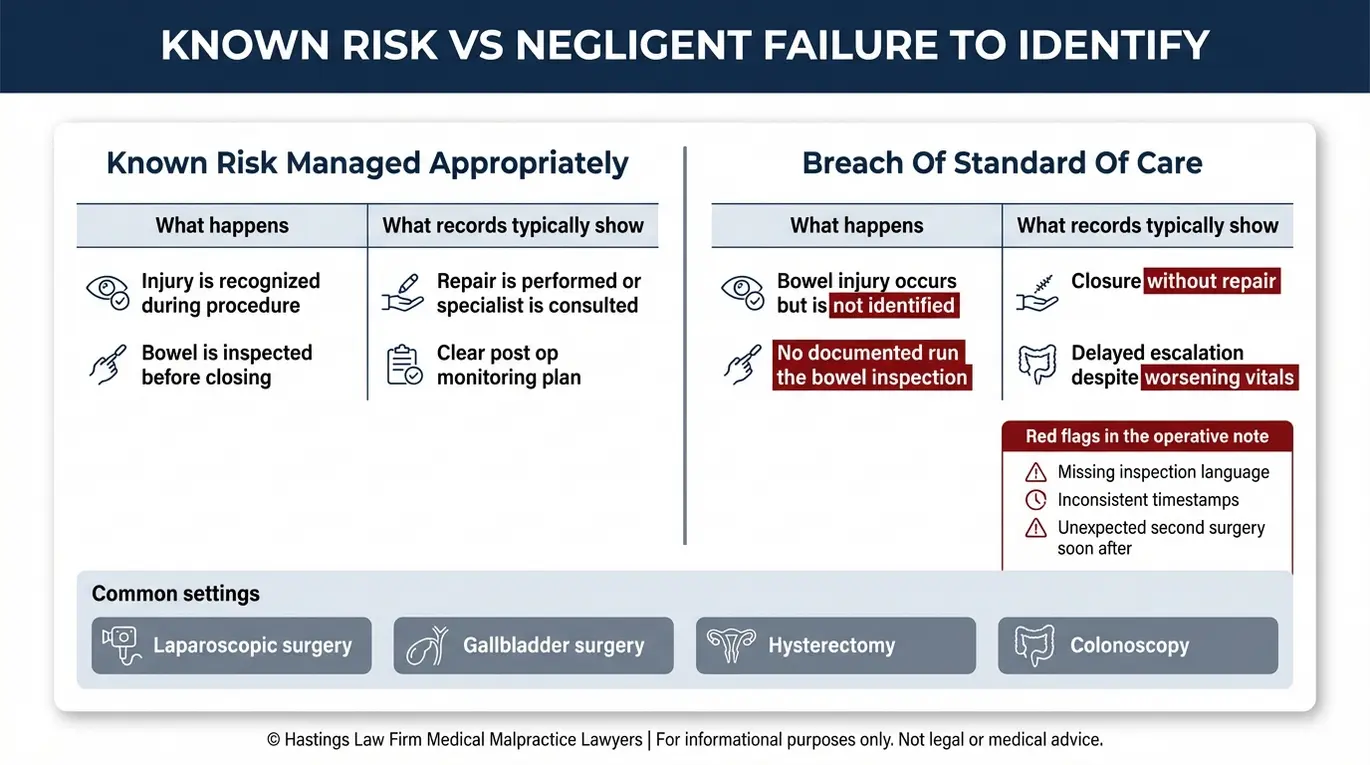
A bowel perforation becomes malpractice when a surgeon fails to meet the standard of care, the level of treatment a reasonably competent surgeon would provide under the same circumstances. A common example is nicking the bowel wall during a laparoscopic surgery and then failing to identify or repair the injury before closing. A Dallas bowel perforation lawyer knows that while complications occur, negligence represents a preventable failure in surgical care.
It is true that bowel perforation is a recognized risk of many abdominal surgeries. Defense teams frequently raise this point. There is an important distinction between a known complication and a preventable surgical error.
The risk that a perforation can occur does not excuse a surgeon from failing to find and fix it. An experienced lawyer for bowel perforation cases understands how to counter this defense.
One critical obligation is what surgeons call “running the bowel,” the practice of carefully inspecting the entire length of the intestine for any signs of damage before closing the abdominal cavity. When a surgeon skips this step or performs it inadequately, an iatrogenic bowel injury can go undetected.
Iatrogenic injury refers to harm caused by the medical procedure itself. Dallas bowel perforation attorneys often identify this omission as the key to a case. That undetected tear can lead to infection, organ failure, or death.
Bowel perforations are especially common during these procedures:
- Gallbladder surgery (cholecystectomy): Instruments working near the bile duct can inadvertently damage adjacent bowel tissue.
- Hysterectomy: The proximity of the uterus to the bowel increases the risk of accidental injury during dissection.
- Colonoscopy: A systematic review and meta-analysis published in PubMed on iatrogenic colonic perforation during colonoscopy confirms that perforations during these diagnostic procedures carry significant morbidity and mortality.
A Dallas bowel perforation lawyer can help determine whether the surgeon’s actions fell below the standard of care. We examine the operative report, nursing notes, and post-operative records to identify where the breakdown occurred. If evidence shows the bowel was not properly inspected or a known injury was left unrepaired, that is the foundation of a medical negligence claim. A bowel perforation attorney in Dallas can then connect those facts to the harm you suffered.
Recognizing Symptoms of Bowel Perforation After Surgery
Symptoms of a perforated bowel typically appear within 24 to 48 hours after surgery and include severe abdominal pain, fever, chills, nausea, and a distended abdomen, all indicating that intestinal contents may be leaking into the abdominal cavity.
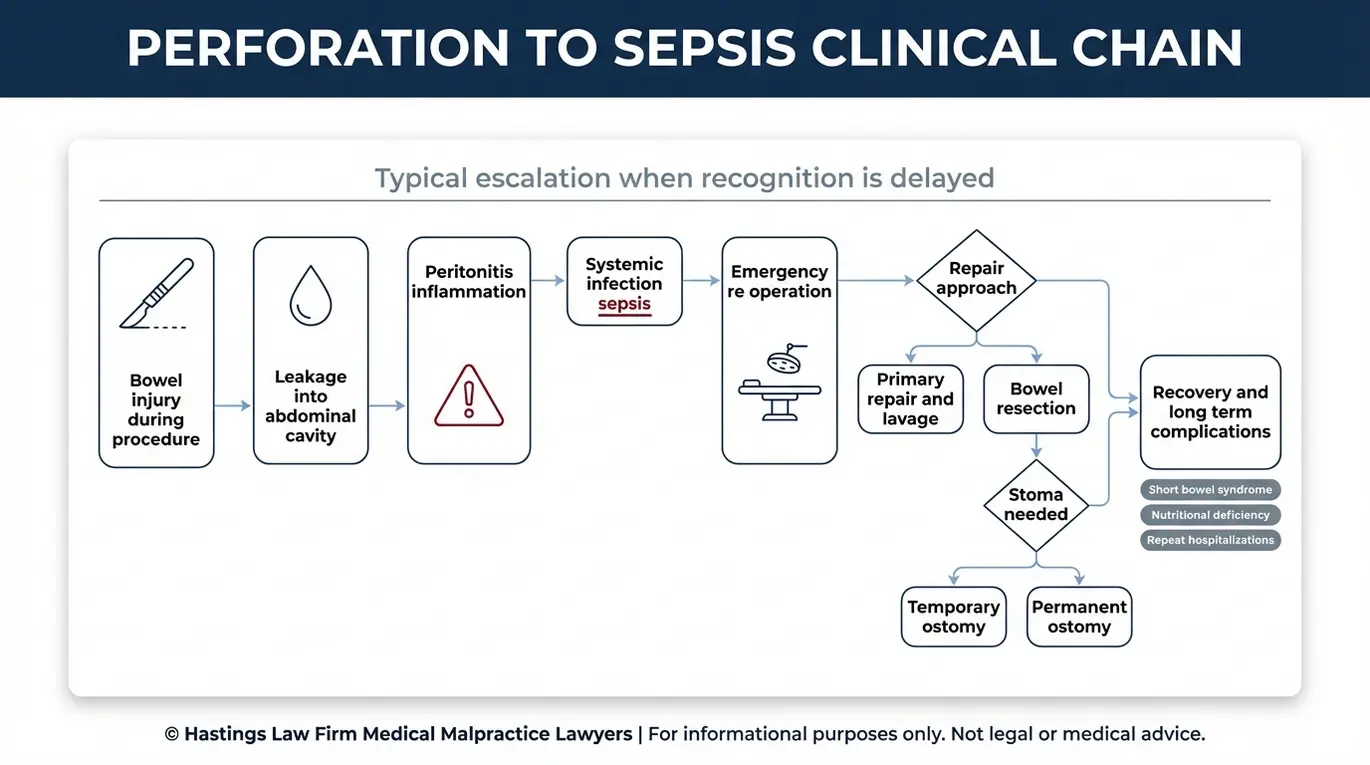
This leakage can cause internal bleeding, peritonitis, or sepsis. When bowel contents escape into the surrounding tissue, they cause peritonitis, a serious infection of the abdominal lining.
Left untreated, peritonitis can progress to sepsis, a condition where the body’s immune response to infection begins damaging its own organs. The CDC’s overview of sepsis signs and symptoms notes that sepsis remains a leading cause of hospital deaths.
Research from PubMed Central on U.S. sepsis mortality trends (1999-2022) reinforces just how deadly delayed treatment can be. An attorney for perforated bowel claims will highlight these dangers.
A failure to diagnose or a delayed diagnosis of these symptoms during post-operative care can turn a treatable injury into a fatal one. If nursing staff or physicians dismiss escalating pain, rising fever, or other warning signs, that delay may constitute medical negligence. A bowel perforation lawyer can investigate these logs.
Post-surgical red flags to watch for:
- Worsening or sudden abdominal pain that does not respond to medication
- Fever or chills developing within 24 to 48 hours after the procedure
- Nausea, vomiting, or inability to pass gas
- A rigid, swollen, or distended abdomen
- Rapid heart rate or low blood pressure
- Confusion or disorientation
If any of these symptoms were present and ignored, a Dallas bowel perforation lawyer can evaluate whether the post-operative response met the standard of care.

The Hastings Law Firm Difference
Results matter, but what truly sets us apart is how we achieve them. Every verdict, every settlement, and every Dallas courtroom victory comes from one guiding promise: To treat each client’s fight for justice as if it were our own.
This balance of skill, experience, and empathy reflects our core philosophy that justice should not only compensate the injured, but also make health care safer nationwide.

The Medical Aftermath: Repairs, Sepsis, and Long-Term Complications
Treating a bowel perforation often requires emergency surgery to wash out the abdominal cavity, a procedure called peritoneal lavage. Depending on the severity, the surgeon may need to perform a bowel resection, removing the damaged section of the small intestine, large intestine, or colon, and sometimes creating an ostomy. Our Dallas bowel perforation attorneys help clients who face this surgically created opening in the abdomen, where waste is diverted into an external collection pouch known as a colostomy or ileostomy bag, as described by MedlinePlus.
The physical and emotional toll of living with an ostomy bag is significant, and legal help for bowel injuries is often necessary to secure compensation for these changes. Daily routines change. Body image suffers.
Some patients face permanent dietary restrictions or repeated follow-up surgeries. In severe cases, extensive bowel removal can lead to short bowel syndrome, a condition where the remaining intestine cannot absorb enough nutrients to sustain normal health.
| Complication | Description | Potential Long-Term Impact |
|---|---|---|
| Peritonitis / Sepsis | Infection from leaking intestinal contents | Organ damage, prolonged ICU stays, death |
| Bowel Resection | Surgical removal of damaged intestinal segments | Digestive problems, nutritional deficiencies |
| Ostomy (Colostomy/Ileostomy) | External waste collection pouch | Lifestyle changes, emotional distress, skin issues |
| Short Bowel Syndrome | Insufficient intestinal length for nutrient absorption | Lifelong nutritional support, IV feeding |
| Anastomotic Leak | Failure of the surgical reconnection to hold | Additional emergency surgery, heightened infection risk |
High-Risk Factors for Poor Healing
Certain patient characteristics, such as a history of smoking, diabetes, or prior steroid use, can affect how well surgical repairs heal. An anastomotic leak occurs when surgical connections fail to seal, and wound dehiscence is the reopening of a surgical incision. These complications are more common in patients with high-risk factors and often require emergency corrective surgery.
Defense attorneys in Dallas bowel perforation cases often try to shift blame onto the patient by highlighting these conditions. Our bowel injury lawyers anticipate these arguments.
We work with qualified medical experts to distinguish between a patient’s pre-existing risks and the surgeon’s preventable errors. A patient’s health history does not excuse a failure to meet the standard of care. A Dallas bowel perforation lawyer will not let them shift the blame.
Compensation for Victims of Surgical Errors in Dallas
Patients harmed by bowel perforation medical malpractice in Texas may recover both economic and non-economic damages. The type and amount of compensation depend on the specific injuries, the cost of corrective treatment, and the lasting impact on the patient’s life. A Dallas bowel perforation lawyer ensures these are calculated correctly.
Recoverable damages in a Dallas bowel perforation case may include:
- Medical expenses: Costs for emergency surgery, ICU stays, corrective procedures, ostomy supplies, and ongoing care. Your malpractice lawyer in Dallas will include all past and current bills.
- Lost wages and earning capacity: Income lost during recovery and any reduction in future earning ability.
- Future medical expenses: Projected costs for follow-up surgeries, nutritional support, or long-term wound care. A Dallas bowel perforation attorney can connect you with experts to estimate these costs. Resources like the Houston Police Department’s medical care guide for victims outline some of the support services available.
- Pain and suffering: Compensation for physical pain, mental anguish, and the emotional burden of living with permanent changes to the body.
- Physical impairment and disfigurement: Damages related to scarring, loss of bodily function, or the presence of a permanent ostomy.
- Wrongful death: If a loved one died from sepsis or complications caused by an undiagnosed bowel perforation, surviving family members may pursue a wrongful death claim.
A lawyer for bowel perforation claims can help calculate the full scope of these losses so that nothing is left unaccounted for.
How Our Dallas Bowel Perforation Lawyers Establish Liability
We establish liability by securing peer reviews from qualified surgical experts who can evaluate whether the surgeon breached the standard of care by failing to identify or repair a bowel injury during the initial procedure. A Dallas bowel perforation lawyer relies on this testimony to build a strong claim.
Our Dallas bowel perforation lawyers begin by obtaining and analyzing the complete medical record, including the operative report, anesthesia logs, nursing notes, and post-operative orders. A Texas medical malpractice lawyer reviews these records line by line, identifying gaps in documentation, inconsistencies in the surgical timeline, and deviations from accepted protocols. A bowel injury attorney identifies these deviations to prove negligence.
We then engage specialists through our national expert network, expert witness surgeons in the same field who can provide an objective opinion on whether the injury was preventable. These experts help us establish causation, connecting the surgical error directly to the infection, the emergency interventions, and the long-term harm. This evidence is what gives a Dallas bowel perforation attorney the foundation to build a case that holds up under scrutiny, whether at the negotiation table, deposition, or in front of a jury.
Contact the Dallas Surgical Error Attorneys at Hastings Law Firm Today for Help
A bowel perforation caused by surgical negligence can change every part of a person’s life. The physical pain, the emotional weight of unexpected surgeries, and the financial strain of mounting medical bills are burdens no one should carry alone, especially when the injury could have been prevented.
Hastings Law Firm represents patients and families exclusively in medical malpractice cases. Our team of attorneys, nurse consultants, and medical experts is prepared to investigate what happened, identify who is responsible, and pursue the compensation you need to move forward.
If you or a loved one suffered a bowel perforation during a surgical procedure in Dallas, contact a Dallas bowel perforation lawyer at Hastings Law Firm for a free, confidential case evaluation. You pay no fees unless we recover compensation on your behalf.
Frequently Asked Questions About Bowel Perforation in Dallas


This content was researched and written by the Hastings Law Firm editorial team, which includes attorneys, medical professionals, and experienced researchers. Our writing is informed by internal knowledge and practical experience, and we cross-check critical details against authoritative sources cited throughout. Every piece undergoes human-led fact-checking and legal review. Because legal and medical information can change, if you spot an error, please contact us. Learn more about our content standards and review process on our editorial policy page.

Brady D. Williams is a nationally recognized medical malpractice attorney who has spent his career handling high-stakes litigation for injured patients and families across the country. Licensed in both Texas and California, Brady draws on experience from hundreds of resolved medical cases to break down complex legal and medical topics for the people who need that information most. His writing reflects the same attention to detail and commitment to clarity that he brings to every case he handles.
