


Texas Bowel Perforation Lawyer
A bowel perforation after abdominal surgery can allow bacteria and digestive contents to leak into the abdomen, leading to severe infection and lasting harm when it is not recognized and treated promptly. Some perforations are known surgical risks, but negligence may be involved when the injury is missed before closing or warning signs after surgery are ignored. The consequences can include emergency surgery, sepsis, long hospital stays, and permanent changes to daily life or worse. If you or a loved one were harmed or worse due to a bowel perforation after surgery in Texas, contact Hastings Law Firm for a free, confidential case review.

Last Updated: July 27, 2026
Trial-Ready Medical Malpractice Attorneys for Surgical Injuries
A bowel perforation, sometimes called a perforated bowel, is an abnormal hole or tear in the intestinal wall that allows bacteria and digestive contents to leak into the abdominal cavity. This type of bowel leak can trigger life-threatening infections when it goes undetected after surgery.
As your Texas bowel perforation lawyer, Hastings Law Firm focuses exclusively on medical negligence cases. Our team includes in-house nurse consultants and former defense attorneys who understand how surgical errors happen and how to prove them.
Contact us for a free, confidential case evaluation. We can review what happened and explain your options.

Common Causes of Bowel Perforation During Abdominal Procedures
A bowel perforation typically occurs during abdominal surgery when a surgeon accidentally nicks or punctures the intestinal wall with a surgical instrument. These injuries happen most often during laparoscopic procedures, hernia repairs, or colonoscopies.
Laparoscopic surgery is a minimally invasive technique where a surgeon operates through small incisions using a camera and specialized tools rather than making one large opening. While this approach generally means faster recovery for patients, it also limits the surgeon’s direct view of the surgical field, forcing them to rely on a 2D monitor image. One of the earliest steps involves inserting a trocar, a sharp, pointed instrument used to create the initial port of entry into the abdomen. If the trocar is inserted improperly, or if instruments contact the bowel during the procedure, the intestinal wall can be punctured without the surgeon immediately realizing it.
When these errors occur, a bowel perforation attorney can investigate whether proper safety protocols were followed.
According to research published in PubMed Central on bowel injury following gynecological laparoscopic surgery, bowel injuries during laparoscopic procedures are among the most serious complications and are frequently diagnosed late, which increases the risk of severe outcomes.
Several abdominal procedures carry a higher risk of bowel injury:
- Gallbladder removal (cholecystectomy): The gallbladder sits near the small intestine and bile ducts. Scar tissue from inflammation can distort anatomy and increase the chance of an accidental cut.
- Hysterectomy: Removing the uterus requires working near loops of bowel, especially when adhesions from prior surgeries or conditions like endometriosis are present.
- Hernia repair: Repairing abdominal wall hernias often involves separating intestinal tissue from the hernia sac, creating opportunities for accidental bowel injury.
- Colonoscopy: During this diagnostic procedure, a flexible endoscope is guided through the colon. If the scope is advanced with too much force or manipulated improperly, it can tear the colon wall. This risk is higher in patients with diverticulitis or prior abdominal surgeries.
A bowel perforation is not always the result of negligence. Some patients have tissue that is more fragile or anatomy that is harder to work with. But when a perforation occurs because a surgeon used improper technique, rushed through a procedure, or failed to identify the injury before finishing the operation, that crosses the line from a known surgical complication into a potential medical malpractice claim. An experienced Texas bowel perforation lawyer can help determine which side of that line your case falls on.
Distinguishing Between Known Complications and Surgical Negligence
While a nicked bowel can be a recognized risk of abdominal surgery, negligence occurs when the surgeon fails to identify the injury before closing the patient or fails to respond promptly to post-operative symptoms of infection.
This distinction is at the heart of every bowel perforation case, and understanding it is essential. An experienced Texas bowel perforation lawyer knows that while the initial cut may be accidental, the failure to react is often where liability lies.
The Standard of Care in the Operating Room
In medical negligence cases, the standard of care is the level of treatment a reasonably competent surgeon would provide under similar circumstances. During abdominal procedures, this standard typically requires the surgeon to inspect the surgical field before closing. Surgeons refer to this as “running the bowel,” a process of carefully examining each section of the intestine to check for nicks, burns, or tears caused during the operation.
If a surgeon skips this step, rushes through it, or performs it inadequately, that can constitute a breach of care. As the NCBI Bookshelf resource on bowel perforation explains, early recognition of a perforation is one of the most important factors in preventing serious complications.
When Delayed Diagnosis Becomes Actionable Negligence
The initial cut to the bowel may be an accident, but the failure to diagnose and repair it is where most malpractice claims gain traction. After surgery, a bowel leak causes bacteria to spill into the abdominal cavity. Without treatment, this leads to sepsis, the body’s dangerous response to widespread infection.
Post-operative monitoring should catch warning signs early. Rising fever, increasing abdominal pain, rapid heart rate, and falling blood pressure are all indicators of a potential bowel leak. When medical staff ignore or misinterpret these signs, a survivable surgical complication can become fatal.
| Known Complication | Potential Negligence | |
|---|---|---|
| The Injury | Bowel is accidentally nicked during a difficult procedure | Bowel is injured due to improper technique or failure to identify anatomy |
| Intraoperative Response | Surgeon identifies and repairs the injury before closing | Surgeon does not run the bowel or misses the perforation |
| Post-Op Monitoring | Staff recognizes early symptoms and orders imaging | Warning signs like fever and tachycardia are ignored or dismissed |
| Patient Outcome | Injury is managed with minimal additional treatment | Delayed diagnosis leads to peritonitis, sepsis, or emergency surgery |
Proving Liability Using Employee Timesheets and Staff Testimony
Our team investigates the full operating room environment, not just the surgeon’s actions. We examine employee timesheets and scheduling records to determine whether fatigue, rushed schedules, or understaffing may have contributed to the surgical error. Testimony from OR staff can reveal whether protocols were followed, whether the surgeon appeared impaired or distracted, and whether concerns were raised but not acted upon. As a malpractice lawyer for bowel injuries, we know these details often reveal patterns of medical negligence that medical records alone do not show.

The Hastings Law Firm Difference
Results matter, but what truly sets us apart is how we achieve them. Every verdict, every settlement, and every Texas courtroom victory comes from one guiding promise: To treat each client’s fight for justice as if it were our own.
This balance of skill, experience, and empathy reflects our core philosophy that justice should not only compensate the injured, but also make health care safer nationwide.

Recoverable Damages for Sepsis and Permanent Intestinal Injury
Patients who suffer untreated bowel perforations can recover compensation for both the economic costs and the personal toll of their injuries. The specific financial recovery depends on the severity of the complications and how the negligence affected the patient’s life going forward.
A Texas bowel perforation lawyer can help you pursue the following categories of damages:
- Corrective and emergency surgeries: A bowel resection, the surgical removal of the damaged section of intestine, often requires reconnecting healthy tissue or creating a temporary or permanent diversion. ICU stays for sepsis and peritonitis, an inflammation of the abdominal lining caused by infection, add significant costs.
- Colostomy or ostomy bag: Some patients require a colostomy, a procedure that reroutes waste through an opening in the abdomen into an external bag. Living with an ostomy bag affects daily routines, body image, and emotional well-being in ways that extend far beyond the hospital stay.
- Ongoing medical care: Long-term digestive problems, nutritional deficiencies, and recurring infections may require treatment for years. Patients may need specialized dieticians, home health care, or additional surgeries to reverse temporary diversions, all of which contribute to the total claim value.
- Lost income and reduced earning capacity: Extended recovery periods, repeated hospitalizations, and permanent physical limitations can prevent patients from returning to work at their previous level. We calculate not just lost current wages, but the loss of future earning potential if you are forced to change careers or retire early.
- Pain and suffering: The physical agony of sepsis and multiple corrective surgeries, combined with the emotional distress of a preventable injury, forms the basis of non-economic damage claims.
- Wrongful death: When an untreated bowel perforation leads to fatal organ failure, surviving family members can seek compensation for their loss, including funeral expenses, lost financial support, and loss of companionship.
Texas law does impose caps on non-economic damages in medical malpractice cases under Chapter 74. These caps limit the amount a jury can award for pain and suffering, regardless of the severity of the injury. However, economic damages, such as medical bills, future care costs, and lost wages, are not capped. Proving the full extent of financial liability is therefore critical to maximizing the value of your claim.

Texas Legal Requirements for Filing a Medical Injury Claim
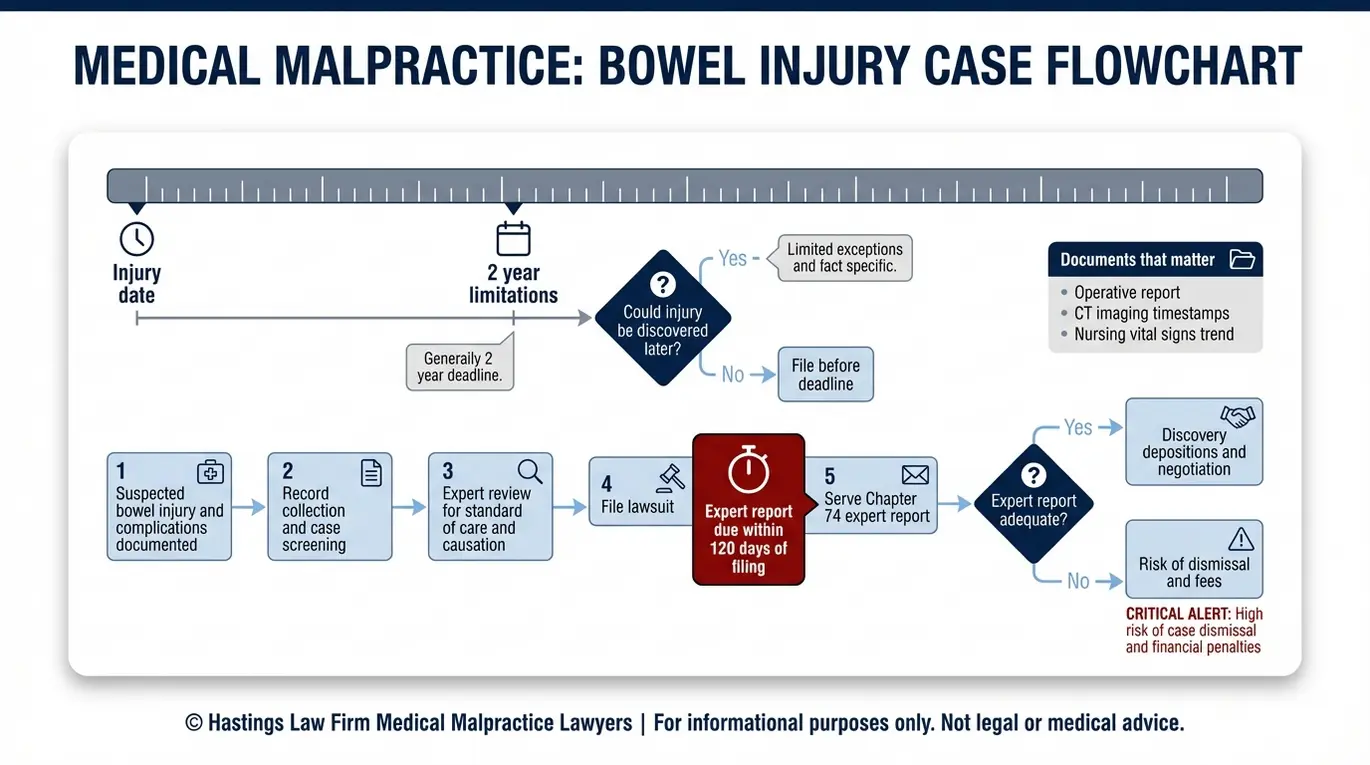
Texas law requires plaintiffs to serve an expert report within 120 days after the defendant files an original answer in a medical malpractice lawsuit and generally mandates that claims be filed within two years of the date of negligence. Reaching the legal threshold for a claim requires strict adherence to these procedural timelines.
The Chapter 74 Expert Report
A Chapter 74 expert report is a mandatory document required by Texas law to proceed with a medical injury lawsuit. Under the Texas Civil Practice and Remedies Code § 74.351, every medical malpractice patient must provide a written expert report from a qualified physician within 120 days after the defendant files an original answer. This report must identify the applicable standard of care, explain how the healthcare provider breached that standard, and describe how the breach caused the patient’s injury. It is a gatekeeping measure to weed out frivolous lawsuits, but it also places a heavy burden on valid claims early in the process.
If the report is not served on time, or if it does not meet the statutory requirements, the court can dismiss the case entirely. The court may also order the patient to pay the defendant’s attorney fees. This is one of the strictest procedural requirements in Texas civil law, and it is the reason having a qualified Texas bowel perforation lawyer matters from day one.
The Two-Year Statute of Limitations
The statute of limitations is the legal deadline for filing a medical malpractice claim in Texas. Generally, the law requires claims to be filed within two years of the date the negligence occurred. Missing this deadline almost always results in losing the right to pursue the case.
The Discovery Rule
The discovery rule is a legal principle that can extend the filing deadline if an injury was not immediately apparent. In some situations, a patient may not realize that a surgical error caused their complications. Texas courts recognize a limited rule that can pause the statute of limitations until the patient knew, or reasonably should have known, about the injury.
Texas courts apply this exception cautiously, and it is not guaranteed to extend your filing window. The court will evaluate whether you exercised due diligence in discovering the injury. The safest approach is to seek legal guidance as soon as you suspect something went wrong. Our team handles the full filing process, from securing a qualified medical expert to preparing the required report, so that procedural technicalities do not prevent your case from being heard.
Contact the Texas Surgical Error Attorneys at Hastings Law Firm Today for Help
A bowel perforation left undetected after surgery can change the course of your life. What should have been a routine recovery can turn into emergency surgeries, long hospital stays, and lasting physical consequences that no one prepared you for.
Founded by Tommy Hastings, who is board-certified in personal injury trial law by the Texas Board of Legal Specialization (achieved by less than 2% of attorneys), our firm operates with a trial-ready philosophy designed to protect patients. This approach, backed by our in-house medical staff and former defense attorneys, puts us in a strong position to pursue full compensation on your behalf.
If you or a loved one suffered a bowel injury due to a surgical error, reach out to our team for a free, confidential evaluation. As your Texas bowel perforation lawyer, we can review your medical records, consult with qualified experts, and help you understand your legal options. There is no fee unless we recover compensation for you.
Frequently Asked Questions About Bowel Perforation in Texas


This content was researched and written by the Hastings Law Firm editorial team, which includes attorneys, medical professionals, and experienced researchers. Our writing is informed by internal knowledge and practical experience, and we cross-check critical details against authoritative sources cited throughout. Every piece undergoes human-led fact-checking and legal review. Because legal and medical information can change, if you spot an error, please contact us. Learn more about our content standards and review process on our editorial policy page.

Gabe Sassin has focused exclusively on medical malpractice law since 2007. After spending more than a decade as a malpractice defense attorney, he knows exactly how the other side works. He has seen firsthand how healthcare providers, insurers, corporate defendants, and their legal teams think, prepare, and build their defense against claims. That knowledge works for the people who need it most today, injured patients and their families. His unique experience shapes everything he writes, giving readers a look at how these cases actually work from someone who has handled them from both sides.
