


Austin Bowel Perforation Lawyer
A bowel perforation during surgery can turn a planned procedure into a medical crisis, especially when the injury is missed and infection spreads. People may face emergency corrective care, intensive monitoring, repeated operations, and lasting changes that affect daily life and independence. Not every perforation is malpractice, but concerns often arise when warning signs are overlooked or treatment is delayed after surgery. If you or a loved one were harmed or worse due to bowel perforation from surgical negligence in Austin, Texas, contact Hastings Law Firm for a free, confidential case review.

Last Updated: July 27, 2026
Trusted Malpractice Attorneys in Austin for Surgical Injuries
When a routine surgery leads to a bowel perforation that should have been caught and repaired, the physical and emotional toll can be overwhelming. You may be facing emergency corrective procedures, a prolonged ICU stay, or life-altering complications like sepsis, and you deserve to know whether the care you received fell below accepted medical standards.
At Hastings Law Firm, our legal team works alongside in-house medical professionals to evaluate surgical error cases and determine whether negligence played a role. As your Austin Bowel Perforation Lawyer, we understand both the medicine and the law behind these claims.
If you or a loved one suffered serious harm after a surgical procedure, we can review what happened and explain your options in a free, confidential consultation.

Understanding Bowel Perforations and How They Occur
A bowel perforation is a hole or nick in the wall of the small intestine or colon that allows waste to leak into the abdominal cavity. While this can occur spontaneously from disease, it is frequently caused by surgical error during abdominal procedures.
During surgery, instruments can accidentally cut or puncture the intestinal wall. This type of injury is known as an iatrogenic bowel injury, meaning it was caused by medical intervention rather than the underlying condition being treated. When the bowel wall is breached, intestinal contents spill into the peritoneal cavity, the space surrounding the abdominal organs, creating an immediate risk of severe infection.
According to research published in the Annals of Laparoscopic and Endoscopic Surgery, gastrointestinal tract defects during surgery require prompt identification and management to prevent life-threatening complications. A study in PLOS ONE also documents the measurable risk of perforation during screening procedures like colonoscopies and sigmoidoscopies.
Certain procedures carry a higher risk of bowel injury, including:
- Laparoscopic surgery, where limited visibility and trocar insertion (using small tubes to enter the body) can lead to undetected nicks
- Gallbladder surgery (cholecystectomy), due to the proximity of the bile duct and intestines
- Colonoscopies, particularly when polyps are removed or the scope is advanced through tight curves
- Hysterectomies, where adhesions or instrument placement may affect nearby bowel tissue
- Hernia repairs and other abdominal surgeries involving extensive dissection near the intestines
If you believe a perforated bowel resulted from a surgical mistake, consulting a bowel perforation attorney can help clarify whether the injury was preventable. Medical malpractice claims in Texas are governed by the Texas Civil Practice and Remedies Code, Chapter 74, which sets specific requirements for filing a claim. A lawyer for bowel injuries can walk you through what applies to your situation.
Is a Perforated Bowel Always Medical Malpractice
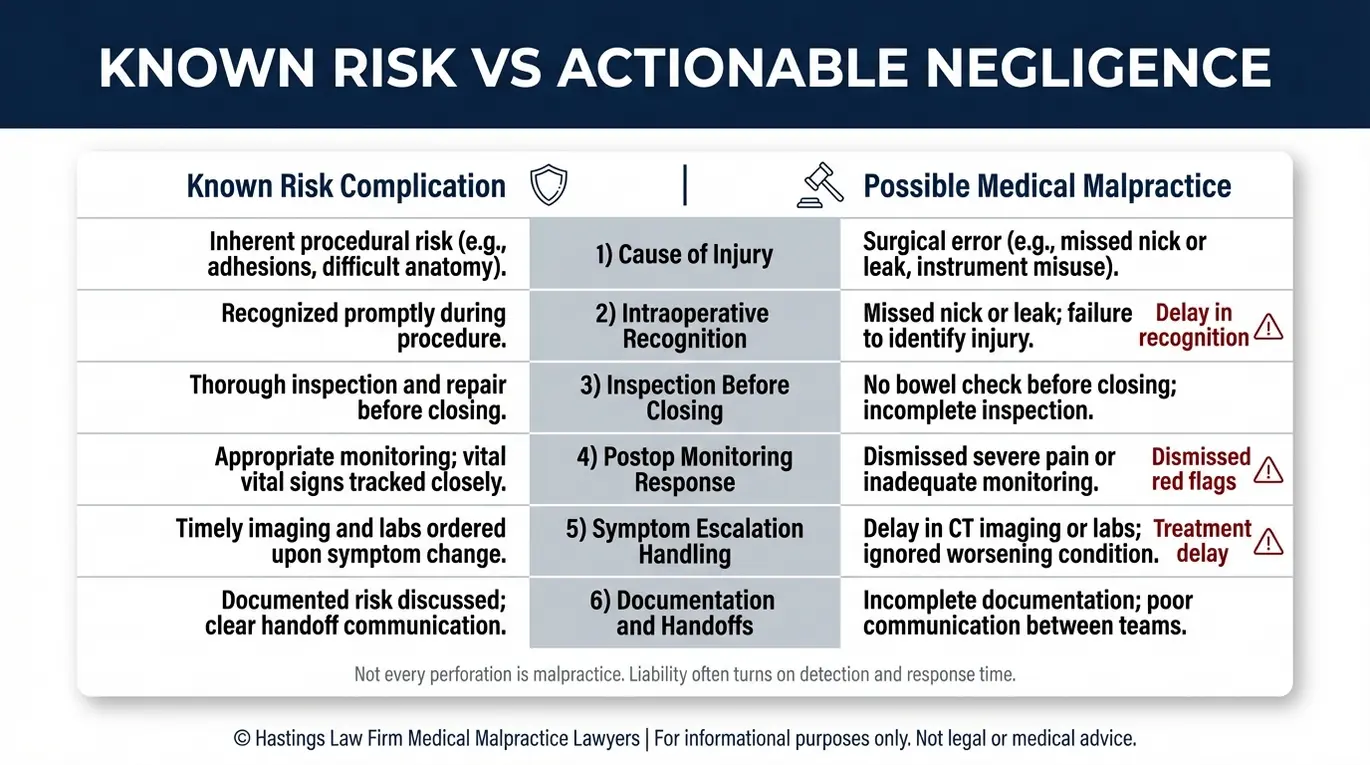
A perforated bowel is not always malpractice. Bowel injury can be a known risk of surgery, and not every complication means the surgeon did something wrong. However, medical malpractice often enters the picture when the surgeon fails to notice the injury during the procedure or fails to diagnose and treat the resulting infection in a timely manner.
This is a distinction that matters in every case we evaluate. The standard of care, the level of treatment a reasonably competent surgeon would provide under similar circumstances, does not require perfection. It does require attentiveness. Surgeons are expected to inspect the operative field carefully before closing, a practice sometimes called “running the bowel.” When that step is skipped or rushed, a small nick can go undetected.
A surgical error becomes medical negligence when the provider’s actions fall below what the medical community considers acceptable. That can include failing to recognize signs of a leak during surgery, ignoring post-operative symptoms, or discharging a patient too early without appropriate monitoring.
If you are unsure whether what happened qualifies as negligence, speaking with a bowel perforation lawyer in Austin can help you understand where the line is. We examine the surgical records, post-operative notes, and nursing documentation to determine whether the standard of care was met.
The Danger of Delayed Recognition and Sepsis
The real danger in many bowel perforation cases is not the initial cut itself. It is the delay in recognizing that something went wrong.
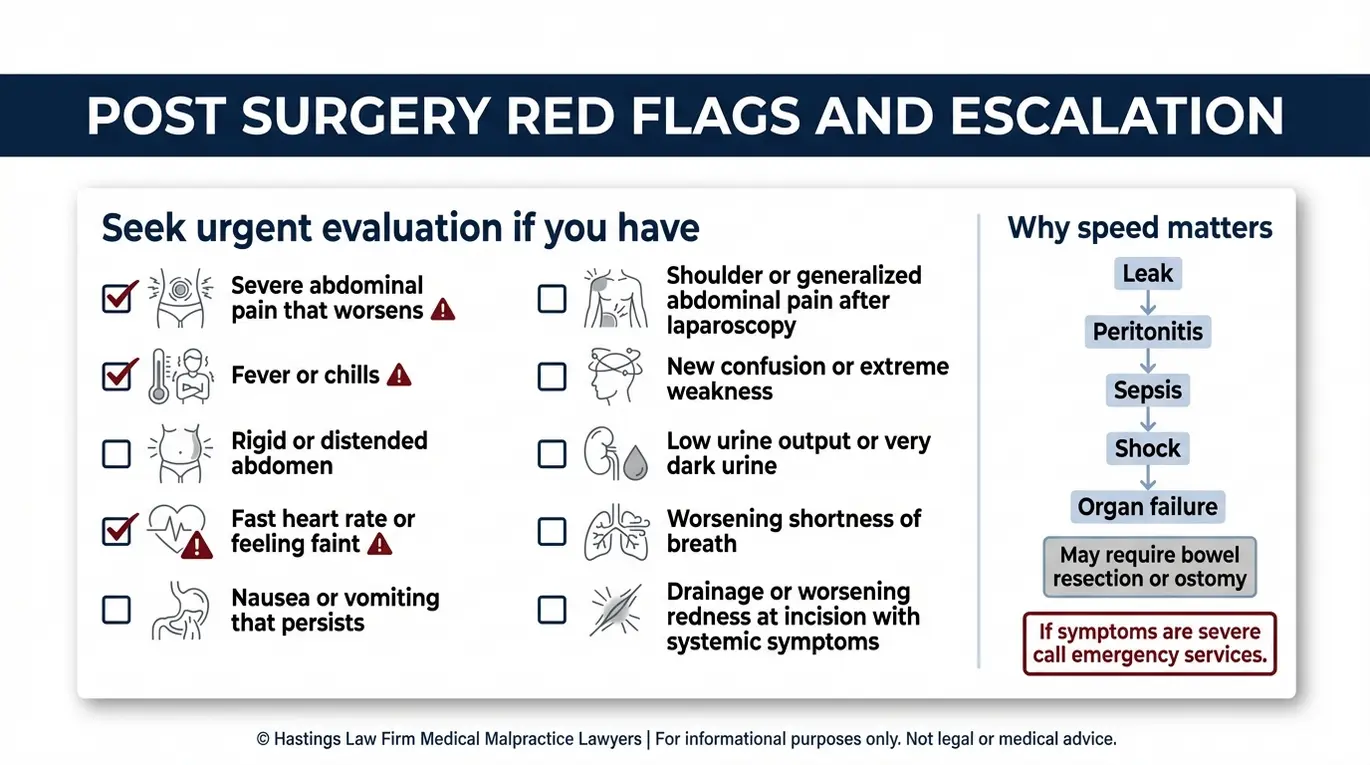
When a perforation goes undetected, intestinal bacteria begin leaking into the abdominal cavity. This triggers peritonitis, a serious and painful infection of the abdominal lining. Without rapid intervention, peritonitis can progress to sepsis, a life-threatening condition where the body’s immune response can lead to multiple organ failure.
The timeline from a missed bowel perforation to full-blown sepsis can be alarmingly short. A missed bowel perforation means the injury was not identified during or shortly after surgery. Hours matter.
A patient may report worsening abdominal pain, fever, or nausea. If those complaints are dismissed or attributed to normal post-surgical recovery, the window for effective treatment narrows quickly. Failure to treat these warning signs is often the strongest basis for a malpractice claim.
The Hastings Law Firm Difference
Results matter, but what truly sets us apart is how we achieve them. Every verdict, every settlement, and every Austin courtroom victory comes from one guiding promise: To treat each client’s fight for justice as if it were our own.
This balance of skill, experience, and empathy reflects our core philosophy that justice should not only compensate the injured, but also make health care safer nationwide.

Consequences and Long-Term Complications of Untreated Perforations
Untreated bowel perforations lead to the leakage of bacteria into the abdomen, causing peritonitis, sepsis, and potentially fatal organ failure. Survivors often require extensive repair surgeries, bowel resection (the surgical removal of damaged sections of intestine), and in many cases, a permanent colostomy.
Research published in PubMed Central on sepsis mortality trends underscores the serious and sometimes fatal nature of sepsis in the United States. When a perforation is missed, the risk of septic shock, a dangerous drop in blood pressure caused by overwhelming infection, increases significantly.
For patients who survive, the physical consequences can be permanent. Short bowel syndrome may develop if large portions of intestine are removed, limiting the body’s ability to absorb nutrients. Many patients require a colostomy, a surgically created opening in the abdomen, or an ostomy bag (a pouch worn externally to collect waste) as described in Rush University System for Health’s ostomy care guide.
Warning signs that may indicate a missed bowel perforation after surgery include:
- Severe or worsening abdominal pain, especially pain that is not improving with medication
- High fever or chills developing within hours or days of the procedure
- Nausea, vomiting, or inability to keep food down
- A rigid, swollen, or distended abdomen
- Rapid heart rate or signs of confusion and disorientation
The emotional toll of these outcomes is significant as well. Adapting to life with an ostomy bag, coping with repeated surgeries, and losing the ability to work or care for a family can be devastating.
Under the Texas Civil Practice and Remedies Code Section 74.051, patients injured by negligence have the right to pursue a claim. They must meet specific pre-suit notice requirements. An Austin bowel perforation attorney can ensure those steps are handled correctly.
Establishing Liability in Surgical Error Cases
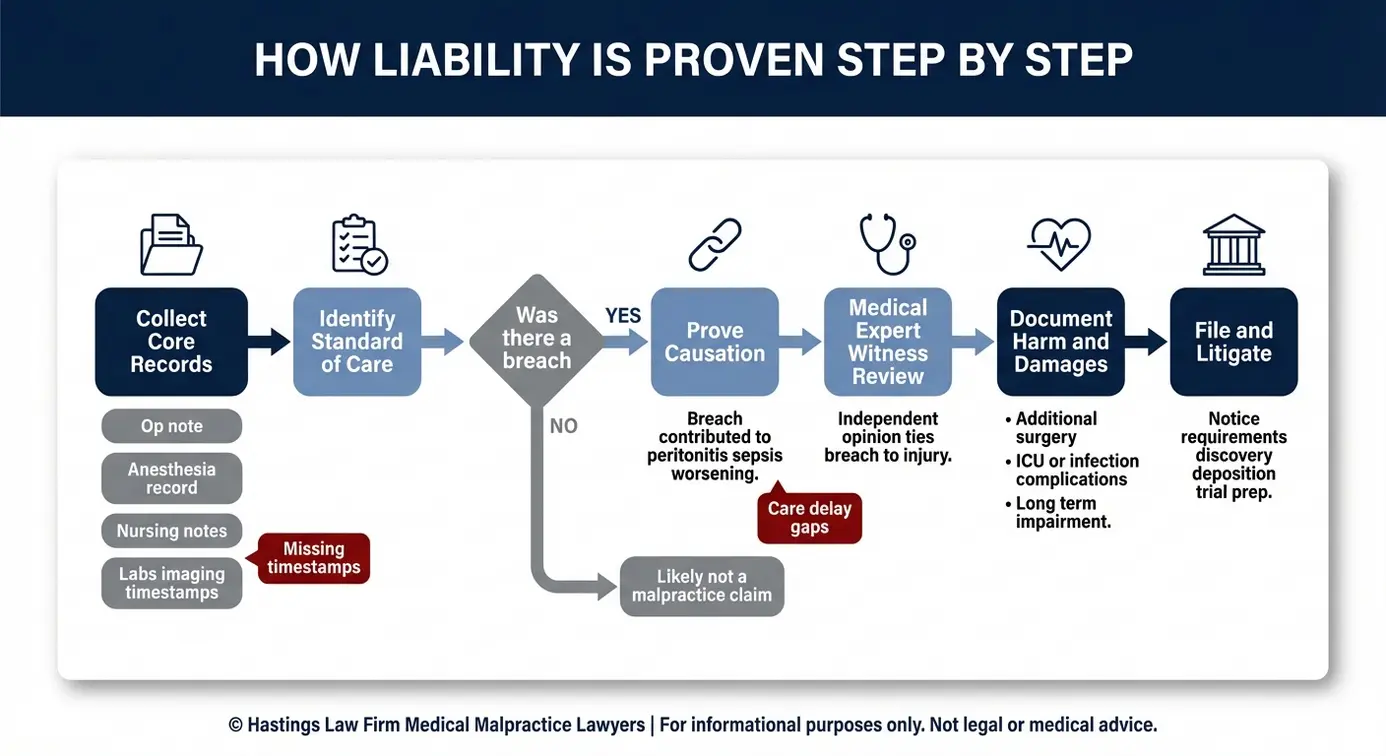
To prove liability, a patient must demonstrate that the surgeon breached the standard of care by either causing a preventable injury or failing to diagnose it after surgery, and that this breach directly caused severe harm or death.
Medical malpractice cases follow a defined structure. Our team works through each element methodically:
- Duty: The surgeon owed a duty of care to the patient. This is established by the doctor-patient relationship.
- Breach: We examine whether a breach of duty occurred. Did the surgeon deviate from accepted practices? Did they inspect the surgical field before closing? Were post-operative complaints investigated appropriately?
- Causation: We must connect the breach to the patient’s worsening condition. If a timely diagnosis would have prevented sepsis or organ failure, the delay itself is the cause of the additional harm. Establishing this link is critical for recovery.
- Damages: The patient suffered measurable harm, whether physical, financial, or emotional, as a direct result of the breach.
Proving these elements requires testimony from a qualified medical expert witness. This is a physician in the same specialty who reviews the records and confirms that the care fell below the standard. Texas law requires this expert analysis early in the litigation process, and our in-house medical staff helps identify the right specialists for each claim.
As an Austin bowel perforation lawyer, we also work with our former defense counsel to anticipate how hospitals and their insurers are likely to respond. We approach every claim with the rigor of a dedicated medical malpractice lawyer, ensuring no evidence is overlooked.
Short bowel syndrome is one example of a severe outcome that strengthens the damages portion of a case when causation is clearly established. Every detail in the medical record matters, and we build a timeline that connects each decision point to the patient’s outcome.
Damages Available to Victims of Bowel Perforation
Patients harmed by bowel perforation malpractice are entitled to recover compensatory damages, which include economic damages for medical bills and lost wages, as well as non-economic damages for pain, suffering, physical impairment, and disfigurement.
Economic damages may include:
| Category | Examples |
|---|---|
| Past and future medical costs | Corrective surgeries, bowel resection, ICU stays, ostomy supplies, home health care |
| Lost income | Wages lost during recovery and reduced future earning capacity |
| Out-of-pocket expenses | Travel to specialists, prescription costs, medical equipment |
Non-economic damages account for the human cost of the injury. Sepsis recovery is often described as one of the most painful medical experiences a person can endure. Living with a colostomy, a surgical opening that redirects the intestine to an external ostomy bag (ostomy pouch), changes daily life in ways that affect self-image, relationships, and independence.
These damages are subjective but critical, acknowledging the loss of enjoyment of life. Settlement compensation and jury awards in these cases reflect both the severity of the physical suffering and the permanence of the lifestyle changes.
If a bowel perforation led to a patient’s death, the family may pursue a wrongful death claim for funeral expenses, loss of companionship, and lost financial support. Austin bowel perforation lawyers at our firm and an experienced Texas medical malpractice attorney on our team can evaluate the full scope of your losses.
Why Choose Hastings Law Firm for Your Malpractice Claim
Hastings Law Firm brings a unique combination of legal skill and medical insight to every bowel perforation case. Led by board-certified trial lawyer Tommy Hastings, our firm includes former defense counsel and in-house nurse consultants who understand hospital protocols from the inside. That background gives us a clear understanding of how the other side builds its case in medical negligence litigation, and it shapes how we build ours.
We prepare every case as though it will go to trial. That level of preparation strengthens our position whether we are negotiating a settlement or presenting evidence to a jury.
Our Austin office serves patients and families throughout the region. As your Austin bowel perforation lawyer, we handle every aspect of the claim so you can focus on recovery. Contact us for a free consultation to discuss your potential claim. We work on a contingency fee basis, which means you pay no attorney fees unless we secure a recovery on your behalf.
Contact the Austin Surgical Error Attorneys at Hastings Law Firm Today for Help
If you or a family member suffered a bowel perforation due to surgical negligence, you have a limited time under Texas law to take action. The answers you need are within reach, and getting them starts with a single conversation.
Our team is ready to review your medical records, consult with qualified experts, and determine whether the care you received fell short of what the standard requires. As your Austin bowel perforation lawyer, we will guide you through every step of the process.
Contact Hastings Law Firm today for a free, confidential case evaluation. There is no fee unless we win.
Frequently Asked Questions About Bowel Perforation in Austin


This content was researched and written by the Hastings Law Firm editorial team, which includes attorneys, medical professionals, and experienced researchers. Our writing is informed by internal knowledge and practical experience, and we cross-check critical details against authoritative sources cited throughout. Every piece undergoes human-led fact-checking and legal review. Because legal and medical information can change, if you spot an error, please contact us. Learn more about our content standards and review process on our editorial policy page.

Gabe Sassin has focused exclusively on medical malpractice law since 2007. After spending more than a decade as a malpractice defense attorney, he knows exactly how the other side works. He has seen firsthand how healthcare providers, insurers, corporate defendants, and their legal teams think, prepare, and build their defense against claims. That knowledge works for the people who need it most today, injured patients and their families. His unique experience shapes everything he writes, giving readers a look at how these cases actually work from someone who has handled them from both sides.
