


Austin Anesthesia Error Lawyer
Anesthesia errors can disrupt breathing, heart function, and consciousness during surgery, and the harm can be sudden and severe. Mistakes with dosing, monitoring, airway management, or team communication can leave families searching for answers about what went wrong and whether the injury was preventable. The resulting impact can range from temporary complications to permanent brain injury, lasting psychological trauma, or fatal outcomes. If you or a loved one were harmed or worse due to an anesthesia error in Austin, Texas, contact Hastings Law Firm for a free, confidential case review.

Last Updated: July 27, 2026
Trial-Ready Austin Malpractice Attorneys for Anesthesia-Related Injuries
Anesthesia requires precise control over some of the body’s most basic functions: breathing, heart rate, blood pressure, and consciousness. When an error occurs during this process, the consequences can be sudden and severe. If you or someone in your family was harmed by an anesthesia mistake during a surgical procedure, you may be unsure of what happened or whether anyone is being held accountable.
As Austin anesthesia error lawyers, our firm focuses exclusively on medical malpractice. Our team includes in-house nurses and former defense attorneys who know how to read anesthesia records, interpret capnography logs (the monitoring of end-tidal CO2 levels that tracks whether a patient is breathing properly), and identify where the standard of care broke down. We can review what happened during your procedure and explain your legal options in a free, confidential consultation.

Common Causes of Anesthesiologist Negligence
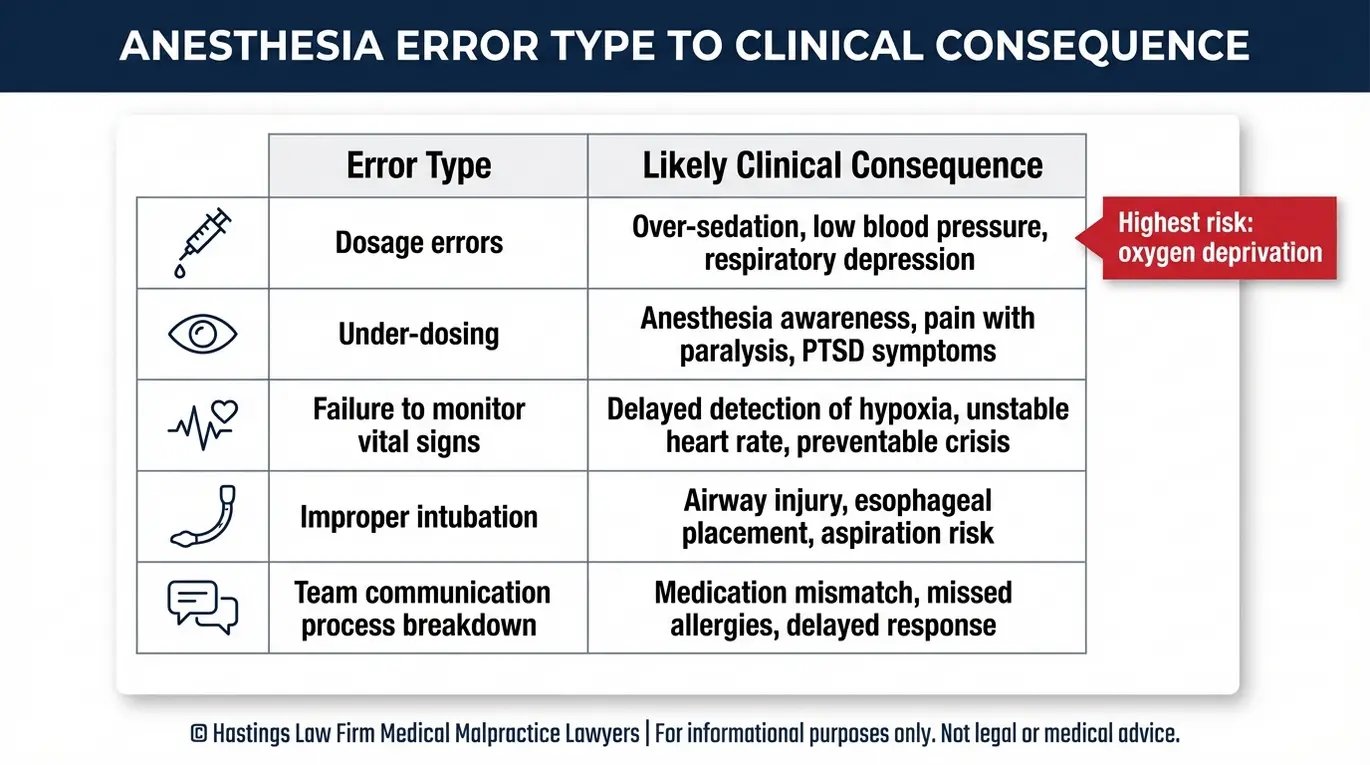
Anesthesia errors occur when medical professionals fail to follow the standard of care, often involving dosage mistakes, failure to monitor vital signs, or improper intubation. Anesthesiology in surgical centers must follow strict protocols to ensure patient safety. The standard of care refers to the accepted level of caution and skill a healthcare professional must provide during a procedure. These failures can happen before, during, or after a surgical procedure, and they are not always immediately obvious to the patient or family.
Dosage errors are among the most frequent forms of anesthesia negligence. An anesthetic dosing error can mean administering too much medication, which risks respiratory depression or cardiac arrest, or too little, which can result in the patient regaining awareness during surgery. Proper dosing depends on a careful review of the patient’s weight, age, medical history, and concurrent medications.
Monitoring failures involve a lapse in tracking oxygen saturation, heart rate, blood pressure, or breathing patterns during the procedure. Vital signs monitoring is a continuous responsibility. Even a brief gap in attention can allow a dangerous drop in oxygen levels to go unnoticed until irreversible damage has occurred. Documentation standards, such as those outlined in the UTMB Medical Record Documentation Checklists, show how thoroughly these records should be maintained.
Intubation issues present another category of risk. Esophageal intubation, where the breathing tube is mistakenly placed into the esophagus instead of the trachea, cuts off oxygen delivery to the lungs entirely. Dental injuries during airway setup, while less catastrophic, are also preventable with proper technique.
Communication breakdowns between the surgeon and the anesthesia team can compound any of these errors. If allergic reactions to specific agents are not flagged before the procedure begins, or if the surgical timeline changes without the anesthesia provider being informed, the risk of a preventable injury increases.
An anesthesia error attorney in Austin will examine these records closely to determine where the process failed.
| Error Type | Clinical Consequence |
|---|---|
| Medication overdose | Respiratory depression, cardiac arrest, death |
| Medication underdose | Anesthesia awareness (patient wakes during surgery) |
| Failure to monitor vital signs | Undetected oxygen drops, brain injury |
| Esophageal intubation | Complete oxygen deprivation, hypoxic injury |
| Unscreened allergic reaction | Anaphylactic shock, organ failure |
| Surgeon-anesthesia miscommunication | Delayed response to surgical complications |
Severe Injuries Resulting From Anesthesiologist Negligence
Negligence in anesthesia administration can lead to catastrophic outcomes, ranging from temporary nerve damage to permanent brain injury or wrongful death due to oxygen deprivation. Serious complications from anesthesia negligence can result in lifelong medical needs. Preventable medical errors often lead to what the state classifies as adverse events. The Texas Department of State Health Services Reportable Preventable Adverse Events Definitions and Guidance defines these outcomes as events that should never occur under proper care.
The injuries most commonly associated with anesthesia negligence include:
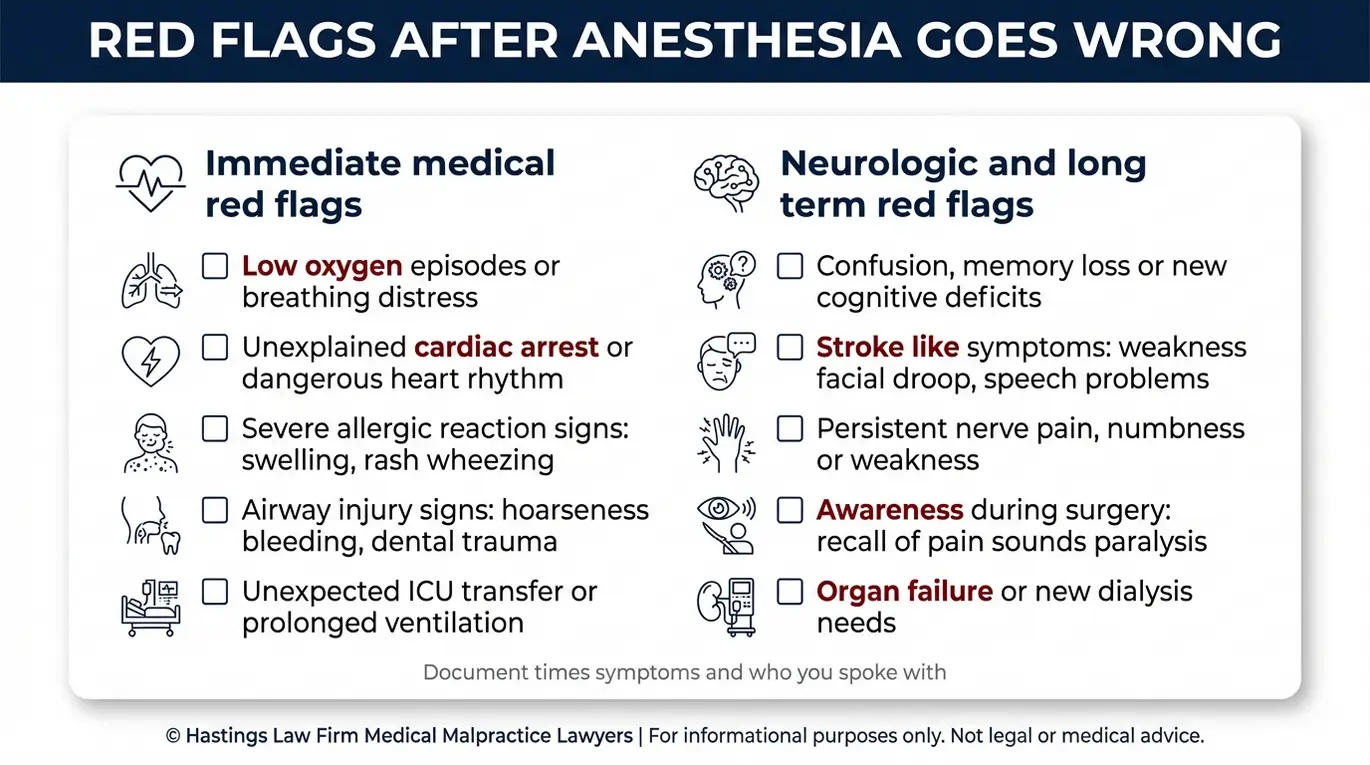
- Hypoxia and oxygen deprivation: Even a few minutes without adequate oxygen can cause permanent cognitive deficits, memory loss, or a vegetative state. Hypoxia, the medical term for insufficient oxygen reaching the brain and organs, is the single most dangerous risk in anesthesia care.
- Heart damage and cardiac arrest: Unmanaged blood pressure spikes or adverse medication reactions during surgery can trigger heart attacks or stroke.
- Nerve damage and paralysis: Improper patient positioning or needle placement during regional anesthesia can result in lasting nerve injury.
- Organ failure: Prolonged oxygen deprivation or severe allergic responses can compromise kidney, liver, or lung function.
- Perioperative anaphylaxis: An anaphylactic shock reaction to an anesthetic agent can be fatal if not recognized and treated within minutes.
- Wrongful death: Airway obstruction, undetected respiratory failure, and anaphylaxis remain leading causes of anesthesia-related fatalities.
- Anesthesia awareness: The psychological trauma of waking up paralyzed but able to feel pain during surgery.
An Austin anesthesia lawyer evaluates the full scope of injury, including long-term prognosis, to build a case that reflects the true cost of the harm.
Understanding Anesthesia Awareness
One of the most psychologically devastating anesthesia injuries is anesthesia awareness, also known as intraoperative awareness. Intraoperative awareness occurs when sedation fails while muscle relaxants remain active. This occurs when a patient regains consciousness during surgery but cannot move or speak. This often happens because a neuromuscular blocking agent, a paralytic drug used to prevent involuntary muscle movement, is still active in their system while the sedative has worn off.
Patients who experience awareness may feel pressure, pain, or the sensation of being unable to breathe, all while unable to alert the surgical team. The resulting psychological trauma frequently leads to post-traumatic stress disorder (PTSD), chronic anxiety, sleep disturbances, and a lasting fear of medical procedures.
Awareness cases often involve underdosing of the anesthetic agent or a failure to use monitoring tools designed to measure the depth of sedation. These claims require specialized legal and medical analysis to establish what went wrong and why it was preventable.
The Hastings Law Firm Difference
Results matter, but what truly sets us apart is how we achieve them. Every verdict, every settlement, and every Austin courtroom victory comes from one guiding promise: To treat each client’s fight for justice as if it were our own.
This balance of skill, experience, and empathy reflects our core philosophy that justice should not only compensate the injured, but also make health care safer nationwide.

Identifying Liable Parties: From Anesthesiologists to CRNAs
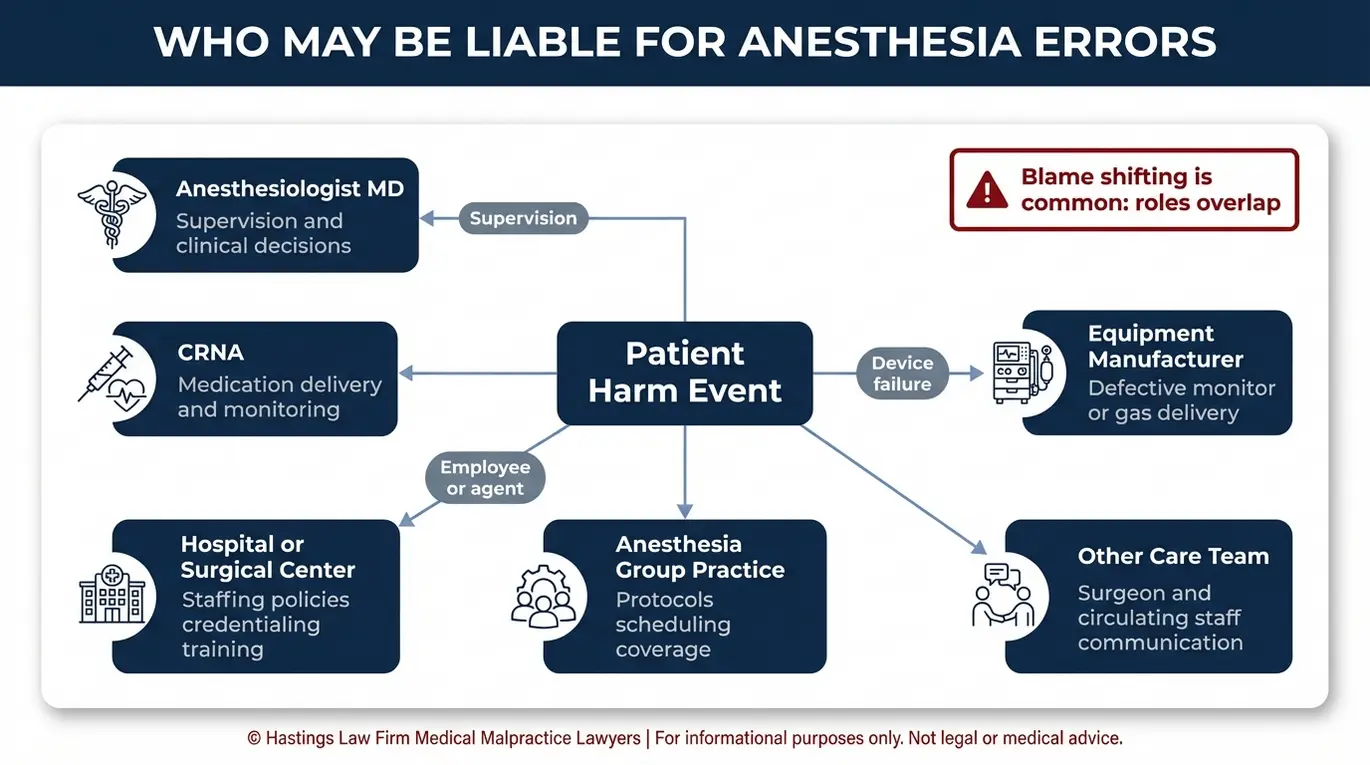
Liability often extends beyond the individual doctor to include Certified Registered Nurse Anesthetists (CRNAs), the supervising hospital, or equipment manufacturers. Malpractice claims often involve multiple parties who shared responsibility for patient care. Liability identifies who is legally responsible for the harm caused during a medical procedure. An anesthesia malpractice lawyer must identify every potentially responsible party to build a complete claim.
The anesthesia team may include both an anesthesiologist (a physician with specialized training) and a CRNA, a Certified Registered Nurse Anesthetist who administers anesthesia under varying levels of physician supervision. The standard of care expected of each provider differs based on their training.
Hospitals and surgical centers can also bear liability. Under vicarious liability, a facility can be held responsible for its staff’s actions. This means a hospital may be liable for institutional failures like inadequate staffing or poor credentialing.
Equipment manufacturers may be liable if a defective anesthesia machine, sometimes referred to as a gas delivery system or breathing circuit, malfunctions. Our team works with expert witnesses to counter the defenses raised by insurance companies and trace liability to its source.
Compensation and Damages in Texas Medical Malpractice Cases
Patients harmed by anesthesia negligence may recover economic damages for medical bills and lost wages, as well as non-economic damages for pain and suffering. Financial recovery helps patients manage the costs of ongoing care and lost income. Damages represent the financial and personal losses recognized under the law. Texas medical malpractice law governs both the types and limits of compensation available.
- Economic damages cover the measurable financial losses tied to the injury. These include past and future medical bills and expenses, rehabilitation costs, home care needs, and lost wages and earning capacity. For patients with permanent injuries, our firm works with financial-projection experts to calculate the full lifetime cost of care and lost income.
- Non-economic damages compensate for losses that do not carry a specific dollar figure, such as physical pain, mental anguish, disfigurement, and loss of enjoyment of life. These damages reflect the personal toll the injury has taken on the patient and their family.
- Texas damage caps are a significant factor in these cases. Under Texas law, non-economic damages are generally capped at $250,000 per claimant against all individual physicians or providers and $250,000 per health care institution, with a maximum of $500,000 across multiple institutions. The notice requirements and procedural rules for filing a medical malpractice claim are outlined in the Texas Civil Practice and Remedies Code Section 74.051. Austin anesthesia error attorneys at our firm help clients understand how these caps may affect the value of their specific claim.
Why Choose Hastings Law Firm for Your Claim?
We are a trial-ready firm led by a board-certified trial attorney, offering the resources of a large practice with the focused attention of a medical malpractice specialist. Our firm focuses exclusively on medical negligence cases to provide specialized representation. Every member of our team, from attorneys to nurse consultants, works exclusively on medical negligence cases. We do not divide our attention across unrelated practice areas.
Founder Tommy Hastings holds Board Certification in Personal Injury Trial Law from the Texas Board of Legal Specialization, a distinction achieved by fewer than 2% of Texas attorneys. He was inducted into the American Board of Trial Advocates (ABOTA) in 2025 and has been recognized as a Texas Super Lawyer every year since 2013. His experience includes multi-million-dollar results in cases involving monitoring failures, neurological injuries, and wrongful death.
Our team includes former defense attorneys who previously represented hospitals and insurance companies. That background gives us a clear view of how the other side prepares its case, and we use that knowledge to build stronger claims for our clients as anesthesia injury attorneys.
As your Austin anesthesia error lawyer, we prepare every case with expert witnesses as though it will go to a jury. That level of preparation is what compels insurance companies to take claims seriously during settlement discussions. And because we work on a contingency fee basis, you pay no attorney fees or costs unless we recover compensation on your behalf.
Contact the Austin Healthcare Malpractice Attorneys at Hastings Law Firm Today for Help
If you believe an anesthesia error caused harm to you or someone in your family, we are here to help you find answers. Legal timelines in Texas require prompt action to protect your rights to compensation. A malpractice claim is the legal process used to seek accountability for medical errors. Our team can review your medical records, consult with qualified anesthesia experts, and determine whether your case meets the legal threshold for a malpractice claim.
Time matters in these cases. Texas law limits how long you have to file a claim, and medical records and witness memory can become harder to obtain as time passes. Reaching out early allows us to preserve the evidence that may be critical to your case.
Your initial consultation is free and confidential. There is no fee unless we recover compensation for you. Contact Hastings Law Firm to take the first step toward understanding what happened and protecting your family’s future.
Frequently Asked Questions About Anesthesia Error in Austin


This content was researched and written by the Hastings Law Firm editorial team, which includes attorneys, medical professionals, and experienced researchers. Our writing is informed by internal knowledge and practical experience, and we cross-check critical details against authoritative sources cited throughout. Every piece undergoes human-led fact-checking and legal review. Because legal and medical information can change, if you spot an error, please contact us. Learn more about our content standards and review process on our editorial policy page.

Gabe Sassin has focused exclusively on medical malpractice law since 2007. After spending more than a decade as a malpractice defense attorney, he knows exactly how the other side works. He has seen firsthand how healthcare providers, insurers, corporate defendants, and their legal teams think, prepare, and build their defense against claims. That knowledge works for the people who need it most today, injured patients and their families. His unique experience shapes everything he writes, giving readers a look at how these cases actually work from someone who has handled them from both sides.
