


Texas ABO Incompatibility Birth Injury Lawyer
Written by: Hastings Law Firm | Reviewed by: Tommy Hastings | Updated: July 27, 2026
ABO and Rh blood type mismatches between a mother and baby are known risks that medical teams are expected to screen for and manage during pregnancy and after delivery. When routine testing, monitoring, or timely treatment is missed, a preventable blood incompatibility can escalate into severe anemia, organ damage, dangerous jaundice, and permanent brain injury or worse. Understanding how these injuries happen and where care can break down can help families make informed decisions after a frightening outcome. If you or a loved one were harmed or worse due to ABO incompatibility birth injury in Texas, contact Hastings Law Firm for a free, confidential case review.
Protecting Texas Families After Preventable Blood Incompatibility Injuries
What You Should Know About Maternal-Fetal Blood Type Mismatch Claims in Texas:
- Permanent brain damage can result when severe jaundice from untreated blood incompatibility is not treated promptly.
- Life threatening complications can develop when hemolytic disease progresses to severe anemia and organ damage without proper intervention.
- A malpractice claim can turn on whether providers detected, monitored, and treated a known blood mismatch in time.
- Preventable harm can occur when routine prenatal blood typing and antibody screening are missed or delayed.
- Options can narrow when Rh immune globulin is not given when indicated because sensitization can make later prevention ineffective.
- Serious injury risk can increase when a jaundiced newborn is discharged without proper follow up.
- Recovery can be limited for non economic damages in Texas medical malpractice cases even when economic losses remain available.
- Disputes often focus on whether timely treatment was ordered when bilirubin levels reached clinical thresholds.
- Medical records of prenatal testing, antibody screens, and newborn bilirubin monitoring can be central in evaluating what went wrong.

A Healthcare Focused Law Firm
When a newborn suffers harm from a condition that routine prenatal testing could have caught, parents are often left searching for answers. ABO and Rh blood type mismatches between mother and baby are well-known medical risks, and doctors have clear protocols to screen for and manage them. If those steps were missed or delayed, and your child was injured as a result, you may have a medical malpractice claim.
As a Texas ABO incompatibility birth injury lawyer, Hastings Law Firm focuses exclusively on medical malpractice. Our team includes in-house nurse consultants and former defense attorneys who know how to investigate these cases from the inside. Our founder, Tommy Hastings, is Board Certified in Personal Injury Trial Law, a distinction held by less than 2% of Texas attorneys.
If your family is dealing with a diagnosis you believe could have been prevented, we can review what happened and explain your options in a free, confidential case evaluation.
Understanding ABO and Rh Incompatibility Claims
ABO and Rh incompatibility claims arise when medical providers fail to identify or treat a mismatch between maternal and fetal blood types, leading to the destruction of the baby’s red blood cells, a condition known as hemolytic disease. These blood-related conditions can lead to serious complications if the medical team does not intervene.
The biological mismatch itself is not malpractice. The potential negligence lies in the failure to detect it, monitor it, or treat it in time.
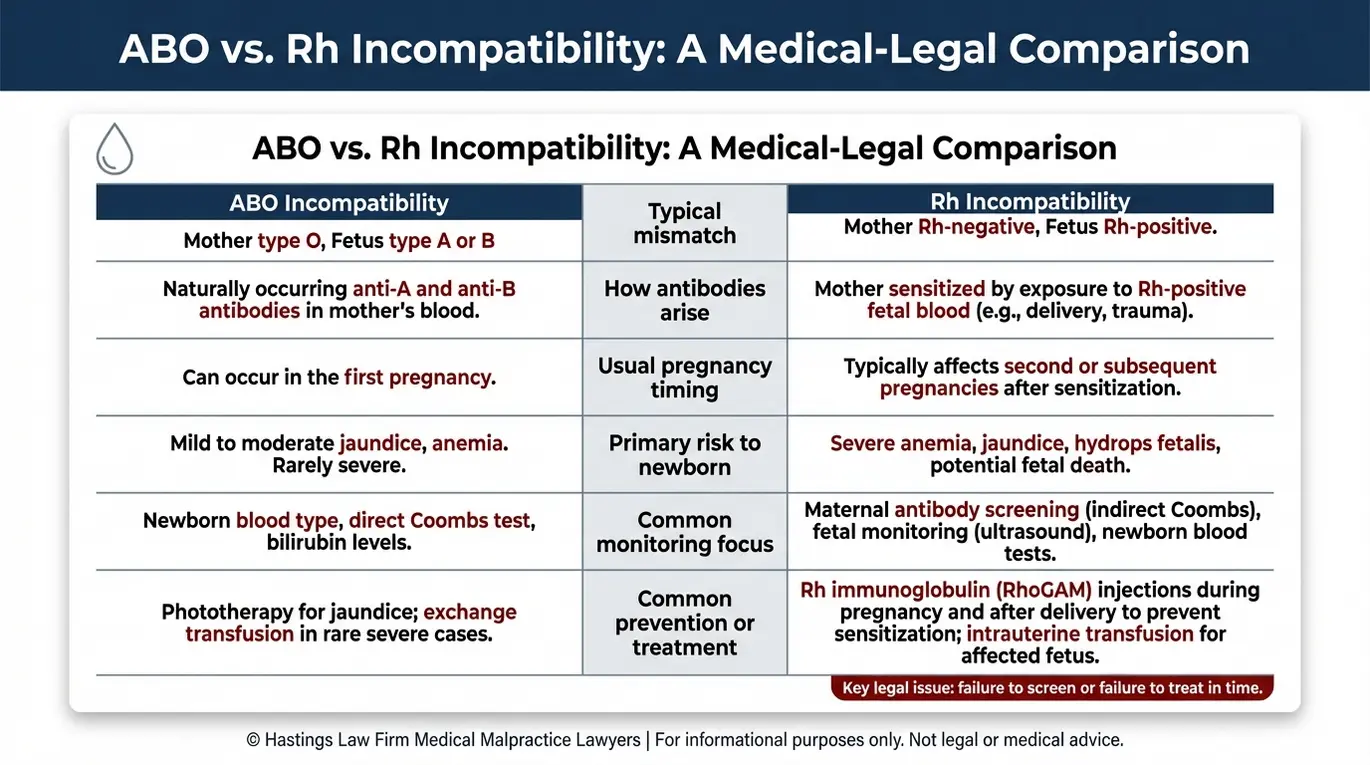
Here is how the two types differ. Rh incompatibility, a condition where a mother who is Rh-negative carries a baby who is Rh-positive, involves the Rh factor protein found on red blood cells. During pregnancy or delivery, the mother’s immune system can produce antibodies that attack the baby’s red blood cells. ABO incompatibility, a mismatch in the A, B, or O blood type groups, follows a similar mechanism but is generally milder in its first presentation.
Both conditions can trigger the same dangerous chain of events. The mother’s antibodies cross the placenta and begin destroying fetal red blood cells. According to the National Center for Biotechnology Information (NCBI), this process, called hemolytic disease of the fetus and newborn, can lead to severe anemia and organ damage if left unmanaged. This biological conflict can be dangerous because the foreign antibodies aggressively target the fetus, turning a natural biological difference into a medical emergency if not properly monitored.
| Feature | Rh Incompatibility | ABO Incompatibility |
|---|---|---|
| Cause | Rh-negative mother / Rh-positive baby | Mother is type O / Baby is type A or B |
| Antibody trigger | Prior pregnancy or blood exposure | Can occur in a first pregnancy |
| Typical severity | Can be severe, worsens with each pregnancy | Usually milder, but can escalate |
| Prevention | RhoGAM injection | No equivalent vaccine; monitoring is key |
The critical question in any legal claim is whether the care team followed established protocols to catch and respond to these mismatches before they caused harm.
The Standard of Care: Screening and Prevention Failures
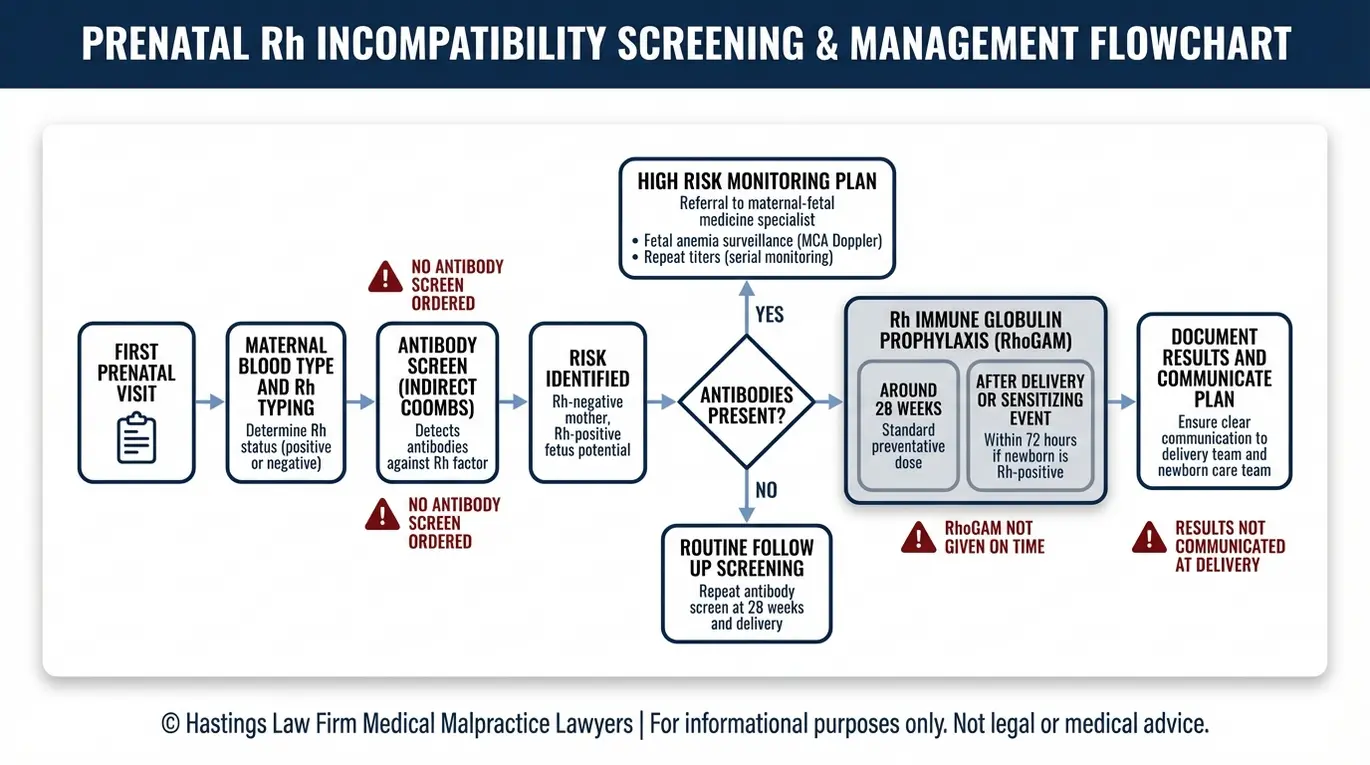
The standard of care, the accepted level of treatment a reasonably competent provider would deliver under similar circumstances, requires obstetricians to perform prenatal blood typing and antibody screening early in pregnancy. The standard of care establishes the legal baseline for how doctors should screen for these risks.
A Texas ABO incompatibility lawyer will typically investigate whether the following steps were taken:
- Blood type and Rh factor testing at the first prenatal visit
- Indirect Coombs test, an antibody screen that detects whether the mother’s blood has developed antibodies against the baby’s red blood cells
- Rh immune globulin (RhIg) administration, a prophylactic treatment also known as the RhoGAM shot, at approximately 28 weeks of gestation and again within 72 hours after delivery for Rh-negative mothers
- Repeat antibody screening later in pregnancy to monitor for new sensitization
- Ongoing fetal surveillance if antibodies are detected, including ultrasound monitoring for signs of fetal anemia
Missing any of these routine steps can constitute negligence. The Indirect Coombs test, for example, is a standard lab draw. If a provider skips it or fails to act on abnormal results, the window to prevent serious injury may close.
Proper prenatal blood typing and antibody screening relies on these checkpoints to manage risk. Without the RhoGAM shot, an Rh-negative mother is likely to become sensitized. Once sensitization occurs, RhIg is no longer effective, and the pregnancy becomes high-risk, leaving the baby vulnerable to antibody attacks that could have been completely avoided.
Medical Consequences of Untreated Incompatibility
Untreated blood mismatches can trigger a spectrum of medical consequences for the baby. When a blood mismatch goes undetected or untreated, the condition can progress from manageable to severe.
Hemolytic disease of the fetus and newborn (HDFN), the clinical term for the immune-driven destruction of a baby’s red blood cells, exists on a spectrum. In mild cases, the baby may show signs of anemia at birth. In more serious cases, the condition can advance to erythroblastosis fetalis, where the baby’s body struggles to replace destroyed red blood cells fast enough.
The most dangerous progression is hydrops fetalis, a life-threatening condition marked by severe fluid buildup in the baby’s tissues and organs. At that stage, the risk of permanent injury or death rises significantly. Each of these escalations represents a point where earlier intervention could have changed the outcome, and that is exactly what our medical and legal teams evaluate.
The Hastings Law Firm Difference
Results matter, but what truly sets us apart is how we achieve them. Every verdict, every settlement, and every Texas courtroom victory comes from one guiding promise: To treat each client’s fight for justice as if it were our own.
This balance of skill, experience, and empathy reflects our core philosophy that justice should not only compensate the injured, but also make healthcare safer nationwide.

Recognizing Severe Injuries: Jaundice and Kernicterus
If a blood mismatch is left untreated, it can cause severe hyperbilirubinemia, a dangerously high level of bilirubin in the blood, which may escalate to kernicterus, a form of permanent brain damage caused by bilirubin accumulating in the brain. Jaundice and kernicterus are specific neurological and physical risks associated with untreated blood incompatibility.
Many newborns develop mild jaundice in their first few days of life. That is common and typically harmless. But jaundice caused by hemolysis, the active destruction of red blood cells, is different. It can spike rapidly and requires prompt treatment.
The destruction of red blood cells also causes fetal anemia, a condition where oxygen delivery is compromised. If this anemia or the resulting jaundice is ignored, the baby’s health can deteriorate quickly.
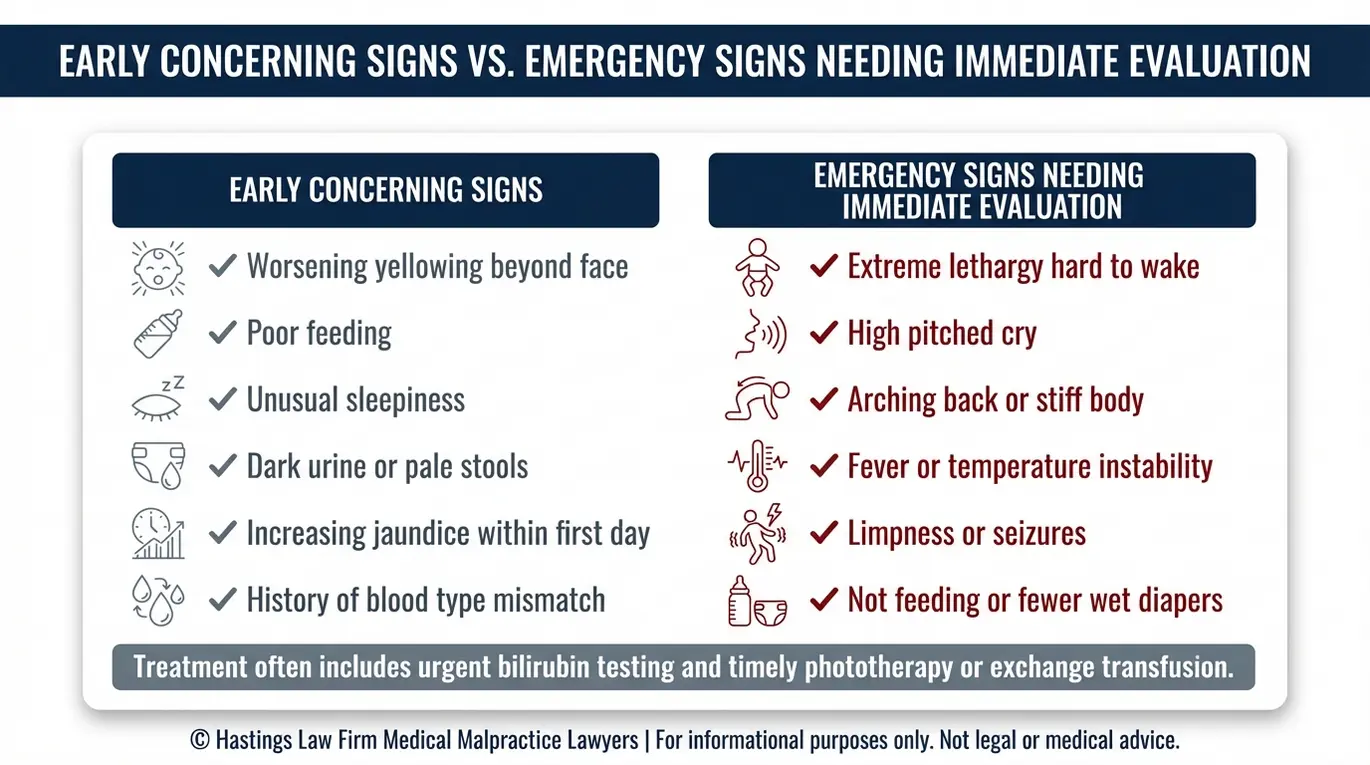
The progression often looks like this:
- Mild jaundice with yellowing of the skin and eyes shortly after birth
- Worsening lethargy, poor feeding, and high-pitched crying as bilirubin levels rise
- Kernicterus, which can cause cerebral palsy, hearing loss, and lifelong developmental delays
The American Academy of Pediatrics’ clinical practice guideline on hyperbilirubinemia management outlines clear thresholds for when phototherapy (light therapy) or exchange transfusion should be initiated. When providers fail to order timely treatment or discharge a jaundiced newborn without proper follow-up, the consequences can lead to permanent brain damage.
Contact the Texas Birth Injury Attorneys at Hastings Law Firm Today for Help
No family should carry the financial and emotional weight of an injury that proper screening could have prevented. Seeking legal advice is a step toward understanding your rights after a medical error.
If your child was harmed by an undetected or untreated blood incompatibility, Hastings Law Firm is here to help you find answers. Our team of attorneys, nurse consultants, and medical experts will review your records, identify where the standard of care may have been breached, and explain your legal options.
As a Texas ABO incompatibility birth injury lawyer, we handle every step of the process, and you pay no fees unless we recover compensation for your family. Contact us today for a free, confidential case evaluation.
Frequently Asked Questions About ABO Incompatibility Birth Injury in Texas


This content was researched and written by the Hastings Law Firm editorial team, which includes attorneys, medical professionals, and experienced researchers. Our writing is informed by internal knowledge and practical experience, and we cross-check critical details against authoritative sources cited throughout. Every piece undergoes human-led fact-checking and legal review. Because legal and medical information can change, if you spot an error, please contact us. Learn more about our content standards and review process on our editorial policy page.

Tommy Hastings, founder of Hastings Law Firm, is a board-certified personal injury trial lawyer dedicated exclusively to healthcare injury cases. Since 2001, he has represented injured patients and families in litigation against major hospital systems, pharmaceutical companies, and negligent healthcare providers nationwide. He has handled numerous high-profile cases that have drawn national media attention and resulted in multi-million dollar recoveries. He draws on that experience in his writing, helping readers understand how these cases work and what options may be available to them.
