


Texas Abnormal Birth Malpractice Lawyer
Written by: Hastings Law Firm | Reviewed by: Tommy Hastings | Updated: July 27, 2026
Traumatic delivery injuries can leave families facing overwhelming uncertainty about what happened during labor and whether the harm could have been prevented. Abnormal birth malpractice cases often focus on missed warning signs, delayed interventions, and decisions that fall below the accepted standard of care during complicated presentations. Disputes frequently center on whether an injury was caused by delivery related trauma or by genetic or congenital factors, and medical records like fetal monitoring and cord blood testing can be central to that determination. If you or a loved one were harmed or worse due to abnormal birth malpractice in Texas, contact Hastings Law Firm for a free, confidential case review.

Specialized Legal Representation for Traumatic Delivery Injuries
What You Should Know About Labor Complication Claims in Texas:
- Long term disability can result when warning signs in a complicated delivery are missed or necessary interventions are delayed.
- Options for recovery can turn on whether harm is tied to delivery related trauma rather than genetic or congenital causes.
- Liability can extend beyond the physician when nursing escalation failures or hospital staffing and protocol problems contribute to a poor outcome.
- Compensation can be shaped by limits on non economic damages in Texas even when medical and future care costs are extensive.
- Claims can be lost if Texas timing rules are missed, including special constraints that can apply to public hospitals.
- Disputes over oxygen deprivation can be influenced by objective testing such as cord blood gas results.
- Proof issues can depend on whether fetal position assessment was performed and documented before active labor.
- The severity of injury can be linked to instrument misuse or medication related overstimulation during labor.
- Key evidence can include fetal monitoring strips and operative delivery notes that show when intervention should have occurred.
- Damages projections can be heavily affected by estimates of future earning capacity for a child with permanent injury.

A Healthcare Focused Law Firm
When a baby is harmed during a complicated delivery, the emotional weight on a family can be overwhelming. You may be searching for answers about what went wrong, whether the injury was preventable, and what options exist to secure your child’s future. These are valid questions, and you deserve clear, honest guidance from someone who understands both the medicine and the law.
A Texas abnormal birth malpractice lawyer focuses specifically on cases where labor and delivery complications, such as breech presentations or shoulder dystocia, were mismanaged by medical providers. At Hastings Law Firm, our team of attorneys, in-house nurse consultants, and medical experts works exclusively on medical malpractice cases. We can review what happened during your child’s delivery and help you understand your legal options through a free, confidential case evaluation.
Defining Negligence in Abnormal Birth Presentations
Medical negligence during an abnormal birth occurs when a physician fails to identify fetal malpresentation, a term describing any position other than the standard head-down orientation, or delays necessary interventions like a Cesarean section, resulting in preventable injury. Under Texas law, this failure is measured against the standard of care, the level of treatment a reasonably competent obstetrician would have provided under similar circumstances.
Not every difficult delivery involves negligence. But when a doctor misses warning signs or pushes forward with a vaginal birth despite clear risks, the outcome can result in permanent injuries. Abnormal birth malpractice lawyers evaluate whether the medical team met its duty of care at every stage of labor and delivery.
An “abnormal birth” in the legal context refers to non-standard fetal presentations that carry elevated risk. These include breech birth (feet or buttocks first), face and brow presentations, transverse lie (sideways positioning), and shoulder dystocia, a dangerous complication where the baby’s shoulder becomes lodged behind the mother’s pubic bone after the head has delivered. Each of these conditions requires specific medical responses. A Texas abnormal birth attorney examines whether those responses were timely and appropriate based on the clinical evidence.
As defined under Health Care Liability Claims, a health care liability claim involves a failure to meet the accepted standard of care. The following checklist outlines common signs of negligence that a lawyer for abnormal birth malpractice will investigate:
- Failure to assess fetal position through ultrasound or physical examination before active labor
- Ignoring signs of arrested labor or failure to progress
- Forcing a vaginal delivery when a C-section was medically indicated
- Failing to diagnose shoulder dystocia risk factors, such as macrosomia (an unusually large baby) or gestational diabetes
- Delayed response to umbilical cord prolapse, where the cord drops into the birth canal ahead of the baby
- Lack of documentation showing ongoing monitoring of fetal position
Diagnosis Failures and Maternal Abdominal Palpation
One of the most basic diagnostic requirements in obstetric care is determining how the baby is positioned before delivery. Doctors are trained to perform Leopold’s maneuvers, a series of four hands-on maternal abdominal palpation steps used to assess the baby’s position, size, and presentation. These maneuvers can identify a breech, transverse, or face presentation, where the baby’s face enters the birth canal first rather than the top of the head.
When a provider skips or improperly performs this assessment, dangerous malpresentations can go undetected until delivery is already underway. At that point, options narrow dramatically. Our in-house medical staff reviews charting records to determine whether these standard diagnostic steps were taken and documented appropriately.
Distinguishing Preventable Labor Injuries from Genetic Defects
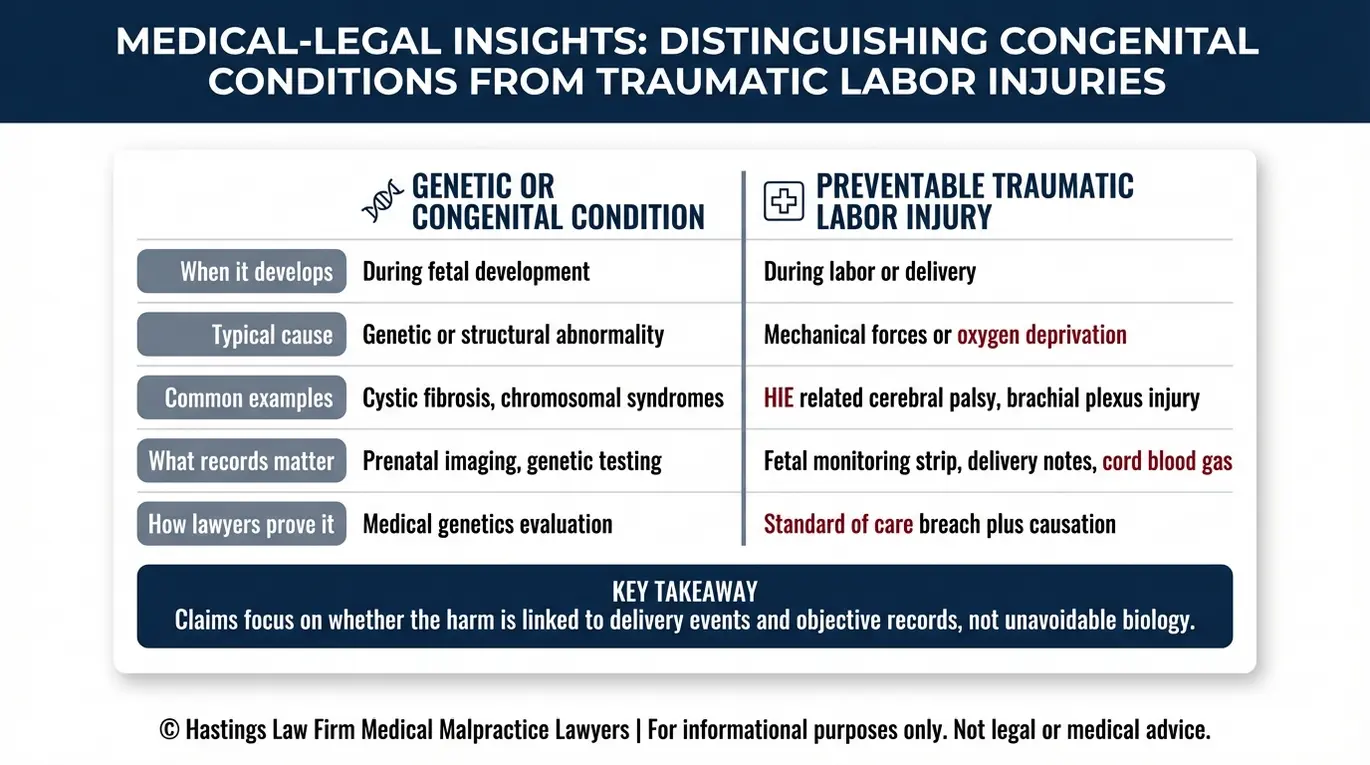
Birth injury claims hinge on proving the harm was caused by external mechanical forces or oxygen deprivation during delivery, rather than unavoidable genetic or congenital abnormalities that formed during fetal development. This distinction between injury and defect is often the primary focus in abnormal birth cases.
A common defense tactic is to attribute the child’s condition to “bad genes” or natural causes. A malpractice lawyer for birth trauma anticipates this argument and works with geneticists to coordinate genetic testing and with neonatologists to establish causation, the link between the provider’s actions and the injury.
One of the most important tools in this analysis is cord blood gas analysis, a test measuring the pH and base deficit levels in the umbilical artery blood at the time of birth. According to NCBI Bookshelf’s resource on Cord Blood Gas, abnormal cord blood gas values can objectively document whether a baby experienced oxygen deprivation during labor. Low pH combined with a high base deficit strongly suggests birth asphyxia. This condition can lead to hypoxic ischemic encephalopathy (HIE), which is brain damage caused by insufficient oxygen (hypoxia) and blood flow near the time of birth.
A Texas abnormal birth malpractice counsel uses this data, along with brain imaging and clinical timelines, to separate genetic conditions from delivery-related trauma. The following table illustrates the difference:
| Genetic/Congenital Conditions | Traumatic Labor Injuries |
|---|---|
| Cystic fibrosis | Cerebral palsy caused by HIE |
| Down syndrome | Erb’s palsy from excessive traction |
| Congenital heart defects | Brachial plexus injury during shoulder dystocia |
| Chromosomal abnormalities | Brain damage from prolonged fetal distress |
| Spina bifida | Skull fractures from improper forceps use |
An abnormal birth injury attorney focuses on proving that the child’s condition did not exist before labor began and resulted directly from how the delivery was managed.
The Hastings Law Firm Difference
Results matter, but what truly sets us apart is how we achieve them. Every verdict, every settlement, and every Texas courtroom victory comes from one guiding promise: To treat each client’s fight for justice as if it were our own.
This balance of skill, experience, and empathy reflects our core philosophy that justice should not only compensate the injured, but also make healthcare safer nationwide.

Common Medical Errors During Complicated Labors
The most frequent errors in abnormal labors involve the misuse of delivery instruments like forceps, failure to recognize fetal distress on monitoring strips, and delaying an emergency C-section during stalled labor. A Texas abnormal birth malpractice lawyer investigates each of these decision points to determine where the standard of care was breached.
Instrument Misuse
Forceps and vacuum extractors are medical tools used to assist delivery when complications arise. Applying a vacuum extractor to a baby positioned high in the birth canal, or using excessive rotational force with forceps, can cause skull fractures, intracranial hemorrhage, and brachial plexus injury. A lawyer for labor errors examines operative delivery notes to assess whether instrument use was appropriate given the baby’s station and presentation.
Pitocin Errors
Pitocin is a synthetic hormone used to induce or strengthen contractions during labor. When dosed improperly or increased too aggressively, it can cause uterine hyperstimulation, where contractions become so frequent and intense that the placenta cannot deliver adequate oxygen between them. This overstimulation can lead to fetal distress, birth asphyxia, and in severe cases, uterine rupture. Our medical team reviews medication administration records and nursing flow sheets to evaluate whether Pitocin protocols were followed.
Delayed C-Section
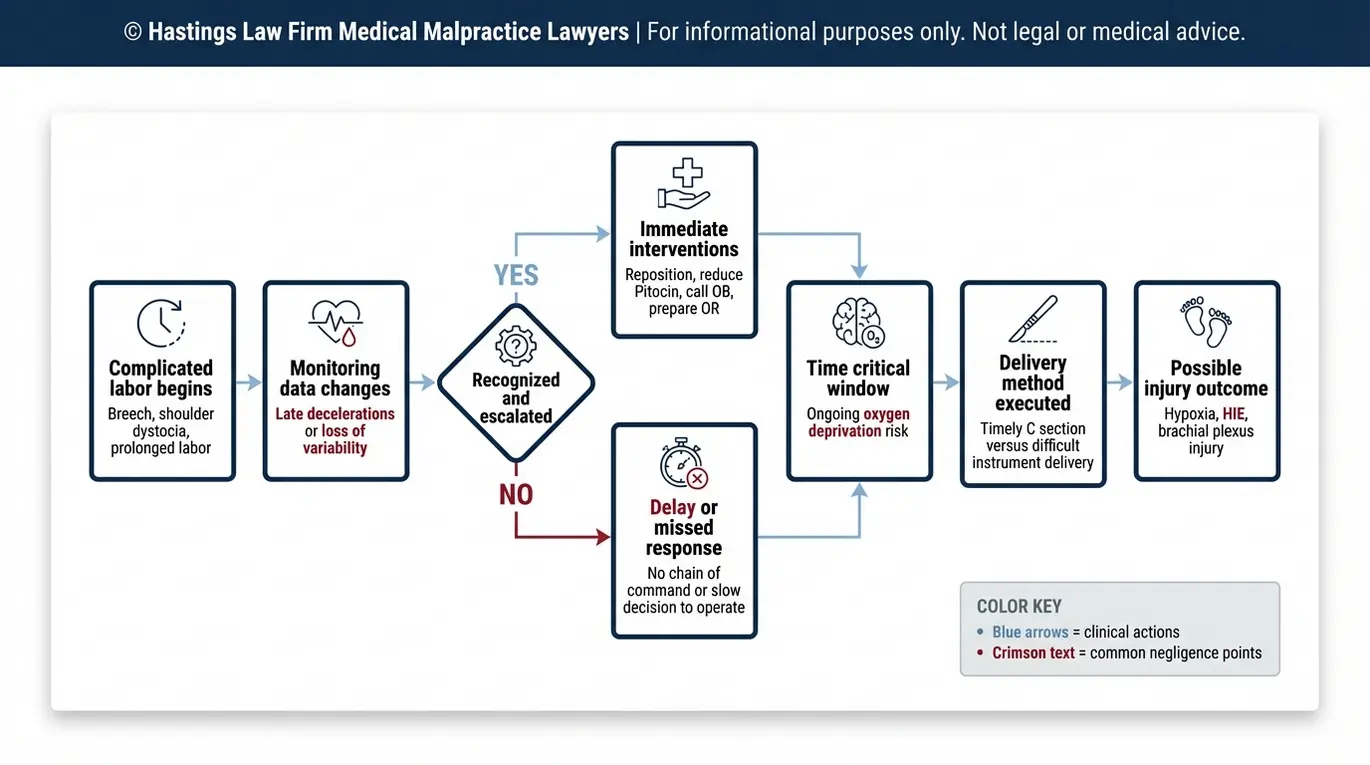
A Cesarean section (C-section) is a surgical procedure used to deliver a baby when vaginal birth poses risks. Delays in making that decision, whether due to unavailable surgical staff, failure to recognize worsening conditions, or hesitation to intervene, can result in prolonged oxygen deprivation and permanent brain injury. An abnormal birth negligence attorney looks closely at the timeline between the first indication of trouble and the moment an emergency Cesarean section was performed.
The following errors frequently appear in the cases our birth malpractice legal team reviews:
- Applying forceps or vacuum to a baby in an abnormal position
- Continuing Pitocin administration despite non-reassuring fetal heart rate patterns
- Failing to call for a C-section when labor has been arrested for an extended period
- Inadequate communication between nurses and the attending physician about changing conditions
- Failing to have an anesthesiologist and surgical team available for emergency delivery
Interpreting Fetal Monitoring Strips for Evidence
Fetal monitoring strips are electronic recordings that track the baby’s heart rate and the mother’s contractions. These continuous tracings record the baby’s heart rate patterns alongside contraction frequency, providing a real-time picture of how the baby tolerated labor.
Two patterns are especially significant. Late decelerations, drops in the fetal heart rate that occur after a contraction peaks, can indicate the placenta is not delivering enough oxygen. Loss of variability, meaning the normal small fluctuations in the baby’s heart rate flatten out, can suggest the baby’s central nervous system is being compromised. According to guidelines published by the Washington University School of Medicine on Intrapartum Fetal Heart Rate Monitoring, these patterns require prompt clinical evaluation and intervention.
Our team, which includes former hospital nurses, reads these strips minute by minute to identify the point at which the medical team should have acted but did not.
Establishing Liability for Mishandled Deliveries
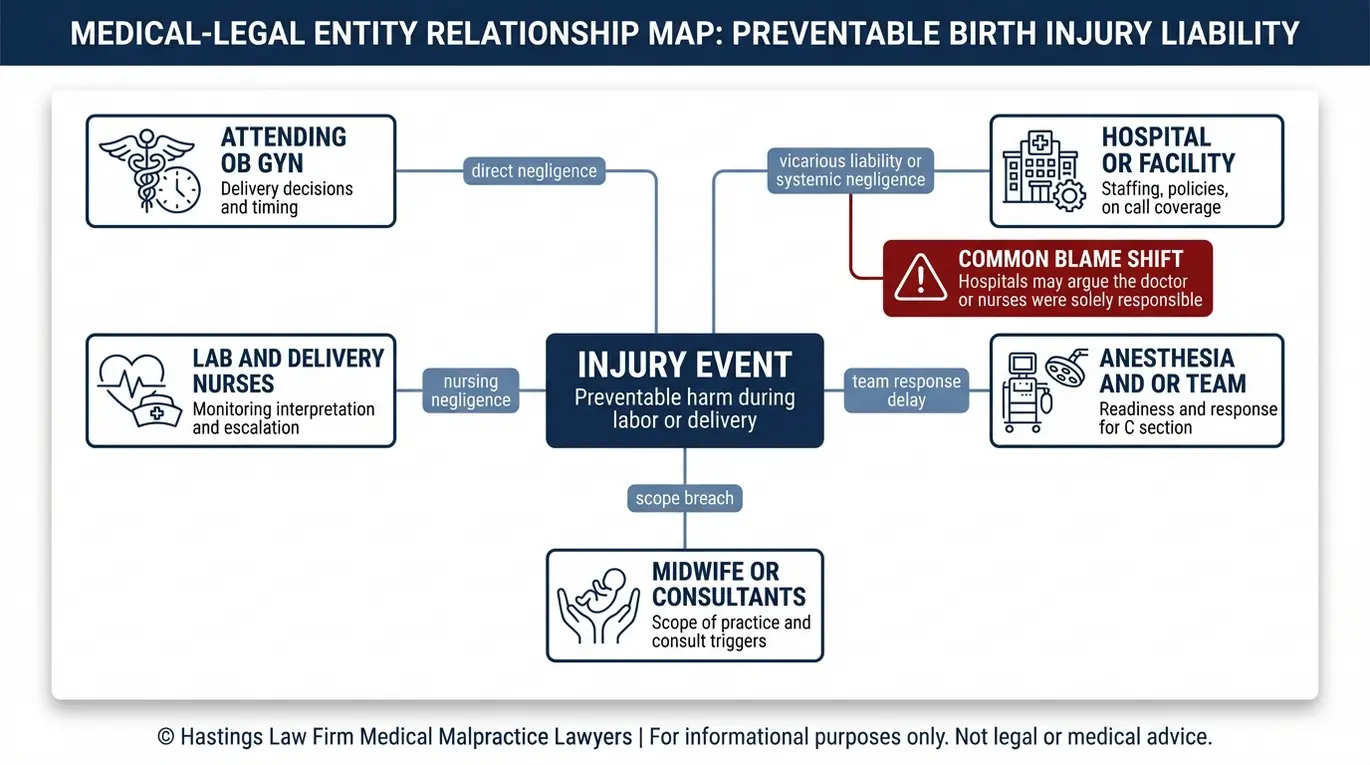
Liability for an abnormal birth injury may extend beyond the attending obstetrician to include nurses who failed to escalate concerns through the chain of command, the hospital for inadequate staffing or protocols, and even midwives if they exceeded their scope of practice. A Texas abnormal birth malpractice lawyer evaluates every party involved in the delivery to determine liability for birth errors.
The Physician
The attending obstetrician or the on-call physician carries primary responsibility for delivery decisions. This person oversees the labor process and decides when medical intervention is necessary. If the physician ignored warning signs or made decisions that fell below the standard of care, they can be held directly liable.
The Nurses
Labor and delivery nurses are responsible for continuous patient monitoring and interpreting fetal heart rate patterns. When a nurse fails to recognize a deteriorating strip pattern, delays notifying the doctor, or does not activate the chain of command after a physician dismisses their concerns, this constitutes nursing negligence. The nurse and their employer may share liability through vicarious liability. As outlined in Texas Pattern Jury Charges, jury instructions can address the specific duties owed by each member of the care team.
The Hospital
Hospitals provide the facility, staffing, and emergency protocols required for a safe delivery. They can be held liable for hospital negligence caused by systemic failures, such as when an on-call obstetrician was not available for an emergency C-section or staffing ratios were insufficient. When suing for abnormal birth malpractice, the hospital’s own policies and staffing records become critical evidence.
At Hastings Law Firm, our former defense attorneys know how hospitals and their insurers build their cases. That background allows us to anticipate defense strategies and identify liability across all responsible parties.
Calculating Compensation for Lifelong Disabilities
Compensation in abnormal birth cases covers both immediate medical bills and lifelong needs, including future surgeries, specialized therapy, around-the-clock care, and the child’s lost future earning capacity. Abnormal birth malpractice settlements must account for the full scope of a child’s needs over an entire lifetime.
A Texas birth injury compensation lawyer works with life care planners, medical specialists, and economists to build a complete picture of the damages, often formalized in a life care plan. These generally fall into three categories:
- Economic damages: Quantifiable financial losses, including NICU costs, ongoing medical treatment, prescription medications, durable medical equipment (wheelchairs, orthotics), home modifications for accessibility, and the cost of in-home nursing or attendant care. These damages are not subject to a cap under Texas law.
- Non-economic damages: Compensation for pain and suffering, loss of enjoyment of life, and the emotional toll on the child and family. Texas does cap non-economic damages in medical malpractice cases at $250,000 per physician and up to $500,000 total for institutional defendants.
- Punitive damages: In rare cases involving gross negligence or malice, Texas courts may award punitive damages. The threshold for these awards is high and requires clear evidence that the provider’s conduct went beyond ordinary negligence, demonstrating a conscious indifference to the safety of the mother and child.
Lost Earning Potential for Permanently Injured Children
One of the most challenging aspects of calculating damages for an injured infant is projecting lost wages and future earning capacity for a child who has no work history. Forensic economists address this by analyzing statistical data on education levels, regional income averages, and expected career trajectories based on the child’s family background and socioeconomic factors.
This projection can represent one of the the largest components of a birth injury settlement. Our team retains qualified forensic economists early in the case to ensure these calculations are thorough, well-supported, and ready to present at trial if needed.
Contact the Texas Birth Injury Attorneys at Hastings Law Firm Today for Help
If your child was harmed during a complicated delivery, you deserve to know what happened and why. At Hastings Law Firm, we exist to help families find the truth and hold negligent providers accountable so the same mistakes are not repeated.
As a Texas abnormal birth malpractice lawyer, Tommy Hastings is board-certified in Personal Injury Trial Law and leads our dedicated medical-legal team to investigate your child’s delivery records, identify where the standard of care was breached, and pursue the compensation your family needs to move forward.
We work on a contingency fee basis, which means you pay no attorney fees unless we recover on your behalf. If you believe your child’s birth injury was preventable, contact our abnormal birth malpractice law firm for a free, confidential case evaluation. Let us help you find the answers you deserve.
Frequently Asked Questions About Abnormal Birth Malpractice in Texas


This content was researched and written by the Hastings Law Firm editorial team, which includes attorneys, medical professionals, and experienced researchers. Our writing is informed by internal knowledge and practical experience, and we cross-check critical details against authoritative sources cited throughout. Every piece undergoes human-led fact-checking and legal review. Because legal and medical information can change, if you spot an error, please contact us. Learn more about our content standards and review process on our editorial policy page.

Tommy Hastings, founder of Hastings Law Firm, is a board-certified personal injury trial lawyer dedicated exclusively to healthcare injury cases. Since 2001, he has represented injured patients and families in litigation against major hospital systems, pharmaceutical companies, and negligent healthcare providers nationwide. He has handled numerous high-profile cases that have drawn national media attention and resulted in multi-million dollar recoveries. He draws on that experience in his writing, helping readers understand how these cases work and what options may be available to them.
