


Texas Ventilator Mismanagement Lawyer
Written by: Hastings Law Firm | Reviewed by: Gabe Sassin | Updated: July 27, 2026
Ventilator care demands precise settings, close monitoring, and careful transitions, and mistakes can quickly lead to severe respiratory harm, permanent brain injury, fatal outcomes, or lasting loss of quality of life. This topic also involves risks tied to defective devices, including recalled Philips ventilators linked to foam degradation and software failures. Accountability often turns on what the medical record shows about ventilator checks, infection control, and decisions to intubate, extubate, or wean support. If you or a loved one were harmed or worse due to ventilator mismanagement in Texas, contact Hastings Law Firm for a free, confidential case review.
Trusted Texas Medical Attorneys for Ventilator Negligence Claims
What You Should Know About Ventilator Malpractice Claims in Texas:
- Life altering injury or fatal outcomes can follow ventilator mismanagement when settings, monitoring, or weaning are not handled with appropriate care.
- Long term impairment can result from premature extubation because even brief oxygen deprivation can cause permanent hypoxic brain injury.
- Serious infection related harm can occur when ventilator associated pneumonia follows lapses in infection control practices.
- Responsibility can be disputed between clinical negligence and product defects when both hospital care and ventilator equipment may have contributed to the injury.
- Recovery can be limited for non economic losses in Texas medical malpractice claims because state law places caps on pain and suffering type damages.
- Available compensation can still cover measurable financial losses because economic damages for medical bills and lost wages are not capped under the framework described.
- Case classification can change available options because product liability claims against manufacturers may be treated differently than medical malpractice claims against hospitals.
- Liability can hinge on what the electronic medical record shows because missing ventilator checks or incomplete respiratory therapy notes may indicate gaps in care.
- Patient safety can depend on respiratory therapist escalation because the article describes an independent duty to advocate when an order appears unsafe.
- Defective device claims can depend on identifying the exact unit because serial and material numbers determine whether equipment falls within the scope of a recall.

A Healthcare Focused Law Firm
When a loved one is placed on a ventilator, you trust that the medical team will manage every setting, every check, and every transition with the care that life-support demands. If that trust was broken, and your family member suffered a preventable injury or death, you deserve honest answers about what went wrong.
Ventilator injury cases sit at the intersection of complex medicine and high-stakes litigation. They can involve clinical errors by hospital staff, defective equipment from manufacturers, or both. Determining what happened, and who is responsible, requires a legal team with deep medical knowledge and the resources to investigate thoroughly.
As a Texas ventilator mismanagement lawyer, Hastings Law Firm focuses exclusively on medical malpractice. Founded by board-certified trial attorney Tommy Hastings, our team includes in-house nurse consultants and former defense attorneys who understand how hospitals document respiratory care and how they defend against these claims. If you believe a ventilator-related error harmed someone you love, we can review what happened and explain your options in a free, confidential consultation.
Common Forms of Clinical Ventilator Mismanagement
Ventilator mismanagement occurs when medical providers deviate from the standard of care regarding intubation, settings, monitoring, or weaning, leading to injuries such as hypoxia, lung damage, or infection. Mechanical ventilation is a life-support treatment that helps patients breathe when they cannot do so on their own.
When negligence in respiratory care occurs, the patient pays the price. Our firm investigates whether providers followed the standard of care throughout the duration of treatment.
Improper Settings and Monitoring
Ventilator settings control how much air reaches the lungs and how much oxygen is delivered. Tidal volume, which is the amount of air pushed into the lungs with each breath, must be precisely managed. Errors in these settings or oxygen concentration can cause barotrauma, physical damage to the lungs from excessive pressure, or hypoxia from inadequate oxygen delivery.
Respiratory therapists and physicians share responsibility for verifying these settings. When monitoring lapses occur, dangerous conditions can go undetected for hours.
Ventilator-Associated Pneumonia (VAP)
Ventilator-associated pneumonia, a lung infection that develops 48 hours or more after intubation, is one of the most common hospital-acquired complications. According to the CDC’s surveillance guidelines for VAP and non-ventilator-associated hospital-acquired pneumonia, these infections carry significant morbidity.
While VAP is a recognized risk, it is often preventable through strict infection-control protocols: regular oral hygiene, head-of-bed elevation, sedation management, and proper hand hygiene. When a hospital fails to follow these protocols, the resulting infection may reflect negligence rather than an unavoidable complication.
Negligent Intubation and Extubation
The physical act of placing or removing an endotracheal tube carries risks. Improper tube placement can damage the trachea, vocal cords, or esophagus. If the tube is positioned incorrectly and not caught quickly, the patient may receive no effective ventilation.
Equally dangerous is premature extubation, which involves removing the breathing tube before the patient can sustain independent respiration. This is a failure during ventilator weaning, the gradual process of reducing ventilator support as the patient regains the ability to breathe on their own.
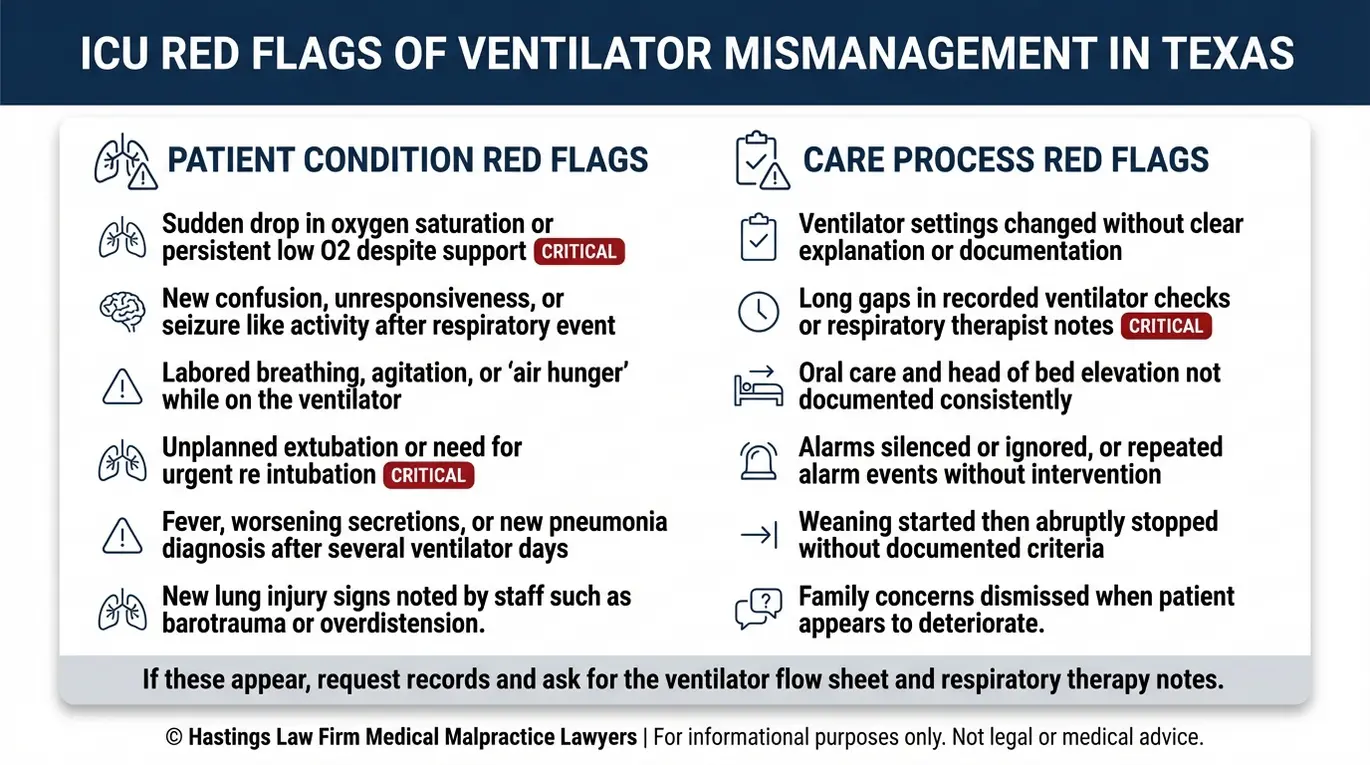
Red flags that may indicate ventilator mismanagement include:
- Sudden, unexplained decline in oxygen saturation after a ventilator setting change
- Development of pneumonia within days of intubation, particularly if infection-control documentation is incomplete
- Evidence of repeated or traumatic intubation attempts
- Removal of the breathing tube followed by rapid respiratory failure requiring re-intubation
- Gaps in ventilator check documentation or respiratory therapy notes
- Alarms that were silenced or went unaddressed for extended periods
Premature Extubation and Hypoxic Brain Injury
The weaning phase of mechanical ventilation is among the most critical periods of a patient’s ICU stay. Premature extubation, removing ventilator support before the patient demonstrates consistent ability to breathe independently, can lead to rapid oxygen deprivation.
The brain is particularly vulnerable during this window. Even a few minutes without adequate oxygen can cause a hypoxic brain injury, which is permanent damage to brain tissue resulting from insufficient oxygen supply.
These injuries can range from cognitive deficits and memory loss to a persistent vegetative state. In cases we evaluate, respiratory therapy records and weaning trial data are essential to determining whether the clinical team followed accepted protocols or moved too quickly. When documentation shows that standard readiness criteria were not met before extubation, it can be strong evidence of a breach in the standard of care.
Defective Medical Devices and The Philips Recall
Beyond clinical error, patient injuries may stem from product defects, specifically the degradation of PE-PUR sound abatement foam in Philips ventilators, which releases toxic particles and gases into the patient’s airway. Sound abatement foam is used in these devices to reduce noise during operation. These product defects can lead to serious respiratory complications.
The PE-PUR Foam Issue
In June 2021, Philips Respironics issued a voluntary recall. The U.S. Food and Drug Administration classified as a Class I recall, the most serious category, indicating a reasonable probability that use of the device could cause serious injury or death. This Class I recall status highlights the life-threatening nature of the foam issues.
The PE-PUR foam was found to degrade under certain conditions, including heat and humidity. This degradation leads to off-gassing, the release of black particulate matter and chemical compounds directly into the device’s air pathway.
A separate recall action addressed programming errors in certain DreamStation devices. The FDA’s notice on the Philips Respironics DreamStation recall confirmed that software failures could result in failed therapy modes, leaving patients without the respiratory support they needed.
Health Risks
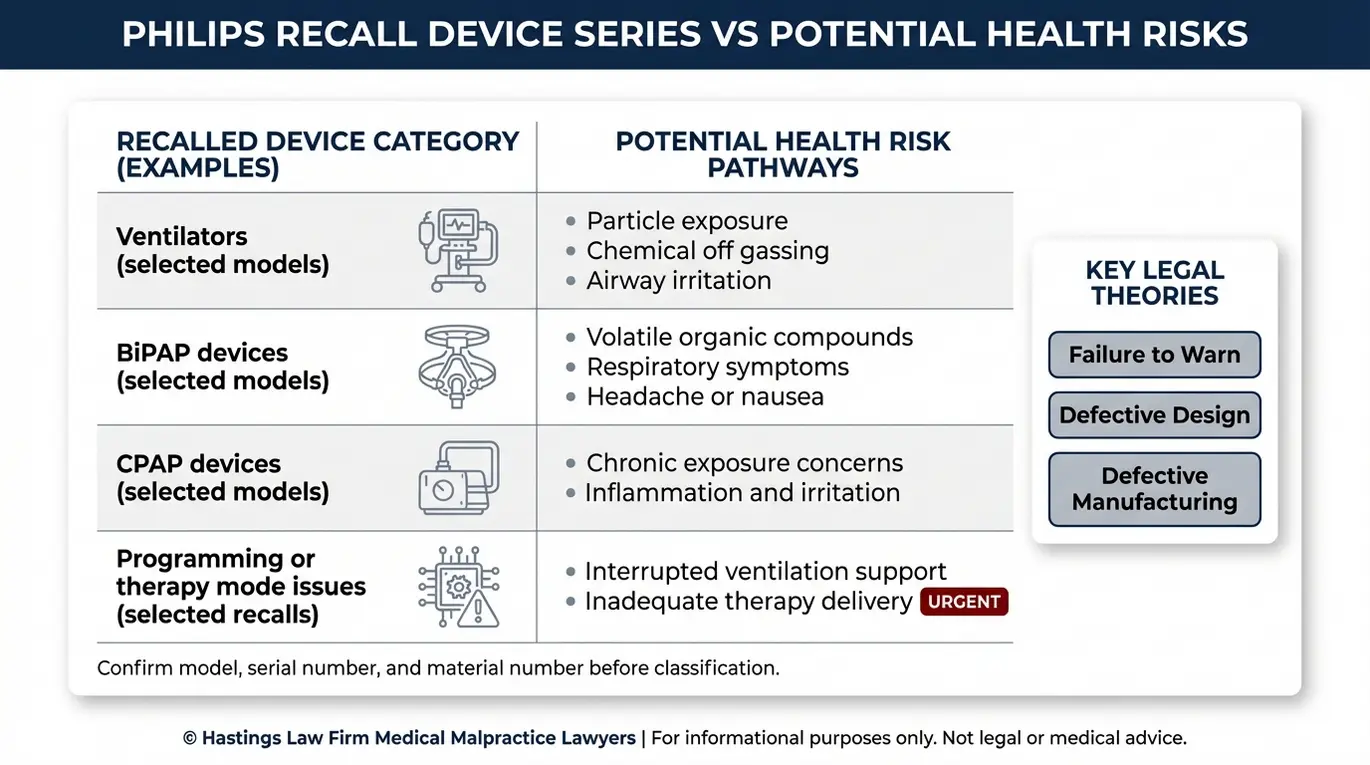
Patients who used affected devices may have inhaled or ingested degraded foam particles over months or years. Reported and potential health risks include respiratory irritation, inflammatory responses, headaches, organ toxicity, and potential carcinogenic effects.
| Recalled Device Series | Potential Health Risks |
|---|---|
| Philips DreamStation (CPAP/BiPAP) | Foam particle inhalation, respiratory irritation, potential cancer risk |
| Philips Trilogy (Life-Support Ventilator) | Toxic off-gassing, organ damage, airway inflammation |
| Philips SystemOne (CPAP/BiPAP) | Particulate ingestion, headaches, potential carcinogenic exposure |
Failure to Warn
Product liability claims related to the Philips recall often center on a failure to warn theory: allegations that the manufacturer had knowledge or reason to know of the foam degradation risk but did not adequately alert hospitals, providers, or patients. This legal theory asserts that Philips had a duty to disclose the potential for foam degradation as soon as the risk was identified, allowing patients to seek alternative therapies before injury occurred. A lawyer for defective medical device claims can help determine whether your case involves a defective design, a manufacturing defect, or a failure to provide adequate warnings.
The Hastings Law Firm Difference
Results matter, but what truly sets us apart is how we achieve them. Every verdict, every settlement, and every Texas courtroom victory comes from one guiding promise: To treat each client’s fight for justice as if it were our own.
This balance of skill, experience, and empathy reflects our core philosophy that justice should not only compensate the injured, but also make healthcare safer nationwide.

Proving Liability in Ventilator Injury Cases
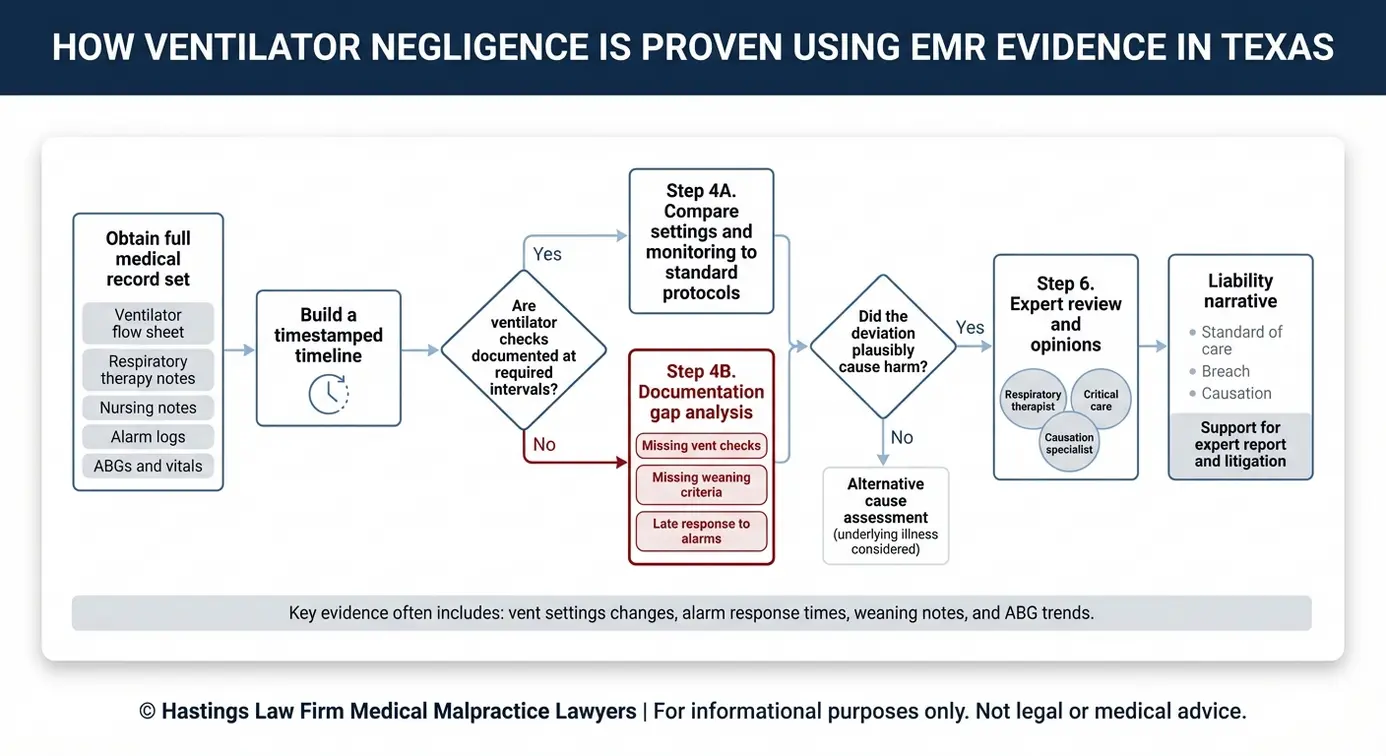
Establishing liability requires a detailed forensic analysis of Electronic Medical Records (EMR) to prove causation, often necessitating testimony from respiratory experts to highlight gaps in documentation or failure to advocate for the patient. We use Electronic Medical Records, the digital version of a patient’s hospital chart, to build a timeline of care.
The Role of Respiratory Therapists
Respiratory therapists (RTs), licensed professionals responsible for managing ventilator equipment, performing assessments, and adjusting settings based on patient response, have an independent professional duty. Under the Texas Administrative Code, Rule 186.2 and Rule 186.14, RTs are not simply required to follow physician orders without question. If an RT recognizes that a ventilator order is unsafe, they have a responsibility to advocate for the patient and escalate concerns.
Documentation Gaps and Medical Negligence
Ventilator patients require regular documented assessments. We scrutinize the EMR for proper settings, such as tidal volume, the amount of air moved in a breath, to ensure they matched the physician’s orders. When the EMR shows missing entries, inconsistent timestamps, or incomplete respiratory therapy notes, those gaps can be powerful evidence of medical negligence.
In our experience, missing data about ventilator checks often reflects a failure in care delivery, not merely a clerical oversight. We build a minute-by-minute timeline from the medical record, comparing what was documented against what the standard of care required.
This forensic work is essential for the required expert report, a formal document detailing the standard of care deviations. This process reveals where critical interventions were delayed, omitted, or performed incorrectly.
The Advantage of Insider Knowledge
Proving ventilator negligence also means anticipating the defense. Hospitals frequently argue that a patient’s decline was inevitable given their underlying condition, a strategy designed to shift focus away from the care that was or was not provided. Our legal team uses our understanding of defense tactics to counter these arguments effectively.
Our team includes former defense attorneys who understand these tactics firsthand. That background allows us to prepare cases that address these arguments before they gain traction, strengthening the path to accountability.
Technical Identification of Recalled Units
When a ventilator injury may involve a defective device, identifying the specific unit is essential. Serial numbers and material numbers (unique identifiers assigned to individual devices and their component parts) determine whether the equipment falls within the scope of an FDA Class I recall, a designation reserved for devices that pose the highest risk of serious harm or death.
This identification is critical because it determines how the case is classified. A product liability claim against a manufacturer like Philips operates under different legal standards than a medical malpractice claim against a hospital. Your attorney can help secure and preserve the device before it is discarded or returned, protecting the serial numbers needed to pursue the correct claim.
Damages Recoverable for Respiratory Injuries
Victims of ventilator mismanagement in Texas can recover economic damages for medical bills and lost wages, as well as non-economic damages for pain, suffering, and physical impairment, subject to state caps. In legal terms, economic damages refer to the financial compensation paid to a person for their measurable losses.
Economic Damages
These cover the measurable financial losses caused by the injury:
- Past medical expenses and future care costs, including corrective surgeries and extended ICU stays
- Lost wages and diminished earning capacity if the patient can no longer work
- Cost of home health care, adaptive equipment, and ongoing respiratory therapy
Non-Economic Damages
Compensation for ventilator injuries also accounts for the human toll, the pain of oxygen deprivation, the fear and trauma of respiratory failure, and the lasting loss of quality of life. Texas law does place caps on non-economic damages in medical malpractice cases, but economic damages remain uncapped.
Wrongful Death
When ventilator mismanagement results in a patient’s death, surviving family members may pursue a wrongful death claim. Recoverable damages can include loss of companionship and consortium, mental anguish, funeral and burial expenses, and the financial support the deceased would have provided.
We understand that no amount of money can replace a family member, but securing these damages can provide financial stability during a difficult transition. Each family’s situation is different, and we work to document the full scope of the loss.
Contact the Texas Healthcare Malpractice Attorneys at Hastings Law Firm Today for Help
Whether the injury was caused by a clinical error during mechanical ventilation or a defective Philips device, you need a legal team that understands both the medicine and the law. As Texas ventilator mismanagement attorneys, Hastings Law Firm brings together in-house medical professionals, a national network of respiratory and critical care experts, and former defense counsel who know how hospitals and manufacturers build their cases.
We handle these claims on a contingency fee basis, meaning you pay no attorney fees or costs unless we secure a recovery for you. If you or a loved one suffered harm related to ventilator care, contact us for a free, confidential case evaluation. Let us help you find the answers you deserve.
Frequently Asked Questions About Ventilator Mismanagement in Texas


This content was researched and written by the Hastings Law Firm editorial team, which includes attorneys, medical professionals, and experienced researchers. Our writing is informed by internal knowledge and practical experience, and we cross-check critical details against authoritative sources cited throughout. Every piece undergoes human-led fact-checking and legal review. Because legal and medical information can change, if you spot an error, please contact us. Learn more about our content standards and review process on our editorial policy page.

Gabe Sassin has focused exclusively on medical malpractice law since 2007. After spending more than a decade as a malpractice defense attorney, he knows exactly how the other side works. He has seen firsthand how healthcare providers, insurers, corporate defendants, and their legal teams think, prepare, and build their defense against claims. That knowledge works for the people who need it most today, injured patients and their families. His unique experience shapes everything he writes, giving readers a look at how these cases actually work from someone who has handled them from both sides.
