


Texas VBAC Complications Lawyer
Written by: Hastings Law Firm | Reviewed by: Tommy Hastings | Updated: July 27, 2026
VBAC complications can turn a planned vaginal delivery after a prior C section into a fast moving emergency for both mother and baby. The most serious risk discussed is uterine rupture, which can cut off oxygen to the baby and cause severe bleeding for the mother, leading to permanent injury, hysterectomy, or fatal outcomes. Concerns often focus on screening for VBAC candidacy, safe use of induction medications, informed consent, and timely response to fetal distress. If you or a loved one were harmed or worse due to VBAC complications in Texas, contact Hastings Law Firm for a free, confidential case review.
Compassionate Texas Medical Attorneys for VBAC Injury Claims
What You Should Know About Trial of Labor After Cesarean Malpractice Claims in Texas:
- Outcomes can be catastrophic when uterine rupture occurs during TOLAC because oxygen supply to the baby can be interrupted and the mother can suffer life threatening hemorrhage.
- Permanent brain injury or fetal death can follow when fetal distress is not recognized promptly or an emergency C section is delayed.
- Safety can hinge on whether the prior cesarean incision type was identified and accounted for because a classical vertical incision carries a significantly higher rupture risk.
- Preventable harm can follow when VBAC candidacy screening is incomplete because operative reports and prior uterine surgery history may reveal contraindications.
- Risk can increase when labor is induced or augmented inappropriately during TOLAC because certain medications and dosing practices can intensify contractions and stress the uterine scar.
- Options can be affected when informed consent is not documented because the mother may not have been told the specific risks of VBAC compared with a scheduled repeat C section.
- Recovery can be limited in Texas for non economic damages in medical malpractice cases because statutory caps apply while economic damages are not capped.
- A claim can be lost even with serious injury when required expert support is not provided on time because missing the deadline can lead to dismissal with prejudice.

A Healthcare Focused Law Firm
If you or someone you love suffered a serious injury during a VBAC, a vaginal birth after cesarean, you are likely searching for answers about what went wrong and whether it could have been prevented. That uncertainty can feel overwhelming, especially when you are also coping with physical recovery or caring for an injured child. You deserve clarity about what happened and honest guidance about what comes next.
At Hastings Law Firm, founded by board-certified trial attorney Tommy Hastings, we focus exclusively on medical malpractice, including birth injury cases involving VBAC complications. As a Texas VBAC Complications Lawyer team, we have the medical and legal resources to evaluate your situation thoroughly. If you believe negligence played a role, we welcome the chance to review your records and explain your options at no cost and with no obligation.
Understanding Serious VBAC Complications and Uterine Rupture
A uterine rupture is a catastrophic medical emergency in which the scar from a previous cesarean section tears open during labor. When this happens, the fetus can be partially or fully expelled into the mother’s abdominal cavity, severing the oxygen supply through the placenta. At the same time, the mother faces life-threatening hemorrhage.
To understand this, it helps to know the terminology. A VBAC is a successful vaginal delivery after a prior C-section, while the attempt itself is called a Trial of Labor After Cesarean (TOLAC). Not every TOLAC is successful, and the most dangerous complication is uterine rupture.
ACOG Practice Bulletin No. 205: Vaginal Birth After Cesarean Delivery outlines the clinical guidance for managing TOLAC patients. When guidelines are ignored, consequences include hypovolemic shock (severe blood loss), emergency hysterectomy (removal of the uterus), and oxygen deprivation causing permanent brain injury.
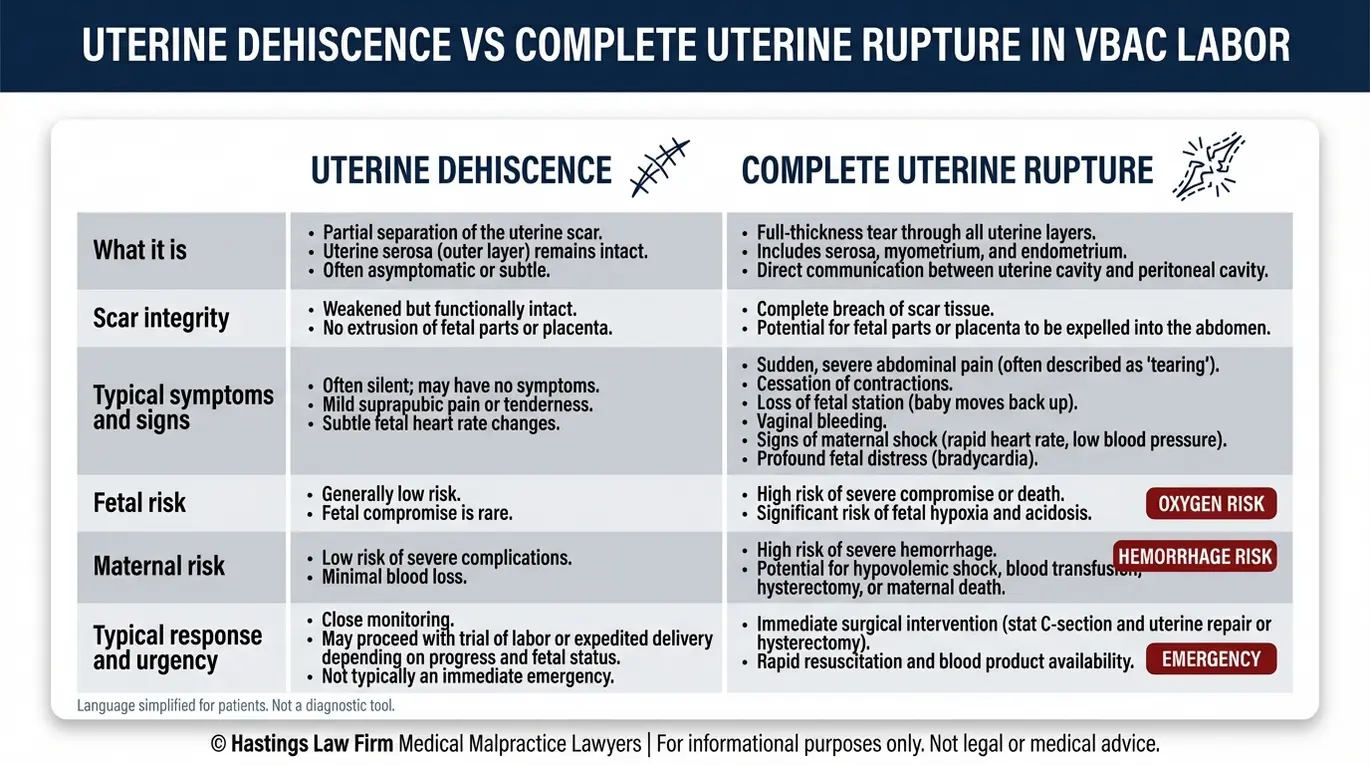
Distinguishing between these two conditions helps clarify the clinical risks:
| Uterine Dehiscence | Complete Uterine Rupture | |
|---|---|---|
| Definition | A partial thinning of the uterine scar; the outer layer remains intact | A full-thickness tear through the uterine wall, often extending into the abdomen |
| Symptoms | Often clinically silent; found incidentally during repeat C-section | Sudden, severe abdominal pain; abnormal fetal heart rate; maternal shock |
| Urgency | Typically not an immediate surgical emergency | Requires immediate emergency C-section to save mother and baby |
| Potential Outcomes | Generally favorable if managed | Can result in fetal death, HIE, hysterectomy, or maternal death |
A Texas VBAC injury lawyer will examine medical records to determine whether early signs of scar weakness were missed before a complete rupture occurred.
Impact of Incision Type on VBAC Risk
The prior cesarean incision type is critical for safety. A low transverse incision, a horizontal cut across the lower uterus, carries a lower rupture risk and is standard for TOLAC candidacy.
A classical incision, a vertical scar through the upper, muscular part of the uterus, carries a significantly higher rupture risk. In most settings, a prior classical incision is a contraindication (a medical reason to avoid the procedure) for VBAC. An attorney for uterine rupture cases will review operative reports to confirm whether the provider accounted for incision type before allowing labor.
Medical Negligence and Contraindications for VBAC
Medical negligence in VBAC cases often involves a provider allowing a high-risk patient to attempt vaginal birth despite clear contraindications, or mismanagement during labor induction that significantly raises the chance of uterine rupture. When standard screening protocols and safety guidelines are ignored, preventable injuries can follow.
Failure to screen properly. Before any TOLAC, the standard of care generally requires a thorough review of the mother’s obstetric history. This includes the number and type of prior cesarean deliveries, the location of the uterine incision, and any history of uterine surgery. Physicians must obtain operative reports from previous surgeries to visually confirm the scar type rather than relying solely on patient memory.
They must also assess the elapsed time since the last cesarean, as a short interpregnancy interval increases rupture probability. A systematic review and meta-analysis published in PubMed underscores the importance of careful patient selection in managing risk.
Dangerous induction practices. Inducing labor in a TOLAC patient with certain medications can create contractions powerful enough to rupture the uterine scar. Pitocin, a synthetic form of oxytocin used to stimulate contractions, must be administered with extreme caution and strict dosage monitoring in these patients. Misoprostol, a cervical ripening agent, is widely considered contraindicated for VBAC candidates because of its association with uterine hyperstimulation and rupture.
Informed consent failures. Mothers have the right to understand the specific risks of attempting a VBAC compared to a scheduled repeat C-section. If a provider fails to clearly explain those risks, the patient cannot make a fully informed decision about her own care.
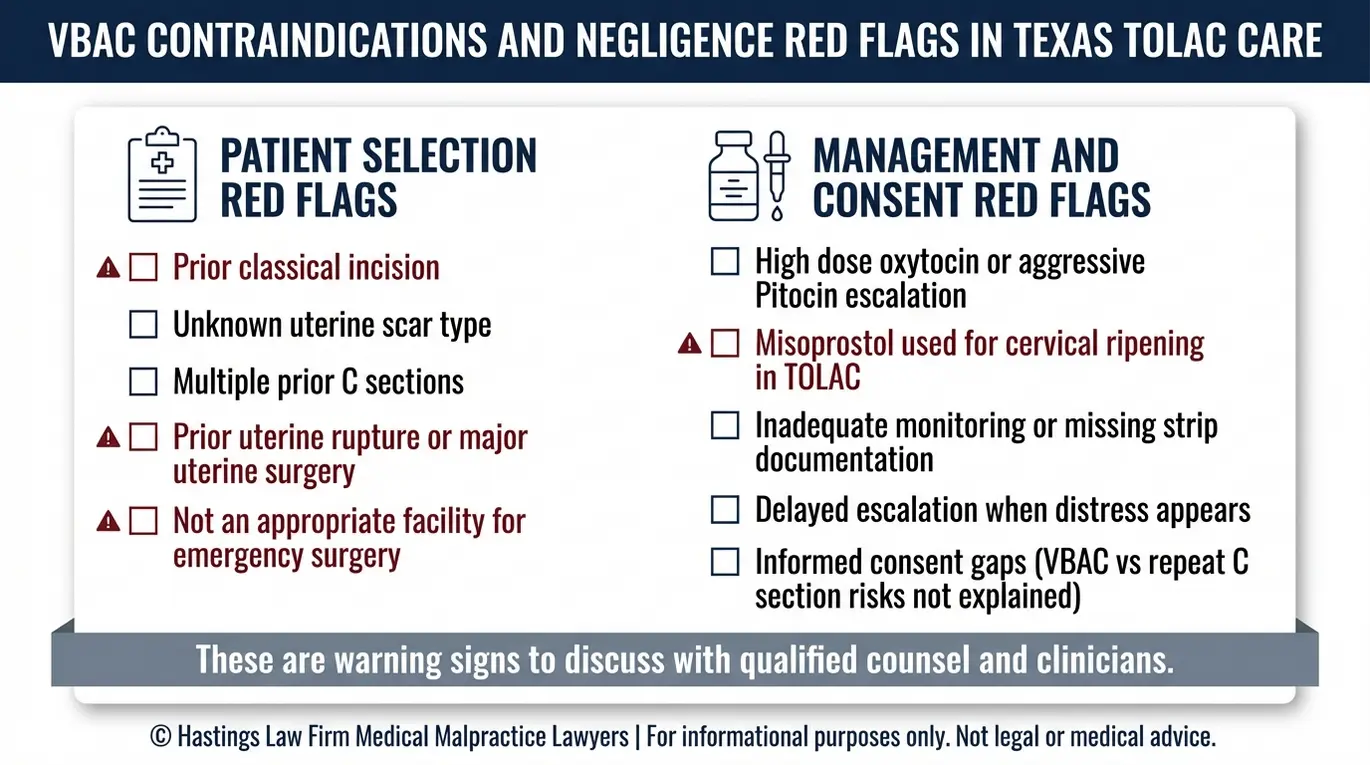
A Texas VBAC Complications Lawyer and VBAC malpractice attorney will review the medical records for red flags such as:
- Prior classical (vertical) uterine incision
- Two or more previous cesarean deliveries
- Unknown uterine scar type from a prior surgery
- Use of misoprostol for cervical ripening in a TOLAC patient
- Aggressive Pitocin augmentation without appropriate fetal monitoring
- No documented informed consent discussion comparing VBAC risks to repeat C-section
- Attempting TOLAC at a facility without the ability to perform an immediate emergency C-section
If any of these factors are present, it may indicate a breach in the standard of care that a lawyer for failed VBAC outcomes would investigate further.
The Hastings Law Firm Difference
Results matter, but what truly sets us apart is how we achieve them. Every verdict, every settlement, and every Texas courtroom victory comes from one guiding promise: To treat each client’s fight for justice as if it were our own.
This balance of skill, experience, and empathy reflects our core philosophy that justice should not only compensate the injured, but also make healthcare safer nationwide.

Recognizing Fetal Distress and Failure to Timely Perform C-Section
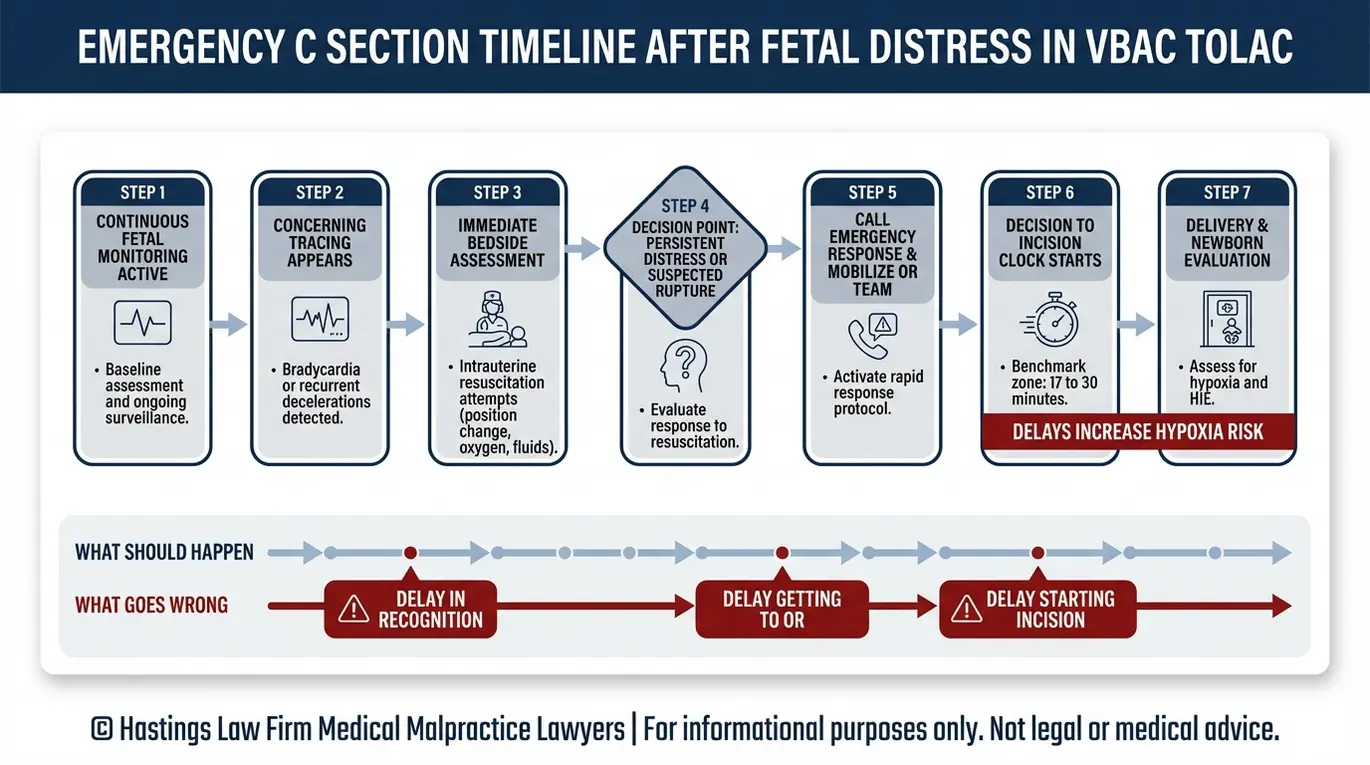
When uterine rupture occurs during labor, fetal distress becomes immediately apparent. The fetal heart rate typically drops rapidly, a condition called fetal bradycardia, which is an abnormally slow heart rate that signals the baby is losing oxygen. A delay in recognizing these signs or in performing an emergency C-section can result in permanent brain damage or death.
Several warning signs may appear on the fetal monitor and in the clinical picture before or during a rupture:
- Sudden, prolonged fetal bradycardia or severe variable decelerations
- Loss of fetal station, where the baby appears to “float” back up in the birth canal
- Sudden, intense abdominal pain in the mother, sometimes described as a “tearing” sensation
- Vaginal bleeding or signs of maternal shock (rapid heart rate, falling blood pressure)
The medical team’s response to these signs must be immediate. Every minute of oxygen deprivation increases the risk of hypoxia (oxygen deficiency), which can lead to hypoxic-ischemic encephalopathy (HIE), a type of brain injury caused by reduced blood flow and oxygen to the brain. HIE is a leading cause of cerebral palsy and other permanent neurological disabilities in newborns.
A Texas VBAC Complications Lawyer and uterine rupture lawyer in Texas will reconstruct the clinical timeline to determine whether the response was adequate or whether delays contributed to the injury.
Emergency Intervention Timing Benchmarks
In obstetric emergencies, the decision-to-incision interval, the time between the decision to perform an emergency C-section and the first surgical cut, is a standard benchmark for evaluating the medical response. This timeframe, often called the emergency delivery window, is critical for patient safety. Research published in a prospective audit of decision-to-delivery intervals in emergency cesarean sections (PubMed Central) examines how this interval is measured in practice.
Most obstetric guidelines reference a target of 30 minutes or less for the decision-to-incision interval in emergencies. In cases of suspected uterine rupture with acute fetal bradycardia, some experts argue that delivery should occur even faster, within 18 minutes, to prevent irreversible brain injury.
When the records show that this timeline was not met, a delayed C-section attorney can work with medical experts to determine whether the delay fell below the standard of care and directly caused the child’s injuries.
Compensation for Mothers and Infants Injured During VBAC
Damages in VBAC malpractice cases are designed to address the full scope of harm to both the child and the mother, covering lifelong medical care, lost income, physical pain, and the emotional toll of a traumatic birth or the loss of a loved one.
A Texas VBAC Complications Lawyer will work to identify every category of birth injury compensation that applies to your family’s situation. Recoverable medical malpractice damages may include:
- Past and future medical expenses: NICU stays, surgeries, medications, rehabilitation, and ongoing therapies such as physical, occupational, and speech therapy.
- Lifelong care costs: For children diagnosed with cerebral palsy or other permanent disabilities, a life care plan may project the cost of 24/7 attendant care, adaptive equipment like wheelchairs and accessible vehicles, and home modifications to bathrooms or entryways. These costs adjust for inflation and medical inflation over the child’s life expectancy.
- Lost wages and earning capacity: Income lost by parents who must reduce or stop working to care for an injured child, as well as the child’s own diminished future earning potential.
- Pain and suffering: Compensation for the physical pain and emotional distress experienced by both mother and child.
- Loss of consortium: The impact on family relationships caused by the injury, such as a child growing up without a mother or a spouse losing their partner.
- Wrongful death: If a child or mother did not survive, the family may pursue a wrongful death claim for their loss.
Under the Texas Civil Practice and Remedies Code § 74.301, non-economic damages in medical malpractice cases are subject to statutory caps. However, there is no cap on economic damages, and in cases involving severe birth injuries, the economic component alone can reach into the millions.
Proving Malpractice in Texas Courts
Successfully proving a VBAC malpractice case requires establishing that the provider violated the standard of care in patient selection, induction management, or emergency response time, and that this violation directly caused the injury.
Under Texas Civil Practice and Remedies Code § 74.351, a plaintiff must serve an expert report within 120 days after the date each defendant’s original answer is filed. This report, authored by a qualified medical professional, must identify the applicable standard of care, explain how the provider deviated from it, and connect that deviation to the harm suffered. This deadline is strict; missing it can result in the case being dismissed with prejudice.
Expert testimony is the foundation of these cases. Proving that a uterine rupture was preventable typically requires opinions from a qualified expert witness, such as a board-certified OB/GYN who can speak to proper TOLAC management, fetal monitoring protocols, and emergency response. In cases involving brain injury, neuroradiologists or neonatologists may be needed to establish that the child’s hypoxia or HIE resulted from the delivery delay rather than a genetic or pre-existing condition. This causation analysis is often the most contested part of the case.
At Hastings Law Firm, we prepare every case from day one as though it will go to a jury. Our team includes former defense attorneys who previously represented hospitals, giving us direct insight into how the other side builds its arguments. Combined with our in-house medical staff, including nurse practitioners and board-certified patient advocates, we identify charting inconsistencies and timeline gaps that other firms may miss. As a Texas VBAC Complications Lawyer team and malpractice attorney group in Texas, we use this preparation to build cases that hold up under intense scrutiny, whether the matter resolves through negotiation or at trial.
Contact the Texas Birth Injury Attorneys at Hastings Law Firm Today for Help
If your family experienced a serious complication during a VBAC, you do not have to face this alone. The questions you have about what happened and whether it should have been prevented deserve honest, informed answers.
As Texas VBAC Complications Lawyers, we are here to listen, review your records, and help you understand whether you have a case. Our consultations are free and confidential. We handle cases on a contingency fee basis, which means you pay no attorney fees or costs unless we secure a recovery for your family.
Your family’s well-being and your child’s future are worth protecting. Contact Hastings Law Firm today to schedule a risk-free case evaluation and take the first step toward the answers you deserve.
Frequently Asked Questions About VBAC Complications in Texas


This content was researched and written by the Hastings Law Firm editorial team, which includes attorneys, medical professionals, and experienced researchers. Our writing is informed by internal knowledge and practical experience, and we cross-check critical details against authoritative sources cited throughout. Every piece undergoes human-led fact-checking and legal review. Because legal and medical information can change, if you spot an error, please contact us. Learn more about our content standards and review process on our editorial policy page.

Tommy Hastings, founder of Hastings Law Firm, is a board-certified personal injury trial lawyer dedicated exclusively to healthcare injury cases. Since 2001, he has represented injured patients and families in litigation against major hospital systems, pharmaceutical companies, and negligent healthcare providers nationwide. He has handled numerous high-profile cases that have drawn national media attention and resulted in multi-million dollar recoveries. He draws on that experience in his writing, helping readers understand how these cases work and what options may be available to them.
