


Texas Urologist Malpractice Lawyer
Urologist negligence can leave a person coping with lasting changes to health, daily function, and emotional wellbeing. When diagnosis, surgery, or routine procedures fall below the accepted standard of care, the result can be chronic pain, infection, loss of function, or worse. Understanding how medical standards apply and how complications differ from preventable errors can help families make informed decisions after a serious urological injury. If you or a loved one were harmed or worse due to urologist negligence in Texas, contact Hastings Law Firm for a free, confidential case review.

Last Updated: July 27, 2026
Trusted Legal Representation for Urological Specialist Negligence in Texas
When a urologist’s error causes lasting harm, the physical and emotional consequences can reshape every part of your daily life. Problems with basic bodily functions, sexual health, or a cancer diagnosis that was missed or delayed can leave you feeling overwhelmed and unsure of what to do next. You deserve clear answers about what happened and whether the care you received fell below the standard you were owed.
At Hastings Law Firm, we focus exclusively on medical malpractice. Our legal team, which includes in-house nurse consultants and former defense attorneys, understands both the medicine and the law behind urological injury claims. Founded by Tommy Hastings, a board-certified trial lawyer, we are dedicated to helping those harmed by medical negligence. If you or a loved one was harmed by a urologist’s negligence, a Texas urologist malpractice lawyer at our firm can review your case and explain your options during a free, confidential evaluation.

Understanding Urological Malpractice Standards in Texas
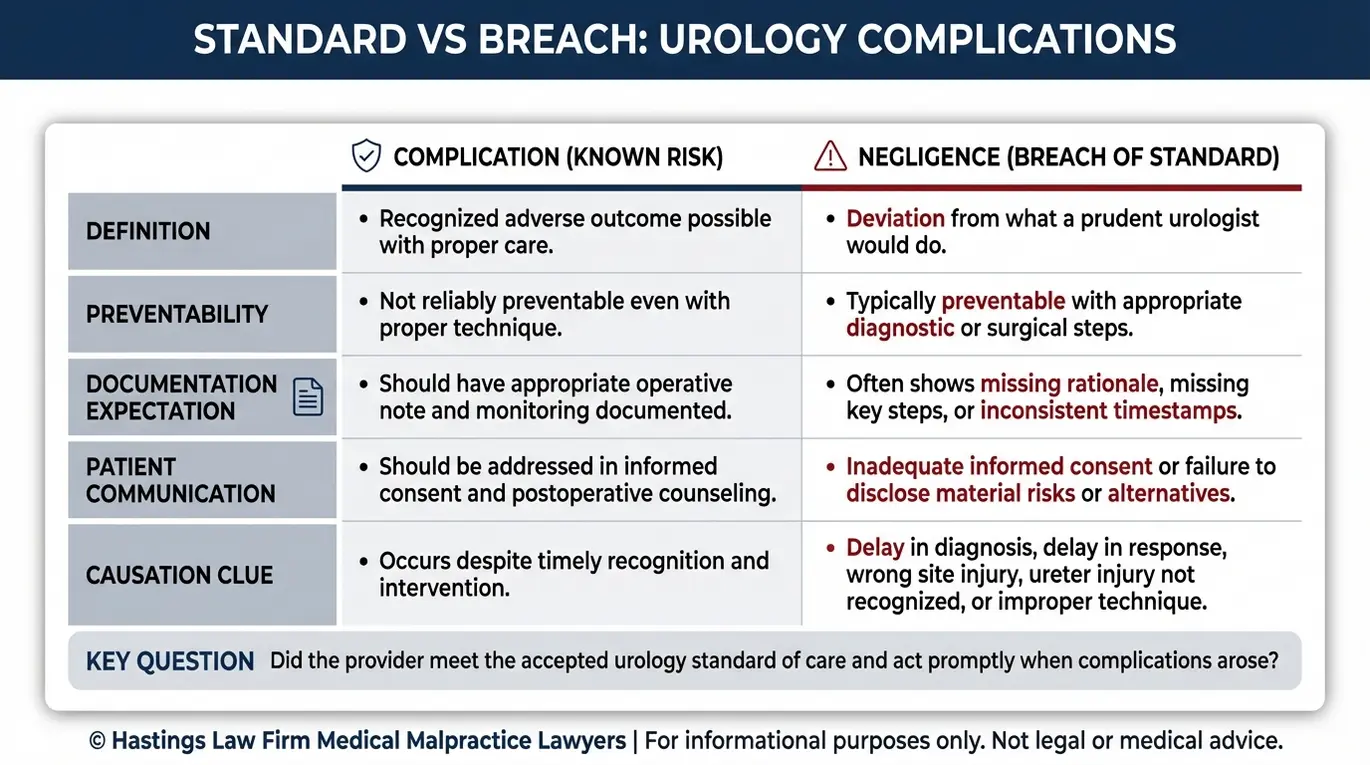
Urological malpractice occurs when a specialist deviates from the accepted medical standard of care during diagnosis, treatment, or surgery, directly causing patient injury. These standards define the legal expectations for medical specialists in the state. The standard of care is the level of treatment a reasonably competent urologist, with similar training and in similar circumstances, would have provided.
When that standard is not met, and the failure leads to harm, it is negligence under Texas law, requiring the attention of a urologist malpractice attorney. Urology covers a wide range of conditions affecting the urinary tract, the system that includes the kidneys, ureters, bladder, and urethra, as well as the male reproductive organs. Because these structures are closely connected and sit near other critical anatomy, even small errors during a procedure can lead to serious complications like organ perforation, chronic pain, or loss of function.
A ureteral injury, which is the perforation or cutting of one of the tubes that carry urine from the kidneys to the bladder, is one example of a potentially devastating surgical mistake. A Texas urologist malpractice lawyer must establish the difference between a known complication and actual negligence. Under Texas Civil Practice and Remedies Code Chapter 74, a patient must demonstrate that a healthcare provider’s actions fell below this standard and that the breach directly caused the injury. This legal framework is central to any urologist malpractice claim in Texas.
Common Forms of Negligence by Urologists
Common examples of urological negligence include surgical errors during vasectomies or cystoscopies, failure to diagnose bladder or prostate cancer, and injuries to the ureters during unrelated procedures. Identifying these types of errors is the first step in a legal investigation. These cases often involve a breakdown at one of three stages: diagnosis, surgery, or routine procedural care.
Diagnostic Errors
Misdiagnosis or delayed cancer diagnoses are among the most consequential forms of urology malpractice. Correct diagnosis is the foundation of effective urological care. When a urologist fails to order appropriate imaging, misreads biopsy results, or does not follow up on abnormal lab values, a treatable condition like prostate or bladder cancer can progress to an advanced stage.
Research published through PSNet on malpractice claims related to diagnostic errors in the hospital confirms that diagnostic failures remain a leading driver of malpractice claims across specialties, and urology is no exception. A delayed diagnosis of even a few months can dramatically change a patient’s prognosis and treatment options.
Surgical Errors
Urological surgeries carry inherent risks, but certain mistakes go beyond acceptable outcomes. Precision is important in every surgical technique to prevent life-altering injuries. These include wrong-site surgery, accidental perforation of the bladder during a laparoscopic procedure, or damage to surrounding organs. When the operative technique falls short of what a competent urologist would have done, the resulting injury may support a negligence claim.
Procedural Errors
Routine procedures like a vasectomy (a surgical method of male sterilization), a circumcision, a cystoscopy (a procedure where a thin scope is inserted through the urethra to examine the bladder), or kidney stone removal may seem low-risk. Safe results depend on proper technique even during minor procedures.
Negligent technique, inadequate patient preparation, or failure to recognize an intraoperative complication can lead to serious outcomes, including infection, chronic pain, or permanent dysfunction. The table below outlines some common urological procedures alongside the types of errors that may give rise to urologist negligence claims:
| Procedure | Potential Negligent Error |
|---|---|
| Prostatectomy | Nerve damage causing erectile dysfunction or incontinence |
| Vasectomy | Incomplete procedure, infection due to poor technique |
| Cystoscopy | Bladder perforation, failure to identify abnormality |
| Kidney Stone Removal | Ureteral injury, retained fragments |
| Circumcision | Excessive tissue removal, uncontrolled bleeding |
| Prostate/Bladder Biopsy | Missed cancer, failure to follow up on results |
If you suspect these errors, a specialized malpractice lawyer for urology errors can help investigate your case.
The Hastings Law Firm Difference
Results matter, but what truly sets us apart is how we achieve them. Every verdict, every settlement, and every Texas courtroom victory comes from one guiding promise: To treat each client’s fight for justice as if it were our own.
This balance of skill, experience, and empathy reflects our core philosophy that justice should not only compensate the injured, but also make health care safer nationwide.

Risks Associated with Robotic Urological Surgery
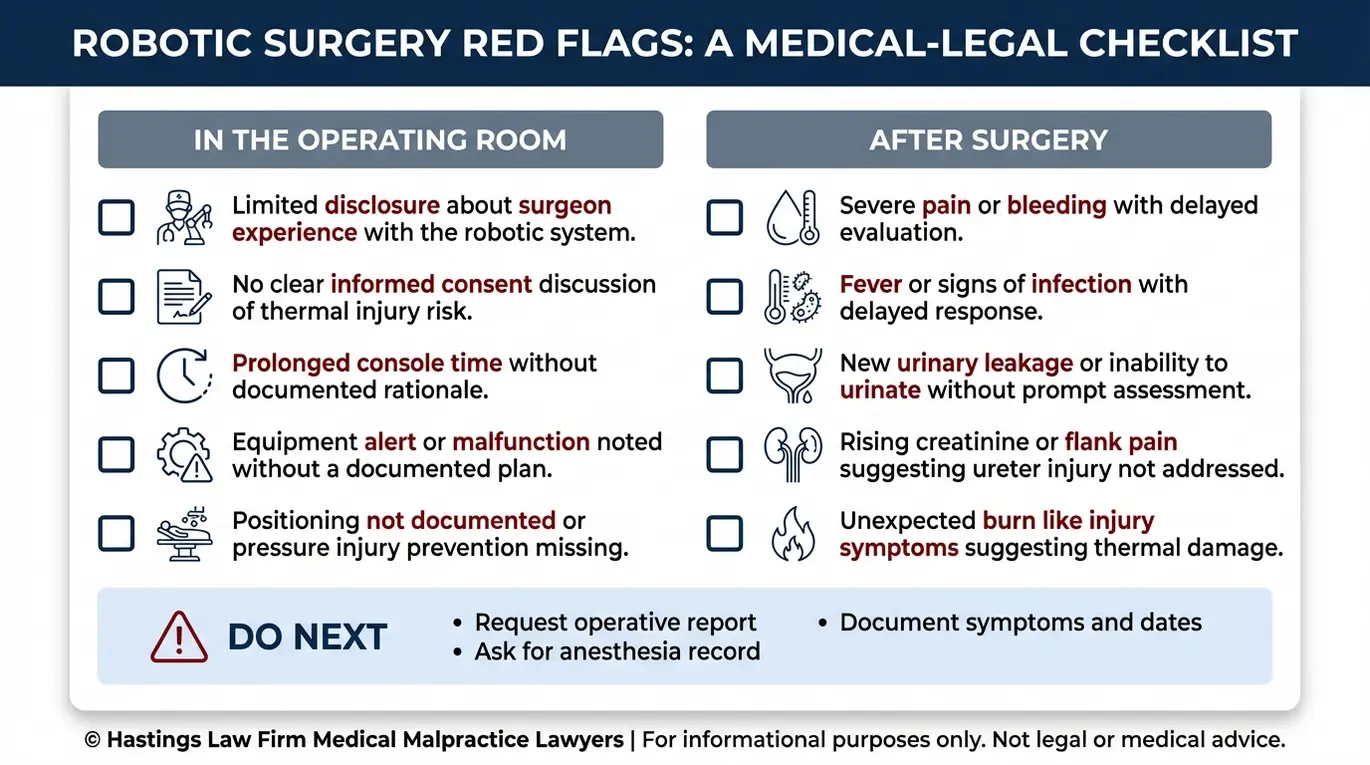
Robotic-assisted surgeries, such as those using the Da Vinci system, carry unique risks including console time errors, positioning injuries, and thermal burns that may constitute malpractice if caused by lack of surgeon proficiency. Robotic platforms are sophisticated tools that require specific surgical expertise to avoid preventable harm. The Da Vinci system, a robotic surgical platform that allows a surgeon to operate through small incisions using camera-guided instruments controlled from a console, is now widely used in urological procedures.
While the technology offers certain advantages, it also introduces risks that differ from traditional open surgery or endourologic surgery (minimally invasive procedures inside the urinary tract). These include:
- Thermal injury (electrosurgical burns to surrounding tissue or organs caused by heat from the robotic instruments)
- Unrecognized internal bleeding during or after the procedure
- Positioning injuries from prolonged operative time
- Damage to ureters or other organs
- Errors during a robotic-assisted biopsy
- Equipment malfunction, such as those documented in the FDA MAUDE Adverse Event Report for the Aquabeam Robotic System
A significant concern in robotic surgery malpractice cases is the surgeon’s experience level. Some physicians begin performing robotic procedures before completing sufficient training, and the “learning curve” associated with these systems can place patients at risk. If a urologist lacked proper proficiency or failed to adequately explain the risks of a robotic approach, including alternative options, that may raise questions about both negligence and informed consent. A robotic surgery negligence attorney can evaluate whether these factors contributed to your injury.
Evidence Required to Substantiate a Claim
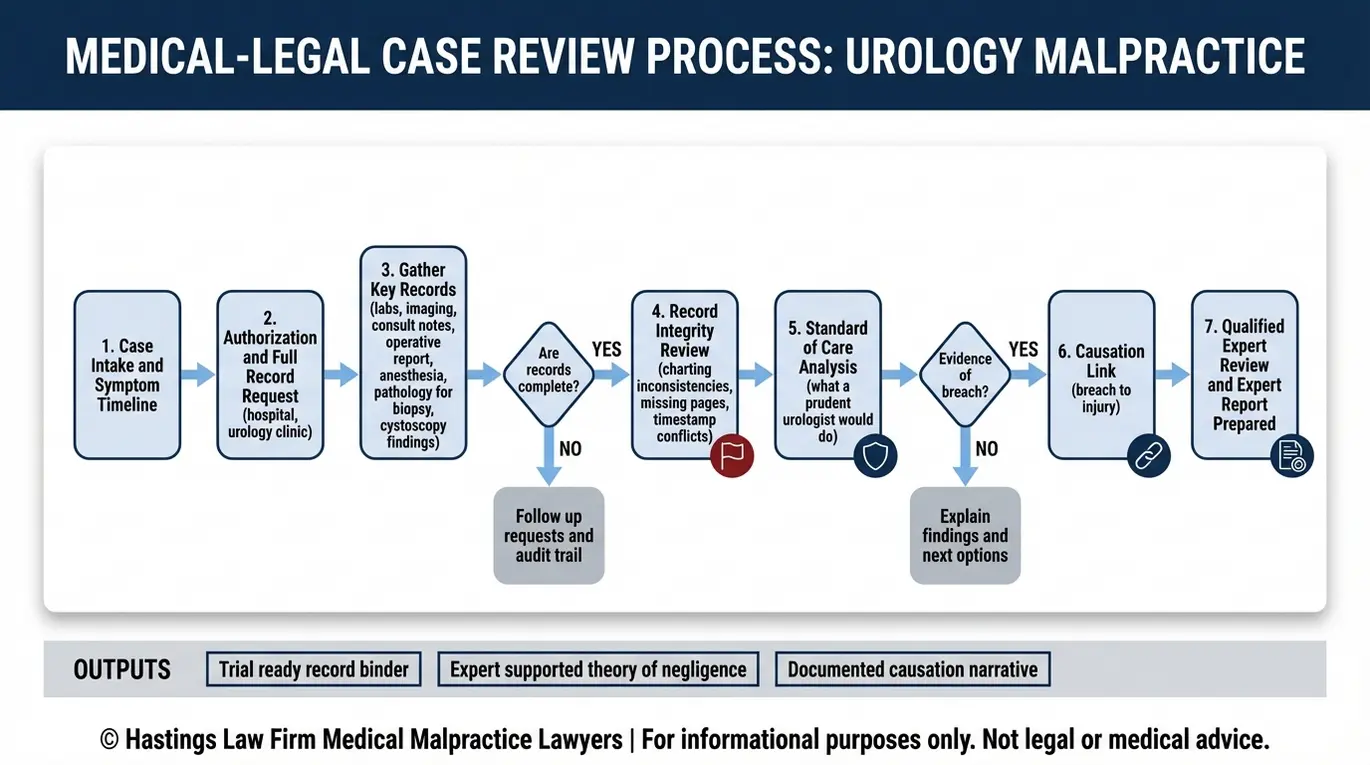
Proving a urology malpractice claim requires detailed medical records, operative reports, and testimony from a qualified medical expert who can confirm that the urologist’s actions caused the injury. This evidence forms the backbone of a legal claim against a healthcare provider. Building a strong case begins with obtaining the full picture of your care.
Under federal law, patients have the right to access their own health information, as outlined by the HHS guidance on individuals’ right under HIPAA to access their health information (45 CFR § 164.524). The key records we review include:
- Pre-operative notes and imaging studies
- Operative and anesthesia reports, including records of endourologic surgery, a minimally invasive internal operation
- Post-operative progress notes, nursing records, and discharge summaries
- Lab results, cystoscopy logs, and pathology reports
- Prostate biopsy, a tissue sampling procedure, findings
- Informed consent documents
Texas law also requires that an expert report be filed early in the litigation process. Under Texas Civil Practice and Remedies Code § 74.351, a qualified medical expert must provide a written opinion identifying the standard of care, how it was breached, and how that breach caused the patient’s injury. This expert testimony must be served within 120 days after the defendant files an original answer, or the case faces dismissal.
At Hastings Law Firm, our in-house medical staff reviews records line by line, looking for charting inconsistencies, gaps in documentation, and deviations from established protocols. This clinical analysis, combined with testimony from specialists in our national expert network, is how our urology malpractice legal team builds cases that are ready for trial from the start.
Steps to Substantiating Your Claim:
- Gather all relevant medical records and imaging.
- Submit records for comprehensive review by legal and medical teams.
- Secure expert reports to validate negligence and causation.
- File suit within the statute of limitations.
Compensation for Life-Altering Urological Injuries
Patients harmed by urological malpractice may recover damages for medical bills, lost wages, and profound non-economic losses such as incontinence, sexual dysfunction, and chronic pain. Legal recovery provides financial support for those dealing with lasting physical changes. Economic damages cover the measurable financial costs of the injury. These include past and future medical care, corrective surgeries, rehabilitation, and lost earning capacity if the injury affects your ability to work.
Non-economic damages address the personal toll of the injury. Urological harm often affects the most private aspects of a person’s life. Urinary incontinence, the involuntary loss of bladder control, can cause social isolation and emotional distress.
Erectile dysfunction (ED), the inability to achieve or maintain an erection, and infertility can profoundly affect relationships and mental health. Texas law recognizes pain and suffering, loss of enjoyment of life, and emotional anguish as compensable harms.
In cases where a missed or delayed diagnosis leads to a patient’s death, surviving family members may pursue a wrongful death claim. If you are suing a urologist in Texas, a lawyer can help identify every category of loss that applies and work to hold the responsible provider accountable.
Contact the Texas Doctor Malpractice Attorneys at Hastings Law Firm Today for Help
If you or a loved one has suffered due to a urologist’s negligence, you do not have to face the healthcare system alone. Working with a legal team allows you to focus on recovery while we handle the case. Hastings Law Firm is dedicated to restoring trust for patients who have been harmed and to securing the financial stability their families need going forward.
Our team of attorneys, nurse consultants, and patient advocates will review your medical records, identify what went wrong, and explain whether you have a viable claim. We operate on a contingency fee basis, which means you pay no attorney fees or costs unless we recover compensation for you.
Contact us today for a free, confidential case evaluation. Let us help you get the answers you deserve.
Frequently Asked Questions About Urologist Malpractice in Texas


This content was researched and written by the Hastings Law Firm editorial team, which includes attorneys, medical professionals, and experienced researchers. Our writing is informed by internal knowledge and practical experience, and we cross-check critical details against authoritative sources cited throughout. Every piece undergoes human-led fact-checking and legal review. Because legal and medical information can change, if you spot an error, please contact us. Learn more about our content standards and review process on our editorial policy page.

Gabe Sassin has focused exclusively on medical malpractice law since 2007. After spending more than a decade as a malpractice defense attorney, he knows exactly how the other side works. He has seen firsthand how healthcare providers, insurers, corporate defendants, and their legal teams think, prepare, and build their defense against claims. That knowledge works for the people who need it most today, injured patients and their families. His unique experience shapes everything he writes, giving readers a look at how these cases actually work from someone who has handled them from both sides.
