


Texas Urogynecologist Malpractice Lawyer
Urogynecology involves delicate pelvic floor care where small errors can cause lasting harm. When a specialist deviates from accepted standards during evaluation, diagnosis, surgery, or follow up, patients may face chronic pain, worsening symptoms, additional procedures, infections, or worse. These situations often turn on informed consent, whether appropriate testing was done, and whether surgical technique met safety expectations. Clear records and qualified medical opinions can be central to understanding what happened. If you or a loved one were harmed or worse due to urogynecologist malpractice in Texas, contact Hastings Law Firm for a free, confidential case review.

Last Updated: July 27, 2026
Trusted Legal Representation for Medical Specialist Negligence in Texas
If you or someone you love has been harmed during treatment for a pelvic floor condition, the confusion and frustration you feel are completely understandable. Urogynecology, the medical specialty focused on disorders of the pelvic floor (the muscles and ligaments supporting the pelvic organs), involves delicate procedures where precision matters. When a specialist’s care falls below accepted standards, the injuries can be life-altering.
Finding a Texas Urogynecologist Malpractice Lawyer who understands both the medicine and the law behind these cases is an important first step. At Hastings Law Firm, our team includes in-house medical professionals and former defense attorneys who know how to evaluate what happened and why. If you believe your injury was preventable, we welcome the chance to review your records and explain your options at no cost.

Identifying Negligence in Urogynecology and Pelvic Floor Care
Urogynecology malpractice occurs when a specialist deviates from the standard of care during the diagnosis or surgical treatment of pelvic floor disorders, resulting in preventable injuries such as nerve damage, perforated organs, or chronic pain. The standard of care is the level of treatment a reasonably competent physician would provide under similar circumstances.
The scope of urogynecology covers conditions like urinary incontinence, pelvic organ prolapse (a condition where pelvic organs drop from their normal position due to weakened support tissues), and related functional problems. A urogynecologist’s duty of care applies at every stage: initial evaluation, diagnostic testing, surgical planning, the procedure itself, and post-operative monitoring. Texas medical malpractice claims involving specialists are governed by the Texas Civil Practice and Remedies Code, Chapter 74, which sets specific requirements for filing and proving these cases.
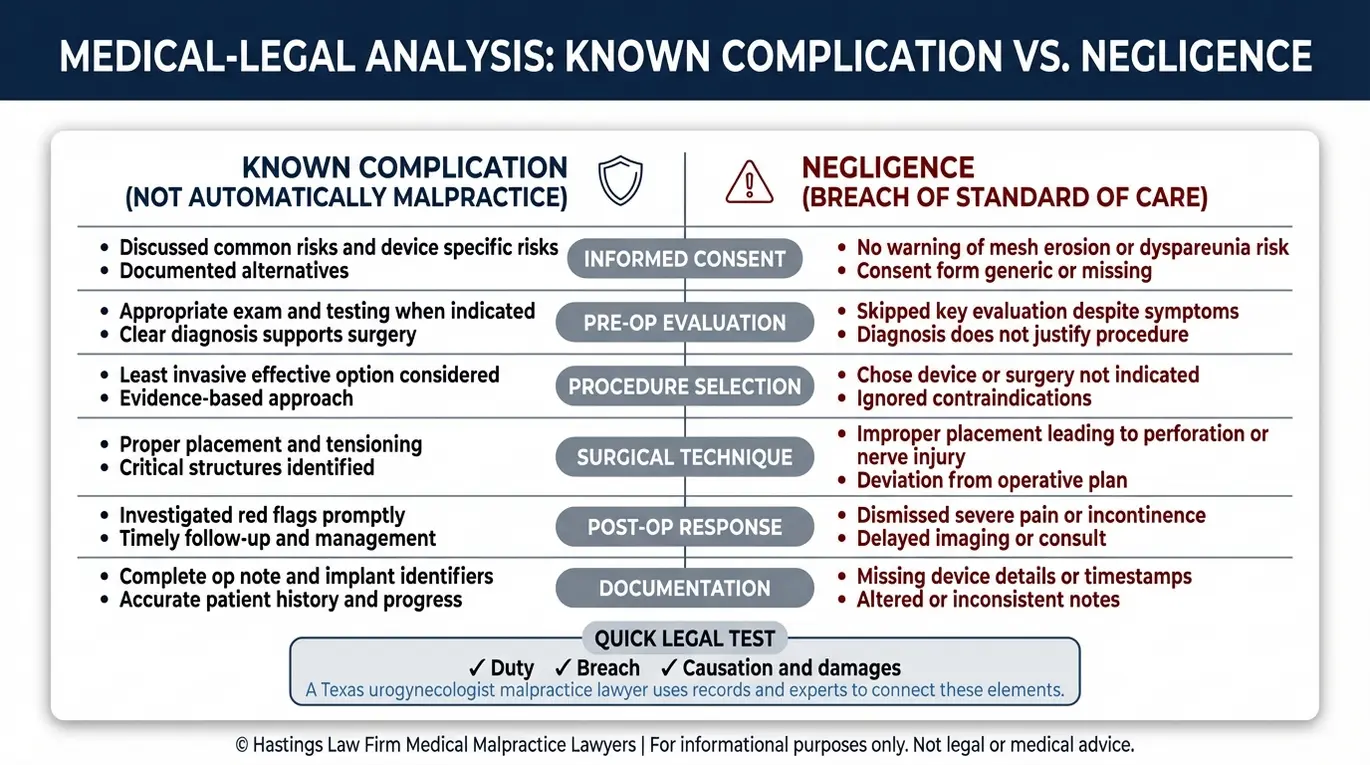
One area we closely examine is informed consent. Before any procedure, a doctor is required to explain the risks involved. For example, research published in the International Neurourology Journal has documented risks associated with midurethral slings, including mesh erosion and long-term pain.
Patients must be fully apprised of these possibilities to make an educated decision about their bodies. If a patient was not warned about the possibility of permanent sexual dysfunction, known medically as dyspareunia (chronic pain during intercourse), that failure may support a negligence claim.
Understand the difference between a known complication and malpractice. Not every poor outcome is negligence. A known complication is a recognized risk that can occur even when the surgeon performs correctly. Negligence involves a preventable error, something that should not have happened if proper care was followed.
Common injuries that may indicate malpractice in urogynecology include:
- Chronic pelvic pain that persists long after expected recovery
- Worsening or new-onset urinary incontinence after a corrective procedure
- Nerve damage causing numbness, weakness, or loss of bladder control
- Organ perforation during surgery
- Mesh erosion through vaginal tissue
- Dyspareunia or loss of sexual function not disclosed as a risk
An experienced malpractice lawyer for urogynecology cases in Texas can help determine whether your injury resulted from a deviation in care or an accepted risk.
Surgical Errors During Pelvic Floor Reconstruction and Hysterectomy
Surgical errors in urogynecology often involve improper mesh placement, accidental bladder or bowel perforation during hysterectomy, or ureter damage during reconstructive surgery. These errors can require additional surgeries and permanently alter quality of life. A Texas urogynecologist malpractice lawyer can help identify actionable negligence.
Mesh and Sling Injuries
A midurethral sling (MUS), a synthetic strip placed under the urethra to treat stress incontinence, requires precise tension. Improper placement can cause erosion, obstruction, or chronic pain. Transvaginal mesh, implanted through the vagina to support prolapsed organs, carries similar risks.
Evaluating the placement and tension of these devices helps determine if a healthcare provider met the safety standards required for your care. The U.S. Food and Drug Administration’s review of urogynecologic surgical mesh has highlighted serious safety concerns with these devices. When a surgical injury does occur, identifying the device through systems like the FDA’s Unique Device Identification System can be critical evidence in a pelvic floor doctor negligence case, especially if it leads to mesh erosion.
Organ Perforation
During minimally invasive procedures such as laparoscopic hysterectomy or reconstructive surgery, accidental cuts to the bladder or bowel can occur. During pelvic floor surgery, undetected perforation can lead to severe complications. When a perforation is recognized and repaired during surgery, the outcome may be manageable. But when it goes undetected, the patient may develop serious infections, sepsis, or require emergency reoperation.
| Procedure | Potential Surgical Error | Possible Consequence |
|---|---|---|
| Midurethral sling placement | Improper tension or positioning | Mesh erosion, urinary obstruction, chronic pain |
| Transvaginal mesh repair | Incorrect placement or device selection | Tissue erosion, infection, need for revision surgery |
| Laparoscopic hysterectomy | Accidental bladder or bowel perforation | Sepsis, emergency surgery, prolonged recovery |
| Pelvic reconstructive surgery | Ureter damage during dissection | Kidney damage, fistula formation |
Common Types of Fistulas Caused by Surgical Error
Surgical trauma to pelvic tissues during urogynecological procedures can create fistulas, which are abnormal connections between two organs that should not be connected. A vesicovaginal fistula, an opening between the bladder and the vagina, can cause continuous urinary leakage. A rectovaginal fistula, an opening between the rectum and the vagina, may result in fecal incontinence and recurring infections.
Both conditions are deeply disruptive and often require additional corrective surgery. When a fistula develops after a urogynecological procedure, our team evaluates whether the surgical technique, instrument use, or failure to identify the injury intraoperatively contributed to its formation.

The Hastings Law Firm Difference
Results matter, but what truly sets us apart is how we achieve them. Every verdict, every settlement, and every Texas courtroom victory comes from one guiding promise: To treat each client’s fight for justice as if it were our own.
This balance of skill, experience, and empathy reflects our core philosophy that justice should not only compensate the injured, but also make health care safer nationwide.

Proving Malpractice Using Diagnostic Records and Expert Testimony
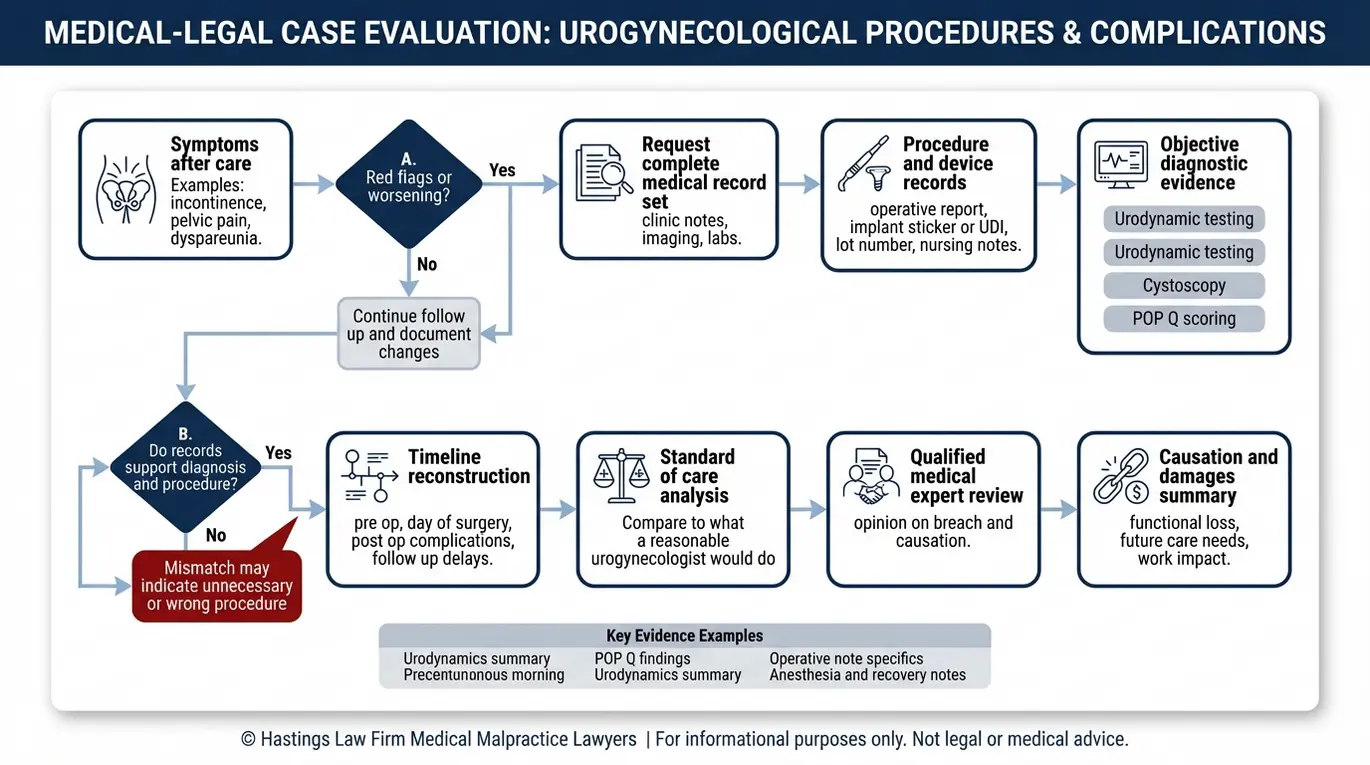
Proving a claim requires objective evidence such as urodynamic testing results and surgical logs, combined with expert testimony to demonstrate that the urogyneclogist failed to meet the established standard of care. This process involves a detailed review of all medical records related to your pelvic treatment. As a Texas urogynecologist malpractice lawyer, our job is to connect the objective evidence to the legal elements of your case.
One of the first things we look for is whether adequate diagnostic testing was performed before surgery. Urodynamic testing, a series of tests that measure how well the bladder and urethra store and release urine, should typically be completed before surgical intervention. Cystoscopy may also be used to visually inspect the bladder. If a surgeon proceeded without these evaluations, the wrong procedure may have been selected entirely.
We also examine how prolapse was documented using the Pelvic Organ Prolapse Quantification system (POP-Q), a standardized measurement tool described in research indexed by PubMed Central that grades prolapse severity at specific anatomical points. Discrepancies between POP-Q findings and the surgery performed can indicate that a procedure was unnecessary or inappropriately aggressive.
Under Texas law, expert testimony is mandatory in medical malpractice cases. A qualified physician must review the records and provide an opinion on what went wrong and how it caused harm. Our firm, led by Tommy Hastings, who is Board Certified in Personal Injury Trial Law by the Texas Board of Legal Specialization and a 2025 inductee into ABOTA, an invitation-only organization for elite trial lawyers, works with national experts to build this critical element of your case.
Key evidence we work to secure includes:
- Complete surgical and anesthesia logs
- Pre-operative urodynamic testing and cystoscopy results
- POP-Q staging documentation
- Post-operative imaging (MRI, CT scans)
- Device identification records for any implanted mesh or sling
- Expert medical opinions on standard of care violations and causation
- Assessments of economic damages for lost wages and future care costs
Contact the Texas Doctor Malpractice Attorneys at Hastings Law Firm Today for Help
A poor outcome after pelvic floor surgery is not something you should simply accept as an unavoidable complication. If your recovery has been defined by worsening symptoms, chronic pain, or additional surgeries, you deserve to know whether negligence played a role.
At Hastings Law Firm, our team of attorneys, nurse consultants, and medical advocates is dedicated to restoring trust for patients who feel let down by their care. We prepare every case as if it will go to trial, because that preparation is what drives fair results. Our firm handles cases on a contingency fee basis, which means you pay no attorney fees or costs unless we secure a recovery for you.
If you or a loved one has been injured by a urogynecologist’s error, contact our Texas urogynecologist malpractice lawyers today for a free, confidential case evaluation. Let us help you find the answers you deserve.
Frequently Asked Questions About Urogynecologist Malpractice in Texas


This content was researched and written by the Hastings Law Firm editorial team, which includes attorneys, medical professionals, and experienced researchers. Our writing is informed by internal knowledge and practical experience, and we cross-check critical details against authoritative sources cited throughout. Every piece undergoes human-led fact-checking and legal review. Because legal and medical information can change, if you spot an error, please contact us. Learn more about our content standards and review process on our editorial policy page.

Brady D. Williams is a nationally recognized medical malpractice attorney who has spent his career handling high-stakes litigation for injured patients and families across the country. Licensed in both Texas and California, Brady draws on experience from hundreds of resolved medical cases to break down complex legal and medical topics for the people who need that information most. His writing reflects the same attention to detail and commitment to clarity that he brings to every case he handles.
