


Texas Untreated Infant Seizure Lawyer
Written by: Hastings Law Firm | Reviewed by: Tommy Hastings | Updated: July 27, 2026
Untreated or delayed treatment of newborn seizures can leave families facing lasting neurological harm and overwhelming uncertainty. Neonatal seizures can be subtle in the NICU, and missed warning signs or delayed testing can allow ongoing seizure activity to worsen brain injury. The discussion also highlights how monitoring tools like EEG and imaging can be central when seizure activity is suspected, and how delays in treatment can affect long term outcomes and future care needs. If you or a loved one were harmed or worse due to untreated infant seizures in Texas, contact Hastings Law Firm for a free, confidential case review.

Top-Rated Legal Support for Texas Families After Negligent Neonatal Care
What You Should Know About Neonatal Convulsions Misdiagnosis Claims in Texas:
- Lasting brain injury can result when neonatal seizures are not recognized and treated promptly.
- Long term outcomes can worsen as seizure activity continues without treatment.
- Missed seizure signs can occur in the NICU because newborn seizures may look subtle rather than dramatic.
- Options for recovery can be limited by Texas time limits for filing medical malpractice claims.
- Lifetime financial impact can be substantial when a birth injury leads to ongoing therapy needs and specialized care.
- Recovery for non economic harm can be restricted in Texas even when the injury is severe.
- Full compensation for economic losses can remain available in Texas because economic damages are not capped.
- Disputes about negligence often focus on whether appropriate testing and monitoring were ordered when seizure activity was suspected.
- Responsibility can extend beyond a single clinician when systemic hospital failures contribute to delayed recognition or treatment.
- The timeline in NICU records can be central when evaluating gaps between documented symptoms and treatment actions.

A Healthcare Focused Law Firm
When your newborn suffers seizures that go unrecognized or untreated, the fear and confusion can feel unbearable. You trusted your medical team to protect your baby, and now you may be left wondering whether the harm could have been prevented. Those questions deserve honest answers.
At Hastings Law Firm, we focus exclusively on medical malpractice, and our team includes in-house medical professionals who know how to review NICU records and identify where the standard of care may have broken down. As a Texas untreated infant seizure lawyer, founder Tommy Hastings and his legal team have spent over two decades holding hospitals and providers accountable for preventable birth injuries.
If your child suffered a brain injury linked to untreated or delayed treatment of neonatal seizures, we welcome the chance to review what happened and explain your options. Consultations are free and confidential.
Understanding the Severity of Untreated Newborn Seizures
Untreated neonatal seizures—seizures occurring within the first 28 days of life—are medical emergencies that require immediate intervention to prevent permanent brain damage, developmental delays, or death. These events happen shortly after birth and signify that the baby’s brain is under significant stress.
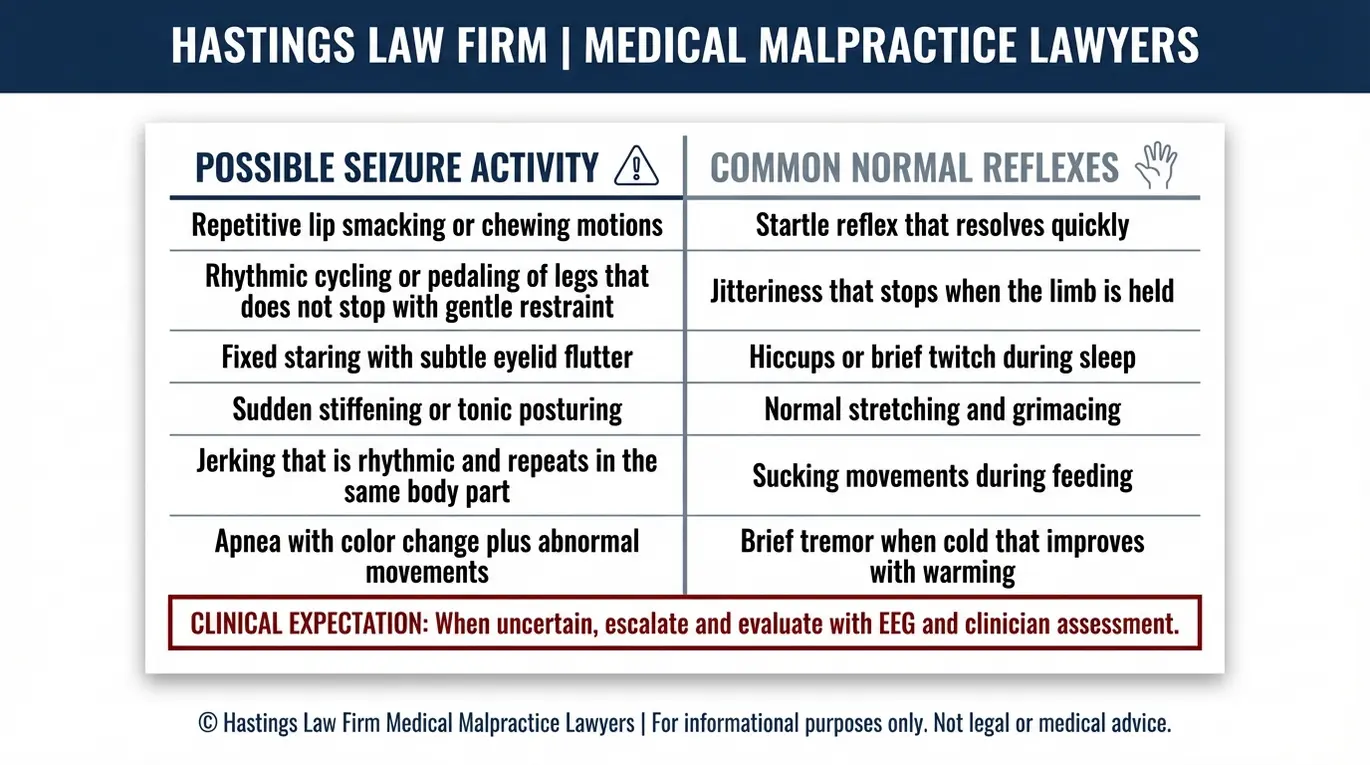
What makes neonatal seizures especially dangerous is that they are often subtle. Unlike the dramatic convulsions many people associate with seizures, newborn seizures can present as lip smacking, eye fluttering, or repetitive limb movements. These quiet signs do not mean the brain is less affected. When seizure activity goes unchecked, it can progress to status epilepticus, a state where the brain fires abnormal electrical signals continuously.
Research published through the National Institutes of Health on seizure burden and neurologic outcomes after neonatal encephalopathy confirms a direct relationship between the length of seizure activity and the degree of long-term injury. The longer seizures persist without treatment, the greater the risk of lasting harm. While these events often stem from underlying complications like intracranial hemorrhage or metabolic disorders, the immediate priority remains stabilizing the infant. The developing brain cannot afford to wait, and neither can families searching for the truth.
There is a distinction between appropriate clinical monitoring and medical negligence. A brief period of observation while running diagnostic tests may be reasonable. But when a medical team observes seizure-like activity and takes no steps to treat the infant, that gap between recognition and response is exactly what Texas untreated infant seizure attorneys investigate.
Recognizing Seizure Symptoms Often Overlooked in the NICU
Medical staff must be trained to distinguish pathological seizures from normal infant movements to ensure timely administration of antiepileptic drugs. Neonatal seizures require specialized knowledge because medical staff must be vigilant for symptoms that are easily missed in a busy NICU environment.
According to the NCBI Bookshelf resource on neonatal seizures and neonatal syndromes, seizures in newborns are classified into several types, each with distinct physical presentations. Understanding these categories helps explain why certain movements should never be ignored:
- Clonic seizures involve rhythmic jerking of a limb or one side of the body. The movement follows a predictable pattern and cannot be stopped by gently holding the limb.
- Tonic seizures cause sustained stiffening of the trunk, arms, or legs, sometimes with the eyes deviating to one side.
- Myoclonic seizures produce rapid, shock-like jerks of the arms, legs, or entire body.
- Subtle seizures are the most commonly missed. They may appear as repetitive sucking, tongue thrusting, pedaling movements of the legs, or episodes of apnea, which are pauses in breathing.
The challenge is that some of these movements can resemble normal newborn reflexes. A baby who appears “jittery” after a stressful delivery may actually be seizing.
| Observation | Possible Seizure Indicator | Normal Newborn Reflex |
|---|---|---|
| Limb jerking | Rhythmic, cannot be stopped by holding | Startle response (Moro reflex), stops with gentle restraint |
| Lip smacking or sucking | Repetitive, occurs without feeding cue | Rooting reflex triggered by touch near mouth |
| Leg cycling or pedaling | Consistent rhythm, may coincide with eye deviation | Random leg movement during active sleep |
| Body stiffening | Sustained, with abnormal posturing | Brief stiffening during crying |
| Eye fluttering or fixed gaze | Unresponsive to stimulation | Normal REM sleep movements |
Electronic fetal monitoring (EFM), a system that tracks the baby’s heart rate and the mother’s contractions during labor, can reveal signs of fetal distress before delivery. Abnormal EFM patterns may indicate the baby was already under stress, making post-delivery seizure screening even more important.
Differentiating Seizures in Non-Verbal Infants
Diagnosing seizures in non-verbal patients who cannot describe their symptoms is inherently difficult, but that difficulty does not excuse a failure to investigate. Many neonatal seizures are subclinical (electrographic) seizures, meaning they produce abnormal electrical activity in the brain without any visible physical symptoms, which can only be detected through continuous EEG monitoring.
When a newborn has risk factors for seizures, such as a complicated delivery, low Apgar scores, or known oxygen deprivation, clinical uncertainty is not a defense for failing to order testing. The standard of care calls for a thorough differential diagnosis and diagnostic evaluation when the clinical picture raises concern. A lawyer for untreated infant seizures in Texas will examine whether the medical team ordered appropriate testing or instead relied on visual observation alone when the circumstances demanded more.
The Hastings Law Firm Difference
Results matter, but what truly sets us apart is how we achieve them. Every verdict, every settlement, and every Texas courtroom victory comes from one guiding promise: To treat each client’s fight for justice as if it were our own.
This balance of skill, experience, and empathy reflects our core philosophy that justice should not only compensate the injured, but also make healthcare safer nationwide.

Common Causes of Seizures Linked to Birth Injury
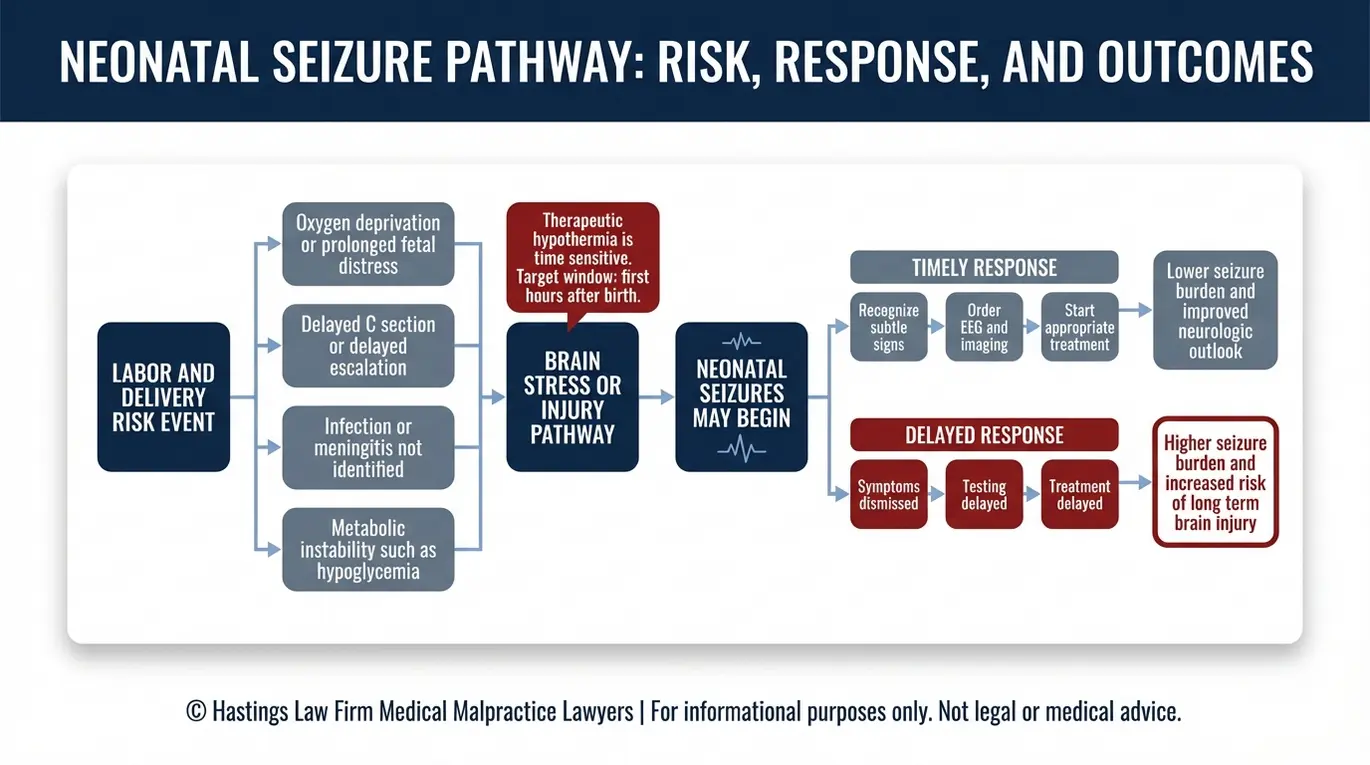
Many neonatal seizures result from preventable birth trauma, including oxygen deprivation and unmonitored infections during labor and delivery. A preventable birth trauma involves physical harm to a baby before, during, or just after delivery that could have been avoided with proper medical care.
The most common causes of seizures linked to birth injury include:
- Hypoxic-ischemic encephalopathy (HIE): HIE occurs when the baby’s brain does not receive enough oxygen and blood flow around the time of birth. It is the single most frequent cause of neonatal seizures. Prolonged labor, umbilical cord complications, and placental abruption can all contribute to HIE if the medical team does not intervene promptly.
- Delayed cesarean section: When fetal monitoring shows signs of distress and a vaginal delivery is no longer safe, a timely C-section can prevent oxygen deprivation. Delays in making that call can lead directly to HIE and subsequent seizure activity.
- Infection and meningitis: Maternal infections such as Group B Streptococcus (GBS) or chorioamnionitis can pass to the infant during delivery. If not identified and treated with antibiotics, these infections can cause meningitis, which inflames the brain and triggers seizures.
- Hypoglycemia: Dangerously low blood sugar in a newborn can cause seizures if not identified and corrected quickly. Infants of diabetic mothers and premature babies are at higher risk, and routine glucose screening is part of standard neonatal care.
- Intracranial hemorrhage: Bleeding inside or around the brain, sometimes caused by traumatic delivery (forceps or vacuum-assisted), can increase pressure on the brain and provoke seizures.
A study published through Thieme Connect characterizing neonatal seizures in a large multicenter cohort reinforces the connection between perinatal complications and seizure onset. Families considering legal action should also know that the Texas Civil Practice and Remedies Code, Chapter 16, sets time limits on when claims must be filed, making early consultation with an attorney important.
The Critical Role of Therapeutic Hypothermia
Therapeutic hypothermia, also called brain cooling treatment, is a time-sensitive intervention designed to slow the process of brain cell death after oxygen deprivation. Therapeutic hypothermia involves lowering the infant’s core body temperature to around 33.5°C for 72 hours, and it must be initiated within approximately six hours of the injury to be effective.
When a baby shows signs of HIE, the standard of care typically requires the medical team to evaluate the infant for cooling eligibility immediately. Missing this six-hour window, whether due to delayed diagnosis, failure to recognize HIE, or problems arranging a transfer to a facility with cooling capability, can constitute a breach of duty. The difference between starting brain cooling at hour three versus hour eight may be the difference between a manageable outcome and a lifetime of severe disability.
Diagnostic Failures and the Standard of Care
The standard of care mandates that medical teams utilize EEGs and imaging immediately upon suspecting seizure activity to confirm the diagnosis and begin treatment. This standard refers to the specific level of care and skill that a competent healthcare professional is expected to provide under similar circumstances.
An EEG, or electroencephalogram, which is a test recording electrical activity through scalp sensors, is the gold-standard tool for confirming seizure activity. This is especially true for subclinical seizures that produce no visible symptoms. Research published through the National Institutes of Health on monitoring newborns at high risk for brain injury supports the use of continuous EEG monitoring for infants who experienced complicated deliveries. Without continuous monitoring, seizures can go undetected while brain damage worsens.
Beyond the EEG, imaging studies provide essential information about the type and extent of injury. An MRI can reveal patterns of brain damage consistent with HIE. A CT scan can quickly identify intracranial hemorrhage. A cranial ultrasound, a non-invasive imaging technique performed through the soft spot on a baby’s skull, can screen for bleeding and structural abnormalities at the bedside without moving the infant.
Delays in ordering any of these studies can allow treatable conditions to progress. If an infant is seizing due to a brain bleed that could be surgically managed, every hour without imaging is an hour of continued damage. At Hastings Law Firm, our in-house medical staff, including nurse practitioners and board-certified patient advocates, audit medical records specifically for these diagnostic gaps. We look at the timeline between documented symptoms and the first diagnostic order and whether the care team followed established protocols.
As an untreated infant seizure lawyer in Texas, we specifically look for discrepancies to uncover where the system failed your child, potentially constituting medical malpractice.
Proving Medical Malpractice in Untreated Seizure Cases
Successful litigation requires proving that the medical provider violated the standard of care and that this specific failure directly caused or worsened the infant’s condition. Medical malpractice occurs when a healthcare professional’s failure to follow medical standards results in harm to a patient.
Texas medical malpractice claims rest on four legal elements, each of which must be established:
- Duty: The healthcare provider owed a duty of care to the infant. This is generally simple in a hospital setting where a doctor-patient relationship exists.
- Breach of duty: The provider failed to meet the standard of care, meaning the level of treatment a reasonably competent neonatologist or nurse would have provided under similar circumstances. Examples may include failing to order an EEG, ignoring documented seizure-like activity, or delaying the administration of antiepileptic drugs.
- Causation: The breach must be directly linked to the infant’s injury. This means demonstrating that timely intervention would have, more likely than not, prevented or reduced the brain damage.
- Damages: The child suffered measurable harm as a result, including medical costs, developmental impairment, pain and suffering, and the need for future care.
According to a PubMed Central analysis of health care liability claims under Texas law, meeting this burden requires both medical and legal expertise working together to expose instances of medical negligence.
Proving Untreated Seizures Breach Standards
The most critical piece of evidence in these cases is often the medical record timeline. Our Texas untreated infant seizure legal team reconstructs a sequence of when a nurse first charted abnormal movements, when a physician was notified, when diagnostic tests were ordered, and when medication was finally administered.
Phenobarbital, a first-line antiepileptic drug commonly used in neonates, is a standard treatment for confirmed or suspected seizures. If records show that hours passed between documented seizure-like activity and the first dose of seizure medication, that gap becomes central to the case.
Establishing liability often depends on connecting this specific delay to the outcome. We rely on expert testimony from qualified medical professionals to review the records, identify where the standard of care was breached, and explain how the delay worsened the child’s injuries. Our team includes former defense attorneys who understand how hospitals and insurers will try to explain away those gaps, and we build our case to address those arguments before they are raised.

Liable Parties in Texas NICU Malpractice Lawsuits
Liability in NICU malpractice cases may extend beyond the attending physician to include nurses, hospital administration, and other specialists involved in the infant’s care. Liability is the legal responsibility one party has for the harm caused to another through negligence or error.
Potential defendants in a Texas NICU malpractice lawsuit may include:
- The attending neonatologist, who bears primary responsibility for diagnosing and treating the infant. Under the “captain of the ship” doctrine, the specialist directing care may be held accountable for failures that occur under their supervision.
- Nursing staff, who are responsible for continuous bedside monitoring and for escalating concerns to physicians. If a nurse observed seizure-like symptoms and failed to alert the medical team, that failure can form its own basis for liability.
- Hospital & Facility Negligence: The hospital itself can be held liable for systemic failures. Inadequate nurse-to-patient ratios, insufficient training, or failure to maintain transfer protocols are institutional issues that can contribute to a preventable injury. Legal doctrines such as vicarious liability can also make the hospital responsible for the actions of its employees.
- Consulting specialists, such as neurologists or radiologists, who may have been called to evaluate the infant and either failed to respond in time or misinterpreted diagnostic results.
Neonatologist Role in NICU Responsibility
The neonatologist’s role carries particular legal weight. In a NICU setting, the neonatologist is the physician who manages the care of critically ill newborns. As the physician directing the infant’s care plan, they are expected to anticipate complications and initiate treatment without unreasonable delay. A care plan is the set of medical steps and treatments designed to help a patient manage their condition.
When a neonatologist is aware of risk factors for seizures, such as a traumatic delivery or evidence of oxygen deprivation, the standard of care typically requires heightened monitoring. We evaluate whether the neonatologist met that standard or fell short.
Long-Term Consequences and Damages
Families affected by untreated neonatal seizures may recover compensation for lifelong medical costs, loss of earning capacity, and the emotional suffering caused by the infant’s preventable injury. Understanding the scope of recoverable damages is an important step in protecting your child’s future.
The reality of caring for a child with cerebral palsy, epilepsy, or other neurological conditions resulting from a birth injury is demanding. Many of these children require ongoing physical and speech therapies, specialized equipment, and medication management. The financial weight of that care over a lifetime can be significant. Life Care Planning is essential to map out these damages.
Texas law recognizes two broad categories of damages in medical malpractice cases:
Economic damages cover the measurable financial losses tied to the injury. These include past and future medical expenses, rehabilitation costs, home modifications, and the child’s lost earning capacity. There is no cap on economic damages in Texas, which means a Texas untreated infant seizure lawyer can pursue the full cost of lifetime care.
Non-economic damages address the pain, suffering, mental anguish, and diminished quality of life experienced by the child and family. Texas does impose statutory caps on non-economic damages in medical malpractice cases, which makes it even more important to build the strongest possible economic claim.
A detailed Life Care Plan, developed with input from medical and financial experts, is often the centerpiece of the damages case. This document projects every anticipated cost across the child’s expected lifespan and gives a jury a clear picture of what your family will need.
Contact the Texas Birth Injury Attorneys at Hastings Law Firm Today for Help
No family should have to face the aftermath of a preventable birth injury without answers and support. If your child suffered brain damage that may be linked to untreated or delayed treatment of neonatal seizures, our team is ready to listen and help you understand what happened.
Hastings Law Firm brings together board-certified trial attorneys, in-house medical professionals, and a national network of expert consultants focused on medical malpractice. We prepare every case from day one as though it will go to a jury, and we do not collect any fee unless we secure a recovery for your family.
Contact Hastings Law Firm today for a free, confidential case evaluation. Let us review your child’s medical records, explain your legal options, and help you take the first step toward accountability and financial security for your family’s future.
Frequently Asked Questions About Untreated Infant Seizure in Texas


This content was researched and written by the Hastings Law Firm editorial team, which includes attorneys, medical professionals, and experienced researchers. Our writing is informed by internal knowledge and practical experience, and we cross-check critical details against authoritative sources cited throughout. Every piece undergoes human-led fact-checking and legal review. Because legal and medical information can change, if you spot an error, please contact us. Learn more about our content standards and review process on our editorial policy page.

Tommy Hastings, founder of Hastings Law Firm, is a board-certified personal injury trial lawyer dedicated exclusively to healthcare injury cases. Since 2001, he has represented injured patients and families in litigation against major hospital systems, pharmaceutical companies, and negligent healthcare providers nationwide. He has handled numerous high-profile cases that have drawn national media attention and resulted in multi-million dollar recoveries. He draws on that experience in his writing, helping readers understand how these cases work and what options may be available to them.
