


Arizona Untreated Chorioamnionitis Lawyer
Written by: Hastings Law Firm | Reviewed by: Tommy Hastings | Updated: July 27, 2026
Untreated chorioamnionitis during labor can turn a manageable infection into a crisis for a newborn, especially when warning signs are missed or treatment is delayed. The condition is linked to severe outcomes such as neonatal sepsis and lasting brain injury, and the most serious cases can involve stillbirth or neonatal death. Understanding how providers are expected to monitor for infection, respond to clinical markers, and act quickly with antibiotics and delivery decisions can clarify where care may have broken down. If you or a loved one were harmed or worse due to untreated chorioamnionitis in Arizona, contact Hastings Law Firm for a free, confidential case review.

Trusted Arizona Birth Injury Attorneys for Infant Infection Cases
What You Should Know About Intraamniotic Infection Birth Injury Claims in Arizona:
- Life altering newborn harm can follow when chorioamnionitis is not diagnosed and treated promptly during labor.
- Legal responsibility may depend on delayed action rather than the mere presence of an infection.
- Catastrophic outcomes can occur when clinical warning signs are present but the care team does not intervene.
- Long term needs can be extensive when untreated infection leads to neonatal sepsis or inflammatory brain injury.
- The most severe outcomes can include stillbirth or neonatal death when infection goes unmanaged.
- Options can be limited if Arizona time limits are missed, including special rules that can affect claims involving minors.
- Disputes over causation are common because defense arguments may claim injuries were genetic, congenital, or unavoidable.
- Strong biological proof can come from placental pathology findings that indicate infection severity and duration.
- Key records can be central when timelines are contested, including fetal monitoring strips and antibiotic administration documentation.

A Healthcare Focused Law Firm
When a baby suffers a preventable brain injury because an infection went undiagnosed or untreated during labor, the emotional weight can feel unbearable. You may be searching for answers about what went wrong, whether anyone is being held accountable, and what options exist for your child’s future care.
As an Arizona untreated chorioamnionitis lawyer, Hastings Law Firm focuses exclusively on medical malpractice cases like these. Founded by Tommy Hastings, a board-certified trial lawyer, our firm has represented families in medical negligence cases since 2005. Our team includes in-house nurse consultants and former defense attorneys who understand how hospitals handle infection cases from the inside.
We know how to identify where the standard of care broke down and how to prove it. If your child was harmed by an infection that should have been caught and treated during delivery, we can review the medical records and explain your legal options. Consultations are free, and we charge no fees unless we recover compensation for your family.
Understanding Chorioamnionitis and Medical Liability
Chorioamnionitis, also known as intraamniotic infection or Triple I, is a bacterial infection of the membranes surrounding the fetus that can cause severe brain injury if it is not treated immediately. In medical liability law, proving a breach of duty involves showing that a provider failed to act according to established safety protocols. The infection develops in the chorion and amnion, the two thin layers of tissue that form the fetal membranes and hold the amniotic fluid protecting the baby during pregnancy.
The infection typically begins when bacteria from the vaginal canal ascend into the uterus. Common organisms include Group B Streptococcus (GBS), E. coli, and certain anaerobic bacteria. Physicians must be vigilant because these bacteria can rapidly multiply in the amniotic fluid, turning a protective environment into a source of danger. According to the NCBI Bookshelf overview of Chorioamnionitis, this condition affects a significant number of deliveries and carries serious risks for both the mother and the baby when it is not promptly identified.
From a legal perspective, the presence of infection alone does not constitute malpractice. Infections can develop despite appropriate care. Legal liability is created by the failure to diagnose or treat the infection in a timely manner. When clinical signs are present and a medical team does not act, the consequences for the baby can be catastrophic. The standard of care requires providers to monitor both maternal and fetal vital signs continuously to detect the earliest indicators of distress.
An Arizona chorioamnionitis malpractice attorney will look closely at whether the care team recognized and responded to known risk factors. Identifying these factors early is important for preventing infection progression. Certain conditions should put doctors and nurses on high alert:
- Prolonged rupture of membranes (PROM), meaning the water has been broken for an extended period before delivery
- Prolonged labor, especially when combined with other warning signs
- Multiple vaginal examinations during labor
- Prior GBS-positive status in the mother
- Preterm delivery
When these risk factors are present and providers fail to monitor for or respond to infection, that failure can form the basis of a medical malpractice claim involving Triple I.
Failure to Diagnose and Missed Signs of Infection
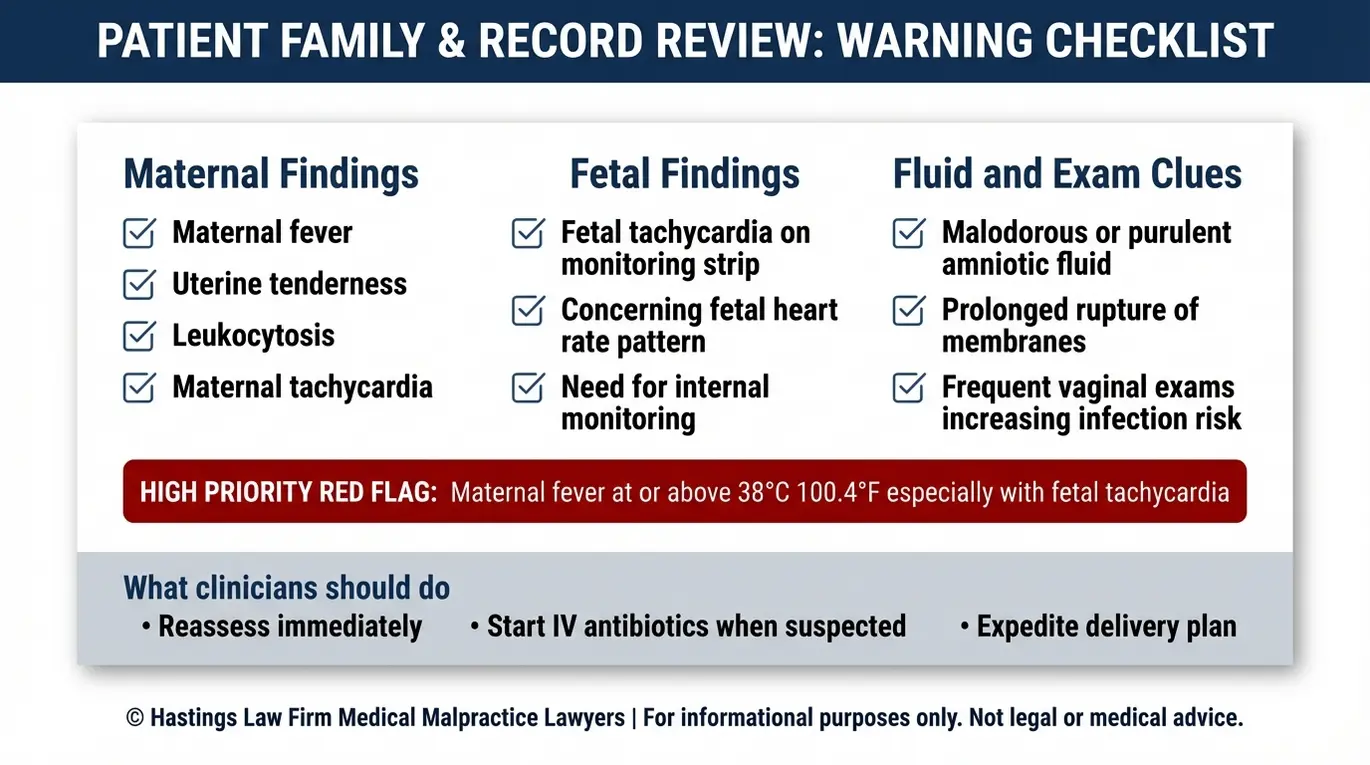
Medical malpractice in chorioamnionitis cases often occurs when doctors fail to recognize the clinical criteria for the infection, such as maternal fever combined with fetal tachycardia or the presence of foul-smelling amniotic fluid. Medical teams use these benchmarks to determine when a patient requires immediate intervention to protect the baby. These signs are well established in obstetric medicine, and missing them can lead to devastating outcomes for the baby.
The single most important warning sign is maternal fever above 100.4°F (38°C) during labor. While fever alone may not confirm infection, it triggers a diagnostic obligation. A fever during labor should prompt the care team to look for additional markers, including:
| Diagnostic Marker | What It Indicates |
|---|---|
| Maternal fever (>100.4°F / 38°C) | Primary warning sign requiring further evaluation |
| Maternal tachycardia (rapid heart rate) | Possible systemic response to infection |
| Fetal tachycardia (heart rate >160 bpm) | Fetal distress, possibly caused by infection |
| Uterine tenderness | Inflammation or infection in the uterine wall |
| Leukocytosis (elevated white blood cell count) | The body’s immune response to bacterial infection |
| Malodorous or purulent amniotic fluid | Direct evidence of bacterial contamination |
Internal fetal monitoring, a method where a small electrode is placed on the baby’s scalp to measure heart rate, is one of the most reliable tools for detecting fetal tachycardia. When a baby’s heart rate remains elevated, it can signal that the baby is under physiological stress from an active infection.
One issue that an untreated chorioamnionitis lawyer in Arizona will examine is the role of frequent vaginal examinations during labor. As noted in a PubMed Central case report on intraamniotic infection, repeated digital exams can introduce bacteria from the lower genital tract into the uterine environment. This is especially concerning in cases of prolonged rupture of membranes (PROM) because the protective barrier is no longer intact. The number and timing of vaginal exams documented in the medical records can become important evidence in determining whether the team missed these clinical criteria.
When these clinical markers appear in the chart but no diagnosis is made, we examine the timeline closely to determine whether the medical team had enough information to act and chose not to.
The Hastings Law Firm Difference
Results matter, but what truly sets us apart is how we achieve them. Every verdict, every settlement, and every Arizona courtroom victory comes from one guiding promise: To treat each client’s fight for justice as if it were our own.
This balance of skill, experience, and empathy reflects our core philosophy that justice should not only compensate the injured, but also make healthcare safer nationwide.

The Standard of Care Regarding Antibiotics and Delivery
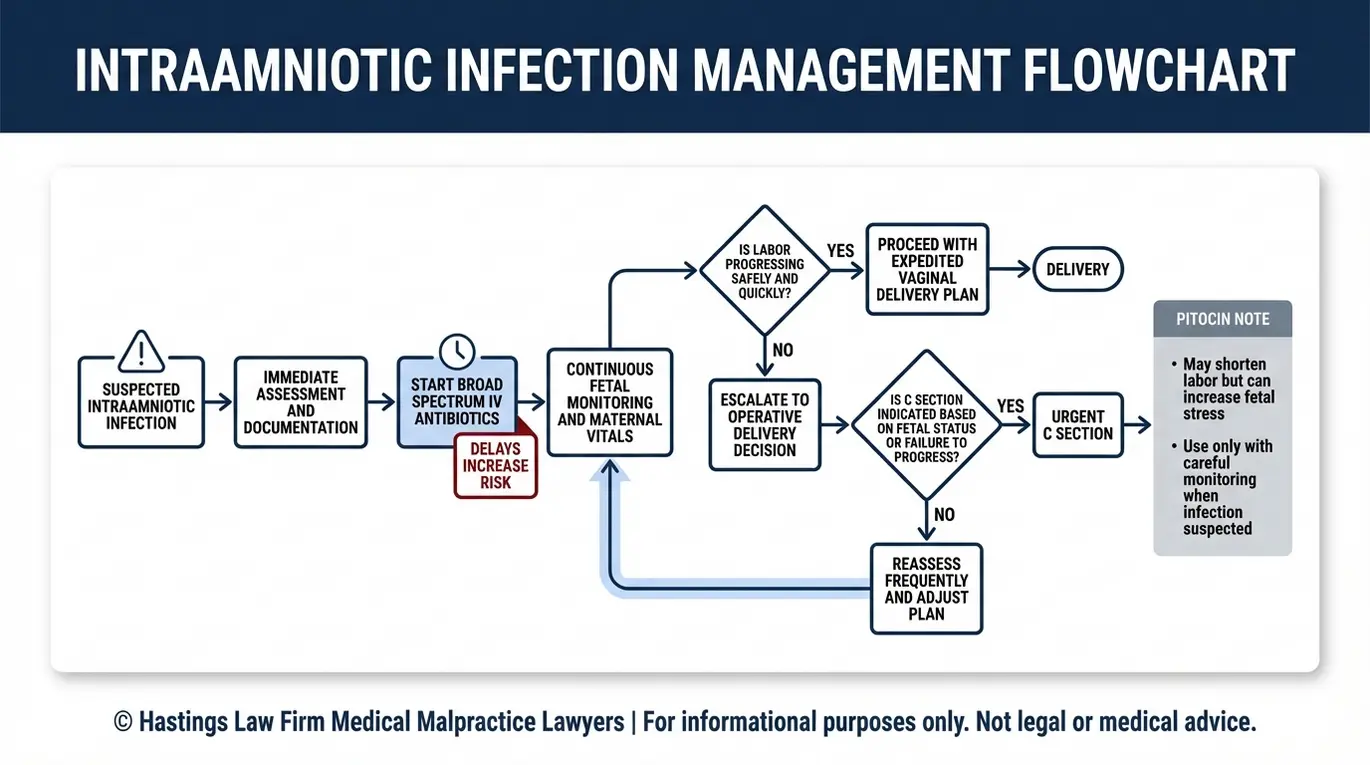
Once chorioamnionitis is suspected, the standard of care requires the immediate administration of broad-spectrum intravenous antibiotics, meaning antibiotics delivered directly into the bloodstream that target a wide range of bacteria, along with an expedited delivery plan to prevent fetal brain injury. The standard of care is the level of treatment a reasonably prudent healthcare professional would provide under similar circumstances. Delays in either step can have permanent consequences.
The clock starts the moment a clinical diagnosis is made or reasonably should have been made. Antibiotic therapy, typically a combination of ampicillin and gentamicin, is the first line of defense. A retrospective study published in PubMed Central comparing antibiotic regimens for chorioamnionitis treatment underscores the importance of prompt antibiotic administration in reducing neonatal complications. Every hour of delay increases the risk that bacteria will cross into the baby’s bloodstream and trigger a dangerous inflammatory response. The regimen should target suspected pathogens like Group B Streptococcus (GBS) to be effective.
Delivery decisions depend on the clinical picture. If the mother is already progressing well through labor and delivery is imminent, a vaginal delivery may still be appropriate. But when prolonged labor occurs, when the baby is showing signs of distress on the fetal heart monitor, or when the infection is worsening despite antibiotics, a C-section may be necessary to protect the baby.
An Arizona birth injury lawyer for infection cases will also evaluate whether the use of Pitocin contributed to the harm. Pitocin is a synthetic form of oxytocin used to induce or speed up contractions. In cases involving an active infection, Pitocin can compound the problem. Stronger, more frequent contractions reduce blood flow to the placenta during each contraction, placing additional stress on an already compromised baby.
If Pitocin was administered during a suspected or confirmed infection without careful monitoring, that decision may represent a separate breach of the standard of care. The treatment protocol the medical team should follow generally includes:
- Immediate IV antibiotic administration upon clinical suspicion
- Continuous fetal heart rate monitoring to assess the baby’s condition
- Assessment of labor progress to determine the safest delivery route
- Preparation for emergency C-section if the baby shows signs of distress
- Coordination between obstetric and neonatal teams for delivery and immediate evaluation
Long-Term Consequences of Untreated Infection
Untreated chorioamnionitis can lead to neonatal sepsis, a life-threatening bloodstream infection in the newborn, and inflammatory brain injuries like cerebral palsy, hypoxic-ischemic encephalopathy (HIE), and periventricular leukomalacia (PVL), a specific form of white matter brain damage. This inflammatory response happens when the body tries to fight off harmful bacteria but accidentally damages healthy tissue.
The mechanism behind these injuries is rooted in the body’s own immune response. When infection spreads unchecked, the mother’s and baby’s immune systems release cytokines, small proteins that act as inflammatory messengers. In a developing fetal brain, especially during vulnerable gestational windows, these cytokines can cross the blood-brain barrier and directly damage the white matter that surrounds and protects nerve fibers. This cytokine-mediated inflammatory pathway is a leading cause of PVL, which in turn is one of the most common precursors to cerebral palsy.
A meta-analysis and systematic review published in PubMed Central on chorioamnionitis and the development of cerebral palsy found a significant association between intraamniotic infection and later diagnosis of CP. This research reinforces what a lawyer for chorioamnionitis birth injury cases must prove: that the infection was present, that it was not properly managed, and that the resulting inflammation caused measurable harm to the baby’s brain.
In the immediate aftermath, affected newborns often require extended stays in the NICU for treatment of neonatal sepsis, pneumonia, or meningitis. Some babies recover from the acute infection but later show signs of developmental delays, motor impairment, or cognitive challenges that become apparent in the months and years that follow.
In the most tragic cases, untreated chorioamnionitis leads to stillbirth or neonatal death. Families who have lost a child under these circumstances may have a wrongful death claim against the providers who failed to act.
Proving Causation Using Placental Pathology
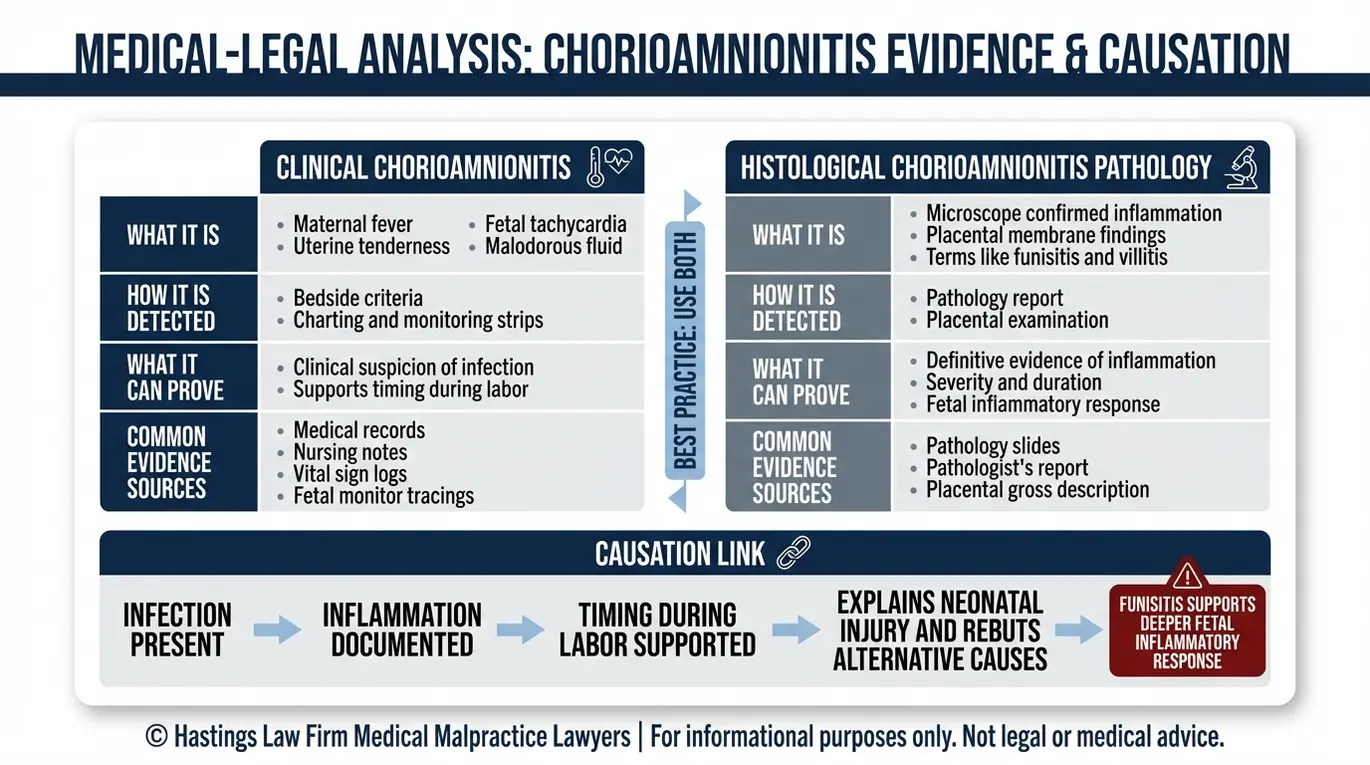
To build a successful chorioamnionitis case, your attorney must use placental pathology reports to prove the timing of the infection and connect it directly to your child’s brain injury. Histopathology refers to the study of diseased tissue and is a primary tool for determining the timing of birth injuries. There is an important distinction between clinical and histological chorioamnionitis.
Clinical chorioamnionitis is the diagnosis made at the bedside based on symptoms like fever and fetal tachycardia. Histological chorioamnionitis is confirmed after delivery when a pathologist examines the placenta under a microscope. The pathology report provides biological evidence of how severe the infection was and, critically, how long it had been present.
One of the most significant findings a pathologist can identify is funisitis, which is inflammation of the umbilical cord. According to a PubMed Central study on funisitis and adverse neonatal outcomes, the presence of funisitis indicates that the infection was deep-seated and had been active long enough to spread beyond the membranes and into the cord itself. This finding can establish that the infection was present during labor and should have been diagnosed and treated.
Other pathology findings, such as villitis (inflammation of the placental villi), help map the progression and severity of the infection. Together, these findings create a timeline that our medical experts use in expert testimony to compare against the labor and delivery records using histopathology.
Defense attorneys in these cases frequently argue that the child’s injuries were genetic, congenital, or otherwise unavoidable. Placental pathology is often the most effective tool for countering those arguments. When a pathology report shows active, advanced infection at the time of delivery, it becomes difficult to argue that the harm was unrelated to the infection or the delay in treatment. Our firm meticulously analyzes these reports to establish the biological certainty required to win in court.
Key evidence sources we examine in these cases include:
- Placental pathology and histology reports
- Fetal heart rate monitoring strips
- Nursing notes and labor timelines
- Antibiotic administration records and timing
- Maternal vital signs and lab results (white blood cell counts, cultures)
- Delivery and operative reports
The Role of Cytokines in Brain Injury
The inflammatory response triggered by untreated chorioamnionitis is driven by cytokines, proteins released by the immune system to fight infection. In birth injury litigation, tracing this biological path is necessary to link an untreated infection to a specific brain condition. In an adult, this inflammatory response is usually contained and manageable. In a developing fetus, the effect can be devastating.
When cytokines flood the fetal bloodstream, they can cross the immature blood-brain barrier and attack the brain’s white matter. This cytokine-mediated inflammatory pathway leads to periventricular leukomalacia. The white matter damaged by this inflammatory cascade is responsible for transmitting signals between the brain and the body, which is why PVL is so closely linked to cerebral palsy and motor disabilities.
Understanding this mechanism is central to building causation. Our medical experts explain to juries how the chain of events, from untreated infection to cytokine release to white matter destruction, connects the provider’s failure to the child’s permanent injuries.
Contact the Arizona Birth Injury Attorneys at Hastings Law Firm Today for Help
If your child suffered a brain injury because an infection was not treated during labor and delivery, you deserve to know what happened and whether the medical team met the standard of care. These are difficult questions, and you should not have to face them alone.
As an Arizona untreated chorioamnionitis lawyer, Hastings Law Firm has the medical knowledge and trial experience to evaluate what went wrong and hold the responsible parties accountable. Our team includes in-house nurse consultants and a national network of medical experts who can analyze placental pathology, fetal monitoring strips, and labor records to determine whether your child’s injury was preventable.
We charge no attorney fees or costs unless we secure a recovery for your family. Contact us today for a free, confidential case evaluation and let our team help you find the answers you deserve.
Frequently Asked Questions About Untreated Chorioamnionitis in Arizona


This content was researched and written by the Hastings Law Firm editorial team, which includes attorneys, medical professionals, and experienced researchers. Our writing is informed by internal knowledge and practical experience, and we cross-check critical details against authoritative sources cited throughout. Every piece undergoes human-led fact-checking and legal review. Because legal and medical information can change, if you spot an error, please contact us. Learn more about our content standards and review process on our editorial policy page.

Tommy Hastings, founder of Hastings Law Firm, is a board-certified personal injury trial lawyer dedicated exclusively to healthcare injury cases. Since 2001, he has represented injured patients and families in litigation against major hospital systems, pharmaceutical companies, and negligent healthcare providers nationwide. He has handled numerous high-profile cases that have drawn national media attention and resulted in multi-million dollar recoveries. He draws on that experience in his writing, helping readers understand how these cases work and what options may be available to them.
