


Texas Umbilical Cord Prolapse Negligence Lawyer
Written by: Hastings Law Firm | Reviewed by: Tommy Hastings | Updated: July 27, 2026
Umbilical cord prolapse is a time sensitive obstetric emergency that can cut off oxygen to a baby during labor and delivery. When warning signs are missed or a rapid delivery is delayed, the result can be permanent brain injury, lifelong disability, or worse. The information that matters most often comes from fetal monitoring patterns, clinical notes, and the timeline of how quickly the team responded. Understanding risk factors and expected emergency actions can help families make sense of what happened. If you or a loved one were harmed or worse due to umbilical cord prolapse negligence in Texas, contact Hastings Law Firm for a free, confidential case review.
Top-Rated Texas Birth Injury Attorneys for Umbilical Cord Emergencies
What You Should Know About Infant Cord Prolapse Error Claims in Texas:
- Life altering injury or worse can result when umbilical cord prolapse is not recognized and treated as an immediate emergency.
- Severe outcomes can follow delays in emergency Cesarean delivery after cord prolapse is diagnosed.
- Long term care needs can be substantial when oxygen deprivation leads to permanent brain injury.
- Disputes often focus on whether fetal heart rate warning signs were visible and whether the response was fast enough.
- Responsibility can extend beyond an OB GYN when multiple clinicians and the hospital are involved in labor and delivery care.
- Recovery options in Texas can be limited by strict legal requirements that must be satisfied early in a malpractice claim.
- Financial recovery may address medical care and therapy costs plus pain and suffering and physical impairment.
- Punitive damages may be available only in rare situations involving gross negligence or willful misconduct.
- Key evidence can be lost over time, including fetal monitoring records and staffing documentation.
- Fetal monitoring strips can be central because they show when distress began and how the team responded.

A Healthcare Focused Law Firm
When your child has been harmed during delivery because of a mishandled umbilical cord prolapse, the weight of that experience can feel impossible to carry alone. You may already sense that something went wrong, that the medical team should have acted sooner or differently. That instinct matters, and you deserve answers.
At Hastings Law Firm, we focus exclusively on medical malpractice. Our team of attorneys, in-house nurse consultants, and board-certified patient advocates understands both the medicine and the law behind these cases. As a Texas Umbilical Cord Prolapse Negligence Lawyer, we investigate what happened, identify where the standard of care broke down, and hold the responsible parties accountable.
If your family is dealing with the aftermath of a birth injury, we can review your child’s medical records and explain your legal options in a free, confidential consultation.
Understanding Umbilical Cord Prolapse as a Preventable Obstetric Emergency
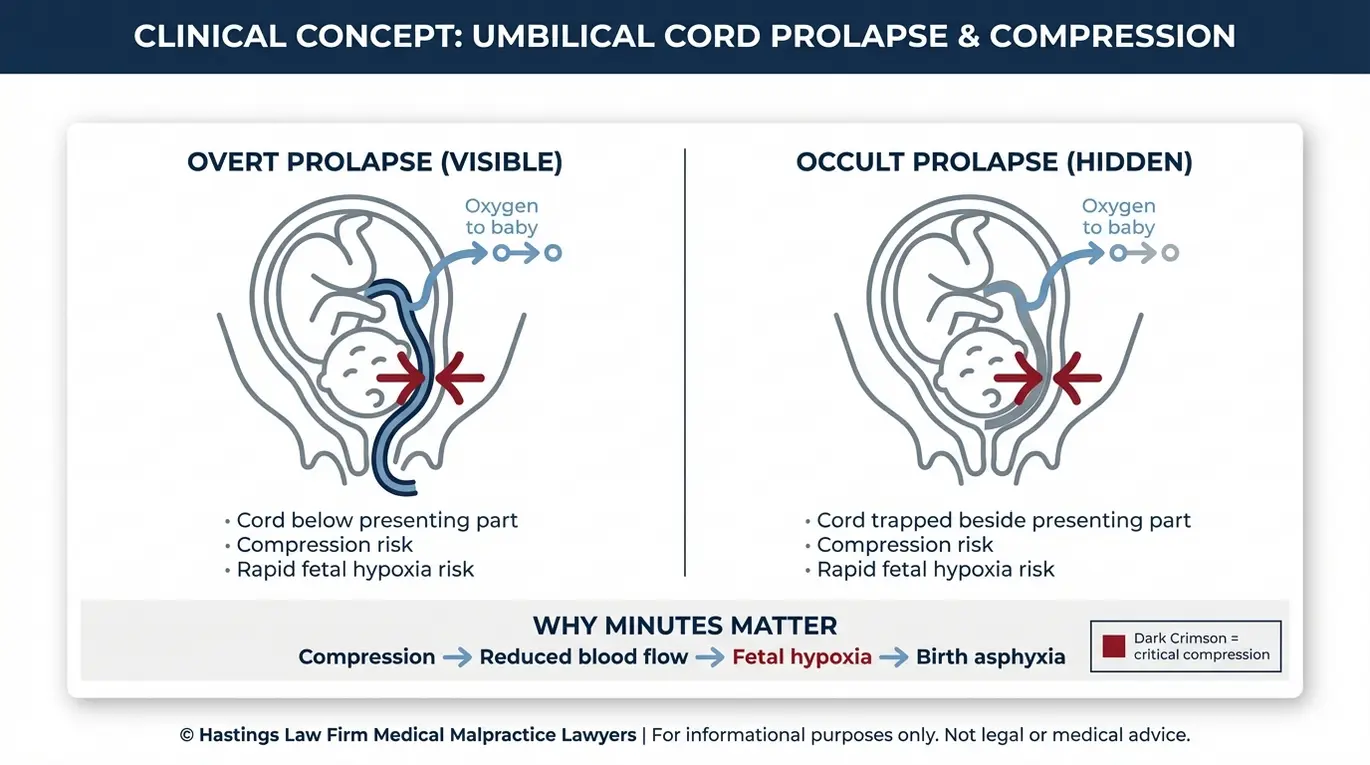
Umbilical cord prolapse is a critical obstetric emergency where the umbilical cord slips through the cervix ahead of the baby, becoming compressed between the baby’s body and the birth canal. This compression restricts or cuts off blood flow and oxygen to the baby, creating an immediate risk of fetal hypoxia, the dangerous reduction of oxygen reaching the brain and vital organs. Without rapid intervention, hypoxia progresses to birth asphyxia and can cause permanent brain damage within minutes.
The condition demands immediate delivery, almost always through emergency C-section. Conditions like premature rupture of membranes (PROM) can trigger this emergency. When medical teams recognize the signs and act quickly, many babies are delivered safely. When they do not, the consequences can be devastating.
An umbilical cord prolapse lawyer helps families determine whether the medical team’s response met the standard of care or whether cord prolapse negligence contributed to their child’s injuries. A Texas birth injury attorney experienced in these cases understands both the clinical timeline and the legal framework needed to build a strong claim.
There are two main types of cord prolapse:
- Overt cord prolapse occurs when the cord visibly drops through the cervix and into the vagina ahead of the baby. This type is typically detected more quickly during examination.
- Occult cord prolapse occurs when the cord is compressed alongside the baby’s body without being visible. Because it is hidden, occult prolapse is harder to detect and often identified only through signs of fetal distress in heart rate patterns.
Both types can rapidly starve the baby of oxygen. Occult prolapse, in particular, may go unrecognized if fetal monitoring is not being watched closely, which is why continuous assessment during labor is so important.
Recognizing Risk Factors and the Standard of Care
Doctors, nurses, and midwives are required to monitor for risk factors such as breech presentation, premature labor, or polyhydramnios, and to respond immediately when those risks are present. Identifying these risk factors early allows medical teams to prepare for potential complications. Failure to anticipate these risks or monitor fetal heart rates can constitute a breach of the standard of care, the accepted level of treatment that a reasonably competent medical professional would provide under similar circumstances.
Several well-documented conditions raise the risk of umbilical cord prolapse. When these factors are present, the standard of care generally requires closer monitoring and preparation for rapid intervention.
| Risk Factor | Required Monitoring / Response |
|---|---|
| Breech presentation, where the baby is positioned feet or buttocks first | Continuous fetal heart rate monitoring; surgical delivery planning |
| Premature rupture of membranes (PROM), the early breaking of the amniotic sac before labor begins | Immediate assessment for cord position; close observation |
| Polyhydramnios (excess amniotic fluid) | Heightened surveillance during labor; preparation for emergency delivery |
| Multiple gestation (twins or more) | Continuous electronic fetal monitoring for all babies |
| Preterm labor | Increased vigilance for cord complications; NICU readiness |
According to the National Center for Biotechnology Information (NCBI Bookshelf), umbilical cord prolapse carries significant risks to the fetus, and prompt recognition paired with rapid delivery is essential to reducing injury.
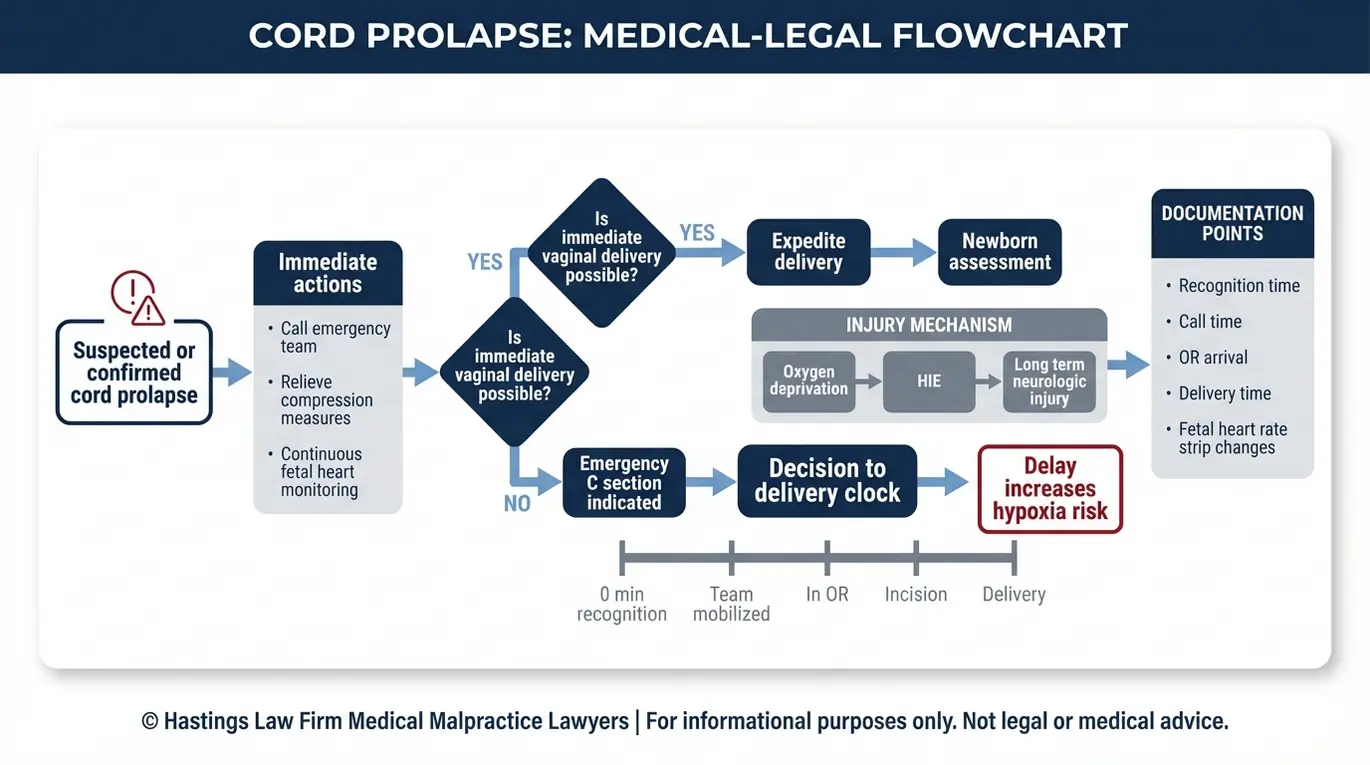
Obstetricians and labor and delivery nurses are trained to watch fetal heart rate strips for sudden decelerations, a key warning sign of umbilical cord compression. When these decelerations appear, the medical team should take immediate steps such as placing the mother in a knee-chest position or manually elevating the baby’s presenting part to relieve pressure on the cord while preparing for emergency delivery.
Medical negligence in these situations often involves a failure to recognize or act on warning signs that were already visible in the clinical data. Our team examines whether labor and delivery negligence occurred by reviewing exactly what the monitors showed and how quickly the staff responded.
The Hastings Law Firm Difference
Results matter, but what truly sets us apart is how we achieve them. Every verdict, every settlement, and every Texas courtroom victory comes from one guiding promise: To treat each client’s fight for justice as if it were our own.
This balance of skill, experience, and empathy reflects our core philosophy that justice should not only compensate the injured, but also make healthcare safer nationwide.

Failure to Perform Emergency C-Section and Resulting Injuries
When cord prolapse is diagnosed, the standard of care typically requires an emergency Cesarean section within approximately 30 minutes. In many clinical scenarios, delivery needs to happen even faster than that. A delay in calling for or performing surgery is often the primary cause of severe, permanent injury or death.
Every minute that the umbilical cord remains compressed, the baby’s brain receives less oxygen. This oxygen deprivation, known as fetal hypoxia, triggers a cascade of cellular damage. When the deprivation is severe or prolonged, it leads to Hypoxic-Ischemic Encephalopathy (HIE), a specific type of brain injury caused by the combination of reduced oxygen and impaired blood flow. HIE is one of the most common diagnoses in umbilical cord prolapse negligence cases.
Research published in the journal *BMC Pregnancy and Childbirth* on decision-to-delivery interval and neonatal outcomes in intrapartum umbilical cord prolapse confirms that shorter intervals between diagnosis and delivery are associated with better outcomes for the baby. The data reinforces what experienced birth injury lawyers already know: the clock is the most critical factor in these emergencies.
The injuries that result from a delayed C-section can cause permanent disability and be life-altering:
- Cerebral palsy, a group of disorders affecting movement, muscle tone, and coordination
- Cognitive and developmental delays that affect learning, communication, and daily functioning
- Seizure disorders and epilepsy stemming from brain damage sustained during oxygen deprivation
- Motor function loss, ranging from difficulty with fine motor skills to full paralysis
- Stillbirth, when the delay is prolonged enough to be fatal
Children who survive these injuries often require lifelong medical care, therapy, and adaptive support. As a Texas malpractice attorney experienced in delayed C-section lawsuits, our firm investigates the precise timeline of events to determine whether faster action could have changed the outcome for your child. A birth injury lawyer’s role in these cases is to connect the delay to the harm, minute by minute.
Proving Malpractice in Texas Cord Prolapse Cases
Proving medical malpractice requires clear evidence that the medical team deviated from the standard of care, such as by ignoring fetal heart rate decelerations or delaying surgery, and that this deviation directly caused the child’s injury. In cord prolapse cases, that often means demonstrating that providers failed to follow hospital protocols for obstetric emergencies.
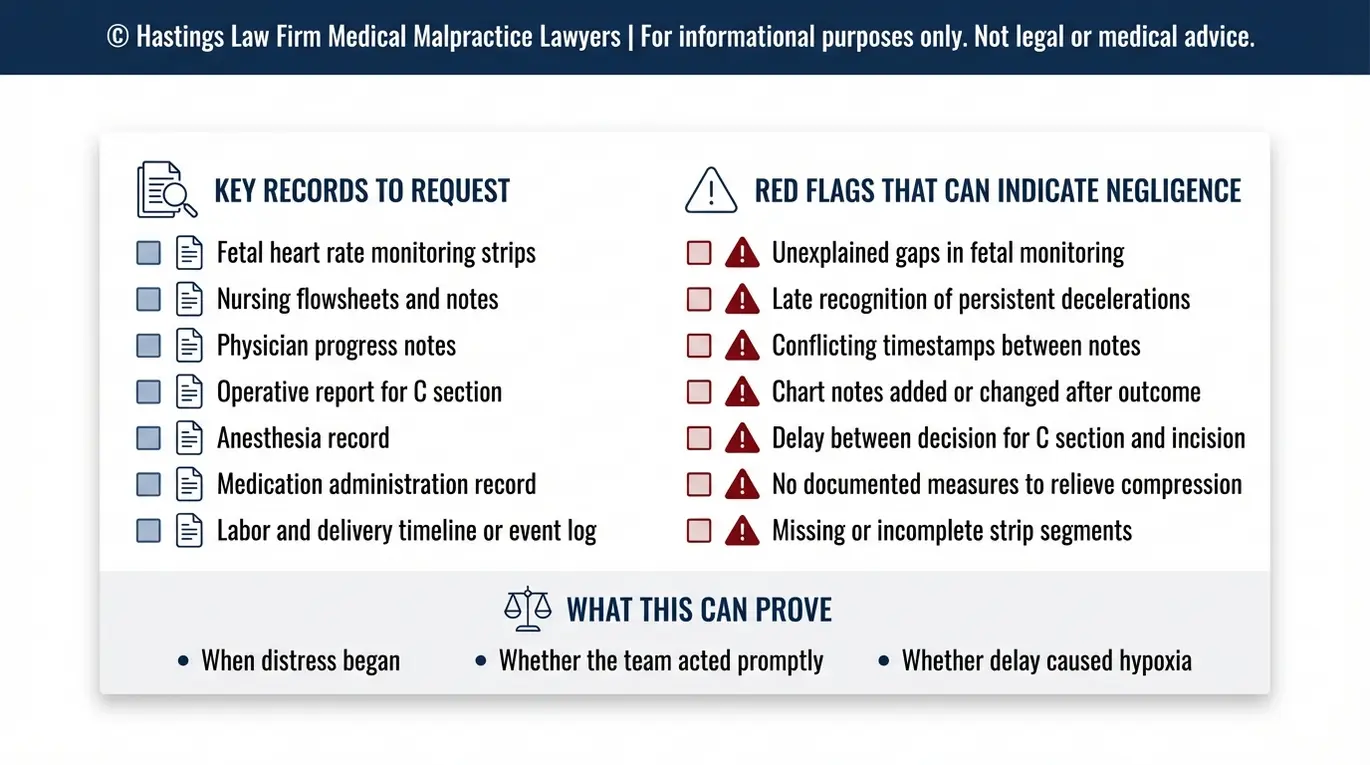
Fetal monitoring strips, also called cardiotocography or CTG records, are the single most important piece of evidence in these cases. These strips continuously record the baby’s heart rate throughout labor. They function as the “black box” of the delivery, showing exactly when fetal distress began and how the medical team responded, or failed to respond. Fetal heart rate decelerations, which are sudden drops in the baby’s heart rate, are a recognized warning sign of umbilical cord compression and demand immediate clinical action.
Our team examines the following evidence when building a cord prolapse case:
- Fetal monitoring strips and the timestamps of any heart rate abnormalities
- Labor and delivery nursing notes, including documentation of when staff notified the physician
- Operative reports and anesthesia records reflecting the decision-to-delivery timeline
- Hospital staffing logs and shift change records
- Internal hospital protocols for managing obstetric emergencies
- Charting inconsistencies, where medical records may have been altered or amended after a poor outcome
Under Texas law, suing a hospital for medical malpractice requires filing an expert report within 120 days of the lawsuit. This requirement, outlined in Texas Civil Practice and Remedies Code § 74.351, means the case must be supported early on by a qualified medical expert who can identify the specific breach and its connection to the injury. To meet the burden of proof, the case must be supported by these expert medical opinions.
As a Texas umbilical cord prolapse lawyer, Hastings Law Firm works with a national network of obstetric and neonatal experts who review records, analyze timelines, and provide the opinions necessary to establish whether evidence of negligence exists. Our in-house nursing staff identifies charting inconsistencies and clinical red flags that general practice attorneys often miss. This is how we determine what went wrong and who is responsible.
Compensation for Lifelong Care and Damages
Families may recover economic damages for past and future medical care, therapy, and lost earning capacity, as well as non-economic damages for pain, suffering, and physical impairment under Texas law. Birth injury compensation in these cases often reflects the reality that a child injured by cord prolapse may need support for the rest of their life. Securing this financial recovery is essential for families who face overwhelmed insurance policies and the staggering expense of specialized medical intervention.
The financial impact begins immediately and grows over time:
| Damage Category | Examples |
|---|---|
| Economic Damages | NICU and hospitalization costs, surgeries, ongoing therapies (physical, occupational, speech), specialized medical equipment, home modifications, 24/7 nursing or attendant care, lost future earning capacity, special education costs |
| Non-Economic Damages | The child’s pain and suffering, loss of quality of life, physical impairment and disfigurement, and the parents’ mental anguish |
| Punitive Damages | May apply in rare cases involving gross negligence or willful misconduct |
To accurately project future medical costs, birth injury cases often involve a life care planner, a specialist who creates a detailed forecast of the child’s medical, therapeutic, and daily living needs across their expected lifespan. These plans account for inflation and the increasing complexity of care as the child ages, and they form the foundation of a settlement for cerebral palsy or other permanent conditions. Without a comprehensive life care plan, families risk settling for an amount that runs out long before the child’s needs are fully met.
Every case is different, and we do not guarantee specific outcomes. But we build each claim to reflect the full scope of what your family will need, now and in the years ahead.
Why Choose Hastings Law Firm for Your Birth Injury Claim
Hastings Law Firm specializes exclusively in medical malpractice, offering a team of board-certified attorneys and medical experts who operate on a contingency fee basis to fight for families against powerful hospital systems. We do not handle car accidents, slip-and-falls, or general personal injury. Every attorney, nurse consultant, and patient advocate on our team works on medical negligence cases, which means your family benefits from a depth of clinical and legal knowledge that general practice firms simply cannot match.
Here is what sets our medical malpractice law firm apart:
- Exclusive medical malpractice focus. Our entire operation is built around one mission: holding negligent healthcare providers accountable. This specialization gives us a strategic advantage when investigating complex birth injury claims.
- In-house medical expertise. Our team includes experienced nurses and board-certified patient advocates who review records, interpret clinical data, and spot the charting inconsistencies that often reveal what went wrong.
- Former defense attorneys on staff. Several of our lawyers previously defended hospitals and physicians. They know the tactics the other side will use, and they help us anticipate and counter those strategies from day one.
- Trial-ready preparation. We prepare every case as if it will go before a jury. This level of preparation strengthens settlement negotiations and signals to insurance carriers that we will not accept less than fair value.
- No fee unless we win. We work on a contingency fee basis, meaning your family pays no attorney fees or costs unless we secure a recovery. There is no financial risk in hiring a birth injury attorney at our firm.
- Nationwide reach. Our firm combines local dedication with nationwide reach, using experts from across the country to support your claim.
Founded by Tommy Hastings, a board-certified trial attorney recognized by the American Board of Trial Advocates and named a Texas Super Lawyer since 2013, our firm has recovered millions for families affected by preventable birth injuries. As a Texas Umbilical Cord Prolapse Negligence Lawyer, Tommy and his team bring both legal skill and genuine compassion to every case.
Contact the Texas Birth Injury Attorneys at Hastings Law Firm Today for Help
Texas law imposes time limits on medical malpractice claims, and while birth injury cases involving minors may have extended deadlines, critical evidence like fetal monitoring strips and staffing records can degrade or disappear over time. These legal time limits are strict, making early investigation essential. The sooner your case is investigated, the stronger it can be.
Your initial consultation is free and confidential. A patient advocate will listen to your family’s experience, review the key details, and help determine whether your child’s injury may have been preventable. There is no obligation and no cost.
Many of our clients come to us motivated not only by their child’s future needs, but by a desire to learn what actually happened and to prevent it from happening to another family. If that is where you are right now, we are here to help.
Contact Hastings Law Firm to request your free case evaluation today.
Frequently Asked Questions About Umbilical Cord Prolapse Negligence in Texas


This content was researched and written by the Hastings Law Firm editorial team, which includes attorneys, medical professionals, and experienced researchers. Our writing is informed by internal knowledge and practical experience, and we cross-check critical details against authoritative sources cited throughout. Every piece undergoes human-led fact-checking and legal review. Because legal and medical information can change, if you spot an error, please contact us. Learn more about our content standards and review process on our editorial policy page.

Tommy Hastings, founder of Hastings Law Firm, is a board-certified personal injury trial lawyer dedicated exclusively to healthcare injury cases. Since 2001, he has represented injured patients and families in litigation against major hospital systems, pharmaceutical companies, and negligent healthcare providers nationwide. He has handled numerous high-profile cases that have drawn national media attention and resulted in multi-million dollar recoveries. He draws on that experience in his writing, helping readers understand how these cases work and what options may be available to them.
