


Texas Uloric Injury Lawyer
Written by: Hastings Law Firm | Reviewed by: Gabe Sassin | Updated: July 27, 2026
Uloric, also called febuxostat, is a prescription drug used to lower uric acid in adults with gout, and it has been linked to serious cardiovascular harm and kidney failure. The FDA required a prominent warning after clinical trial findings showed higher cardiovascular death compared with allopurinol. Some patients report life changing outcomes, including long term disability and extensive ongoing care needs, after taking the medication. Allegations also claim the manufacturer withheld safety information during approval and monitoring. If you or a loved one were harmed or worse due to Uloric injury in Texas, contact Hastings Law Firm for a free, confidential case review.
Dedicated Legal Advocacy for Victims of Dangerous Pharmaceuticals in Texas
What You Should Know About Febuxostat Injury Claims in Texas:
- Life altering cardiovascular outcomes have been linked to Uloric use, including heart attack and stroke.
- Fatal outcomes have been reported, and wrongful death claims are discussed for families who lost a loved one after a cardiovascular event tied to Uloric.
- Options for recovery can be shaped by whether warnings about cardiovascular risk were provided before the medication was started.
- Accountability claims may turn on allegations that Takeda withheld or downplayed cardiovascular safety data during approval and post approval monitoring.
- Financial recovery may depend on the severity of harm, since damages discussed include medical bills, lost income, and pain and suffering.
- Recovery can be limited if filing is delayed in Texas, since missing the applicable time limit can permanently bar a claim.
- Individual lawsuits are emphasized over class actions, since compensation and decision making can be diluted in a group settlement.
- Proof issues can hinge on medical records and medication timelines that connect Uloric use to the injury.
- Kidney harm is discussed as a potential outcome, including renal decline and kidney failure requiring dialysis.
- Disputes over causation are common, since the manufacturer may argue pre existing conditions caused the event rather than the drug.

A Healthcare Focused Law Firm
If you or someone you love suffered a serious cardiovascular event, stroke, or kidney failure after taking Uloric, the confusion and anger you feel right now are completely understandable. You trusted that a medication prescribed by your doctor was safe, and learning that a pharmaceutical company may have failed to disclose known risks can feel like a profound betrayal.
You do not have to sort through this alone. A Texas Uloric injury lawyer with specific experience in pharmaceutical litigation can help you understand what happened and whether you have a viable legal claim. At Hastings Law Firm, our team of attorneys, nurse consultants, and medical experts focuses exclusively on cases where patients are harmed by medical negligence and dangerous drugs. We invite you to contact us for a free, confidential case evaluation so we can review your situation and explain your next steps.
Choosing the Right Legal Representation for Uloric Victims in Texas
A qualified Texas Uloric injury lawyer focuses on product liability cases against pharmaceutical companies like Takeda Pharmaceuticals, helping injured patients work through complex litigation to recover damages for medical expenses, lost income, and suffering. Not every law firm is equipped to handle these cases effectively, and choosing the right representation can make a significant difference in the outcome.
Pharmaceutical injury litigation is fundamentally different from a car accident or slip-and-fall case. Claims involving dangerous drugs require an attorney who understands clinical pharmacology, FDA regulatory history, and defense strategies. A general personal injury firm may lack the medical depth needed to build a persuasive case against a company like Takeda. These cases often involve mass tort proceedings, where thousands of similar claims are consolidated.
At Hastings Law Firm, we bring a distinct advantage to product liability cases. Our legal team includes former defense attorneys and experienced hospital nurses who previously worked for the systems they now challenge. That experience gives us direct insight into how the other side builds its case, allowing us to anticipate arguments and prepare accordingly. We also have in-house nurse consultants and board-certified patient advocates who analyze medical records and identify the clinical details that connect a drug to an injury.
Every case we accept is prepared from day one as though it will go before a jury. This trial-ready approach sends a clear message to defense counsel and insurance carriers: we are prepared to take the case to a jury rather than accepting less than fair value. Many firms look for quick settlements to avoid the courtroom, but we believe that being fully prepared for trial maximizes the potential recovery. Texas Uloric injury attorneys who prepare this aggressively tend to achieve better results at every stage of the process.
We also believe that cost should never prevent someone from seeking justice. Our firm operates on a contingency fee basis, meaning you pay no attorney fees or costs unless we secure a recovery on your behalf.
Why choose Hastings Law Firm for your Uloric claim:
- Exclusive focus on medical malpractice and pharmaceutical injury litigation
- Former defense attorneys and in-house medical professionals on staff
- Trial-ready preparation from the first day of every case
- Contingency fee structure with no upfront costs
- National expert network for credible, qualified testimony
Understanding Uloric (Febuxostat) and Its Risks
Uloric (febuxostat) is a prescription medication designed to lower uric acid levels in adults with gout but has been linked to an increased risk of cardiovascular death compared to the older alternative drug, allopurinol. Since its FDA approval in 2009, this correlation has raised significant safety concerns for patients managing hyperuricemia, the buildup of excess uric acid in the blood.
Allopurinol, the standard treatment for gout for decades, works by inhibiting an enzyme called xanthine oxidase, which reduces the body’s production of uric acid. Both drugs share this mechanism, but Uloric was marketed as an option for patients who could not tolerate allopurinol or whose uric acid levels did not respond adequately to it.
Many doctors prescribed Uloric because it offered an alternative for patients with limited options, particularly those with mild renal dysfunction. Takeda Pharmaceuticals promoted the drug as a modern solution for managing chronic gout. What many prescribing physicians may not have fully appreciated at the time was the extent of the cardiovascular risk, information that would later emerge through post-market studies and whistleblower allegations.
Uloric injury attorneys in Texas evaluate whether patients were adequately warned about these risks before starting the medication and whether safer alternatives should have been recommended. The ULORIC (febuxostat) prescribing information filed with the FDA now reflects these warnings, but for many patients, the damage was already done.
| Feature | Uloric (Febuxostat) | Allopurinol |
|---|---|---|
| FDA Approval | 2009 | 1966 |
| Drug Class | Xanthine Oxidase Inhibitor | Xanthine Oxidase Inhibitor |
| Primary Use | Lowers uric acid in gout patients | Lowers uric acid in gout patients |
| FDA Black Box Warning | Yes (cardiovascular death risk) | No |
| Cardiovascular Death Risk | Higher (per CARES trial) | Lower (comparator) |
| Common Prescribing Reason | Alternative when allopurinol is ineffective or not tolerated | First-line treatment for gout |
The Hastings Law Firm Difference
Results matter, but what truly sets us apart is how we achieve them. Every verdict, every settlement, and every Texas courtroom victory comes from one guiding promise: To treat each client’s fight for justice as if it were our own.
This balance of skill, experience, and empathy reflects our core philosophy that justice should not only compensate the injured, but also make healthcare safer nationwide.

The FDA Black Box Warning and CARES Clinical Trial
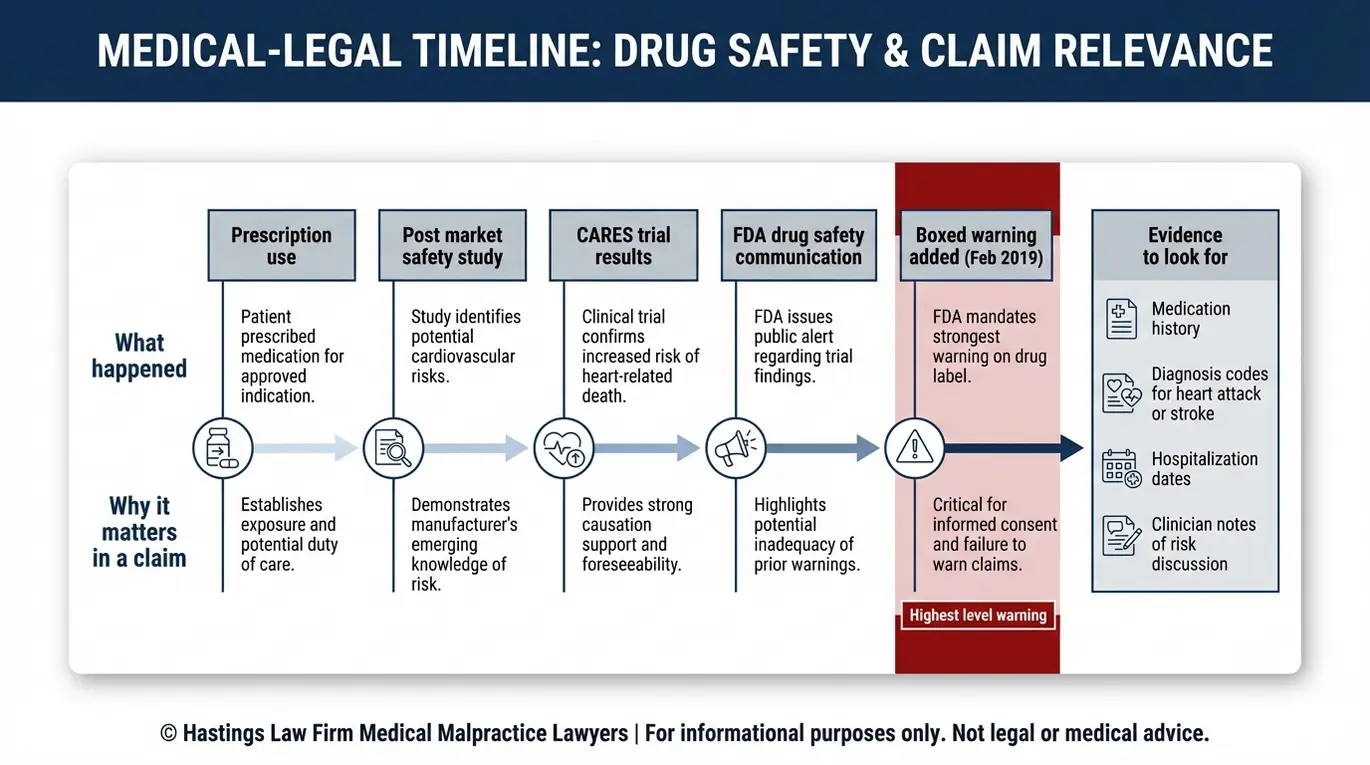
The FDA mandated a Black Box Warning for Uloric in February 2019 after the CARES clinical trial revealed a significantly higher rate of heart-related deaths among Uloric users compared to those taking allopurinol. A Black Box Warning, the most serious safety label the FDA can require on a prescription drug, signals that the medication carries risks severe enough to cause death or life-threatening harm. This designation effectively marks the medication as a potentially bad drug in the eyes of many safety advocates.
This action followed a formal FDA Drug Safety Communication announcing that Uloric (febuxostat) carries an increased risk of death. This communication, a public alert about new or evolving safety information regarding an approved drug, directed healthcare providers to limit Uloric prescriptions to patients who had failed or could not tolerate allopurinol. It also required Takeda Pharmaceuticals to update the drug’s labeling to reflect the new findings.
The timeline of FDA action raises important questions for any Uloric lawsuit attorney evaluating a potential claim. Records indicate that cardiovascular safety concerns existed as early as the drug’s original approval process. The FDA required the CARES trial as a condition of approval, yet the drug remained on the market for a full decade before the Black Box Warning was issued. This delay allowed millions of prescriptions to be filled while the potential dangers were still being investigated, leaving patients vulnerable to risks they did not fully understand.
A systematic review and meta-analysis published in PubMed Central examining cardiovascular safety of febuxostat versus allopurinol provides additional clinical context supporting the connection between febuxostat use and elevated cardiovascular risk.
Timeline of key FDA actions:
- 2009: FDA approves Uloric; requires Takeda to conduct a post-market cardiovascular safety study
- 2017: CARES trial results submitted to FDA showing increased cardiovascular death
- November 2017: FDA issues initial Drug Safety Communication, a formal public alert about new or evolving safety information regarding an approved drug
- February 2019: FDA adds Black Box Warning to Uloric labeling
- 2019–Present: FDA limits Uloric to second-line therapy for patients who failed allopurinol
Specific Findings of the CARES Post-Market Safety Clinical Trial
The CARES clinical trial, a post-market safety study required by the FDA as a condition of Uloric’s approval, enrolled over 6,000 patients with gout and existing cardiovascular disease. This postmarketing safety study, a clinical trial conducted after a drug reaches the market to monitor long-term safety in real-world patient populations, compared cardiovascular outcomes between patients randomized to febuxostat and those randomized to allopurinol.
The results were striking. While the overall rate of major cardiovascular events was similar between the two groups, cardiovascular death was significantly higher in the Uloric group. Specifically, patients taking Uloric experienced a 34% higher rate of cardiovascular death and a 22% higher rate of all-cause mortality compared to those on allopurinol.
These findings are central to product liability claims against Takeda Pharmaceuticals. The data suggests that the company’s drug carried a measurable and statistically significant increased risk of death, a risk that patients and their doctors needed to weigh before choosing Uloric over allopurinol. For a Texas Uloric injury lawyer building a case, the CARES trial provides the clinical foundation linking the drug to the harm.
Serious Side Effects Including Heart Attack and Stroke
Serious side effects associated with Uloric include fatal cardiovascular events such as heart attack and stroke, as well as unstable angina and the need for urgent cardiac surgery. These are not minor complications. They represent life-altering and, in many cases, life-ending medical emergencies. Survivors often face long-term disability, requiring extensive rehabilitation, ongoing medication, and significant lifestyle adjustments just to manage the aftermath of the event.
According to MedlinePlus, the National Library of Medicine’s consumer health resource on febuxostat, patients should monitor for a major adverse cardiovascular event (MACE). This category includes non-fatal heart attack, stroke, and cardiovascular death, which is sudden death caused by heart function loss.
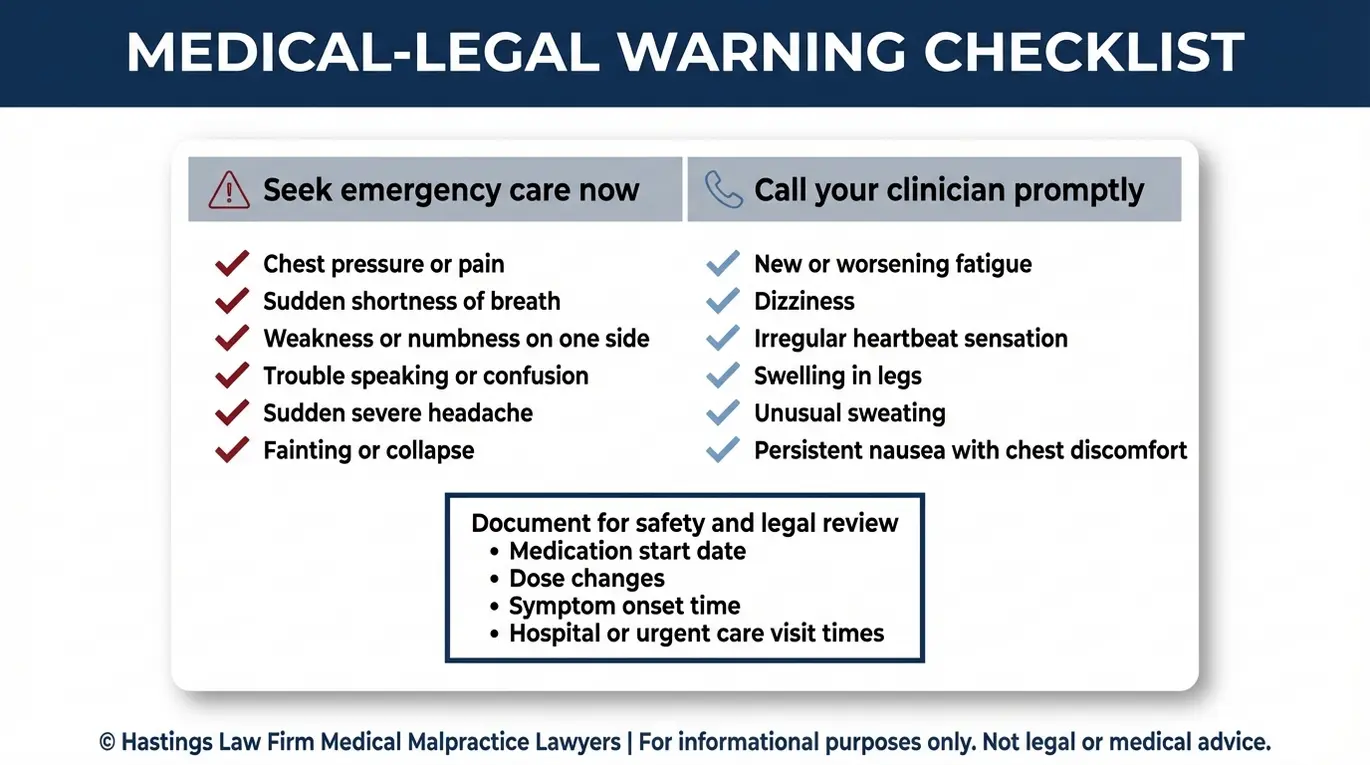
Symptoms that may indicate a serious cardiovascular event while taking Uloric:
- Chest pain, pressure, or tightness
- Shortness of breath, especially with mild exertion or at rest
- Pain radiating to the arm, jaw, neck, or back
- Sudden numbness or weakness on one side of the body
- Difficulty speaking or sudden confusion
- Severe, unexplained headache
- Rapid or irregular heartbeat
- Sudden dizziness or loss of balance
If you or a loved one experienced any of these symptoms while taking Uloric, seek immediate medical attention and preserve all medical records related to the event.
Attorneys for Uloric injuries also handle wrongful death claims on behalf of families who lost a loved one to a cardiovascular event connected to the drug. In these cases, surviving family members may be entitled to pursue compensation for funeral expenses, lost financial support, and the profound personal loss they have suffered. The wrongful death component of Uloric litigation is among the most important, because many patients who experienced cardiovascular death were never warned that their gout medication carried this level of risk.
Connection Between Uloric and Renal Failure
Adverse event reports and emerging clinical data have suggested a link between Uloric usage and the development of renal dysfunction, a decline in kidney function measured by estimated glomerular filtration rate (eGFR), which tracks how well the kidneys filter waste from the blood. Some patients who began Uloric with stable kidney function later experienced significant decline, including kidney failure requiring dialysis.
This connection is particularly troubling because one of the primary reasons doctors prescribed Uloric over allopurinol was for patients who already had mild kidney issues. Allopurinol requires dose adjustments in patients with impaired renal function, and Uloric was promoted as a safer alternative for that population. The possibility that the drug itself may worsen kidney health undermines the very rationale for prescribing it. For a patient attempting to manage gout, discovering that their treatment has led to end-stage renal disease is a devastating physical and financial blow.
According to the National Institute of Diabetes and Digestive and Kidney Diseases (NIDDK), kidney disease affects millions of Americans, and drug-induced renal injury can accelerate decline in patients who were already at elevated risk. For gout patients, whose condition is closely tied to how the kidneys process uric acid, any medication that impairs kidney function can create a dangerous cycle of worsening disease.
An Uloric kidney failure lawyer evaluates whether the prescribing physician was aware of these risks and whether the patient was monitored appropriately. Our team reviews lab results, medication timelines, and renal function trends to determine whether Uloric contributed to the decline.
The Takeda Whistleblower Lawsuit and Dr. Helen Ge
Dr. Helen Ge, a former safety consultant for Takeda Pharmaceuticals, filed a whistleblower lawsuit alleging that the company intentionally withheld data about Uloric’s cardiovascular risks to secure and maintain FDA approval. Her allegations paint a troubling picture of a pharmaceutical company that may have prioritized market access over patient safety.
According to the whistleblower lawsuit, Dr. Ge raised internal concerns about how Takeda was handling adverse event data during the drug’s development and post-approval monitoring. She alleged that the company failed to report certain safety signals to the FDA as required by law and that clinical data suggesting cardiovascular harm was downplayed or excluded from regulatory submissions.
The lawsuit also alleges that the company aimed to protect sales of Uloric while competing against generic and inexpensive allopurinol. By allegedly suppressing negative safety data, the company could maintain a competitive edge while patients unknowingly assumed the risks. These are serious accusations. If the allegations are supported by evidence, they suggest that Takeda had early knowledge that Uloric posed cardiovascular dangers and chose not to share that information transparently.
For lawyers suing Takeda on behalf of injured patients, the whistleblower testimony strengthens the foundation of product liability claims. It provides an insider account of the company’s decision-making process. It also supports the argument that Takeda knew, or should have known, about the risks long before the FDA mandated the Black Box Warning.
Dr. Ge’s willingness to come forward at personal and professional risk reflects the kind of accountability that drives meaningful change in pharmaceutical safety. Evidence demonstrating that a company acted with conscious disregard for patient safety can sometimes support a claim for additional damages intended to penalize such conduct.
Why We File Individual Lawsuits Instead of Class Actions
We file individual lawsuits rather than class actions for Uloric injuries to ensure that each client’s specific medical history, damages, and suffering are fully evaluated and compensated, rather than diluted in a group settlement. This distinction matters because every patient’s experience with Uloric is different.
Many people assume that pharmaceutical cases are always handled as class actions, but that is not how most dangerous drug litigation works. Uloric cases are typically pursued as individual product liability claims, sometimes coordinated through Multi-District Litigation (MDL), a procedural mechanism that consolidates similar federal cases before one judge for pretrial proceedings while preserving each person’s individual claim.
The difference between MDL and a class action is significant. In a class action, one outcome applies to everyone, and individual circumstances often get lost. In an individual lawsuit or MDL, your unique medical records, your specific injuries, and your personal losses are the focus of your case.
Hastings Law Firm acts as dedicated Uloric injury counsel, rejecting high-volume approaches that may prioritize quick turnover. Instead, we prepare every Uloric case with the same trial-ready discipline we apply to all of our work. This means thorough medical record analysis, qualified expert consultations, and a litigation strategy built around the facts of your case.
| Factor | Individual Lawsuit / MDL | Class Action |
|---|---|---|
| Case Evaluation | Based on your specific injuries and damages | Based on group-wide common issues |
| Compensation | Tailored to your medical bills, losses, and suffering | Divided among all class members |
| Client Control | You have direct input on settlement decisions | Lead plaintiffs make decisions for the group |
| Trial Preparation | Each case prepared for trial individually | Rarely goes to trial |
| Attorney Relationship | Direct, ongoing communication with your legal team | Limited individual contact |
Texas Statute of Limitations for Pharmaceutical Injury Claims
In Texas, the statute of limitations for filing a product liability or personal injury lawsuit is generally two years from the date of the injury or the date the injury was discovered. Under Texas Civil Practice and Remedies Code § 16.003, failing to file within this window can permanently bar your right to pursue a claim.
The “discovery rule” is particularly relevant in dangerous drug cases. Many patients do not immediately connect a heart attack, stroke, or kidney failure to a medication they have been taking for months or years. The statute of limitations under Texas law may begin running from the date the patient knew, or reasonably should have known, that their injury was linked to the drug. Determining exactly when that clock started requires careful legal analysis.
If you believe you or a family member was harmed by Uloric, do not wait to seek legal guidance. Evidence can degrade over time, medical records can become harder to obtain, and critical deadlines can pass without warning. Exceptions may apply for minors or individuals who were legally incapacitated at the time of injury, but these must be evaluated on a case-by-case basis.
A Texas Uloric injury lawyer can assess your timeline and explain specific Texas Uloric claim time limits to protect your right to file.
Recovering Damages for Uloric Injuries in Texas
Patients harmed by Uloric may be entitled to compensation for economic damages like medical bills and lost wages, as well as non-economic damages for pain, suffering, and physical impairment. The specific value of a claim depends on the severity of the injury, the extent of ongoing medical needs, and the impact on the patient’s daily life and relationships.
Texas law recognizes several categories of recoverable damages in pharmaceutical injury cases. The Texas Pattern Jury Charges, which guide how juries evaluate damages, outline the framework courts use to assess what an injured patient is owed. Economic damages may include:
- Past and future medical expenses, including hospitalizations, surgeries, cardiac rehabilitation, and dialysis
- Lost wages and diminished earning capacity
- Cost of in-home care or long-term assisted living
- Prescription medications and ongoing treatment
Non-economic damages may include:
- Physical pain and suffering
- Mental anguish and emotional distress
- Loss of enjoyment of life
- Physical impairment and disfigurement
- Loss of consortium (available to spouses in injury cases and to families in wrongful death claims)
Punitive damages may also be available in cases where the evidence demonstrates that Takeda Pharmaceuticals acted with fraud, malice, or gross negligence. While not awarded in every case, punitive damages serve a vital public interest by penalizing companies that place profits over human safety. A Texas Uloric injury lawyer can evaluate which categories of damages apply to your situation and work with medical and economic experts to document the full scope of your losses.
Contact the Texas Dangerous Drug Attorneys at Hastings Law Firm Today for Help
If you or a loved one suffered a heart attack, stroke, or kidney failure after taking Uloric, you deserve a legal team that combines genuine medical knowledge with disciplined trial preparation. At Hastings Law Firm, we have the attorneys, the in-house medical professionals, and the national expert network to investigate your case thoroughly and hold Takeda Pharmaceuticals accountable.
Founded by board-certified trial attorney Tommy Hastings, our firm has recovered tens of millions of dollars for patients harmed by medical negligence and dangerous drugs. We understand the science, we know the defense playbook, and we prepare every case as if it is going to trial.
There is no cost to learn where you stand. Contact us today for a free, confidential case evaluation. You pay nothing unless we recover compensation on your behalf. Let us help you find the answers you deserve.
Frequently Asked Questions About Uloric Injury in Texas


This content was researched and written by the Hastings Law Firm editorial team, which includes attorneys, medical professionals, and experienced researchers. Our writing is informed by internal knowledge and practical experience, and we cross-check critical details against authoritative sources cited throughout. Every piece undergoes human-led fact-checking and legal review. Because legal and medical information can change, if you spot an error, please contact us. Learn more about our content standards and review process on our editorial policy page.

Gabe Sassin has focused exclusively on medical malpractice law since 2007. After spending more than a decade as a malpractice defense attorney, he knows exactly how the other side works. He has seen firsthand how healthcare providers, insurers, corporate defendants, and their legal teams think, prepare, and build their defense against claims. That knowledge works for the people who need it most today, injured patients and their families. His unique experience shapes everything he writes, giving readers a look at how these cases actually work from someone who has handled them from both sides.
