


Texas Toxicologist Malpractice Lawyer
Written by: Hastings Law Firm | Reviewed by: Brady D. Williams | Updated: July 27, 2026
Toxicology related medical negligence can involve medication dosing mistakes, missed poisoning, or flawed laboratory testing, and the harm can be severe and lasting. These situations often turn on whether a clinician, pharmacist, or lab professional met the accepted standard of care when managing drug levels, chemical exposure, or test results. When errors occur, the consequences can include irreversible injury, major financial strain, and profound disruption to daily life. If you or a loved one were harmed or worse due to toxicologist malpractice in Texas, contact Hastings Law Firm for a free, confidential case review.
Trusted Legal Representation for Healthcare Negligence in Texas
What You Should Know About Overdose or Toxic Exposure Negligence Claims in Texas:
- Life altering harm can follow toxicology related mistakes because medication toxicity and missed poisoning can lead to irreversible injury and wrongful death.
- Options for accountability can narrow quickly because Texas time limits can bar a claim even when an injury is discovered later.
- Recovery can extend beyond immediate treatment costs because long term monitoring and future medical care may be a major part of damages.
- Disputes over causation can be central because the harm from an underlying exposure can be difficult to separate from the harm caused by medical error.
- Liability can extend beyond a single clinician because systemic failures such as corporate negligence and high volume prescribing practices are discussed as potential drivers of harm.
- Laboratory errors can change treatment decisions because false negative or false positive results can lead to missed care or unnecessary harmful care.
- Additional damages may be available in rare situations because gross negligence such as falsified lab results or reckless over prescribing is described as a basis for punitive damages.
- Proof can depend heavily on specialized medical analysis because expert testimony and scientific evidence are described as essential in toxicology malpractice claims.
- Key records can shape what can be shown because electronic medical records, audit trails, and specimen handling documentation are described as important evidence sources.

A Healthcare Focused Law Firm
When a medical professional’s error involves toxic substances, dangerous medications, or flawed laboratory results, the consequences can be severe and life-altering. If you or a loved one has been harmed by a toxicology-related medical mistake, you deserve answers and a legal team that understands both the medicine and the law. As a Texas toxicologist malpractice lawyer, Hastings Law Firm focuses exclusively on medical malpractice, bringing board-certified trial experience, in-house medical professionals, and a national network of forensic experts to every case we accept. We are here to help you understand what happened, whether negligence caused the harm, and what legal options may be available. Contact us for a free, confidential case evaluation to discuss your situation.
Understanding Medical Negligence Involving Toxicology
A toxicology malpractice case arises when a medical professional, pharmacist, or laboratory specialist deviates from the standard of care in medication management, poison control, or chemical analysis, resulting in patient injury or death. These cases sit at the intersection of medicine, pharmacology, and law, and they require a legal team with deep knowledge of all three.
Key concepts in these cases include:
- Medical Toxicology: The medical specialty focused on diagnosing, managing, and preventing poisoning and adverse health effects from medications, drugs, and chemical substances.
- Standard of Care: The level of treatment that a reasonably competent professional with similar training would have provided under the same circumstances.
- Therapeutic Drug Monitoring (TDM): The regular measurement of drug concentrations in a patient’s blood to ensure levels remain safe and effective.
When a provider practicing in these areas, or any provider managing a patient’s drug levels or chemical exposure, falls below the accepted standard of care, the results can be catastrophic. Toxicologist malpractice often overlaps with other areas of medical negligence. Emergency room physicians may fail to properly treat an overdose. Pharmacists may dispense incorrect dosages, and lab technicians may misinterpret or mishandle toxicology screenings.
In each scenario, the core question is the same: did the provider act as a competent professional should have? One area that deserves attention is the connection between over-prescription and toxicity. In pain management settings, providers have a duty to monitor patients through TDM.
When providers fail to track these levels, or when clinics operate as high-volume prescribing operations with little clinical oversight, patients can suffer organ damage, neurological injury, or death. The Texas Supreme Court examined liability involving both individual providers and a healthcare practice in Pediatrics Cool Care v. Thompson, a case that addressed the causation standards applicable in medical malpractice claims. A Texas toxicologist malpractice lawyer with experience in these cases understands how to trace the medical evidence, identify the breach, and connect the negligence to the injury through expert testimony and causation analysis.
Common Types of Toxicology and Medication Errors
Common errors in toxicology-related malpractice include failure to diagnose poisoning, administering medication dosages that reach toxic levels, misinterpreting toxicology screenings in the emergency room, and pharmaceutical contamination. Recognizing these medication errors is the first step toward understanding whether you may have a claim. Each type of error carries distinct risks for the patient.
Medication Overdose and Toxicity
A doctor who prescribes or administers a dose that exceeds safe therapeutic limits can cause serious harm. This includes anesthesia errors during surgery, opioid toxicity from improper pain management, and failures to adjust dosages for dangerous drugs or patients with kidney or liver impairment. According to the CDC’s report on drug overdose deaths in the United States, overdose remains a significant cause of preventable death, and medical settings are not immune from contributing to these numbers.
Laboratory Negligence
When a lab produces a false negative, a test result that incorrectly shows no presence of a drug or toxin, providers may fail to treat a dangerous condition. A false positive, which incorrectly indicates the presence of a substance, can lead to unnecessary or harmful treatment. A toxicology panel, the blood or urine screening used to detect drugs and chemicals, is only as reliable as the people and protocols behind it.
Sample contamination, mislabeling, or equipment calibration failures can all produce inaccurate results. Equipment calibration ensures that laboratory instruments provide accurate and reliable measurements for patient testing. When these systems fail, the diagnostic data used for life-saving decisions becomes untrustworthy.
Failure to Diagnose Poisoning
In emergency departments, symptoms of chemical exposure or overdose can mimic other conditions. When an ER physician dismisses these symptoms as simple intoxication or a viral illness, critical treatment windows close. Delayed diagnosis of toxic exposure can lead to irreversible organ damage or wrongful death.
Pharmaceutical Injury
Contaminated or improperly compounded medications represent another form of toxicology negligence. When a compounding pharmacy introduces toxic substances or hazardous substances into a medication, or when quality controls fail, patients bear the consequences of product liability failures.
The table below illustrates how similar patient presentations can stem from very different types of negligence:
| Patient Presentation | Possible Negligent Cause | Standard of Care Expectation |
|---|---|---|
| Unresponsive patient with respiratory depression | Opioid over-prescription or dosing error | Monitor drug levels; adjust for organ function |
| Negative drug screen despite known ingestion | Lab error: false negative result | Proper specimen handling; calibrated equipment |
| Worsening symptoms after ER discharge | Failure to diagnose chemical exposure | Complete toxicology workup when exposure is suspected |
| Organ failure after compounded medication | Pharmaceutical contamination | Sterile compounding; quality assurance testing |
A Texas toxicologist malpractice lawyer can evaluate the medical records to determine which type of error may have occurred and whether it fell below the accepted standard.

The Hastings Law Firm Difference
Results matter, but what truly sets us apart is how we achieve them. Every verdict, every settlement, and every Texas courtroom victory comes from one guiding promise: To treat each client’s fight for justice as if it were our own.
This balance of skill, experience, and empathy reflects our core philosophy that justice should not only compensate the injured, but also make healthcare safer nationwide.

Proving Liability: The Role of Expert Witnesses and Evidence
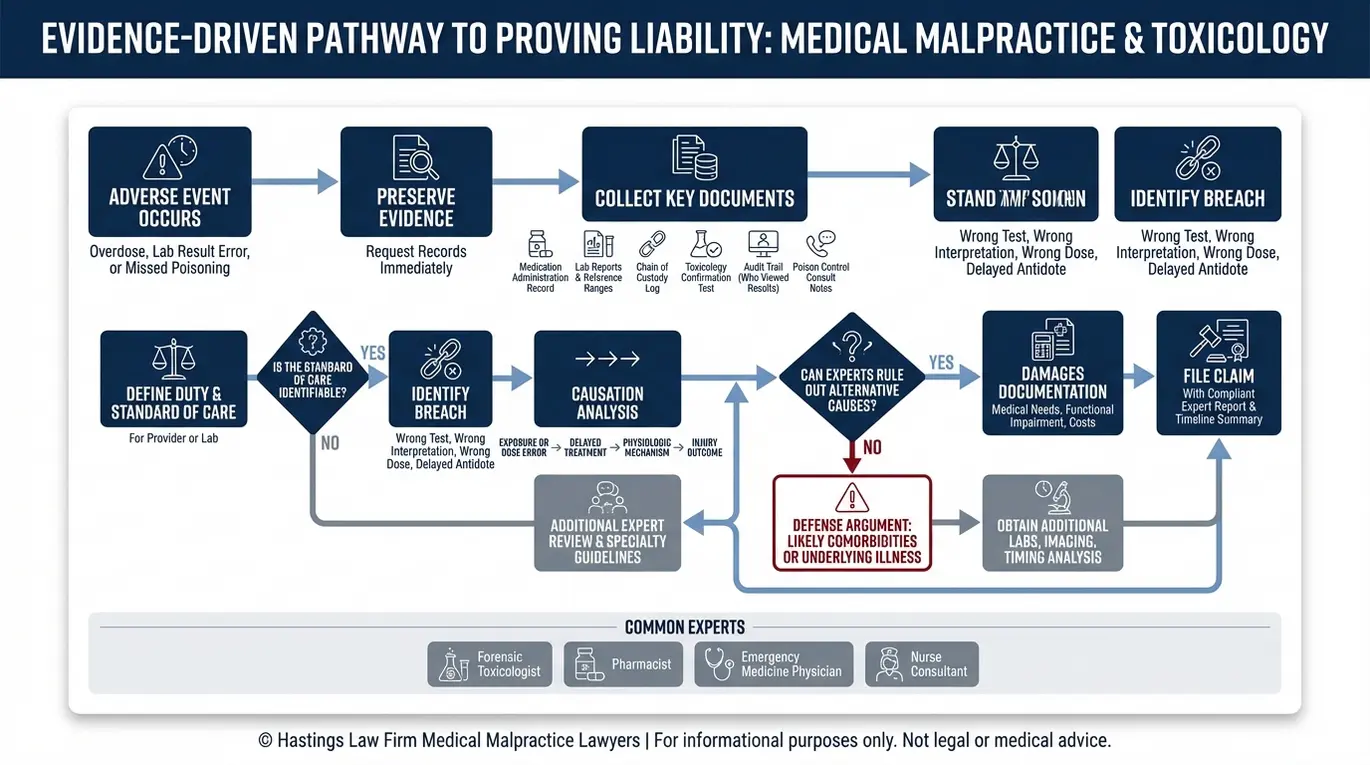
Proving a toxicologist malpractice claim requires establishing four legal elements: the provider owed a duty of care, the provider breached that duty, the breach directly caused the injury, and the patient suffered quantifiable damages. Forensic toxicologists and medical experts are central to building this proof, particularly when the Discovery Rule is invoked to address latent injuries.
The Burden of Proof
The challenge in many toxicology cases is separating the harm caused by the underlying condition from the harm caused by the medical error. A patient who ingested a toxic substance may already be seriously ill. The question becomes whether the provider’s failure to diagnose, treat, or monitor properly made the outcome worse than it should have been.
Scientific evidence and causation analysis are essential to address these complexities. Under Texas Civil Practice and Remedies Code, Section 74.351, plaintiffs in medical malpractice cases must serve a qualified expert report within 120 days after the date each defendant’s original answer is filed. This report must detail the applicable standard of care, how it was breached, and how that breach caused the injury. This process is vital for holding providers accountable for both individual errors and systemic corporate negligence.
How We Build the Case
As a Texas toxicologist malpractice lawyer, Hastings Law Firm ensures our team includes Board Certified Patient Advocates and in-house medical staff who assist in reviewing records and interpreting clinical data. We also work with a national network of forensic toxicologists who can reconstruct the timeline of exposure or medication error with scientific precision.
Our investigation typically follows these steps:
- Obtain and review all electronic medical records, including audit trails. Audit trails are digital records that show every time a medical professional accesses or changes a patient’s chart.
- Evaluate specimen chain of custody, the documented process tracking a toxicology sample from collection through testing, to identify potential contamination or handling errors.
- Retain qualified forensic specialists to perform independent analysis of drug levels, dosing records, and metabolic data.
- Reconstruct a detailed timeline connecting the provider’s actions (or inaction) to the patient’s injury.
- Prepare expert reports that meet the statutory requirements under Texas law.
Specimen contamination, the introduction of outside substances into a lab sample due to improper handling, is one of the issues we examine closely. Even small procedural breakdowns in the laboratory can distort results and lead to dangerous clinical decisions.
Medical Monitoring and Long-Term Surveillance
In cases involving exposure to hazardous substances or medication mismanagement, the full extent of the injury may not appear right away. Organ damage, neurological decline, or other conditions can develop over weeks, months, or even years. This is known as a latency period, or the time between exposure to a harmful agent and the appearance of symptoms or diagnosable injury.
When long-term health consequences are possible, patients often seek medical monitoring, ongoing diagnostic testing and surveillance necessary to detect conditions that may develop as a result of the toxic exposure. Future medical expenses tied to this monitoring can be a significant component of a patient’s recovery. Medical monitoring involves ongoing diagnostic testing to catch health issues before they become life-threatening.
Damages Recoverable in Toxicology Negligence Cases
Patients harmed by toxicology-related medical negligence may recover economic damages for medical bills and lost wages, as well as non-economic damages for pain, suffering, and physical impairment caused by the toxic injury. The specific categories available depend on the facts of each case, including whether the claim involves severe personal injury or wrongful death.
Economic Damages
Economic damages cover the measurable financial losses a patient or family has incurred. These economic damages include:
- Hospitalization, emergency treatment, and ICU stays.
- Cost of antidotes, dialysis, or specialized detoxification treatment.
- Ongoing rehabilitation and future medical care needs.
- Lost wages and reduced earning capacity.
Future medical care often includes long-term dialysis, organ transplant costs, or lifetime medication needs, which must be calculated for present value. Data from the Healthcare Cost and Utilization Project (HCUP) Statistical Briefs underscores the significant financial burden of hospitalizations related to poisoning and adverse drug events. These costs often extend well beyond the initial admission.
Non-Economic Damages
Non-economic damages compensate for losses that don’t carry a specific price tag but profoundly affect a person’s life. This category covers:
- Physical pain from organ failure, neurological injury, or prolonged recovery.
- Mental anguish and emotional distress.
- Loss of quality of life and physical impairment.
- Loss of consortium for spouses and family members.
These damages acknowledge that the patient’s life has been fundamentally altered, impacting their ability to enjoy daily activities, hobbies, and relationships.
Punitive Damages
In rare cases involving gross negligence, Texas law allows for punitive damages. These may apply in situations such as intentional falsification of lab results or systematic over-prescribing with disregard for patient safety. A Texas toxicologist malpractice lawyer can evaluate whether the facts of your case support this additional category of recovery.
Wrongful Death Actions for Fatal Medication Errors
If a toxicology error or medication overdose leads to death, surviving family members may file a wrongful death claim to recover funeral costs, loss of companionship, and lost financial support. These cases demand both legal precision and genuine compassion from your Texas toxicologist malpractice lawyer.
Who Can File
Under Texas Civil Practice and Remedies Code, Section 71.004, a wrongful death action may be brought by the surviving spouse, children, or parents of the deceased. Each eligible beneficiary may seek damages for their individual losses, including grief, loss of consortium, and the financial support the deceased would have provided.
Investigating the Cause of Death
These cases often involve disputes over the manner of death, which is the medical determination of how the death occurred. In some instances, a death may be attributed to natural causes or an underlying condition when toxicity was actually the contributing factor. Our team works with independent medical experts to review autopsy findings, toxicology reports, and clinical records to determine whether the death was preventable. This rigorous analysis is essential for establishing liability in court.
Tommy Hastings, our founder, has long held that medical malpractice law is about more than compensation. It is about prevention. When a fatal medication error goes unexamined, the same conditions that led to the tragedy remain in place. Pursuing accountability helps protect other patients and families from the same outcome.
Statute of Limitations for Toxicology Claims in Texas
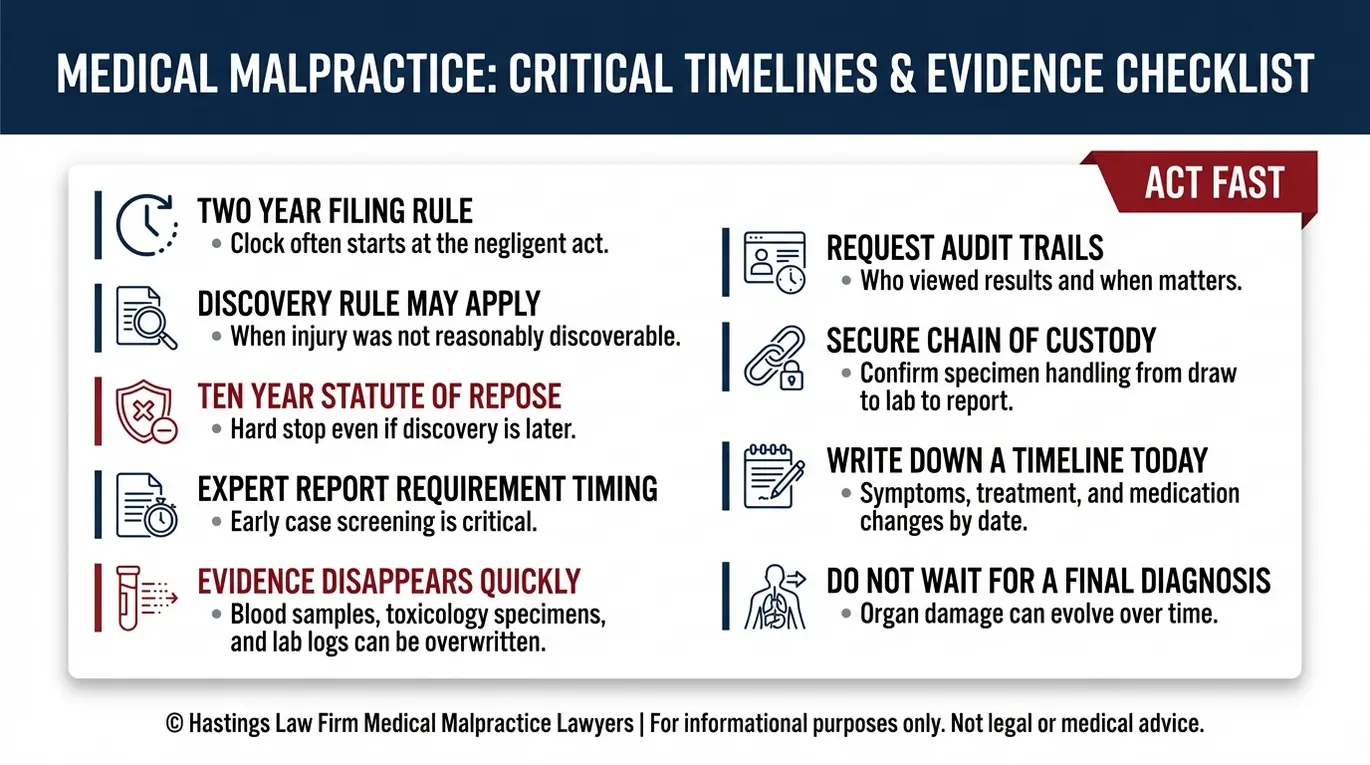
Generally, medical malpractice claims in Texas must be filed within two years from the date of the negligent act. However, the Discovery Rule may extend this deadline when the toxic injury was not immediately discoverable.
The Two-Year Rule
Texas law sets a two-year statute of limitations for medical malpractice claims. The clock typically starts on the date the negligence occurred. Missing this deadline usually means losing the right to file suit entirely.
The Discovery Rule Exception
The Discovery Rule allows the limitations period, or the time you have to file a claim, to begin when the patient knew or reasonably should have known the injury was linked to the provider’s conduct. Toxicology cases frequently involve injuries that take time to develop. Organ damage from prolonged drug toxicity, for example, may not become apparent until months after the medication error.
This exception can be critical for patients whose conditions have long latency periods. It ensures they are not unfairly barred from seeking justice simply because the damage was hidden.
The 10-Year Statute of Repose
Regardless of when the injury is discovered, Texas imposes an absolute 10-year statute of repose. No medical malpractice claim may be filed more than 10 years after the date of the negligent act, with very limited exceptions. An absolute bar means that after this 10-year window, you cannot file a lawsuit regardless of when the injury was found.
Key deadlines to be aware of:
- 2-year filing deadline from the date of negligence (standard rule).
- Discovery Rule exception if the injury was not reasonably discoverable at the time.
- 10-year absolute bar under the statute of repose.
- 120-day expert report requirement after each defendant’s original answer is filed, under Section 74.351.
Because these deadlines can determine whether your case moves forward at all, seeking a legal consultation with a Texas toxicologist malpractice lawyer as early as possible is one of the most important steps you can take.
Contact the Texas Healthcare Malpractice Attorneys at Hastings Law Firm Today for Help
If you suspect that a loved one suffered harm from a medication error, laboratory mistake, or toxic exposure caused by medical negligence, you do not have to face the healthcare system alone. Hastings Law Firm brings board-certified trial expertise, in-house medical professionals, and a track record of results in complex medical malpractice cases.
We operate on a contingency fee basis, which means you pay no attorney fees or costs unless we secure a recovery on your behalf. Our team includes former defense attorneys who understand how the other side operates, along with nurse consultants and patient advocates who can interpret your medical records from day one.
Contact us today for a free, confidential case evaluation. We can review what happened, help you understand your options, and explain whether you may have a viable claim.
Frequently Asked Questions About Toxicologist Malpractice in Texas


This content was researched and written by the Hastings Law Firm editorial team, which includes attorneys, medical professionals, and experienced researchers. Our writing is informed by internal knowledge and practical experience, and we cross-check critical details against authoritative sources cited throughout. Every piece undergoes human-led fact-checking and legal review. Because legal and medical information can change, if you spot an error, please contact us. Learn more about our content standards and review process on our editorial policy page.

Brady D. Williams is a nationally recognized medical malpractice attorney who has spent his career handling high-stakes litigation for injured patients and families across the country. Licensed in both Texas and California, Brady draws on experience from hundreds of resolved medical cases to break down complex legal and medical topics for the people who need that information most. His writing reflects the same attention to detail and commitment to clarity that he brings to every case he handles.
