


Houston Nursing Home Abuse Lawyer
Elder care abuse in a nursing home or assisted living facility can leave families feeling shocked, angry, and unsure who to trust. Abuse and neglect can take many forms, from intimidation and exploitation to missed care that leads to serious medical injury or worse. Facilities also have responsibilities to protect residents from harm caused by other residents or visitors. Recognizing warning signs, documenting concerns, and reporting to appropriate authorities can help protect a vulnerable loved one. If you or a loved one were harmed or worse due to nursing home abuse or neglect in Houston, Texas, contact Hastings Law Firm for a free, confidential case review.

Last Updated: July 27, 2026
Trusted Medical Attorneys for Elder Care Abuse Claims in Houston
When a loved one is harmed in a place that was supposed to keep them safe, the experience can feel like a profound betrayal. You trusted a facility with someone irreplaceable, and now you are dealing with questions, anger, and fear about what happens next.
You are not powerless, and you do not have to sort through this alone. As a Houston nursing home abuse lawyer team, we focus exclusively on medical negligence and abuse cases. Our firm combines legal experience with in-house medical professionals who know how to read clinical records, identify failures in care, and build cases that hold facilities accountable.
If you suspect your loved one has been harmed by abuse or neglect, we can review what happened and explain your options in a free, confidential consultation.

Common Types of Abuse in Houston Care Facilities
Nursing home abuse encompasses physical assault, emotional manipulation, sexual misconduct, financial exploitation, and severe neglect that results in medical injury. Not every case involves a single dramatic event. Many families discover a pattern of harm that developed over weeks or months and realize they need a lawyer for nursing home abuse to intervene.
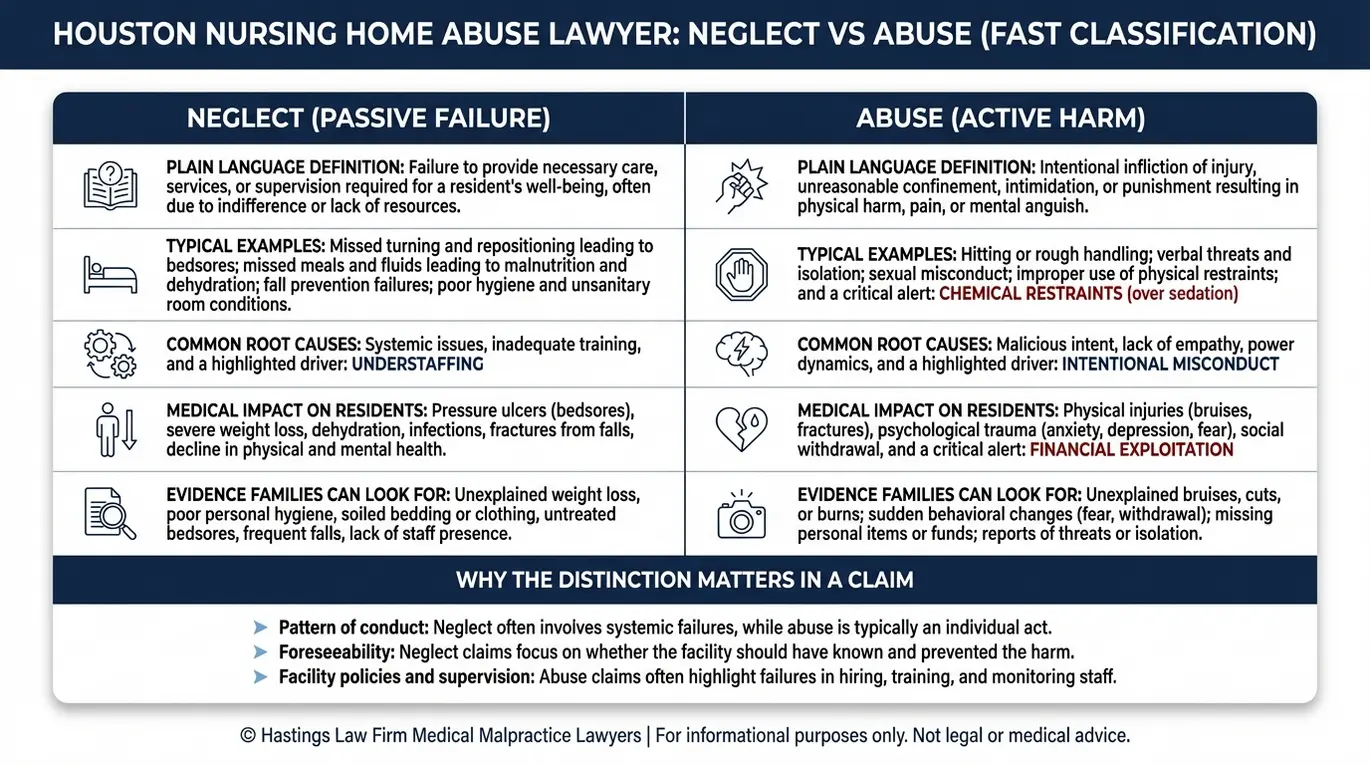
Understanding the difference between active abuse and passive neglect is an important first step. Abuse involves intentional acts, such as hitting, threatening, or exploiting a resident. Neglect is a failure to act, like not repositioning an immobile patient, skipping medications, or ignoring signs of infection. Both are actionable under Texas law, and both can cause serious harm or death.
One of the most common root causes behind neglect is understaffing. When a facility does not employ enough qualified caregivers, basic needs go unmet. Research published by the VA Evidence Synthesis Program on nurse staffing and resident outcomes confirms a direct link between low staffing levels and higher rates of injury, infection, and decline among residents.
Abuse also takes forms that leave no visible marks. Physical restraints, which involve strapping or confining a resident to a bed or chair, and chemical restraints, the use of sedatives or psychotropic drugs to keep a resident quiet, are both recognized forms of abuse when used without medical justification. Isolation from family and emotional intimidation also fall under this category.
| Category | Type | Examples |
|---|---|---|
| Abuse (Active Intent) | Physical | Hitting, pushing, improper use of physical restraints |
| Emotional / Psychological | Threats, humiliation, isolation from family | |
| Sexual | Unwanted contact, coercion, assault | |
| Financial Exploitation | Theft, unauthorized use of funds, forged documents | |
| Neglect (Passive Failure) | Medical | Missed medications, untreated infections, ignored symptoms |
| Basic Care | Failure to reposition patients, poor hygiene, malnutrition | |
| Environmental | Unsanitary conditions, broken equipment, unsafe rooms |
Our nursing home abuse attorneys in Houston see cases across every one of these categories. Many involve overlapping types of harm that compound the resident’s suffering.
Risks Involving Non-Staff Aggressors
Facilities are also responsible for protecting residents from harm caused by other residents, visitors, or third-party vendors. This legal duty applies to nursing homes and assisted living facilities. Resident-to-resident aggression, which refers to physical or verbal attacks between patients living in the same facility, is especially common in units caring for individuals with dementia or Alzheimer’s disease. When a facility fails to monitor interactions, separate at-risk residents, or maintain adequate security, that failure can support a claim of negligent security or negligent care.
Recognizing Warning Signs of Neglect and Malnutrition
Warning signs include unexplained bruising, sudden weight loss, development of bedsores, poor hygiene, behavioral withdrawal, and unsanitary living conditions. Families are often the first to notice these changes, and trusting your instincts matters.
Pressure ulcers, commonly called bedsores, are one of the most serious indicators of neglect. These wounds develop when a patient is left in the same position for too long without being turned or repositioned. The Agency for Healthcare Research and Quality (AHRQ PSNet) classifies advanced pressure ulcers as “Never Events,” meaning they should not occur under proper care.
A Stage 4 bedsore can expose muscle and bone, lead to life-threatening infection, and cause extreme pain. If your loved one has developed one, it can suggest a breakdown in basic nursing protocols, which may warrant a consultation with a nursing home neglect attorney.
Malnutrition, a condition where the body does not receive enough nutrients to maintain healthy function, slips and falls, and dehydration are also frequently overlooked. Rapid weight loss is sometimes dismissed as a natural part of aging, but it can indicate that residents are not receiving adequate assistance during meals or sufficient fluids throughout the day. For residents with dementia or Alzheimer’s, who may not be able to ask for food or water, the responsibility falls entirely on staff.
Behavioral changes can be just as telling as physical symptoms. A resident who was once social but has become fearful, silent, or agitated around certain staff members may be experiencing abuse. These shifts deserve attention, not dismissal.
Red Flag Checklist for Family Visits:
- Unexplained bruises, cuts, or fractures, especially in various stages of healing
- Bedsores or skin breakdown, particularly on the back, hips, or heels
- Noticeable weight loss or signs of dehydration (dry mouth, sunken eyes, dark urine)
- Soiled clothing or bedding; strong odor in the room
- Resident appears over-sedated or unusually lethargic
- Withdrawal, flinching, or visible fear around caregivers
- Broken or missing personal belongings
- Reluctance by staff to leave you alone with the resident
- Unexplained changes in financial accounts or documents
If you recognize several of these signs, it may be time to contact a Houston elder abuse lawyer to discuss your concerns.

The Hastings Law Firm Difference
Results matter, but what truly sets us apart is how we achieve them. Every verdict, every settlement, and every Houston courtroom victory comes from one guiding promise: To treat each client’s fight for justice as if it were our own.
This balance of skill, experience, and empathy reflects our core philosophy that justice should not only compensate the injured, but also make health care safer nationwide.

Immediate Steps After Suspecting Elder Abuse
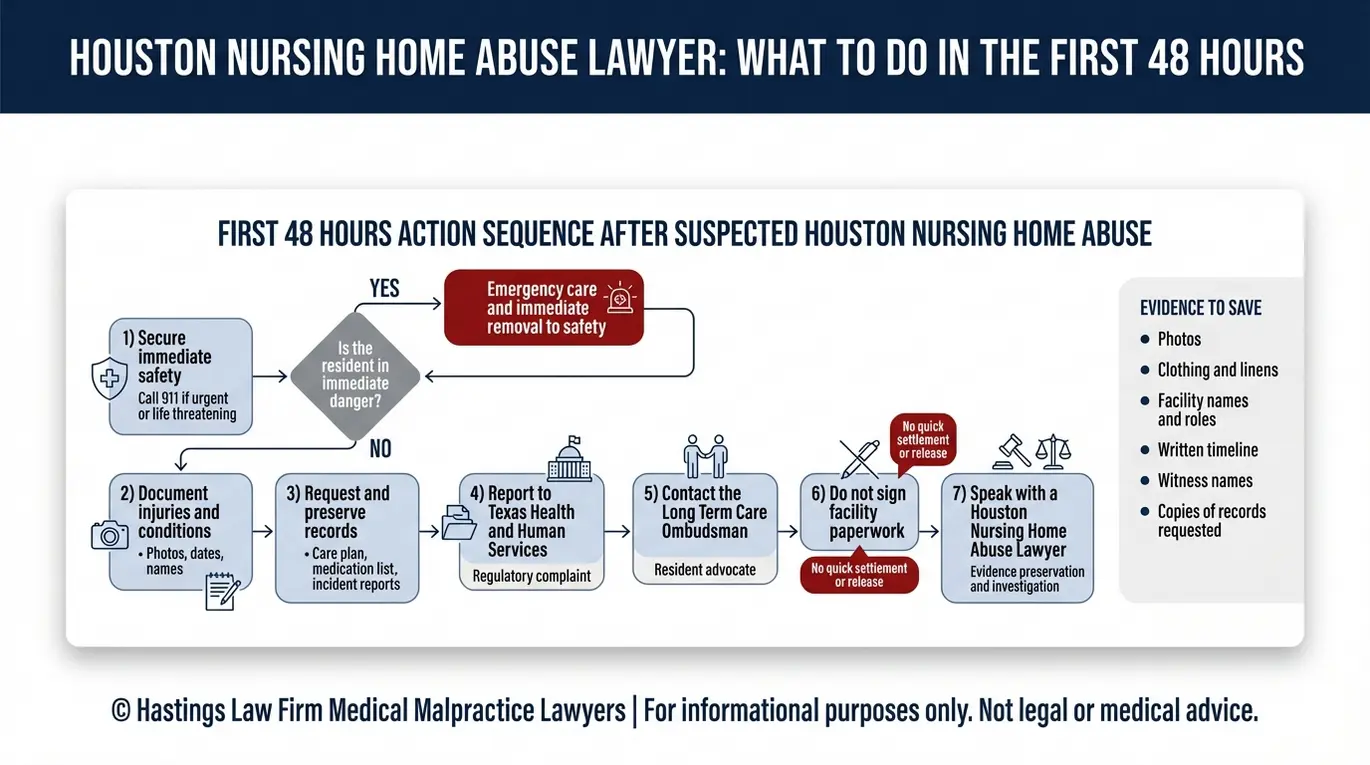
If you believe abuse or neglect is occurring, immediately ensure the resident’s safety by calling 911 if there is an active threat. Then focus on documenting what you see and reporting it to the proper authorities. Taking action quickly can protect your loved one and assist with evidence preservation that may be critical to a future claim.
Tommy Hastings, a board-certified trial lawyer, founded our firm to help families identify the truth behind medical failures and abuse in care facilities.
Here are the steps to follow:
- Secure the resident’s safety. If your loved one is in immediate danger, call 911. If the situation is not an emergency but requires medical attention for issues like dehydration, which is a dangerous depletion of bodily fluids, arrange for an independent medical evaluation outside the facility.
- Document everything. Photograph visible injuries, unsanitary conditions, and anything that appears unusual. Write down dates, times, names of staff present, and what you observed.
- Report to state authorities. File a complaint with the Texas Department of Family and Protective Services (DFPS), the state agency that investigates allegations of abuse, neglect, and exploitation of elderly and disabled adults. You can also contact the Texas State Long-Term Care Ombudsman, an independent advocate who investigates complaints on behalf of nursing home residents.
- Consult a specialized attorney. Contact a Houston nursing home abuse law firm before signing anything from the facility, especially any document that could be framed as a settlement offer or release of liability. An attorney experienced in these cases can take immediate steps to preserve medical records, staffing logs, and surveillance footage before they are altered or destroyed.
Acting early gives attorneys for elder neglect the best opportunity to build a strong case on your family’s behalf.
How Our Medical Legal Team Investigates Liability
We use a dual approach that combines legal discovery with forensic medical review to identify instances of medical malpractice where the standard of care broke down, and who is responsible. Many of the failures we uncover are not isolated mistakes but systemic problems driven by understaffing, which refers to a facility operating with fewer qualified caregivers than patient needs and safety require.
Every case we accept is prepared from day one as if it will go before a jury. This trial-ready approach signals to insurance carriers and defense counsel that we will not accept an inadequate settlement. Our team includes former defense attorneys who previously represented hospitals and facilities, which gives us direct insight into the strategies the other side will use.
Our in-house medical staff, including nurse practitioners and Board Certified Patient Advocates, reconstruct a detailed timeline of your loved one’s care. They review medical records line by line, looking for charting inconsistencies, which are gaps, contradictions, or alterations in clinical documentation that may indicate records were changed after an incident or that care was never provided as claimed.
We also investigate the facility’s broader operations. This includes reviewing staffing schedules, employee training records, prior complaints, and inspection reports. The CMS Five Star Quality Rating System provides publicly available data on facility performance, and low ratings in staffing or quality measures can support claims of negligent care and corporate negligence.
As a lawyer for nursing home negligence, our goal is to move beyond the individual caregiver and establish liability at the corporate level. When a facility makes operational decisions that foreseeably put residents at risk, the company itself can be held accountable. Our Houston nursing home injury attorney team has the medical knowledge and litigation experience to connect those decisions to the harm your loved one suffered.
Compensation Recoverable for Injured Residents
Residents and their families may recover economic damages for medical bills and relocation costs, non-economic damages for pain and suffering, and potentially punitive damages if the facility’s conduct was grossly negligent. The amount depends on the severity of harm, the facility’s history, and the strength of the evidence.
Recoverable damages generally fall into three categories:
- Economic damages cover measurable financial losses. These include past and future medical expenses, the cost of transferring to a safer facility, rehabilitation, in-home care, and any other out-of-pocket costs directly tied to the abuse or neglect.
- Non-economic damages address the human toll. Physical pain, emotional distress, loss of dignity, and diminished quality of life all fall under this category. For families who watched a loved one suffer, these losses are deeply personal, and Texas law recognizes their value.
- Punitive damages may be available when a facility’s conduct goes beyond ordinary negligence. If the evidence shows a pattern of reckless disregard for resident safety, a jury can award punitive damages designed to deter future misconduct.
In wrongful death cases, where a resident dies as a result of abuse or neglect, surviving family members may pursue a wrongful death claim and a survival action on behalf of their loved one. These claims can include compensation for the resident’s pain and suffering before death, funeral and burial expenses, and the family’s loss of companionship.
A nursing home abuse lawyer in Houston can evaluate your situation and identify every category of damages that applies. As an elder abuse compensation lawyer, we work with medical and financial experts to calculate the full scope of losses, including future care needs that families may not immediately anticipate. There are no fees unless we recover compensation on your behalf.
Texas Laws Protecting Nursing Home Residents
Texas law mandates strict standards of care for long-term care facilities and sets specific deadlines for filing claims. Under the general rule, families typically have two years from the date the abuse or neglect occurred, or was discovered, to file a lawsuit.
The statute of limitations is governed by Texas Civil Practice and Remedies Code § 16.003, which establishes a two-year window for personal injury claims. In some cases, a “discovery rule” exception may apply if the harm was not immediately apparent. Because nursing home abuse is often concealed or develops gradually, this exception can be significant. Still, waiting too long creates real risk. Evidence degrades, witnesses become unavailable, and the window to file can close permanently.
Texas law also guarantees nursing home residents specific legal rights, including the right to dignity, privacy, freedom from abuse, and freedom from unnecessary physical or chemical restraints. These protections, along with other elder abuse laws, exist independently of any lawsuit and give families a legal framework to hold facilities accountable.
Understanding the Texas Human Resources Code
Chapter 48 of the Texas Human Resources Code, specifically Texas Human Resources Code § 48.002, establishes legal definitions and protections for elderly persons and adults with disabilities. This statute defines what constitutes abuse, neglect, and exploitation under Texas law and provides the foundation for state investigations and civil claims. Anyone seeking legal help for nursing home abuse should understand that these protections are codified and enforceable, not merely aspirational standards.
Contact the Houston Nursing Home Attorneys at Hastings Law Firm Today for Help
No family should have to wonder whether their loved one is safe in a care facility. If you have seen the warning signs or already know that something went wrong, taking the first step toward answers does not have to be overwhelming.
At Hastings Law Firm, our entire team is focused on one area of law: holding medical providers and facilities accountable when they fail the people who depend on them. Our in-house medical staff and experienced trial attorneys work together to uncover the truth and protect your family’s rights.
As your Houston nursing home abuse lawyer, we offer a free, confidential case evaluation with no obligation. You pay no attorney fees or costs unless we secure a recovery for you.
Call us today or reach out online. Let us help you understand what happened and what your options are.
Frequently Asked Questions About Nursing Home Abuse in Houston


This content was researched and written by the Hastings Law Firm editorial team, which includes attorneys, medical professionals, and experienced researchers. Our writing is informed by internal knowledge and practical experience, and we cross-check critical details against authoritative sources cited throughout. Every piece undergoes human-led fact-checking and legal review. Because legal and medical information can change, if you spot an error, please contact us. Learn more about our content standards and review process on our editorial policy page.

Tommy Hastings, founder of Hastings Law Firm, is a board-certified personal injury trial lawyer dedicated exclusively to healthcare injury cases. Since 2001, he has represented injured patients and families in litigation against major hospital systems, pharmaceutical companies, and negligent healthcare providers nationwide. He has handled numerous high-profile cases that have drawn national media attention and resulted in multi-million dollar recoveries. He draws on that experience in his writing, helping readers understand how these cases work and what options may be available to them.
