


Austin Doctor Malpractice Lawyer
Physician negligence can leave patients facing worsening health, unexpected costs, and a lasting loss of trust in medical care. In Texas, not every bad outcome is malpractice, but a preventable error that falls below the accepted standard of care can lead to serious injury, life changing complications, or fatal outcomes. These cases often turn on what the doctor knew at the time, whether the right provider or facility is responsible, and whether expert medical testimony supports the claim. If you or a loved one were harmed or worse due to doctor malpractice in Austin, Texas, contact Hastings Law Firm for a free, confidential case review.

Last Updated: July 27, 2026
Top Rated Legal Advocacy for Victims of Physician Negligence in Austin
When a doctor’s error causes serious harm, the experience can shake your trust in the entire healthcare system. You may be dealing with worsening health, unexpected medical bills, and a deep sense of betrayal by someone you relied on for care. These feelings are valid, and you deserve honest answers about what happened.
Hastings Law Firm was founded by board-certified trial attorney Tommy Hastings in 2005 and is built to handle exactly this kind of case. Our team of attorneys, in-house nurse consultants, and former defense lawyers focuses exclusively on representing patients harmed by medical negligence. As an experienced Austin doctor malpractice lawyer team, we understand both the medicine and the law involved in holding a negligent physician accountable.
If you believe a doctor’s mistake caused your injury, we can review what happened and explain your options in a free, confidential consultation.

Defining Physician Negligence and Medical Malpractice in Texas
Physician negligence occurs when a doctor fails to provide treatment that meets the accepted standard of care, directly resulting in patient injury or death. Not every poor outcome means a doctor made a preventable mistake, but when the line between an unfortunate result and a genuine error is crossed, Texas law provides a path to accountability, often requiring a lawyer for medical errors to handle the case.
The standard of care is the level of treatment a reasonably competent physician in the same specialty would have provided under similar circumstances. This standard is not a theoretical ideal. It reflects real-world clinical practice, the kind of care that qualified doctors in the same field would agree is appropriate. When a physician departs from that standard and a patient is harmed as a result, the legal framework outlined in Texas Civil Practice and Remedies Code Chapter 74 allows the injured patient to pursue a medical malpractice claim.
Experienced Austin doctor malpractice lawyers emphasize the difference between a bad outcome and actual negligence. Medicine involves risk; not every complication signals a breach of duty. A surgery may result in infection despite following protocols, or properly disclosed medication side effects may occur. These harmful outcomes may not be malpractice. What separates negligence is a preventable error, such as a misdiagnosis (an incorrect diagnosis that leads to wrong or delayed treatment) or overtreatment (unnecessary medical intervention for a condition the patient did not actually have).
A claim may target an individual physician or a healthcare facility. An attorney for doctor negligence investigates if the doctor personally failed their duty, a different analysis than hospital liability. Identifying the right defendant early is essential.
The Reasonable Physician Standard and Hindsight Bias
Texas courts evaluate a doctor’s decisions in medical malpractice cases based on what the physician knew at the time of treatment. The analysis excludes hindsight. Defense attorneys frequently argue that a negative outcome only looks like an error because we now know what happened next.
Skilled physician malpractice counsel knows how to counter this. The key is expert testimony from a qualified doctor in the same specialty explaining the standard of care in real time. For example, a failure to diagnose, which is a doctor’s failure to identify a condition that should have been caught given the symptoms presented, may be defended by claiming symptoms were ambiguous. We work with experts to determine if a proper differential diagnosis, the systematic process of weighing all possible conditions against the patient’s symptoms and test results, was performed.
Common Examples of Doctor Errors in Austin Healthcare Facilities
Common forms of doctor malpractice include diagnostic failures, surgical mistakes, birth injuries, medication prescription errors, and failure to monitor patient vitals during procedures. These errors can happen in any clinical setting, from private offices to major hospital systems.
As an Austin doctor malpractice lawyer team handling cases across Central Texas, we see recurring patterns of physician error in the facilities our clients rely on for care, often necessitating a physician error attorney. The Texas Department of State Health Services’ Reportable Preventable Adverse Events Definitions outlines categories of medical errors that healthcare providers are required to report, and many align with the claims we investigate.
- Diagnostic Errors: Diagnostic mistakes are among the most common and most dangerous forms of physician negligence. These can include missed cancer diagnoses, heart attacks dismissed as indigestion or anxiety, and failure to order labs or imaging that should have been standard given a patient’s symptoms. When a diagnosis is delayed or missed entirely, the window for effective treatment can close quickly.
- Surgical Errors: Surgical mistakes range from wrong-site surgery, a procedure performed on the wrong part of the body, to instruments or sponges left inside a patient after an operation. These errors are sometimes called “never events” because they should never occur when proper safety protocols are followed.
- Medication and Prescription Errors: Medication errors can stem from prescribing the wrong drug, the wrong dosage, or failing to perform a proper medication reconciliation, the process of reviewing a patient’s current medications to avoid dangerous interactions. These mistakes can cause severe allergic reactions, organ damage, or overdose.
- Anesthesia and Monitoring Failures: Errors involving anesthesia, whether during surgical procedures, labor and delivery, or diagnostic procedures, can lead to brain injuries, nerve damage, or death. Monitoring failures during post-operative recovery are equally serious.
- Unnecessary Treatment from Misdiagnosis: In some cases, a doctor’s incorrect diagnosis leads to invasive treatment for a condition the patient never had. A patient may undergo surgery, chemotherapy, or long-term medication therapy based on an error that a more careful evaluation would have prevented.
Malpractice attorneys in Austin familiar with local healthcare systems, including Ascension Seton and St. David’s facilities, understand how these institutions operate and where documentation gaps tend to appear. A State of Texas investigation highlighted how some doctor malpractice lawsuits are kept quiet even when patients die, underscoring why independent legal review matters. If you are considering suing a doctor in Austin because a doctor’s error caused you or a loved one harm, a doctor negligence lawyer can evaluate the medical records and determine whether a claim exists.

The Hastings Law Firm Difference
Results matter, but what truly sets us apart is how we achieve them. Every verdict, every settlement, and every Austin courtroom victory comes from one guiding promise: To treat each client’s fight for justice as if it were our own.
This balance of skill, experience, and empathy reflects our core philosophy that justice should not only compensate the injured, but also make health care safer nationwide.

Distinguishing Between Private Doctor and Hospital Liability
Doctors are often independent contractors rather than hospital employees, meaning the hospital may not be automatically liable for the doctor’s individual negligence. Understanding independent contractor liability is one of the first steps in any case handled by a physician liability lawyer.
In Texas, the “Corporate Practice of Medicine” doctrine generally prevents hospitals from directly employing physicians to practice medicine. Instead, many doctors hold hospital privileges, which is a credentialing arrangement that grants a physician the right to treat patients within a facility without being on its payroll. An independent contractor physician, a doctor who practices at a hospital or clinic but is not a W-2 employee of that institution, commonly operates under this model. This matters because when an independent surgeon makes an error during a procedure at a hospital, the hospital may argue it has no legal responsibility for that doctor’s actions.
Hospitals can be held liable for the negligence of their direct employees, such as nurses, technicians, and certain staff physicians. They can also face claims for their own institutional failures, like inadequate staffing or broken safety protocols.
An Austin doctor malpractice lawyer experienced in these cases will investigate the contractual relationships between the physician and the facility early in the process. Suing a private physician requires identifying the correct legal entity and their malpractice insurance carrier. Missing a liable party, or targeting the wrong one, can jeopardize the entire claim, especially under Texas’s strict filing deadlines.
| Factor | Individual Doctor Liability | Hospital Liability |
|---|---|---|
| Employment Status | Independent contractor or private practitioner | Direct employee (nurse, tech, staff physician) |
| Basis for Liability | Personal breach of the standard of care | Institutional negligence, respondeat superior (the legal rule making an employer liable for an employee’s actions), or credentialing failures |
| Insurance | Doctor’s own malpractice policy | Hospital’s institutional policy |
| Common Examples | Surgical error by attending surgeon, misdiagnosis by specialist | Understaffing, equipment failures, nursing errors |
| Key Investigation Step | Confirm contractor vs. employee status | Review hospital policies and staffing records |
Identifying all potentially liable parties early is critical. Our team examines contracts, billing records, and medical staff bylaws to determine exactly who is responsible for your care.

Proving the Case With Medical Experts and Evidence
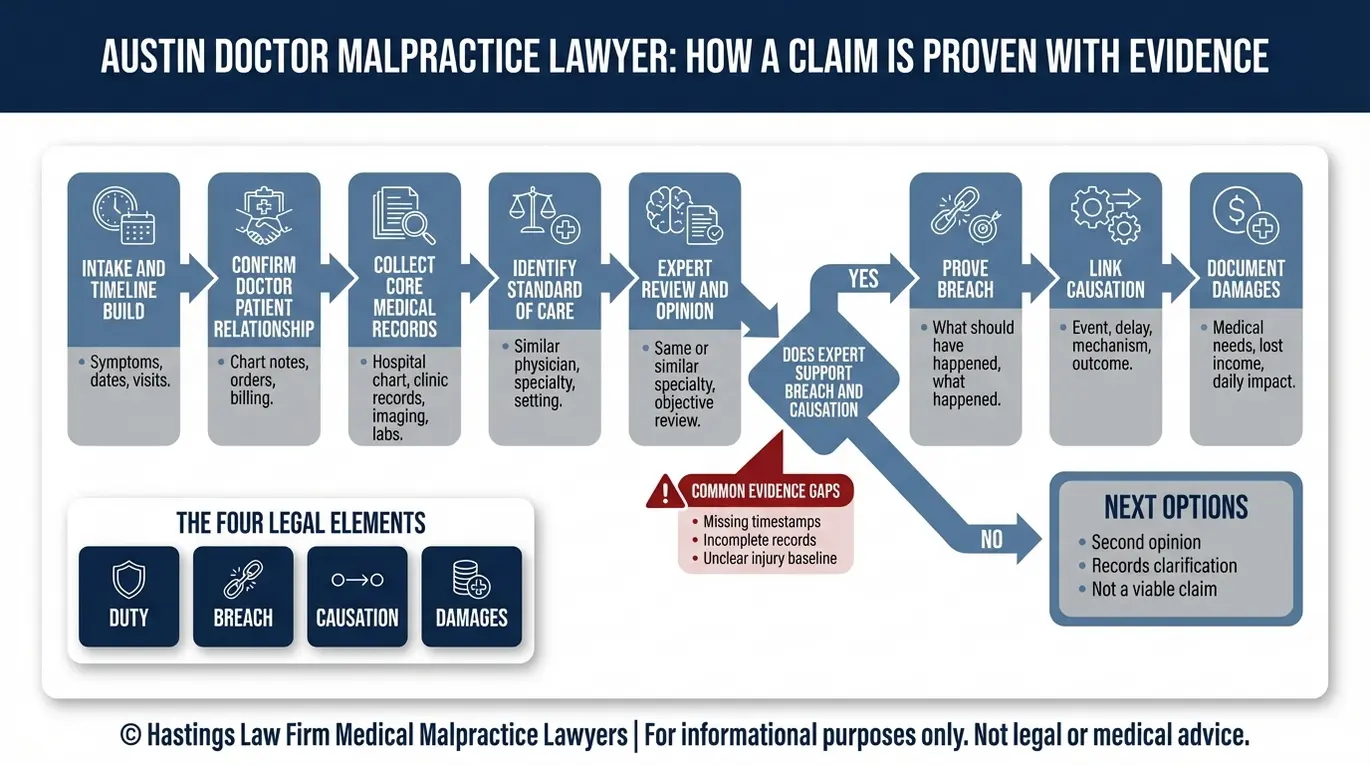
Proving a claim requires clear evidence that a doctor-patient relationship existed, the doctor breached the standard of care, and that breach was the proximate cause of the injury. These are the foundational elements of every medical negligence case in Texas, as a medical negligence attorney will explain.
Every medical malpractice claim rests on four legal elements. Proving doctor malpractice involves establishing each one:
- Duty: The doctor owed you a duty of care based on an established doctor-patient relationship.
- Breach: The doctor failed to meet the accepted standard of care for their specialty.
- Causation: That specific failure directly caused your injury, not an underlying condition or an expected complication.
- Damages: You suffered measurable harm, whether physical, financial, or both.
Texas law places a particular emphasis on expert testimony when proving doctor malpractice. Under Texas Civil Practice and Remedies Code § 74.351, a plaintiff must serve a qualified expert report early in the case. This report must come from a physician practicing in the same or a similar specialty as the defendant, and it must identify what the standard of care required, how the doctor fell short, and how that failure caused harm.
How We Investigate and Build the Evidence
Our medical-legal team follows a structured process to build evidence of physician negligence:
- Obtain and review all relevant medical records, including physician notes, nursing charts, lab results, imaging, and operative reports. You have the right to request your own records, as outlined by the Texas Medical Board.
- Reconstruct a detailed timeline of your care to identify where the standard of care was breached.
- Consult with board-certified medical experts in the relevant specialty to evaluate the physician’s decisions.
- Analyze whether monitoring tools, such as capnography (a device that measures carbon dioxide levels during sedation or anesthesia to detect breathing problems), were properly used.
- Review operative reports for evidence of retained surgical items (RSIs), which are instruments, sponges, or other objects unintentionally left inside a patient’s body after surgery.
- Examine internal communications, incident reports, and quality assurance records that may reveal what the facility knew and when.
The Value of a Prompt Second Opinion
If you suspect a doctor made an error, seeking a second medical opinion as soon as possible can protect both your health and your legal claim. A second opinion documents the current state of your condition and can establish a clear record of the harm caused. This step gives a medical negligence attorney concrete clinical evidence to work with from the start.
Recoverable Damages in Austin Physician Negligence Lawsuits
Patients harmed by doctor negligence in Texas can recover economic damages for medical bills and lost wages, as well as non-economic damages for pain, suffering, and impairment. Securing compensation for medical errors depends on the nature and severity of the injury.
Economic Damages
Economic damages cover the financial losses directly tied to the doctor’s error. These are not capped under Texas law and can include:
- Past and future medical expenses, including surgeries, rehabilitation, medications, and ongoing care
- Lost wages from time missed at work during recovery
- Lost earning capacity if the injury permanently reduces your ability to work
- Costs of assistive devices, home modifications, or long-term nursing care
An Austin doctor malpractice lawyer will work with medical and financial experts to calculate not just what you have spent, but what your injury will cost over the course of your lifetime.
Non-Economic Damages
Non-economic damages compensate for the personal toll of the injury, the losses that do not come with a receipt. These include:
- Physical pain and suffering
- Emotional distress and mental anguish
- Disfigurement or permanent physical impairment
- Loss of enjoyment of life
- Loss of consortium, which compensates a spouse for the loss of companionship and support
Texas does place a cap on non-economic damages in medical malpractice cases, generally limiting recovery to $250,000 per claimant against physicians. This cap makes it especially important that your attorney thoroughly documents every category of economic loss, where there is no cap, to maximize financial recovery for negligence.
Wrongful Death Claims
When a doctor’s negligence results in a patient’s death, surviving family members may file a wrongful death claim. The financial recovery in damages in doctor lawsuits is meant to address both the family’s immediate needs and long-term stability. These cases can recover both economic losses, such as the deceased’s future earnings and final medical costs, and non-economic losses, including the grief and loss of companionship experienced by a spouse, children, or parents.
Our team works closely with families during what is often the most difficult period of their lives, handling the legal process so they can focus on healing.
Contact the Austin Doctor Malpractice Attorneys at Hastings Law Firm Today for Help
If a doctor’s negligence has harmed you or someone you love, you do not have to face the process of seeking answers alone. The firm is led by board-certified trial lawyer Tommy Hastings, who has dedicated over two decades to handling complex medical negligence cases. Our team of attorneys, in-house nurses, and medical experts is dedicated to one thing: holding negligent physicians accountable and helping injured patients secure the compensation they need to move forward.
Texas imposes strict deadlines on medical malpractice claims, so the sooner you reach out, the more time we have to investigate and preserve critical evidence. There is no cost to speak with us. We work on a contingency fee basis, meaning you pay no attorney fees or costs unless we recover for you.
Contact our Austin doctor malpractice lawyer team today for a free, confidential case evaluation. Let us help you find the answers you deserve.
Frequently Asked Questions About Doctor Malpractice in Austin


This content was researched and written by the Hastings Law Firm editorial team, which includes attorneys, medical professionals, and experienced researchers. Our writing is informed by internal knowledge and practical experience, and we cross-check critical details against authoritative sources cited throughout. Every piece undergoes human-led fact-checking and legal review. Because legal and medical information can change, if you spot an error, please contact us. Learn more about our content standards and review process on our editorial policy page.

Gabe Sassin has focused exclusively on medical malpractice law since 2007. After spending more than a decade as a malpractice defense attorney, he knows exactly how the other side works. He has seen firsthand how healthcare providers, insurers, corporate defendants, and their legal teams think, prepare, and build their defense against claims. That knowledge works for the people who need it most today, injured patients and their families. His unique experience shapes everything he writes, giving readers a look at how these cases actually work from someone who has handled them from both sides.
