


Texas Improper Delivery Technique Lawyer
Written by: Hastings Law Firm | Reviewed by: Tommy Hastings | Updated: July 27, 2026
Improper delivery technique can leave families facing sudden medical uncertainty and long term care needs. When a delivery is physically mismanaged, the harm may be preventable and the difference often turns on whether the medical team followed accepted safety protocols and responded appropriately to signs of distress. The topic also involves how injuries are identified through records, monitoring data, and diagnostic testing, and how responsibility may extend beyond a single provider. If you or a loved one were harmed or worse due to improper delivery technique in Texas, contact Hastings Law Firm for a free, confidential case review.

Top Rated Birth Injury Attorneys Representing Families Across Texas
What You Should Know About Infant Birthing Technique Error Claims in Texas:
- Lasting disability can follow a delivery room error when excessive force, delayed intervention, or misused instruments cause preventable trauma.
- Disputes often turn on whether the injury was avoidable, since not every difficult delivery or adverse outcome is medical malpractice.
- Clarity about what happened can depend on fetal monitoring data and the timing of clinical decisions during labor.
- Serious harm can be linked to instrument errors such as forceps misplacement or prolonged vacuum extraction.
- Brain injury risk can increase when fetal distress is not addressed promptly and oxygen deprivation continues.
- Options for financial recovery can be limited by caps on non economic damages in Texas even when care needs are extensive.
- Long term support planning can shape outcomes when a recovery is placed into a trust through a structured settlement.
- Responsibility may extend beyond the obstetrician when nursing monitoring failures or hospital protocol breakdowns contribute to the outcome.
- Stronger proof of timing and severity can come from objective testing such as cord blood gas results and advanced imaging.
- Access to complete medical records can be pivotal because documentation may reveal whether accepted diagnostic standards were followed.

A Healthcare Focused Law Firm
When your child is hurt during delivery because of how the birth was physically managed, the confusion and grief can feel overwhelming. You may sense that something went wrong, but proving it requires more than instinct. It takes a legal team with deep medical knowledge and the ability to reconstruct exactly what happened in the delivery room.
At Hastings Law Firm, our attorneys, in-house nurse consultants, and medical experts focus exclusively on medical malpractice. As a Texas improper delivery technique lawyer team, we investigate the mechanics of the delivery itself, reviewing fetal monitoring strips, medical records, and clinical decision-making to determine whether the care your child received fell below accepted standards. If you believe your child was injured during birth, we welcome the chance to review what happened and explain your options in a free, confidential case evaluation.
When Does a Delivery Technique Constitute Medical Malpractice
Medical malpractice in the context of delivery occurs when a physician deviates from the standard of care, the accepted level of treatment a reasonably competent obstetrician would have provided under similar circumstances, and that deviation causes preventable harm to the infant or mother. Standard of care is the legal benchmark for measuring medical performance. Not every difficult delivery or adverse outcome qualifies. The distinction lies in whether the injury was avoidable. Detailed medical records often reveal whether the clinical choices made aligned with established safety protocols or represented a failure in judgment.
Birth defects differ from birth injuries. A birth defect is a condition that develops during pregnancy and is typically unrelated to anything that happens during labor. A birth injury, on the other hand, results from something that occurred during the delivery itself, often tied to the physical techniques, tools, or decisions made by the medical team. Proper labor and delivery management involves anticipating these risks and reacting appropriately to changing conditions. When providers fail to adapt, preventable trauma can occur. An improper delivery technique attorney can help determine which category applies to your child’s situation.
Under Texas Civil Practice and Remedies Code Chapter 74, medical negligence claims require showing that a provider breached the standard of care and that the breach directly caused the injury. As a Texas birth injury lawyer team, we examine the full clinical picture to identify where things went wrong.
Here are common indicators of a technique-related failure during delivery:
- The medical team ignored or misread Category III fetal heart rate tracings. These patterns on the fetal monitor signal the baby is in distress and may need immediate intervention.
- The team delayed the decision to perform a C-section despite clear signs of fetal distress.
- Physicians rushed the delivery with excessive traction, meaning too much pulling force was applied to the baby’s head or body during extraction.
- Providers attempted instrument-assisted delivery without proper indication or technique.
- Staff performed fetal monitoring intermittently or discontinued it during critical stages of labor.
- The provider continued vaginal delivery after multiple failed attempts at resolving a complication.
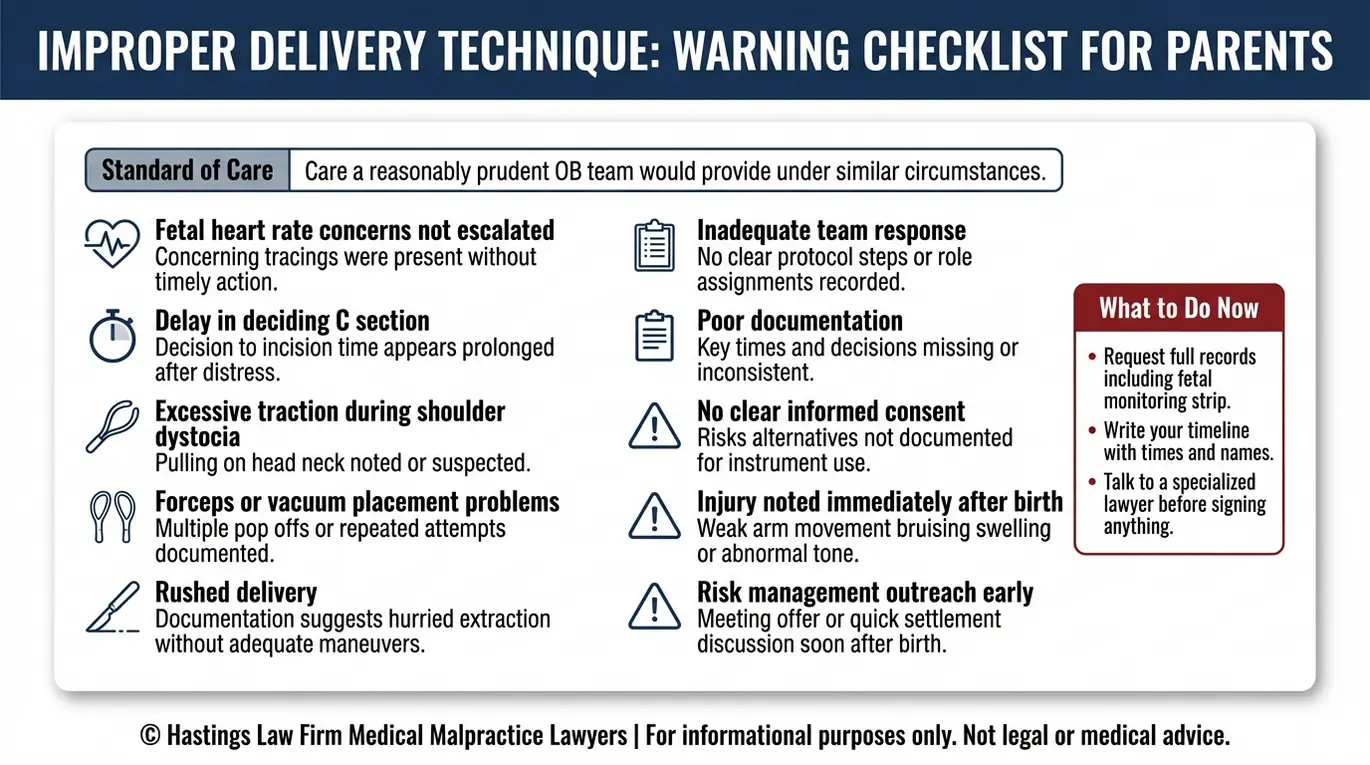
Common Improper Delivery Maneuvers and Surgical Errors
Improper delivery maneuvers often involve the misuse of extraction tools like forceps or vacuums, or the application of excessive physical traction during complications like shoulder dystocia, a condition where the baby’s shoulder becomes lodged behind the mother’s pelvic bone after the head has already been delivered. Surgical and manual errors during labor represent a significant risk for injury. These physical interventions require precision; even a slight error in application or force can have permanent consequences.
Instrumental Delivery Errors
An operative vaginal delivery, one that uses forceps or a vacuum extractor to assist in guiding the baby through the birth canal, carries inherent risk even when performed correctly. Operative tools can help guide a baby during a difficult birth. When these tools are misapplied, the risk of serious injury increases significantly. Research published by PLOS ONE on maternal complications of instrumental vaginal delivery documents the elevated rates of trauma associated with these procedures.
Common errors with instruments include:
- Forceps misplacement: Incorrect positioning on the baby’s head, leading to skull compression or facial nerve injury
- Excessive vacuum force: Applying too many “pop-offs” (detachments) or maintaining suction for too long, which can cause internal bleeding beneath the scalp
- Failed conversion: Continuing with one instrument after it has failed instead of proceeding to a cesarean section, often referred to as a C-section
Manual Manipulation Errors
Shoulder dystocia is one of the most dangerous delivery complications. Physicians use manual techniques to resolve delivery complications and free the trapped shoulder. Pulling too hard, or at the wrong angle, can stretch or tear the nerves that run from the neck into the arm. Physicians must recognize the signs immediately and employ techniques like the McRoberts maneuver rather than resorting to force that endangers the child.
Medication Mismanagement
Pitocin, a synthetic form of oxytocin used to induce or strengthen contractions, can also create conditions that lead to risky delivery maneuvers. While providers use Pitocin to stimulate labor, the drug requires strict monitoring. When Pitocin is administered without careful monitoring, it can cause contractions that are too frequent or too intense. This places extreme stress on the baby and may force the medical team into urgent, poorly executed extraction attempts. An improper delivery technique lawyer evaluates whether the medication protocol contributed to uterine tachysystole, excessive uterine contractions that can result from Pitocin use.
The Hastings Law Firm Difference
Results matter, but what truly sets us apart is how we achieve them. Every verdict, every settlement, and every Texas courtroom victory comes from one guiding promise: To treat each client’s fight for justice as if it were our own.
This balance of skill, experience, and empathy reflects our core philosophy that justice should not only compensate the injured, but also make healthcare safer nationwide.

Injuries Caused by Negligent Delivery Techniques
Negligent delivery techniques can result in catastrophic trauma, including brachial plexus injuries, bone fractures, and hypoxic-ischemic encephalopathy (HIE) caused by prolonged oxygen deprivation. Physical trauma during delivery can lead to permanent disabilities. Identifying the source of catastrophic trauma is a primary goal of our investigation.
Nerve Injuries
Excessive traction during a complicated delivery can stretch or tear the brachial plexus. The brachial plexus is the nerve network in the shoulder that controls movement and sensation in the arm and hand. The most common result is Erb’s palsy, a condition that causes weakness or paralysis in the affected arm. In severe cases, a brachial plexus injury, sometimes called Erb’s palsy, may require surgical intervention or result in permanent disability.
Bone Injuries
Improper use of forceps or a vacuum extractor can lead to skull fractures. Infant bones can fracture if providers apply too much pressure during a difficult labor. Subgaleal hemorrhage, bleeding in the space between the skull and the scalp tissue caused by shearing forces during vacuum extraction, is another serious and potentially life-threatening injury. Aggressive manual maneuvers during shoulder dystocia may also cause clavicle fractures.
Brain Injuries
When delivery complications are not resolved quickly, the baby may be deprived of adequate oxygen. HIE is a serious form of brain damage caused by oxygen loss at birth. Prolonged deprivation can lead to Hypoxic-ischemic encephalopathy, which is brain damage caused by a lack of blood flow and oxygen to the brain around the time of birth, and is a leading cause of cerebral palsy. As a Texas improper delivery technique attorney, our team traces the timeline of labor to identify whether delays in decision-making contributed to the injury.
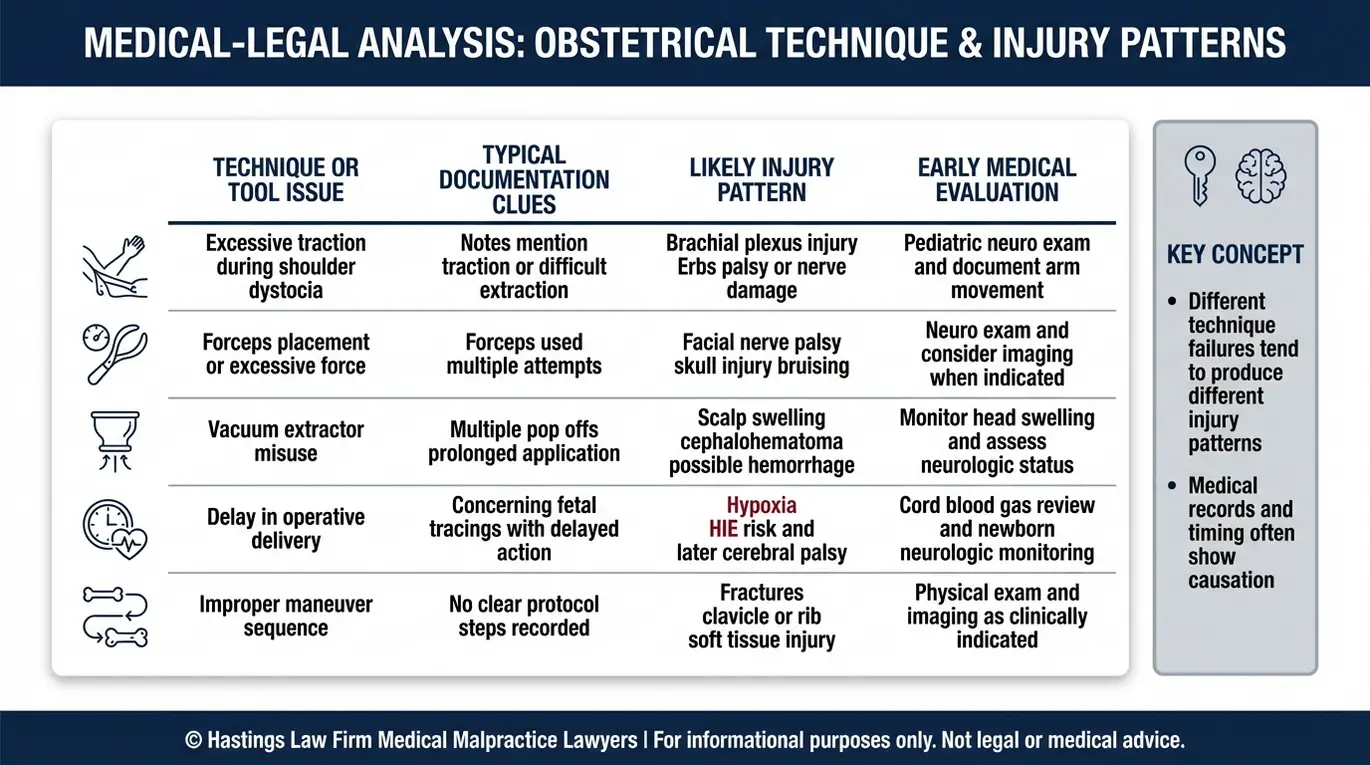
| Delivery Technique Failure | Associated Injury | Potential Long-Term Impact |
|---|---|---|
| Excessive traction on head/neck | Brachial plexus injury / Erb’s palsy | Arm weakness or paralysis |
| Forceps misapplication | Skull fractures, facial paralysis | Neurological deficits, cosmetic damage |
| Prolonged vacuum extraction | Subgaleal hemorrhage | Brain damage from blood loss |
| Delayed C-section during fetal distress | HIE / Oxygen deprivation | Cerebral palsy, developmental delays |
| Improper shoulder dystocia management | Clavicle fracture, nerve damage | Limited mobility, chronic pain |
Diagnosing Trauma Using Advanced Imaging vs. Observation
When a neonatal neurologic injury or fracture is suspected after a difficult delivery, early and accurate diagnosis is essential. Standard observation or basic X-rays may not reveal the full extent of the damage, so adherence to proper diagnostic standards is critical. A CT scan can identify fractures and acute bleeding, while a diffusion-weighted MRI (DWI), a specialized imaging technique that detects changes in brain tissue caused by restricted blood flow, is considered the gold standard for diagnosing HIE in newborns. According to NCBI Bookshelf’s resource on cord blood gas analysis, objective data like cord blood gas lab tests and advanced imaging are critical in establishing the timing and severity of oxygen deprivation. Parents should ask whether these diagnostic tools were used in the hours and days following delivery.
Immediate Steps for Parents Suspecting Delivery Malpractice
Parents should request full copies of all medical records as soon as possible, avoid signing any settlement offers or releases from the hospital, and consult a specialized attorney to preserve critical evidence before it can be altered or lost. Taking these steps helps families preserve critical evidence for a future claim.
Document Everything
Write down your own recollection of events while they are still fresh. Record keeping helps the investigation as you note the timing of key decisions and who was in the room. This personal timeline can become an important reference when your legal team reconstructs the clinical events. Include any conversations with doctors or nurses before and after delivery.
Be Cautious with Hospital Risk Management
Hospitals sometimes initiate contact through their risk management department after a serious delivery outcome. Risk management departments focus on minimizing the hospital’s liability. These early conversations, whether framed as “apology programs,” “quality reviews,” or settlement discussions, may be designed to limit the hospital’s liability. Before signing anything or providing a recorded statement, speak with a lawyer for improper delivery technique cases who can protect your rights.
Seek an Independent Medical Evaluation
If you have concerns about your child’s condition, consider having the baby evaluated by a specialist outside of the birth hospital. An independent pediatric neurologist or orthopedist can provide an objective assessment of your child’s injuries. Under the Texas Health and Safety Code Chapter 241, you have the right to obtain your medical records. Results from a cord blood gas lab test can provide objective evidence of whether oxygen deprivation occurred. Records related to uterine tachysystole, which is excessive uterine contractions that can be caused by Pitocin, may also be relevant.
Liability and Compensation in Delivery Error Cases
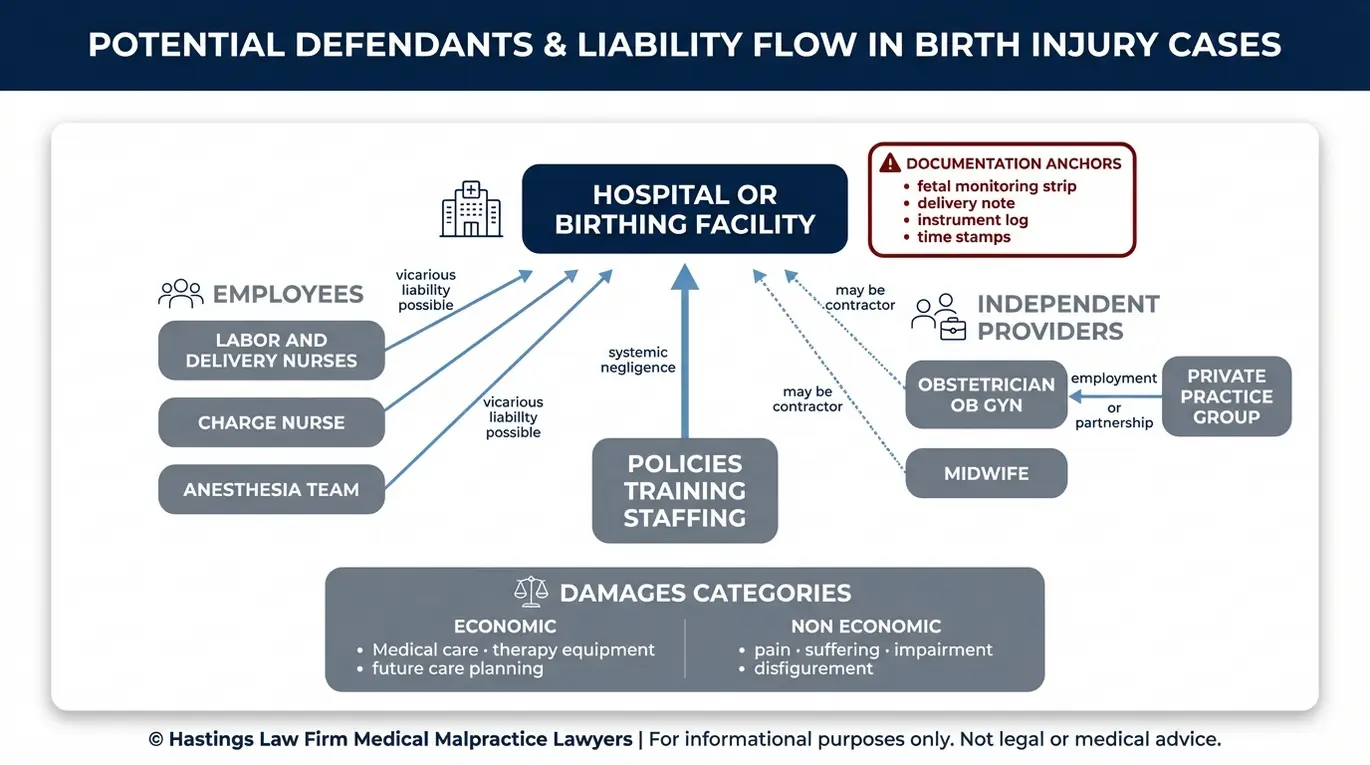
Liability in delivery error cases may extend to the obstetrician for technique errors, the nursing staff for monitoring failures, or the hospital itself for hospital negligence involving systemic protocol breakdowns. Liability refers to the legal responsibility for the harm caused by medical errors. We investigate every party involved to ensure hospital negligence or individual errors are properly identified.
Who Can Be Held Liable
Determining liability requires understanding the employment relationships in the delivery room. Many obstetricians are independent contractors with hospital privileges rather than hospital employees. Our legal team includes former defense attorneys and experienced hospital nurses who previously worked for the systems they now challenge. Vicarious liability holds employers responsible for employee actions, which often applies to nursing staff. Nurses and support staff are often direct hospital employees. If a nurse failed to properly monitor fetal heart rate tracings or delayed notifying the physician of a change in the baby’s status, the hospital may bear liability through vicarious liability.
How Compensation Is Calculated
Damages in these cases generally fall into two categories. Damages represent the legal remedy for the injuries your child sustained. Texas law categorizes damages into financial and non-financial losses to address the family’s needs.
- Economic damages: These include past and future medical expenses such as NICU costs, surgeries, physical therapy, adaptive equipment, home modifications, and the cost of ongoing care. A life care plan, prepared by a qualified expert, projects the total cost of care over the child’s lifetime. Economic damages are not subject to caps under Texas law.
- Non-economic damages: These cover pain and suffering, physical impairment, and disfigurement. Under Texas Civil Practice and Remedies Code § 74.051, non-economic damages are capped at $250,000 per defendant, with an overall maximum of $500,000 when multiple defendants are involved.
Structured Settlements for a Child’s Future
When a child receives a significant recovery, the funds are often placed into a trust. Structured settlement plans provide long-term financial stability for children throughout their lifetime. This approach ensures the money is professionally managed and available for the child’s medical care, education, and living expenses, rather than being disbursed all at once.
Contact the Texas Birth Injury Attorneys at Hastings Law Firm Today for Help
If your child was injured during delivery and you believe the techniques used were improper, you deserve answers. Our team at Hastings Law Firm, led by board-certified trial attorney Tommy Hastings, has spent nearly two decades holding medical providers accountable for preventable birth injuries across Texas.
We understand the weight of what you are carrying. Our in-house nurses and medical experts will review your child’s records, reconstruct the delivery timeline, and give you an honest assessment of whether negligence played a role. As a Texas improper delivery technique lawyer team, we prepare every case for medical malpractice litigation. We represent every case as if it will go to trial, which puts us in the strongest possible position to pursue full and fair compensation on your family’s behalf.
There are no fees unless we recover for you. Contact us today for a free, confidential case evaluation and take the first step toward understanding what happened and what can be done about it.
Frequently Asked Questions About Improper Delivery Technique in Texas


This content was researched and written by the Hastings Law Firm editorial team, which includes attorneys, medical professionals, and experienced researchers. Our writing is informed by internal knowledge and practical experience, and we cross-check critical details against authoritative sources cited throughout. Every piece undergoes human-led fact-checking and legal review. Because legal and medical information can change, if you spot an error, please contact us. Learn more about our content standards and review process on our editorial policy page.

Tommy Hastings, founder of Hastings Law Firm, is a board-certified personal injury trial lawyer dedicated exclusively to healthcare injury cases. Since 2001, he has represented injured patients and families in litigation against major hospital systems, pharmaceutical companies, and negligent healthcare providers nationwide. He has handled numerous high-profile cases that have drawn national media attention and resulted in multi-million dollar recoveries. He draws on that experience in his writing, helping readers understand how these cases work and what options may be available to them.
