


Texas Surgical Site Infection Lawyer
Post operative infections can be a serious complication, and some occur when sterile technique or hospital safety protocols break down. Healthcare associated infections can lead to extended recovery, additional treatment, and life threatening consequences such as sepsis and organ failure. Recognizing warning signs and understanding how infections can be linked to preventable errors helps clarify when harm may be tied to substandard care. If you or a loved one were harmed or worse due to a surgical site infection in Texas, contact Hastings Law Firm for a free, confidential case review.

Last Updated: July 27, 2026
Trusted Texas Medical Attorneys for Post-Operative Infection Claims
Not every infection after surgery is unavoidable. Some infections develop because a hospital or surgical team failed to follow the sterilization and safety protocols that exist to protect patients. These are called healthcare-associated infections (HAIs), meaning they were acquired during the course of medical treatment rather than before admission.
If you or a loved one developed a serious infection after a surgical procedure, you may be dealing with mounting medical bills and an extended recovery. Tommy Hastings founded Hastings Law Firm in 2005 to focus solely on representing patients in medical malpractice cases. Our team includes in-house nurses and former defense attorneys who understand both the medicine and the litigation. Contact us for a free, confidential case evaluation.

Types of Healthcare-Associated Infections and Surgical Errors
Surgical site infections (SSIs) and healthcare-associated infections (HAIs) occur when bacteria enter the body due to breaches in sterile technique, ranging from superficial skin infections to life-threatening sepsis. These healthcare-acquired conditions differ from pre-existing illnesses because they result from the hospital environment.
According to the CDC’s data on healthcare-associated infections, HAIs remain a persistent problem in American hospitals. Understanding the types helps clarify where negligence may have occurred.
A surgical site infection (SSI) is classified into three categories based on depth and severity:
- Superficial incisional SSI affects only the skin and the tissue directly beneath the incision.
- Deep incisional SSI involves the deeper soft tissues, such as fascia and muscle layers, at the surgical site.
- Organ/space SSI occurs in any organ or body cavity that was opened or manipulated during surgery, such as the abdominal cavity after a bowel procedure.
Identifying the specific type of infection is the first step in determining if hospital negligence occurred. The CDC’s FAQs on Surgical Site Infection events provide detailed clinical criteria for each classification.
When an SSI goes unrecognized or untreated, the infection can enter the bloodstream and trigger sepsis, the body’s dangerous overreaction to infection. Sepsis can rapidly progress to septic shock, a condition marked by plummeting blood pressure and organ failure that carries a high mortality rate.
Hospital environments also harbor specific organisms that make these infections particularly dangerous. Staphylococcus aureus (Staph) is one of the most common culprits. Its antibiotic-resistant strain, MRSA (Methicillin-resistant Staphylococcus aureus), is notoriously difficult to treat. Clostridioides difficile, commonly known as C. diff, is a bacterial infection that frequently develops after prolonged antibiotic use in hospital settings and causes severe gastrointestinal illness.
Device-related infections add another layer of risk. Catheter-associated urinary tract infections and central line bloodstream infections are often classified as preventable “never events,” meaning they should not occur when proper protocols are followed. As Texas surgical infection lawyers, we examine whether these protocols were in place and whether they were followed to protect patients.

Recognizing Symptoms of a Post-Operative Infection
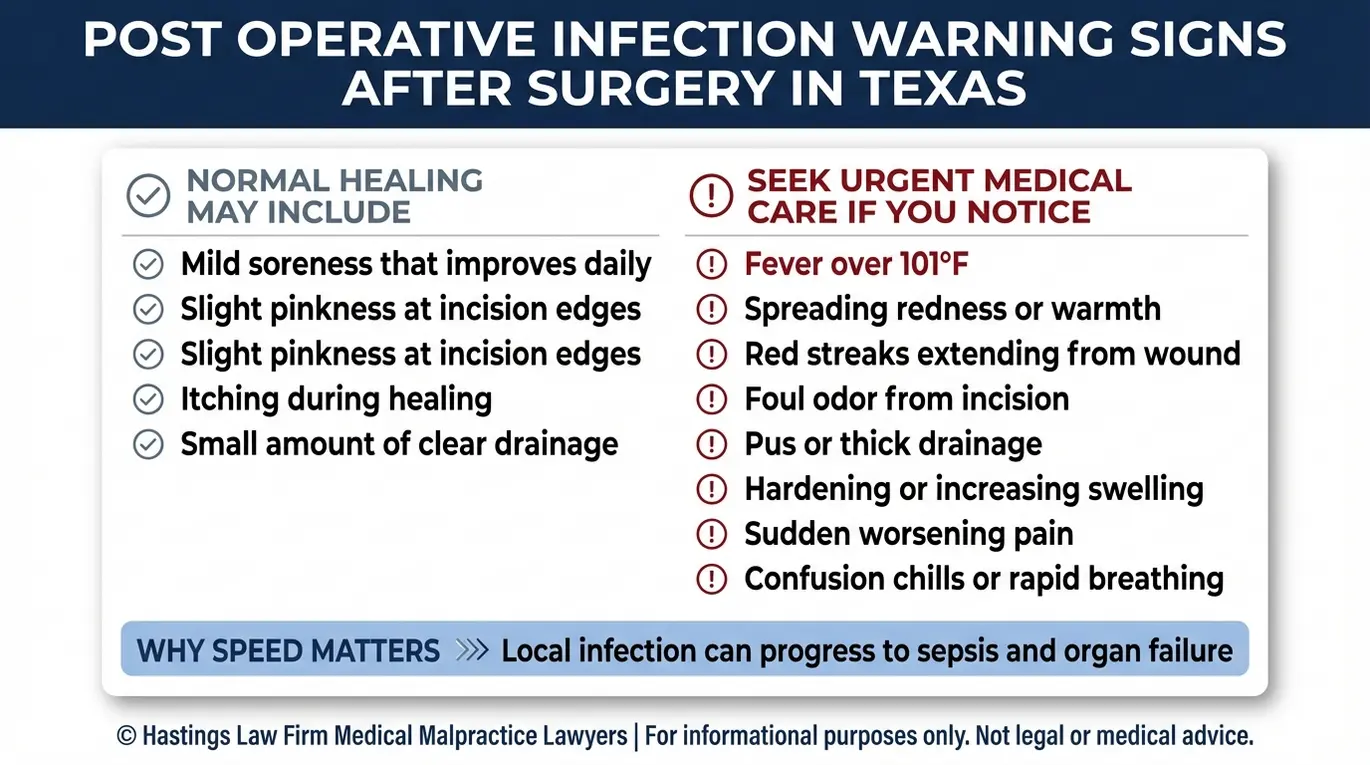
Early detection is critical; signs include spreading redness, purulent drainage, fever over 101°F, and unexpected pain, which typically require immediate medical intervention to prevent systemic spread. These indicators help patients and doctors identify a post-operative complication before it becomes life-threatening.
Some degree of discomfort after surgery is normal. Mild pinkness around an incision, slight swelling, and itchiness are part of the healing process. Infection looks and feels different. The skin near the wound may become hot to the touch. Red streaks may radiate outward from the incision site. The area may harden or produce pus.
Internal infections, particularly organ/space SSIs, can be harder to detect because they may not produce visible changes at the wound. Complications like ventilator-associated pneumonia or deep tissue infections often present as unexplained fever, confusion, rapid heart rate, or a general decline in condition. Left unaddressed, these symptoms can signal the onset of sepsis, a systemic inflammatory response to infection, or septic shock, a severe drop in blood pressure caused by sepsis that can lead to organ failure and wrongful death.
The Surgical Site Infection Prevention guidelines from Nebraska Medicine outline evidence-based protocols for both prevention and early identification.
Post-operative warning signs to watch for:
- Fever above 101°F that persists or worsens
- Red streaks extending from the incision
- Foul-smelling or discolored drainage
- Pus or cloudy fluid leaking from the wound
- Hardening, swelling, or increasing tenderness at the site
- Confusion, rapid breathing, or feeling significantly worse without clear cause
If a medical team fails to recognize and act on these signs, the resulting harm may indicate medical negligence. An infection malpractice lawyer in Texas can evaluate whether delays in diagnosis or treatment fell below the accepted standard of care.
The Hastings Law Firm Difference
Results matter, but what truly sets us apart is how we achieve them. Every verdict, every settlement, and every Texas courtroom victory comes from one guiding promise: To treat each client’s fight for justice as if it were our own.
This balance of skill, experience, and empathy reflects our core philosophy that justice should not only compensate the injured, but also make health care safer nationwide.

Common Causes of Surgical Infections and Negligence
Negligence occurs when medical providers fail to adhere to strict sterilization protocols, such as improper hand hygiene, using non-sterile instruments, or failing to administer prophylactic antibiotics.
The Surgical Site Infection Prevention guidelines from the California Department of Public Health outline the expected standard of care for surgical environments. When those standards are not met, the result can be a preventable infection.
Common failures we investigate include:
- Sterilization breakdowns: Instruments must be sterilized in an autoclave, a device that uses pressurized steam to kill bacteria. Errors in autoclave cycles or the use of shortcuts like “flash sterilization” can leave instruments contaminated.
- Environmental failures: Operating rooms require controlled airflow and strict sanitation. HVAC malfunctions, inadequate cleaning between procedures, or construction dust infiltrating surgical suites can introduce harmful pathogens.
- Procedural lapses: Shaving the surgical site too far in advance can create micro-abrasions that harbor bacteria. Failing to clip hair properly, not applying appropriate skin antiseptics, or skipping pre-operative antibiotics altogether are well-documented causes of preventable SSIs.
- Inadequate hand hygiene: Despite being the most basic infection control protocol, failures in handwashing and glove protocols remain a persistent source of contamination and antibiotic resistance.
As Texas surgical site infection lawyers, our team traces each of these potential failures through the surgical record, nursing notes, and hospital policies to identify where the breakdown occurred.
Forced Air Warming Systems as a Contamination Vector
Forced air warming systems are medical devices used to maintain a patient’s body temperature during surgery. One area of infection litigation involves these forced-air warming systems, such as Bair Hugger blankets, which are placed over patients. Maintaining body temperature is vital for recovery, but the equipment must be used safely to avoid moving bacteria into open wounds.
These systems work by circulating heated air through a disposable blanket draped over the patient. This technology is often used during major procedures to stabilize the patient’s core temperature.
The concern is that some of these devices draw in ambient air from near the operating room floor, where bacterial counts tend to be highest, and then direct that air across or near the open surgical site. In joint replacement and other implant-based surgeries, this potential contamination pathway has become a focus of product liability and medical negligence claims. We evaluate whether contaminated medical equipment, including warming devices, may have contributed to a patient’s post-operative infection.
Proving Liability and Filing a Lawsuit in Texas
Liability often falls on the hospital for systemic sterilization failures or the surgeon for procedural errors; proving this requires distinguishing between unavoidable risk and preventable negligence using expert testimony. This process involves a careful review of hospital policies and surgical logs.
Hospitals are generally responsible for the systems and staff they control. If a sterilization technician fails to properly process instruments, or if nursing staff do not follow hand hygiene protocols, the facility can be held liable under vicarious liability principles. This legal concept means the hospital is responsible for the actions of its employees while they are on the job.
Liability can also extend to third parties. Surgeons bear responsibility for their own procedural decisions, such as whether prophylactic antibiotics were ordered or whether contamination was introduced through their technique.
Defense attorneys in these cases almost always argue that “infection is a known risk of surgery.” That statement is technically true, but it does not end the analysis. Our surgical malpractice attorneys counter this defense by showing that the specific infection was preventable. We build a timeline from pre-operative preparation through post-operative monitoring, using medical experts to identify the exact breach in the standard of care and connect it to the infection that developed.
The Texas Chapter 74 Expert Report Requirement
As a key component of Texas Tort Reform, Texas imposes a strict procedural hurdle in medical malpractice cases. This law requires specific evidence early in the legal process to prevent frivolous lawsuits.
Under Chapter 74 of the Texas Civil Practice and Remedies Code, a plaintiff must serve a qualified expert report within 120 days of the date the defendant’s original answer is filed. This report must identify the standard of care, explain how it was violated, and establish how that violation caused the injury.
If the report is not filed on time, or if it fails to meet the statutory requirements, the court can dismiss the case with prejudice. This is one of the reasons our team includes in-house medical professionals who begin building the medical foundation of a case from the very first consultation. Having medical experts engaged early allows us to meet this deadline with a thorough, well-supported report.

Recoverable Damages for Infection Victims
Victims of surgical infections can recover economic damages for medical bills and lost wages, as well as non-economic damages for pain, suffering, and physical impairment.
The financial impact of a post-operative infection can be significant. According to the CDC’s SSI Event protocol manual, surgical site infections are among the most common and costly HAIs in the United States. These financial recoveries help families manage the high costs of unexpected medical complications.
Patients of surgical infections can recover damages including:
- Additional surgical procedures, including surgical debridement, which is the removal of infected or dead tissue to promote healing
- Extended hospitalization and long-term antibiotic therapy, including IV antibiotics that may continue for weeks after discharge
- Lost wages and diminished earning capacity, particularly when the infection results in prolonged disability or permanent limitations
- Pain and suffering, including the mental anguish of enduring a preventable complication and its effect on daily life
- Wrongful death damages when a surgical infection leads to sepsis, organ failure, and death
A medical negligence lawyer can evaluate the full scope of your losses and help you understand what compensation may be available based on the specifics of your case.
Contact the Texas Surgical Error Attorneys at Hastings Law Firm Today for Help
You should not have to bear the cost of a hospital’s failure to maintain a clean and safe surgical environment. If you or someone in your family developed a serious infection after surgery, the team at Hastings Law Firm is ready to listen and help you understand what happened.
Our legal team includes in-house nurses and board-certified patient advocates who can interpret your medical records and identify where protocols may have failed. Our founder, Tommy Hastings, is board-certified in Personal Injury Trial Law (a distinction held by less than 2% of Texas attorneys) and is a member of the American Board of Trial Advocates. Our trial-ready approach signals to insurance carriers that we are prepared to take the case to a jury if necessary.
We work on a contingency fee basis, which means you pay no attorney fees unless we recover compensation on your behalf. If you are looking for a Texas surgical site infection lawyer who understands both the medicine and the law, contact Hastings Law Firm for a free case evaluation.
Frequently Asked Questions About Surgical Site Infection in Texas


This content was researched and written by the Hastings Law Firm editorial team, which includes attorneys, medical professionals, and experienced researchers. Our writing is informed by internal knowledge and practical experience, and we cross-check critical details against authoritative sources cited throughout. Every piece undergoes human-led fact-checking and legal review. Because legal and medical information can change, if you spot an error, please contact us. Learn more about our content standards and review process on our editorial policy page.

Gabe Sassin has focused exclusively on medical malpractice law since 2007. After spending more than a decade as a malpractice defense attorney, he knows exactly how the other side works. He has seen firsthand how healthcare providers, insurers, corporate defendants, and their legal teams think, prepare, and build their defense against claims. That knowledge works for the people who need it most today, injured patients and their families. His unique experience shapes everything he writes, giving readers a look at how these cases actually work from someone who has handled them from both sides.
