


Houston Robotic Surgery Malpractice Lawyer
Robotic assisted surgery can leave patients with severe injuries that are not always recognized right away, especially when heat or electrical energy is involved. Harm may stem from surgeon inexperience, inadequate training, poor judgment during a complication, or a device malfunction that causes unintended instrument movement. These cases often turn on whether the injury was preventable and whether robotic assistance was appropriate for the procedure. If you or a loved one were harmed or worse due to robotic surgery malpractice in Houston, Texas, contact Hastings Law Firm for a free, confidential case review.
Last Updated: July 27, 2026
Trusted Houston Medical Attorneys for Surgical Robot Injury Claims
If you or a loved one suffered a serious injury during a robotic-assisted surgery, you may be dealing with far more than a “known complication.” This procedure involves a surgeon operating through small incisions using a robotic device rather than their hands directly.
Many of these injuries raise questions about surgeon training, device safety, and whether the procedure should have been performed robotically. Traditional laparoscopic surgery uses similar small incisions but with handheld instruments the surgeon controls directly.
As your Houston robotic surgery malpractice lawyer, Hastings Law Firm brings together trial attorneys, in-house medical professionals, and former defense counsel who understand both the technology and the tactics used to deflect responsibility. If something went wrong during your procedure, we can review your records, identify what happened, and explain your legal options at no cost.

Common Injuries and Risks Associated with the Da Vinci Surgical System
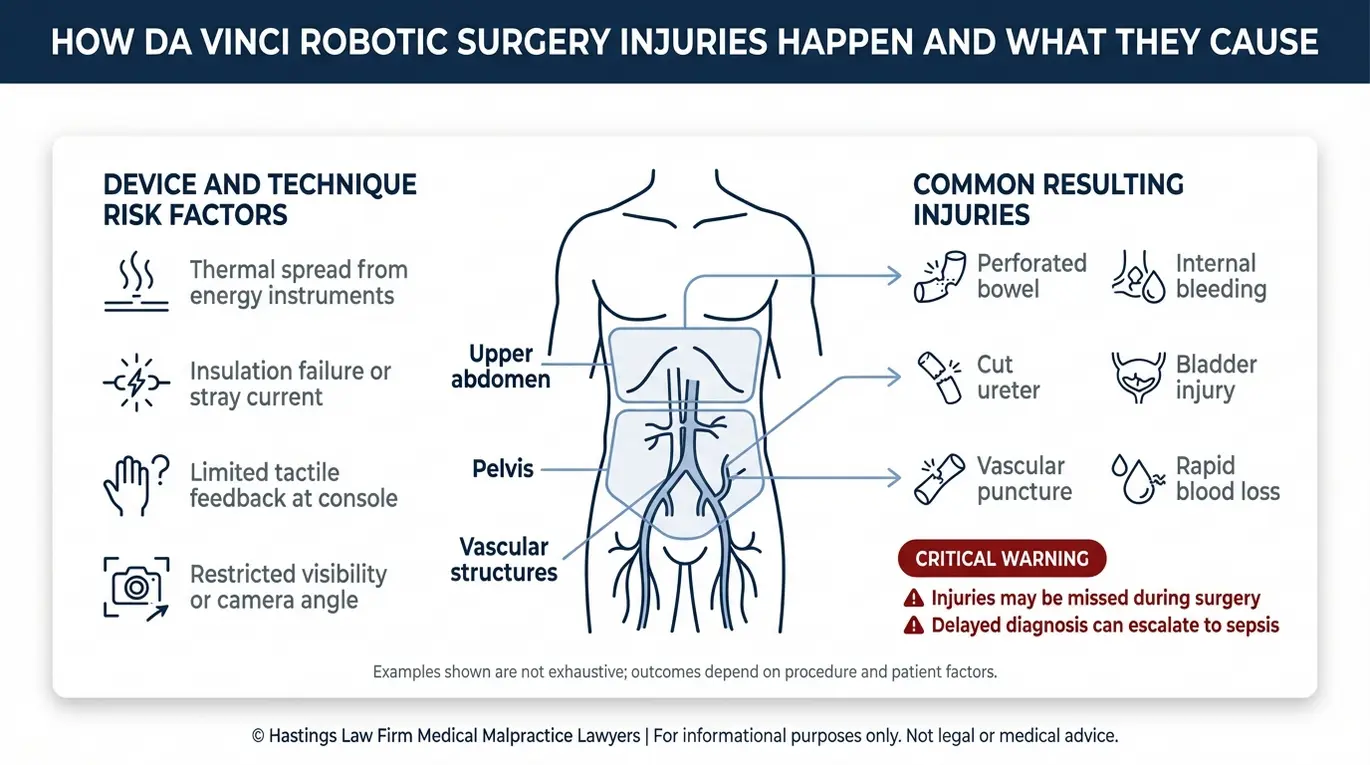
Robotic surgery complications often stem from technical failures or surgeon inexperience and include unintended burn injuries, organ perforation, and nerve damage that may not be immediately detected. That delayed discovery is one of the most dangerous aspects of these cases.
The Da Vinci Surgical System, a robotic platform manufactured by Intuitive Surgical, allows surgeons to operate remotely from a console and is marketed as a safer, minimally invasive alternative. But the reality inside the operating room can be very different. The robotic arms move with extreme precision, yet they also carry instruments that generate intense heat and electrical energy. When something goes wrong, the resulting injuries can be severe and, in many cases, life-threatening.
Complications reported in connection with the da Vinci surgical robot system include:
- Thermal injury (electrosurgical burns): Electrical energy from the instrument tip can arc or travel through damaged insulation, burning tissue the surgeon cannot see. These burns may not produce symptoms for hours or even days.
- Organ puncture or perforation: The bowel, bladder, ureters, and blood vessels can be cut or punctured during instrument movement, sometimes without any visible sign during the procedure.
- Nerve damage: Prolonged patient positioning and excessive force from robotic arms can compress or sever nerves, leading to chronic pain or loss of function.
- Internal bleeding: Vascular injuries may go undetected until the patient’s condition deteriorates post-operatively.
- Sepsis: When a bowel perforation or burn goes undiagnosed, bacteria can leak into the abdominal cavity, leading to sepsis, a potentially fatal systemic infection.
Data submitted to the U.S. Food and Drug Administration’s MDR (Medical Device Reporting) database includes thousands of adverse event reports linked to robotic surgical systems. These reports document device malfunctions, patient injuries, and deaths. If you suspect your injury was caused by a device failure or surgical error, a lawyer can help determine what the evidence shows.
The Danger of Tactile Sensation Loss
One risk unique to robotic surgery is the complete loss of tactile sensation, sometimes called haptics, which is the surgeon’s ability to physically feel the resistance of tissue, the tension on a suture, or the pressure being applied to an organ. In traditional open or laparoscopic procedures, surgeons rely on this sense of touch to avoid applying too much force.
When operating from a robotic console, the surgeon sees the surgical field on a screen but cannot feel it. This lack of tactile feedback means tissue can be grasped too firmly, retracted too aggressively, or dissected with more force than the anatomy can tolerate.
The absence of haptic feedback places greater demands on surgeon training and credentialing. When that training is insufficient, the risk of surgical errors increases significantly.
Distinguishing Between Medical Malpractice and Product Liability
Legal liability in robotic surgery cases depends on whether the injury was caused by a surgeon’s negligent error or a design defect within the robotic device itself. In some cases, both apply, and identifying the correct legal liability early on shapes the entire direction of the claim.
Surgeon liability (medical malpractice) applies when the injury results from the surgeon’s decisions or technique. This can include inadequate training on the robotic platform, failure to recognize a complication during the procedure, or failure to convert to open surgery when the robotic approach is not working safely. An insulation failure, a breach in the protective coating of a robotic instrument that allows electrical current to escape and burn surrounding tissue, may also point to surgeon error if the instrument was improperly inspected before use.
Manufacturer liability (product liability) applies when the medical device itself malfunctions. Under Texas Civil Practice and Remedies Code Chapter 82, claims can be brought against companies like Intuitive Surgical for design defects, manufacturing flaws, or failure to warn about known risks. Device recalls and software glitches that cause unintended instrument movement fall into this category.
Hospital liability can arise when a facility fails to properly credential surgeons on robotic equipment or allows procedures to be performed without adequate oversight.
| Factor | Surgeon Negligence (Malpractice) | Manufacturer Defect (Product Liability) |
|---|---|---|
| Cause of Injury | Surgeon error, lack of training, poor judgment | Mechanical failure, software glitch, design flaw |
| Defendant | Surgeon and/or hospital | Device manufacturer (e.g., Intuitive Surgical) |
| Key Evidence | Operative reports, credentialing records | Device data logs, FDA reports, recall history |
| Legal Standard | Breach of the standard of care | Defective product under Texas Chapter 82 |

The Hastings Law Firm Difference
Results matter, but what truly sets us apart is how we achieve them. Every verdict, every settlement, and every Houston courtroom victory comes from one guiding promise: To treat each client’s fight for justice as if it were our own.
This balance of skill, experience, and empathy reflects our core philosophy that justice should not only compensate the injured, but also make health care safer nationwide.

High Risk Procedures Using Robotic Assistance in Texas
While robotic systems are used in various fields, the highest incidence of reported complications occurs in gynecological, urological, and colorectal surgeries due to the complex anatomy involved.
In gynecology, robotic-assisted hysterectomies carry a recognized risk of ureter injury, the accidental cutting or damage to the tubes that carry urine from the kidneys to the bladder, as well as bladder perforation. A systematic review and meta-analysis published in PubMed Central comparing robotic-assisted hysterectomy to laparoscopic and open approaches highlights outcomes and complication profiles across these methods.
In urology, robotic prostatectomies can result in nerve damage that affects bladder control and sexual function. General surgery procedures like gallbladder removal and bariatric operations also carry risk of bowel perforation, a puncture in the intestine that allows contents to leak into the abdomen, when performed robotically.
One concern across all these specialties is whether robotic-assisted surgery is being used in cases where traditional laparoscopic surgery or minimally invasive surgery would produce equivalent or better outcomes with fewer device-related risks. Hospitals often invest heavily in robotic systems, and this can lead to an increased frequency of robotic-assisted procedures.
When a procedure is performed robotically without a clear clinical advantage, patients may be exposed to unnecessary risk. In the most serious situations, device-related complications during routine procedures have contributed to wrongful death.
How Our Team Proves Negligence in Robotic Surgery Cases
Proving negligence requires a comprehensive forensic investigation that correlates the timeline of the surgery with device logs and post-operative symptoms to establish causation.
As a robotic surgery lawyer in Houston, Hastings Law Firm focuses on the details of medical negligence. Founded by board-certified trial lawyer Tommy Hastings, our firm approaches these cases by assembling a detailed, forensic investigation from the very beginning. Our in-house medical staff, including nurse practitioners and board-certified patient advocates, work alongside our attorneys and national network of surgical experts to reconstruct what happened during your procedure and maximize your recovery of personal injury damages.
The key evidence we pursue in robotic surgery cases includes:
- Operative reports and surgical notes: These document the surgeon’s account of the procedure, including any complications noted intraoperatively.
- Device data logs (system event logs): The robotic system records instrument movements, error codes, and system alerts throughout surgery. These electronic records can reveal malfunctions or irregularities the operative report may not mention.
- FDA adverse event reports: Reports filed with the U.S. Food and Drug Administration under its mandatory reporting requirements can show whether similar device failures have been documented before.
- Complete medical records: Under the Texas Medical Board’s patient records guidelines, patients have the right to access their full medical records, which are essential for timeline reconstruction.
- Training and credentialing records: These show whether the surgeon met the facility’s requirements for operating the robotic system.
- Post-operative records and imaging: Delayed symptoms often hold critical evidence of when an injury actually occurred versus when it was discovered.
Texas law requires that an expert report be served on all defendants within 120 days after each defendant’s original answer is filed, validating the claim with a qualified medical professional’s opinion. One challenge in these cases is that hospitals and device manufacturers sometimes delay or underreport adverse events to the FDA during the discovery process, making independent investigation essential to uncovering the full picture.

Texas Deadlines and Statutory Requirements for Filing
Texas law imposes a strict two-year statute of limitations on medical malpractice claims along with procedural hurdles like the expert report requirement that demand immediate legal action. The clock generally starts on the date of the injury, though in some cases it may begin when the injury was discovered or reasonably should have been discovered.
Beyond the filing deadline, Texas medical malpractice laws under Chapter 74 of the Texas Civil Practice and Remedies Code require that an expert report be served on all defendants within 120 days after each defendant’s original answer is filed. This report must come from a qualified medical professional and must identify the applicable standard of care, the breach, and causation. Failure to meet this deadline can result in dismissal of the case.
Texas also caps non-economic damages in medical malpractice cases, which limits recovery for pain and suffering. These caps make it even more important to build a strong case for the full scope of economic damages, including medical expenses, lost income, and future care needs under the applicable statute of limitations.
Contact the Houston Surgical Error Attorneys at Hastings Law Firm Today for Help
Robotic surgery injuries require a legal team that understands both the medical technology and the defense strategies used by hospitals, surgeons, and device manufacturers. Hastings Law Firm combines the resources of a national medical malpractice practice with the personal attention of a team that treats every client as a partner, not a case number.
Our team includes former defense attorneys who know how the other side builds its case, in-house medical professionals who can interpret surgical records and device data, and trial attorneys who prepare every case as if it will go before a jury. That preparation gives us a firm negotiation posture and the credibility to follow through if a fair resolution cannot be reached outside the courtroom.
If you or a loved one was harmed during a robotic procedure, we are here to help you find answers. Contact Hastings Law Firm for a free, confidential case evaluation. You pay no fees unless we recover compensation on your behalf.
Frequently Asked Questions About Robotic Surgery Malpractice in Houston


This content was researched and written by the Hastings Law Firm editorial team, which includes attorneys, medical professionals, and experienced researchers. Our writing is informed by internal knowledge and practical experience, and we cross-check critical details against authoritative sources cited throughout. Every piece undergoes human-led fact-checking and legal review. Because legal and medical information can change, if you spot an error, please contact us. Learn more about our content standards and review process on our editorial policy page.

Tommy Hastings, founder of Hastings Law Firm, is a board-certified personal injury trial lawyer dedicated exclusively to healthcare injury cases. Since 2001, he has represented injured patients and families in litigation against major hospital systems, pharmaceutical companies, and negligent healthcare providers nationwide. He has handled numerous high-profile cases that have drawn national media attention and resulted in multi-million dollar recoveries. He draws on that experience in his writing, helping readers understand how these cases work and what options may be available to them.
