


Phoenix Robotic Surgery Malpractice Lawyer
Robotic assisted surgery is often presented as precise and minimally invasive, yet serious harm can occur when the system is poorly controlled, the team is not properly trained, or complications are not recognized in time. Injuries may involve internal bleeding, burns, or damage to nearby organs, and symptoms can appear after discharge when the connection to the procedure is missed. Responsibility may involve a surgeon, a hospital, or a device manufacturer depending on what went wrong. If you or a loved one were harmed or worse due to robotic surgery malpractice in Phoenix, Arizona, contact Hastings Law Firm for a free, confidential case review.

Last Updated: July 27, 2026
Trusted Phoenix Medical Attorneys for Surgical Robot Injury Claims
When a surgical robot, a physician-controlled device used to perform operations through small incisions, causes an unexpected injury, the experience can leave you with more questions than answers. You may be recovering from what was supposed to be a minimally invasive surgery, a procedure performed through tiny openings rather than large incisions, only to find yourself dealing with serious complications that no one warned you about.
If that sounds familiar, you are not imagining things. Something may have gone wrong, and you have every right to ask why.
As a Phoenix robotic surgery malpractice lawyer, Hastings Law Firm focuses exclusively on medical malpractice. Our team of attorneys, nurse consultants, and medical staff can review your records, explain what happened, and help you understand your legal options. Contact us for a free, confidential case evaluation.

Understanding Robotic Surgery Negligence in Arizona Hospitals
Robotic surgery negligence occurs when a surgeon or hospital fails to meet the standard of care while using devices like the da Vinci Surgical System, resulting in preventable patient injury. Despite what marketing materials suggest, these machines do not operate independently. While minimally invasive surgery offers benefits, a surgeon controls every movement from a nearby console, which means the technology is only as safe as the person directing it. Human error remains a primary cause of injury.
One of the most common issues we investigate is inadequate training. Hospitals may allow surgeons to use robotic systems without completing sufficient hands-on training or formal credentialing. The Joint Commission requires hospitals to conduct a Focused Professional Practice Evaluation (FPPE), a structured review process that assesses whether a physician is competent to perform specific procedures, before granting privileges. When hospitals skip or rush this process, patients bear the risk.
We evaluate the different sources of robotic surgery malpractice to identify where the error occurred:
- Surgeon error: The surgeon controlling the robot makes a mistake, such as applying too much force, clipping the wrong structure, or failing to recognize a complication in real time.
- Failure to convert: When complications arise during a robotic procedure, the standard of care may require the surgeon to abandon the robot and perform a conversion to open surgery, meaning switching to a traditional open operation to address the problem directly. Delays in making that decision can cause serious harm.
- Inadequate training or credentialing: The hospital permits a surgeon to use the system without verifying competence through proper evaluation.
- Hospital negligence: The facility fails to maintain the equipment, enforce safety protocols, or provide adequate surgical support staff.
- Mechanical malfunction: The robotic system itself fails due to a hardware or software defect unrelated to surgeon control.
Understanding which type of robotic surgery negligence occurred is the first step in building a case. Our team examines operative reports, device logs, training records, and hospital credentialing files to identify exactly where the breakdown happened.

Common Injuries Caused by the da Vinci Surgical System
Common injuries from robotic surgery include accidental organ perforation, burned tissue from electrical arcing, and internal bleeding caused by mechanical malfunction or surgeon error. These injuries from the da Vinci Surgical System and other platforms can range from treatable complications to life-threatening emergencies, and in some cases, they contribute to wrongful death.
Electrical arcing, the unintended transfer of electrical current from a robotic instrument to surrounding tissue, is one of the most dangerous risks. Because the surgical field is viewed through a camera, burns to nearby organs can go unnoticed during the procedure. A patient may be discharged feeling fine, only to develop severe symptoms days later.
Accidental organ perforation, a puncture or tear in an organ such as the bowel, bladder, or a blood vessel, presents a similar danger. These injuries often are not detected during the original surgery. When symptoms like fever, abdominal pain, or sepsis appear after discharge, the connection to the robotic procedure is not always immediately recognized.
| Injury Type | How It Occurs | When It’s Typically Detected |
|---|---|---|
| Organ perforation | Instrument punctures bowel, bladder, or blood vessel | Hours to days post-surgery |
| Electrical burn | Arcing from robotic arm to surrounding tissue | Days post-surgery (infection, pain) |
| Internal bleeding | Vessel damage from instrument or mechanical fault | Hours to days post-surgery |
| Laceration | Unintended cut to adjacent structures | During or shortly after surgery |
| Bowel injury | Thermal or mechanical damage to intestinal wall | Days post-surgery (sepsis, fever) |
If you experienced unexpected complications after a robotic procedure, a Phoenix robotic surgery malpractice lawyer can help determine whether your injury was preventable. An experienced robotic surgery attorney understands the complex mechanisms behind these injuries.
Practical Methods to Identify Robotic System Usage
Many patients do not realize a robot was used during their surgery. If you are unsure, request a copy of your medical records, specifically the operative report, the detailed surgical narrative written by your surgeon that describes every step of the procedure. This document will reference the robotic system if one was used.
You can also review your billing statements for billing codes known as Current Procedural Terminology (CPT) codes, standardized numeric codes that identify the specific procedures performed. Certain CPT codes correspond to robotic-assisted techniques and can confirm whether a surgical robot was involved in your care.
The Hastings Law Firm Difference
Results matter, but what truly sets us apart is how we achieve them. Every verdict, every settlement, and every Phoenix courtroom victory comes from one guiding promise: To treat each client’s fight for justice as if it were our own.
This balance of skill, experience, and empathy reflects our core philosophy that justice should not only compensate the injured, but also make health care safer nationwide.

Determining Liability in Robotic Surgery Cases
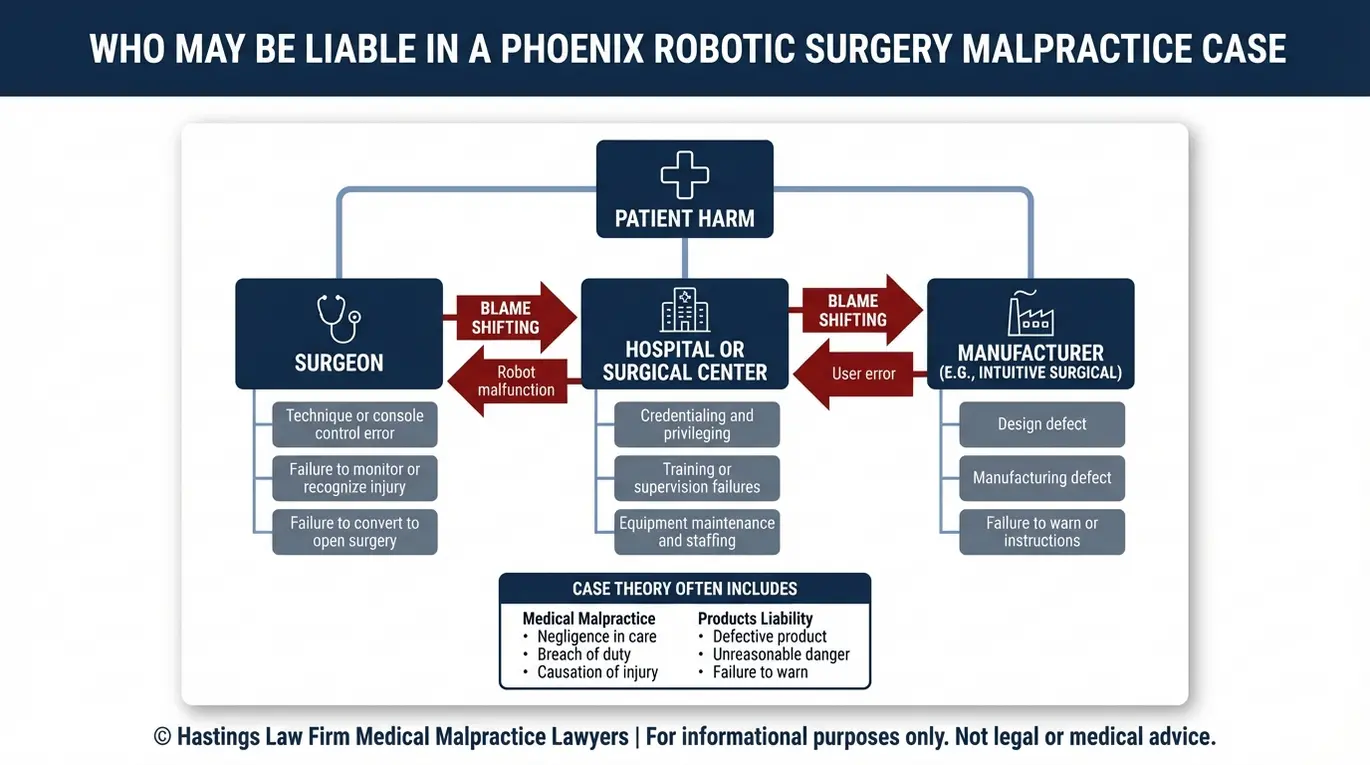
Liability in robotic surgery cases may fall on the surgeon for negligence, the hospital for inadequate credentialing, or the manufacturer for product defects. In many cases, more than one party shares responsibility.
Determining the source of harm often involves comparing different liability theories:
- Medical Malpractice: Surgeon liability typically involves failure to properly control the device, inadequate monitoring during the procedure, or the decision not to convert to open surgery when complications developed. Hospital liability may arise when the facility failed to properly credential the surgeon or maintain the equipment.
- Product Liability: Manufacturer liability involves the company that designed and built the robot. The da Vinci Surgical System, a complex robotic platform, is manufactured by Intuitive Surgical. If the injury resulted from a design defect, manufacturing defect, or failure to warn about known risks (such as those identified in FDA investigations or product recalls), a products liability claim may be pursued.
A 2025 study published in PubMed comparing robotic surgery to traditional laparoscopy for colorectal endometriosis found no significant advantage in perioperative outcomes for the robotic approach. Research like this raises questions about how aggressively these devices have been marketed despite limited evidence of superior results.
A robotic surgery lawyer can investigate all potential sources of liability, including robotic surgery malpractice and device defects, to build a case that holds each responsible party accountable.
Arizona Statute of Limitations for Surgical Errors
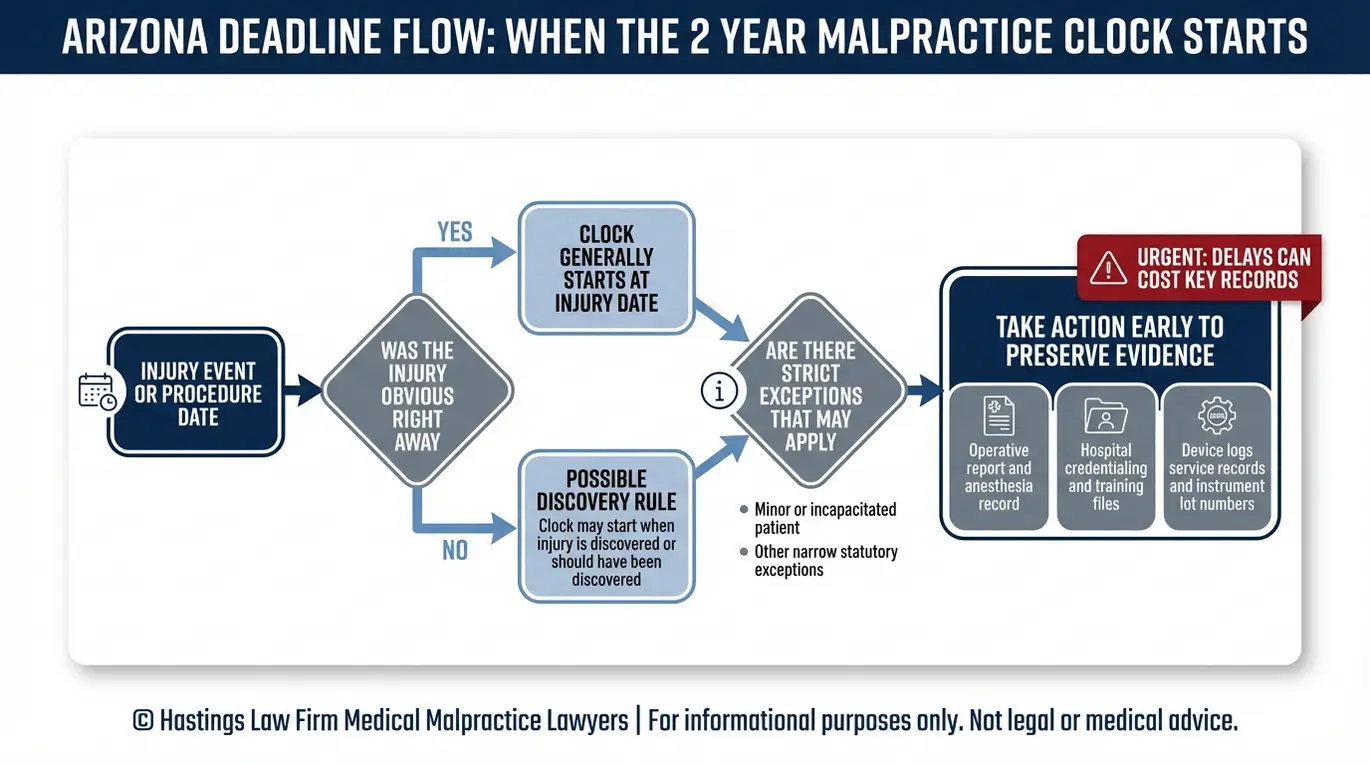
In Arizona, the statute of limitations for medical malpractice is generally two years from the date the injury occurred or was discovered. Under Arizona Revised Statutes § 12-542, this legal deadline is strictly enforced, and missing it typically means losing the option for claim filing.
Arizona also recognizes a discovery rule. If an injury, such as a hidden internal burn or undetected perforation, was not immediately apparent, the two-year clock may start from the date you discovered or reasonably should have discovered the harm. Even so, evidence deteriorates and medical records can become harder to obtain over time. Speaking with a robotic surgery malpractice lawyer as early as possible gives your legal team the best chance to preserve critical evidence.
Why Choose Hastings Law Firm for Complex Litigation
Hastings Law Firm specializes exclusively in medical malpractice, using board-certified attorneys and national experts to secure justice for those harmed by surgical negligence. As a Phoenix robotic surgery malpractice lawyer, we do not take car accident cases, slip-and-fall claims, or general personal injury work. Every resource in our firm is dedicated to holding healthcare providers and medical device companies accountable.
Our team includes former defense attorneys who previously represented hospitals, giving us direct insight into how the other side builds its case. We also maintain a national expert network of surgeons and medical specialists who provide independent case reviews and testimony. Founder Tommy Hastings is board certified in personal injury trial law, a distinction held by fewer than 2% of Texas attorneys.
We work on a contingency fee basis, meaning you pay no attorney fees unless we recover compensation for you.
Contact the Phoenix Surgical Error Attorneys at Hastings Law Firm Today for Help
If you or a loved one was injured during a robotic surgical procedure, you deserve to know what happened and why. At Hastings Law Firm, our mission is to restore trust for patients who feel betrayed by the healthcare system and to enforce accountability that helps prevent the same mistakes from harming someone else.
You do not need to have all the answers before reaching out. Our Phoenix medical malpractice law firm offers free, confidential case evaluations led by a patient advocate who can review your situation and explain your options. There is no cost and no obligation.
Call us or request your evaluation online. Let us help you take the first step toward understanding what went wrong.
Frequently Asked Questions About Robotic Surgery Malpractice in Phoenix


This content was researched and written by the Hastings Law Firm editorial team, which includes attorneys, medical professionals, and experienced researchers. Our writing is informed by internal knowledge and practical experience, and we cross-check critical details against authoritative sources cited throughout. Every piece undergoes human-led fact-checking and legal review. Because legal and medical information can change, if you spot an error, please contact us. Learn more about our content standards and review process on our editorial policy page.

Tommy Hastings, founder of Hastings Law Firm, is a board-certified personal injury trial lawyer dedicated exclusively to healthcare injury cases. Since 2001, he has represented injured patients and families in litigation against major hospital systems, pharmaceutical companies, and negligent healthcare providers nationwide. He has handled numerous high-profile cases that have drawn national media attention and resulted in multi-million dollar recoveries. He draws on that experience in his writing, helping readers understand how these cases work and what options may be available to them.
