


Arizona Robotic Surgery Malpractice Lawyer
Robot assisted surgery is often promoted as safer and more precise, yet serious harm can still occur when human error, inadequate training, or device problems affect a procedure. These cases often turn on whether a surgeon met the standard of care, whether a hospital properly credentialed and supervised robotic use, or whether a defect in the system contributed to the injury. Complications may be severe and sometimes appear only after surgery, making accountability hard to sort out. If you or a loved one were harmed or worse due to robotic surgery malpractice in Arizona, contact Hastings Law Firm for a free, confidential case review.
Last Updated: July 27, 2026
Trusted Legal Representation for Surgical Robot Injuries in Arizona
When a procedure marketed as safer and more precise leads to serious harm, it can feel difficult to know where to turn or who to hold accountable. Robot-assisted surgery, where a surgeon operates through a computerized console rather than by hand, has become increasingly common across Arizona hospitals. Systems like the da Vinci Surgical System, a sophisticated robotic platform widely used for minimally invasive procedures, are used in thousands of procedures each year, but the technology does not eliminate the risk of human error or mechanical failure.
If you or a loved one suffered an injury during a robotic procedure, you may have questions about what went wrong and whether negligence was involved. As an experienced Arizona robotic surgery malpractice lawyer team, we focus exclusively on medical malpractice. Our firm was founded by board-certified trial lawyer Tommy Hastings and provides the specialized medical and legal resources needed to investigate these cases. Contact our Phoenix office for a free, confidential case evaluation to discuss what happened and learn about your options.

Identifying Liable Parties in Robotic Surgery Injuries
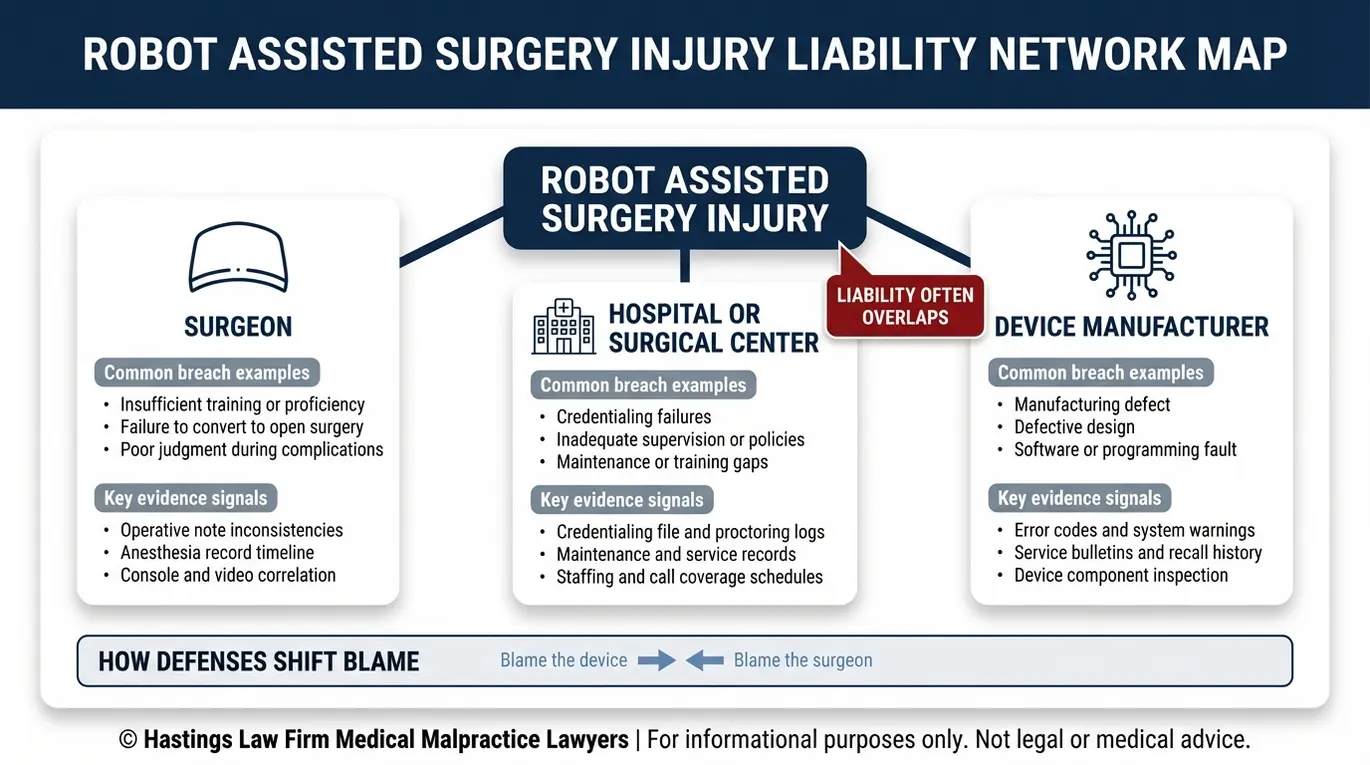
Liability in robotic surgery cases typically falls on the surgeon for lack of training or judgment, the hospital for credentialing failures, or the device manufacturer if a mechanical defect caused the injury. Sorting out who is responsible, and why, is one of the most important steps in building a strong case.
Surgeon Negligence
A surgeon operating through a robotic console still owes the patient the same standard of care, which is the level of treatment a reasonably competent surgeon would provide under similar circumstances. One common issue in these cases involves the failure to convert to open surgery, meaning the surgeon continued using the robot despite complications that called for a traditional, hands-on approach. If the surgeon lacked adequate proficiency with the system or ignored warning signs during the procedure, that can form the basis of a negligence claim.
Hospital Liability
Hospitals have a responsibility to ensure that surgeons using robotic systems are properly trained and credentialed before performing procedures on patients. In some cases, hospitals allow surgeons to operate robotic consoles before they are fully proficient to offer specialized services. When a hospital fails to verify a surgeon’s competence with the technology, the institution itself may share liability for injuries that result.
Manufacturer Liability
When the injury stems not from human error but from a mechanical or design problem with the device, the claim may shift toward the manufacturer. Product liability applies when a medical device like the da Vinci System, made by Intuitive Surgical, contains a manufacturing defect or a defective design that makes it unreasonably dangerous. Instrument insulation failures involving the tip cover, the protective sheath on the robotic arm, can cause electrical current to reach tissue the surgeon never intended to contact.
Research published by the University of Miami Law Review on AI and robotic medical liability explores the growing legal challenges of assigning fault when autonomous and semi-autonomous systems are involved in patient care. Because our team includes former defense counsel and in-house medical professionals, we know how to trace the evidence back to the responsible party.
- Surgeon: Errors in console operation, failure to convert to open surgery, inadequate training or experience with the robotic system
- Hospital: Credentialing failures, insufficient surgeon oversight, pressure to use robotic technology without proper safeguards
- Manufacturer: Design defects, manufacturing defects, instrument insulation failures, software errors in the robotic system
Severe Injuries and Complications Caused by Robotic Surgical Errors
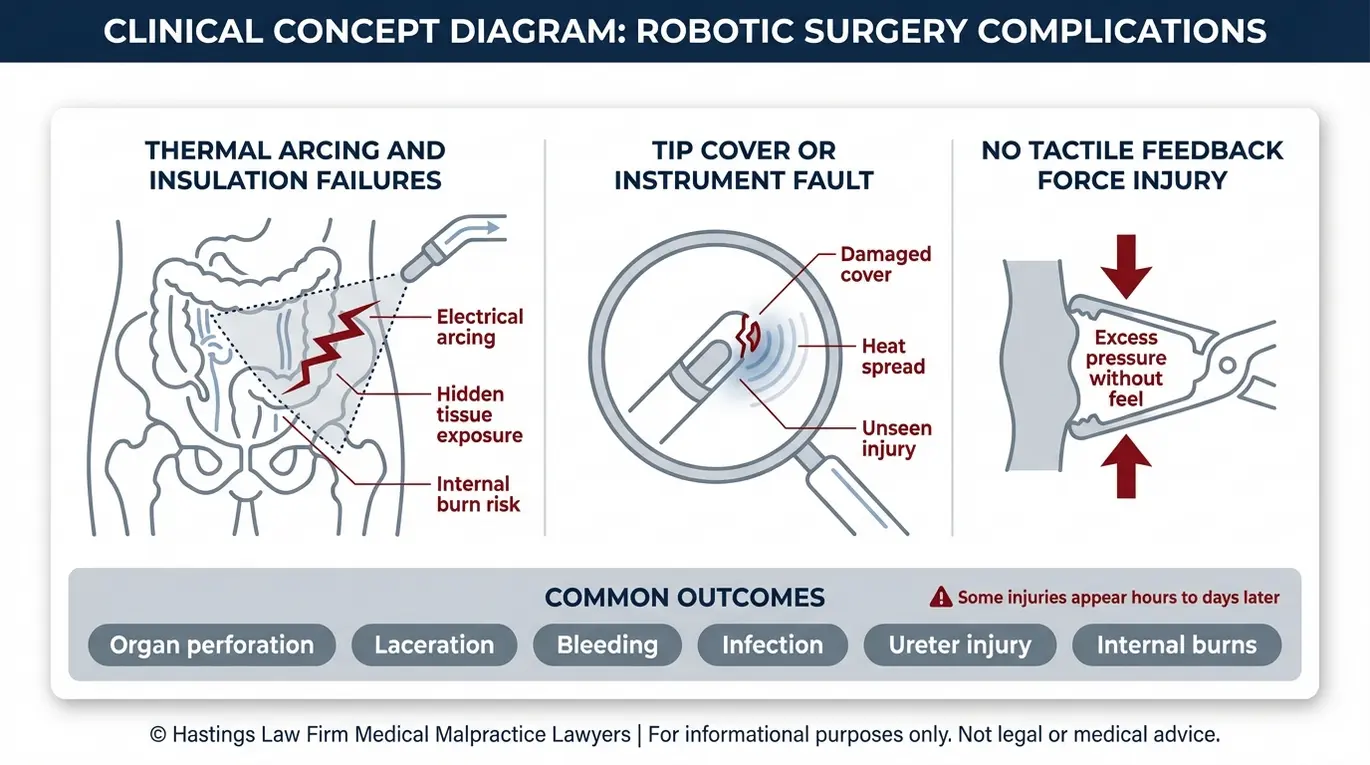
Common injuries from robotic surgery malpractice include inadvertent cuts to nearby organs, thermal burns from uninsulated instrument arms, and internal bleeding caused by lack of tactile feedback. These injuries can be severe and may not be detected until hours or days after the procedure. Because they sometimes occur outside the camera’s direct view, medical teams may overlook undetected surgical complications during the operation. Reporting these adverse events immediately is critical for patient safety.
Thermal Burns and Electrical Arcing
One of the most dangerous risks specific to robotic surgery is electrical arcing, a phenomenon where electrical current jumps from the instrument tip to nearby tissue that the surgeon did not intend to contact. This can happen if the tip cover, which insulates the instrument, is damaged or defective. The resulting current can cause serious thermal burns to the bowel, ureter, or other organs.
A study published in PubMed Central on thermal effects of robotic instrument electrodes documents the safety risks associated with monopolar electrosurgery instruments, which are tools that use electrical current to cut or cauterize tissue.
Loss of Tactile Feedback
Traditional surgery allows the surgeon to feel the resistance and density of tissue through their hands. Most current robotic systems lack this sensation. Without haptic feedback, the physical sense of touch transmitted through instruments, surgeons operating a console may apply excessive force, tear delicate tissue, or fail to recognize when they have reached a critical structure. This loss of direct physical input is a known limitation of robot-assisted surgery.
Specific Injuries Seen in These Cases
If you or a loved one experienced complications after a robotic procedure, a robotic surgery injury lawyer in Arizona can help determine whether negligence played a role. These common robotic injuries can happen when the surgical team deviates from safety protocols. We evaluate cases involving:
- Perforated bowel or intestinal wall
- Severed or damaged blood vessels
- Ureter lacerations or obstruction
- Organ perforation and internal burns to surrounding tissues
- Post-surgical infection from undetected tissue damage
- Uncontrolled bleeding requiring emergency reoperation
The Hastings Law Firm Difference
Results matter, but what truly sets us apart is how we achieve them. Every verdict, every settlement, and every Arizona courtroom victory comes from one guiding promise: To treat each client’s fight for justice as if it were our own.
This balance of skill, experience, and empathy reflects our core philosophy that justice should not only compensate the injured, but also make health care safer nationwide.

Common Procedures Performed With the Da Vinci Surgical System
The da Vinci Surgical System is frequently used for complex procedures including hysterectomies, prostatectomies, gallbladder removal, and cardiac valve repairs where precision is critical but risks remain high. According to the Cleveland Clinic’s overview of da Vinci robotic surgery, the system is used across multiple surgical specialties.
Robotic-assisted surgery is often recommended for procedures in tight or hard-to-reach areas of the body. These procedures include hysterectomies to remove the uterus or prostatectomies for prostate cancer. While the technology can offer benefits like smaller incisions and shorter recovery times, it also introduces unique robotic risks that are specific to the platform. Patients must weigh these potential benefits against the possibility of system errors or surgeon inexperience. Our robotic malpractice lawyers evaluate cases involving a wide range of these procedures to determine if the standard of care was breached.
| Specialty | Common Procedures |
|---|---|
| Gynecologic | Hysterectomy, fibroid removal (myomectomy) |
| Urologic | Prostate removal (prostatectomy), kidney surgery |
| General Surgery | Gallbladder removal (cholecystectomy), bariatric surgery |
| Cardiothoracic | Mitral valve repair, other cardiac procedures |
Proving Negligence Using Robotic System Data Logs
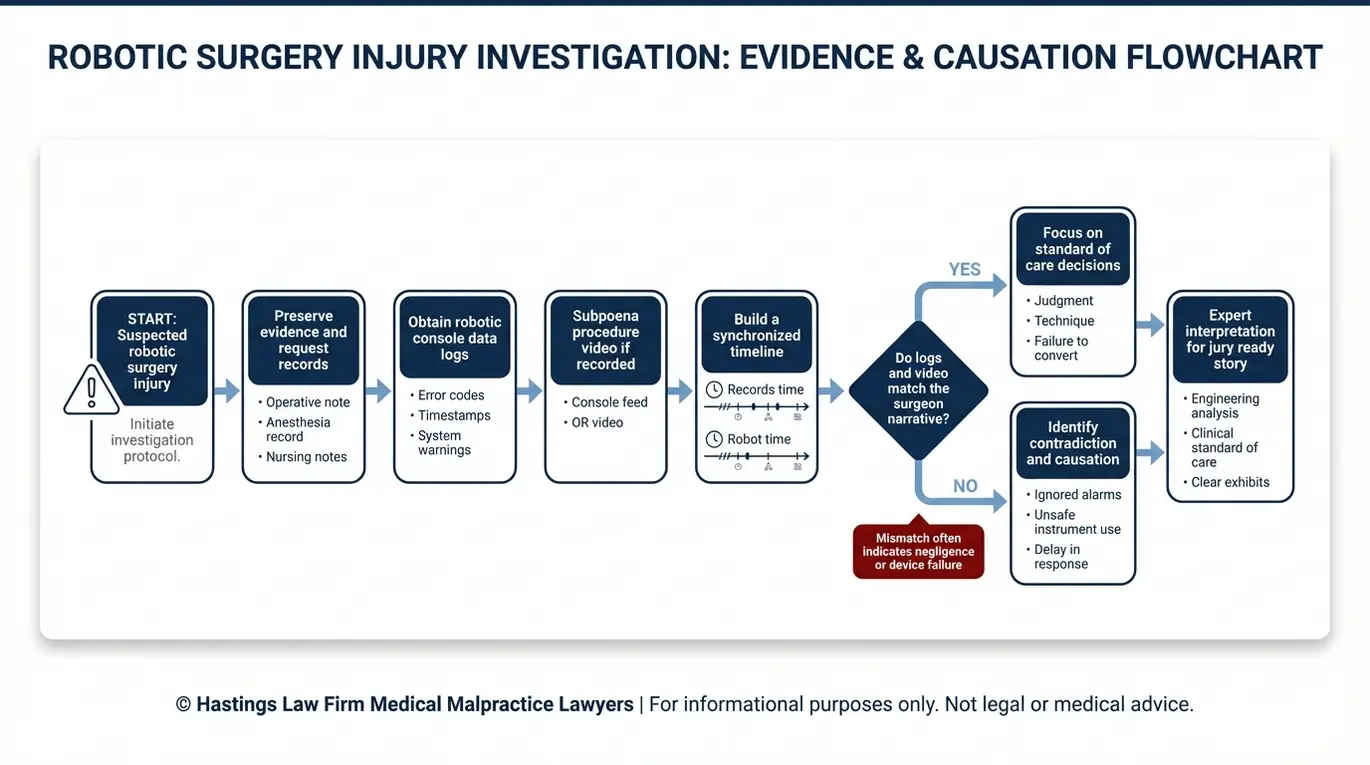
Attorneys can prove negligence by obtaining the “black box” data logs from the robotic console which record every movement, error code, and timestamp to contradict the surgeon’s version of events. These logs are an important piece of evidence that can objectively show whether the machine malfunctioned or the surgeon erred.
Data Logs
Like the flight recorder on an aircraft, the robotic console captures a detailed digital record of the surgery. This includes the surgeon’s hand movements, system warnings, instrument positioning, and any error codes generated during the operation.
If the system flagged a malfunction, sometimes caused by a programming fault (a software glitch that causes unintended system behavior), the logs will show it. We also investigate if the FDA issued any recall notices for the specific device used. The Da Vinci Xi User Manual describes the system’s recording capabilities and operational parameters, which our experts use as a baseline when reviewing case data.
Video Evidence
Many robotic consoles also record video of the surgery from the endoscopic camera. This footage can be subpoenaed during litigation and reviewed frame by frame to identify the precise moment an error occurred. This visual proof is often essential for expert testimony during a trial.
Billing Codes
Our team also reviews surgical billing codes and medical records to confirm whether the robot was actually used during the procedure and whether billing accurately reflects what took place. Discrepancies between the operative report and the billing record can reveal important inconsistencies.
As a robotic surgery malpractice lawyer team, we work with qualified engineering and medical experts who understand how to interpret this data. This kind of technical analysis is central to how we build these cases.
Contact the Arizona Surgical Error Attorneys at Hastings Law Firm Today for Help
Robotic technology has changed the way surgeries are performed, but advances in technology should never come at the cost of patient safety. Our firm was founded in 2005 and has been dedicated exclusively to medical negligence for nearly two decades. When errors occur, accountability matters.
Hastings Law Firm represents patients and families across Arizona who have been harmed by surgical errors involving robotic systems. Our team prepares every case as if it will go to trial, because that trial-ready preparation is what it takes to pursue full and fair compensation.
We handle these cases on a contingency fee basis, meaning you pay no attorney fees or costs unless we recover compensation for you. If you believe a robotic surgical procedure caused you or a loved one harm, we encourage you to schedule a free case evaluation at our Phoenix office. Let us review what happened and help you understand your legal options.
Frequently Asked Questions About Robotic Surgery Malpractice in Arizona


This content was researched and written by the Hastings Law Firm editorial team, which includes attorneys, medical professionals, and experienced researchers. Our writing is informed by internal knowledge and practical experience, and we cross-check critical details against authoritative sources cited throughout. Every piece undergoes human-led fact-checking and legal review. Because legal and medical information can change, if you spot an error, please contact us. Learn more about our content standards and review process on our editorial policy page.

Tommy Hastings, founder of Hastings Law Firm, is a board-certified personal injury trial lawyer dedicated exclusively to healthcare injury cases. Since 2001, he has represented injured patients and families in litigation against major hospital systems, pharmaceutical companies, and negligent healthcare providers nationwide. He has handled numerous high-profile cases that have drawn national media attention and resulted in multi-million dollar recoveries. He draws on that experience in his writing, helping readers understand how these cases work and what options may be available to them.
