


Texas Rheumatologist Malpractice Lawyer
Rheumatologist negligence can leave patients with worsening symptoms, lasting complications, and a reduced quality of life when warning signs are dismissed, testing is delayed, or high risk medications are prescribed or monitored improperly. These cases often involve disputes about whether harm came from the underlying autoimmune disease or from a preventable breakdown in diagnosis, treatment, or informed consent. Understanding how diagnostic decisions, medication safety, and causation are evaluated can help families make sense of what happened and what comes next. If you or a loved one were harmed or worse due to rheumatologist malpractice in Texas, contact Hastings Law Firm for a free, confidential case review.

Last Updated: July 27, 2026
Trial-Ready Texas Attorneys for Arthritis and Autoimmune Negligence
When a rheumatologist misses the signs of a serious autoimmune condition or makes a medication error that causes lasting harm, the consequences can reshape every part of your life. You may be dealing with worsening symptoms, new complications, or the frustrating feeling that something went wrong and no one will explain what happened. That instinct deserves to be taken seriously.
At Hastings Law Firm, we focus exclusively on medical malpractice. Our legal and medical team, which includes in-house nurse consultants and former defense attorneys, understands the clinical details behind rheumatology cases and knows how to investigate them thoroughly. If you believe your rheumatologist’s care fell below the standard you deserved, a Texas rheumatologist malpractice lawyer at our firm can review what happened and explain your options in a free, confidential consultation.

Common Errors Committed by Rheumatologists in Texas
Rheumatologist malpractice typically involves the failure to diagnose autoimmune conditions like lupus or rheumatoid arthritis (RA) in a timely manner, or the negligent prescribing of high-risk immunosuppressants, medications that suppress the immune system to control disease activity. A malpractice lawyer in Texas frequently sees cases where these errors lead to permanent joint destruction, organ damage, and a dramatically reduced quality of life.
Rheumatic conditions are diseases that affect the joints, muscles, and bones. One of the biggest challenges in rheumatology is that many rheumatic diseases are considered “great imitators,” conditions whose symptoms closely mimic other illnesses. Lupus, for instance, can present with fatigue, joint pain, and skin rashes that overlap with dozens of other diagnoses.
RA may initially look like routine wear-and-tear arthritis. This overlap makes accurate diagnosis difficult, but a lawyer for rheumatologist errors knows it does not excuse a failure to follow proper diagnostic protocols.
According to the Coordinating Center for Diagnostic Excellence (CoDEx) at UCSF, diagnostic errors remain one of the most common and harmful categories of medical mistakes. In rheumatology, these errors often take specific forms:
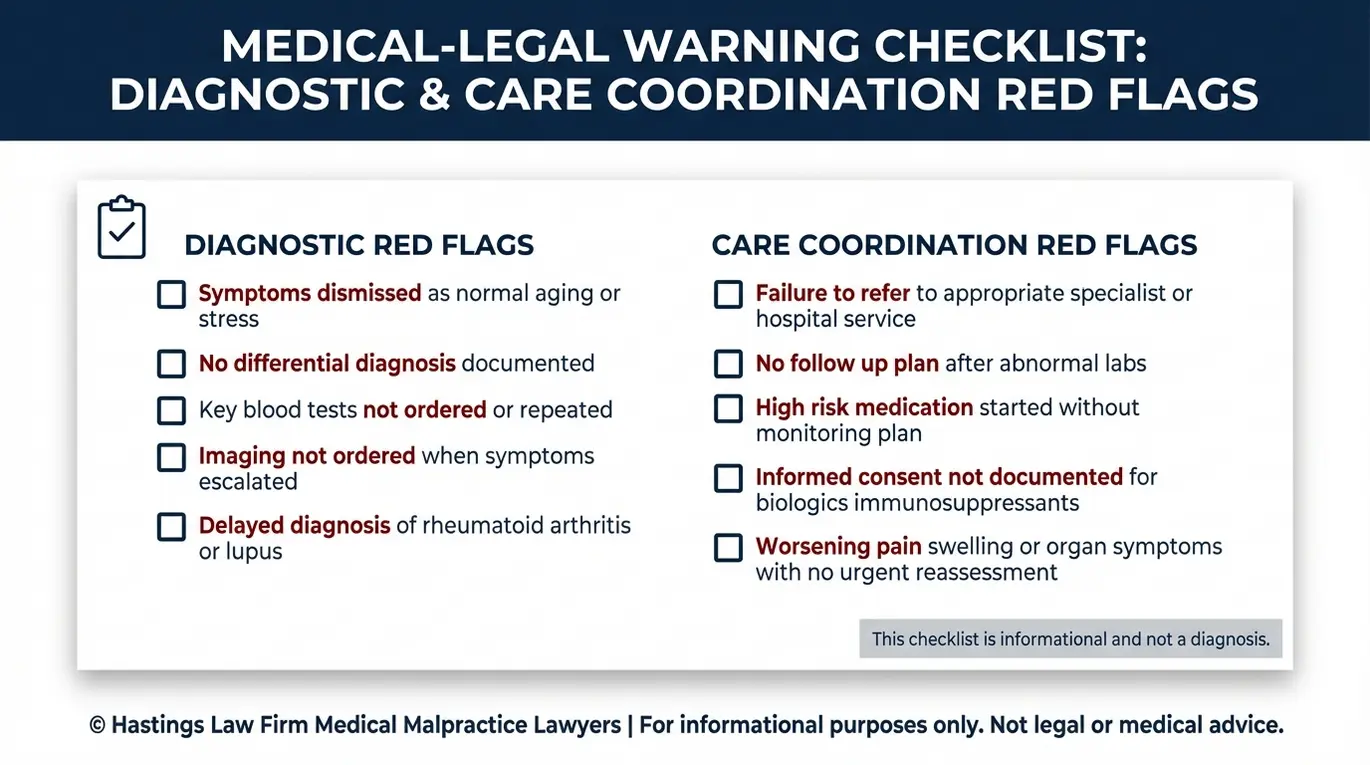
- Dismissal of persistent symptoms such as joint swelling, unexplained fatigue, or recurring fevers without further investigation
- Failure to order appropriate blood panels or imaging studies when autoimmune disease is a reasonable possibility
- Delayed referral to a rheumatologist when a primary care provider identifies potential autoimmune indicators, such as positive blood tests or persistent joint swelling
- Misattribution of symptoms to stress, aging, or fibromyalgia when objective findings suggest an inflammatory or systemic process
- Incomplete evaluation of conditions like lupus nephritis, which is kidney inflammation caused by lupus, or vasculitis, which is inflammation of the blood vessels, that can cause irreversible organ damage if left untreated
When a rheumatologist fails to recognize these conditions, patients can suffer progressive joint erosion, kidney failure, or cardiovascular complications. As a Texas rheumatologist malpractice lawyer, we review these clinical decisions carefully. We evaluate whether the standard of care, the level of treatment a competent rheumatologist would provide, was met or resulted in a breach of duty, which is the failure to provide the expected standard of medical care.
Failures in Differential Diagnosis Protocols
A core responsibility of any rheumatologist is to conduct a thorough differential diagnosis, the systematic process of comparing a patient’s symptoms against a list of possible conditions and ruling them out one by one. This process relies heavily on diagnostic tests, including blood tests, imaging, and clinical evaluation.
Autoantibody testing, the analysis of blood for specific immune markers, is central to this process. Tests for ANA (antinuclear antibodies), which are markers of an overactive immune system, RF (rheumatoid factor), and anti-CCP (anti-cyclic citrullinated peptide) help identify specific autoimmune markers. When a rheumatologist skips these tests, misinterprets the results, or fails to correlate them with the patient’s clinical picture, the wrong diagnosis can follow.
This failure can mean a patient receives treatment for a condition they do not have while the real disease progresses unchecked. We also examine whether appropriate imaging, such as MRI or X-rays, was ordered to evaluate joint inflammation or soft tissue involvement. A lawyer for rheumatologist errors at our firm works alongside our in-house medical staff to determine whether the diagnostic workup was adequate or whether critical steps were missed.
The Dangers of Medication Errors with Biologics and Immunosuppressants
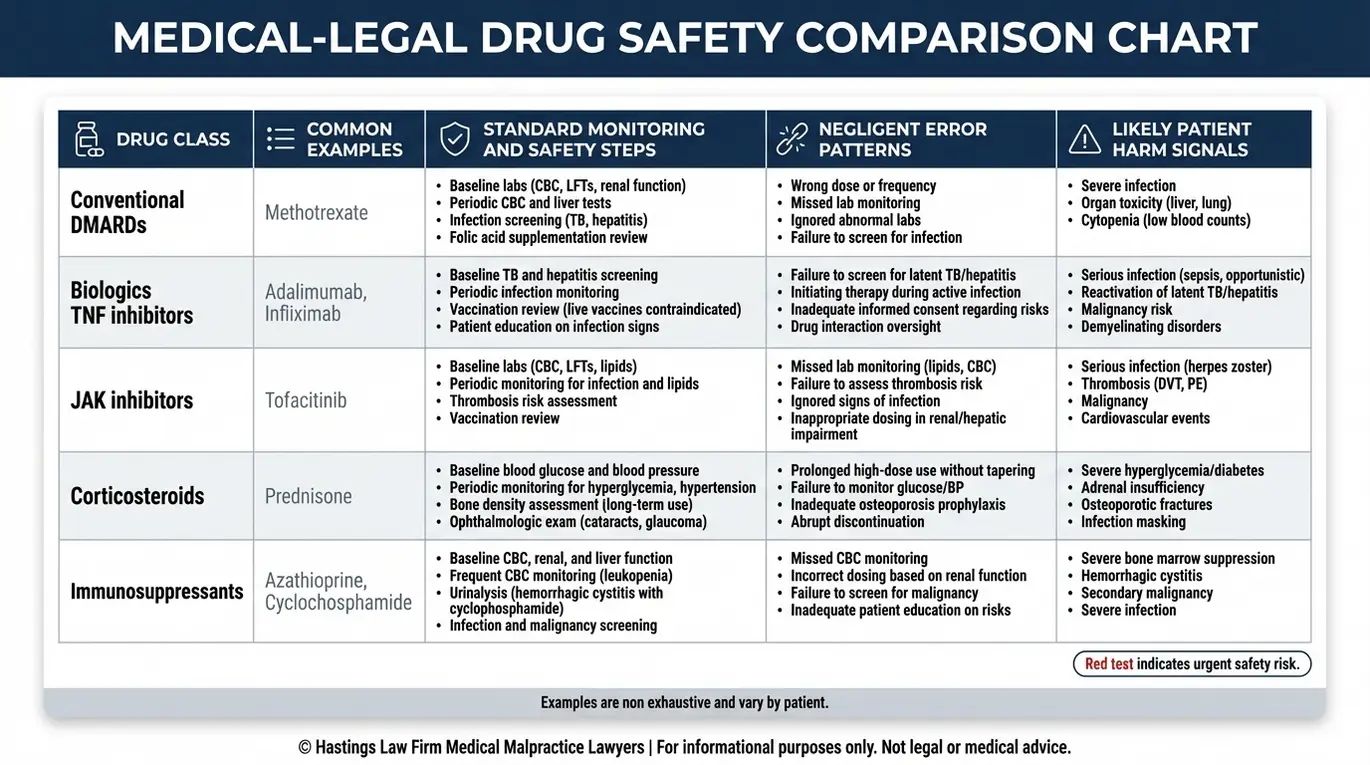
Medication errors in rheumatology often involve improper dosing of toxicity-prone drugs like methotrexate or failure to monitor for infections while patients are on biologics. Because many of these medications carry serious risks, even small lapses in prescribing or monitoring can cause severe harm.
Biologics are complex medications made from living organisms that target specific parts of the immune system. Many rheumatology drugs have what pharmacologists call a narrow therapeutic index. This means the difference between a dose that helps and a dose that causes toxicity is very small.
Methotrexate, one of the most commonly prescribed drugs in rheumatology, is a prime example. Methotrexate toxicity, a serious reaction to high drug levels, can cause liver damage, bone marrow suppression, and life-threatening infections if the drug is dosed incorrectly or if a provider fails to monitor bloodwork at appropriate intervals.
Biologics, also known as biologic DMARDs (disease-modifying antirheumatic drugs), are another category that requires close attention. These are treatments that target specific parts of the immune system to reduce inflammation. While effective, they significantly increase the risk of serious infections, including tuberculosis and opportunistic infections. A rheumatologist who prescribes a biologic without proper screening, or who fails to monitor for signs of infection during treatment, may be committing medical negligence.
According to the National Center for Biotechnology Information (NCBI), medication dispensing and prescription drug errors remain a persistent and preventable source of patient harm across all medical specialties. In rheumatology specifically, the high-risk nature of the drugs involved makes careful prescribing and monitoring essential.
Informed consent is another area where negligence can occur. Before starting a patient on a powerful immunosuppressant or biologic, the standard of care generally requires that the physician explain the known risks, potential side effects, and alternative treatment options. A rheumatologist malpractice lawyer knows that when that conversation does not happen, or when significant risks are downplayed, the patient is denied the ability to make an informed decision about their own care.
| Drug Class | Examples | Monitoring Required | Potential Negligence Outcome |
|---|---|---|---|
| Conventional DMARDs | Methotrexate, Leflunomide | Regular liver function tests, complete blood counts | Liver damage, bone marrow suppression from missed lab monitoring |
| Biologic DMARDs | Adalimumab, Etanercept, Infliximab | TB screening, infection monitoring, bloodwork | Serious infections, sepsis from inadequate screening |
| Corticosteroids | Prednisone (long-term use) | Bone density, blood sugar, adrenal function | Osteoporosis, diabetes, adrenal crisis from unsupervised long-term use |
| JAK Inhibitors | Tofacitinib, Baricitinib | Cardiovascular and cancer risk monitoring | Blood clots, cardiovascular events from failure to assess risk factors |
A Texas malpractice attorney with experience in rheumatology cases understands how to trace these failures back to a specific breach of the standard of care. At Hastings Law Firm, our in-house medical staff, including nurse practitioners and Board Certified Patient Advocates, reviews prescription records, lab histories, and clinical notes to identify where the breakdown occurred. This level of clinical detail is what separates a medical negligence lawyer who handles these cases from a general practice firm.
The Hastings Law Firm Difference
Results matter, but what truly sets us apart is how we achieve them. Every verdict, every settlement, and every Texas courtroom victory comes from one guiding promise: To treat each client’s fight for justice as if it were our own.
This balance of skill, experience, and empathy reflects our core philosophy that justice should not only compensate the injured, but also make health care safer nationwide.

Proving Liability Under Texas Chapter 74 Laws
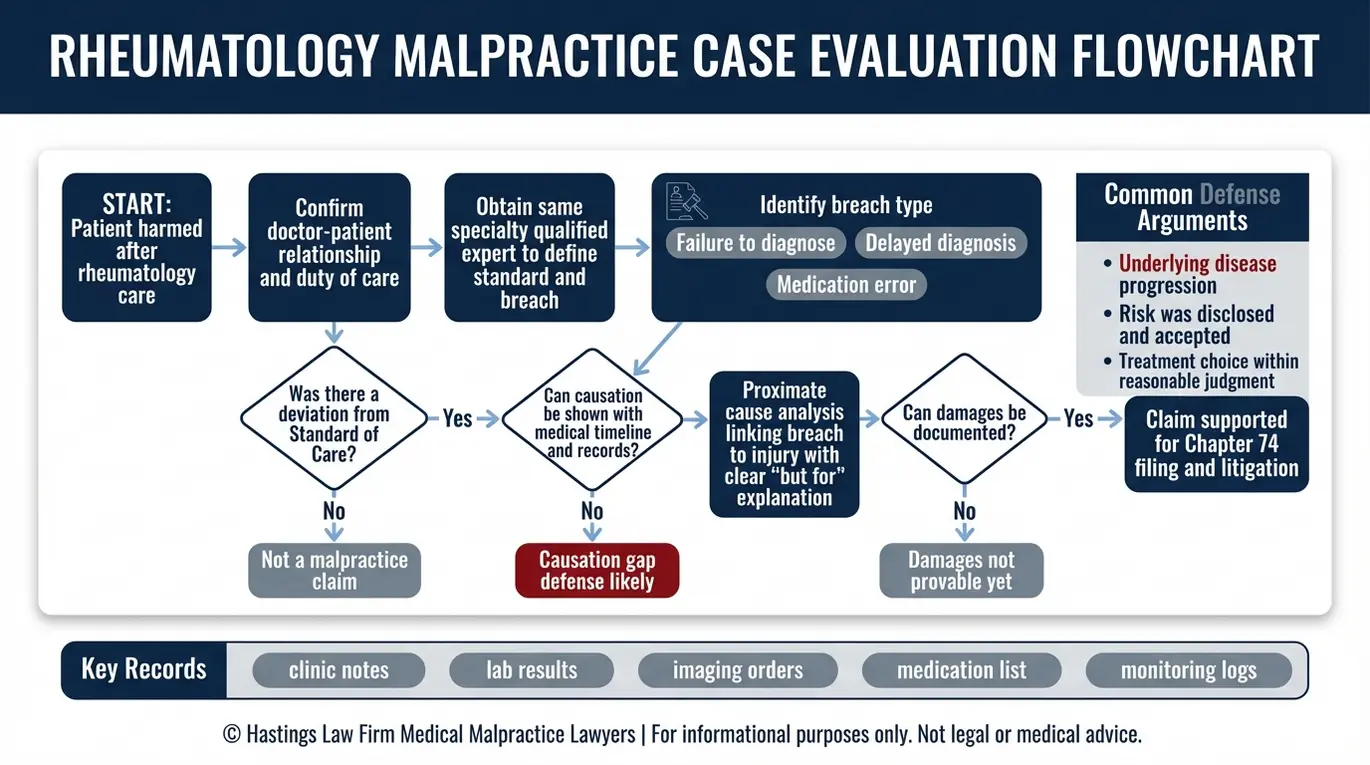
Proving liability requires establishing a doctor-patient relationship, demonstrating a breach of the standard of care through expert testimony, and linking that breach directly to the patient’s injury. Chapter 74 is the set of Texas laws that governs all medical liability claims in the state.
The first step is straightforward: you must show that a doctor-patient relationship existed, meaning the rheumatologist owed you a duty of care. From there, the case depends on proving three connected elements: breach, causation, and damages.
Texas law is particularly strict about expert testimony. Under Texas Civil Practice and Remedies Code § 74.401, the expert who testifies about the standard of care must be a physician practicing in a field that involves the same type of care or treatment as that delivered by the defendant doctor. In a case against a rheumatologist, this means the expert witness typically must be a board-certified rheumatologist. This requirement ensures that someone with relevant clinical experience evaluates the standard of care.
Under Texas Civil Practice and Remedies Code § 74.351, the patient’s legal team must also serve a qualified expert report within 120 days after the date each defendant’s original answer is filed. This report must outline the applicable standard of care, explain how the defendant breached it, and describe how that breach caused the injury. If this report is not filed on time, the court can dismiss the case entirely.
Causation, often referred to as proximate cause, is where many rheumatology malpractice cases face the strongest opposition. Proximate cause is the legal link showing that the provider’s mistake was the direct cause of your injury. When suing a rheumatologist, defense attorneys frequently argue that the patient’s underlying autoimmune disease caused the harm, not the doctor’s conduct. A Texas rheumatologist malpractice lawyer must be prepared to counter this argument with detailed evidence of medical negligence showing that earlier diagnosis or proper treatment would have changed the outcome.
Our firm, led by board-certified trial attorney Tommy Hastings, prepares every case as if it will go to trial from the very first day. We work with qualified rheumatology experts to build a clear timeline connecting the delay or error to measurable harm. Our team of former defense attorneys understands how the other side constructs these arguments, which allows us to anticipate and address them early in the process.
Understanding Damages and Compensation in Rheumatology Cases
Patients harmed by rheumatologist negligence can recover damages for medical bills, lost earning capacity due to disability, and non-economic damages like pain and suffering. The specific types and amounts of compensation depend on the severity of the injury and its long-term impact on the patient’s life.
Economic damages cover the financial losses that result from the malpractice. These include past and future medical expenses, such as the cost of corrective treatments, surgeries, physical therapy, and ongoing medication. Lost wages and lost earning capacity are also recoverable.
In cases involving conditions like lupus or RA, joint erosion can lead to irreversible destruction of joint tissue. If delayed diagnosis leads to systemic complications affecting organs beyond the joints, future care costs can be substantial. A lawyer for arthritis negligence can help quantify these future needs.
Non-economic damages account for the personal toll of the injury. This includes joint pain, loss of mobility, emotional distress, and the loss of enjoyment of activities you once valued. Under Texas Civil Practice and Remedies Code, Chapter 74, non-economic damages in medical malpractice cases are subject to statutory caps.
In the most tragic cases, where a missed diagnosis leads to fatal complications such as organ failure or uncontrolled vasculitis, a wrongful death claim may be available to surviving family members. A Texas medical malpractice lawyer at our firm can help families understand what compensation may be available and how to pursue it. Whether your case involves damage to the musculoskeletal system, systemic organ involvement, or the loss of a loved one, a rheumatologist malpractice lawyer at Hastings Law Firm will work to document every category of harm.
Contact the Texas Doctor Malpractice Attorneys at Hastings Law Firm Today for Help
If you or someone in your family has been harmed by a rheumatologist’s error, you do not have to face this alone. Hastings Law Firm is dedicated exclusively to medical malpractice, and our team of attorneys, nurse consultants, and medical staff has the experience and resources to investigate what happened and hold the responsible parties accountable.
We believe every patient deserves the truth about their care. Our Texas rheumatologist malpractice lawyers are ready to listen, review your medical records, and give you an honest assessment of your legal options.
There is no cost to get started. We work on a contingency fee basis. This means you pay no attorney fees unless we recover compensation on your behalf. Contact our medical malpractice lawyer team today for a free, confidential case evaluation and take the first step toward the answers you deserve.
Frequently Asked Questions About Rheumatologist Malpractice in Texas


This content was researched and written by the Hastings Law Firm editorial team, which includes attorneys, medical professionals, and experienced researchers. Our writing is informed by internal knowledge and practical experience, and we cross-check critical details against authoritative sources cited throughout. Every piece undergoes human-led fact-checking and legal review. Because legal and medical information can change, if you spot an error, please contact us. Learn more about our content standards and review process on our editorial policy page.

Brady D. Williams is a nationally recognized medical malpractice attorney who has spent his career handling high-stakes litigation for injured patients and families across the country. Licensed in both Texas and California, Brady draws on experience from hundreds of resolved medical cases to break down complex legal and medical topics for the people who need that information most. His writing reflects the same attention to detail and commitment to clarity that he brings to every case he handles.
