


Texas Respiratory Therapist Malpractice Lawyer
Written by: Hastings Law Firm | Reviewed by: Brady D. Williams | Updated: July 27, 2026
Respiratory therapist negligence can cause severe, lasting harm when ventilator settings are not monitored, airway management goes wrong, or warning signs of respiratory decline are missed. These events often happen in high acuity settings where patients can deteriorate quickly and where alarms, documentation, and communication with physicians matter. Responsibility may involve an individual therapist, a hospital, or a staffing agency, and government facilities can add added limits. If you or a loved one were harmed or worse due to respiratory therapist negligence in Texas, contact Hastings Law Firm for a free, confidential case review.
Top Rated Texas Attorneys for Respiratory Specialist Negligence Claims
What You Should Know About Breathing Therapy Negligence Claims in Texas:
- Life altering injury or death can follow ventilator and airway mistakes because oxygen deprivation and delayed intervention can become irreversible.
- Recovery options can depend on who employed the respiratory therapist because liability may shift between a hospital, a staffing agency, and an individual provider.
- Accountability can extend beyond the therapist because hospitals may face separate exposure for unsafe staffing, credentialing failures, or equipment problems.
- Options can be more limited when care occurred at a government operated facility because sovereign immunity can restrict liability and shorten notice requirements.
- Compensation can be constrained in Texas because non economic damages are capped even when economic losses like medical bills and lost income are not.
- A claim can fail even with clear error because causation must be tied to the injury rather than the underlying illness.
- The ability to pursue a case can be lost if timing rules are missed because Texas applies strict filing limits with narrow exceptions.
- Proof disputes can turn on clinical documentation because missing or inconsistent ventilator and assessment charting may indicate inadequate monitoring.
- Causation questions can hinge on objective respiratory data because arterial blood gas results and ventilator flow sheets can show unaddressed carbon dioxide changes.

A Healthcare Focused Law Firm
When a respiratory therapist’s error causes serious harm, the consequences can be devastating and life-altering. If you or someone you love suffered an injury during respiratory care, you likely have difficult questions about what went wrong and who is responsible. These are the right questions to ask, and you deserve clear answers.
At Hastings Law Firm, our team focuses exclusively on medical malpractice. Founder Tommy Hastings is board-certified in Personal Injury Trial Law and our team includes former defense attorneys who understand hospital protocols from the inside. We have the clinical knowledge and courtroom preparation to investigate what happened and hold negligent providers accountable. Contact us for a free, confidential case evaluation to discuss your situation and understand your legal options.
Respiratory Therapist Negligence and Scope of Practice Violations in Texas
Respiratory therapist negligence occurs when a licensed practitioner deviates from the accepted standard of care, such as failing to properly monitor ventilator settings, mismanaging artificial airways, or ignoring signs of respiratory distress, resulting in patient harm.
Respiratory therapists fill an essential role in Texas hospitals, particularly in the ICU and emergency departments. They manage life-sustaining equipment like mechanical ventilators, which are devices that breathe for patients who cannot breathe on their own.
Mechanical ventilator management is the complex process of setting and adjusting life-support machines to ensure adequate oxygenation and carbon dioxide elimination. This core competency requires vigilant attention. They also administer therapeutic gases, perform airway management procedures, and continuously monitor cardiopulmonary status.
Their scope of practice, which describes the legally defined boundaries of their training and authority, is governed by Texas Occupations Code Chapter 604. It is also regulated by the Texas Medical Board.
Respiratory therapy is a highly technical field, and practitioners must adhere to strict protocols regarding gas administration and bronchial hygiene. Because respiratory therapists work with critically ill patients whose conditions can deteriorate rapidly, even a brief lapse in attention or judgment can cause catastrophic injury.
The standard of care requires RTs to recognize changes in a patient’s condition, respond promptly, and communicate findings to the treating physician. When a respiratory therapist fails to meet that standard and a patient is harmed, that failure can form the basis of a medical negligence claim. Experienced respiratory therapy negligence attorneys know how to identify these subtle but critical deviations from accepted protocols.
Common acts of respiratory therapist negligence include:
- Failure to monitor or respond to abnormal carbon dioxide levels or other blood gas values
- Improper suctioning of airways, leading to tissue damage or oxygen deprivation
- Medication dosing errors during nebulizer treatments or inhaled drug administration
- Failure to verify correct endotracheal tube placement after intubation
- Neglecting to adjust ventilator settings based on changing patient status
- Inadequate documentation of respiratory assessments and interventions
- Hypoventilation caused by incorrect ventilator parameters, resulting in dangerous CO2 buildup
In many cases of malpractice involving respiratory therapists, the error stems from a failure to appreciate the urgency of a patient’s declining status. If you suspect that an error contributed to a serious injury, consulting a Texas respiratory therapist malpractice lawyer is the first step toward understanding whether the care fell below the accepted standard. Our team includes in-house medical professionals who review clinical records and identify exactly where the standard of care may have been breached.
Duty to Advocate Under Texas Administrative Code Chapter 186
Beyond technical skills, respiratory therapists in Texas carry a legal duty that sets them apart from many other allied health professionals. Under Texas Administrative Code Title 22, Chapter 186, an RT is expected to perform clinical assessments of the patient’s respiratory status, not simply follow a physician’s orders without question.
This means a respiratory therapist has an advocacy duty toward the patient. If a doctor orders a treatment that the RT believes is potentially harmful, the therapist is expected to speak up and document concerns. If necessary, they must escalate the issue through the chain of command.
Respiratory distress, a condition in which a patient struggles to breathe adequately, can escalate quickly. An RT who notices signs of distress but fails to act independently on that assessment may be violating this duty.
When we investigate malpractice involving respiratory therapists, we examine whether the therapist fulfilled this advocacy obligation. We also evaluate whether they simply deferred to instructions that may not have been appropriate for the patient’s condition. This “chain of command” failure is frequently cited in litigation when nurses or therapists stay silent despite obvious dangers to the patient.
Critical Care Errors Involving Ventilators and Artificial Airways
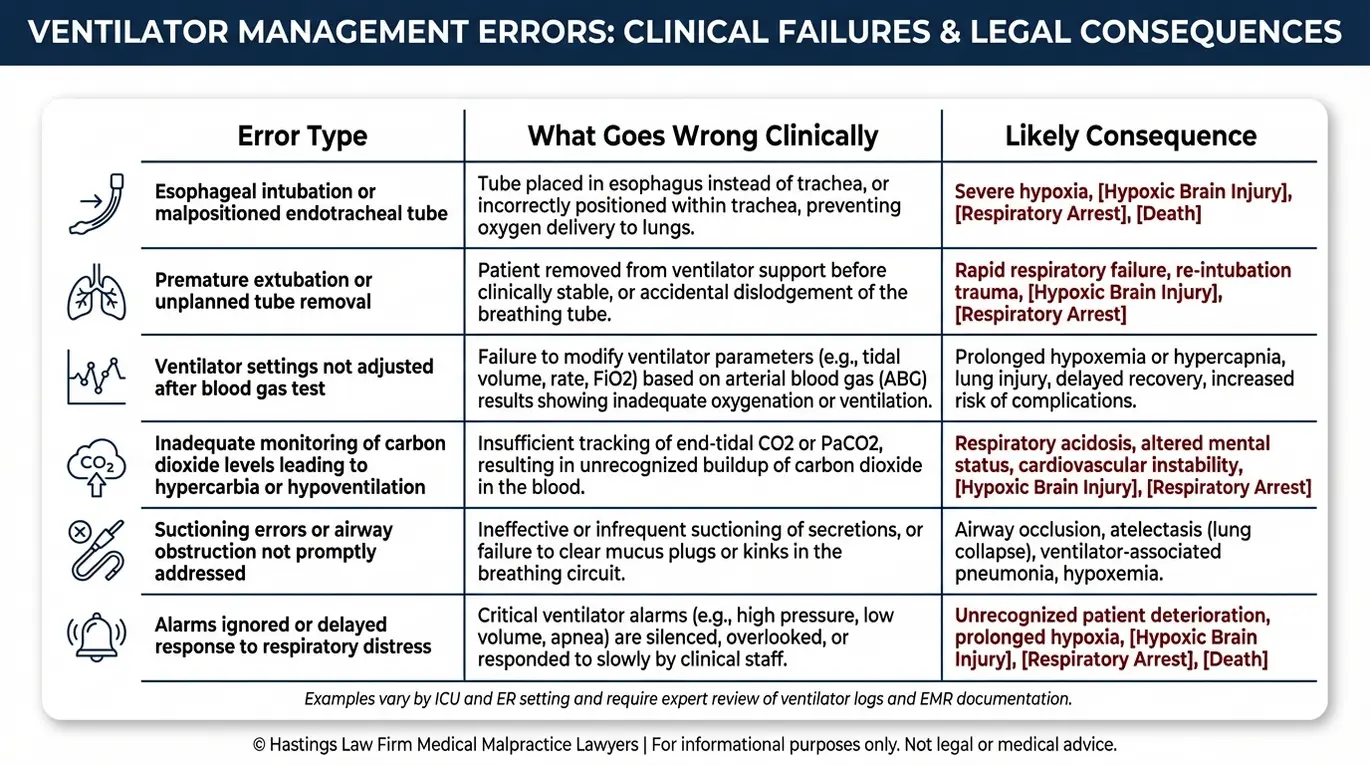
Ventilator and airway errors, such as improper intubation or premature extubation, often lead to catastrophic hypoxic brain injuries or death, making them a primary focus of respiratory malpractice litigation. The margin for error in mechanical ventilator management is extremely narrow, and the results of negligence are often irreversible.
Intubation involves inserting an endotracheal tube through the mouth or nose and into the trachea to establish an artificial airway. One of the most dangerous mistakes during this procedure is esophageal intubation, where the tube is accidentally placed into the esophagus (the food pipe) instead of the trachea (the airway).
When this happens and is not immediately identified, the patient receives no oxygen to the lungs. Brain damage can begin within minutes. An attorney for intubation errors will look at whether proper confirmation methods, such as end-tidal CO2 monitoring, were used to verify tube placement.
Extubation, the removal of the endotracheal tube, carries its own set of risks. Premature extubation occurs when a patient is taken off the ventilator before they can breathe independently. If the care team has not confirmed adequate respiratory function through blood gas tests and clinical assessment, removing the tube too early can trigger respiratory arrest.
Re-intubation is often difficult in these emergency scenarios, increasing the risk of hypoxic injury. Ongoing ventilator management requires constant attention. Respiratory therapists must regularly review arterial blood gas results and adjust ventilator settings accordingly.
Failing to do so can lead to hypercarbia, a dangerous buildup of carbon dioxide in the blood caused by hypoventilation. Elevated carbon dioxide levels can cause confusion, seizures, cardiac instability, and death if not corrected. A Texas respiratory therapist malpractice lawyer will examine the flow sheets to determine if the RT responded to these blood gas changes in a timely manner.
Monitoring failures compound these risks. The ECRI Top 10 Health Technology Hazards reports have repeatedly identified alarm management and ventilator-related errors as significant patient safety concerns. Ignoring ventilator alarms or failing to document changes in a patient’s hemodynamic status, which refers to blood flow and cardiovascular stability, can delay critical interventions.
Alarm fatigue, where staff become desensitized to constant beeping, is a known systemic issue, but it does not excuse the failure to respond to a critical life-support warning.
| Type of Error | Potential Consequence |
|---|---|
| Esophageal intubation (tube placed in esophagus) | Oxygen deprivation, hypoxic brain injury, death |
| Premature extubation (tube removed too early) | Respiratory arrest, emergency re-intubation, brain damage |
| Failure to adjust ventilator settings | Hypercarbia, CO2 buildup, seizures, cardiac arrest |
| Ignored or silenced ventilator alarms | Delayed response to respiratory failure |
| Failure to verify tube placement | Prolonged oxygen deprivation without detection |
| Inadequate blood gas monitoring | Undetected hypoventilation, progressive organ damage |
If you believe a ventilator or airway error caused harm to you or a family member, a lawyer for ventilator malpractice can review the clinical records to determine whether the standard of care was met during these critical procedures.
The Hastings Law Firm Difference
Results matter, but what truly sets us apart is how we achieve them. Every verdict, every settlement, and every Texas courtroom victory comes from one guiding promise: To treat each client’s fight for justice as if it were our own.
This balance of skill, experience, and empathy reflects our core philosophy that justice should not only compensate the injured, but also make healthcare safer nationwide.

Determining Liability in Respiratory Therapy Malpractice Cases
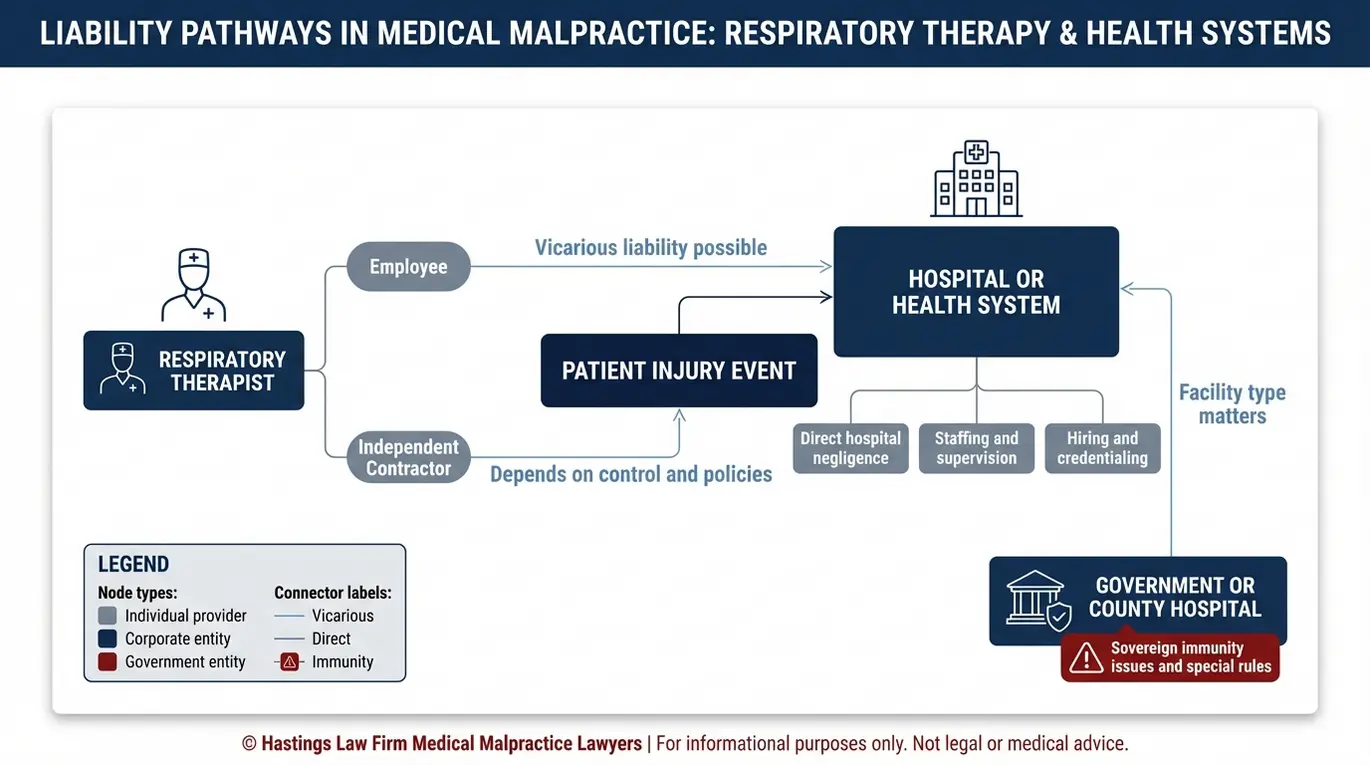
Liability may fall on the individual respiratory therapist for specific practice violations, or on the hospital system under vicarious liability, a legal doctrine that holds an employer responsible for the negligent acts of its employees, or for direct administrative failures like inadequate staffing or negligent hiring.
Identifying the right defendants is one of the most important parts of building a respiratory malpractice case. It is rarely as simple as suing a respiratory therapist in Texas alone. The legal analysis must account for the relationships between the therapist, the hospital, the supervising physician, and any other staffing agencies involved.
Vicarious liability applies when the respiratory therapist is a direct employee of the hospital. In that situation, the hospital can be held legally responsible for the therapist’s negligent acts performed within the scope of employment. If the RT is an independent contractor or employed through a third-party staffing agency, the liability analysis changes significantly.
Other parties may be named in the lawsuit. Hospitals often use staffing agencies to fill gaps in respiratory care coverage. If an agency nurse or therapist causes harm, the agency itself may be liable for failing to vet the employee’s competence.
Direct hospital negligence is a separate theory of liability. A hospital can be independently liable if it failed to maintain safe staffing levels or hired respiratory therapists without verifying proper credentials and permits under Adopted Rules Title 22 of the Texas Administrative Code. It may also be liable if it lacked the equipment necessary for safe respiratory care.
These are institutional failures, not just individual ones. For instance, if a hospital knows its ventilators are outdated or malfunctioning and fails to replace them, it can create direct liability for the institution. Texas Medical Board regulation compliance is mandatory; hospitals must ensure all practicing RTs hold valid, unexpired permits.
Sovereign immunity adds another layer of difficulty when the injury occurred at a government-operated facility, such as a county or public hospital. Under the Texas Tort Claims Act (Civil Practice and Remedies Code Chapter 101), government entities have limited liability and shorter notice deadlines. These cases require swift action, as the window to notify the government entity can be as short as six months.
When evaluating liability, we examine the following:
- Whether the RT was a hospital employee, independent contractor, or agency worker
- Whether the hospital verified the therapist’s licensure and credentials before hiring
- Whether staffing levels met safe patient care requirements at the time of the incident
- Whether the supervising physician gave appropriate orders and was available for consultation
- Whether institutional policies or equipment failures contributed to the harm
- Whether government immunity protections apply and what procedural rules must be followed
As a Texas respiratory therapist malpractice lawyer, our firm has former defense attorneys on staff who understand how hospitals structure their liability protections. This gives us an advantage when identifying every responsible party and building claims against each one.
Proving Causation and Damages in Texas Medical Injury Claims
To secure compensation, plaintiffs must prove that the respiratory therapist’s breach of duty directly caused the injury, utilizing expert testimony and medical records to substantiate claims for economic and non-economic damages.
In a Texas lawsuit, the burden of proof rests with the injured patient. It is not enough to show that the RT made an error. You must also demonstrate that the error, rather than the patient’s underlying condition, caused the specific injury.
For example, if a patient suffered brain damage following a period on a ventilator, our team works with qualified experts to determine whether the damage resulted from improper ventilator management. We evaluate if the harm came from the disease process itself or a preventable error. An arterial blood gas test (ABG), a blood draw that measures oxygen and carbon dioxide levels, often provides critical evidence.
Abnormal ABG results that went unaddressed can help establish that hypercarbia developed because the RT failed to adjust care appropriately. Hypercarbia is also known as hypercapnia, which refers to dangerously elevated carbon dioxide in the blood.
Expert report requirements under Chapter 74 are a critical hurdle in proving causation. Texas law mandates that a valid expert report be served on the defendant within 120 days of the date the defendant files an original answer. This report must be written by a qualified medical expert and must detail the applicable standard of care. It must explain how the RT failed to meet it and the causal relationship between that failure and the injury.
Our firm retains highly qualified respiratory and critical care experts to satisfy this strict Chapter 74 requirement. We also look for documentation gaps, which are common in these cases. Respiratory therapists must chart ventilator parameter changes and assessment findings in the electronic medical record (EMR).
When entries are missing or inconsistent with other clinical data, it can suggest that proper monitoring was not performed. Our in-house nursing staff is trained to identify these charting inconsistencies and reconstruct clinical timelines from multiple record sources.
Recoverable damages in respiratory malpractice cases may include:
- Past and future medical expenses, including rehabilitation and long-term care
- Lost wages and diminished earning capacity
- Physical pain and suffering
- Mental anguish and emotional distress
- Loss of enjoyment of life and loss of consortium
- Wrongful death damages if the patient did not survive, including funeral costs and loss of companionship
Texas does impose statutory caps on non-economic damages in medical malpractice cases, which limits recovery for pain, suffering, and similar losses. However, economic damages like medical bills and lost income are not capped. Calculating damages in respiratory malpractice cases often involves life care planners who project the cost of lifelong ventilator support or nursing care.
Statute of Limitations and Legal Deadlines for Filing Suit
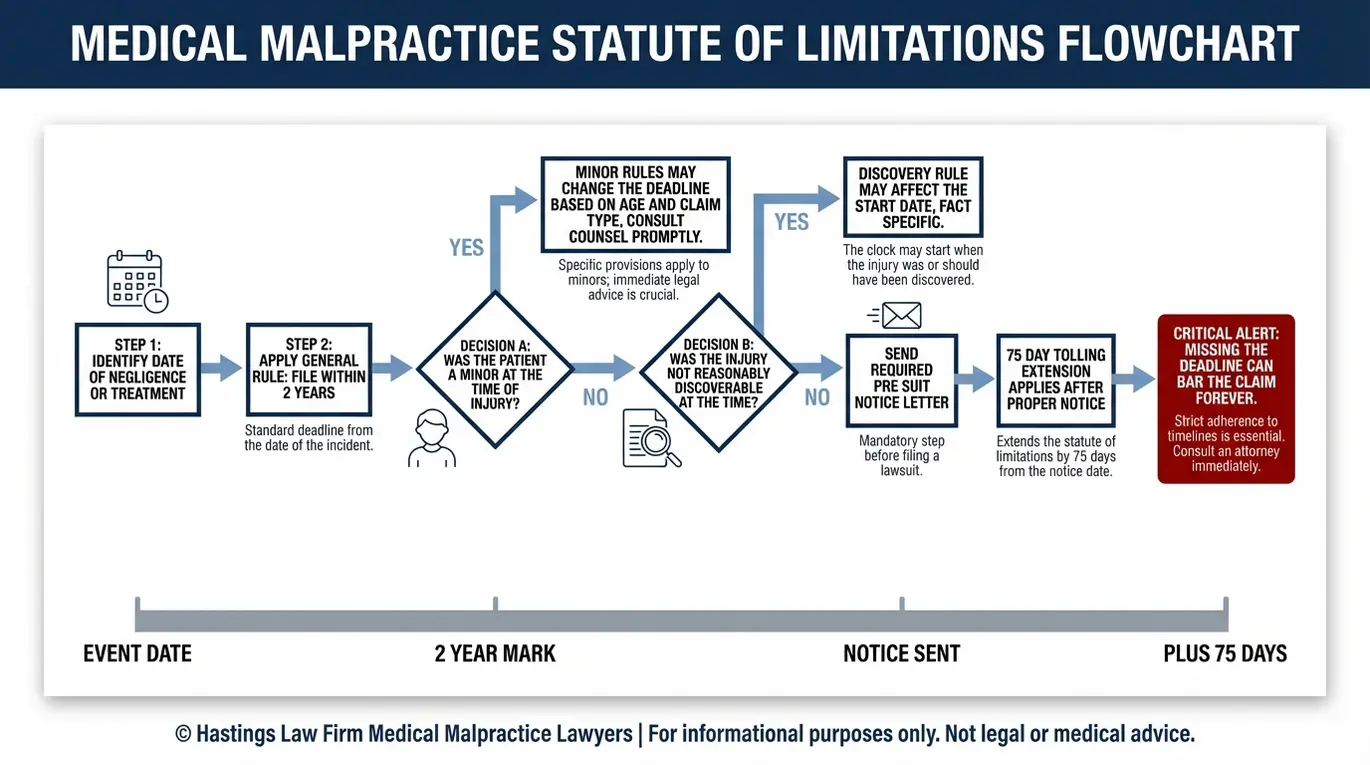
In Texas, the general statute of limitations for medical malpractice is two years from the date of the negligence, though specific exceptions exist for minors and cases where the injury could not be immediately discovered.
The two-year rule is strict. Under Texas law, you must file your lawsuit within two years of the date the respiratory therapist’s negligence occurred. In many cases, the date is straightforward because the injury happened during a specific hospital stay or procedure. But not every case is that clear.
If the precise date of the negligence cannot be ascertained, the two-year period may run from the last date of the relevant course of treatment. The discovery rule provides a limited exception. In some situations, the injury caused by respiratory therapy negligence is not immediately apparent.
A patient may not realize that brain damage or chronic respiratory problems were connected to an RT’s error until well after discharge. When the injury was not and could not have been reasonably discovered at the time it occurred, the two-year clock may begin on the date the patient knew or should have known about the harm.
Even with the discovery rule, Texas imposes a 10-year statute of repose, meaning no claim can be filed more than 10 years after the act of negligence. This statute of repose is absolute and extinguishes the claim completely once the time has passed.
Minors receive additional protection. If a child under the age of 12 was injured by respiratory therapy negligence, the statute of limitations is extended until the child’s 14th birthday. This ensures families have adequate time to recognize harm and pursue a claim, even when the injury is not immediately apparent.
The 75-day tolling provision is another important procedural tool. Under Texas Civil Practice and Remedies Code § 74.051, sending a statutory notice letter to the healthcare provider at least 60 days before filing suit extends the statute of limitations by 75 days. This gives your legal team additional time to complete the required investigation and expert report while preserving your right to file.
These overlapping deadlines and exceptions are why contacting an attorney early is important. The sooner the investigation begins, the more effectively your legal team can preserve evidence and meet every procedural requirement.
Contact the Texas Healthcare Malpractice Attorneys at Hastings Law Firm Today for Help
If a respiratory therapist’s negligence has caused serious harm to you or someone in your family, you deserve answers and a legal team that knows how to find them. Hastings Law Firm was founded on two principles: restoring trust for patients who have been failed by the healthcare system, and preventing the same mistakes from happening to others.
Board-certified trial attorney Tommy Hastings and our medical-legal team prepare every case from day one as if it will go to trial. That preparation, backed by in-house medical staff and a national network of expert consultants, is what gives our clients a strong position from the start.
There are no upfront fees or costs. We only get paid if we recover compensation for you. Contact our Texas respiratory therapist malpractice law firm today for a free, confidential case evaluation and let us help you understand your options.
Frequently Asked Questions About Respiratory Therapist Malpractice in Texas


This content was researched and written by the Hastings Law Firm editorial team, which includes attorneys, medical professionals, and experienced researchers. Our writing is informed by internal knowledge and practical experience, and we cross-check critical details against authoritative sources cited throughout. Every piece undergoes human-led fact-checking and legal review. Because legal and medical information can change, if you spot an error, please contact us. Learn more about our content standards and review process on our editorial policy page.

Brady D. Williams is a nationally recognized medical malpractice attorney who has spent his career handling high-stakes litigation for injured patients and families across the country. Licensed in both Texas and California, Brady draws on experience from hundreds of resolved medical cases to break down complex legal and medical topics for the people who need that information most. His writing reflects the same attention to detail and commitment to clarity that he brings to every case he handles.
