


Dallas Prostate Surgery Error Lawyer
Unexpected complications after a radical prostatectomy can leave lasting physical and emotional effects, especially when the outcome stems from a preventable surgical error rather than a known risk. Robotic prostatectomy can add unique hazards, including limited tactile feedback, variable surgeon training, and device malfunctions that may not be recognized until after surgery. Distinguishing negligence from an accepted complication often turns on what happened in the operating room and how closely the care matched accepted standards. If you or a loved one were harmed or worse due to a prostate surgery error in Dallas, Texas, contact Hastings Law Firm for a free, confidential case review.

Last Updated: July 27, 2026
Trusted Dallas Medical Attorneys for Negligent Urological Procedures
If you or a loved one suffered unexpected complications after a radical prostatectomy, which is the surgical removal of the prostate gland, you may be dealing with more than a difficult recovery. Whether the procedure was a traditional surgery or a robotic prostatectomy, the injuries following a surgical error can change daily life. A robotic prostatectomy is a minimally invasive procedure performed through small incisions with the assistance of a robotic system.
You deserve to know whether what happened was a recognized risk or the result of negligence. As a Dallas prostate surgery error lawyer team that focuses exclusively on medical malpractice, Hastings Law Firm has the medical knowledge and litigation experience to investigate your case and give you honest answers.
If you have questions about what went wrong, we offer a free, confidential case evaluation. Reach out so we can review your situation and explain your options.

The Risks and Flaws of Da Vinci Robotic Prostate Surgery
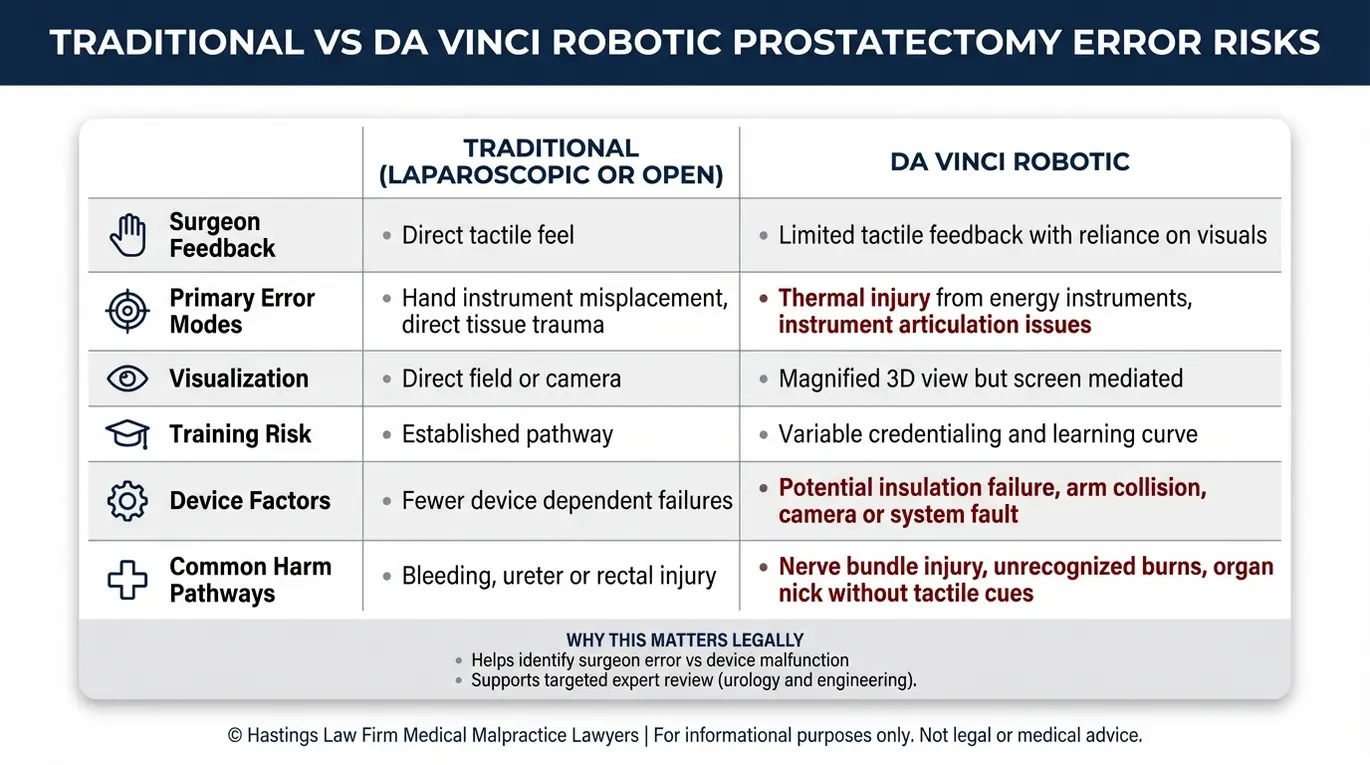
Robotic surgery errors often occur because of a lack of tactile feedback, meaning the surgeon cannot physically “feel” the tissue they are cutting, which can lead to accidental damage to nerves or surrounding organs that goes unnoticed during the procedure.
The Da Vinci Surgical Robot, a robotic-assisted platform manufactured by Intuitive Surgical, is used in many prostatectomies across Dallas and the rest of the country. The system translates a surgeon’s hand movements at a console into precise movements of miniature instruments inside the patient’s body. But the surgeon is not directly touching the tissue. That gap between the surgeon’s hands and the patient’s body introduces risks that do not exist in traditional open surgery.
Inadequate training is another concern. Some surgeons receive certification on the robotic system after relatively few hours of supervised practice. Unlike traditional surgical training, which builds skill through years of hands-on repetition, robotic certification requirements can vary widely between hospitals. When a surgeon lacks sufficient experience, the chance of error increases.
Mechanical problems with the device itself also contribute to patient injuries. Adverse events reported to the FDA’s MAUDE (Manufacturer and User Facility Device Experience) database include thermal burns from uninsulated robotic arms, unexpected instrument movements, and system failures mid-procedure. If this occurs, a robot surgery lawsuit may involve both the surgeon and Intuitive Surgical as the device manufacturer.
| Risk Factor | Traditional Open Prostatectomy | Robotic Prostatectomy |
|---|---|---|
| Tactile Feedback | Surgeon directly feels tissue and tension | No tactile feedback; surgeon relies on visual cues only |
| Surgeon Training | Extensive hands-on residency training | Variable; some certifications require minimal robotic hours |
| Mechanical Failure | Not applicable | Risk of instrument malfunction, electrical burns, system errors |
| Nerve/Organ Injury Cause | Typically technique-related | Can result from technique, lack of feedback, or device malfunction |
| Error Detection During Surgery | Surgeon may feel resistance or abnormality | Injuries may go undetected until post-op |
Distinguishing Known Risks from Negligence in Prostate Procedures
Not every bad outcome after prostate surgery is malpractice; instead, negligence occurs when a urologist deviates from the accepted standard of care, the level of skill and caution that a competent urologist would exercise under similar circumstances. Examples include perforating the rectum during dissection or severing the obturator nerve due to poor technique.
Before surgery, patients typically sign an informed consent form acknowledging known risks such as bleeding, infection, or temporary urinary issues. Under Texas Civil Practice and Remedies Code § 74.104, physicians must disclose the risks and hazards of procedures that appear on the Texas Medical Disclosure Panel’s list before proceeding. But signing a consent form does not give a surgeon permission to be careless. When an injury results from inattention, inadequate preparation, or poor technique rather than an inherent risk of the procedure, a malpractice claim may exist.
Specific preventable injuries we evaluate include damage to the neurovascular bundle (NVB), the group of nerves and blood vessels running alongside the prostate that control erectile function. Excessive or unnecessary damage to the NVB can cause permanent impotence. We also investigate cases involving stress urinary incontinence (SUI), the involuntary leakage of urine that can result from sphincter damage during surgery, as well as accidental bowel perforation and ureteral injury.
Signs that a surgical error, not a known risk, may have occurred:
- Injuries to structures well outside the surgical field
- Complications far more severe than what was discussed during informed consent
- Post-operative symptoms that suggest retained instruments or uncontrolled bleeding
- A surgeon who lacked documented experience with the specific procedure performed
- Absence of proper intraoperative monitoring records

The Hastings Law Firm Difference
Results matter, but what truly sets us apart is how we achieve them. Every verdict, every settlement, and every Dallas courtroom victory comes from one guiding promise: To treat each client’s fight for justice as if it were our own.
This balance of skill, experience, and empathy reflects our core philosophy that justice should not only compensate the injured, but also make health care safer nationwide.

Common Complications and Errors During Radical Prostatectomy
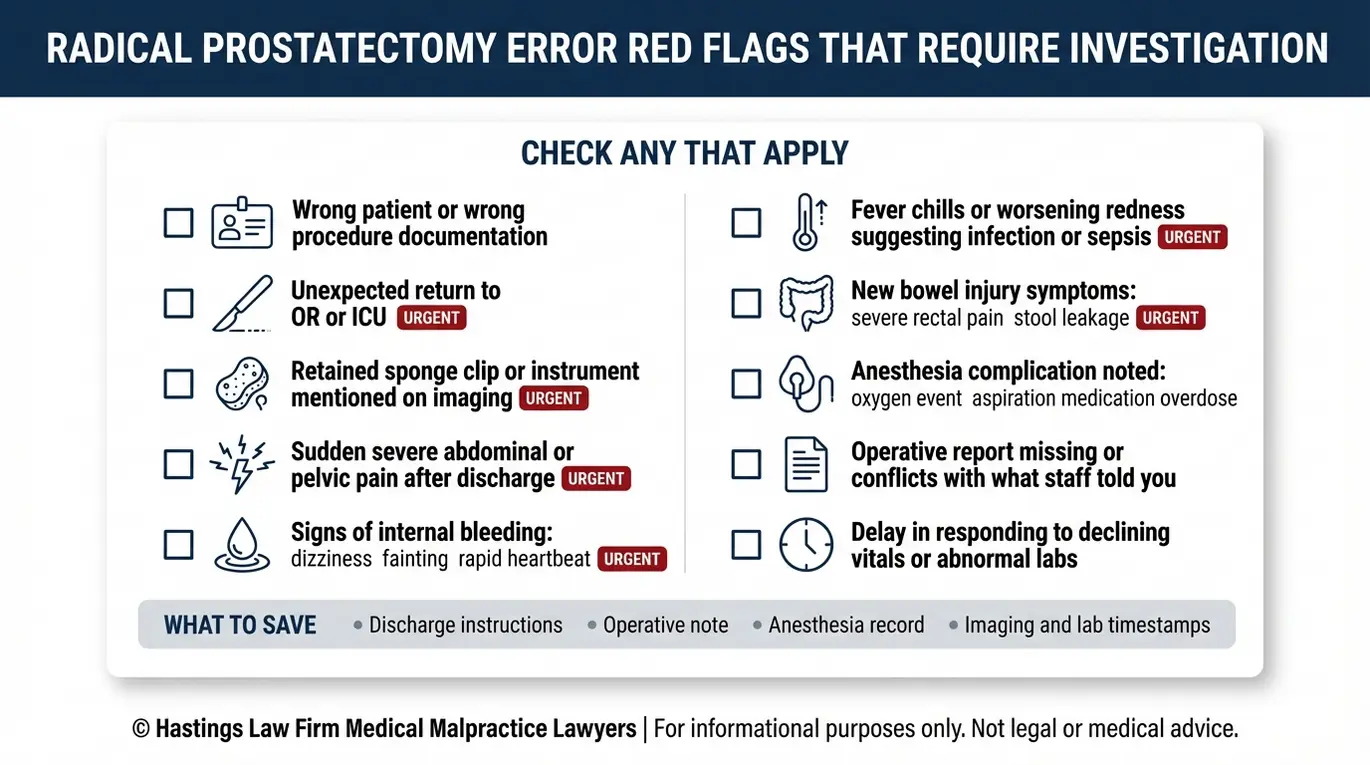
Actionable surgical errors during prostatectomy often include wrong-site incisions, retained surgical instruments, anesthesia complications, and failure to monitor for internal bleeding after the procedure. These are not ordinary risks of surgery. Many fall into a category known as “never events,” errors so preventable they should never happen in a properly managed operating room.
Examples of surgical never events and preventable errors include:
- Wrong-site or wrong-patient surgery: A catastrophic administrative breakdown where the procedure is performed on the wrong side of the body or on the wrong person entirely.
- Retained surgical instruments: Sponges, clips, or needles left inside the body, which can cause serious infection and require additional surgery. The Agency for Healthcare Research and Quality (AHRQ) Patient Safety Indicator 05 tracks these events nationally as a core measure of hospital safety.
- Rectal perforation, an accidental puncture of the rectal wall during dissection, which can lead to fistula formation and sepsis if not immediately identified and repaired.
- Thermal injury, an electrosurgical burn caused by insulation failure on robotic or laparoscopic instruments, which can damage tissue outside the surgeon’s line of sight.
- Post-operative monitoring failures: Not identifying internal bleeding, rising infection markers, or worsening vital signs in the hours after surgery, potentially leading to wrongful death.
If you experienced any of these complications, a Dallas surgical error lawyer with medical malpractice experience can help determine whether the injury was preventable and who is responsible.
Damages Available to Victims of Botched Prostate Surgery
Victims of prostate surgery errors in Texas may recover economic damages for corrective surgeries and lost wages, as well as non-economic damages for pain, suffering, physical impairment, and loss of consortium.
Economic damages cover the measurable financial losses tied to the injury. These can include the cost of corrective surgeries and ongoing medical care. They also cover devices like an artificial urinary sphincter (AUS), which helps control urinary leakage, or a penile implant (penile prosthesis) used to restore erectile function after nerve damage. Lost income and wages, both past and future, are also recoverable if the injury affects your ability to work.
Non-economic damages address the personal toll of the injury. Permanent incontinence and impotence affect far more than physical health. They can alter self-image, emotional well-being, and intimate relationships. Texas law recognizes claims for pain and suffering, physical impairment, and mental anguish tied to these losses.
Spouses may also have a separate claim for loss of consortium, which compensates for the loss of companionship, affection, and intimacy that results from a partner’s injuries. This is a distinct claim from the injured patient’s case and reflects how surgical negligence affects the entire family.
Why Choose Hastings Law Firm for Your Dallas Claim
Hastings Law Firm specializes exclusively in medical malpractice, bringing board-certified leadership, in-house medical experts, and a history of securing millions for injured patients to your case. Every attorney, nurse consultant, and patient advocate on our team works on these cases and nothing else. That singular focus is what sets us apart when investigating complex surgical errors.
Our founder, Tommy Hastings, is a board-certified trial lawyer in personal injury trial law by the Texas Board of Legal Specialization, a distinction held by fewer than 2% of Texas attorneys. Our team includes former defense attorneys who know how hospitals and insurers build their cases, along with in-house medical staff who can analyze surgical records and identify where the standard of care may have been breached.
We built this firm to restore trust for people who feel the healthcare system failed them. If you are searching for a Dallas prostate surgery error lawyer, your initial consultation with us is free, confidential, and led by a patient advocate who will listen before anything else. And because we work on a contingency fee basis, you pay no attorney fees or costs unless we secure a recovery for you.
Contact the Dallas Surgical Error Attorneys at Hastings Law Firm Today for Help
A surgery that was supposed to improve your health should never leave you worse off. If a prostate procedure resulted in injuries that you were not warned about or that should not have occurred, you have the right to find out what happened and hold the responsible parties accountable.
Hastings Law Firm has the medical knowledge, litigation experience, and dedication to give your case the attention it deserves. Our team will review your surgical records, consult with qualified medical experts, and give you an honest assessment of your legal options.
You do not have to figure this out alone. Contact Hastings Law Firm today for a free, confidential case evaluation. There is no fee unless we win your case.
Frequently Asked Questions About Prostate Surgery Error in Dallas


This content was researched and written by the Hastings Law Firm editorial team, which includes attorneys, medical professionals, and experienced researchers. Our writing is informed by internal knowledge and practical experience, and we cross-check critical details against authoritative sources cited throughout. Every piece undergoes human-led fact-checking and legal review. Because legal and medical information can change, if you spot an error, please contact us. Learn more about our content standards and review process on our editorial policy page.

Brady D. Williams is a nationally recognized medical malpractice attorney who has spent his career handling high-stakes litigation for injured patients and families across the country. Licensed in both Texas and California, Brady draws on experience from hundreds of resolved medical cases to break down complex legal and medical topics for the people who need that information most. His writing reflects the same attention to detail and commitment to clarity that he brings to every case he handles.
