


Texas Podiatrist Malpractice Lawyer
Podiatrist malpractice involves substandard foot and ankle care that falls below the professional standard of care and leads to serious harm. These cases often turn on whether a podiatrist made decisions no reasonably competent peer would have made and whether that lapse caused lasting injury. Common consequences described include chronic pain, infection, loss of mobility, amputation, and major disruptions to work and daily life. If you or a loved one were harmed or worse due to podiatrist malpractice in Texas, contact Hastings Law Firm for a free, confidential case review.
Last Updated: July 27, 2026
Trusted Legal Representation for Foot and Ankle Specialist Negligence in Texas
When a podiatrist causes harm through substandard care, the consequences can be life-altering. Chronic pain, infection, loss of mobility, and even amputation are among the injuries we see in these cases. All podiatrists must meet the same professional standard of care under Texas law, including those with board certification from the American Board of Foot and Ankle Surgery (ABFAS).
As a Texas podiatrist malpractice lawyer team founded by Tommy Hastings, a trial lawyer board-certified in personal injury law, we focus exclusively on medical negligence. If you believe negligent podiatric treatment caused your injury or made an existing condition worse, you deserve clear answers. We can review your records, consult with qualified medical experts, and explain your legal options at no cost.

Identifying Negligence in Podiatric Care and Surgery
Podiatric malpractice occurs when a foot doctor deviates from the accepted standard of care, resulting in injury, infection, or worsened conditions. Not every poor outcome qualifies as negligence, but when a podiatrist makes decisions that no reasonably competent peer would have made, that deviation can form the basis of a legal claim.
As an experienced Texas podiatrist malpractice lawyer team, we investigate a wide range of podiatric errors. The most common types of negligence we evaluate include:
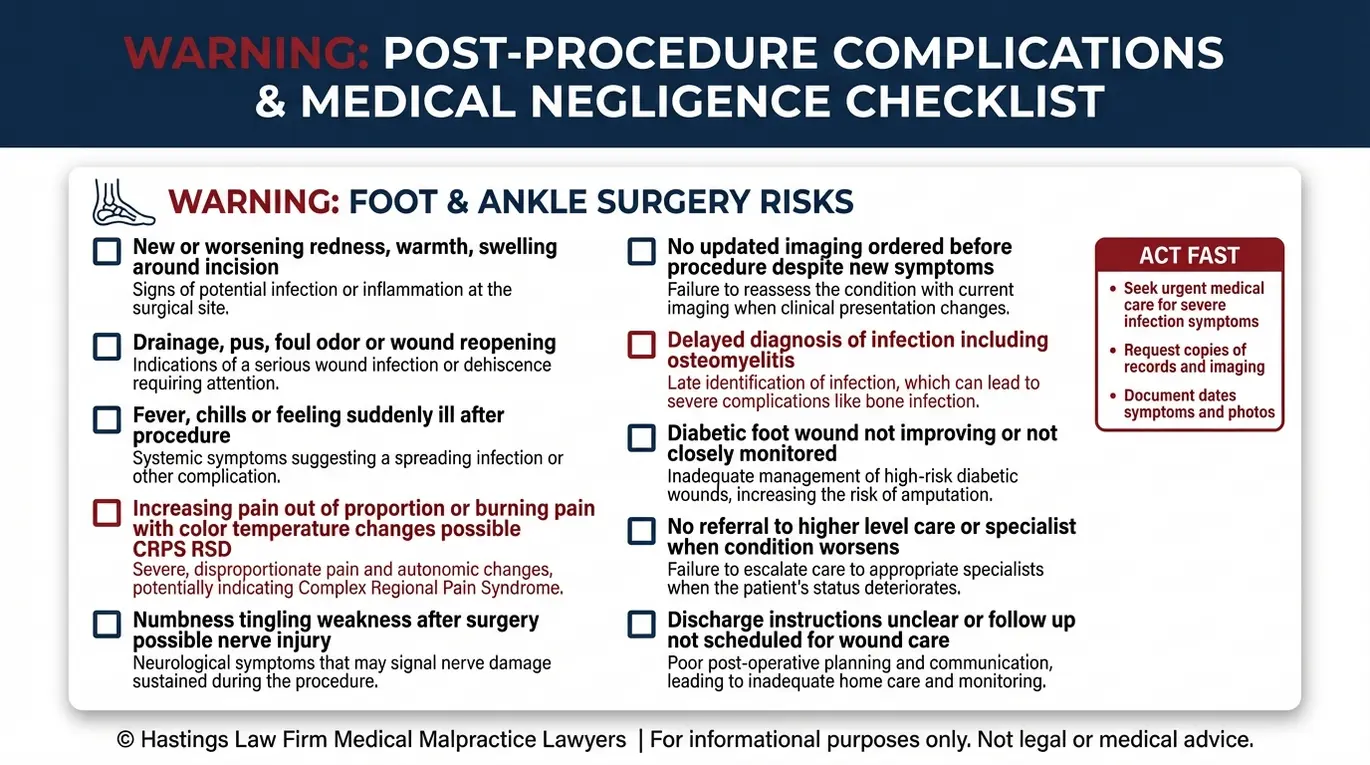
- Surgical errors. Mistakes during a bunionectomy (surgical removal of a bunion) or the negligent removal of sesamoid bones, the small bones embedded in the tendons beneath the big toe joint, can cause lasting damage.
- Failure to diagnose infections. Missing signs of osteomyelitis, a serious bone infection, or delaying wound treatment can be limb-threatening. The Boston Medical Center’s guide on spotting surgical infections outlines warning signs.
- Inadequate diabetic foot care. Poor ulcer management often leads to gangrene and amputation. The CDC’s State Diabetes Profiles highlight the prevalence of this risk in Texas.
- Nerve injury from improper technique. Surgical errors can cause nerve injury, potentially triggering Complex Regional Pain Syndrome (CRPS) or Reflex Sympathetic Dystrophy (RSD). These are conditions that involve chronic, severe pain.
A lawyer for podiatrist malpractice in Texas will examine your records to identify exactly where the standard of care was breached. Contact a podiatrist malpractice lawyer in Texas to discuss your specific case.
Risks of Relying on Outdated Diagnostic Imaging
Medical negligence often involves relying on old X-rays. The standard of care requires current weight-bearing radiographs (X-rays taken while the patient stands) as part of a complete preoperative imaging workup, the set of diagnostic images a surgeon reviews before operating. Surgery based on outdated imaging may target changed anatomy, leading to errors. If your Texas podiatrist malpractice lawyer discovers outdated imaging was used, it is strong evidence of liability.
Establishing Liability Through Expert Witness Testimony
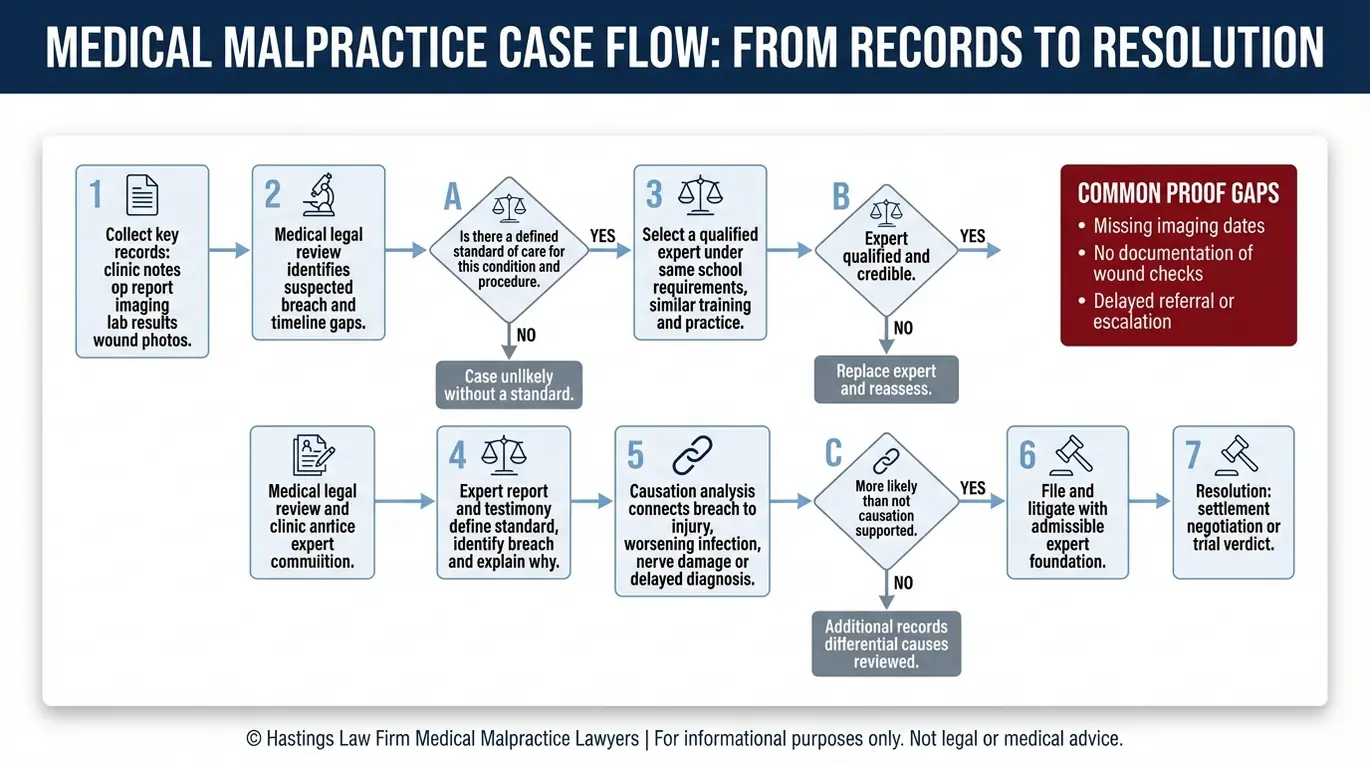
Proving liability in Texas requires a qualified expert witness to testify that the podiatrist breached the standard of care and that this breach directly caused the patient’s injury. In cases of medical negligence, credible expert testimony is essential.
Texas follows the “same school” rule, meaning the expert witness must have training similar to the defendant. In most cases, the expert will be another board-certified podiatrist or orthopedic surgeon. These qualifications must meet the Texas Rules of Evidence.
Finding a qualified expert is challenging due to local bias. Our team uses a national network of experts to provide objective reviews and identify witnesses who can withstand cross-examination. A skilled Texas podiatrist malpractice lawyer ensures these experts are prepared.
The expert will also explain concepts like failure to refer, which occurs when a podiatrist does not send the patient to a specialist for a condition outside their competence, or the failure to order proper offloading (pressure relief devices for healing foot wounds). Their analysis is often used to draft the expert report required by law. If you need a lawyer for podiatrist malpractice in Texas, this expert-driven approach is necessary for success.
The Hastings Law Firm Difference
Results matter, but what truly sets us apart is how we achieve them. Every verdict, every settlement, and every Texas courtroom victory comes from one guiding promise: To treat each client’s fight for justice as if it were our own.
This balance of skill, experience, and empathy reflects our core philosophy that justice should not only compensate the injured, but also make health care safer nationwide.

Recoverable Damages for Permanent Foot and Ankle Injuries
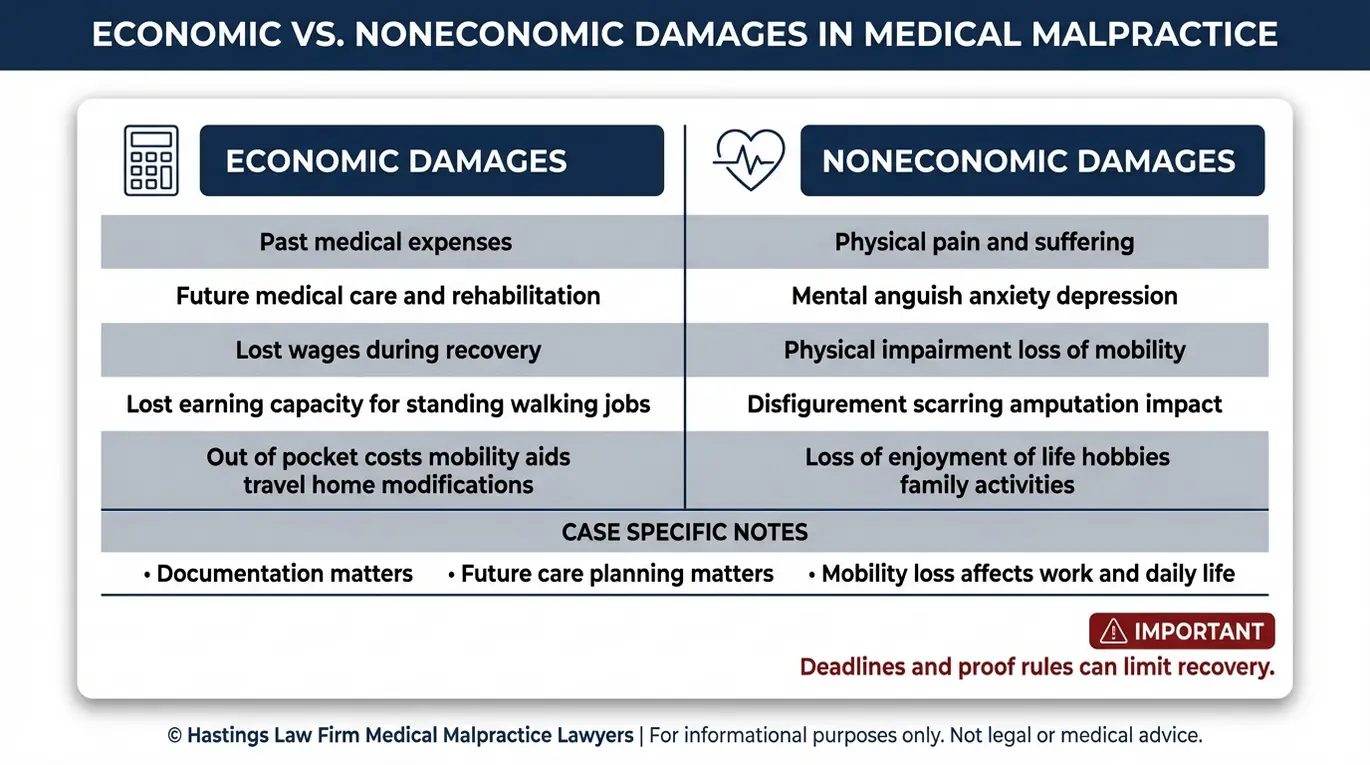
Patients harmed by podiatric negligence may recover compensation for medical bills, lost wages due to immobility, and non-economic damages like pain and suffering. The specific categories break down into two main types:
| Economic Damages | Non-Economic Damages |
|---|---|
| Past and future medical expenses (including reconstructive surgery, prosthetics, and rehabilitation) | Physical pain and suffering |
| Lost wages and lost earnings (especially for workers whose jobs require standing or walking) | Physical disfigurement or scarring |
| Costs of assistive devices and home modifications | Loss of enjoyment of life and daily activities |
| Future medical care and monitoring | Mental anguish and emotional distress |
Foot injuries carry a unique burden. A patient placed on non-weight-bearing (NWB) orders, meaning they cannot put any pressure on the affected foot, may be unable to work. Even after recovery, many patients develop an antalgic gait, an abnormal walking pattern caused by pain. Data from the Agency for Healthcare Research and Quality (AHRQ) Medical Expenditure Panel Survey confirms that injury-related costs are substantial.
A Texas podiatrist malpractice lawyer can help document these losses. Consulting a Texas podiatrist malpractice lawyer is essential for calculating future costs. If your injury has changed your daily life, contact a Texas podiatrist malpractice lawyer to discuss what your claim may be worth.
Contact the Texas Doctor Malpractice Attorneys at Hastings Law Firm Today for Help
Hastings Law Firm was founded on a straightforward belief: patients who are harmed by medical negligence deserve honest answers, thorough investigation, and a legal team that prepares every case as if it is going to trial. Our medical-legal team, which includes in-house nurse consultants and former defense attorneys, focuses exclusively on medical malpractice cases throughout Texas and across the country.
We understand that questioning a doctor’s care can feel uncomfortable. But if a podiatrist’s error has caused you lasting pain, infection, or loss of mobility, you have every right to find out what happened.
As your Texas podiatrist malpractice lawyer, we handle every step of the process, from securing your medical records and consulting with qualified experts to preparing your case for trial. There is no fee unless we recover compensation for you.
Contact Hastings Law Firm today for a free, confidential case evaluation. Let us help you get the answers and accountability you deserve.
Frequently Asked Questions About Podiatrist Malpractice in Texas


This content was researched and written by the Hastings Law Firm editorial team, which includes attorneys, medical professionals, and experienced researchers. Our writing is informed by internal knowledge and practical experience, and we cross-check critical details against authoritative sources cited throughout. Every piece undergoes human-led fact-checking and legal review. Because legal and medical information can change, if you spot an error, please contact us. Learn more about our content standards and review process on our editorial policy page.

Gabe Sassin has focused exclusively on medical malpractice law since 2007. After spending more than a decade as a malpractice defense attorney, he knows exactly how the other side works. He has seen firsthand how healthcare providers, insurers, corporate defendants, and their legal teams think, prepare, and build their defense against claims. That knowledge works for the people who need it most today, injured patients and their families. His unique experience shapes everything he writes, giving readers a look at how these cases actually work from someone who has handled them from both sides.
