


Texas Placental Insufficiency Malpractice Lawyer
Written by: Hastings Law Firm | Reviewed by: Tommy Hastings | Updated: July 27, 2026
Placental insufficiency can reduce the oxygen and nutrients a baby receives during pregnancy, and missed warning signs can lead to serious birth injuries with lifelong effects. Risk factors such as high blood pressure, diabetes, and smoking can make careful prenatal monitoring especially important. The standard of care described includes tracking fetal growth, using Doppler studies, and monitoring fetal heart patterns so providers can respond when results show worsening placental function. If you or a loved one were harmed or worse due to placental insufficiency malpractice in Texas, contact Hastings Law Firm for a free, confidential case review.

Trusted Malpractice Attorneys for Birth-Related Injuries in Texas
What You Should Know About Placenta Dysfunction Birth Injury Claims in Texas:
- Lifelong neurological injury can result when placental insufficiency is not recognized and addressed before prolonged oxygen deprivation causes brain damage.
- Options for financial recovery can be affected when a delayed emergency C section is linked to permanent injury or wrongful death.
- A malpractice claim may turn on whether providers failed to diagnose IUGR, ignored signs of fetal distress, or delayed a necessary C section.
- Liability may extend beyond the OB GYN when nursing escalation failures or radiology misreads contribute to a delayed diagnosis.
- Recovery can include economic damages for long term care needs and non economic damages for pain suffering and impairment.
- Compensation for non economic harm can be limited in Texas because statutory caps may restrict what is recoverable.
- Legal options can be lost if Texas filing deadlines are missed, including separate time limits for parents claims and a child claim.
- Evidence can become harder to obtain over time because records may be less available and witness memories can fade.
- Disputes often focus on causation when defendants argue the injury was genetic inevitable or not detectable.
- Medical records such as ultrasound results Doppler reports and fetal monitoring data can be central when evaluating whether warning signs were missed.

A Healthcare Focused Law Firm
When your child has been diagnosed with a condition linked to placental insufficiency, the weight of that news can be overwhelming. You may be searching for answers about what went wrong during pregnancy or delivery, and whether the care your family received met the standard your baby deserved. Those questions are valid, and you do not have to sort through them alone.
Led by founder Tommy Hastings, a board-certified trial lawyer, our team focuses exclusively on medical malpractice. Our legal and medical professionals work together to examine what happened, identify where the standard of care may have been broken, and hold the responsible parties accountable. If your family is facing this situation, we can review what happened and explain your options in a free, confidential consultation with no fees unless we recover for you.
Understanding Placental Insufficiency and Related Complications
Placental insufficiency occurs when the placenta fails to deliver adequate oxygen and nutrients to the fetus, often leading to intrauterine growth restriction (IUGR), a condition where the baby grows more slowly than expected, and potentially serious birth injuries. Because the placenta is the sole connection between the mother’s blood supply and the developing baby, any decline in its function can have lasting consequences. According to the NCBI Bookshelf entry on placental insufficiency, this condition requires careful management to prevent adverse outcomes.
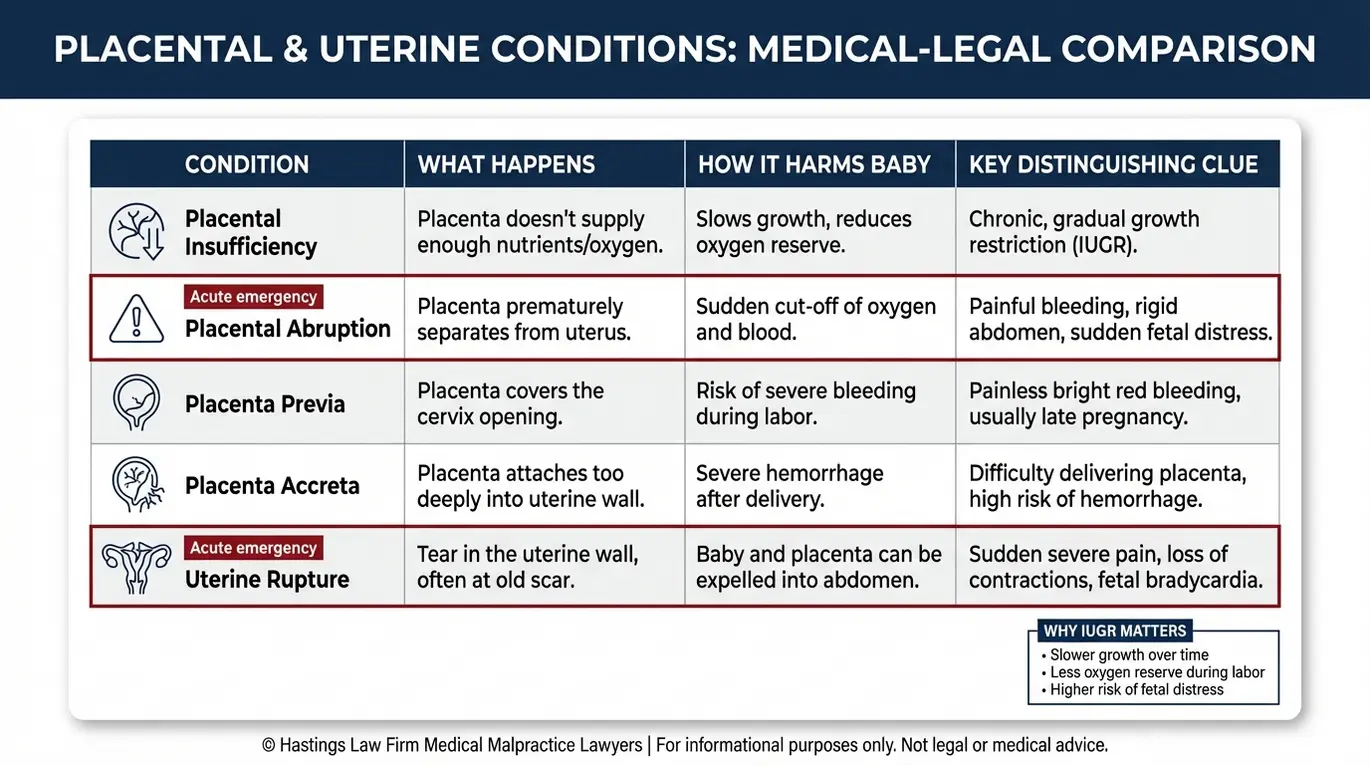
Several placental conditions can threaten a pregnancy, and they are sometimes confused with one another. Understanding the differences matters, both medically and legally, because the type of placental problem affects what a doctor should have been watching for, and what a Texas placental insufficiency malpractice lawyer will need to prove.
Here is how the most common conditions compare:
| Condition | Mechanism of Injury | Key Difference |
|---|---|---|
| Placental Insufficiency | Gradual decline in placental function, reducing oxygen and nutrient delivery over time | Develops slowly; detectable through growth monitoring and Doppler studies |
| Placental Abruption | The placenta partially or fully detaches from the uterine wall before delivery | Sudden event; often presents with bleeding and acute fetal distress |
| Placenta Previa | The placenta covers part or all of the cervix, blocking the birth canal | Positional problem; typically identified on ultrasound and managed with delivery planning |
| Placenta Accreta | The placenta grows too deeply into the uterine wall and cannot detach normally | Poses severe bleeding risk at delivery; may require surgical intervention |
| Uterine Rupture | The uterine wall tears, often during labor, cutting off blood flow to the baby | Acute emergency; most common in patients with prior cesarean scars |
Placental insufficiency is the primary focus for families whose babies suffered IUGR or oxygen-related brain injuries. Unlike a sudden abruption, insufficiency tends to develop over weeks or months. That slower progression is exactly what creates the window for diagnosis and intervention, and exactly why a failure to act can become the basis for a malpractice claim. A placental insufficiency attorney examines whether providers used that window appropriately or let it close.
Distinguishing between these types of placental birth injuries is necessary when building a case. For example, a lawyer for placental abruption might focus on the speed of the emergency response, while a placenta previa negligence lawyer would investigate whether a cesarean section was scheduled appropriately. A placenta accreta lawyer often deals with surgical errors during delivery. However, for insufficiency, a birth injury legal advice team focuses on prenatal monitoring. If you believe your provider missed warning signs, consulting a lawyer for placental errors is essential. Choosing a placental birth injury lawyer or a placental dysfunction lawyer who is familiar with these medical nuances is key.
The Placenta as the In-Utero Life Support System
During pregnancy, the placenta acts as a temporary organ providing oxygen and nutrients to the baby. It transfers oxygen from the mother’s blood to the fetus, removes carbon dioxide and metabolic waste, and delivers the nutrients the baby needs to grow. When placental function declines, the baby receives less of everything required for healthy development.
Prolonged oxygen deprivation, known medically as fetal hypoxia, is one of the most dangerous consequences of placental insufficiency. If the oxygen deficit is severe or goes undetected for too long, it can lead to fetal distress, which describes signs the baby is not tolerating conditions in the womb. This distress can progress to hypoxic-ischemic encephalopathy (HIE), a type of brain damage caused by a combination of reduced oxygen and impaired blood flow.
HIE is among the most serious outcomes associated with placental birth injuries. Depending on severity, it can result in lifelong neurological conditions including cerebral palsy, developmental delays, and seizure disorders. For families affected by these outcomes, consulting a Texas placental insufficiency malpractice lawyer is often the first step toward understanding whether earlier detection could have changed the result. An intrauterine growth restriction attorney can help determine if the placenta’s failure was missed.
Recognizing Risk Factors for Placental Insufficiency
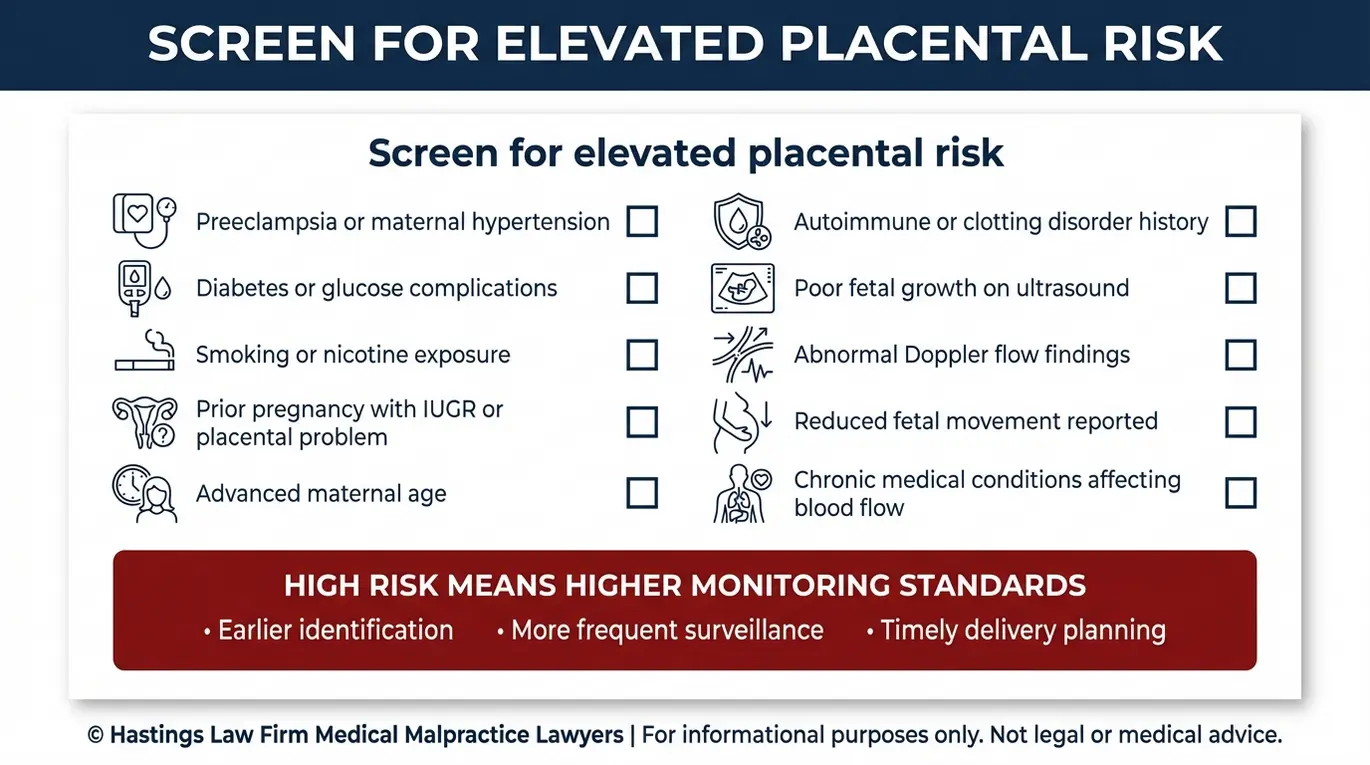
Common risk factors for placental insufficiency include maternal hypertension (preeclampsia), diabetes, smoking, advanced maternal age, and a history of placental problems in prior pregnancies. An OB-GYN’s ability to identify and respond to these risk factors early in prenatal care can be the difference between a healthy delivery and a preventable injury.
Preeclampsia, a pregnancy-specific condition involving high blood pressure and organ stress, is one of the most significant contributors. It restricts blood flow through the uterine arteries, which can progressively starve the placenta and compromise fetal growth. Research published in *Ultrasound in Obstetrics & Gynecology* on perinatal and maternal outcomes of extremely early onset fetal growth restriction underscores how early-onset growth restriction tied to conditions like preeclampsia carries elevated risks for both mother and baby.
When any of these factors are present, the pregnancy should be designated as high-risk. That designation is not just a label; it triggers a higher standard of monitoring and more frequent assessments. If a provider fails to classify a pregnancy appropriately or does not adjust the care plan to match the elevated risk, it may form the basis for a claim that a lawyer for high-risk pregnancy errors would investigate.
Risk factors that should prompt increased surveillance include:
- Preeclampsia or chronic hypertension
- Gestational or pre-existing diabetes
- Tobacco use or substance use during pregnancy
- Advanced maternal age (typically 35 or older)
- History of placental insufficiency, IUGR, or stillbirth in a previous pregnancy
- Blood clotting disorders (thrombophilia)
- Multiple gestation (twins or higher-order multiples)
- Autoimmune conditions such as lupus
The presence of even one of these factors should alert the care team to monitor for placental insufficiency throughout the pregnancy. A Texas birth injury counsel evaluating a potential case will review prenatal records to determine whether these risks were documented, communicated, and acted on in a timely manner. If a mother had high blood pressure, a preeclampsia malpractice lawyer will look for missed spikes. Similarly, a maternal hypertension lawyer understands the specific vascular risks involved.
Failures often occur when doctors overlook history. A diabetes pregnancy negligence case might arise if glucose control was ignored, worsening placental health. A placental issues attorney checks if previous complications were noted. Whether the issue was age or illness, a prenatal care lawyer or high-risk obstetrics malpractice attorney can determine if the standard of care was breached. A placental insufficiency risk lawyer will scrutinize the intake forms to see if your pregnancy was mismanaged from the start.
The Hastings Law Firm Difference
Results matter, but what truly sets us apart is how we achieve them. Every verdict, every settlement, and every Texas courtroom victory comes from one guiding promise: To treat each client’s fight for justice as if it were our own.
This balance of skill, experience, and empathy reflects our core philosophy that justice should not only compensate the injured, but also make healthcare safer nationwide.

Standard of Care for Diagnosing and Treating Placental Insufficiency in Texas
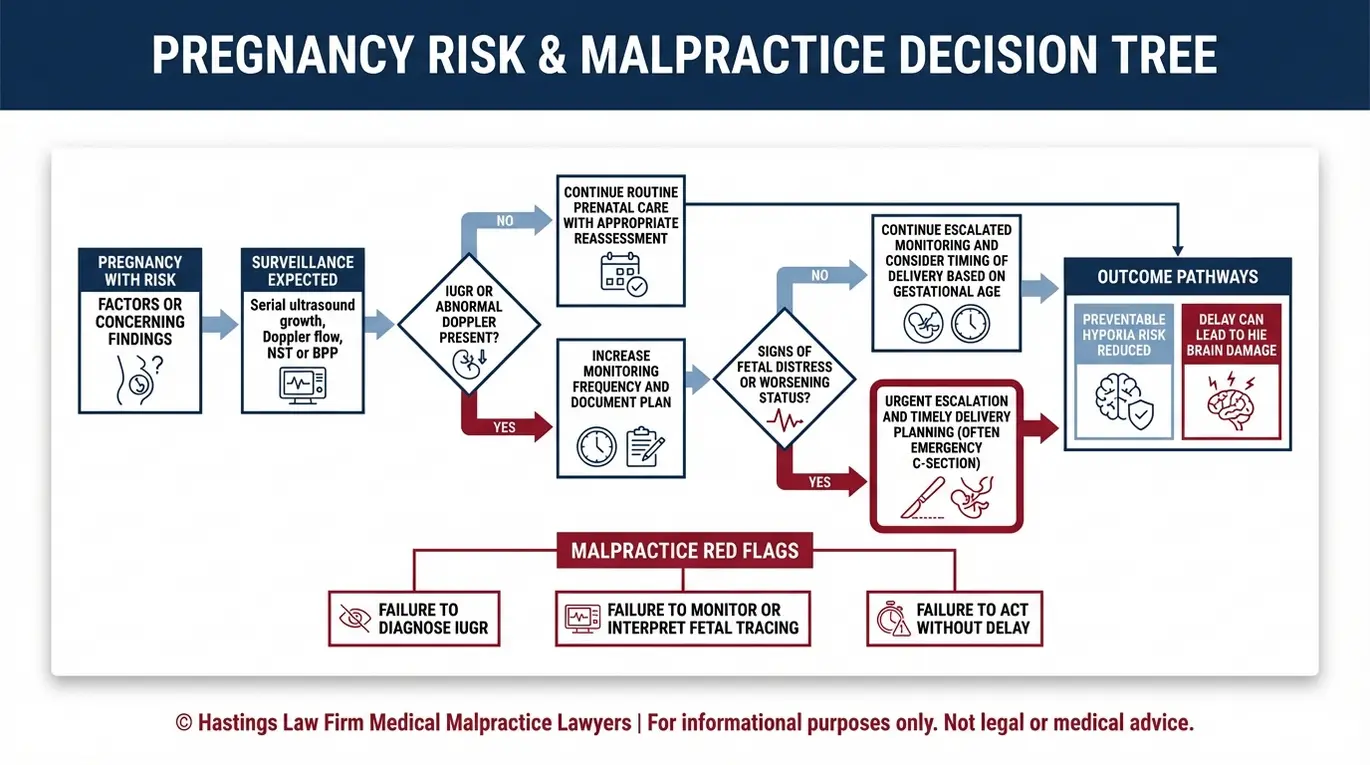
The standard of care requires regular ultrasounds to measure fetal growth, Doppler flow studies to assess blood flow, and non-stress tests (NSTs) to monitor fetal heart rate patterns. These tools, used together, give providers the information they need to detect placental insufficiency before it causes irreversible harm.
Serial ultrasounds are the foundation of monitoring. By tracking the baby’s growth across multiple appointments, providers can identify a lag that may signal the placenta is underperforming. According to the NCBI Bookshelf entry on fetal growth restriction, estimated fetal weight below the 10th percentile is a key diagnostic marker, and consistent tracking is necessary to distinguish a constitutionally small baby from one whose growth has stalled due to inadequate placental support.
Doppler flow studies, commonly called umbilical artery Doppler velocimetry, measure the resistance of blood flowing through the umbilical cord. High resistance or absent end-diastolic flow suggests the placenta is struggling to maintain adequate circulation. This test is one of the most reliable indicators of worsening placental function and is a standard part of the diagnostic workup for suspected IUGR.
A non-stress test (NST), a simple assessment that records the baby’s heart rate in response to its own movements, is used to evaluate fetal well-being. A reassuring NST shows appropriate heart rate accelerations, while a non-reassuring result may indicate the baby is under stress. Providers may also use a Biophysical Profile (BPP), which combines ultrasound observations of fetal movement, tone, and breathing with the NST to score fetal health. A low BPP score is a major red flag.
Recent research published in *Obstetrics & Gynecology* on the proportion of time in Category II fetal heart rate tracings and adverse outcomes highlights how patterns in heart rate monitoring can signal increasing risk. A Texas placental injury lawyer will carefully review whether monitoring was ordered at appropriate intervals and whether concerning results were acted upon.
When these diagnostic tools reveal that placental insufficiency is progressing, the standard of care typically calls for a clear treatment protocol. That may include increased monitoring frequency, administration of corticosteroids to accelerate fetal lung development in anticipation of early delivery, and a planned or emergency delivery when the risks of remaining in the womb outweigh the risks of premature birth. In many cases, a timely cesarean section is the safest path forward. A medical malpractice claim for failure to diagnose often centers on whether the provider ordered these tests, correctly interpreted the results, and acted within an appropriate time frame.
If these tests were skipped, a failure to diagnose attorney can help. We often work as a fetal monitoring attorney to read the strips that were ignored. An ultrasound error lawyer can spot when growth lags were dismissed. A Doppler flow study negligence claim focuses on the specific failure to check blood resistance. Whether it is non-stress test malpractice or a general lack of surveillance, an antenatal testing lawyer or radiology error lawyer will fight for the truth.
When Does Placental Insufficiency Become Medical Malpractice
Malpractice occurs when a medical provider deviates from the standard of care by failing to diagnose IUGR, ignoring signs of fetal distress, or delaying a necessary C-section, and that deviation directly causes injury to the baby. Not every bad outcome is malpractice, but when the warning signs were present and the response was inadequate, families have the right to seek answers.
To establish a medical negligence claim in Texas, four elements must be present: a duty of care existed between the provider and the patient, the provider breached that duty, the breach caused the injury, and the injury resulted in measurable damages. In placental insufficiency cases, the central question is usually whether the provider recognized the condition, and if not, whether a reasonably competent OB-GYN in similar circumstances would have.
Failure to Diagnose is one of the most common grounds for a malpractice claim involving placental insufficiency. If a patient had known risk factors, such as preeclampsia or a history of IUGR, but the provider did not order serial ultrasounds or Doppler studies, that omission may constitute a breach. Malpractice involving fetal distress often traces back to this failure to identify the problem in time to intervene.
Failure to Monitor becomes the focus when providers had information suggesting trouble but did not follow up appropriately. This can include gaps in fetal heart monitoring, failure to order repeat testing when initial results were borderline, or not escalating care when growth measurements plateaued.
Failure to Act is often the most consequential lapse. Even when the diagnosis is made and the monitoring shows distress, a delayed emergency C-section, used when immediate delivery is required for safety, can be the direct cause of brain damage or death. When minutes matter, delays in the decision-to-incision interval can have permanent consequences. In the most tragic scenarios, this delay leads to wrongful death, allowing families to claim damages for the loss of life.
Red flags that may indicate negligence in a placental insufficiency case include:
- Growth measurements showing a decline across percentile lines on serial ultrasounds with no change in management
- Non-reassuring fetal heart rate tracings, including Category II fetal heart rate tracings, that were not escalated
- Absence of Doppler flow studies despite a diagnosis of IUGR
- Delayed delivery after multiple signs of worsening placental function
- Failure to consult maternal-fetal medicine specialists when the case exceeded the provider’s scope
- Discharge of a patient with unresolved concerning findings
Our team, which includes former defense attorneys and in-house medical professionals, reviews fetal monitoring strips, imaging reports, delivery logs, and nursing notes to reconstruct the timeline and determine whether the care provided met the standard. Taking legal action for placental negligence allows parents to secure the future their child needs. A delayed C-section attorney can specifically address surgical timing errors.
For families exploring whether to pursue a claim, consulting a Texas placental insufficiency malpractice lawyer is a critical first step. An emergency C-section lawyer can determine if surgery should have happened sooner. Our firm is ready to help if you need a birth injury negligence lawyer or OB-GYN malpractice counsel. We also act as failure to deliver attorney and fetal death lawyer for those who lost a child. A birth asphyxia attorney or intrapartum negligence counsel can help you understand your rights.
Recoverable Damages in Texas Placental Insufficiency Cases
Families affected by placental insufficiency injuries can recover economic damages for past and future medical care, lost earning capacity, and life care costs, as well as non-economic damages for pain, suffering, and physical impairment. These cases often involve children who will need support for the rest of their lives, and the legal system recognizes that reality.
Children diagnosed with cerebral palsy or hypoxic-ischemic encephalopathy (HIE) as a result of oxygen deprivation frequently require decades of specialized care. The financial burden is enormous, and compensation in these cases reflects the true scope of what families face.
Economic damages cover the measurable financial losses tied to the injury. These may include:
- Past and future medical bills, including hospitalizations, surgeries, and specialist visits
- Physical therapy, occupational therapy, and speech therapy
- Adaptive equipment such as wheelchairs, communication devices, and home modifications
- Full-time or part-time nursing care and personal attendants
- Special education services and developmental programs
- Lost earning capacity if the child’s injuries prevent future employment
A life care plan, prepared by a qualified expert, projects the total cost of care from the date of injury through the child’s expected lifespan. These plans are a central piece of evidence in damages for Texas birth injury cases, and they often reflect costs reaching into the millions of dollars. A life care plan attorney works closely with economists to ensure these projections are accurate.
Non-economic damages address the human cost that cannot be measured with a receipt. In Texas, these include compensation for physical pain and suffering, mental anguish, physical impairment, and loss of enjoyment of life. For a child with severe neurological injuries, these damages acknowledge the full scope of what was taken from them. Securing compensation for cerebral palsy or an HIE settlement lawyer can make a significant difference in quality of life.
Texas does impose statutory caps on non-economic damages in medical malpractice cases, which can limit the amount recoverable from individual providers and healthcare institutions. Understanding how these caps apply to your specific situation is one of the reasons working with a Texas placental insufficiency malpractice lawyer experienced in birth injury litigation matters. We work with medical experts, life care planners, and economists to build a damages case that reflects the full cost of your child’s future needs. Whether seeking a settlement for placental injury or financial recovery for birth trauma, we fight for every dollar. Our goal is economic damages for birth injury that secure your child’s future, alongside the maximum pain and suffering compensation Texas law allows.
Who Can Be Held Liable for Placental Birth Injuries
Liability in a placental insufficiency case may extend to the OB-GYN, the hospital for nursing negligence, radiologists for misreading ultrasounds, or other medical staff involved in prenatal care and delivery. Identifying every responsible party is essential to securing full compensation for the injured child and family.
Physician Liability typically centers on the attending OB-GYN. This is the provider responsible for interpreting test results, making the diagnosis, and deciding when and how to deliver the baby. If the OB-GYN failed to order appropriate monitoring, misinterpreted results, or delayed delivery in the face of deteriorating conditions, they may be individually liable for OB-GYN malpractice. Suing a doctor for birth injury often requires proving their specific decision-making failures.
Hospital Liability can arise through the actions of nursing staff, systemic failures, or institutional policies that contributed to the injury. Nurses responsible for monitoring the patient during labor have an obligation to recognize concerning changes and report them. When a nurse identifies signs of fetal distress but the attending physician does not respond, the nurse has a duty to escalate by following what is known in healthcare settings as the chain of command. The University of Tulsa’s overview of the chain of command in nursing explains how this protocol is designed to protect patients when initial communication breaks down. Hospitals can also be held liable for inadequate staffing levels, faulty equipment, or failures in their own protocols. Under the legal doctrine of vicarious liability, a hospital may bear responsibility for the negligent acts of its employees. A hospital negligence lawyer can navigate these corporate liability issues.
Radiologists and Specialists who review imaging studies, including ultrasounds and Doppler reports, can face liability if they failed to identify or report abnormal findings. A radiologist who misreads an ultrasound showing IUGR, or who fails to flag declining growth trends, may have contributed to a delayed diagnosis. A radiologist malpractice attorney or radiology error birth injury lawyer is skilled in these technical claims.
As a nationally recognized firm founded in 2005, we examine each provider’s role in the timeline of care. We identify not just what went wrong, but who was responsible at each decision point. As a birth injury firm, we understand how to trace liability across multiple parties and build a case that holds each accountable. Whether you need a nursing malpractice attorney or medical staff liability lawyer, we have the resources to help. An obstetrician liability lawyer can ensure the lead doctor answers for their role.
Texas Statute of Limitations for Placental Injury Lawsuits
In Texas, medical malpractice claims generally have a two-year statute of limitations, but for birth injuries involving minors under age 12, the law allows claims to be filed until the child reaches age 14. Understanding these deadlines is essential for protecting your family’s legal rights.
The standard rule under Texas Civil Practice & Remedies Code § 74.251 requires that a healthcare liability claim be filed within two years of the date the alleged negligence occurred, or within two years of when it reasonably should have been discovered. For parents bringing claims in their own right, such as claims for medical expenses they have already incurred or emotional distress, this two-year window applies directly. Missing this deadline can permanently bar the parents’ portion of the case.
Texas law also imposes a 10-year statute of repose, which acts as a hard outer deadline. Regardless of when the injury was discovered, no claim can be filed more than 10 years after the date of the negligent act. This applies even in cases where the full extent of a child’s injuries may not be apparent for years.
Important Deadlines to Keep in Mind:
- Parents’ claims (medical bills, emotional distress): Must be filed within 2 years of the negligent act or discovery
- Child’s personal claims (pain and suffering, future lost earnings): For minors under 12 at the time of injury, the claim may be filed until the child’s 14th birthday
- Absolute outer deadline (statute of repose): 10 years from the date of the act, regardless of discovery
Tolling for Minor Children
In Texas birth injury lawsuits, the law treats the child’s claim differently than the parents’ claim because minors are not legally able to act on their own behalf. This extension recognizes that the full impact of a birth injury may not be clear immediately. The tolling provision exists to protect children who cannot file a lawsuit themselves and whose injuries may not be fully understood in infancy.
A child injured at birth by medical negligence has until their 14th birthday to file a claim for their own damages, including future pain, physical impairment, and lost earning capacity. This extended timeline gives families time to assess the full scope of the injury, but it does not mean waiting is always the best strategy. This rule protects the legal rights of the child until they are old enough to potentially understand the situation. Knowing the time limit for birth injury lawsuit filings is important.
Evidence can deteriorate over time. Medical records may become harder to obtain, witnesses’ memories fade, and electronic fetal monitoring data may not be preserved indefinitely. A Texas placental insufficiency malpractice lawyer will typically advise families to begin the investigation as early as possible, even when the filing deadline is years away, to ensure that important evidence is preserved and the strongest possible case can be built. As a tolling for minors lawyer, we ensure no deadlines are missed. A birth injury filing deadline or statute of limitations malpractice lawyer can confirm exactly how much time you have. Even with the statute of repose Texas medical malpractice laws, acting early is safer.
Contact the Texas Birth Injury Attorneys at Hastings Law Firm Today for Help
If your child was diagnosed with a condition linked to placental insufficiency, you deserve to know whether the care your family received met the standard your baby was owed. At Hastings Law Firm, our team of attorneys, former defense lawyers, and in-house medical professionals investigates every case with the goal of uncovering the truth and preparing it as though it will go to trial.
We believe accountability is how medicine gets safer. Every case we take is an opportunity to find out what happened, to secure the resources your child needs for their future, and to help prevent the same failure from affecting another family.
Our consultations are free and confidential. There are no attorney fees or costs unless we recover compensation for you. If you are ready for answers, contact Hastings Law Firm to speak with an experienced Texas placental insufficiency malpractice lawyer about your family’s case.
Frequently Asked Questions About Placental Insufficiency Malpractice in Texas


This content was researched and written by the Hastings Law Firm editorial team, which includes attorneys, medical professionals, and experienced researchers. Our writing is informed by internal knowledge and practical experience, and we cross-check critical details against authoritative sources cited throughout. Every piece undergoes human-led fact-checking and legal review. Because legal and medical information can change, if you spot an error, please contact us. Learn more about our content standards and review process on our editorial policy page.

Tommy Hastings, founder of Hastings Law Firm, is a board-certified personal injury trial lawyer dedicated exclusively to healthcare injury cases. Since 2001, he has represented injured patients and families in litigation against major hospital systems, pharmaceutical companies, and negligent healthcare providers nationwide. He has handled numerous high-profile cases that have drawn national media attention and resulted in multi-million dollar recoveries. He draws on that experience in his writing, helping readers understand how these cases work and what options may be available to them.
