


Texas Phlebologist Malpractice Lawyer
Written by: Hastings Law Firm | Reviewed by: Brady D. Williams | Updated: July 27, 2026
Vein procedures are often presented as routine, but preventable errors can cause lasting harm. When a vein specialist deviates from the accepted standard of care, injuries can extend beyond cosmetic concerns and lead to serious complications, long term pain, and major disruption to daily life. Risk can increase when procedures are performed in outpatient settings without adequate training, imaging, or emergency safeguards. Understanding whether an outcome was an expected risk or a preventable mistake is a key first step. If you or a loved one were harmed or worse due to phlebologist malpractice in Texas, contact Hastings Law Firm for a free, confidential case review.
Trusted Legal Representation for Vascular Surgery Negligence in Texas
What You Should Know About Vein Doctor Negligence Claims in Texas:
- Life threatening complications can follow vein procedure errors, including blood clots that can travel to the lungs and cause fatal outcomes.
- Permanent harm can result from technique mistakes, including irreversible nerve damage and severe tissue injury.
- Options can expand beyond a cosmetic complaint when the outcome reflects a preventable breach of the medical standard of care.
- Risk can increase in outpatient vein clinics when staffing, equipment, or emergency transfer planning is inadequate.
- Recovery can be limited for pain and suffering in Texas even when economic losses like medical bills and lost wages remain fully recoverable.
- A claim can be dismissed in Texas when an early medical expert validation is not provided.
- Disputes often turn on whether proper imaging and monitoring were performed before and after the procedure.
- Key records can shape what can be proven, including operative notes, ultrasound images, follow up documentation, and photographs of visible injuries.

A Healthcare Focused Law Firm
Vein procedures are often marketed as quick, routine, and low-risk. But when something goes wrong, the consequences can be severe and life-altering, from chronic nerve pain and deep tissue burns to blood clots that threaten your life. If you or a loved one suffered an injury during a vein procedure, you may be wondering whether what happened to you was a known risk or a preventable medical error.
That distinction matters, and it is one we can help you understand. Finding the right Texas phlebologist malpractice lawyer means working with a team that understands both the medicine and the law behind vascular negligence claims. Founded by Tommy Hastings in 2005, our firm is led by a board-certified trial lawyer and has dedicated decades to representing patients harmed by clinical errors. At Hastings Law Firm, our attorneys, in-house nurses, and medical consultants focus exclusively on medical malpractice, including injuries caused by damage to the saphenous nerve.
If you believe your care fell short, we are here to listen. Contact us for a free, confidential case evaluation to learn what your options may be.
What Constitutes Negligence by a Phlebologist or Vein Specialist
Phlebologist malpractice occurs when a vein specialist deviates from the accepted medical standard of care during the diagnosis or treatment of venous diseases, resulting in preventable patient harm. The standard of care refers to the level of treatment a reasonably competent vein specialist would provide under similar circumstances. When a provider falls below that standard and a patient is injured as a result, the foundation for a medical malpractice claim may exist.
A phlebologist, or vein specialist, is a physician who focuses on diagnosing and treating conditions of the veins, such as varicose veins and spider veins. Some are board-certified vascular surgeons, meaning they have completed rigorous advanced training and certification in the surgical treatment of blood vessel disorders. Others may come from backgrounds in family medicine, dermatology, or emergency medicine, with varying levels of vascular training.
This distinction is important. The rapid growth of outpatient clinics has created a landscape where not every provider performing vein procedures has the same depth of vascular expertise. A study published in PubMed Central on outcomes of surgeries performed in physician offices compared with ambulatory surgery centers and hospital outpatient departments found measurable differences in complication rates depending on the clinical setting and provider qualifications.
These findings underscore the danger of seeking treatment from providers who lack specific board certification in vascular surgery. In many clinics, the focus can shift from patient safety to volume, increasing the likelihood that subtle reasons why a procedure might be unsafe are missed. True vascular specialists are trained to manage not just the procedure, but the complex function of the venous system, ensuring that risks are minimized before a scalpel or laser ever touches the skin. When procedures are performed by physicians without adequate vascular training, or in settings without proper safety protocols, the risk of medical negligence increases.
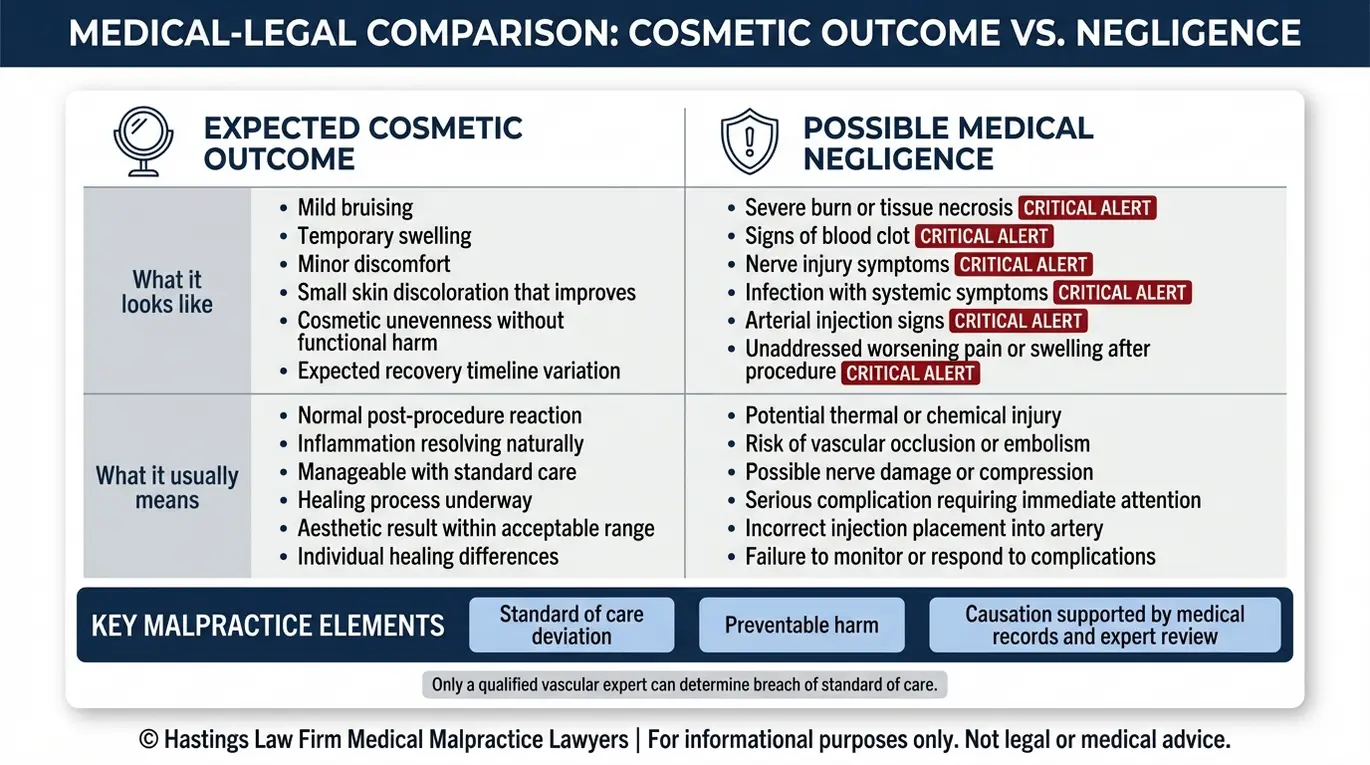
It is also essential to distinguish between dissatisfaction with a cosmetic outcome and actual negligence. Not every unsatisfactory result is malpractice. A malpractice lawyer for phlebologist errors evaluates whether the harm goes beyond an expected cosmetic issue and into a breach of the medical standard.
| Cosmetic Outcome Issue | Potential Medical Negligence |
|---|---|
| Minor bruising or skin discoloration after sclerotherapy | Thermal burns or tissue necrosis from improper laser settings |
| Residual spider veins requiring additional treatment sessions | Deep vein thrombosis caused by failure to perform pre-procedure ultrasound |
| Mild, temporary swelling at the treatment site | Permanent nerve damage from treating the wrong vein segment |
| Slight asymmetry in treated veins | Arterial injection causing tissue death or limb loss |
| Dissatisfaction with aesthetic appearance | Undiagnosed blood clot leading to pulmonary embolism |
If your complications look more like the right column than the left, the injury may have been preventable, and a legal review can help determine what went wrong.
Severe Injuries and Physiological Consequences of Vein Procedure Errors
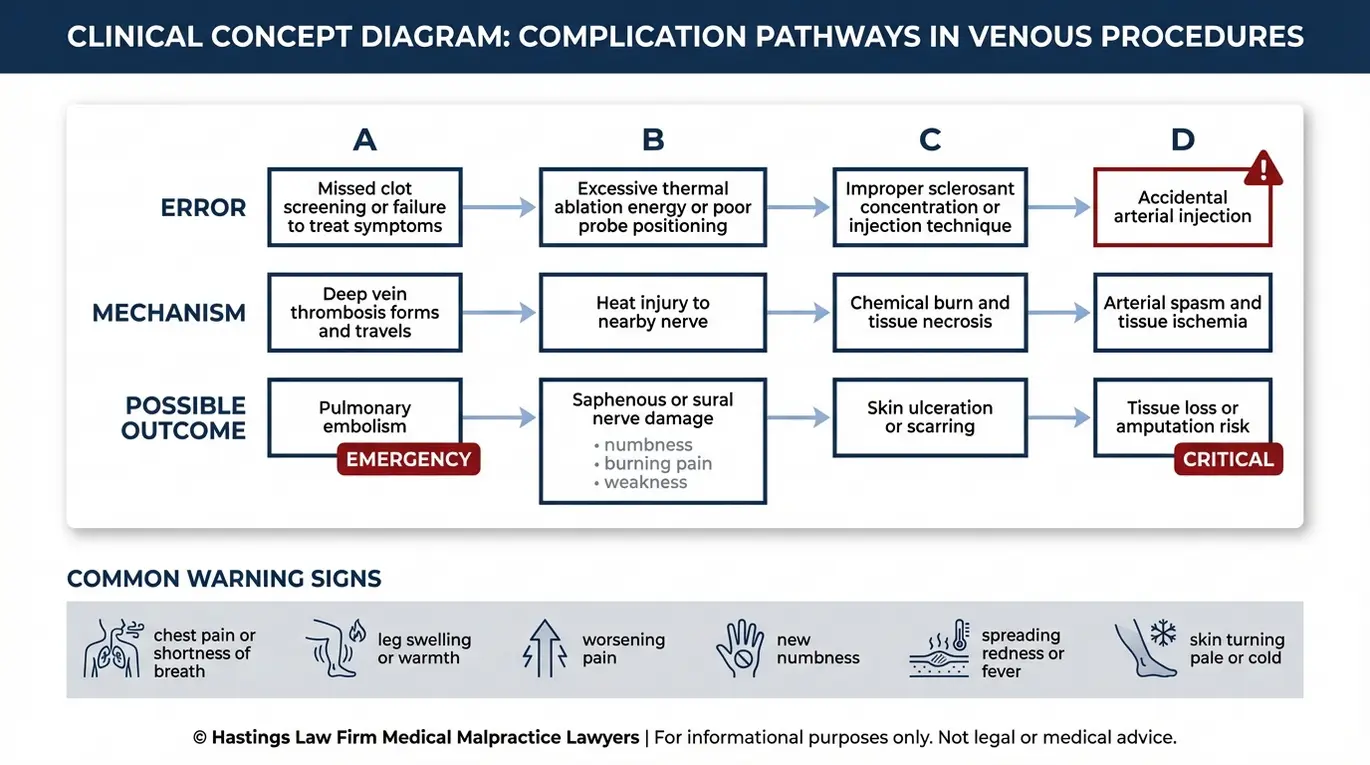
Errors during vein procedures can lead to catastrophic outcomes, including deep vein thrombosis, pulmonary embolism, irreversible nerve damage, and in severe cases, loss of limb or stroke. While many vein treatments are performed safely every day, the consequences of a mistake during these procedures can extend far beyond the treatment site. Finding a qualified Texas Phlebologist Malpractice Lawyer is essential when these injuries occur.
Deep Vein Thrombosis (DVT) and Pulmonary Embolism (PE)
Deep vein thrombosis (DVT) and its complication, pulmonary embolism, are significant risks in vascular care. DVT is the formation of a blood clot in a deep vein, which is one of the most dangerous complications of vein procedures. If a clot breaks free and travels to the lungs, it becomes a pulmonary embolism, a potentially fatal blockage of blood flow to the lung tissue. DVT can develop when a provider fails to assess clotting risk before a procedure, uses improper technique, or neglects post-procedure monitoring. In some cases, an undetected embolism can result in wrongful death.
Nerve Injury
Thermal ablation procedures involve applying heat energy to close damaged veins. When the thermal ablation is applied too close to sensory nerves, such as the saphenous or sural nerves, the result can be chronic burning pain, numbness, or loss of sensation in the leg. A literature review published in PubMed on endovenous laser ablation induced complications documented nerve injury as a recognized complication, often linked to improper catheter positioning or inadequate use of protective anesthesia techniques.
Chemical Burns and Tissue Necrosis
During sclerotherapy, a chemical solution called a sclerosant is injected into damaged veins to seal them shut. If the sclerosant is injected at the wrong concentration, in the wrong location, or into surrounding tissue, it can cause chemical burns and tissue death.
Arterial Injection
A serious surgical error occurs when a provider accidentally injects sclerosant or inserts a catheter into an artery instead of a vein. This can result in hemorrhage, widespread tissue loss, severe infection, and in extreme cases, amputation.
Watch for these warning signs of possible complications after a vein procedure:
- Sudden, severe swelling or pain in the treated leg
- Chest pain, shortness of breath, or rapid heartbeat (possible PE)
- Skin discoloration, blistering, or open wounds near the treatment area
- Persistent numbness, tingling, or burning along the leg
- Fever or signs of infection at the procedure site
- Kidney failure (resulting from severe infection or rhabdomyolysis)
Vascular Procedures and Common Sources of Liability
Endovenous laser ablation (EVLA) is a common treatment for varicose veins that uses laser energy delivered through a catheter to seal off malfunctioning veins. Errors can stem from incorrect laser power settings, poor catheter placement, or failure to use tumescent anesthesia, a diluted local anesthetic injected around the vein to protect surrounding tissue from heat. Without adequate imaging guidance, the wrong vein may be treated entirely.
Sclerotherapy involves injecting a sclerosant solution directly into problematic veins. Diagnostic errors, such as failing to perform proper imaging beforehand, can lead a provider to treat veins that do not need treatment or miss underlying conditions.
The decision between endovascular options and open surgery depends on the patient’s anatomy, the severity of disease, and the risks involved. When a provider chooses the wrong approach, makes a wrong incision, or proceeds without adequate diagnostic workup, the resulting harm may reflect a breach of the standard of care.
The Hastings Law Firm Difference
Results matter, but what truly sets us apart is how we achieve them. Every verdict, every settlement, and every Texas courtroom victory comes from one guiding promise: To treat each client’s fight for justice as if it were our own.
This balance of skill, experience, and empathy reflects our core philosophy that justice should not only compensate the injured, but also make healthcare safer nationwide.

Proving Negligence and Building a Strong Case Against Vein Clinics
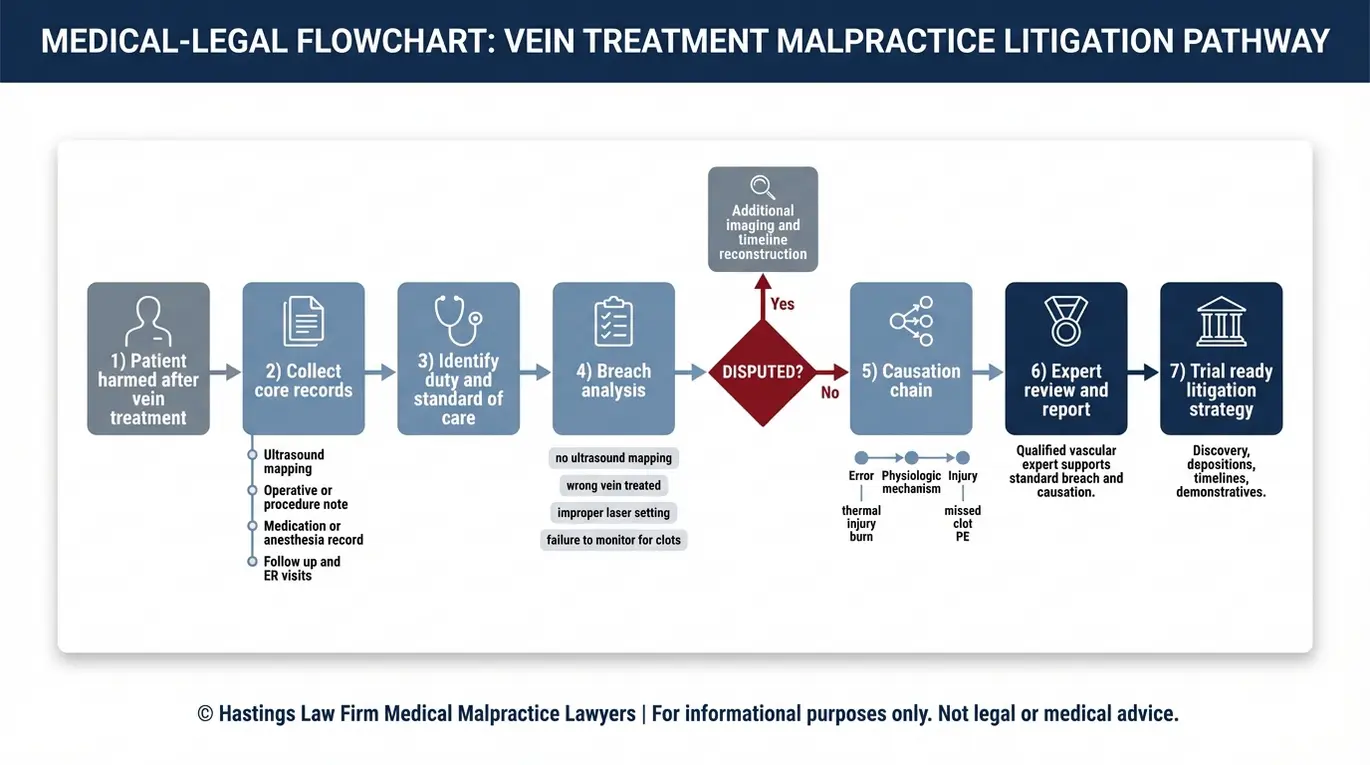
Proving a case requires clear evidence that the doctor breached the specific standard of care for vascular medicine and that this breach directly caused the injury, confirmed by expert testimony. Building a case with a qualified Texas phlebologist malpractice lawyer follows a structured legal framework, but the strength of any claim depends on the quality and completeness of the evidence gathered early.
Duty and Breach
The first step is establishing that a doctor-patient relationship existed and that the provider owed you a duty of care. From there, we examine whether a specific error occurred. Failure to perform a duplex ultrasound, a non-invasive imaging study that maps the veins and identifies reflux, before a procedure is one example of a potential breach. In many cases, the negligence involves a misdiagnosis of the patient’s condition or a delayed diagnosis of complications like DVT. When a provider misses these critical signs, they deny the patient the opportunity for timely intervention.
Causation
Identifying the error is only part of the equation. The legal standard also requires demonstrating that the specific error directly caused the injury. For example, if a provider used excessive laser energy and the patient developed a thermal burn at that treatment site, the causal connection may be clear. This element of failure to treat acts as a bridge between the error and the harm. Without proving that the doctor’s inaction directly worsened the outcome, the claim may fail. Our in-house nursing team and medical consultants review operative reports, imaging records, and clinical notes to trace that connection.
The Expert Report
Texas law requires that a qualified medical expert validate the claim early in the litigation process. This expert report must identify what the provider should have done, how they fell short, and how that failure caused harm. Your expert witness plays a pivotal role here, translating complex medical data into clear testimony that a jury can understand. Without this objective analysis, Texas courts will likely dismiss the suit before it reaches trial. At Hastings Law Firm, we work with a national network of vascular specialists who can provide objective, credible analysis.
Here is a checklist of evidence that strengthens a vein malpractice claim:
- Complete medical records, including intake forms, consent documents, and operative notes
- Pre-procedure and post-procedure ultrasound images
- Photographs of visible injuries such as burns, scarring, or discoloration
- Records of all follow-up visits and any corrective treatments
- Documentation of lost wages and missed work
- A timeline of symptoms, from the procedure date through current condition
- An independent expert review confirming the breach of care and its connection to the injury
Liability in Outpatient Vein Clinics versus Hospitals
Many vein procedures occur in private, outpatient clinics which may lack the emergency safety protocols of hospitals, creating unique liability issues regarding staffing, equipment, and emergency transfer plans. Private vein clinics often provide specialized care but may not have the full resources of a hospital. The setting where your procedure was performed can affect both the standard of care you were owed and the parties who may be held responsible.
Some outpatient vein clinics operate more like medical spas than surgical centers. An ambulatory surgery center (ASC), a licensed outpatient facility designed for same-day surgical procedures, must meet specific state and federal safety standards. But not every clinic advertising vein treatments meets those requirements. In some cases, procedures are performed in office settings without board-certified vascular surgeons on site, without adequate emergency equipment, or without trained staff to manage complications like hemorrhage or arterial injury.
The absence of crash carts or intubation equipment in a standard office room means that if a patient suffers a severe reaction to anesthesia or accidental puncture of major arteries, the staff may be unable to resuscitate them while waiting for an ambulance. This disparity in emergency safety protocols is a critical component of our investigation. We assess whether the facility was equipped to handle foreseeable emergencies or if they prioritized volume over patient safety protocols.
When a complication arises in a facility that lacks the ability to respond, delays in stabilization or transfer to a hospital can turn a treatable problem into a catastrophic one. Failures in emergency transfer protocols, inadequate circulation monitoring equipment, or insufficient staffing can all form the basis of a negligence claim against the facility itself, separate from any claim against the treating physician.
As a Texas phlebologist malpractice lawyer, our team examines not only the provider’s actions but also whether the clinic’s infrastructure, staffing, and safety planning met the required standards. Diagnostic errors and failures to treat are sometimes traceable not just to an individual doctor, but to a system that was never set up to catch problems in the first place.
Recoverable Damages for Victims of Vascular Malpractice
Patients harmed by vascular malpractice may be entitled to economic damages for medical bills and lost wages, as well as non-economic damages for pain, suffering, physical impairment, and disfigurement caused by the negligence. The full scope of compensation depends on how the injury has affected your life, both now and in the future.
Economic Damages
These cover the measurable financial losses tied to the malpractice. They are not capped under Texas law and can include:
- Future medical expenses, including costs of corrective surgeries and ongoing medical treatment
- Long-term care for permanent conditions such as nerve damage or chronic pain
- Lost income from missed work during recovery
- Reduced future earning capacity if the injury limits your ability to work
We also calculate economic damages which are often substantial in cases of vascular injury. This includes the projected costs of physical therapy, wound care supplies for chronic ulcers, and specialized medications needed for the rest of the patient’s life.
Non-Economic Damages
These address the personal toll of the injury, which is harder to quantify but no less real:
- Physical pain and suffering, both past and ongoing
- Disfigurement from scarring, burns, or tissue loss
- Mental anguish and emotional distress
- Loss of enjoyment of daily activities or hobbies
Calculating pain and suffering involves presenting a holistic view of how the injury has diminished your quality of life. Whether it is the inability to play with your children due to leg pain or the psychological trauma of a disfiguring scar, these losses deserve full recognition under the law. Texas law does place a cap on non-economic damages in medical malpractice cases, but the full extent of your economic losses can be recovered without limit.
Wrongful Death
In some severe cases, a pulmonary embolism or other fatal complication caused by negligence may give rise to a wrongful death claim. Surviving family members can seek compensation for funeral expenses, loss of financial support, loss of companionship, and the emotional suffering caused by their loss.
Every case is different. Our team works to identify every category of damage that applies to your situation so that nothing is overlooked.
Contact the Texas Surgical Error Attorneys at Hastings Law Firm Today for Help
If you or someone you love was injured during a vein procedure, you do not have to face the insurance companies and hospital legal teams alone. Hastings Law Firm represents patients and families exclusively in medical malpractice cases. Our legal team includes former defense attorneys who understand the tactics used against injured patients, and in-house medical professionals who can evaluate your records and identify what went wrong.
As a dedicated Texas phlebologist malpractice lawyer, we prepare every case as though it is going to trial, because that preparation is what drives fair results.
There are no upfront costs. We work on a contingency fee basis, which means you pay nothing unless we recover compensation for you. Call us or reach out online for a free, confidential case evaluation. We are here to listen, to answer your questions, and to help you understand your options.
Frequently Asked Questions About Phlebologist Malpractice in Texas


This content was researched and written by the Hastings Law Firm editorial team, which includes attorneys, medical professionals, and experienced researchers. Our writing is informed by internal knowledge and practical experience, and we cross-check critical details against authoritative sources cited throughout. Every piece undergoes human-led fact-checking and legal review. Because legal and medical information can change, if you spot an error, please contact us. Learn more about our content standards and review process on our editorial policy page.

Brady D. Williams is a nationally recognized medical malpractice attorney who has spent his career handling high-stakes litigation for injured patients and families across the country. Licensed in both Texas and California, Brady draws on experience from hundreds of resolved medical cases to break down complex legal and medical topics for the people who need that information most. His writing reflects the same attention to detail and commitment to clarity that he brings to every case he handles.
