


Texas Pharmacist Malpractice Lawyer
Pharmacy errors can cause sudden, serious harm when the wrong medication, dose, or instructions reach a patient. In Texas, pharmacist negligence may involve missed interaction warnings, ignored allergy history, labeling mistakes, or skipped counseling that leaves patients without critical safety information. These failures can lead to medical emergencies, lasting injury, and major financial and emotional strain for families. Understanding how dispensing mistakes happen and how responsibility is evaluated can help people make informed decisions after an adverse drug event. If you or a loved one were harmed or worse due to pharmacist malpractice in Texas, contact Hastings Law Firm for a free, confidential case review.

Last Updated: July 27, 2026
Trusted Legal Representation for Pharmacy Negligence in Texas
When you pick up a prescription, you trust that the medication in the bottle is exactly what your doctor ordered. If a pharmacy error caused you or someone in your family serious harm, that trust has been broken, and you may have questions about what went wrong and what you can do about it.
Pharmacy malpractice cases require a legal team that understands both the medicine and the law. At Hastings Law Firm, our attorneys, in-house nurse consultants, and medical staff work together to investigate medication errors, identify where the standard of care was violated, and hold the responsible parties accountable. As a firm that handles medical malpractice exclusively, we bring focused experience to every prescription error case we evaluate.
If you believe a pharmacist’s mistake caused a serious injury, a Texas pharmacist malpractice lawyer at our firm can review what happened and explain your options. Consultations are free and confidential, and we collect no fee unless we recover compensation for you.

Common Dispensing Errors Committed by Texas Pharmacists
Pharmacist malpractice occurs when a pharmacy professional deviates from the accepted standard of care, resulting in dispensing errors, meaning mistakes made when preparing or handing off a prescription, such as providing the wrong medication, an incorrect dosage, or failing to identify dangerous drug interactions. These are not minor clerical oversights. A single error at the pharmacy counter can trigger a medical emergency.
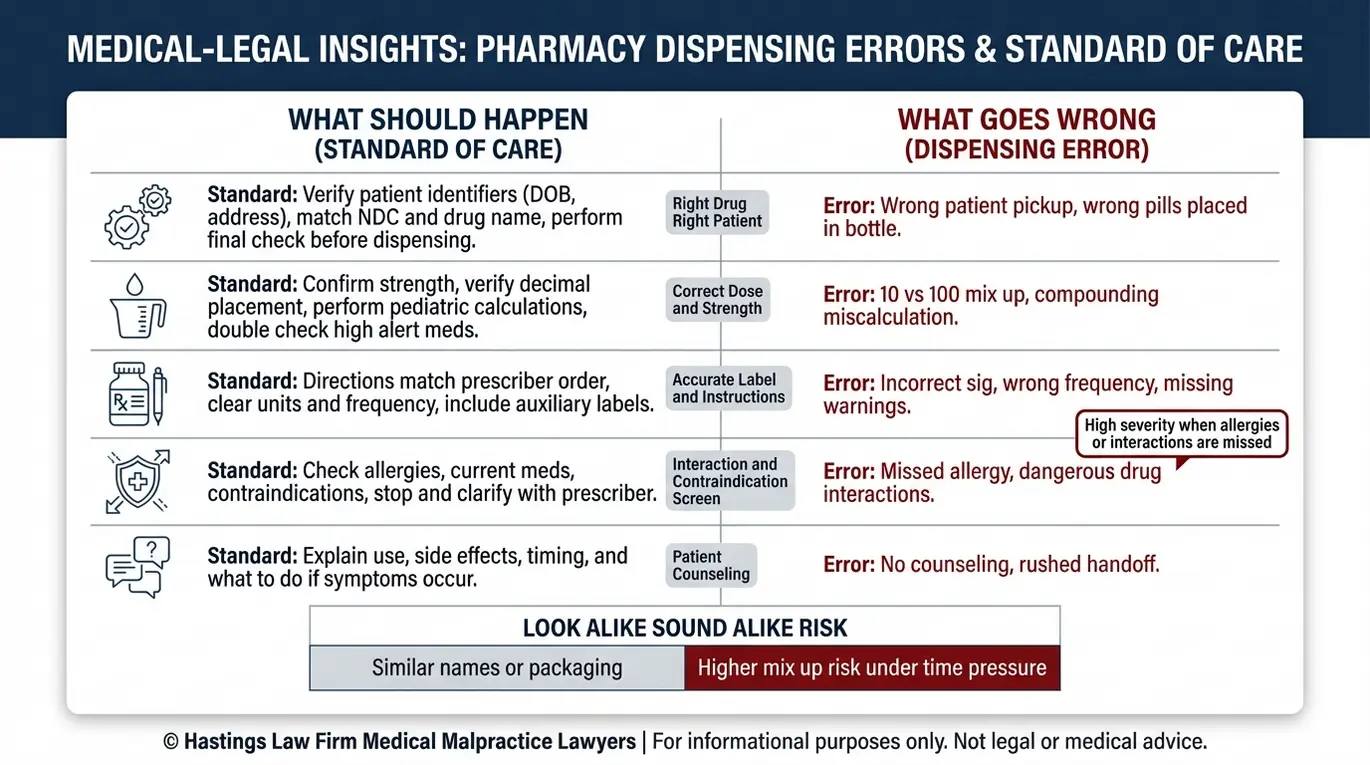
Wrong Drug or Wrong Patient. One of the most common pharmacy errors happens when a pharmacist hands a filled prescription to the wrong customer or places the wrong pills in the bottle. Distractions, staffing shortages, and similar patient names all contribute. The result is that a patient takes a medication never intended for them.
Dosage Errors. A misplaced decimal point can turn a safe dose into a dangerous one. Filling a prescription for 100mg instead of 10mg, or making a compounding mistake in a pediatric formulation, can cause overdose or toxic reactions in children and adults alike.
Labeling Failures. Sometimes the correct drug is inside the bottle, but the label carries the wrong instructions. This is known as mislabeling, where the printed directions on the container do not match the prescriber’s intent, for example, directing a patient to take a medication three times daily instead of once. The patient follows the label, trusting it to be accurate, and suffers a preventable injury.
Failure to Counsel. Texas pharmacists have a duty to counsel patients about side effects, proper administration, and potential risks. Skipping this step, especially for high-risk medications, removes the patient’s ability to make informed decisions about their own care.
If you suspect a pharmacy error, you can file a report with the Texas State Board of Pharmacy. You should also speak with a Texas pharmacist malpractice lawyer. Our team can evaluate whether the error rises to the level of negligence.
The Role of Sound-Alike Drug Names in Systemic Errors
A significant source of prescription errors involves look-alike/sound-alike medications (LASA), which are drugs whose names are so similar in spelling or pronunciation that they are frequently confused during dispensing. When pharmacists work under time pressure or in understaffed environments, the risk of a LASA mix-up increases sharply. An adverse drug event (ADE), any harm caused to a patient by a medication, can follow.
Consider how easily these names could be swapped:
Look-Alike / Sound-Alike Drug Risks
| Intended Drug | Confused With | Risk if Dispensed Incorrectly |
|---|---|---|
| Adderall (ADHD stimulant) | Inderal (blood pressure/heart rate) | Dangerous cardiovascular changes |
| Celexa (antidepressant) | Celebrex (anti-inflammatory) | Untreated depression or GI complications |
| Hydroxyzine (antihistamine) | Hydralazine (blood pressure) | Severe hypotension or allergic reaction |
| Metformin (diabetes) | Metronidazole (antibiotic) | Uncontrolled blood sugar or adverse drug reaction |
These are not hypothetical scenarios. LASA errors are among the most commonly reported pharmacy mistakes nationwide. A Texas pharmacist malpractice lawyer can investigate whether safety protocols designed to prevent these mix-ups were followed or ignored.
How Pharmacist Negligence Leads to Severe Patient Injury
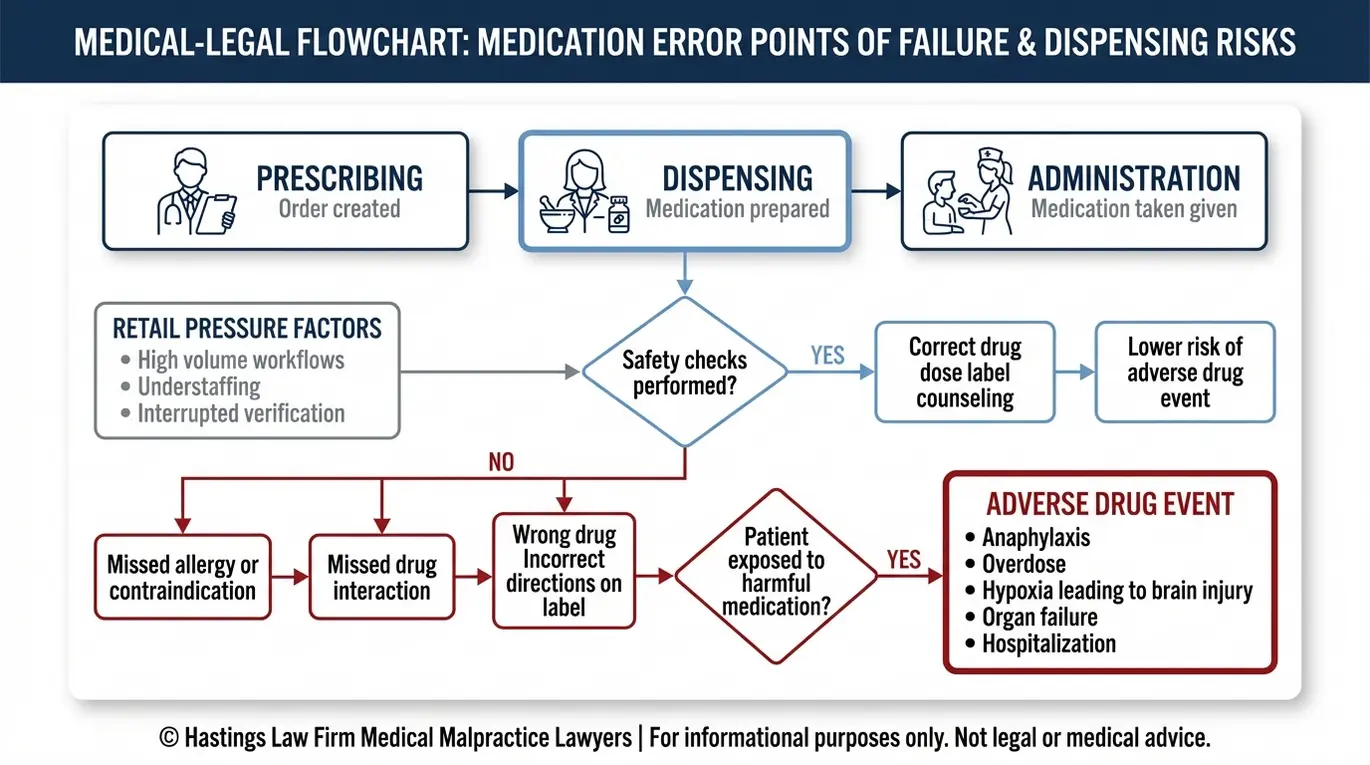
Negligence in the pharmacy supply chain can occur at the prescribing, dispensing, or administration stage. It is often driven by understaffing, lack of supervision, or failure to review a patient’s medication profile for contraindications. This involves checking for specific reasons a person should not receive a particular treatment or medication. The consequences of these failures range from treatable reactions to permanent, life-altering injuries.
Failure to Check Patient History. Every pharmacist is expected to review a patient’s medication profile before dispensing. If a patient has documented drug allergies, such as to penicillin or sulfa drugs, and that allergy is ignored, the pharmacist has failed a basic safety check. This type of pharmaceutical negligence can trigger anaphylaxis or other severe allergic reactions.
Dangerous Drug Interactions. A drug-drug interaction occurs when one medication reacts harmfully with another the patient is already taking. Dispensing a new prescription without screening for these interactions, particularly with blood thinners, cardiac drugs, or immunosuppressants, can lead to internal bleeding, organ failure, or cardiac events. Research published through the Institute for Safe Medication Practices and the American Association of Poison Control Centers highlights the scale of preventable medication injuries in the United States.
High-Volume Retail Pressure. Many pharmacy errors occur in fast-paced retail settings where pharmacists are expected to fill hundreds of prescriptions per shift. When speed takes priority over patient safety, human error becomes more likely. This environment can contribute to skipped verification steps, incomplete drug utilization reviews, and missed warning flags.
The injuries that follow these errors can be severe:
- Anaphylactic shock from an undisclosed or ignored allergy
- Permanent brain injury caused by hypoxia after an overdose or adverse reaction
- Organ failure from prolonged exposure to a contraindicated medication, meaning a drug that should not have been given based on the patient’s existing conditions
- Fatal overdose from an incorrect dosage or dangerous interaction
- Prolonged hospitalization and secondary infections
If you experienced a serious injury after a pharmacy mistake, a medication error attorney can help. We can determine where the failure occurred and who should be held responsible.
Three Critical Points of Failure in the Medication Supply Chain
Medication errors can happen at three distinct stages. The prescribing stage involves the physician selecting and ordering the drug. The dispensing stage is where the pharmacist fills, labels, and provides the medication. The administration stage covers how the drug is given to the patient, often by a nurse or caregiver.
Each stage carries its own standard of care. A pharmacist’s obligation includes performing a drug utilization review (DUR), the process of checking a prescription against a patient’s full medication profile for safety, as well as accurate compounding, which is the custom preparation of a medication when a commercial version is not available. This page focuses specifically on failures at the dispensing stage, where the pharmacist’s independent professional judgment is the last safeguard before a drug reaches the patient.
The Hastings Law Firm Difference
Results matter, but what truly sets us apart is how we achieve them. Every verdict, every settlement, and every Texas courtroom victory comes from one guiding promise: To treat each client’s fight for justice as if it were our own.
This balance of skill, experience, and empathy reflects our core philosophy that justice should not only compensate the injured, but also make health care safer nationwide.

Establishing Liability and Proving the Standard of Care
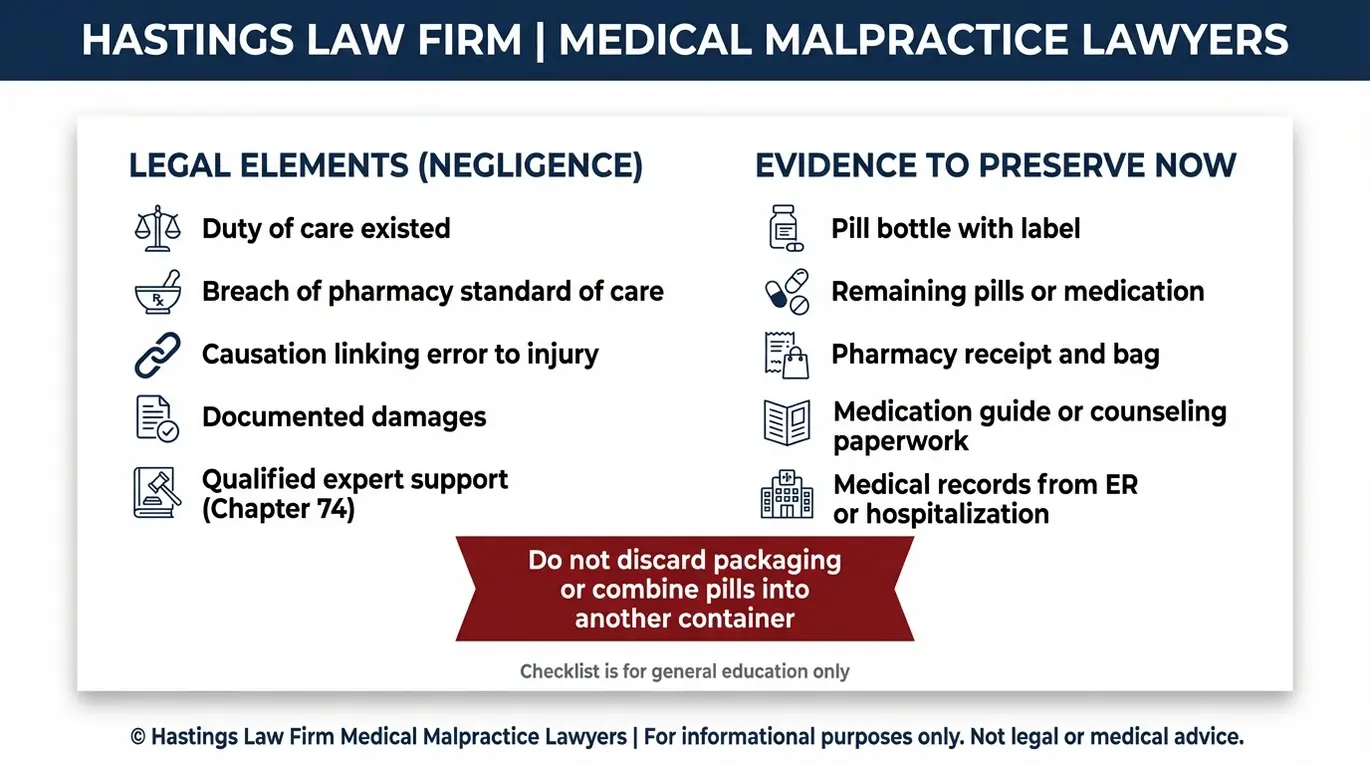
To succeed in a malpractice claim against a pharmacist, the injured patient must prove that a duty of care existed, the pharmacist breached that duty by failing to act as a reasonably prudent professional would, and that breach directly caused the patient’s injury. This includes proving the standard of care, which is the professional level of skill and care a reasonably prudent professional must provide. Texas law sets specific procedural requirements that make experienced legal representation essential.
Duty. A pharmacist owes every patient a legal duty of care. They are often described as the last line of defense in the medication process, responsible for verifying that a prescription is accurate, appropriate, and safe before it leaves the counter.
Breach. A breach occurs when the pharmacist fails to meet the standard of care. This might involve ignoring an automated interaction warning, bypassing a required verification step, or dispensing without reviewing the patient’s allergy history. Our team examines pharmacy records, software logs, and internal protocols to identify exactly where the breakdown occurred.
Causation. It is not enough to show that an error was made. The error must be directly linked to a new injury or worsening condition, separate from the patient’s underlying illness. Our in-house medical staff and outside experts work together to establish this connection through detailed clinical analysis.
Expert Testimony. Under Texas Civil Practice and Remedies Code Chapter 74, plaintiffs must serve a qualified expert report within 120 days of the defendant’s original answer being filed. This report, typically authored by a pharmacist or physician, must identify the standard of care, explain how it was breached, and connect that breach to the harm suffered. A Texas pharmacist malpractice lawyer at our pharmacy error law firm handles this requirement from the start, working with credentialed experts to build a case that meets the statutory threshold.
Elements of Negligence
- ✅ Duty: Confirm the pharmacist owed a professional duty of care to the patient
- ✅ Breach: Identify specific actions or omissions that fell below the accepted standard
- ✅ Causation: Link the pharmacy error directly to the injury or adverse outcome
- ✅ Damages: Document the physical, financial, and emotional harm that resulted
- ✅ Expert Report: Secure a qualified expert to author and serve the report within the statutory deadline
Steps to Preserve Evidence After a Pharmacy Mistake
If you suspect a pharmacy error, your first priority is to preserve physical evidence. Keep the pill bottle with its label intact, the pharmacy bag, the receipt, and any remaining pills. Do not throw anything away. Take photos of the label and the medication itself.
Request a copy of your pharmacy records from the pharmacy and ask your prescribing doctor’s office for a copy of the original prescription. These documents allow your legal team to compare what was ordered against what was dispensed. Evidence preservation strengthens the foundation of any potential claim.
Compensation for Victims of Pharmacy Malpractice
Patients harmed by pharmacy errors may recover economic damages for medical bills and lost wages, as well as non-economic damages for pain, suffering, and physical impairment, subject to Texas statutory caps on certain categories of recovery.
Medical Costs. A pharmacy error can trigger emergency room visits, hospitalization, surgeries, and long-term treatment to address the injury. Compensation may cover the full scope of past and future medical costs, including rehabilitation, specialist care, and prescription costs related to treating the harm caused by the original error.
Lost Income. When a medication injury forces a patient out of work, they may recover wages lost during recovery. In cases involving permanent impairment, a claim can also include loss of future earning capacity, accounting for the income the patient would have earned had the injury not occurred.
Pain and Suffering. Texas law recognizes that the physical pain and mental anguish caused by a preventable pharmacy mistake deserve compensation. This includes the emotional distress, anxiety, and diminished quality of life that often follow a serious adverse drug event. A prescription error lawyer can help document the full impact on a patient’s daily life and wellbeing.
Wrongful Death. When a fatal dosage error or dangerous drug interaction causes a patient’s death, surviving family members may bring a wrongful death claim. These damages can include funeral and burial expenses, loss of companionship, loss of financial support, and the mental anguish experienced by the family. A Texas pharmacist malpractice lawyer can guide families through this process with the care and thoroughness these cases demand.
Contact the Texas Healthcare Malpractice Attorneys at Hastings Law Firm Today for Help
Pharmacy errors are preventable. When a pharmacist’s mistake causes serious harm, it is not simply an accident; it is a failure to meet the professional standard of care that every patient deserves. You have the right to find out what happened and to seek accountability.
Hastings Law Firm focuses exclusively on medical malpractice, including pharmacy negligence cases across Texas. Our legal team includes former defense attorneys who understand how the other side builds its case, and in-house medical professionals who can analyze your records from day one. Our founder, Tommy Hastings, is board-certified in Personal Injury Trial Law by the Texas Board of Legal Specialization.
We work on a contingency fee basis, so you pay no attorney fees or costs unless we recover compensation for you. If you or a loved one was injured by a medication error, contact a Texas pharmacist negligence attorney at our offices in The Woodlands, Houston, Dallas, or Austin. We are ready to listen, investigate, and explain your options in a free, confidential consultation.
Frequently Asked Questions About Pharmacist Malpractice in Texas


This content was researched and written by the Hastings Law Firm editorial team, which includes attorneys, medical professionals, and experienced researchers. Our writing is informed by internal knowledge and practical experience, and we cross-check critical details against authoritative sources cited throughout. Every piece undergoes human-led fact-checking and legal review. Because legal and medical information can change, if you spot an error, please contact us. Learn more about our content standards and review process on our editorial policy page.

Gabe Sassin has focused exclusively on medical malpractice law since 2007. After spending more than a decade as a malpractice defense attorney, he knows exactly how the other side works. He has seen firsthand how healthcare providers, insurers, corporate defendants, and their legal teams think, prepare, and build their defense against claims. That knowledge works for the people who need it most today, injured patients and their families. His unique experience shapes everything he writes, giving readers a look at how these cases actually work from someone who has handled them from both sides.
