


Texas Persistent Pulmonary Hypertension Lawyer
Written by: Hastings Law Firm | Reviewed by: Tommy Hastings | Updated: July 27, 2026
Persistent pulmonary hypertension of the newborn is a life threatening condition that can cause severe oxygen deprivation and organ damage soon after birth. Signs such as cyanosis and respiratory distress may appear quickly and require urgent care in a neonatal intensive care unit. The risk of permanent brain injury can increase when diagnosis or treatment is delayed. Some cases are linked to preventable medical errors, including missed fetal distress, delayed intervention during delivery, or medication related risks during pregnancy. If you or a loved one were harmed or worse due to persistent pulmonary hypertension of the newborn in Texas, contact Hastings Law Firm for a free, confidential case review.
Securing Justice for Infants Impacted by PPHN and Medical Negligence
What You Should Know About Infant Pulmonary Hypertension Misdiagnosis Claims in Texas:
- Lifelong developmental and neurological harm can follow severe PPHN when oxygen deprivation leads to brain injury.
- Options for financial recovery can depend on whether PPHN is tied to a preventable medical error rather than an unavoidable complication.
- A missed or delayed response can be central when signs of fetal distress or newborn respiratory compromise were not acted on with urgency.
- Liability exposure can extend beyond delivery care when pregnancy medications were prescribed without adequate risk counseling or monitoring.
- Recovery can include both economic losses and non economic harms, reflecting long term medical needs and quality of life impacts.
- Limits on available legal options can apply in Texas when filing deadlines are missed for medical malpractice and related parental claims.
- Medical records and the clinical timeline can be decisive when evaluating monitoring, medication decisions, escalation of care, and treatment delays.

A Healthcare Focused Law Firm
When a newborn is rushed to the neonatal intensive care unit (NICU), a specialized unit for critically ill infants, and diagnosed with a serious condition like persistent pulmonary hypertension, the fear and confusion can be overwhelming. You may have watched your baby struggle with cyanosis, a bluish discoloration of the skin caused by low oxygen levels, and wondered whether something could have been done differently.
If your child developed PPHN and you believe medical negligence played a role, you are not wrong to ask questions. A Texas Persistent Pulmonary Hypertension Lawyer can help you understand what happened, why it happened, and what legal options may be available to your family.
We are here to listen. Founded by Tommy Hastings, a board-certified trial attorney, Hastings Law Firm focuses exclusively on medical malpractice litigation to help families find the truth. Contact us for a free, confidential case evaluation to learn whether your child’s condition may have been preventable.
Understanding PPHN and the Physiology of Birth Injuries
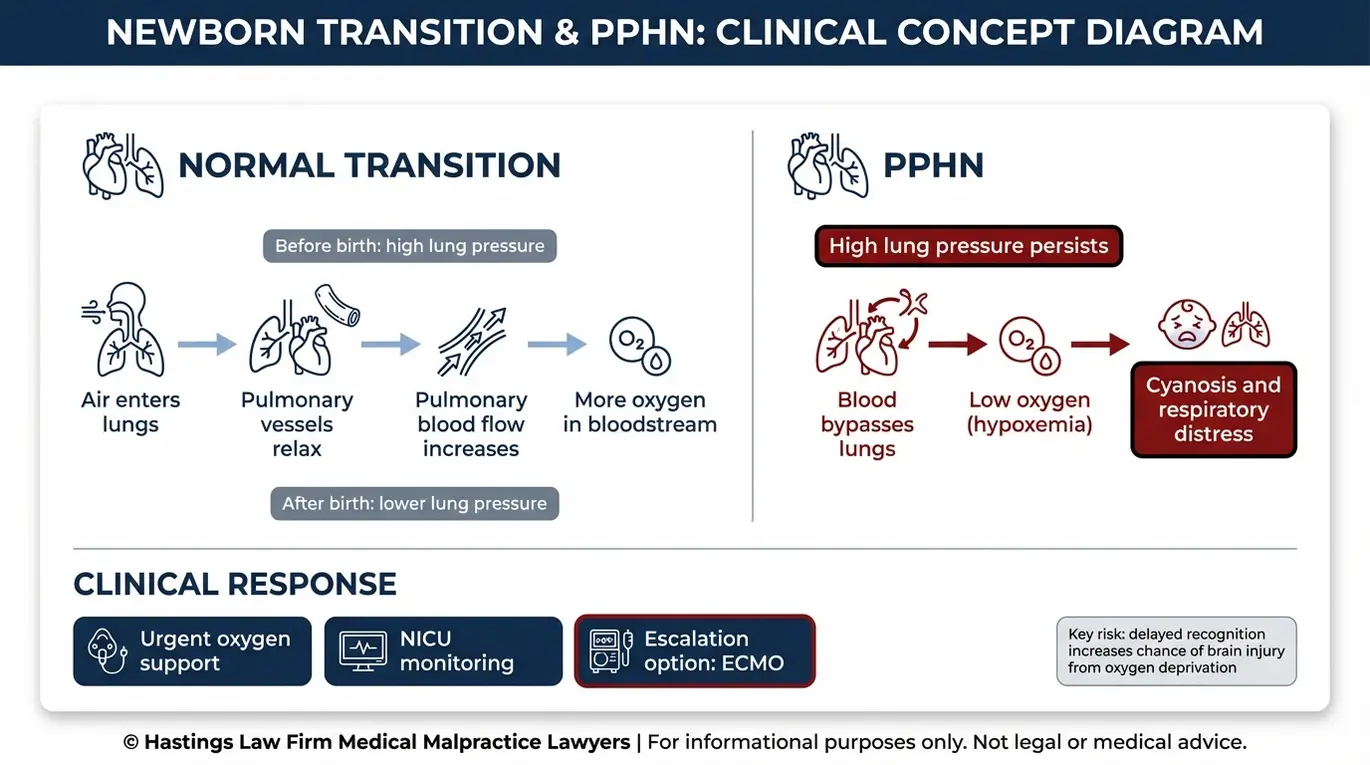
Persistent Pulmonary Hypertension of the Newborn (PPHN) is a life-threatening condition where a newborn’s circulatory system fails to adapt to breathing outside the womb, causing dangerously high blood pressure in the lungs and severe oxygen deprivation, a state known as hypoxemia (critically low oxygen levels in the blood). This condition prevents blood from reaching the lungs to pick up oxygen, which can quickly lead to organ damage.
During a healthy birth, the baby’s fetal circulation transitions so that blood flows to the lungs for oxygen. With PPHN, that transition does not happen properly. Blood bypasses the lungs and continues circulating without adequate oxygen, starving the brain and organs. Brain damage in newborns can lead to lifelong cognitive or motor challenges.
The signs often appear within hours of birth:
- Rapid or labored breathing and low oxygen saturation readings
- Cyanosis, visible as a bluish tint to the skin, lips, or nail beds
- Low blood pressure and signs of cardiovascular stress
- Need for emergency intervention in the neonatal intensive care unit (NICU), including mechanical ventilation or ECMO (extracorporeal membrane oxygenation), a machine that oxygenates the blood outside the body when the lungs cannot, as described in the ECMO PICU Handbook from Stead Family Children’s Hospital
Timely diagnosis is critical. The longer PPHN goes unrecognized or untreated, the greater the risk of permanent brain damage. An experienced PPHN lawyer can help determine whether delays in recognizing or treating these symptoms fell below the expected medical standard.
Common Causes of PPHN: Malpractice vs. Complication
PPHN can result from underlying conditions like meconium aspiration or diaphragmatic hernia, but it is often triggered or worsened by medical negligence, such as a failure to manage maternal infections or ignoring signs of fetal distress. Identifying a preventable medical error is the first step in determining if you have a legal claim for your child’s injuries.
Understanding the difference between an unavoidable complication and a preventable medical error is central to any birth injury claim. Some risk factors are clinical conditions that require proper management. Others point directly to gaps in care.
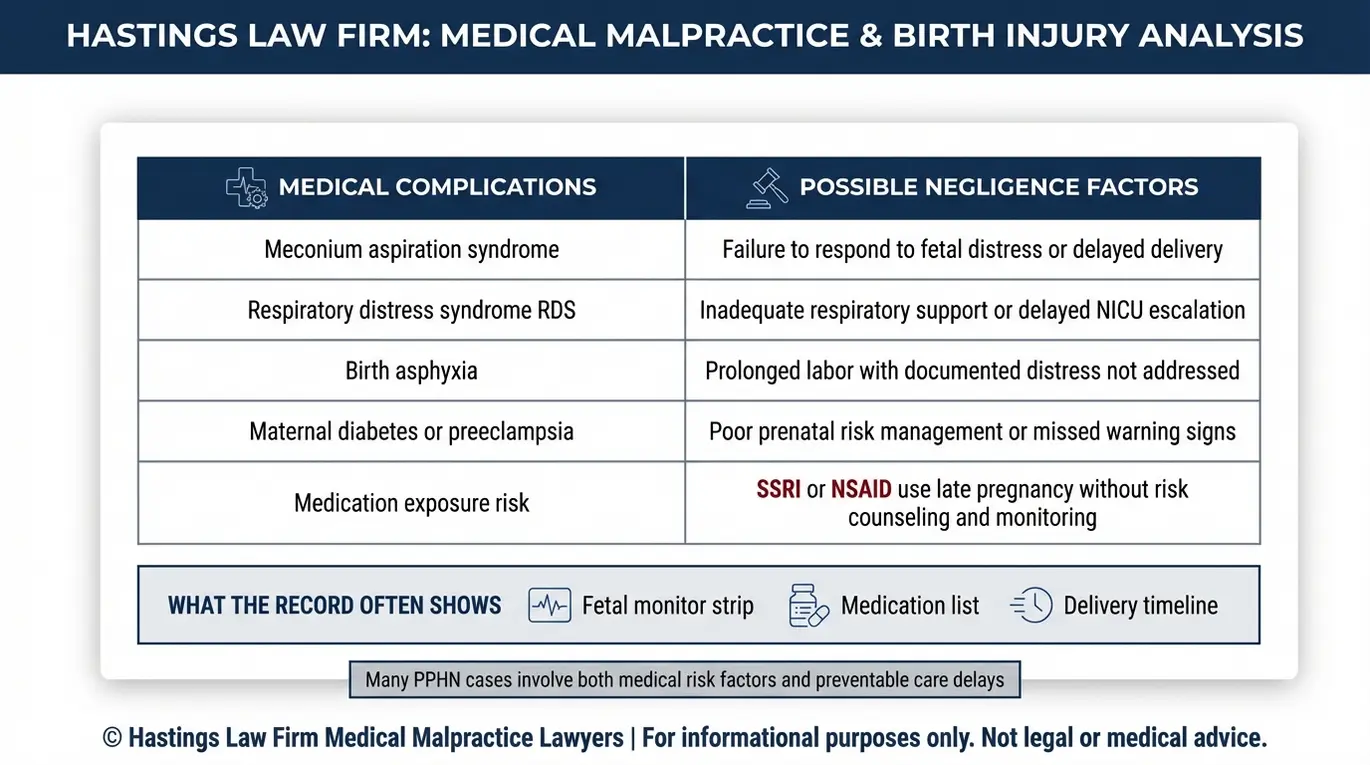
| Category | Risk Factor | Potential Negligence |
|---|---|---|
| Maternal Health | Maternal diabetes, preeclampsia, untreated infections | Failure by the OB/GYN to monitor or manage known conditions |
| Birth Trauma | Birth asphyxia, oxygen deprivation during labor | Delayed intervention when fetal distress was present |
| Respiratory | Meconium aspiration syndrome (MAS), a condition where the baby inhales a mix of meconium and amniotic fluid | Failure to clear airways or respond to warning signs during delivery |
| Respiratory | Respiratory distress syndrome (RDS), caused by underdeveloped lungs | Inadequate assessment of lung maturity before delivery |
| Pharmaceutical | SSRI antidepressants, NSAIDs (non-steroidal anti-inflammatory drugs) used late in pregnancy | Prescribing without adequate risk counseling or monitoring |
A Texas birth injury lawyer for PPHN will examine your medical records to determine which category your child’s case falls into and whether a provider’s actions, or inactions, crossed the line from complication into negligence.
The Link Between SSRI Antidepressants and PPHN
Selective serotonin reuptake inhibitors (SSRIs), a class of antidepressants that includes medications like Paxil and Zoloft, have been associated with an increased risk of PPHN when used during the later stages of pregnancy. Selective serotonin reuptake inhibitors (SSRIs) are medications often used for mental health but require careful management during pregnancy. An updated meta-analysis published on PubMed confirmed a statistically significant association between SSRI exposure and PPHN.
Non-steroidal anti-inflammatory drugs (NSAIDs), common pain relievers like ibuprofen, have also been linked to PPHN risk when taken during the third trimester. If your prescribing physician failed to warn you about these risks, including relevant FDA warnings, or failed to adjust your treatment plan, that failure may support a medical product liability or negligence claim.
The Hastings Law Firm Difference
Results matter, but what truly sets us apart is how we achieve them. Every verdict, every settlement, and every Texas courtroom victory comes from one guiding promise: To treat each client’s fight for justice as if it were our own.
This balance of skill, experience, and empathy reflects our core philosophy that justice should not only compensate the injured, but also make healthcare safer nationwide.

Proving Negligence in Texas PPHN Cases
To succeed in a PPHN malpractice case in Texas, you must prove that the medical provider deviated from the accepted standard of care—such as failing to perform a timely C-section or mismanaging medication—and that this deviation directly caused or worsened your child’s condition. The accepted standard of care refers to the level of care a competent medical professional would provide under similar circumstances.
Texas Civil Practice and Remedies Code Chapter 74 governs medical malpractice claims. This law requires an expert report early in the case to support the allegations. Our team works with qualified medical experts who can review the records and provide expert testimony on whether the provider met the standard.
Here is what we examine when building a PPHN negligence case:
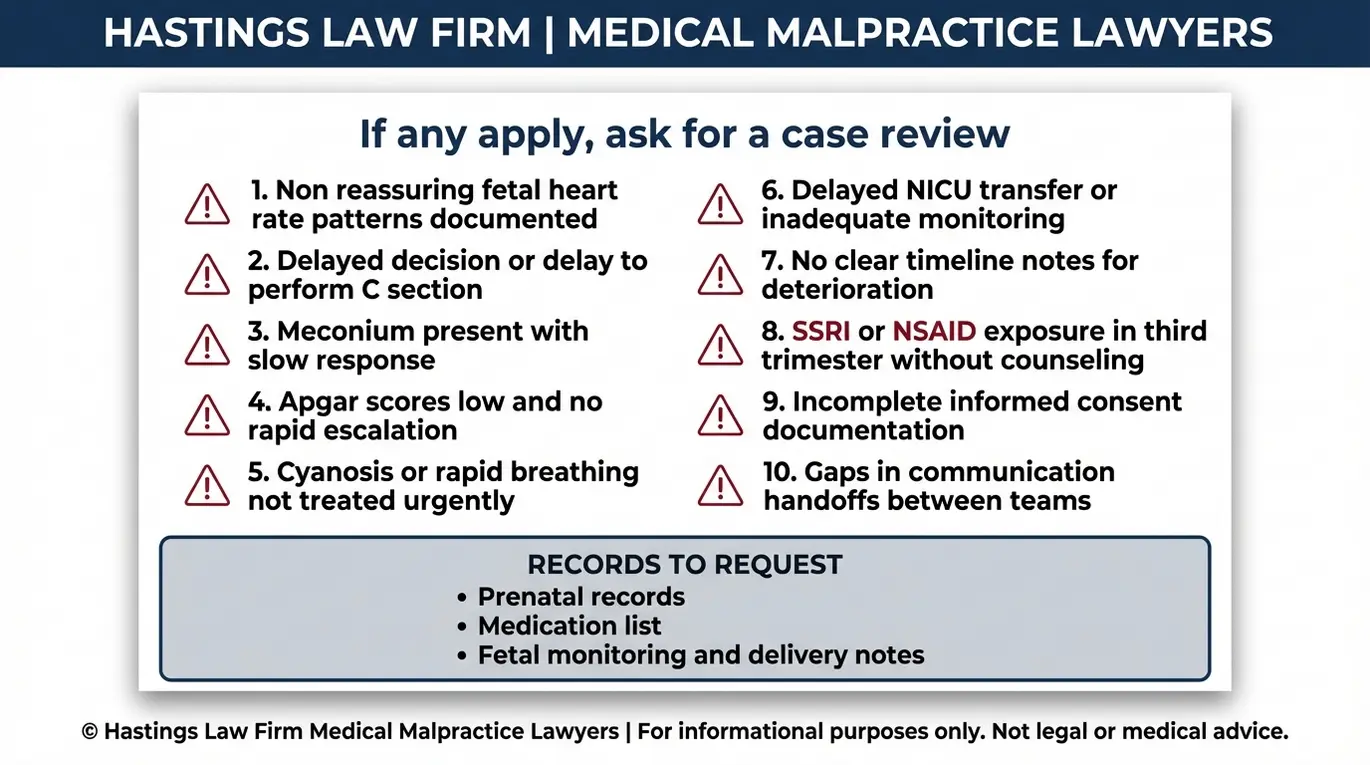
- Failure to monitor: Were signs of fetal distress, a condition indicating the baby is not receiving enough oxygen, or abnormal patterns detected through electronic fetal monitoring (EFM), identified and acted on in time? EFM is a technology that continuously tracks the baby’s heart rate during labor.
- Medication errors: Was the mother prescribed SSRIs or NSAIDs during the third trimester without proper risk counseling or follow-up monitoring?
- Delayed treatment: Once the infant showed signs of respiratory distress or cyanosis after birth, did the medical team respond with appropriate urgency?
- Failure to escalate: Were neonatology consults or NICU transfers initiated when the baby’s condition worsened?
As a Texas Persistent Pulmonary Hypertension Lawyer, Hastings Law Firm reconstructs the clinical timeline from labor through delivery and postnatal care to identify where breakdowns occurred. Our in-house nursing staff and former defense attorneys know exactly what to look for in the medical records.
Recoverable Damages for Long-Term PPHN Complications
Compensation in PPHN cases covers both economic losses, such as past and future medical bills for NICU stays and therapies, and non-economic damages like pain, suffering, and physical impairment. Pursuing economic losses helps families secure the resources needed to cover the lifelong financial impact of a medical error.
Children who survive severe PPHN may face developmental delays, cognitive problems, neurological problems, and in some cases, conditions like cerebral palsy due to prolonged oxygen deprivation. Non-economic damages represent the human cost of an injury, acknowledging the long-term impact on the child’s quality of life.
A PPHN malpractice attorney will work with experts to create a life care plan to calculate the full scope of your child’s future needs. A life care plan is a document that outlines every medical and non-medical resource the patient will require throughout their life.
Recoverable damages may include:
- Past and current medical costs: NICU care, ECMO treatment, surgeries, and hospitalizations
- Future medical needs: Ongoing therapy for developmental delays, specialty appointments, adaptive equipment, and long-term neurological care
- Educational support: Special education services, tutoring, and behavioral therapy
- Non-economic damages: The child’s pain and suffering, physical impairment, and loss of enjoyment of life
- Parental claims: Mental anguish and loss of companionship experienced by the family
Contact the Texas Birth Injury Attorneys at Hastings Law Firm Today for Help
PPHN can change the course of a child’s life and place enormous emotional and financial pressure on a family. Legal support for birth injuries focuses on securing the resources needed for lifelong care and therapeutic support.
Our team of attorneys, nurse consultants, and medical experts will review your records, identify what went wrong, and build a case designed to protect your child’s future. We operate on a contingency fee basis, which means you pay no attorney fees or costs unless we recover compensation for your family.
You do not have to face this alone. Contact a Texas Persistent Pulmonary Hypertension Lawyer at Hastings Law Firm today for a free, confidential case evaluation. Let us help you take the first step toward understanding what happened and holding the responsible parties accountable.
Frequently Asked Questions About Persistent Pulmonary Hypertension in Texas


This content was researched and written by the Hastings Law Firm editorial team, which includes attorneys, medical professionals, and experienced researchers. Our writing is informed by internal knowledge and practical experience, and we cross-check critical details against authoritative sources cited throughout. Every piece undergoes human-led fact-checking and legal review. Because legal and medical information can change, if you spot an error, please contact us. Learn more about our content standards and review process on our editorial policy page.

Tommy Hastings, founder of Hastings Law Firm, is a board-certified personal injury trial lawyer dedicated exclusively to healthcare injury cases. Since 2001, he has represented injured patients and families in litigation against major hospital systems, pharmaceutical companies, and negligent healthcare providers nationwide. He has handled numerous high-profile cases that have drawn national media attention and resulted in multi-million dollar recoveries. He draws on that experience in his writing, helping readers understand how these cases work and what options may be available to them.
