


Texas Periventricular Leukomalacia Lawyer
Written by: Hastings Law Firm | Reviewed by: Tommy Hastings | Updated: July 27, 2026
Periventricular leukomalacia, also called PVL, is a brain injury that primarily affects premature infants and can lead to lasting challenges with movement and development. PVL involves damage to white matter near the brain ventricles, and the severity of that damage often relates to long term disability. Some risk factors are unavoidable, but preventable lapses in monitoring, infection treatment, or oxygen management can cause or worsen harm. If you or a loved one were harmed or worse due to preventable periventricular leukomalacia in Texas, contact Hastings Law Firm for a free, confidential case review.

Top-Rated Legal Representation for Preventable Infant Brain Injuries
What You Should Know About Infant White Matter Brain Injury Claims in Texas:
- Long term disability can follow PVL because white matter damage can disrupt signals between the brain and the body.
- Preventable harm can be a central dispute in PVL cases because some risk factors are natural while others relate to monitoring, infection treatment, or oxygen management.
- Delayed diagnosis can worsen long term outcomes because it can delay access to early intervention therapies.
- Lifelong financial strain can result because PVL can require ongoing rehabilitation, specialized equipment, and support services.
- Recovery for non economic harm can be limited in Texas because state law caps non economic damages in medical malpractice cases.
- Options can narrow over time because Texas imposes strict time limits for filing medical malpractice claims involving birth injuries.
- Key records can be decisive because fetal monitoring strips, NICU records, and imaging studies can show what care was provided and when.
- Disputes about severity can shape projected needs because PVL grading and imaging findings can correlate with the extent of long term disability.

A Healthcare Focused Law Firm
Learning that your child has been diagnosed with periventricular leukomalacia, or PVL, can be overwhelming. You may be searching for answers about what happened during labor, delivery, or in the neonatal intensive care unit, and whether different decisions could have changed the outcome. Those questions deserve honest, informed answers from people who understand both the medicine and the law.
At Hastings Law Firm, we focus exclusively on medical malpractice cases, including birth injuries involving brain damage in premature infants. Our team of trial attorneys, nurse consultants, and Board Certified Patient Advocates operates as a dedicated Texas Periventricular Leukomalacia Lawyer. We review medical records to determine whether negligence contributed to the injury and explain your legal options.
If you believe your child’s PVL may have been preventable, we are here to listen. Contact us for a free, confidential case evaluation.
What Is Periventricular Leukomalacia (PVL)?
Periventricular leukomalacia (PVL) is a type of brain injury primarily affecting premature infants, characterized by the death of white matter near the brain’s ventricles, often resulting in motor control issues and developmental delays. PVL refers to damage in the brain’s white matter tissue.
White matter acts as the communication highway of the brain. When it is damaged, signals between the brain and the body are disrupted. This can affect motor control, coordination, and cognitive development. Because white matter is especially vulnerable in premature infants whose brains are still developing, PVL is most commonly diagnosed in babies born before 32 weeks of gestation.
The severity of the white matter damage often correlates with the extent of future disability. You should understand the distinction between PVL itself and its consequences. PVL is the underlying brain damage. The conditions that often follow, such as cerebral palsy, developmental delays, or difficulties with movement and learning, are the symptoms of that damage.
Research published by Dove Press on neonatal periventricular leukomalacia shows that PVL remains one of the leading causes of neurological disability in premature infants.
If your child has been diagnosed with PVL and you suspect medical error may have been involved, speaking with a Texas PVL lawyer or birth injury attorney in Texas can help you understand what happened and whether a legal claim exists.
Causes of Periventricular Leukomalacia and When Negligence May Play a Role
While some cases of PVL occur naturally in premature infants, medical negligence such as failure to treat infections, improper monitoring of fetal distress, or mismanagement of oxygen levels can directly cause or worsen the injury. Medical providers must monitor oxygen levels to prevent brain damage.
Premature infants are particularly vulnerable because their developing brains have limited ability to regulate blood flow. When oxygen supply to the brain drops, a condition called hypoxia (oxygen deprivation), or when blood flow is restricted through ischemia (reduced blood supply to tissue), the delicate white matter surrounding the ventricles can begin to die. This mechanism is often associated with hypoxic-ischemic encephalopathy (HIE), a dangerous brain injury resulting from oxygen loss.
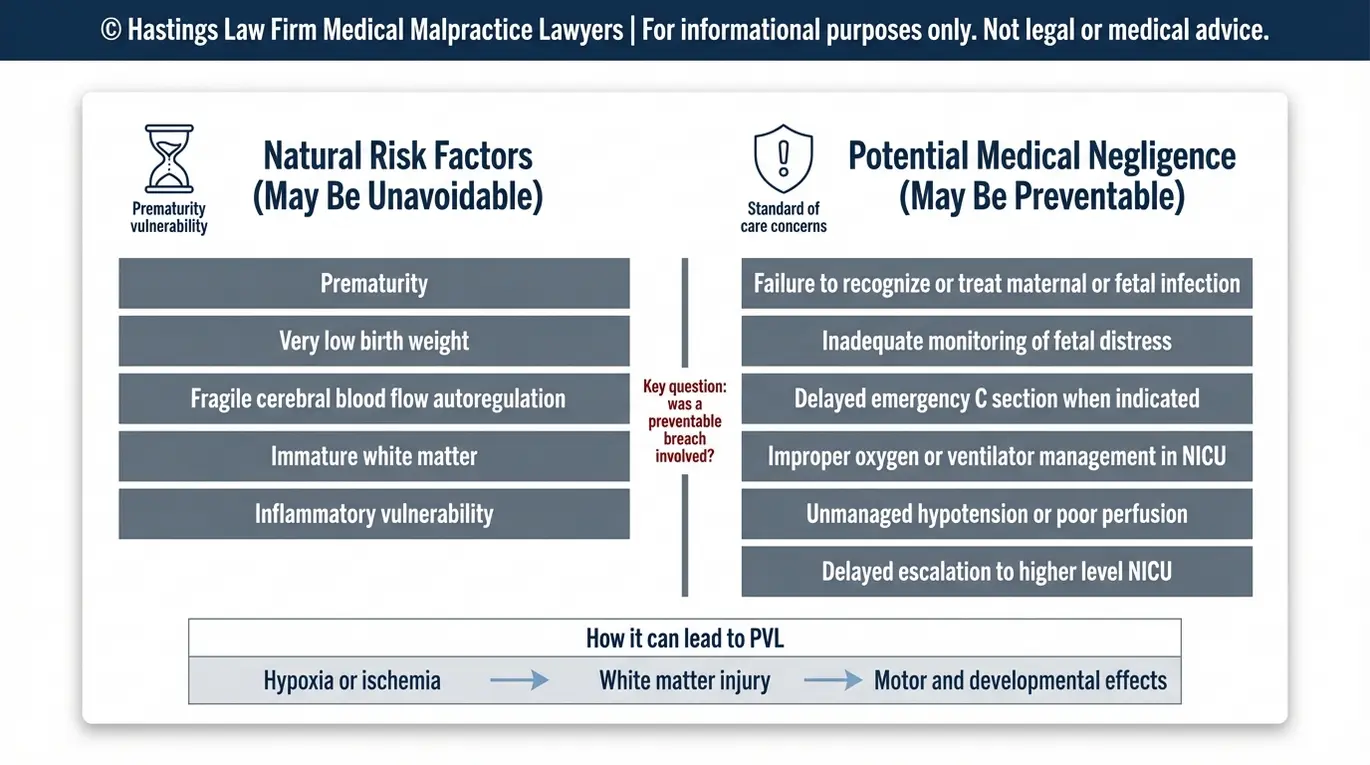
A systematic review published by PubMed on the prevalence and risk factors for periventricular leukomalacia in preterm infants identified several risk factors, some of which are unavoidable and others that fall within a medical team’s ability to prevent or manage. Understanding the difference between these categories is central to any medical negligence case involving PVL.
| Natural Risk Factors | Potential Medical Negligence |
|---|---|
| Prematurity (born before 32 weeks) | Failure to diagnose or treat maternal infection |
| Low birth weight | Delayed emergency C-section during fetal distress |
| Underdeveloped brain vasculature | Improper ventilator management in the NICU |
| Twin-to-twin transfusion syndrome | Failure to monitor fetal heart rate patterns |
| Placental insufficiency | Inadequate response to dropping oxygen saturation levels |
The distinction between unavoidable risk and preventable harm is exactly what a Texas Periventricular Leukomalacia Lawyer and medical negligence attorneys investigate. Our team reviews the medical timeline to determine whether the standard of care was met or whether specific failures led to the injury. A PVL malpractice lawyer can identify if protocols were missed during labor and delivery or NICU care.
The Hastings Law Firm Difference
Results matter, but what truly sets us apart is how we achieve them. Every verdict, every settlement, and every Texas courtroom victory comes from one guiding promise: To treat each client’s fight for justice as if it were our own.
This balance of skill, experience, and empathy reflects our core philosophy that justice should not only compensate the injured, but also make healthcare safer nationwide.

Common Signs, Symptoms, and Long-Term Effects of PVL
Symptoms of PVL often include spasticity, tight muscles, developmental delays, and seizures, though signs may not be immediately visible at birth and often evolve as the child grows. Early identification of developmental delays is important for accessing care.
In the NICU, early indicators of PVL can be subtle. Some infants may show abnormal muscle tone or difficulty feeding, while others may initially appear healthy. As the child develops, parents and pediatricians may begin to notice delayed signs, including:
- Difficulty reaching motor milestones such as rolling over, sitting, or walking
- Increased stiffness or tightness in the legs and arms
- Problems with balance and coordination
- Visual impairment
- Cognitive or learning difficulties
- Seizure activity
The CDC’s Milestone Checklists by Age can help parents identify potential developmental concerns early. Missing multiple milestones does not confirm PVL, but it does warrant further evaluation by a specialist.
PVL is a non-progressive condition, meaning the white matter damage does not worsen over time. But the effects are permanent. Children with PVL often require ongoing physical therapy, occupational therapy, and other forms of rehabilitation throughout their lives. A Texas birth injury lawyer or PVL attorney Texas families trust can help you understand the full scope of these long-term needs when evaluating a potential claim.
PVL and Cerebral Palsy
PVL is one of the most common causes of cerebral palsy (CP) in premature infants. Cerebral palsy is a motor disability that often results from PVL-related brain damage. The damaged white matter disrupts the brain’s ability to send proper signals to the muscles, which frequently leads to spastic diplegia, a form of cerebral palsy that primarily causes stiffness and difficulty with movement in the legs.
Children with spastic diplegia may demonstrate impaired motor function, walk with a distinctive gait, require assistive devices, or need surgical interventions as they grow. The presence of CP linked to PVL is often a key factor in both the medical evaluation and the legal assessment of a birth injury case.
How Doctors Should Diagnose and Monitor PVL
Doctors must utilize imaging tests like Cranial Ultrasounds, MRIs, and CT scans to detect PVL in high-risk infants; failure to order these tests when symptoms are present may constitute negligence. Medical imaging helps confirm the location and severity of white matter damage.
A cranial ultrasound is a non-invasive imaging technique that uses sound waves to create pictures of the brain. It is typically the first diagnostic tool used in the NICU and is effective at detecting early signs of white matter damage, particularly cystic changes near the ventricles. Because ultrasounds may not catch subtle diffuse damage, relying solely on them can be insufficient.
For a more detailed assessment, doctors may order a magnetic resonance imaging (MRI) scan, which uses powerful magnets and radio waves to produce high-resolution images of brain tissue. MRI is the gold standard of care for evaluating the extent and location of PVL damage, though it is usually performed later, once the infant is stable enough for the procedure. Computed tomography (CT) scans are less common due to radiation but may be used in specific emergencies.
When a premature or high-risk infant shows signs of neurological concern, the medical team should provide timely imaging and ongoing monitoring. A doctor’s failure to diagnose PVL can delay access to early intervention therapies, potentially affecting the child’s long-term outcomes and neuroplasticity. As a Texas Periventricular Leukomalacia Lawyer and medical malpractice lawyer, we evaluate whether imaging was ordered at appropriate intervals and whether diagnostic gaps may have caused harm.
How a PVL Birth Injury Lawsuit Works in Texas
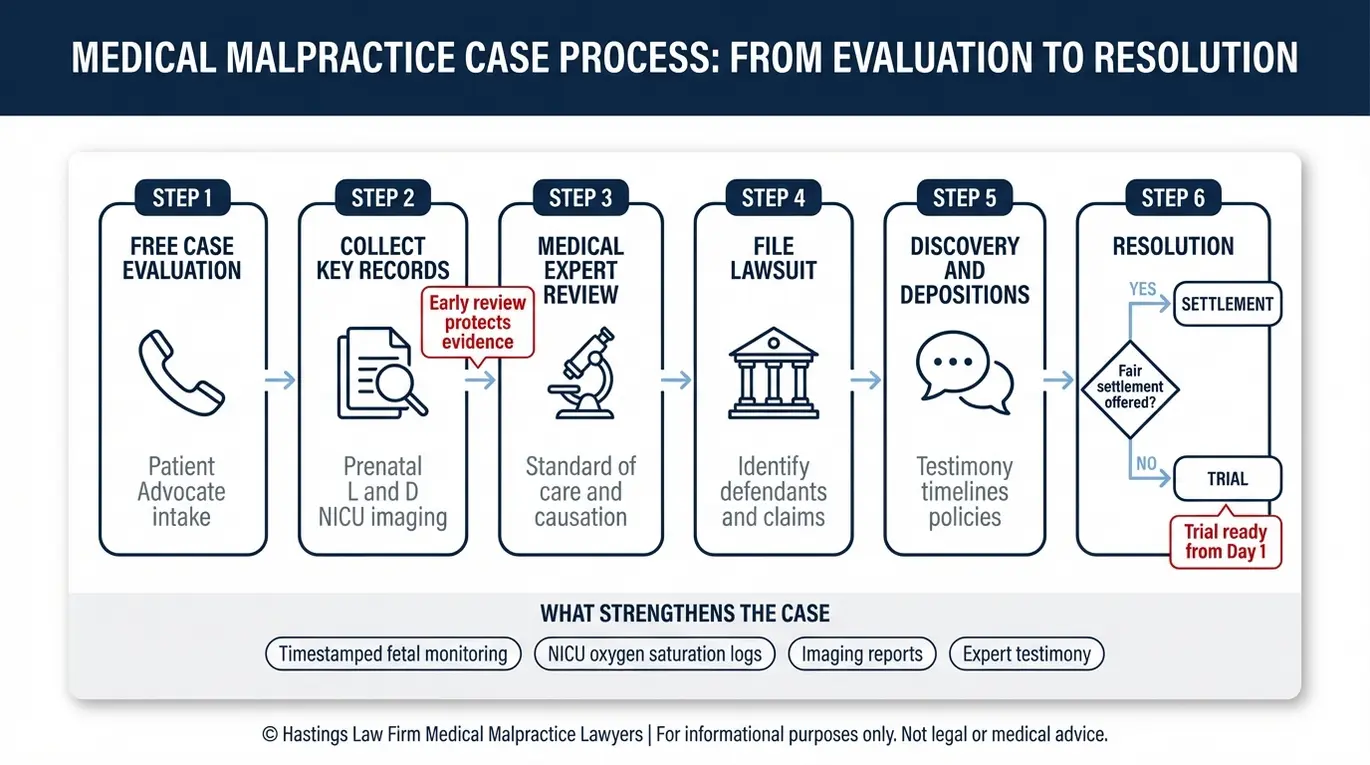
A PVL lawsuit in Texas involves an initial investigation by medical experts, filing a claim against the negligent providers, the discovery phase, and potentially a trial if a fair settlement cannot be reached. A legal claim helps families secure the financial resources needed for therapy.
- Free Evaluation and Record Review: The process begins with a confidential case evaluation led by one of our Board Certified Patient Advocates. We collect your child’s medical records and begin building a detailed timeline of the care provided during pregnancy, labor, delivery, and the NICU stay.
- Expert Medical Review: Our in-house medical staff and national network of specialists review the records to determine whether the standard of care was met. This step is critical to confirming that a breach of duty occurred and that it caused or contributed to the PVL.
- Filing the Lawsuit: Once we have established that the case has merit, we prepare and file the legal claim against the negligent providers. Texas law requires a qualified expert report early in the process, and we handle all of these requirements.
- Discovery and Depositions: Both sides exchange evidence, request documents, and depose key witnesses, including the treating physicians and our retained experts. This phase often reveals important details about what happened and why.
- Settlement Negotiation or Trial: Many birth injury cases resolve through negotiated settlements. We prepare every case as if it will go to a jury from day one, which allows us to negotiate from a position of strength using expert testimony. If a fair offer is not made, we are fully prepared to take the case to trial.
As a Texas Periventricular Leukomalacia Lawyer, we guide families through every stage of this birth injury lawsuit process, keeping you informed and involved at each step.
Compensation in PVL and Birth Injury Lawsuits
Compensation for PVL aims to cover the lifetime cost of the child’s care, including past and future medical expenses, rehabilitation, specialized equipment, and non-economic damages like pain and suffering. Economic damages include the tangible costs of medical treatment and equipment.
Because PVL is a permanent brain injury, the financial impact on a family can be enormous. Research published by PubMed Central on the economic costs of childhood disability highlights the significant and ongoing financial burden that families of children with disabilities face across a lifetime.
Economic damages in a PVL case may include:
- Past and future medical bills, including surgeries, hospitalizations, and specialist visits
- Physical therapy, occupational therapy, and speech therapy
- Assistive devices such as wheelchairs, braces, and communication tools
- Home modifications for accessibility, such as ramps or widened doorways
- Special education and support services
- Lost future earning capacity
Non-economic damages address the human cost that cannot be measured by a receipt:
- Pain and suffering
- Mental anguish experienced by the child and family
- Physical impairment and loss of quality of life
One of the most important components of birth injury compensation is the development of a life care plan. Texas PVL attorneys work with economists and life care planners to calculate the true cost of 50 or more years of ongoing care. These plans account for inflation and anticipated medical needs, ensuring that a settlement or verdict reflects the full scope of what your child will need to live as independently as possible.
Why Choose Hastings Law Firm for Your Texas PVL Case
Hastings Law Firm offers a unique advantage by combining Board Certified trial expertise with an in-house medical team, ensuring that complex PVL cases are handled with both legal aggression and medical precision.
Unlike general personal injury firms, our entire team focuses exclusively on medical malpractice. Every attorney, nurse consultant, and Board Certified Patient Advocate at the firm is dedicated to one area of law. That focus matters when the success of your case depends on understanding fetal monitoring strips, NICU protocols, and neonatal brain imaging.
Founder Tommy Hastings is Board Certified in Personal Injury Trial Law by the Texas Board of Legal Specialization, a distinction held by fewer than 2% of Texas attorneys. He is a recognized authority on medical liability and has been named a Texas Super Lawyer every year since 2013. His ability to translate complex medical evidence into clear arguments has earned the trust of juries and clients across the state.
Our team also includes former defense attorneys who previously represented hospitals and insurance carriers. That background gives us direct insight into how the other side prepares its case, allowing us to anticipate their strategies and counter them effectively.
As a Texas Periventricular Leukomalacia Lawyer and Texas PVL attorney, we operate on a contingency fee basis. You pay no fee unless we win. We maintain offices in The Woodlands, Houston, Dallas, and Austin, giving families across Texas local access to our team.
Statute of Limitations for PVL Claims in Texas
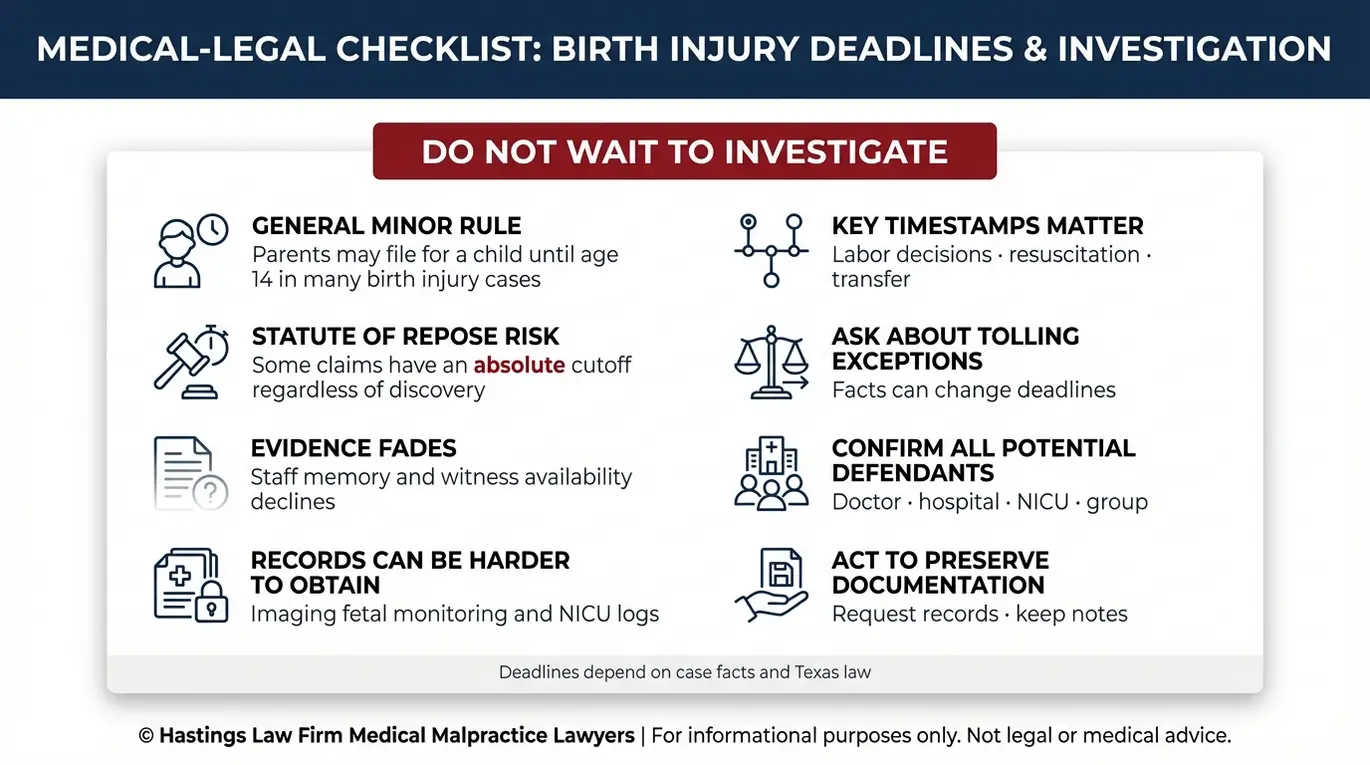
In Texas, the statute of limitations for birth injury claims involving children under 12 generally allows parents to file on behalf of the child until the child turns 14, though specific circumstances can alter this deadline, making immediate legal consultation vital.
Under Texas Civil Practice and Remedies Code § 74.251, medical malpractice claims must generally be filed within two years from the date the act of negligence occurred. For minors under the age of 12, the law extends that deadline, allowing the claim to be filed until the child’s 14th birthday. This provision recognizes that young children may not be able to identify or communicate harm, and it gives families additional time to pursue a claim.
However, Texas also imposes a Statute of Repose, which sets an absolute 10-year limit on filing most medical malpractice claims, regardless of when the injury was discovered. These legal time limits are strict. For children injured at or near birth, this deadline can arrive before many families even fully understand the extent of their child’s condition.
Do not wait to take action, even if the law appears to allow more time. Medical records can be lost or destroyed, witnesses’ memories fade, and imaging studies may become harder to obtain as years pass. The sooner a Texas Periventricular Leukomalacia Lawyer can begin preserving evidence and reviewing the timeline, the stronger the foundation for your child’s case.
Contact the Texas Birth Injury Attorneys at Hastings Law Firm Today for Help
Your child’s diagnosis may have left you feeling overwhelmed, uncertain, and searching for answers. You deserve to know whether the care your baby received met the standard that any parent should be able to expect. At Hastings Law Firm, our mission is to restore trust for families who feel let down by the healthcare system, and to hold negligent providers accountable so that other families are protected.
Our medical-legal team, including nurse consultants, Board Certified Patient Advocates, and experienced trial attorneys, is ready to review what happened and explain your options. As a Texas Periventricular Leukomalacia Lawyer and Texas birth injury law firm, we handle these cases because they matter, not just to your family, but to patient safety as a whole.
Contact Hastings Law Firm today for a free, confidential case evaluation. You pay nothing unless we win.
Frequently Asked Questions About Periventricular Leukomalacia in Texas


This content was researched and written by the Hastings Law Firm editorial team, which includes attorneys, medical professionals, and experienced researchers. Our writing is informed by internal knowledge and practical experience, and we cross-check critical details against authoritative sources cited throughout. Every piece undergoes human-led fact-checking and legal review. Because legal and medical information can change, if you spot an error, please contact us. Learn more about our content standards and review process on our editorial policy page.

Tommy Hastings, founder of Hastings Law Firm, is a board-certified personal injury trial lawyer dedicated exclusively to healthcare injury cases. Since 2001, he has represented injured patients and families in litigation against major hospital systems, pharmaceutical companies, and negligent healthcare providers nationwide. He has handled numerous high-profile cases that have drawn national media attention and resulted in multi-million dollar recoveries. He draws on that experience in his writing, helping readers understand how these cases work and what options may be available to them.
