


Texas Pediatric Hydrocephalus Lawyer
Written by: Hastings Law Firm | Reviewed by: Tommy Hastings | Updated: July 27, 2026
Pediatric hydrocephalus can cause dangerous pressure in an infant brain, and delays in diagnosis or mistakes in treatment can lead to permanent harm. Families often face uncertainty about whether warning signs were missed, imaging was delayed, or a surgical decision made the condition worse. Understanding how hydrocephalus is identified, how providers are expected to respond, and what kinds of errors can occur helps clarify when care may have fallen below accepted standards. If you or a loved one were harmed or worse due to pediatric hydrocephalus malpractice in Texas, contact Hastings Law Firm for a free, confidential case review.

Top Rated Malpractice Attorneys for Birth-Related Injuries in Texas
What You Should Know About Infant Brain Fluid Accumulation Claims in Texas:
- Long term brain injury can result when hydrocephalus is not identified and treated before pressure causes permanent damage.
- Liability disputes often focus on whether providers dismissed parental concerns and failed to act on early warning signs.
- Preventable harm can follow a delayed response to abnormal head growth or other signs of rising intracranial pressure.
- Serious complications can occur when surgical care involves shunt placement errors, missed shunt malfunction, or an inappropriate procedure choice.
- Recovery can be limited for non economic losses in Texas, while economic losses tied to lifetime care and lost earning capacity are not capped.
- Options can be lost if legal deadlines are missed, including an outside cutoff that can apply even when the patient is still a minor.
- Case outcomes can turn on the completeness of medical records such as imaging, nursing notes, and operative documentation.
- Future care needs can drive damages because hydrocephalus related impairments may require ongoing treatment, therapy, and support for life.

A Healthcare Focused Law Firm
When your child has been diagnosed with hydrocephalus, the weight of that moment can feel impossible to carry. You may be asking whether the doctors missed something, whether an earlier diagnosis could have changed the outcome, or whether a surgical error made things worse. These are the right questions, and you deserve honest answers.
At Hastings Law Firm, we focus exclusively on medical malpractice. As a Texas pediatric hydrocephalus lawyer, Tommy Hastings and his team of attorneys, in-house nurse consultants, and Board Certified Patient Advocates have the experience and resources to investigate what happened and hold the responsible parties accountable. Tommy Hastings is a board-certified trial lawyer with over two decades of experience representing families across the state.
If your child was harmed by a diagnostic failure or surgical error, we can review the medical records and explain your legal options. Contact us for a free, confidential case evaluation.
Understanding Pediatric Hydrocephalus and Medical Negligence
Hydrocephalus is a condition in which cerebrospinal fluid (CSF), the clear fluid that cushions and nourishes the brain, accumulates inside the ventricles, the fluid-filled chambers deep within the brain, causing dangerous intracranial pressure; medical negligence occurs when providers fail to identify this buildup or treat it before permanent brain damage occurs. When CSF cannot drain properly, it creates pressure that can stretch and damage brain tissue. This legal framework helps families in Texas seek answers when preventable medical errors occur.
In infants, the skull bones have not yet fused. This means rising pressure can force the plates apart, causing the head to enlarge abnormally. While this expansion may temporarily relieve some pressure, it does not stop the underlying damage to developing brain tissue. Early detection is important to preventing long-term cognitive deficits.
Hydrocephalus generally falls into two categories. Congenital hydrocephalus is present at birth and may develop during pregnancy due to genetic factors or structural abnormalities. Acquired hydrocephalus develops after birth, often as a result of intraventricular hemorrhage, meningitis, or another brain injury. According to a study on paediatric hydrocephalus published in PubMed, the condition remains one of the most common reasons for pediatric neurosurgical intervention.
Not every case of hydrocephalus involves malpractice. However, families may have grounds for a claim under Texas Civil Practice and Remedies Code Chapter 74 when a provider fails to monitor for risk factors or ignores warning signs. This applies when a delay in treatment violates the required standard of care. An experienced Texas hydrocephalus birth injury attorney or infant medical malpractice lawyer can help determine whether the care your child received fell below accepted medical standards.
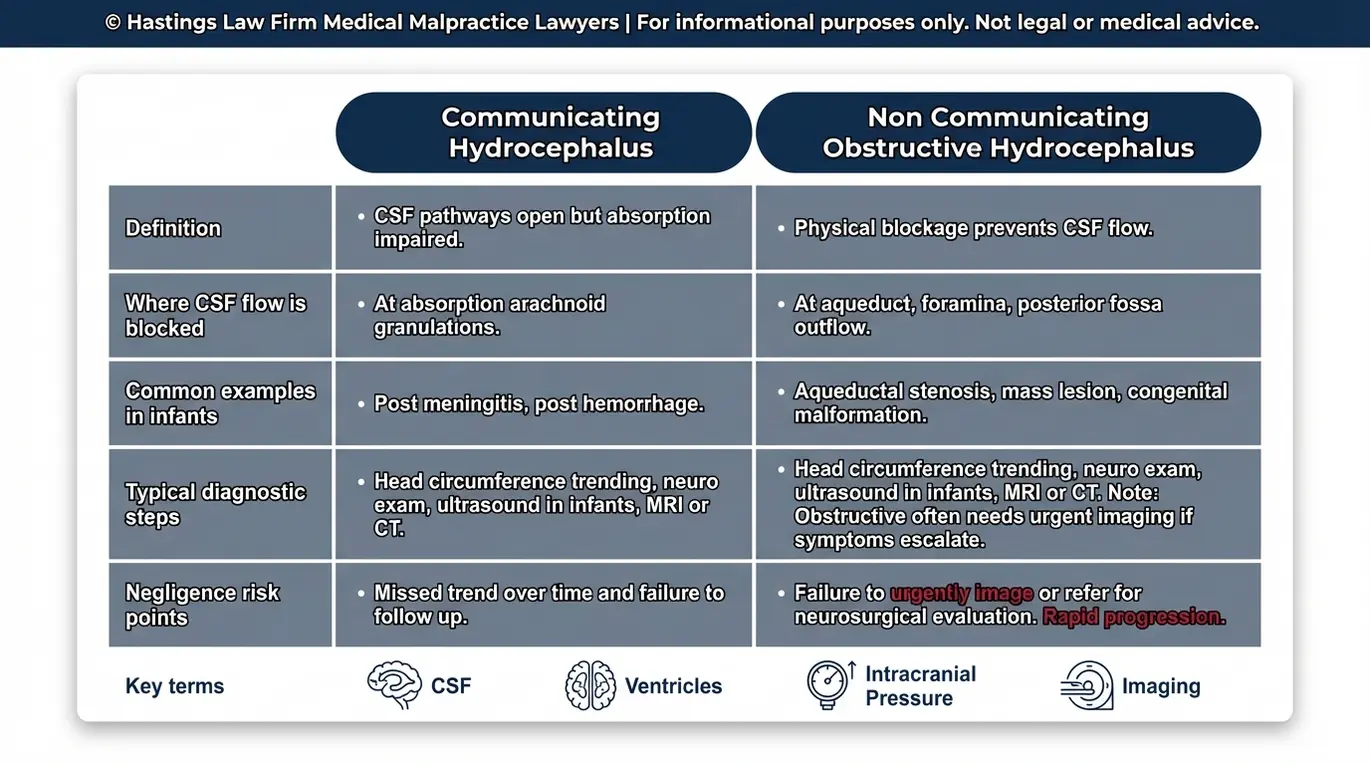
| Communicating Hydrocephalus | Non-Communicating (Obstructive) Hydrocephalus | |
|---|---|---|
| Mechanism | CSF flows between ventricles but is not properly absorbed | A physical blockage prevents CSF from flowing between ventricles |
| Common Causes | Infection, hemorrhage, or inflammation affecting absorption | Congenital abnormalities, tumors, or cysts blocking CSF pathways |
| Typical Diagnostic Tools | MRI, CT scan | MRI, CT scan, prenatal ultrasound |
| Negligence Risk | Failure to investigate persistent symptoms or follow up after hemorrhage | Failure to identify structural abnormalities on imaging or respond to acute pressure signs |
Failure to Diagnose: Did Your Doctor Miss the Warning Signs?
Medical providers can be held liable for a missed hydrocephalus diagnosis if they ignore standard warning signs like rapid head growth, a bulging fontanelle, or abnormal eye movements, and the resulting delay leads to preventable injury. Understanding these clinical triggers is essential for identifying potential negligence.
A bulging fontanelle, the soft spot on top of an infant’s skull, is one of the earliest visible indicators that intracranial pressure may be rising. Another hallmark sign is the “setting sun” appearance, a downward deviation of the eyes where the white of the eye is visible above the iris. Both of these findings should prompt immediate evaluation.
Pediatricians are trained to track head circumference at every well-child visit using standardized growth charts. The CDC’s guidance on using WHO Growth Standard Charts provides the benchmarks that clinicians rely on to identify abnormal head growth early. A head circumference that crosses percentile lines rapidly is a red flag that should trigger imaging, not reassurance.
Warning signs that should prompt further evaluation include:
- Rapid increase in head circumference crossing growth chart percentiles
- A tense or bulging fontanelle, especially when the infant is upright and calm
- Setting sun eyes or difficulty looking upward
- Persistent vomiting not explained by feeding issues
- Excessive sleepiness or irritability beyond what is typical for the child’s age
- Visible scalp vein distension
One of the most concerning patterns we see in these cases is the dismissal of parental concerns. Parents may report that their infant is unusually fussy, sleeping too much, or feeding poorly. In some cases, these symptoms are attributed to colic or normal infant behavior rather than investigated as potential signs of rising intracranial pressure.
What makes infant hydrocephalus particularly dangerous is the mechanism of skull expansion. Because the skull plates have not yet fused, increasing pressure pushes them apart rather than creating the acute crisis an adult brain would experience. This can mask the severity of the condition, giving providers a false sense of security while brain tissue continues to sustain damage.
A pediatric malpractice attorney in Texas can work with medical experts to evaluate whether your child’s symptoms should have been recognized and acted upon sooner by the standard of care. If you believe errors occurred, a failure to diagnose hydrocephalus lawyer can help you investigate.
The Hastings Law Firm Difference
Results matter, but what truly sets us apart is how we achieve them. Every verdict, every settlement, and every Texas courtroom victory comes from one guiding promise: To treat each client’s fight for justice as if it were our own.
This balance of skill, experience, and empathy reflects our core philosophy that justice should not only compensate the injured, but also make healthcare safer nationwide.

Surgical Errors: Shunt Malfunctions and ETV Complications
Surgeons may be held liable for errors during shunt placement, failure to recognize shunt malfunction, or selecting an inappropriate procedure for the child’s age, any of which can result in brain hemorrhage, infection, or worsening neurological damage. Surgical intervention is often the only way to manage intracranial pressure and prevent further brain injury.
The two primary surgical treatments for hydrocephalus are shunt placement and endoscopic third ventriculostomy (ETV), sometimes combined with choroid plexus cauterization (CPC). A ventriculoperitoneal (VP) shunt is a thin tube surgically placed to drain excess CSF from the brain’s ventricles into the abdominal cavity, where the body absorbs it. ETV with CPC is a minimally invasive alternative where a neurosurgeon creates a small opening in the floor of a ventricle to restore CSF flow, while also reducing fluid production at the choroid plexus.
Each approach carries specific risks, and the choice between them depends heavily on the child’s age, the type of hydrocephalus, and the underlying cause. ETV tends to have lower success rates in very young infants, particularly those under six months. When a surgeon selects ETV for a patient whose age or anatomy makes shunt placement the more appropriate option, and the procedure fails, that decision may fall below the standard of care.
Shunt systems, while effective, carry a well-documented risk of malfunction. A retrospective population-based study on shunt revision rates in pediatric patients confirmed that a significant percentage of children require at least one revision surgery. Knowing this, providers have a duty to educate families about warning signs of shunt failure and to respond quickly when those signs appear.
Common surgical errors in pediatric hydrocephalus cases include:
- Improper catheter positioning during shunt placement
- Failure to recognize signs of shunt obstruction or malfunction after surgery
- Choosing ETV for an infant too young for the procedure to succeed reliably
- Inadequate infection control leading to post-surgical meningitis or ventriculitis
- Delayed shunt revision when symptoms of increased pressure return
When a surgical error causes or worsens a child’s brain injury, families may have a claim against the surgeon, the surgical team, or the hospital. A VP shunt malpractice lawyer or surgical error attorney with experience in pediatric neurosurgical cases can evaluate the operative notes, imaging, and post-surgical records to determine whether the standard of care was met.
Proving Liability: How We Establish Medical Malpractice
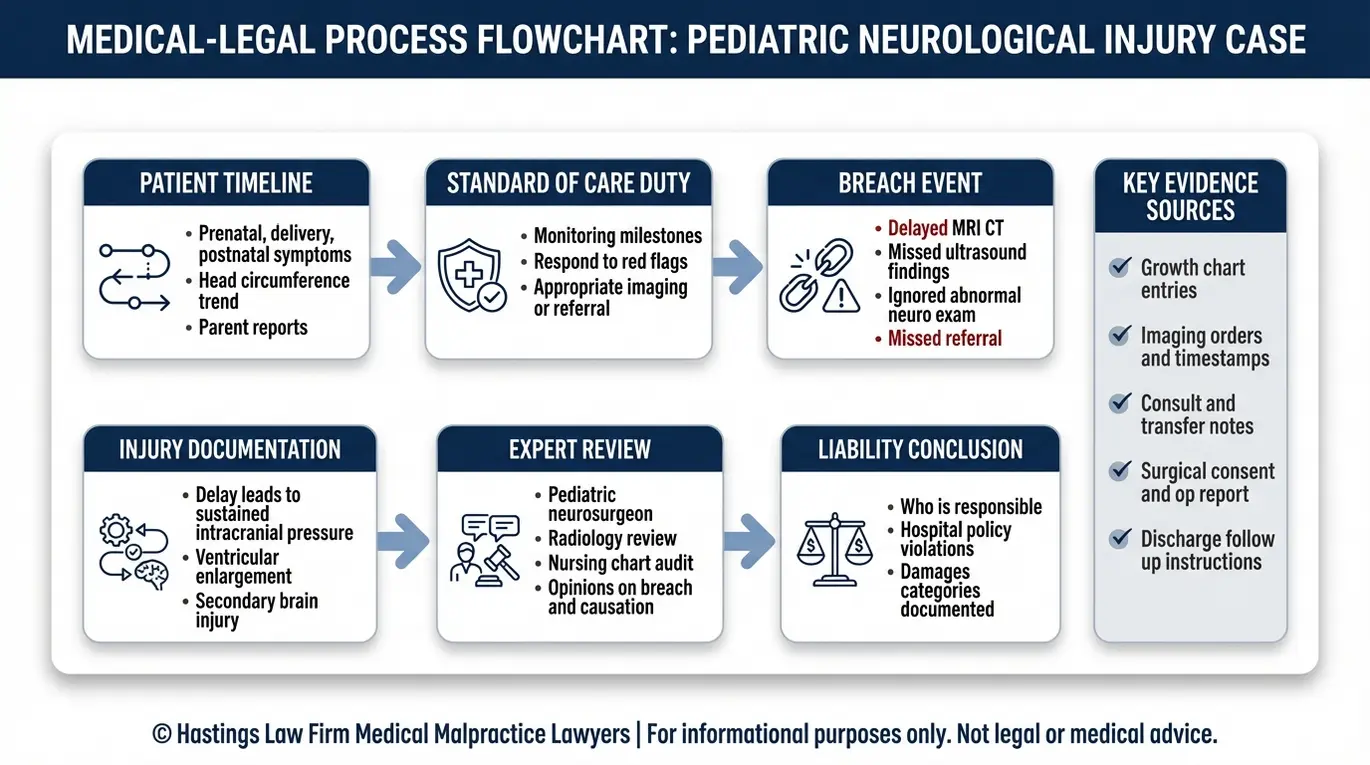
To prove liability in a hydrocephalus case, we must show that a healthcare provider breached the standard of care, the level of treatment a reasonably competent professional would have provided under similar circumstances, and that this breach directly caused the child’s brain injury. We conduct a thorough investigation to identify where these gaps in care occurred.
Our investigation typically focuses on three areas of potential negligence.
Prenatal and labor negligence may involve a failure to detect abnormalities on routine prenatal ultrasounds or an inadequate response to signs of fetal distress during delivery. If imaging showed enlarged ventricles or other structural findings and no follow-up was ordered, that gap in care becomes a focal point of the case.
Post-natal negligence often involves delays in ordering a CT scan or MRI when an infant presents with symptoms of rising intracranial pressure. We evaluate the timeline between when symptoms first appeared in the medical record and when diagnostic imaging was actually performed. In communicating hydrocephalus, where CSF flows between ventricles but is not properly absorbed, the symptoms may develop gradually, making consistent monitoring essential. In obstructive (non-communicating) hydrocephalus, where a physical blockage prevents normal CSF flow, symptoms can escalate quickly and demand urgent intervention.
Hospital liability can arise when institutional failures contribute to the harm. Inadequate nurse-to-patient ratios, missing or incomplete protocols for infant neurological monitoring, or breakdowns in communication between care teams are all factors we examine.
We work with qualified expert witnesses, including pediatric neurologists and neurosurgeons, to establish what the standard of care required and how the provider’s actions or inactions fell short. Our Texas medical negligence lawyers and hospital liability attorneys build a detailed, minute-by-minute timeline using medical records, nursing notes, imaging studies, and lab results to connect the breach directly to the child’s injury.
Calculating Damages: Securing Your Child’s Future
Compensation in hydrocephalus malpractice cases covers past and future medical expenses, pain and suffering, and the projected lost earning capacity of the child due to cognitive or motor impairments caused by the negligence. Damages represent the financial compensation and support intended to cover your child’s lifelong needs.
Because hydrocephalus-related brain damage can affect a child for life, the financial impact extends far beyond the initial hospitalization. Families must consider the long-term reality of raising a child with special needs. We work with medical and economic experts to build a complete picture of what your child will need, both now and decades into the future.
Recoverable damages in a pediatric hydrocephalus case may include:
- Past and future medical costs: Hospitalizations, shunt placements, shunt revision surgeries, neurological follow-up, medications, and rehabilitative therapies including physical, occupational, and speech therapy
- Assistive care and equipment: In-home nursing, adaptive devices, and specialized educational support for developmental delays
- Pain and suffering: The physical discomfort, emotional distress, and diminished quality of life the child experiences
- Physical impairment: Compensation for permanent disabilities affecting motor function, cognition, or daily living
- Lost earning capacity: The income your child would have reasonably been expected to earn over a lifetime, reduced or eliminated by the injury
- Future Care Planning: Experts create a life care plan that outlines the lifelong costs associated with the injury, detailing expenses for future surgeries, therapies, and daily assistance
Calculating lost earning capacity for a newborn or young child presents a unique challenge. Because the child never entered the workforce, our economists use statistical models based on education levels, regional income data, and life expectancy to project what the child’s earnings would have been without the injury. This figure is often one of the largest components of a birth injury compensation claim in Texas.
Under Texas Civil Practice and Remedies Code Section 74.301, non-economic damages are subject to statutory caps. However, economic damages, including lifetime medical care and lost earning capacity, have no cap. This makes thorough documentation and expert testimony critical to securing the full value of a hydrocephalus lawsuit settlement.
The Litigation Process: What Parents Can Expect
The lawsuit process involves a free investigation by medical experts, filing a Chapter 74 expert report, discovery, and potentially a trial. Hastings Law Firm handles all upfront costs and only charges a fee if compensation is recovered. We use a structured approach to ensure every case is prepared for a jury if necessary.
Here is what the process looks like from start to finish:
- Free case evaluation. The process begins with a confidential consultation led by one of our Board Certified Patient Advocates. We listen to what happened, gather initial information, and determine whether the facts support a potential claim. We will explain your rights and the legal pathways available to you. There is no cost and no obligation.
- Medical investigation. Once we accept a case, our in-house medical team, which includes nurse practitioners and former hospital staff, conducts a detailed review of your child’s medical records. We retain qualified expert witnesses from our national network to provide independent opinions on whether the standard of care was breached.
- Filing suit and the expert report. Filing a medical malpractice lawsuit in Texas involves strict procedural requirements. Texas law requires that a qualified expert report be served early in the litigation. This report must identify the standard of care, explain how it was violated, and connect that violation to your child’s injury. we handle all filings, deadlines, and procedural requirements.
- Discovery and depositions. Both sides exchange evidence, take sworn testimony from witnesses, and build their case. Our team includes former defense counsel who understand how hospitals prepare their defense, allowing us to anticipate opposing strategies and prepare accordingly.
- Resolution. Many cases resolve through negotiated settlement when the evidence is strong. But we prepare every case as if it will go to a jury. This trial-ready approach sends a clear message to the defense, forcing them to understand our firm negotiation posture, and often leads to better outcomes at the negotiation table.
As a pediatric injury law firm, we operate on a contingency fee basis. You pay no attorney fees or costs unless we recover compensation for your family.
Texas Statute of Limitations for Minors
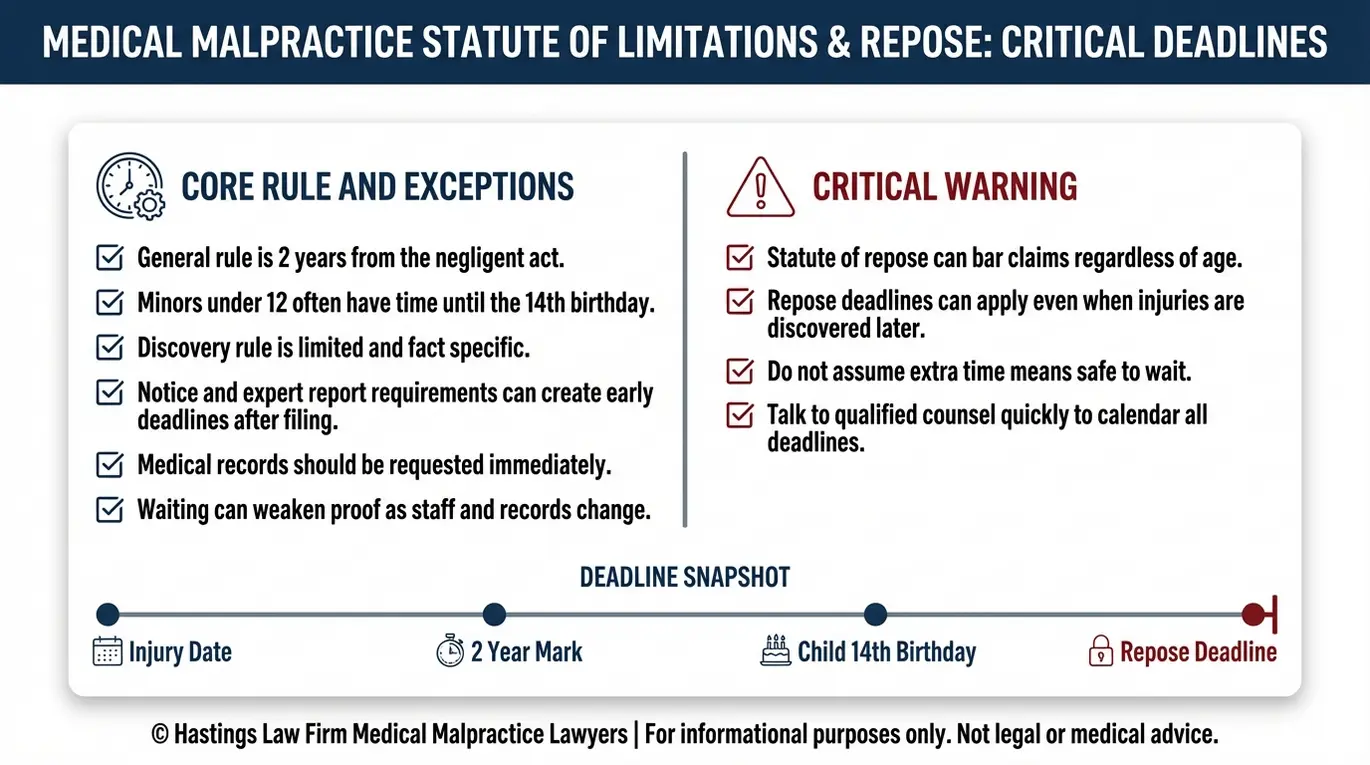
While Texas generally imposes a two-year statute of limitations for medical malpractice claims, cases involving minors under age 12 typically allow parents to file suit until the child’s 14th birthday. A statute of limitations is the legal deadline for filing a claim.
This extension, known as tolling, exists because minor children cannot advocate for themselves. The law pauses the standard deadline to give families additional time to discover and act on potential negligence, a concept often related to the discovery rule. However, this extended window does not mean families should wait.
There is an important backstop that applies regardless of the child’s age: the statute of repose. Texas law imposes a hard 10-year deadline from the date the negligent act occurred. Once 10 years have passed, the right to file a claim is generally lost, even if the child is still a minor. This deadline cannot be extended.
Waiting too long creates real risks beyond legal deadlines. Medical records can be lost or destroyed. Witnesses relocate or forget details. Imaging studies may no longer be available. The sooner an investigation begins, the stronger the evidence will be.
Statutes of limitations and repose involve strict legal deadlines that vary depending on the specific facts of each case. This information is general in nature and should not be relied upon as legal advice. Contact a qualified attorney to evaluate the deadlines that apply to your child’s situation.
Even if you are unsure whether the statute of limitations has passed, it is worth reaching out. Our team can evaluate the timeline of events and determine whether your family still has the right to pursue a claim.
Contact the Texas Birth Injury Attorneys at Hastings Law Firm Today for Help
A child living with brain damage from hydrocephalus may need medical care, therapy, and support for the rest of their life. If that injury resulted from a doctor’s failure to diagnose or a surgical error, your family should not bear that financial burden alone.
At Hastings Law Firm, we focus exclusively on medical malpractice litigation to provide families with specialized advocacy. We believe every family deserves the truth about what happened and the financial security to protect their child’s future. Our team handles every aspect of the legal process so you can focus on your child.
We charge no fees unless we recover compensation for your family. Contact our Texas medical law firm today for a free, confidential case review. Call us or complete our online form to speak with a patient advocate who can help you understand your options.
Frequently Asked Questions About Pediatric Hydrocephalus in Texas


This content was researched and written by the Hastings Law Firm editorial team, which includes attorneys, medical professionals, and experienced researchers. Our writing is informed by internal knowledge and practical experience, and we cross-check critical details against authoritative sources cited throughout. Every piece undergoes human-led fact-checking and legal review. Because legal and medical information can change, if you spot an error, please contact us. Learn more about our content standards and review process on our editorial policy page.

Tommy Hastings, founder of Hastings Law Firm, is a board-certified personal injury trial lawyer dedicated exclusively to healthcare injury cases. Since 2001, he has represented injured patients and families in litigation against major hospital systems, pharmaceutical companies, and negligent healthcare providers nationwide. He has handled numerous high-profile cases that have drawn national media attention and resulted in multi-million dollar recoveries. He draws on that experience in his writing, helping readers understand how these cases work and what options may be available to them.
