


Texas Orthotist Malpractice Lawyer
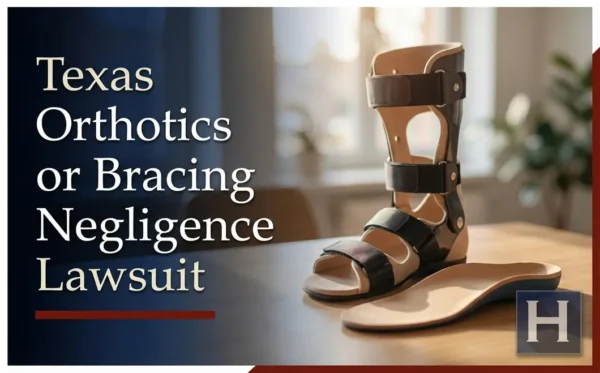
Orthotic and bracing injuries can happen when a device is improperly designed, poorly fitted, or not monitored as a patient changes over time. Harm may involve skin breakdown, nerve compression, falls, fractures, and lasting pain that disrupts recovery and daily life. Texas claims often turn on whether the orthotist met accepted medical standards, whether the error caused a new or worsened injury, and what documentation exists about fitting decisions, consent, and follow up care. If you or a loved one were harmed or worse due to orthotist malpractice in Texas, contact Hastings Law Firm for a free, confidential case review.
Last Updated: July 27, 2026
Trusted Legal Representation for Orthotic and Bracing Injuries
When you trust a healthcare professional to provide a device meant to support your body and aid your recovery, the last thing you expect is for that device to cause further harm. Yet injuries from improperly designed or poorly fitted orthotic devices do happen, and the physical and emotional toll can be significant.
An orthotist is a licensed specialist who designs, fabricates, and fits orthoses. These external braces or supportive devices help stabilize or protect muscles, bones, and joints. These specialists must follow strict medical standards. When an orthotist’s care falls below these accepted standards and a patient is injured as a result, it may constitute medical malpractice.
If you or a loved one has been harmed by negligent orthotic care, a Texas orthotist malpractice lawyer at Hastings Law Firm can review what happened and explain your legal options during a free, confidential consultation.

Common Types of Orthotist Malpractice and Negligence
Orthotist malpractice occurs when a specialist fails to design, fit, or monitor a brace or orthotic device according to accepted medical standards, resulting in patient injury. These cases involve professional negligence, meaning the orthotist provided substandard care that a competent peer would not have delivered under the same circumstances.
Because orthotic devices are worn directly against the body, often for extended periods, even small errors in design or fitting can lead to serious medical complications. A breach of duty by the orthotist may take several forms:
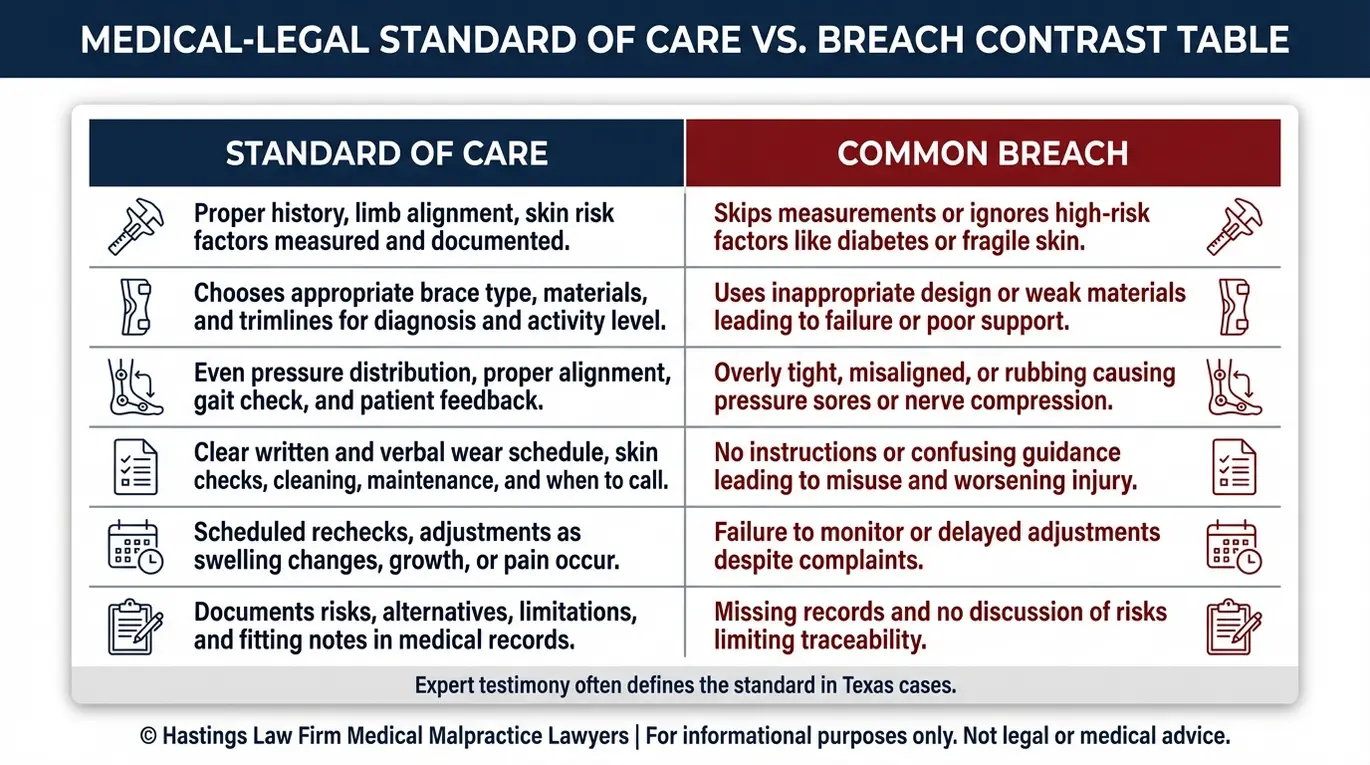
- Improper fitting: A device that is too tight, too loose, or misaligned can cause medical device-related pressure injuries (MDRPIs), commonly known as pressure ulcers or skin breakdown. Prolonged compression from a poorly fitted brace can also lead to peripheral nerve compression, sometimes called neuropraxia, where sustained pressure on a nerve causes numbness, weakness, or pain in the affected area.
- Device failure: An orthotist who selects defective materials or uses flawed fabrication methods may produce a brace that cracks, snaps, or fails to provide adequate support. This can result in falls, fractures, or catastrophic injuries if the patient relies on the device for stability or mobility.
- Failure to monitor: A patient’s body changes over time. Swelling subsides, muscle tone shifts, and surgical sites heal. An orthotist has a duty to schedule follow-up appointments and adjust the device accordingly. Neglecting this responsibility can allow a once-appropriate brace to become a source of ongoing harm.
- Instructional errors: Patients need clear guidance on how to properly wear, remove, and maintain their orthotic device. Failing to provide this patient education, or providing incorrect instructions, can lead to misuse that results in skin damage, joint problems, or reduced therapeutic benefit.
Any of these failures can form the basis of a medical malpractice claim. An experienced Texas orthotist malpractice lawyer can evaluate the specific circumstances of your injury and determine whether the care you received fell short of what the profession requires.
Establishing the Standard of Care for Orthotic Devices
The standard of care requires an orthotist to exercise the same degree of skill and diligence that a reasonably prudent orthotist would use under similar circumstances. The standard of care is the legal benchmark used to measure whether a healthcare provider’s performance was appropriate under the circumstances.
In Texas, proving an orthotic malpractice claim requires testimony from a qualified expert witness. The court does not allow a jury to simply guess whether the orthotist made an error. Instead, a medical expert with relevant training must explain what the standard of care required in the specific situation and how the orthotist’s conduct fell short. This expert’s opinion carries significant weight in establishing a breach of duty. Without this testimony, a patient cannot support the claim that the provider failed to meet the necessary professional benchmarks, which is why securing a credible expert is a key step in building a successful case.
The level of care owed can also depend on the type of device involved. A custom-molded orthosis, a device individually sculpted from a cast or scan of the patient’s body, requires precise measurements, material selection, and follow-up adjustments. Errors in any of these steps can cause significant harm. An off-the-shelf brace, a prefabricated device selected by general size, still requires proper fitting and patient education, but may involve different monitoring expectations.
Regardless of device type, orthotists are expected to document their clinical decisions, obtain informed consent by explaining the risks and benefits of the prescribed device, and track patient outcomes. Informed consent means your provider explained the risks and you agreed to the treatment. When these medical records are incomplete or missing, it can be a red flag. Adverse events involving orthotic devices may also be reported through the U.S. Food and Drug Administration’s MDR Data Files, which our team reviews to identify patterns of device-related failures that may support your claim.
The Hastings Law Firm Difference
Results matter, but what truly sets us apart is how we achieve them. Every verdict, every settlement, and every Texas courtroom victory comes from one guiding promise: To treat each client’s fight for justice as if it were our own.
This balance of skill, experience, and empathy reflects our core philosophy that justice should not only compensate the injured, but also make health care safer nationwide.

Proving Liability in Orthotic and Prosthetic Injury Cases
Proving liability requires demonstrating that the orthotist breached the standard of care and that this specific breach directly caused the patient’s new or worsened injury. Proving liability involves showing that specific medical errors caused physical harm.
Every orthotic or prosthetic negligence claim in Texas rests on four legal elements. First, the orthotist owed a duty of care to the patient. Second, that duty was breached through substandard conduct. Third, the breach was the direct cause of the injury, a concept the law calls causation. And fourth, the patient suffered actual damages as a result. Our attorneys analyze the case for all forms of liability, including instances of gross negligence.
One of the most important procedural requirements is the Chapter 74 expert report. Under Texas Civil Practice and Remedies Code Section 74.351, a plaintiff must serve a written expert report within 120 days of the date each defendant’s original answer is filed. This report must identify the standard of care, explain how it was breached, and establish causation. Failure to meet this deadline can result in dismissal of the case, which is one reason early case evaluation matters so much. This strict requirement demands that your legal team gathers a solid foundation of evidence immediately, ensuring that every allegation is supported by medical facts before the clock runs out.
Our team works closely with qualified medical experts to build this case. We review clinical records, device specifications, gait biomechanics analysis, which is the study of how a patient’s movement and alignment are affected by the device, and follow-up documentation, including manufacturer guidelines such as those published in Hanger Clinic’s Care and Use Instructions for Orthotic and Prosthetic Devices, to determine where the care broke down.
Liability of Hospitals versus Independent Orthotic Clinics
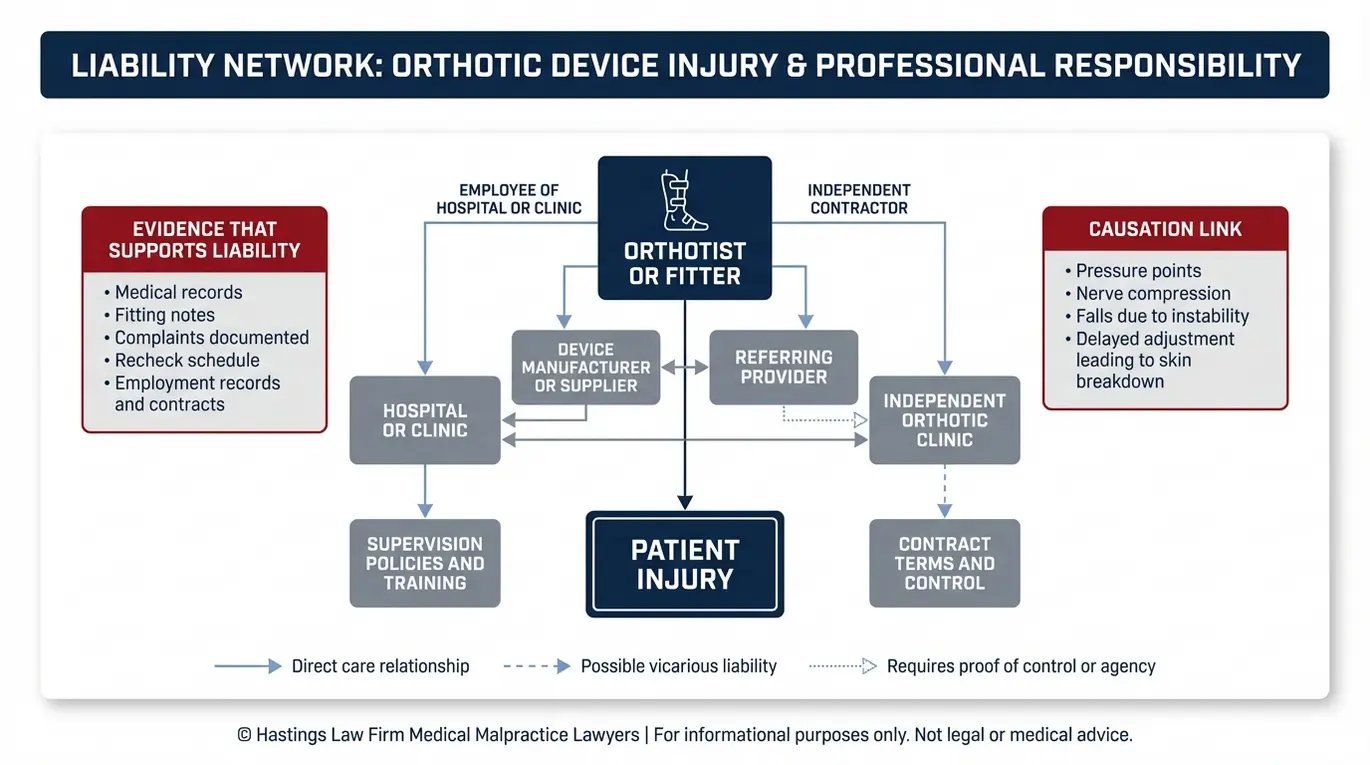
Identifying who is legally responsible depends on the orthotist’s employment status. If the orthotist was a hospital or clinic employee, the facility may share liability under a legal theory called vicarious liability, meaning the employer can be held responsible for the negligent acts of its staff. If the orthotist was an independent contractor, the facility may argue it bears no responsibility for that individual’s clinical decisions.
| Factor | Hospital Employee | Independent Contractor |
|---|---|---|
| Who can be sued | Both the orthotist and the hospital/clinic | Typically only the orthotist and their own practice |
| Vicarious liability | Generally applies to the employer | Usually does not extend to the hiring facility |
| Evidence we examine | Employment records, facility protocols, supervision structure | Service contracts, billing arrangements, control over clinical decisions |
We investigate contracts, billing records, and supervisory relationships to determine every party that may bear responsibility for the harm you experienced.
Recovering Damages for Injuries Caused by Improper Bracing
Patients harmed by orthotist negligence may recover economic damages for medical costs and lost wages, as well as non-economic damages for pain, suffering, and physical impairment. The full scope of recoverable compensation depends on the severity of the injury and the financial losses tied to long-term impact on the patient’s life.
Economic damages in Texas cover the measurable financial losses tied to the injury:
- Corrective surgeries to repair tissue damage, decompress nerves, or address complications from a faulty device
- Replacement orthotic devices or prosthetics
- Physical therapy, rehabilitation, and ongoing medical treatment
- Lost wages and diminished earning capacity if the injury prevents the patient from working
These funds are intended to restore the patient’s financial stability. They include reimbursement for past and future bills, ensuring that the burden of paying for corrective care does not fall on the patient rather than the negligent party.
Non-economic damages address the human cost that does not come with a receipt:
- Physical pain and suffering caused by the injury and subsequent treatments
- Disfigurement, including scarring from pressure sores or surgical correction
- Mental anguish, anxiety, and reduced quality of life
- Loss of consortium, which compensates a spouse for the loss of companionship and support resulting from the injury
In rare cases involving gross negligence, where the orthotist’s conduct was so far below acceptable standards that it demonstrated a conscious disregard for patient safety, punitive damages may also be available.
Texas law does impose a cap on non-economic damages in medical malpractice cases. Under current statute, Texas damage caps limit non-economic damages to $250,000 per claimant against all individual healthcare providers combined, and $250,000 per healthcare institution, with a maximum of $500,000 across all institutions. Economic damages, however, have no cap. This makes thorough documentation of every financial loss, including projected future costs, essential to maximizing the total recovery.
If a patient dies as a result of orthotist negligence, surviving family members may pursue a wrongful death claim to recover both economic and non-economic losses.
Texas Statute of Limitations for Orthotist Malpractice Lawsuits
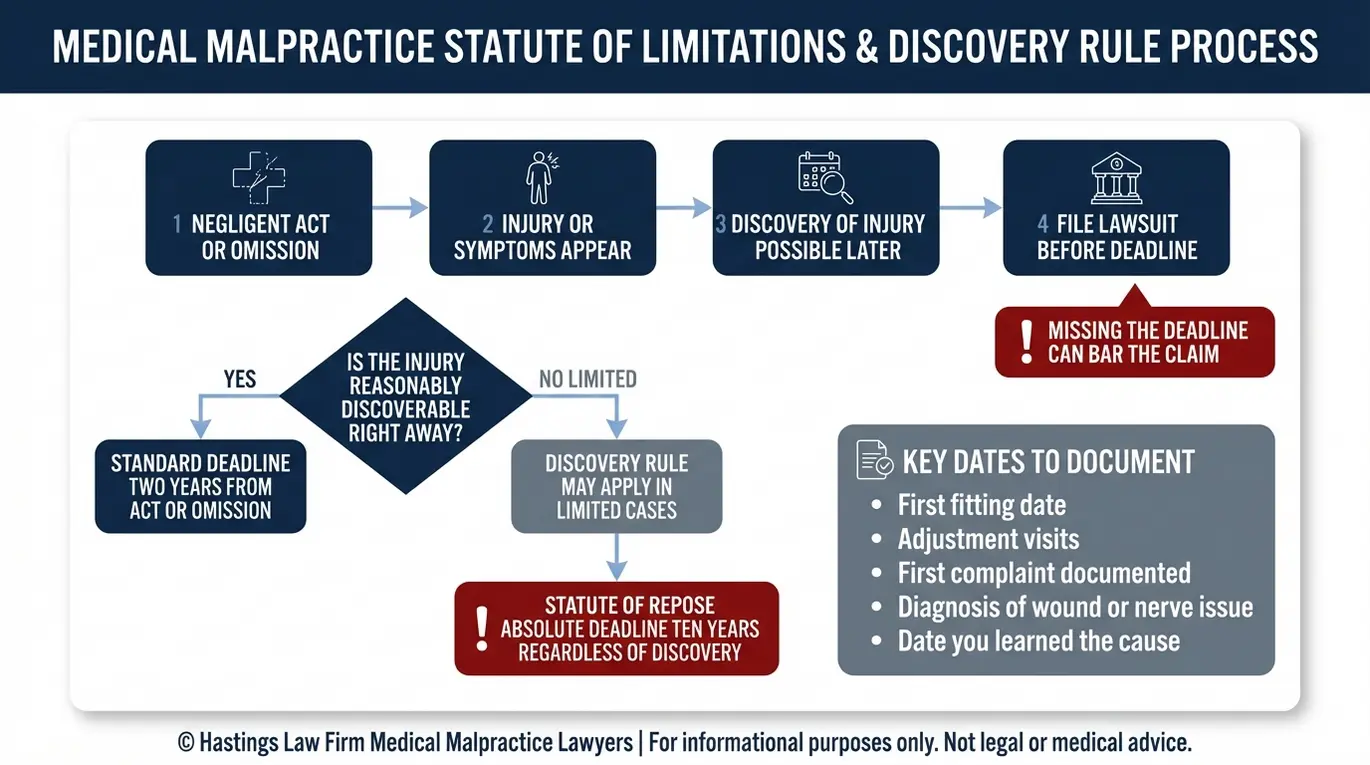
In Texas, a medical malpractice claim must typically be filed within two years from the occurrence of the breach or tort, or from the date the medical treatment that is the subject of the claim is completed. A statute of limitations is the legal time limit for filing a lawsuit. This filing deadline, set by Texas Civil Practice and Remedies Code Section 74.251, applies to claims against orthotists and other healthcare providers. Missing this window almost always means losing the right to pursue compensation, regardless of the potential for a favorable settlement or trial verdicts.
There is a limited exception known as the discovery rule. In some orthotic injury cases, the harm is not immediately apparent. Internal nerve damage, gradual skin breakdown beneath a brace, or slowly developing alignment problems may not become obvious until well after the device was fitted. When a patient could not reasonably have discovered the injury at the time it occurred, the two-year clock may begin running from the date the injury was discovered or should have been discovered through reasonable diligence.
Texas also enforces a statute of repose, which sets an absolute outer boundary of ten years from the date of the negligent act. Even if the injury remained hidden for years, no medical malpractice claim may be filed after this ten-year deadline has passed.
Because these deadlines are strictly enforced and the exceptions are narrowly applied, early consultation with a Texas orthotist malpractice lawyer is one of the most important steps you can take to protect your rights in a personal injury claim.
Contact the Texas Doctor Malpractice Attorneys at Hastings Law Firm Today for Help
If you or a loved one suffered injury due to negligent orthotic care, you deserve a legal team that focuses exclusively on medical malpractice. Our role is to handle the legal and medical analysis so you can focus on recovery.
At Hastings Law Firm, founded by board-certified trial lawyer Tommy Hastings, our attorneys work alongside in-house nurse consultants and a national network of medical experts to investigate what went wrong and identify who is responsible. Tommy is board-certified in Personal Injury Trial Law by the Texas Board of Legal Specialization, a distinction held by fewer than 2% of attorneys in the state. Every case we accept is prepared as though it will go to trial, which positions our clients for the strongest possible outcome whether through settlement or a jury verdict.
We operate on a contingency fee basis, meaning you pay no attorney fees or costs unless we recover compensation on your behalf. Contact Hastings Law Firm today to schedule your free, confidential case evaluation.
Frequently Asked Questions About Orthotist Malpractice in Texas


This content was researched and written by the Hastings Law Firm editorial team, which includes attorneys, medical professionals, and experienced researchers. Our writing is informed by internal knowledge and practical experience, and we cross-check critical details against authoritative sources cited throughout. Every piece undergoes human-led fact-checking and legal review. Because legal and medical information can change, if you spot an error, please contact us. Learn more about our content standards and review process on our editorial policy page.

Brady D. Williams is a nationally recognized medical malpractice attorney who has spent his career handling high-stakes litigation for injured patients and families across the country. Licensed in both Texas and California, Brady draws on experience from hundreds of resolved medical cases to break down complex legal and medical topics for the people who need that information most. His writing reflects the same attention to detail and commitment to clarity that he brings to every case he handles.
