


Phoenix Organ Puncture or Perforation Lawyer
An organ puncture or perforation during surgery can leave patients facing sudden complications, longer hospitalization, and lasting harm. These injuries happen when a surgical instrument damages an organ, blood vessel, or tissue that was not part of the intended procedure, and they are sometimes missed during the operation. When a perforation is not identified and repaired promptly, severe infection, organ failure, permanent disability, or fatal outcomes can follow, along with emergency corrective surgery and prolonged recovery. If you or a loved one were harmed or worse due to organ puncture or perforation in Phoenix, Arizona, contact Hastings Law Firm for a free, confidential case review.

Last Updated: July 27, 2026
Trusted Phoenix Medical Attorneys for Surgical Negligence
When a routine surgery leads to an unexpected injury inside your body, the confusion and fear can be overwhelming. An organ puncture or perforation, sometimes called an iatrogenic organ injury, means a surgical instrument damaged an organ, blood vessel, or tissue that was never supposed to be part of the procedure. These injuries can cause serious complications, extended hospital stays, and lasting harm that changes your daily life.
If you or a loved one experienced this kind of injury during surgery in Phoenix, you may have a valid medical malpractice claim. As a Phoenix Organ Puncture or Perforation Lawyer, Hastings Law Firm focuses exclusively on medical malpractice. Founded by board-certified trial attorney Tommy Hastings, our team includes in-house medical professionals and former defense attorneys who know how hospitals respond to these claims. Contact us for a free, confidential case evaluation to learn what happened and understand your legal options.

Common Types of Organ Puncture and Perforation Injuries
An organ puncture occurs when a surgeon accidentally cuts, nicks, or perforates an internal organ, vessel, or tissue not involved in the intended procedure, often caused by negligence during laparoscopic entry or careless scalpel use. These surgical errors can happen in a number of ways: a slip of the hand during a traditional open surgery, improper trocar insertion during laparoscopic entry (the initial placement of a narrow instrument through the abdominal wall) in laparoscopic surgery, or poor visualization on a surgical monitor during robotic-assisted procedures.
An organ puncture lawyer in Phoenix often sees these injuries go undetected during the operation itself, which is what turns a mistake into a potential case of negligence. A qualified perforation injury attorney understands that when the injury is missed, the patient may be discharged without knowing anything is wrong, only to develop severe symptoms hours or days later.
Common organ puncture and perforation injuries include:
- Perforation of the bowel or intestine: A tear in the intestinal wall can leak bacteria and waste into the abdominal cavity, leading to a dangerous condition called intra-abdominal sepsis.
- Laceration of bladder or ureter: This internal organ damage is frequently associated with hysterectomies and C-sections, where the bladder sits close to the surgical field.
- Artery injury or vascular damage: Nicking a major artery or blood vessel, a laceration of a critical vascular structure, can cause rapid hemorrhage that becomes life-threatening within minutes.
- Nerve injury or damage: Accidental severing or compression of nerves during incision can result in chronic pain, numbness, or loss of function.
According to Arizona Revised Statutes § 12-563, proving these surgical puncture cases requires showing that the surgeon’s actions fell below the accepted standard of care. A lawyer for organ perforation can help determine whether the injury was truly unavoidable or the result of negligence.
Proving Negligence: Holding Phoenix Surgeons Accountable
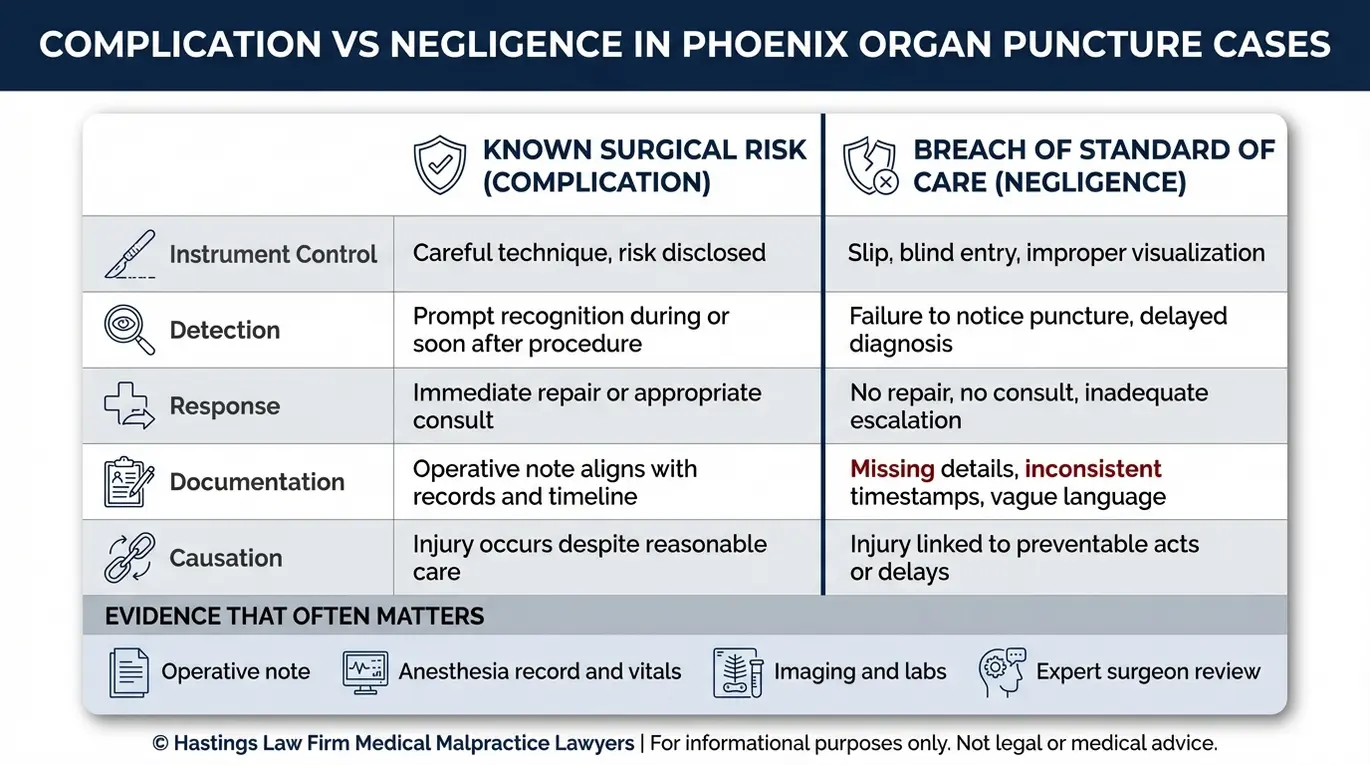
Proving negligence requires demonstrating that the surgeon deviated from the accepted standard of care, meaning a competent doctor would not have made the same error, or that the surgeon failed to identify and repair the puncture in a timely manner.
One of the most important distinctions a Phoenix organ puncture or perforation lawyer must establish is the difference between a known surgical complication and actual negligence. A Phoenix surgical error attorney knows that surgeons sometimes argue that a perforation of the bowel (an intestinal perforation) or other organ nick is simply a “known risk” of the procedure and part of informed consent.
This can be true in some cases. But when the injury happens because of careless technique, or when there is a delayed diagnosis, the failure to identify the injury promptly, the claim shifts from an accepted complication to a breach of the standard of care. A perforation malpractice lawyer can help determine if this breach occurred.
Proving surgical negligence in Phoenix requires expert medical testimony. An independent surgeon in the same field reviews the case records and provides an opinion on whether the care provided fell below acceptable standards. This outside perspective is essential because the legal system does not allow a jury to decide medical questions without qualified guidance.
Your right to obtain your own medical records is protected under federal law. The U.S. Department of Health and Human Services HIPAA access guidelines confirm that patients can request complete copies of their health information, including surgical records.
The Challenge of Operative Notes
Operative notes, the formal written report a surgeon creates after a procedure, present a unique challenge. These documents are the surgeon’s official record of what happened during your operation. The surgeon writes this document themselves, often hours after the surgery is complete.
Details about errors, unexpected bleeding, or instrument slips may be minimized or left out entirely. Our team, which includes experienced nurses who formerly worked inside hospital systems, knows how to identify hidden evidence or gaps in surgical logs. We cross-reference them with anesthesia records, nursing notes, and post-operative vitals to reconstruct what actually happened.
The Hastings Law Firm Difference
Results matter, but what truly sets us apart is how we achieve them. Every verdict, every settlement, and every Phoenix courtroom victory comes from one guiding promise: To treat each client’s fight for justice as if it were our own.
This balance of skill, experience, and empathy reflects our core philosophy that justice should not only compensate the injured, but also make health care safer nationwide.

Life-Altering Consequences of Untreated Perforations
If an organ perforation is not immediately diagnosed and repaired, it can lead to catastrophic outcomes including sepsis, organ failure, permanent disability, and the need for emergency corrective surgeries. A small tear in the bowel, for example, may not cause obvious symptoms right away. But as intestinal contents leak into the abdomen, peritonitis (a severe inflammation of the abdominal lining) can develop, progressing quickly to sepsis, a life-threatening infection that can cause organ failure and wrongful death.
The physical toll extends beyond the initial injury. Patients often face emergency corrective surgeries, extended ICU stays, and months of recovery. The financial burden of prolonged hospitalization, long-term disability, and lost income compounds the harm.
| Injury Type | Potential Consequence |
|---|---|
| Bowel perforation | Sepsis, peritonitis, colostomy |
| Bladder laceration | Urinary complications, repeat surgery |
| Vascular injury | Hemorrhage, blood transfusions, organ damage |
| Nerve damage | Chronic pain, permanent loss of function |
A Phoenix malpractice attorney can help document these losses and connect them to the original surgical error through a thorough organ puncture injury claim. Consult a lawyer for bowel perforation to understand your rights.
Identifying Liable Parties for Surgical Errors in Arizona
Liability in organ puncture cases may extend beyond the lead surgeon to include assisting residents, the hospital for inadequate staffing or equipment failures, or device manufacturers if a surgical tool malfunctioned. Determining liability for surgical errors requires investigating the entire surgical team.
Nursing staff also have a duty to monitor vitals after surgery. If post-operative signs of internal bleeding, such as dropping blood pressure or rising heart rate, were missed or ignored, that failure can support a separate claim of hospital negligence.
When suing a hospital in Phoenix, questions of vicarious liability may arise. This legal concept means the facility is responsible for errors made by its employees during surgery or recovery. The Arizona Court of Appeals addressed related questions of institutional liability in *Fadely v. Encompass Health Valley of the Sun Rehabilitation Hospital*, reinforcing that healthcare facilities can be held accountable for failures within their systems. A Phoenix organ puncture or perforation lawyer investigates every potential source of liability to build the strongest possible case.

How to File an Organ Puncture Malpractice Claim
Filing a claim involves an immediate investigation by a specialized medical malpractice firm to secure medical records, followed by an expert review to confirm negligence before filing a lawsuit within Arizona’s statute of limitations. Here is how the process typically works with a Phoenix organ puncture or perforation lawyer:
- Free confidential evaluation: Our patient advocates listen to your experience and assess whether the facts support a potential claim. There is no cost and no obligation. We operate on a contingency fee basis.
- Medical record collection and analysis: Our in-house nurses and legal team obtain your complete surgical records, nursing notes, and imaging studies. We build a detailed timeline of what happened before, during, and after the procedure.
- Filing the preliminary expert opinion: Under Arizona Revised Statutes § 12-2603, a plaintiff in a medical malpractice case must serve a preliminary expert opinion affidavit setting forth the basis for the claim that the standard of care was breached. This affidavit must be served with initial disclosures after the lawsuit is filed.

Contact the Phoenix Surgical Error Attorneys at Hastings Law Firm Today for Help
Hastings Law Firm prepares every case from day one as though it will go before a jury. That trial-ready approach, combined with our team of former defense attorneys and in-house medical staff, sends a clear message to hospitals and their insurers: we will not accept less than fair value for your injuries.
Time to file a claim in Arizona is limited. If you or a loved one suffered an organ perforation during surgery, contact us for a free case evaluation. We can review your records, explain what we find, and help you understand your legal options.
You pay no attorney fees unless we recover compensation for you. Call us today or complete our online form to take the first step toward answers.
Frequently Asked Questions About Organ Puncture or Perforation in Phoenix


This content was researched and written by the Hastings Law Firm editorial team, which includes attorneys, medical professionals, and experienced researchers. Our writing is informed by internal knowledge and practical experience, and we cross-check critical details against authoritative sources cited throughout. Every piece undergoes human-led fact-checking and legal review. Because legal and medical information can change, if you spot an error, please contact us. Learn more about our content standards and review process on our editorial policy page.

Tommy Hastings, founder of Hastings Law Firm, is a board-certified personal injury trial lawyer dedicated exclusively to healthcare injury cases. Since 2001, he has represented injured patients and families in litigation against major hospital systems, pharmaceutical companies, and negligent healthcare providers nationwide. He has handled numerous high-profile cases that have drawn national media attention and resulted in multi-million dollar recoveries. He draws on that experience in his writing, helping readers understand how these cases work and what options may be available to them.
