


Texas Optometrist Malpractice Lawyer
Eye specialist negligence can leave patients with permanent vision loss and lasting disruption to daily life when warning signs are missed or referrals are delayed. Understanding the difference between optometrists and ophthalmologists can clarify who was responsible for diagnosis, testing, and timely escalation of care. Common problems include incomplete exams, missed findings, and failures to act on symptoms that should trigger urgent evaluation. These cases often turn on whether earlier detection would have changed the outcome and what records show about the care provided. If you or a loved one were harmed or worse due to optometrist malpractice in Texas, contact Hastings Law Firm for a free, confidential case review.
Last Updated: July 27, 2026
Trusted Legal Representation for Eye Specialist Negligence in Texas
When an eye care provider misses the signs of a serious condition, the consequences can be life-altering. Vision loss that could have been prevented with a timely diagnosis or referral leaves patients and families searching for answers, often unsure whether what happened qualifies as negligence.
If you or a loved one experienced a worsening eye condition after a missed or delayed diagnosis, you may have legal options. Our Texas optometrist malpractice lawyers can review your medical records, consult with qualified eye care experts, and determine whether the care you received fell below the accepted standard.
Hastings Law Firm focuses exclusively on medical malpractice. Our team includes in-house medical professionals who understand clinical eye care protocols and former defense attorneys who know how the other side builds its case. Contact us for a free, confidential evaluation so we can review what happened and explain your options.

Distinguishing Liability Between Optometrists and Ophthalmologists
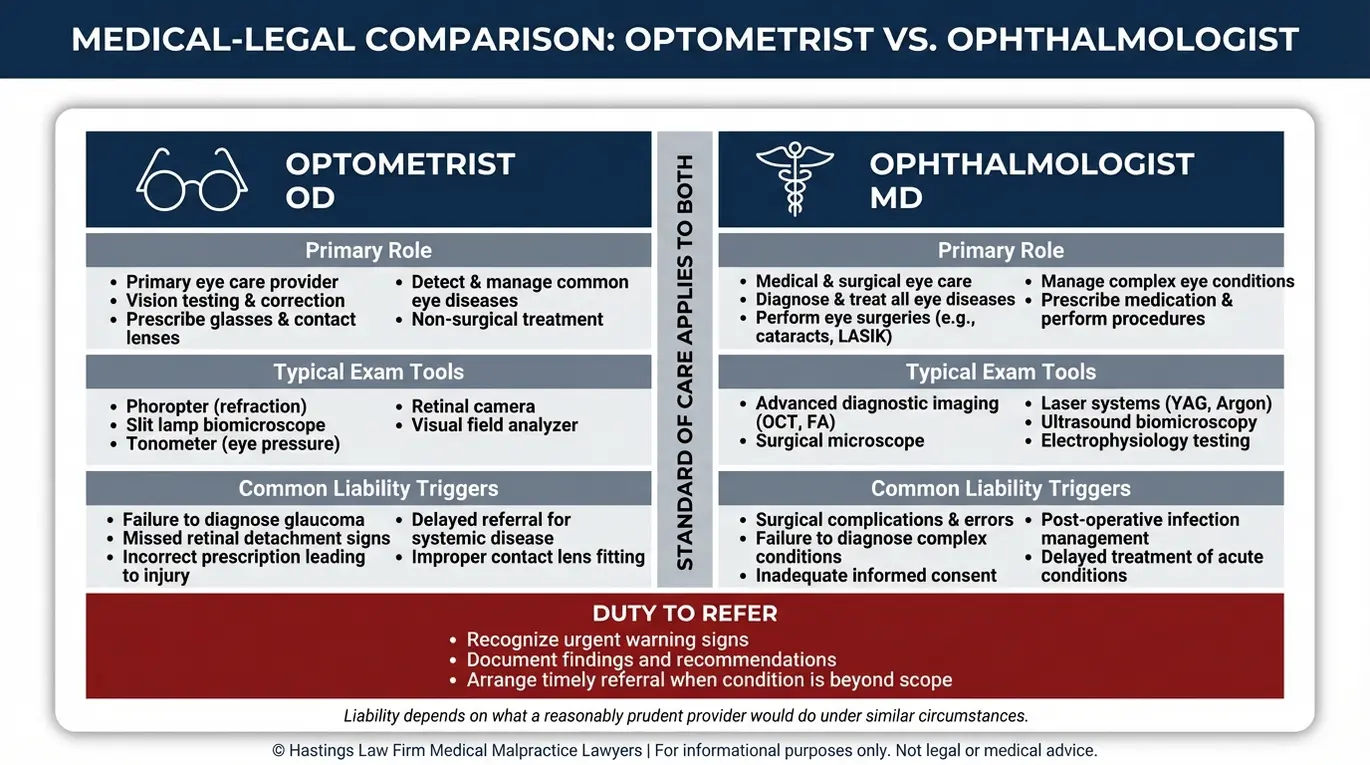
An optometrist is a primary eye care provider who focuses on vision tests and corrective lenses, while an ophthalmologist is a medical doctor licensed to perform surgery and treat complex diseases; however, both are held to a strict standard of care regarding diagnosis and timely referrals. Optometrists (ODs) are vision specialists, while ophthalmologists (MDs) are medical doctors who treat advanced pathologies.
The legal distinction between these providers matters because it shapes the duty each one owes you. Under Texas Occupations Code Chapter 351, optometrists are authorized to examine, diagnose, and treat certain eye conditions. That authorization carries a significant obligation: the duty to refer. When an optometrist identifies signs of a condition beyond their scope, such as a retinal tear or rapidly progressing disease, they are required to refer the patient to a specialist without delay.
A common defense in these cases is that the optometrist was “just checking vision.” This argument may not reflect clinical duties when the standard of care requires a thorough evaluation, including a dilated fundus exam (DFE). Patients rely on these professionals to detect abnormalities even during routine visits. Missing clear signs of disease during an eye exam that should have included a full evaluation can suggest medical negligence.
Our Texas optometrist malpractice attorneys work with qualified experts in both optometry and ophthalmology to determine exactly where the breakdown in care occurred and who bears responsibility.
| Provider Type | Scope of Practice | Common Liability Triggers |
|---|---|---|
| Optometrist (OD) | Vision testing, corrective lenses, disease screening, some treatments | Failure to diagnose, failure to refer, incomplete exam, missed retinal findings |
| Ophthalmologist (MD) | Surgery, advanced disease treatment, laser procedures, full medical eye care | Surgical errors, delayed treatment, informed consent failures, post-operative negligence |
Common Diagnostic Errors Leading to Permanent Vision Loss
The most frequent grounds for malpractice suits against eye doctors involve the failure to diagnose time-sensitive conditions such as retinal detachment, glaucoma, or diabetic retinopathy, leading to irreversible blindness that could have been prevented with early intervention. A malpractice lawyer for eye exams can help determine whether a missed diagnosis led to your outcome.
Retinal Detachment
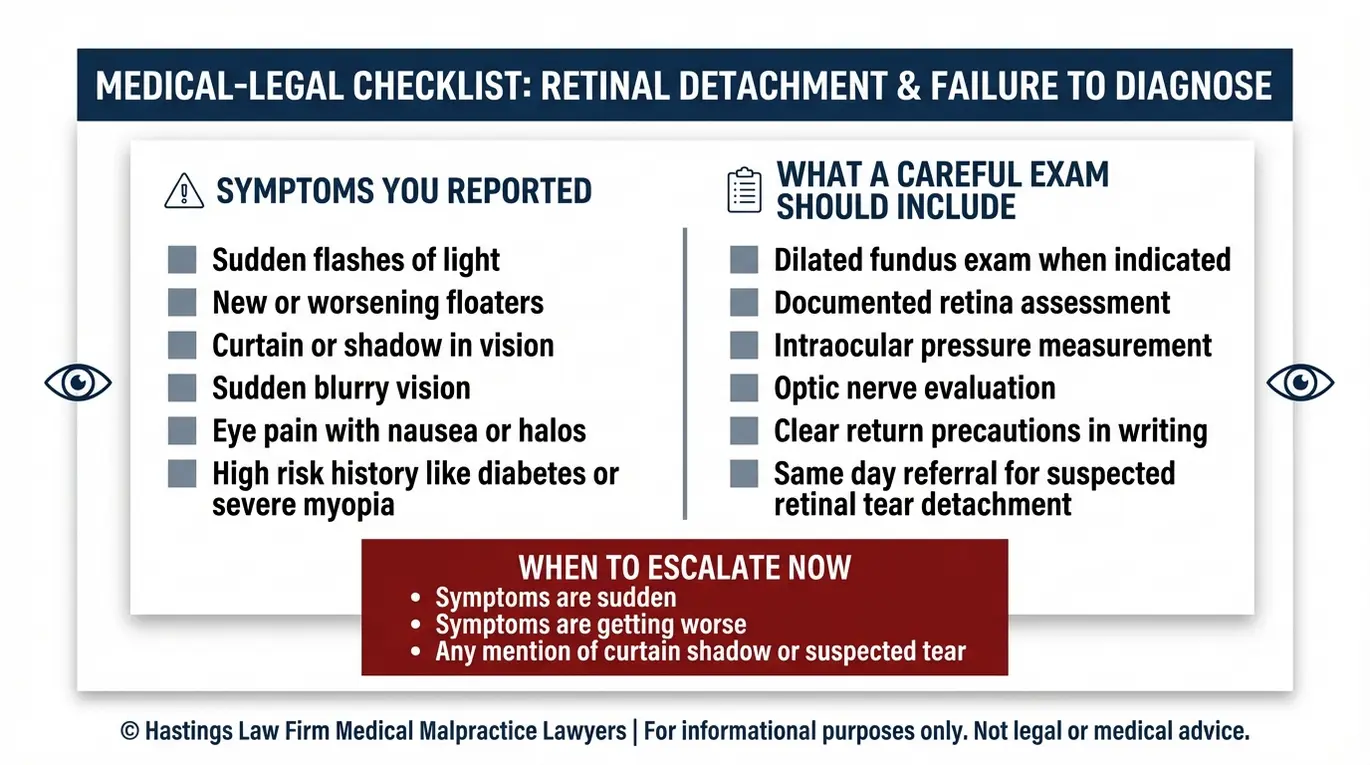
Retinal Detachment is a medical emergency involving the light-sensitive tissue at the back of the eye. Patients often present with flashes and floaters, which are sudden bursts of light or dark spots drifting across vision, warning that the retina may be tearing. According to the National Eye Institute, prompt treatment is essential.
Dismissing these symptoms or failing to perform a dilated fundus exam (DFE), a procedure using drops to widen the pupil for retinal inspection, allows treatable detachments to become irreversible.
Glaucoma
Glaucoma is a group of conditions that damage the optic nerve, often called the “silent thief of sight” because it progresses without obvious symptoms. Diagnosis requires measuring intraocular pressure and examining the optic nerve. Research published in PubMed Central on the optic nerve head in glaucoma confirms structural changes are primary indicators.
Failing to perform pressure tests or dilate pupils during routine exams can leave this condition undetected until permanent damage occurs.
Diabetic Retinopathy
Diabetic Retinopathy affects patients with diabetes and is caused by damage to the blood vessels of the retina. The standard of care requires consistent monitoring and timely referrals. Failing to track retinal changes or delay referrals allows the disease to advance to stages where vision loss becomes unavoidable.
Red flag symptoms and exam failures that may indicate negligence include:
- Complaints of flashes and floaters that were not investigated further
- No dilated fundus exam performed despite presenting symptoms
- Failure to measure intraocular pressure during a routine visit
- No referral to a specialist after abnormal findings
- Lack of follow-up monitoring for patients with diabetes or known risk factors
- Blurry vision or visual field loss reported but attributed to a simple prescription change can mask medical issues
The Significance of Macula Off Retinal Detachment
The macula is the central retina responsible for sharp vision. In retinal detachment cases, the distinction between macula-on detachment and “macula-off” can determine a patient’s visual outcome. A macula-on detachment means the central retina is still attached, and emergency surgical repair can often preserve sight.
Once it separates, a condition known as macula-off, permanent vision loss becomes likely even with repair. Proving a provider missed signs of a torn retina while the condition was still macula-on is central to establishing causation. If an earlier diagnosis could have caught the detachment before this pivotal shift, the failure to refer may have directly caused the blindness.
The Hastings Law Firm Difference
Results matter, but what truly sets us apart is how we achieve them. Every verdict, every settlement, and every Texas courtroom victory comes from one guiding promise: To treat each client’s fight for justice as if it were our own.
This balance of skill, experience, and empathy reflects our core philosophy that justice should not only compensate the injured, but also make health care safer nationwide.

Proving Negligence and the Standard of Care in Texas
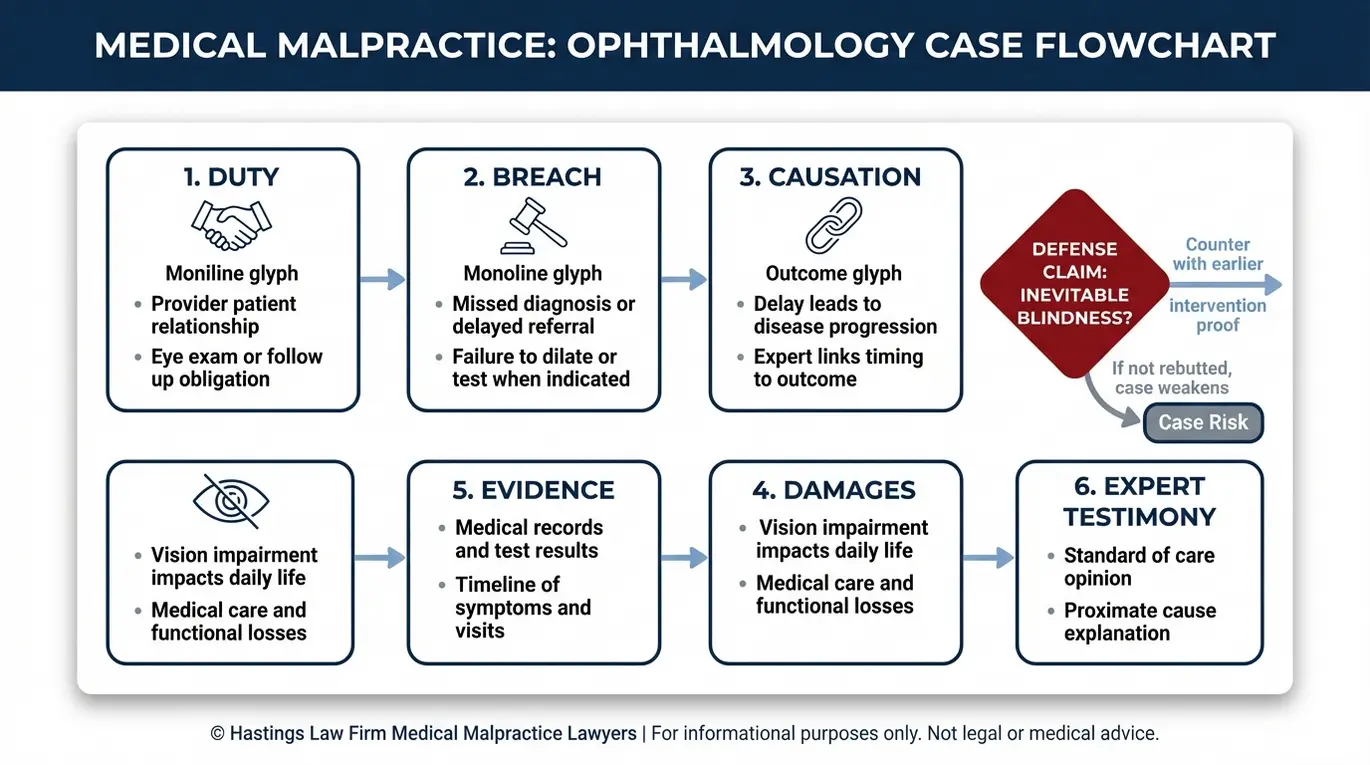
To win an eye malpractice claim in Texas, a plaintiff must prove via expert testimony that the optometrist deviated from the accepted standard of care, directly causing vision loss that would not have occurred otherwise. Establishing the standard of care means showing what a competent doctor would have done in the same situation.
Under Texas Civil Practice and Remedies Code Chapter 74, medical malpractice claims require proof of four elements. First, the provider owed the patient a duty of care, which begins with the doctor-patient relationship. Second, the provider breached that duty by failing to act as a competent peer would have. Third, the breach was the cause of the injury. And fourth, the patient suffered actual damages.
Establishing proximate cause is often the most contested element in these cases. Defense teams frequently argue that the vision loss was inevitable regardless of the diagnosis timeline. Our Texas optometrist malpractice lawyers counter this by working with qualified expert witnesses who can demonstrate that earlier detection and treatment would have changed the outcome.
Evidence starts with your medical records. We recommend requesting copies of all exam notes, imaging, and referral records as soon as possible. Our team reviews these records alongside diagnostic tools like tonometry, which measures intraocular pressure. We also use visual field testing, or perimetry, to map your range of vision and identify where the provider failed to meet the standard of care.
As a malpractice attorney for optometrist negligence cases, Hastings Law Firm also examines informed consent documentation. We determine whether the patient was properly advised about risks, alternative treatments, or the need for specialist evaluation.
Recoverable Damages for Vision Impairment
Victims of eye malpractice may recover compensation for both economic losses, such as surgeries and adaptive equipment, and non-economic damages, including pain, suffering, and the profound loss of quality of life associated with blindness. Economic damages cover measurable financial losses, while non-economic damages address personal impacts like pain and suffering.
When suing an eye doctor in Texas, recoverable damages generally fall into several categories:
- Past and future medical expenses: corrective surgeries, specialist visits, rehabilitation, prescription medications, and assistive devices
- Lost wages and earning capacity: income lost during recovery and reduced ability to work in the future, particularly for those whose careers depend on visual acuity
- Pain and suffering: physical discomfort from the injury and subsequent treatments
- Mental anguish: the emotional toll of coping with vision loss, including anxiety, depression, and grief
- Loss of enjoyment of life: the inability to participate in daily activities, hobbies, and experiences
- Physical impairment: the permanent functional limitations caused by blindness or partial vision loss
For patients facing a lifetime of visual impairment, the long-term financial impact is significant. Our team works with life care planning experts, professionals whose methodology aligns with the Journal of Life Care Planning’s Standards of Practice, to calculate the full cost of living with blindness. This includes everything from in-home assistance to vocational retraining and adaptive technology.
Contact the Texas Doctor Malpractice Attorneys at Hastings Law Firm Today for Help
Losing your vision because a provider missed what should have been caught is not something you should have to accept without answers. At Hastings Law Firm, we exist to hold negligent medical providers accountable and help our clients secure the financial stability they need to move forward.
Time matters in these cases. Texas imposes strict filing deadlines on medical malpractice claims, and important evidence can deteriorate. Because we focus exclusively on medical malpractice litigation, our team brings a level of clinical knowledge that general firms may not match. Founder Tommy Hastings is board-certified in Personal Injury Trial Law and brings over 20 years of experience to every case.
Our in-house nurses review your records, and our attorneys build your case from day one as if it is going to trial. Our firm handles every stage of the legal process, from investigation to trial, on a contingency fee basis. You pay nothing unless we recover compensation on your behalf. If you or a loved one suffered vision loss, contact Hastings Law Firm for a free, confidential case evaluation.
Frequently Asked Questions About Optometrist Malpractice in Texas


This content was researched and written by the Hastings Law Firm editorial team, which includes attorneys, medical professionals, and experienced researchers. Our writing is informed by internal knowledge and practical experience, and we cross-check critical details against authoritative sources cited throughout. Every piece undergoes human-led fact-checking and legal review. Because legal and medical information can change, if you spot an error, please contact us. Learn more about our content standards and review process on our editorial policy page.

Gabe Sassin has focused exclusively on medical malpractice law since 2007. After spending more than a decade as a malpractice defense attorney, he knows exactly how the other side works. He has seen firsthand how healthcare providers, insurers, corporate defendants, and their legal teams think, prepare, and build their defense against claims. That knowledge works for the people who need it most today, injured patients and their families. His unique experience shapes everything he writes, giving readers a look at how these cases actually work from someone who has handled them from both sides.
