


Dallas Nursing Home Supervision Lawyer
Written by: Hastings Law Firm | Reviewed by: Brady D. Williams | Updated: July 27, 2026
Negligent supervision in a nursing home can leave a resident without timely help, basic safety monitoring, or protection from foreseeable harm. These failures are often tied to understaffing, poor training, or ignored care plans, and they can result in serious injuries, worsening medical emergencies, or fatal outcomes. Families may notice patterns such as repeated falls, unexplained bruising, poor hygiene, or rapid weight loss that suggest a lack of oversight. If you or a loved one were harmed or worse due to nursing home negligent supervision in Dallas, Texas, contact Hastings Law Firm for a free, confidential case review.
Protecting Dallas Seniors from Negligent Oversight
What You Should Know About Elderly Elopement Negligence Claims in Dallas:
- Serious injury or fatal outcomes can result when a facility fails to provide adequate monitoring, staffing, or security for foreseeable risks.
- Accountability can turn on whether the facility followed the resident care plan and documented risk assessments for supervision needs.
- Options for recovery can be affected when understaffing or ghost staffing leaves residents without timely assistance.
- Severe harm can follow when call lights, bed alarms, or required checks are not answered or performed.
- Life threatening emergencies can develop when wandering and elopement risks are not actively managed for residents with cognitive impairment.
- Physical and emotional harm can increase when resident on resident aggression is not supervised and de escalated.
- Recognition of neglect can depend on patterns such as unexplained bruises, poor hygiene, rapid weight loss, or repeated falls without documentation.
- Compensation can include medical bills, pain and suffering, physical impairment, and wrongful death damages when negligence causes harm.
- Additional financial consequences can apply when gross negligence or willful indifference is shown through the evidence.
- Public facility ratings can affect decision making when staffing history and inspection results show ongoing supervision concerns.

A Healthcare Focused Law Firm
When a family member is placed in a nursing home, there is an expectation that trained staff will watch over them, respond to their needs, and keep them safe. Discovering that your loved one has been injured because no one was paying attention is a deeply unsettling experience. You trusted the facility with their care, and that trust was broken.
If you suspect that inadequate monitoring or staffing contributed to your loved one’s injury, you are not powerless. A Dallas nursing home supervision lawyer can help you understand what went wrong, determine who is responsible, and identify the legal options available to your family. At Hastings Law Firm, our team includes in-house nurse consultants and former defense attorneys who know how to investigate these cases from the inside out. Contact us for a free, confidential case evaluation to learn where you stand.
Understanding Negligent Supervision in Long-Term Care Facilities
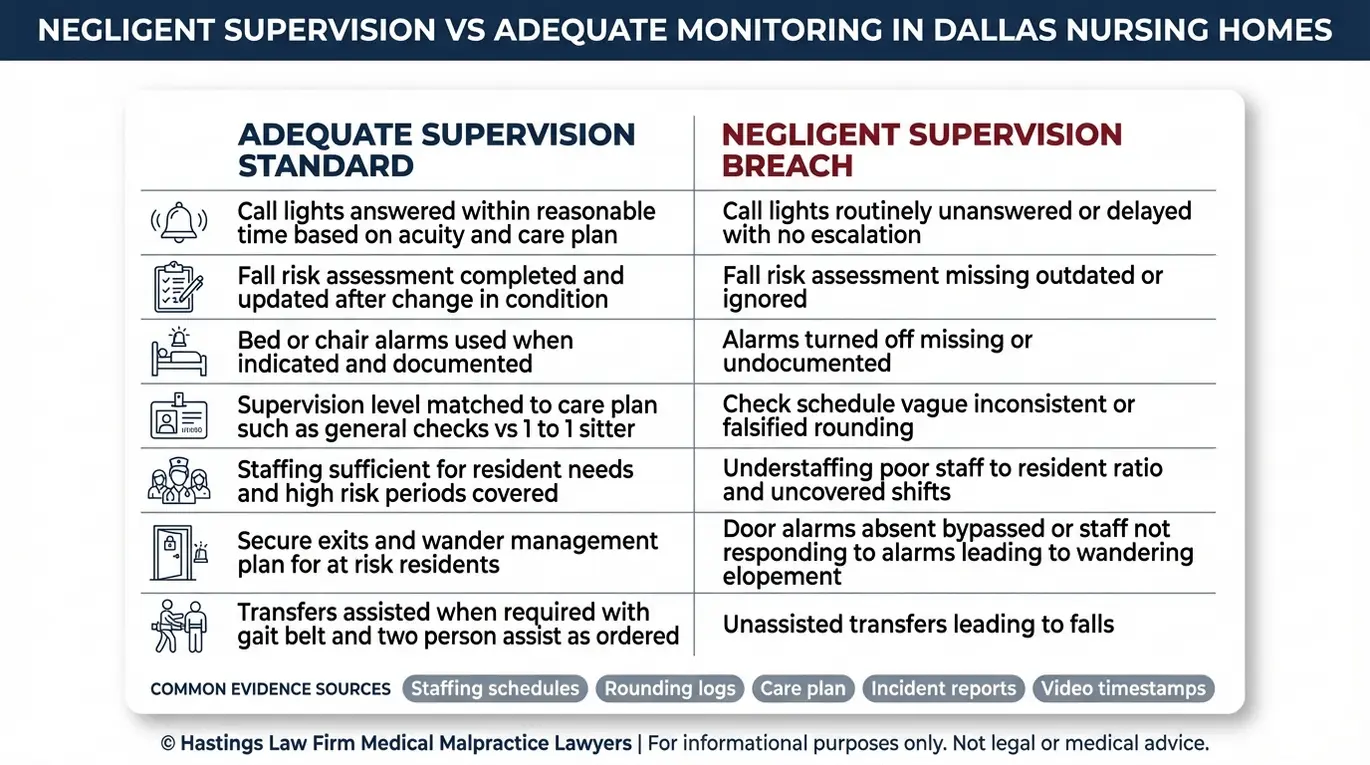
Negligent supervision occurs when a nursing home fails to provide the level of monitoring, staffing, or security a resident needs to remain safe from foreseeable harm, such as falls, wandering, or prolonged immobility. It is one of the most common and preventable forms of nursing home negligence.
Every long-term care facility has a legal duty to assess each resident’s individual risks and assign appropriate supervision levels. The standard of care is the level of professional service that a reasonable facility must provide under similar circumstances. For some residents, this means general monitoring. For others with cognitive decline, the standard may require one-on-one observation or bed alarms (sensors that alert staff when a resident attempts to leave their bed).
When a facility operates with insufficient staffing, that duty often goes unmet. Understaffing and poor staff-to-resident ratios are frequent systemic causes of unsupervised care. When there are not enough trained aides on a unit, residents who need help simply do not get it in time. Negligent supervision remains a primary focus for families seeking accountability for these failures.
Common examples of negligent supervision include:
- Failure to answer call lights within a reasonable timeframe
- Failure to activate or respond to bed alarms for fall-risk residents
- Ignoring documented fall risk assessments when assigning staff
- Leaving cognitively impaired residents in unsecured areas without monitoring
- Failing to perform required wellness checks or rounding
You can check a facility’s staffing history through the CMS Care Compare Nursing Home Five-Star Quality Rating System. This system tracks staffing levels, health inspection scores, and quality measures for every Medicare-certified nursing home.
Facility Factors Leading to Inadequate Supervision
Supervision failures rarely happen in isolation. These failures often stem from administrative decisions regarding facility resources and personnel management. Understaffing, which means operating a facility without enough qualified personnel to meet residents’ documented needs, is the most direct cause. Some facilities engage in ghost staffing, the practice of reporting higher staffing levels on paper than what actually exists during a given shift.
A lack of staff training also affects safety. Even in assisted living facilities with adequate headcounts, aides who are not properly trained to recognize fall risks or manage dementia cannot provide safe supervision. We evaluate both the staffing numbers and the quality of training when building your case.
Common Injuries Resulting from Lack of Monitoring
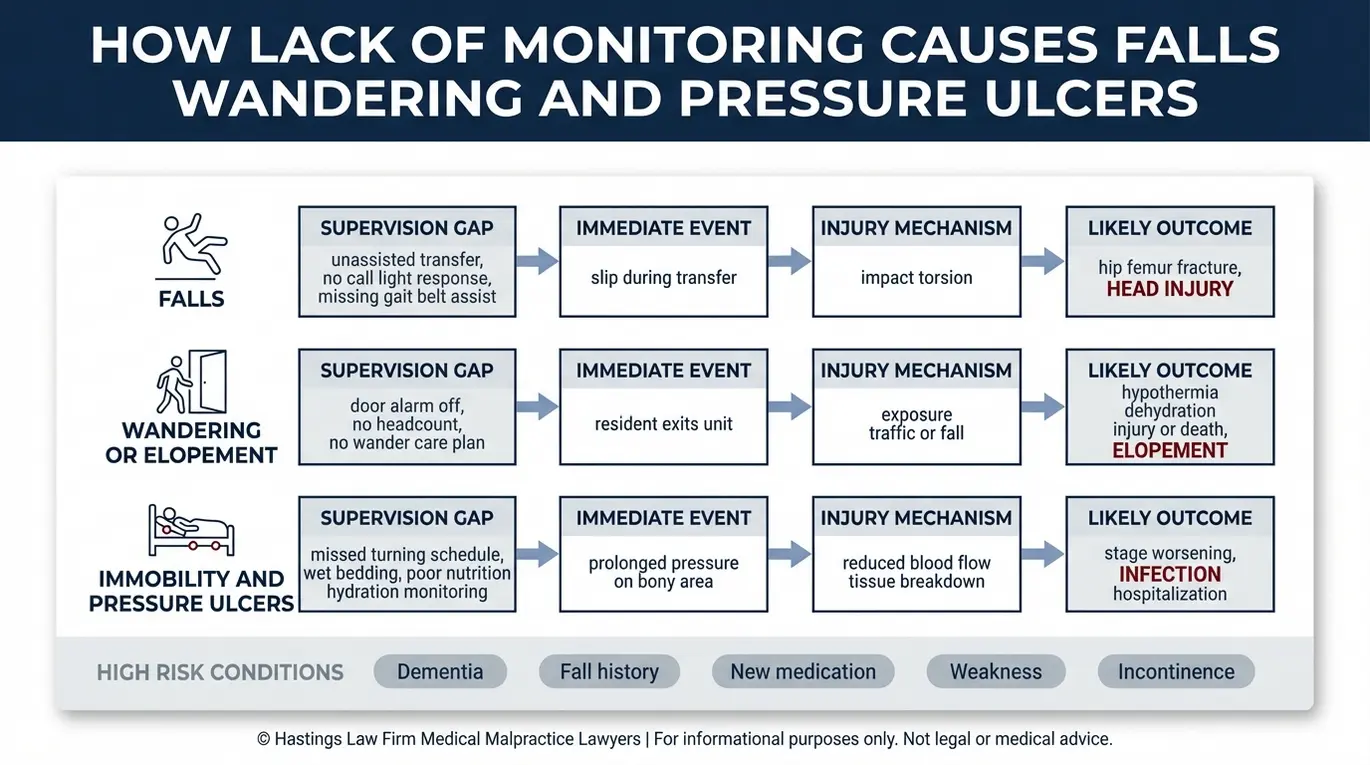
When residents are left unattended, the most frequent outcomes are severe fractures from falls and fall injuries, life-threatening wandering incidents, and the development of bedsores and pressure ulcers due to prolonged immobility. Each of these injuries is directly tied to a failure in supervision and can even lead to wrongful death. A significant lack of monitoring often allows preventable conditions to escalate into medical emergencies.
Falls are the leading cause of serious injury in nursing homes. According to the Centers for Disease Control and Prevention (CDC), falls are extremely common among older adults and frequently result in hip fractures or traumatic brain injuries. Many of these falls happen during unassisted transfers, when a resident tries to move without help because no staff member is available.
Wandering and elopement present an acute danger for residents with Alzheimer’s disease or other forms of dementia. Wandering refers to a cognitively impaired resident moving into unsafe areas within the facility. Elopement means the resident leaves the building entirely, often without anyone noticing. The California Advocates for Nursing Home Reform (CANHR) Dementia Care Checklist outlines the precautions facilities should take.
Resident-on-resident aggression is another consequence supervision lawyers in Dallas see regularly. When staff are not present to intervene, verbal conflicts between residents can escalate into physical altercations. This causes serious injury to vulnerable individuals who cannot protect themselves.
| Supervision Failure | Foreseeable Risk | Potential Outcome |
|---|---|---|
| No response to call light | Resident attempts to move unassisted | Hip fracture, head injury from fall |
| Unsecured exit doors | Cognitively impaired resident wanders out | Exposure, traffic injury, death |
| No staff on unit during shift | Resident-on-resident conflict | Bruising, fractures, psychological trauma |
| Missed repositioning schedule | Prolonged immobility | Stage 3 or 4 pressure ulcers, infection |
| Inadequate mealtime assistance | Resident unable to eat independently | Malnutrition, dehydration, weight loss |
The Hastings Law Firm Difference
Results matter, but what truly sets us apart is how we achieve them. Every verdict, every settlement, and every Dallas courtroom victory comes from one guiding promise: To treat each client’s fight for justice as if it were our own.
This balance of skill, experience, and empathy reflects our core philosophy that justice should not only compensate the injured, but also make healthcare safer nationwide.

Signs Your Loved One Is Suffering from Unsupervised Care
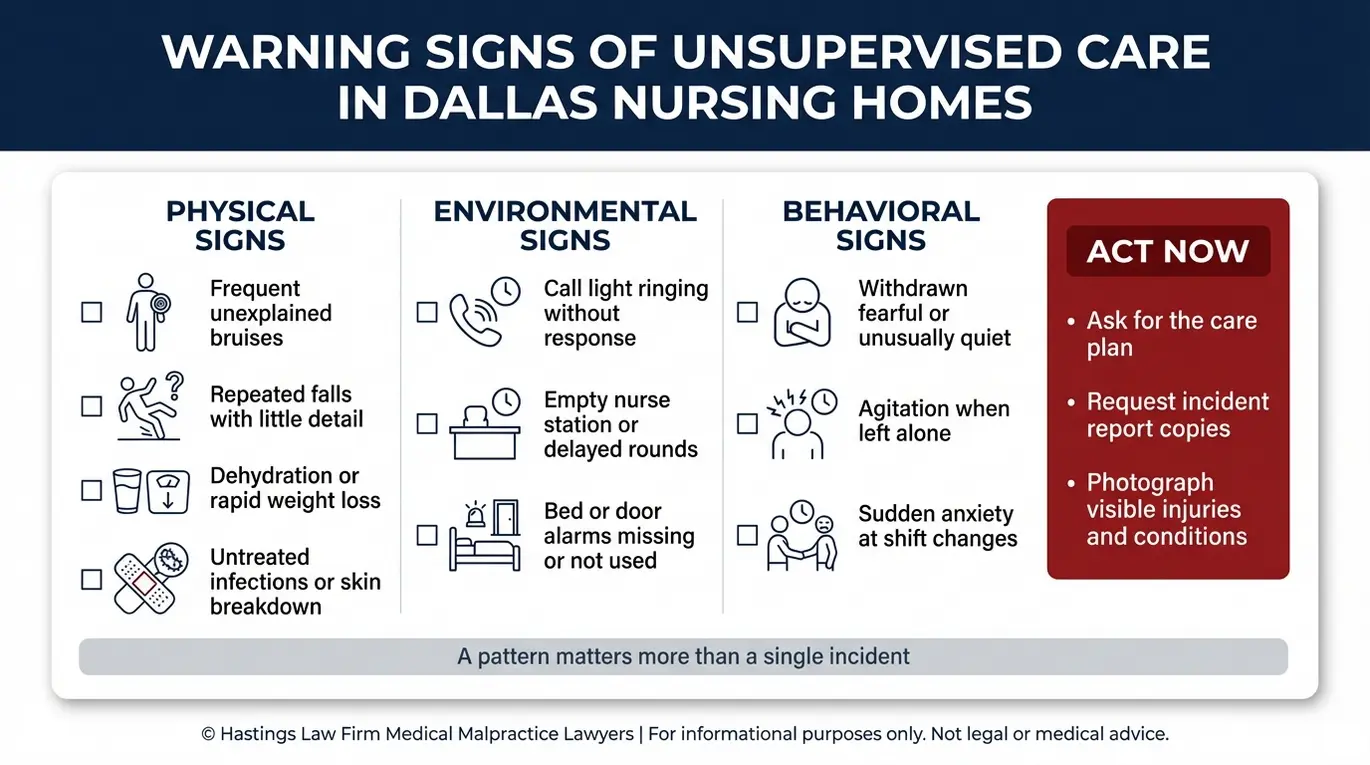
Warning signs of inadequate supervision include frequent unexplained bruises, poor hygiene, rapid weight loss, repeated falls without documentation, and a resident who appears withdrawn or anxious when staff are absent. These indicators may not point to a single dramatic event. Instead, they often emerge as a pattern over weeks or months. Identifying these warning signs early is essential for protecting your family member.
If you visit regularly, pay attention to these categories:
Physical indicators:
- Unexplained bruising, cuts, or skin tears
- Soiled clothing or bedding that has not been changed
- Untreated infections, including urinary tract infections
- Signs of dehydration or sudden weight loss
Environmental indicators:
- Call lights, the bedside buttons residents press for help, ringing for extended periods without response
- Empty nurse stations during your visits
- Door alarms (sometimes called WanderGuard systems) that appear disabled or ignored
Behavioral indicators:
- Sudden fearfulness, silence, or withdrawal, which can suggest emotional abuse
- Reluctance to speak openly when staff are present
- Increased confusion or agitation beyond baseline
If you notice several of these signs, it may be time to speak with attorneys for nursing home supervision cases who can help determine whether a pattern of negligence exists.
Legal Standards and Texas Regulations on Resident Safety
Texas law and federal regulations require nursing homes to maintain enough qualified staff to meet the assessed needs of every resident. When a facility falls short of these requirements, it may be in violation of the Texas Administrative Code and federal standards alike.
At the federal level, the Nursing Home Reform Act requires facilities to develop an individualized care plan. This written document identifies each resident’s specific medical and cognitive needs and outlines the supervision required to address them. This includes conducting a fall risk assessment, which is a standardized evaluation that scores a resident’s likelihood of falling based on mobility and medication use. Our medical team, which includes Board Certified Patient Advocates, reviews these plans to see if the facility followed the required standards.
Texas Health and Human Services oversees facility compliance at the state level. This includes staffing ratios, resident rights, and safety protocols. Under the Texas Human Resources Code and the resident rights and bill of rights, residents have the right to adequate care and a safe living environment.
Wandering is not a neutral behavior. For a resident with documented cognitive impairment, it is a foreseeable risk that the facility must actively manage. A lawyer for supervision failure can review whether the facility met its legal duty or ignored its own care plan.
Recovering Damages for Supervision Failures in Dallas
Families can recover compensation for medical bills, pain and suffering, physical impairment, and in tragic cases, wrongful death damages when a facility’s negligence causes harm in a personal injury lawsuit.
Economic damages cover the tangible financial costs of the injury. These may include:
- Emergency room visits and hospitalization
- Surgical costs, such as hip replacement after a fall
- Rehabilitation and physical therapy
- Ongoing medical care related to the injury
Non-economic damages address the harm that does not come with a receipt. This includes physical pain, emotional distress, loss of dignity, and diminished quality of life. For families pursuing a wrongful death claim, non-economic damages may also include loss of companionship.
Punitive damages may be available in cases involving gross negligence or willful indifference to resident safety. These are not awarded in every case, but when the evidence supports them, they serve to hold the facility accountable beyond simple compensation.
As supervision negligence counsel and a Dallas nursing home neglect attorney, our team at Hastings Law Firm handles every aspect of the claim. We manage medical record analysis through trial so your family can focus on your loved one’s well-being.
Contact the Dallas Nursing Home Attorneys at Hastings Law Firm Today for Help
Supervision failures are not accidents. They are the result of systemic gaps in staffing, training, and accountability. When those gaps cause injury to someone you love, your family deserves answers, and your loved one deserves better.
At Hastings Law Firm, led by board-certified trial lawyer Tommy Hastings, our team of medical malpractice attorneys, nurse consultants, and former defense lawyers investigates supervision cases with rigor. We prepare every case as though it will go to a jury because that level of preparation is what produces results.
If your family member has been harmed by negligent supervision in a Dallas-area nursing home, reach out to a Dallas nursing home supervision lawyer at Hastings Law Firm. The consultation is free and confidential. There is no fee unless we secure a recovery on your behalf.
Frequently Asked Questions About Nursing Home Supervision in Dallas


This content was researched and written by the Hastings Law Firm editorial team, which includes attorneys, medical professionals, and experienced researchers. Our writing is informed by internal knowledge and practical experience, and we cross-check critical details against authoritative sources cited throughout. Every piece undergoes human-led fact-checking and legal review. Because legal and medical information can change, if you spot an error, please contact us. Learn more about our content standards and review process on our editorial policy page.

Brady D. Williams is a nationally recognized medical malpractice attorney who has spent his career handling high-stakes litigation for injured patients and families across the country. Licensed in both Texas and California, Brady draws on experience from hundreds of resolved medical cases to break down complex legal and medical topics for the people who need that information most. His writing reflects the same attention to detail and commitment to clarity that he brings to every case he handles.
