


Phoenix Nursing Home Sexual Abuse Lawyer
Sexual abuse in a nursing home can leave an older adult traumatized and a family struggling to understand what happened. These cases often involve power imbalances, limited supervision, and barriers to reporting such as fear, shame, or cognitive impairment. Warning signs may be physical or behavioral, and prompt medical evaluation can help protect safety and preserve evidence. Accountability may depend on whether the perpetrator was staff or another resident and whether the facility failed in hiring, supervision, or staffing. If your loved one was harmed or worse due to nursing home sexual abuse in Phoenix, Arizona, contact Hastings Law Firm for a free, confidential case review.
Last Updated: July 27, 2026
Compassionate Legal Advocacy for Victims of Elder Sexual Abuse in Phoenix
Discovering that a loved one may have been sexually abused in a nursing home is devastating. The person you trusted a facility to protect was instead harmed in one of the most deeply personal ways imaginable. If your family is facing this reality, you deserve both answers and a clear path forward.
Sexual abuse in elder care facilities is more common than most people realize, and it thrives in environments where oversight is weak and accountability is absent. Families often feel overwhelmed, unsure of what happened or who to turn to. That uncertainty is understandable, and it does not have to last.
As a Phoenix nursing home sexual abuse lawyer, Hastings Law Firm focuses on investigating these cases with the medical and legal depth they require. Founded by board-certified trial attorney Tommy Hastings, our firm is dedicated exclusively to medical negligence and nursing home litigation. If you suspect abuse, we can review the circumstances, explain your options, and help you take the first steps toward protecting your loved one.

Understanding the Types of Sexual Misconduct in Nursing Facilities
Sexual misconduct in nursing homes ranges from non-consensual sexual contact and unwanted touching to rape and coerced nudity, often perpetrated by staff members, visitors, or other residents due to inadequate supervision.
The scope of abuse in these settings extends beyond physical acts of violence. It can include non-physical harassment such as forced exposure, inappropriate photographing, or verbal sexual intimidation. A sexual abuse attorney knows that these acts are not just physical violations but profound betrayals of trust. These acts of misconduct are violations of safety and dignity in long-term care.
Non-consensual sexual contact, meaning any sexual touching that occurs without the knowing and voluntary agreement of the person, is among the most frequently documented forms of abuse in long-term care environments. What makes nursing home sexual abuse particularly insidious is the power dynamic at play. Residents depend on caregivers for basic needs like bathing, dressing, and toileting.
Sexual predators in these roles can exploit that dependency, using a resident’s reliance on them as a tool of coercion. Residents may feel they cannot refuse or resist because the person harming them also controls their daily care. This exploitation of vulnerable residents is particularly egregious.
Cognitive decline adds another layer of vulnerability. Residents living with dementia or Alzheimer’s disease may lack the capacity to consent, which refers to the mental ability to understand and agree to what is happening. Under Arizona Revised Statutes § 13-1401, sexual offenses are defined in part by the absence of consent, and a person who cannot understand the nature of the act cannot legally give it.
Common forms of sexual misconduct in nursing facilities include:
- Unwanted touching of breasts, genitals, or other intimate areas during care tasks
- Rape or attempted rape by staff, visitors, or other residents
- Coerced nudity or exposure, including leaving residents undressed unnecessarily
- Non-physical sexual harassment, such as sexually explicit comments or gestures
- Forced viewing of pornographic material
Distinguishing Between Staff and Resident Perpetrators
The legal theory behind a claim changes depending on who committed the abuse. Liability depends on whether the harm was caused by an employee or another patient. When an employee sexually assaults a resident, the facility can face direct liability for negligent hiring, supervision, or retention of that employee.
Direct liability holds the facility responsible for its own failures, such as neglecting to screen or monitor a dangerous employee. Knowing who caused the harm is necessary for determining how to file a legal claim. This is especially true if the facility failed to conduct proper screening before hiring.
When the perpetrator is another resident, the claim typically centers on the facility’s failure to supervise and protect. Resident-on-resident sexual abuse, which acts as a specific type of resident-on-resident aggression, involves one resident harming another and often results from inadequate monitoring, poor room assignments, or ignoring known behavioral risks. In either scenario, a Phoenix nursing home abuse lawyer examines the facility’s policies, staffing decisions, and response patterns to determine where the breakdown occurred.

Identifying Signs of Sexual Trauma in Elderly Residents
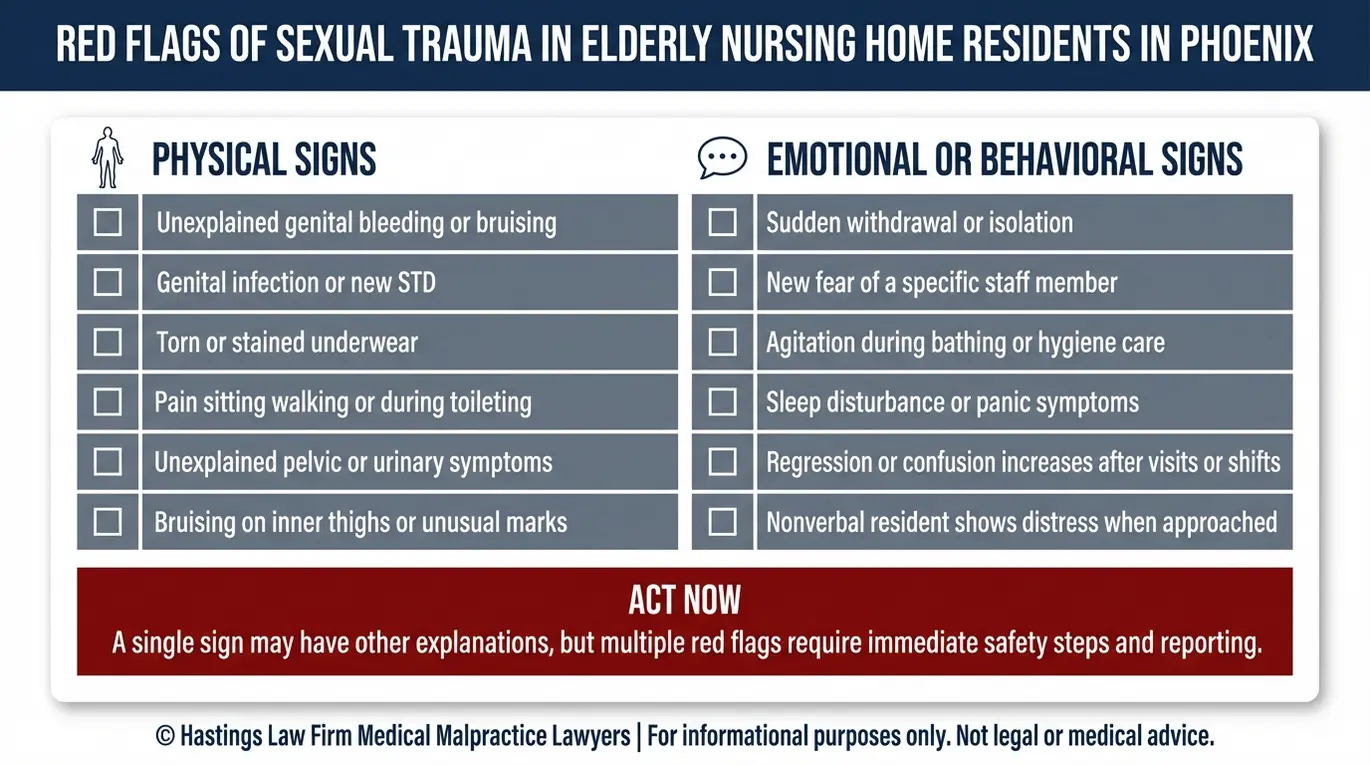
Signs of sexual trauma in the elderly often include unexplained genital infections or bleeding, torn undergarments, sudden withdrawal from social activities, new sexually transmitted diseases (STDs), or an intense fear of specific staff members. Recognizing these indicators early can be the difference between ongoing abuse and intervention.
Many of these signs are subtle, and families may not immediately connect them to sexual harm. Physical evidence can overlap with age-related conditions, which is one reason abuse goes undetected for so long. Sexual abuse lawyers in Phoenix frequently work with medical professionals to review medical records and distinguish between symptoms of natural decline and emotional distress or evidence of trauma.
Sudden behavioral changes are often the only warning sign when physical marks are absent. The table below outlines common physical and emotional warning signs:
| Physical Indicators | Emotional / Behavioral Indicators |
|---|---|
| Unexplained bruising on inner thighs or genital area | Sudden withdrawal from activities or social interaction |
| Perineal trauma (injuries to the genital or rectal area) | New onset of PTSD symptoms, such as nightmares or flashbacks |
| Difficulty walking or sitting | Intense fear or anxiety around specific caregivers |
| Stained or bloody bedding or undergarments | Regression to childlike behaviors |
| New sexually transmitted infections (STIs), which are infections passed through sexual contact | Refusal to undress for bathing or medical exams |
| Unexplained genital bleeding or discharge | Unexplained crying, agitation, or emotional outbursts |
Detection becomes even harder with non-verbal patients. Residents who cannot communicate due to advanced dementia, stroke, or other conditions may show behavioral changes as their only signal. A sudden flinch during personal care, resistance to being touched, or increased agitation around certain times of day can all point to something deeper.
The National Institute on Aging’s guide on spotting the signs of elder abuse provides additional context on what to watch for during visits. If you notice any combination of these signs, document what you observe and seek a medical evaluation immediately.
The Hastings Law Firm Difference
Results matter, but what truly sets us apart is how we achieve them. Every verdict, every settlement, and every Phoenix courtroom victory comes from one guiding promise: To treat each client’s fight for justice as if it were our own.
This balance of skill, experience, and empathy reflects our core philosophy that justice should not only compensate the injured, but also make health care safer nationwide.

The Silence of Trauma: Why Phoenix Elders Rarely Report Abuse
Abuse often goes unreported because residents fear retaliation from the people who control their daily care, feel deep shame about what happened, or lack the cognitive capacity to describe the assault, leading to a culture of silence that protects predators.
Many elderly residents experience what can be called the White Coat Effect, a conditioned trust and deference toward authority figures in medical or caregiving roles. When the person committing the elder abuse is also the person administering medication, helping with meals, or assisting with hygiene, residents may have a fear of retaliation or feel powerless to speak up. Some fear that reporting will lead to harsher treatment or loss of care entirely.
Residents with cognitive impairment may be unable to articulate what happened, making them easy targets. When residents do not report harm, the abuse often continues without intervention. Isolation compounds the problem.
Restricted visiting hours, limited phone access, and the absence of regular family contact can leave residents without anyone to confide in. In facilities that prioritize reputation over transparency, internal reporting mechanisms may be inadequate due to systemic failures. Understaffing also contributes to this silence, as fewer staff means fewer potential witnesses.
The U.S. Preventive Services Task Force’s recommendation on screening for intimate partner violence and caregiver abuse of older or vulnerable adults highlights the systemic challenges involved in identifying abuse. This is why families and nursing home abuse attorneys often become the first line of defense. If something feels wrong during a visit, trust that instinct.
Immediate Steps to Take if You Suspect Sexual Abuse
If you suspect abuse, immediately ensure the victim’s safety by removing them from the facility, seek a medical exam to preserve evidence, report the incident to the Phoenix Police and Adult Protective Services, and contact a specialized attorney to secure records.
Here is a step-by-step guide:
- Call 911 if there is immediate danger. If your loved one is in physical distress or you believe the threat is ongoing, contact emergency services right away.
- Seek a medical examination. Request a Sexual Assault Forensic Exam (SAFE), which is a specialized medical exam designed to document injuries and collect physical evidence such as DNA. This exam is typically performed by a Sexual Assault Nurse Examiner (SANE), a nurse with advanced training in forensic evidence collection. Time is critical here, as physical evidence can be lost within hours.
- Report to authorities. File a report with the Phoenix Police Department and contact Adult Protective Services. You should also report the incident to the Arizona Attorney General’s office, which provides an elder abuse training guide and resources for families. The Arizona Department of Health Services should be notified as well, since they oversee facility licensing and compliance.
- Preserve physical evidence. Do not wash clothing, bedding, or undergarments. Take photographs of any visible injuries. Write down dates, times, and the names of any staff members involved.
- Contact a lawyer for nursing home sexual assault. An attorney can act quickly to issue preservation demands that prevent the facility from altering or destroying surveillance video, staffing logs, incident reports, and internal communications. Taking these steps helps secure the evidence needed for a nursing home abuse claim.
Each of these steps builds the foundation for both a criminal investigation and the ability to file a claim. A Phoenix nursing home sexual abuse lawyer can coordinate with law enforcement and medical professionals to ensure nothing falls through the cracks.

Establishing Liability Against Phoenix Nursing Facilities
Nursing homes can be held liable for sexual abuse through claims of negligent hiring, inadequate security, understaffing, or failure to supervise, specifically when they retain employees with a history of misconduct or ignore background check requirements.
A background check, which involves reviewing a prospective employee’s criminal history, prior employment records, and registry listings, is one of the most basic safeguards a facility can implement. When a nursing home skips this step or ignores red flags in the results, it creates a direct path to liability. If the person hired later assaults a resident, the facility’s failure to screen that individual becomes central to the legal claim.
Understaffing, meaning a staff-to-resident ratio too low to provide adequate supervision, creates the physical opportunity for abuse to occur. Often, this results from staffing levels that are lower than necessary to monitor everyone safely. We evaluate whether a facility reduced its staff to increase corporate profits, creating the gaps where predators operate.
Public data on staffing and inspection history is available through resources like Medicare Care Compare’s profile for facilities such as Immanuel Campus of Care, which can reveal patterns of deficiency. As a Phoenix nursing home sexual abuse lawyer, we examine hiring records, training documentation, and staffing schedules.
We use our background as former defense attorneys to identify charting inconsistencies that others might miss. The goal is to identify whether the facility met its duty of care, the legal obligation to provide a safe environment, or whether systemic failures made the abuse foreseeable and preventable.
Pursuing Compensation and Justice for Sexual Abuse Victims
Victims of sexual abuse may be entitled to compensation for medical expenses, pain and suffering, emotional distress, and punitive damages designed to punish the facility for egregious conduct and prevent future harm.
Every case is different, but the categories of recoverable damages generally include:
- Medical expenses: Costs for emergency treatment, forensic exams, ongoing therapy, psychiatric care, and any medications required as a result of the abuse.
- Therapy and counseling: Long-term psychological treatment for trauma, PTSD, anxiety, and depression.
- Relocation costs: Expenses associated with transferring your loved one to a safe facility.
- Pain and suffering: Compensation for the physical pain endured during and after the assault.
- Emotional distress: Recognition of the psychological harm, including loss of dignity, fear, shame, and the destruction of a person’s sense of safety.
- Punitive damages: In cases where the facility acted with an “evil mind,” demonstrated through outrageous, oppressive, or intentionally harmful conduct, Arizona courts may award punitive damages. These are not tied to the resident’s losses but are intended to punish the facility and send a message that this level of misconduct will not be tolerated.
The Centers for Medicare & Medicaid Services (CMS) sets federal standards for nursing home safety. Violations of those standards can strengthen a claim for damages by demonstrating a pattern of non-compliance.
Taking legal action helps protect your loved one’s future security. A Phoenix nursing home sexual abuse lawyer can evaluate the full scope of harm your family has experienced and pursue a settlement or verdict that reflects it. Hastings Law Firm operates on a contingency fee basis, which means you pay no attorney fees unless we secure a recovery on your behalf.
Contact the Phoenix Nursing Home Attorneys at Hastings Law Firm Today for Help
Sexual abuse in a care facility is a profound violation of trust, safety, and human dignity. If your family is dealing with this situation, you do not have to face it alone.
At Hastings Law Firm, we provide a safe, confidential space for families to ask questions and get honest answers. Our team includes in-house medical professionals and former defense attorneys who understand how facilities operate and how to hold them accountable. We prepare every case as if it will go to trial, because that level of preparation is what these cases demand.
Your free consultation is the first step, and our contingency fee structure means you pay nothing unless we secure a recovery. If you suspect your loved one has been harmed, reach out to our team today. We can review the circumstances, preserve critical evidence, and help you understand the options available to protect your family.
Frequently Asked Questions About Nursing Home Sexual Abuse in Phoenix


This content was researched and written by the Hastings Law Firm editorial team, which includes attorneys, medical professionals, and experienced researchers. Our writing is informed by internal knowledge and practical experience, and we cross-check critical details against authoritative sources cited throughout. Every piece undergoes human-led fact-checking and legal review. Because legal and medical information can change, if you spot an error, please contact us. Learn more about our content standards and review process on our editorial policy page.

Tommy Hastings, founder of Hastings Law Firm, is a board-certified personal injury trial lawyer dedicated exclusively to healthcare injury cases. Since 2001, he has represented injured patients and families in litigation against major hospital systems, pharmaceutical companies, and negligent healthcare providers nationwide. He has handled numerous high-profile cases that have drawn national media attention and resulted in multi-million dollar recoveries. He draws on that experience in his writing, helping readers understand how these cases work and what options may be available to them.
