


Texas Nursing Home Chemical Restraint Lawyer
Chemical restraints in nursing homes involve using medication to control behavior for convenience rather than medical necessity, and the results can be frightening for families. Sudden drowsiness, reduced alertness, and rapid decline can signal overmedication that undermines a resident’s rights and safety. Proper use requires a documented medical reason, a physician order, a care plan, and informed consent, with attention to alternatives that do not rely on sedation. If your loved one was harmed or worse due to nursing home chemical restraints in Texas, contact Hastings Law Firm for a free, confidential case review.
Last Updated: July 27, 2026
Compassionate Texas Medical Attorneys for Chemical Restraint Claims
When an elderly loved one begins showing sudden changes in behavior, unexplained drowsiness, or a rapid decline in alertness, it can be deeply unsettling. If you suspect a nursing home is using medication to sedate your family member for reasons unrelated to their medical needs, you are right to question what is happening. These situations raise serious legal and ethical concerns, and you do not have to sort through them alone.
Founded by board-certified trial lawyer Tommy Hastings, Hastings Law Firm focuses exclusively on medical malpractice cases, including the misuse of chemical restraints in Texas nursing homes. Our team of attorneys, in-house nurse consultants, and board-certified patient advocates understands both the medical and legal dimensions of these claims. We are prepared to help you find answers through a thorough review of the facts.
If you believe your loved one is being improperly medicated, we can review what happened and explain your options in a free, confidential case evaluation.

What Are Chemical Restraints in Nursing Homes?
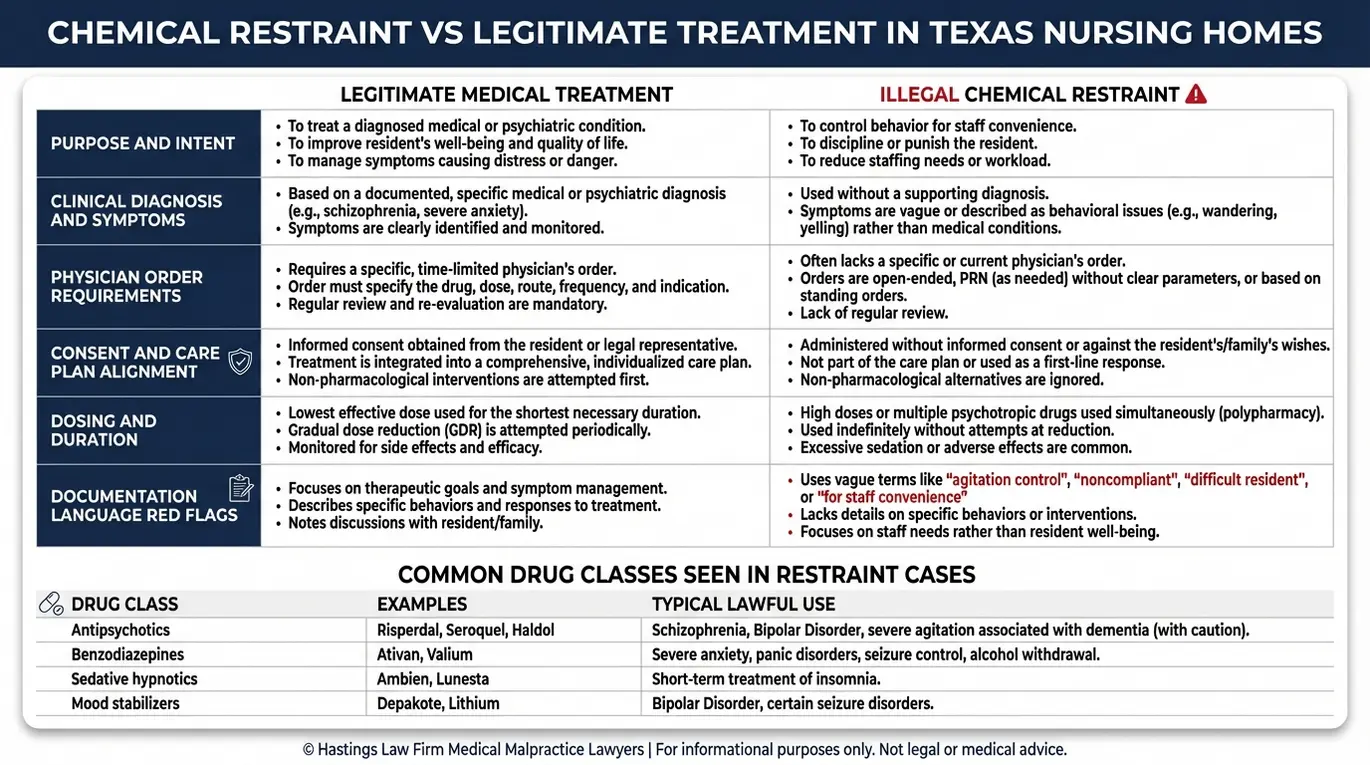
A chemical restraint is the use of any drug, such as a psychotropic medication or sedative, to control a resident’s behavior or restrict their mental activity for discipline or staff convenience, rather than to treat a specific diagnosed medical condition. In a legal context, chemical restraint refers to using drugs as a form of control rather than medical treatment. The distinction between a chemical restraint and legitimate treatment comes down to intent and medical necessity.
Psychoactive drugs, which are medications that alter brain function and affect mood, perception, or consciousness, have valid clinical uses. A physician may appropriately prescribe an antipsychotic to manage hallucinations caused by a psychiatric diagnosis. That is treatment. But when the same medication is administered to manage a resident’s behavior for staff convenience, it becomes a chemical restraint.
For any psychoactive medication to be used lawfully, there must be a specific physician’s order tied to a documented medical condition and incorporated into the resident’s plan of care. This plan of care is the individualized treatment roadmap developed for each nursing home resident. The plan must be reviewed regularly to assess whether the medication can be reduced or discontinued.
The resident or their legal representative must also provide informed consent. This process involves a detailed discussion where the physician explains the risks, benefits, and potential side effects of the drug. The physician must also discuss non-pharmacological alternatives, which are options that do not involve drugs.
Without this transparency, the administration of powerful psychotropic drugs violates a resident’s rights. In some cases, families discover that these conversations never happened or that the drugs were added to the regimen without notice.
When these safeguards are ignored, an attorney for chemical restraint abuse can help families determine whether the drugs given to their loved one were medically justified or used as a tool for control.
Identifying Specific Drugs Used as Restraints
Several classes of medication are commonly involved in chemical restraint cases. Antipsychotic medications, which are drugs designed to treat severe psychiatric disorders like schizophrenia, are among the most frequently misused. Benzodiazepines, a class of sedatives prescribed for anxiety and seizure disorders, are also used improperly in nursing home settings. Understanding the difference between legitimate treatment and restraint helps families protect their loved ones.
The table below outlines common drug classes, their intended medical purpose, and how they are misused as restraints:
| Drug Class | Common Brand Names | Intended Medical Use | Misuse as Chemical Restraint |
|---|---|---|---|
| Antipsychotics | Risperdal, Haldol (Haloperidol), Seroquel | Schizophrenia, bipolar disorder, acute psychosis | Sedating residents with dementia who exhibit “difficult” behaviors |
| Benzodiazepines | Ativan, Valium, Xanax | Anxiety disorders, seizures, insomnia | Keeping residents calm and compliant for staff convenience |
| Sedative-Hypnotics | Ambien, Lunesta | Short-term treatment of insomnia | Inducing prolonged sleep to reduce supervision needs |
| Mood Stabilizers | Depakote | Epilepsy, bipolar disorder | Suppressing agitation without a psychiatric diagnosis |
When any of these drugs appear in a resident’s medication records without a clear, documented diagnosis to support their use, it raises a serious red flag.
Physical vs. Chemical Restraints: Understanding the Difference
While physical restraints involve mechanical devices like bedrails to restrict movement, chemical restraints involve the administration of medication to sedate a resident; both are illegal when used for staff convenience or discipline. Chemical restraints involve the administration of medication to sedate a resident, while physical restraints use mechanical items to limit movement. Mechanical restraints carry well-documented dangers, including nerve damage, circulation problems, and skin breakdown.
The combination of physical and chemical restraints is particularly dangerous. A resident who has been chemically sedated may lack the awareness or physical strength to reposition themselves or call for help. If that same resident is also restrained by bedrails, the risk of strangulation or suffocation increases significantly.
Key differences between these restraint types include:
- Method of Control: Physical restraints use external devices like ties or rails, while chemical restraints rely on internal sedation.
- Visibility: Mechanical restraints are immediately visible to family members, whereas chemical restraints may be masked as “medical treatment” or attributed to the aging process.
- Risk Profile: While both cause harm, chemical restraints carry unique risks of metabolic changes, overdose, and interaction with other necessary medications.
Residents living with dementia or Alzheimer’s disease are especially vulnerable. They may not understand why they are being restrained and may struggle against physical devices, leading to injury. These residents are also less likely to report what is happening to them. Both forms of restraint violate a resident’s fundamental right to autonomy, which is the legal and ethical right of a patient to make their own choices about their body and care.
The Hastings Law Firm Difference
Results matter, but what truly sets us apart is how we achieve them. Every verdict, every settlement, and every Texas courtroom victory comes from one guiding promise: To treat each client’s fight for justice as if it were our own.
This balance of skill, experience, and empathy reflects our core philosophy that justice should not only compensate the injured, but also make health care safer nationwide.

Why Nursing Homes Use Chemical Restraints
Facilities often resort to chemical restraints to manage residents with dementia or behavioral issues because sedating a patient requires far fewer staff resources than providing proper individualized supervision and care. This practice is often linked to staffing levels within the facility.
The connection between understaffing and restraint use is well documented. When a facility does not employ enough qualified caregivers to meet the needs of its residents, staff may use medication to manage the facility’s workload. A report from the U.S. Department of Health and Human Services Office of Inspector General has reviewed the scope of personnel shortages across federal health care programs, highlighting how staffing gaps can compromise the quality of care residents receive.
The legal standard distinguishes between medical necessity and convenience. If a resident is exhibiting agitation related to an untreated urinary tract infection, the standard of care requires treating the infection, not sedating the patient. When medication is used to address a staffing problem rather than a clinical one, it represents a clear instance of negligence and a breach of the facility’s duty of care.
Residents with dementia or Alzheimer’s disease are disproportionately affected. Because they may be unable to articulate what is happening to them or advocate on their own behalf, the misuse of medication can go undetected for weeks or months. This is one of the reasons we may need to reconstruct a detailed medication timeline to uncover the pattern. Facilities that operate with inadequate staffing levels must be held accountable for the resulting harm.
The Medical Consequences of Overmedication
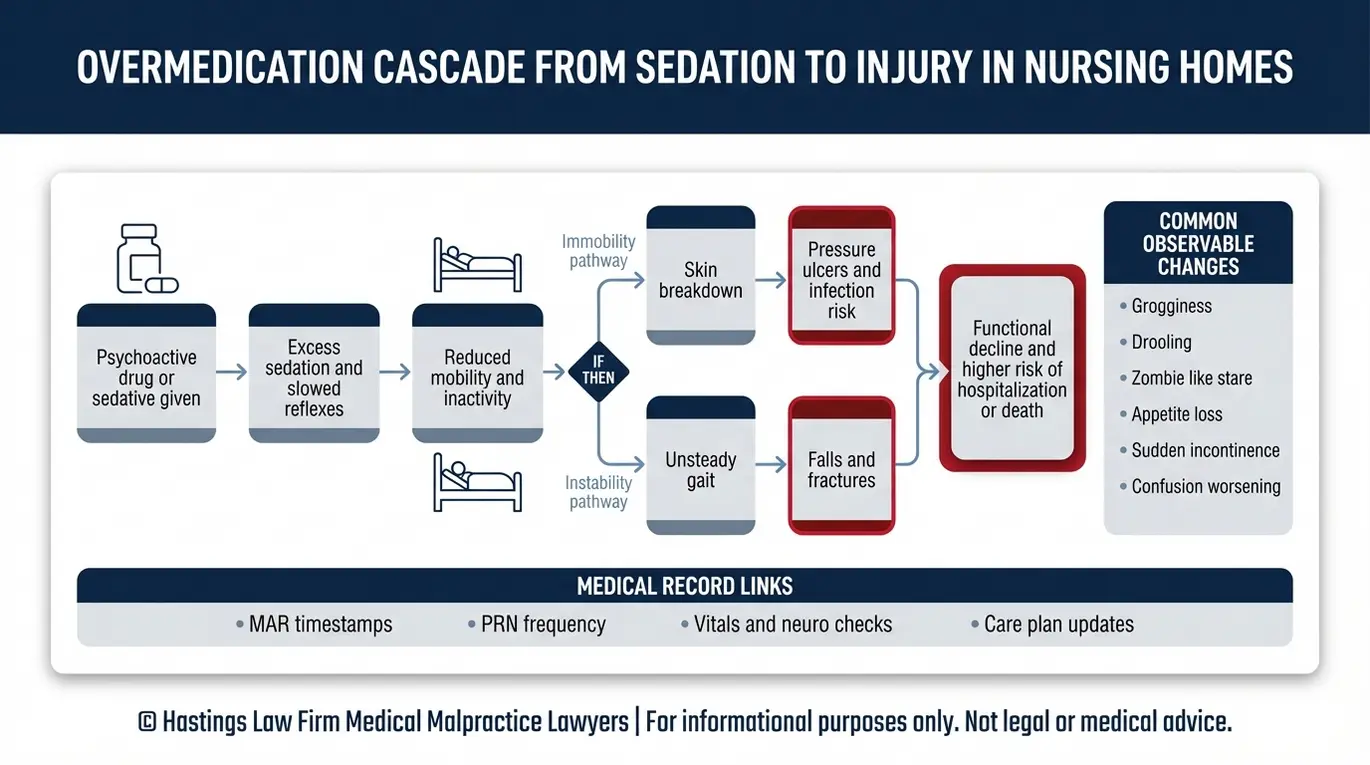
Prolonged use of chemical restraints can lead to severe physical decline, including increased fall risk, progressive muscle atrophy, the development of bedsores from prolonged immobility, and a heightened risk of stroke or cardiac events in elderly patients. Overmedication occurs when a patient receives more medication than is medically necessary to treat a condition. The effects of sustained sedation extend well beyond drowsiness.
The FDA has issued a boxed warning, the most serious safety warning the agency places on a prescription drug label, regarding the use of antipsychotic medications in elderly patients with dementia-related psychosis. Research presented at a Duke Health Policy workshop on mortality and antipsychotic use in dementia-related behavioral disorders has examined the increased mortality risk associated with these drugs in this population. Despite this warning, antipsychotics remain widely used in nursing homes.
The pattern of harm often follows a predictable sequence: sedation leads to immobility, which leads to pressure ulcers, pneumonia, blood clots, and functional decline. Over time, a resident who was once mobile and engaged can become completely dependent, and in some cases, the overmedication contributes directly to wrongful death.
If you have noticed changes in your loved one, the following signs may indicate the use of chemical restraints:
- Unusual drowsiness, grogginess, or difficulty staying awake during the day
- A blank or glazed “zombie-like” stare
- New or worsening incontinence without a clear medical explanation
- Sudden loss of appetite or difficulty swallowing
- Unexplained falls or loss of balance
- Drooling or slurred speech
- Rapid weight loss or new pressure ulcers
- Withdrawal from social interaction or loss of interest in activities they previously enjoyed
Any combination of these symptoms warrants a closer look at the facility’s medication records. A lawyer for nursing home drugging can help you obtain and interpret those records.
Federal and Texas Laws Protecting Residents
The Nursing Home Reform Act of 1987 (OBRA ’87) and Texas state regulations explicitly forbid the use of restraints for discipline or convenience, mandating that residents have the right to be free from chemical restraints not required to treat medical symptoms. A physician’s order is a legal requirement for the administration of controlled drugs in a nursing home. This landmark federal law applies to all facilities that receive Medicare or Medicaid funding.
Under both federal and Texas regulations, chemical restraints may only be used when a physician’s order is in place. This order is a written directive from a licensed physician authorizing a specific medication for a documented condition. That order must specify the drug, the dosage, and the duration.
Federal guidelines from CMS (Centers for Medicare & Medicaid Services) and state laws require facilities to attempt less restrictive alternatives before resorting to medication, including:
- Companionship programs and increased supervision
- Structured activities to engage the resident
- Environmental modifications to reduce stress
- Behavioral interventions tailored to the resident’s needs
Texas state law reinforces these protections. Texas Health and Safety Code Chapter 322 governs the use of restraint and seclusion in certain health care facilities, and additional state regulations apply specifically to nursing homes. Legal scholarship from the Marquette University Law School has examined the legal framework surrounding chemical restraint use in nursing homes. Violations can give rise to regulatory penalties and civil liability under medical malpractice law.
When a facility fails to follow these requirements, a Texas nursing home chemical restraint lawyer can pursue accountability through a breach of duty claim. A breach of duty occurs when the facility fails to meet the legal standard of care required to keep a resident safe. We examine whether the facility followed the law’s requirements at every step, from documentation to consent to the use of alternatives.
Proving Negligence in Chemical Restraint Cases
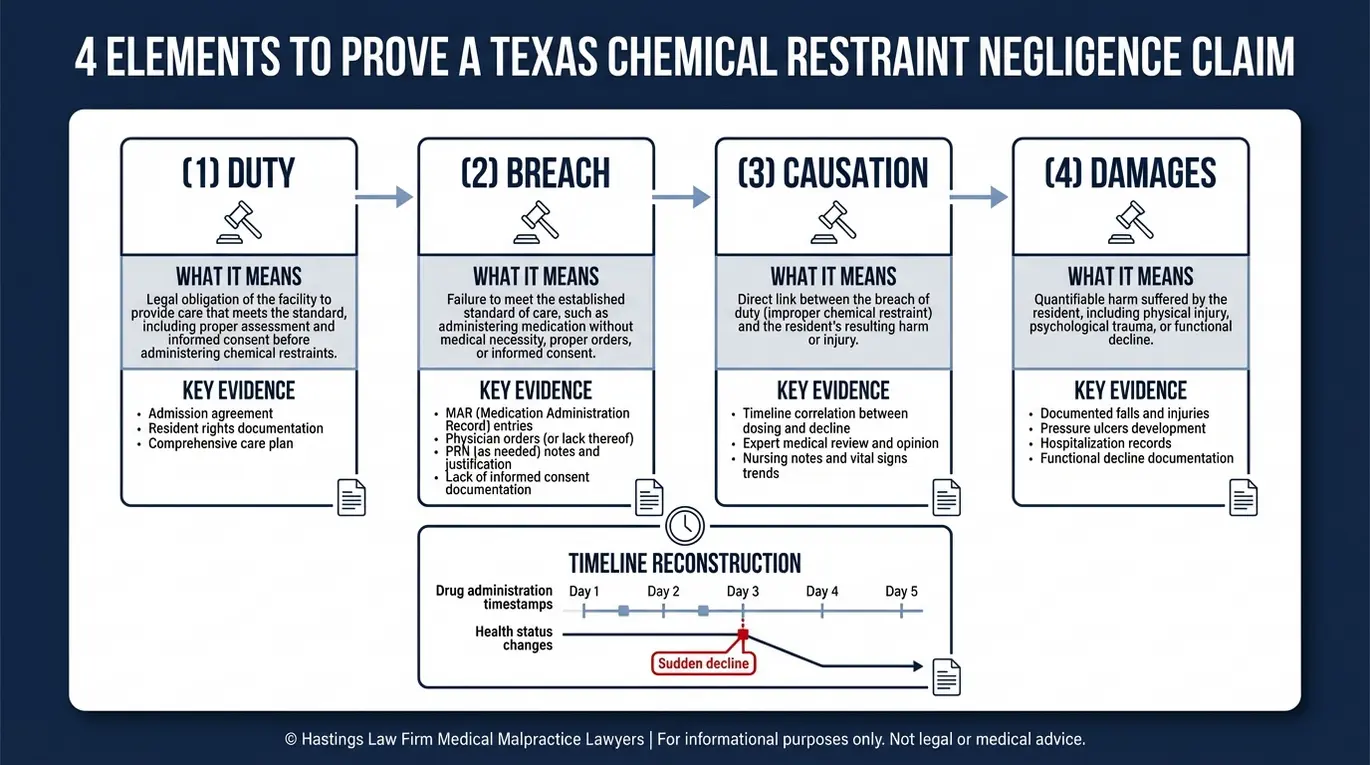
Proving a claim requires demonstrating that the facility breached the standard of care by administering unnecessary medication without informed consent, and that this breach directly caused injury or decline in the resident. Medical negligence occurs when a healthcare provider fails to follow the accepted standard of care. Determining negligence involves reviewing whether the facility failed in its legal duty of care. The legal framework involves four elements: duty, breach, causation, and damages.
Every nursing home owes its residents a duty of care that includes proper medication management. A breach occurs when the facility administers psychoactive drugs without appropriate medical justification, without a valid physician’s order, or without attempting required alternatives. Causation connects the improper medication to the resident’s decline. Damages reflect the physical, emotional, and financial harm that resulted.
One of the most important pieces of evidence in these cases is the Medication Administration Record (MAR). The MAR is the facility’s log documenting every drug administered to a resident, including the time, dose, and the staff member who gave it. The MAR, combined with the resident’s plan of care, physician orders, and nursing notes, creates a timeline our team can reconstruct. As outlined by the CMS Residents’ Rights and Quality of Care standards, residents have the right to proper treatment and to be free from abuse.
At Hastings Law Firm, our in-house nursing staff and medical consultants analyze these records line by line. Our former defense attorneys know how facilities organize and present their records, which helps us identify inconsistencies and gaps. A lawyer for chemical restraint lawsuits builds the case by mapping drug administration against the timeline of the resident’s physical and cognitive decline.
Contact the Texas Nursing Home Attorneys at Hastings Law Firm Today for Help
No elderly person should be silenced by sedation. If you suspect that a nursing home is using medication to control your loved one rather than treat them, you deserve answers, and your loved one deserves protection.
Hastings Law Firm represents families across Texas in chemical restraint and nursing home negligence cases. Our team of attorneys, nurse consultants, and patient advocates is prepared to review your loved one’s medical records and identify whether improper medication practices occurred. We are committed to helping your family hold facilities accountable for substandard care.
We work on a contingency fee basis, which means you pay no attorney fees or costs unless we recover compensation on your behalf. As a Texas nursing home chemical restraint lawyer, we are here to listen, investigate, and help you protect your loved one’s rights and dignity.
Contact us today for a free, confidential case evaluation.
Frequently Asked Questions About Nursing Home Chemical Restraint in Texas


This content was researched and written by the Hastings Law Firm editorial team, which includes attorneys, medical professionals, and experienced researchers. Our writing is informed by internal knowledge and practical experience, and we cross-check critical details against authoritative sources cited throughout. Every piece undergoes human-led fact-checking and legal review. Because legal and medical information can change, if you spot an error, please contact us. Learn more about our content standards and review process on our editorial policy page.

Gabe Sassin has focused exclusively on medical malpractice law since 2007. After spending more than a decade as a malpractice defense attorney, he knows exactly how the other side works. He has seen firsthand how healthcare providers, insurers, corporate defendants, and their legal teams think, prepare, and build their defense against claims. That knowledge works for the people who need it most today, injured patients and their families. His unique experience shapes everything he writes, giving readers a look at how these cases actually work from someone who has handled them from both sides.
