


Fort Worth Nursing Home Abuse Lawyer
Written by: Hastings Law Firm | Reviewed by: Gabe Sassin | Updated: July 27, 2026
Elder care abuse and neglect in nursing homes can leave families feeling overwhelmed while trying to understand what went wrong. Harm can stem from poor supervision, unsafe conditions, medication mistakes, chemical restraints, or resident wandering tied to inadequate security. Warning signs such as unexplained injuries, sudden behavioral changes, poor hygiene, or financial irregularities can signal deeper problems in a facility’s care standards. Accountability may involve both individual caregivers and the corporate operators responsible for staffing and safety. If you or a loved one were harmed or worse due to nursing home abuse or neglect in Fort Worth, Texas, contact Hastings Law Firm for a free, confidential case review.
Trusted Medical Attorneys for Elder Care Abuse Claims in Fort Worth
What You Should Know About Senior Care Negligence Claims in Fort Worth:
- Safety and quality of life can be permanently affected when nursing home abuse or neglect leads to serious injuries or fatal outcomes.
- Early intervention can depend on recognizing patterns such as unexplained injuries, sudden behavioral changes, poor hygiene, or financial irregularities.
- Severe medical complications can follow preventable breakdowns in care such as untreated bedsores that progress to life threatening infection.
- Long term mobility and independence can be lost after facility related falls that cause fractures or traumatic brain injuries.
- Health and cognition can decline when chemical restraints or medication errors lead to over sedation, respiratory depression, or missed treatment.
- Catastrophic harm can occur when inadequate security and supervision allow resident wandering and elopement.
- Responsibility can extend beyond individual staff when corporate decisions on staffing, hiring, and enforcement of care standards contribute to unsafe conditions.
- Options for recovery can be limited if legal time limits are missed under Texas rules for injury and medical negligence claims.
- Recovery can include economic losses and non economic harms such as pain, emotional distress, loss of dignity, and diminished quality of life.
- Proof can depend on documentation such as written observations, photographs, medical records, staffing data, and inspection history.

A Healthcare Focused Law Firm
When someone you love is harmed in a place that was supposed to keep them safe, the emotions can be overwhelming. You may feel anger, guilt, confusion, or all three at once. Those feelings are valid, and you deserve clear answers about what happened and what you can do next.
Nursing home abuse and neglect take many forms, from physical harm and medication errors to elopement, resident wandering caused by inadequate supervision or security. Whatever the circumstances, families often sense something is wrong long before they can prove it. That instinct matters.
Led by board-certified trial attorney Tommy Hastings, our Fort Worth nursing home abuse lawyer team focuses exclusively on medical malpractice and facility negligence. Our legal and medical professionals work together to uncover the truth behind your loved one’s injuries. If you suspect abuse or neglect, we can review what happened and explain your options in a free, confidential consultation.
Recognizing Signs of Abuse and Neglect in Fort Worth Facilities
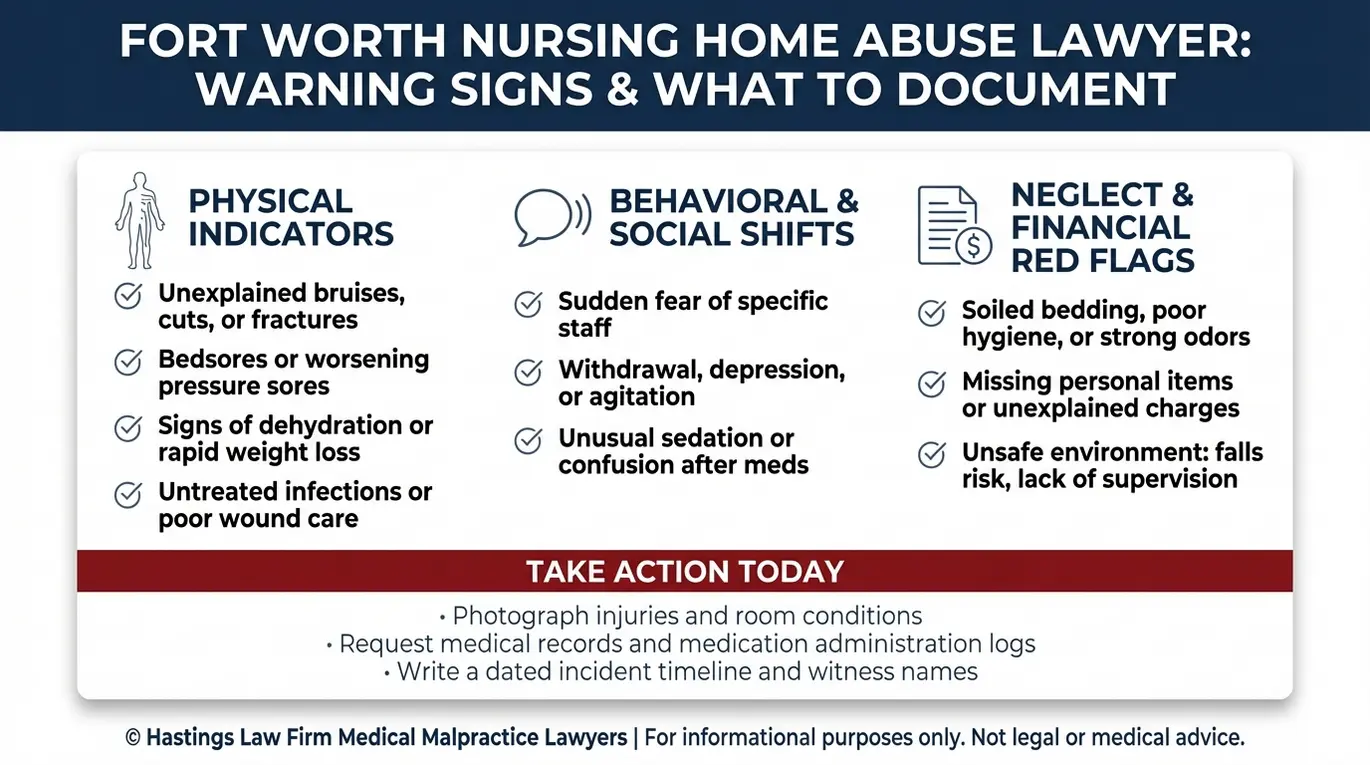
Nursing home abuse can show up as unexplained injuries, rapid weight loss, poor hygiene, sudden behavioral changes, or financial irregularities. These warning signs are not always obvious, and they rarely appear all at once. Families often notice small things over time, a new bruise here, a shift in mood there, before the full picture comes into focus. These patterns often help establish the care standards provided by the facility.
Physical indicators may include unexplained bruising, marks consistent with restraint use, untreated wounds, or recurring infections. These signs can point to violations of resident rights, caregiver neglect, or direct physical and sexual abuse. If your loved one has injuries that staff cannot adequately explain, that warrants immediate attention.
Behavioral shifts are just as telling. A resident who was once social may become withdrawn, anxious, or fearful around certain staff members. Sudden agitation, depression, or reluctance to speak openly during visits can signal that something is happening behind closed doors.
Neglect red flags tend to be the most visible. Soiled bedding, body odor, unchanged clothes, and significant weight loss may indicate malnutrition and dehydration, a dangerous condition where a resident is not receiving adequate food or fluids.
Financial exploitation, the unauthorized use of a resident’s money, property, or assets, is another common form of abuse. An investigation by In These Times into the Texas boarding home system documented how widespread these failures can be.
If any of these signs are familiar, keep a written record. Fort Worth nursing home abuse lawyers use this documentation, along with medical records, to build a timeline of events. As a nursing home abuse attorney in Fort Worth, our team evaluates these patterns to determine whether the care your loved one received fell below the accepted standard.
Warning signs to watch for:
- Unexplained bruises, cuts, or fractures
- Marks from physical restraints on wrists or ankles
- Recurring or untreated infections
- Sudden weight loss or signs of dehydration
- Soiled clothing or bedding left unchanged
- Withdrawal from social interaction or fearfulness around staff
- Unexplained changes in financial accounts or missing personal belongings
- Poor oral hygiene or lack of basic grooming
- Resident’s reluctance to speak when staff are present
Common Types of Nursing Home Negligence We Litigate
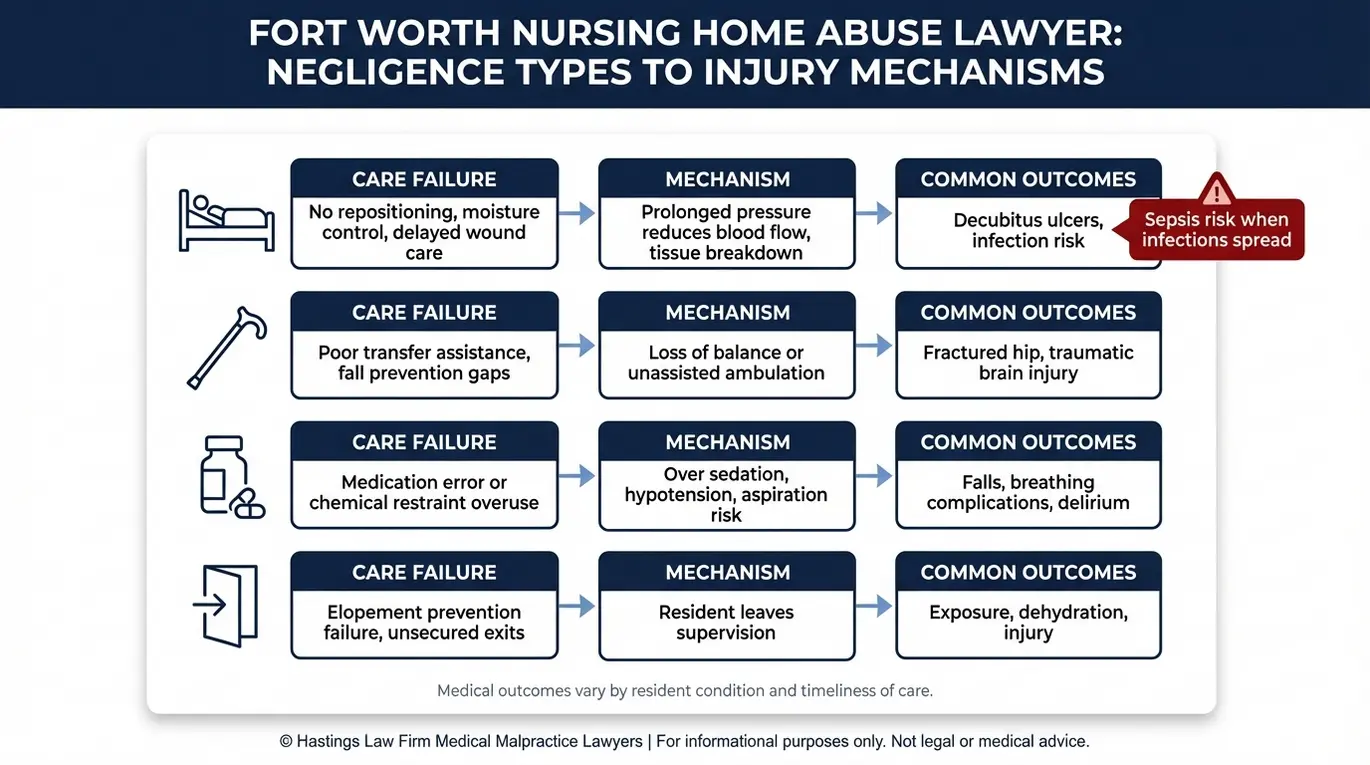
We handle cases involving bedsores, falls, medication errors, elopement, and physical abuse resulting from facility negligence. Each of these injuries points to a specific breakdown in the care a resident should have received.
Bedsores (Pressure Ulcers)
Decubitus ulcers, commonly called pressure ulcers or bedsores, develop when sustained pressure on the skin restricts blood flow to underlying tissue. They are almost always preventable with routine repositioning, proper nutrition, and skin assessments.
When a facility fails to perform these basic interventions, Stage 3 and Stage 4 ulcers can develop, sometimes leading to life-threatening infections like sepsis. The Wound Healing Society (WHS) Guidelines for the Treatment of Pressure Ulcers (2023 update) confirm that evidence-based repositioning and wound care protocols can prevent the vast majority of these injuries. A Fort Worth nursing home abuse attorney evaluates whether the facility followed those protocols or ignored them.
Falls and Fractures
Falls are a leading cause of serious injury in nursing homes. A fractured hip alone can permanently reduce a resident’s mobility and quality of life. Traumatic brain injuries from unwitnessed falls can be fatal.
These events often trace back to inadequate supervision, missing bed rails, wet floors, or failure to assist residents during transfers. These injuries are common in long-term care settings.
Medication Errors and Chemical Restraints
Chemical restraints, the use of sedation to control a resident’s behavior rather than treat a medical condition, are a serious form of abuse. In medical negligence cases, chemical restraints are sedation used for control rather than clinical need.
Over-sedation can cause falls, respiratory depression, and cognitive decline. Even standard medication errors, such as wrong dosages or missed doses, can have severe consequences. These errors often occur when facilities do not follow safety protocols.
Elopement
When a resident with cognitive impairment wanders away from a facility because of inadequate security measures, the results can be catastrophic. As a nursing home negligence lawyer team, we investigate whether the facility had proper door alarms, monitoring systems, and staffing in place to prevent these incidents. This risk is especially high for residents with cognitive impairment.
| Type of Negligence | Common Injuries | What We Investigate |
|---|---|---|
| Bedsores / Pressure Ulcers | Stage 3-4 wounds, sepsis, tissue death | Repositioning logs, wound care records, staffing schedules |
| Falls | Fractured hip, traumatic brain injury | Supervision protocols, incident reports, fall risk assessments |
| Medication Errors / Chemical Restraints | Over-sedation, respiratory failure, cognitive decline | Medication administration records, physician orders, pharmacy logs |
| Elopement | Exposure injuries, drowning, traffic accidents | Security systems, door alarm logs, staffing levels at time of incident |
The Hastings Law Firm Difference
Results matter, but what truly sets us apart is how we achieve them. Every verdict, every settlement, and every Fort Worth courtroom victory comes from one guiding promise: To treat each client’s fight for justice as if it were our own.
This balance of skill, experience, and empathy reflects our core philosophy that justice should not only compensate the injured, but also make healthcare safer nationwide.

Proving Liability Regarding Understaffing and Corporate Negligence
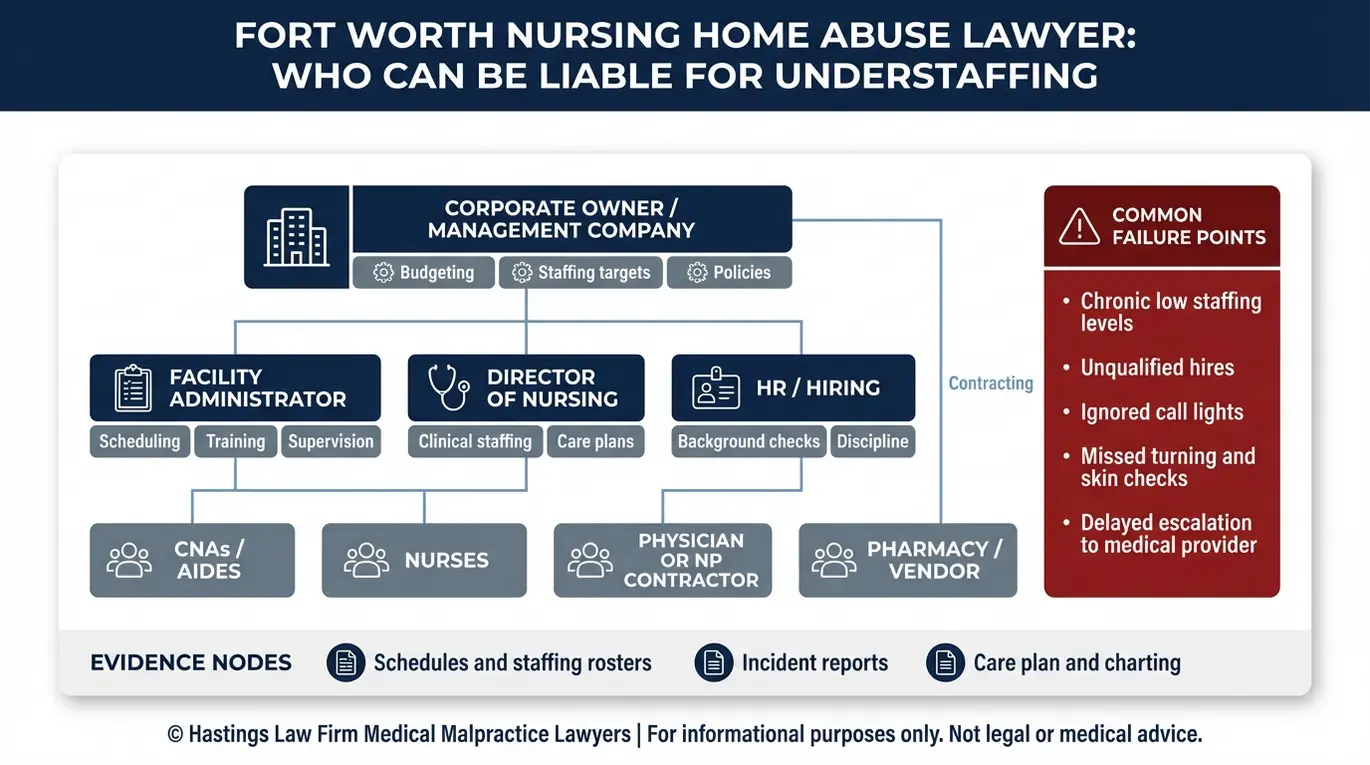
Liability often extends beyond individual aides to the corporate entity responsible for maintaining safe staffing levels, hiring qualified personnel, and enforcing care standards.
Systemic Understaffing
Low staffing levels, meaning the ratio of staff members to residents, directly affect the quality of care. When there are not enough aides, neglect becomes inevitable. Fort Worth nursing home abuse lawyers examine payroll data, including records reported through the Payroll-Based Journal on data.cms.gov, to determine if the facility failed to meet the standard of care. This Payroll-Based Journal data allows our team to compare actual staffing hours against mandated requirements.
Hiring Failures
Facilities must screen employees through background checks. When a facility hires staff with a documented history of abuse and a resident is harmed, that hiring decision itself can establish a breach of duty.
Third-Party Liability
We also investigate the liability of third-party contractors, such as outside medical providers. As an elder abuse attorney Fort Worth families trust, we trace responsibility across every entity involved.
Analyzing Medicare Ratings and History of Violations
We examine inspection data to build a pattern of negligence. The CMS Five-Star Quality Rating System, a federal rating program, assigns scores based on health inspections, staffing, and quality measures.
Low CMS ratings, repeated infection control citations, or poor inspection reports often reveal long-standing problems. This history can show that risks like sepsis, a life-threatening response to infection, were foreseeable. CMS ratings help families identify a history of substandard care.
Legal Protections Under the Nursing Home Reform Act and Texas Law
The Nursing Home Reform Act guarantees residents the right to freedom from abuse, privacy, and dignity, while Texas law provides avenues for civil legal action when those rights are violated. Residents are protected by both state and federal law.
Federal Rights
Under federal law, every nursing home resident is entitled to specific protections. These include the right to be free from physical and chemical restraints used for convenience rather than treatment, the right to privacy, and the right to participate in their own care decisions. These rights are codified in 42 CFR § 483.10, which establishes the baseline standard every facility must meet.
Key resident rights include:
- Freedom from verbal, sexual, physical, and mental abuse
- Freedom from involuntary seclusion and unnecessary restraints
- The right to privacy in medical treatment and personal affairs
- The right to voice grievances without retaliation
- The right to dignity and self-determination in daily life
State Protections
Texas law provides additional legal tools for families. The Texas Health and Human Services Commission (HHSC) monitors compliance, and the Texas Civil Practice & Remedies Code governs medical liability actions. A Fort Worth nursing home negligence lawyer can help you understand how state filing requirements apply to your situation, as local rules govern how these claims proceed in court.
Role of the Ombudsman
The Long-Term Care Ombudsman, a state-appointed advocate who investigates complaints and mediates disputes, helps protect resident rights within care facilities. While the Ombudsman does not file lawsuits, their findings and reports can support a legal claim. An Ombudsman acts as a neutral party to resolve care issues.
Compensation for Elder Abuse and Wrongful Death
Families and residents may recover damages for medical bills, pain and suffering, disfigurement, and in tragic cases, wrongful death. The type and amount of compensation depend on the severity of harm, the conduct of the facility, and the losses the family has endured.
Economic Damages
These cover the measurable financial costs of the abuse. Medical care needed to treat injuries caused by neglect, rehabilitation, relocation to a safe facility, and any other out-of-pocket expenses are included. A nursing home abuse lawyer in Fort Worth documents these costs to ensure nothing is overlooked during settlement negotiation or following a favorable trial verdict.
Non-Economic Damages
Compensation for physical pain, emotional distress, loss of dignity, and diminished quality of life falls into this category. These damages recognize that the harm goes far beyond medical bills. For many families, this is where the true weight of the situation is acknowledged.
Punitive Damages
Texas law allows punitive damages (also called exemplary damages) in cases involving fraud, malice, or gross negligence. According to Texas Civil Practice & Remedies Code § 41.003, the standard for recovering these damages requires clear and convincing evidence that the facility’s conduct was egregious. The 26 Tex. Admin. Code § 559.93 also outlines facility reporting obligations related to abuse, neglect, or exploitation that can inform these claims. Punitive damages are designed to deter future misconduct.
Wrongful Death
When nursing home abuse or neglect results in death, surviving family members may file a wrongful death claim. Fort Worth elder abuse attorneys at our firm help families pursue accountability and fair compensation for their loss, including funeral expenses, loss of companionship, and the emotional suffering that follows.
Contact the Fort Worth Nursing Home Attorneys at Hastings Law Firm Today for Help
Your loved one deserved safe, dignified care. If that trust was broken, you have every right to ask questions and demand answers.
Hastings Law Firm was built for cases like these. Our team of attorneys, nurse consultants, and former defense counsel prepares every case as if it is going to trial, because that level of preparation is what it takes to hold facilities accountable. We understand the medical evidence, we know how these facilities operate, and we are ready to stand with your family.
There is no cost to speak with us. We work on a contingency fee basis, which means you pay no attorney fees unless we recover compensation on your behalf. If you suspect your loved one has been harmed by nursing home abuse or neglect, a Fort Worth nursing home abuse lawyer at our firm can review your situation in a free, confidential consultation.
Call us today, or fill out our online form to get started.
Frequently Asked Questions About Nursing Home Abuse in Fort Worth


This content was researched and written by the Hastings Law Firm editorial team, which includes attorneys, medical professionals, and experienced researchers. Our writing is informed by internal knowledge and practical experience, and we cross-check critical details against authoritative sources cited throughout. Every piece undergoes human-led fact-checking and legal review. Because legal and medical information can change, if you spot an error, please contact us. Learn more about our content standards and review process on our editorial policy page.

Gabe Sassin has focused exclusively on medical malpractice law since 2007. After spending more than a decade as a malpractice defense attorney, he knows exactly how the other side works. He has seen firsthand how healthcare providers, insurers, corporate defendants, and their legal teams think, prepare, and build their defense against claims. That knowledge works for the people who need it most today, injured patients and their families. His unique experience shapes everything he writes, giving readers a look at how these cases actually work from someone who has handled them from both sides.
