


Texas Nuchal Cord Malpractice Lawyer
Written by: Hastings Law Firm | Reviewed by: Tommy Hastings | Updated: July 27, 2026
A nuchal cord can be managed safely, but serious harm can occur when warning signs of fetal distress are missed or oxygen flow is not restored quickly. Families often face confusion, grief, and a lack of clear answers after a difficult delivery. Understanding how monitoring, communication, and timely intervention affect outcomes can help clarify whether the response met accepted standards of care. The long term impact can include permanent neurological injury and lifelong care needs, which can reshape daily life and financial stability. If you or a loved one were harmed or worse due to nuchal cord malpractice in Texas, contact Hastings Law Firm for a free, confidential case review.
Top Rated Texas Birth Injury Attorneys for Nuchal Cord Cases
What You Should Know About Infant Nuchal Cord Injury Claims in Texas:
- Lifelong consequences can follow when oxygen deprivation during delivery is not addressed promptly.
- Permanent neurological injury can occur when fetal distress is missed or a necessary C section is delayed.
- Disputes often focus on whether fetal heart rate warning signs were recognized and acted on in time.
- Liability can turn on whether the medical team followed accepted monitoring and response protocols during labor.
- Recovery options in Texas can be limited if legal deadlines are missed, even when the injured child is a minor.
- Evidence can become harder to obtain over time because fetal monitoring strips and hospital records may not be preserved indefinitely.
- Key records can be central to understanding what happened, including electronic fetal monitoring strips and nursing notes.
- Hospital defenses may shift blame to unavoidable complications or genetic factors rather than medical negligence.

A Healthcare Focused Law Firm
When your child has been hurt during delivery and you suspect the medical team failed to respond to a nuchal cord complication, the confusion and grief can feel overwhelming. You may sense that something went wrong, but the medical system rarely offers clear answers. That instinct deserves to be taken seriously.
As a dedicated Texas Nuchal Cord Malpractice Lawyer team, Hastings Law Firm focuses exclusively on medical malpractice. Our legal and medical professionals, including former hospital defense attorneys, know how to examine what happened during delivery and determine whether the care your child received fell below accepted standards.
If you have questions about your child’s birth injury, we can review what happened and explain your options in a free, confidential consultation. You pay nothing unless we recover compensation on your behalf.
Identifying Negligence When Nuchal Cord Complications Occur
A nuchal cord, meaning the umbilical cord has wrapped around a baby’s neck, becomes a malpractice issue when a doctor or nurse fails to monitor fetal distress signals, misses signs of oxygen deprivation on the heart rate monitor, or delays a necessary C-section. The cord itself is not uncommon. Research published through PubMed Central on perinatal outcomes related to nuchal cords shows that nuchal cords occur in many deliveries.
Most are managed safely. The issue is not the cord; it is how the medical team responds when the cord causes umbilical cord compression. This is a condition where the cord is squeezed tightly enough to reduce blood and oxygen flow to the baby.
The standard of care requires obstetricians and labor nurses to continuously watch for signs of fetal distress, particularly decelerations in fetal heart rate patterns. The American College of Obstetricians and Gynecologists provides clear guidelines on fetal heart rate monitoring during labor, and trained professionals are expected to recognize warning signs and act quickly.
When these professionals fail to intervene despite evidence of distress, it puts the baby at unnecessary risk. Medical protocols dictate that persistent decelerations must trigger immediate corrective action to restore oxygen flow.
When we evaluate a potential case as a nuchal cord lawyer in Texas, we look for specific indicators that the standard of care was not met. A breach of duty can take many forms, including:
Signs of Potential Negligence in Nuchal Cord Cases:
- Failure to adequately monitor fetal heart rate strips throughout labor
- Ignoring or misinterpreting clear patterns of fetal distress
- Delayed decision to move to an emergency C-section when conservative measures failed
- Poor communication between nursing staff and the attending obstetrician
- Incomplete or altered documentation in delivery records
Any one of these gaps can mean the difference between a healthy delivery and a lifelong injury.
Long Term Impact of Oxygen Deprivation and Birth Injuries
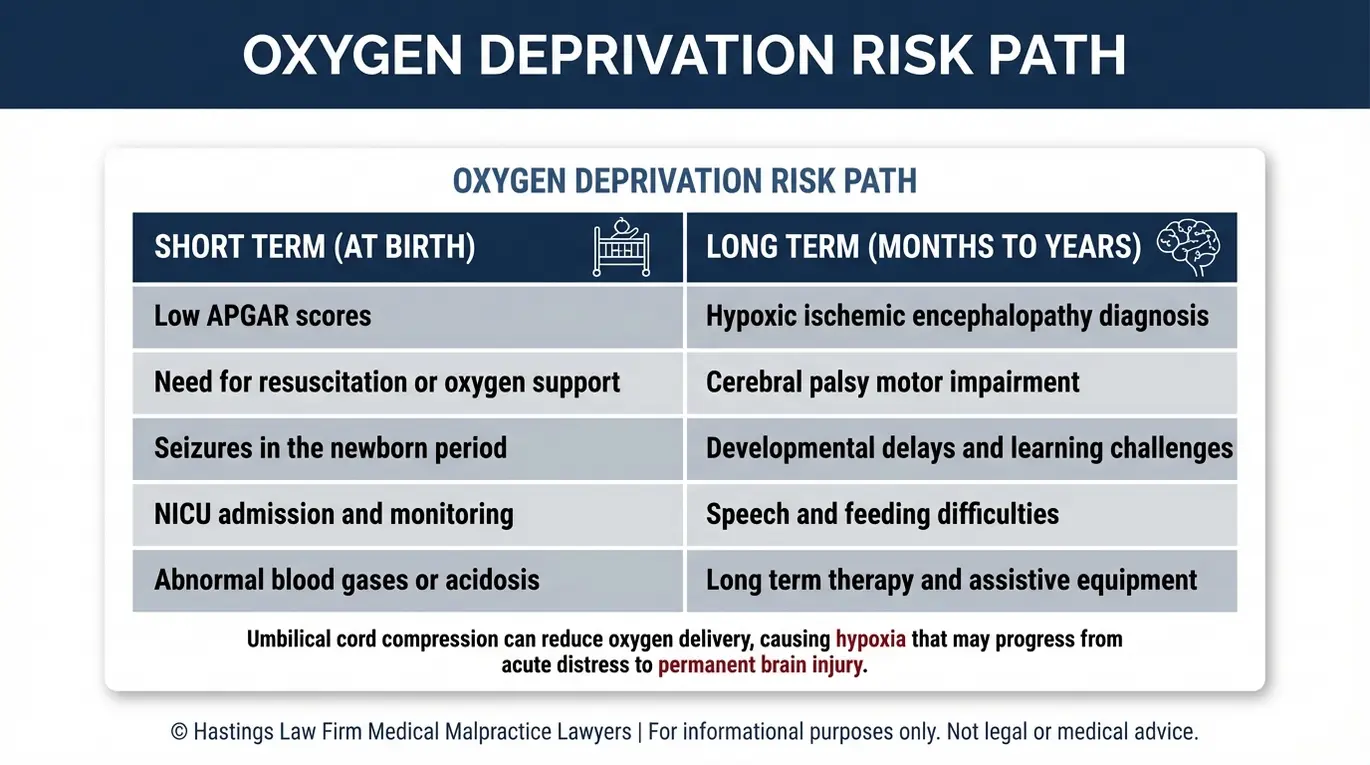
When a nuchal cord is not properly managed, it can cut off oxygen to the baby, a condition known as hypoxia (reduced oxygen to the body’s tissues, which can deprive the brain of oxygen). Prolonged oxygen deprivation can lead to permanent conditions like cerebral palsy, HIE (Hypoxic-Ischemic Encephalopathy), and cognitive disabilities requiring lifetime care. As outlined by NCBI Bookshelf’s resource on birth asphyxia, the severity of injury depends heavily on how long the oxygen supply was compromised and how quickly the medical team intervened.
The consequences of birth asphyxia range from immediate complications to permanent neurological damage. An Apgar score, a quick assessment of a newborn’s health at one and five minutes after birth, is often one of the first indicators that something went wrong.
A Texas nuchal cord injury attorney examines both the short-term and long-term outcomes to fully understand the scope of a child’s injuries and future care needs.
| Short-Term Outcomes | Long-Term Outcomes |
|---|---|
| Low Apgar scores at birth | Developmental and cognitive delays |
| Seizures in the first hours or days | Loss of motor function or coordination |
| Need for resuscitation or NICU admission | Permanent brain damage |
| Difficulty breathing independently | Cerebral palsy or related conditions |
| Organ stress or failure | Need for lifelong specialized care and life care planning |
These long-term outcomes shape every part of a family’s future, from daily routines to financial planning.
The Hastings Law Firm Difference
Results matter, but what truly sets us apart is how we achieve them. Every verdict, every settlement, and every Texas courtroom victory comes from one guiding promise: To treat each client’s fight for justice as if it were our own.
This balance of skill, experience, and empathy reflects our core philosophy that justice should not only compensate the injured, but also make healthcare safer nationwide.

Proving Liability in Umbilical Cord Management Cases
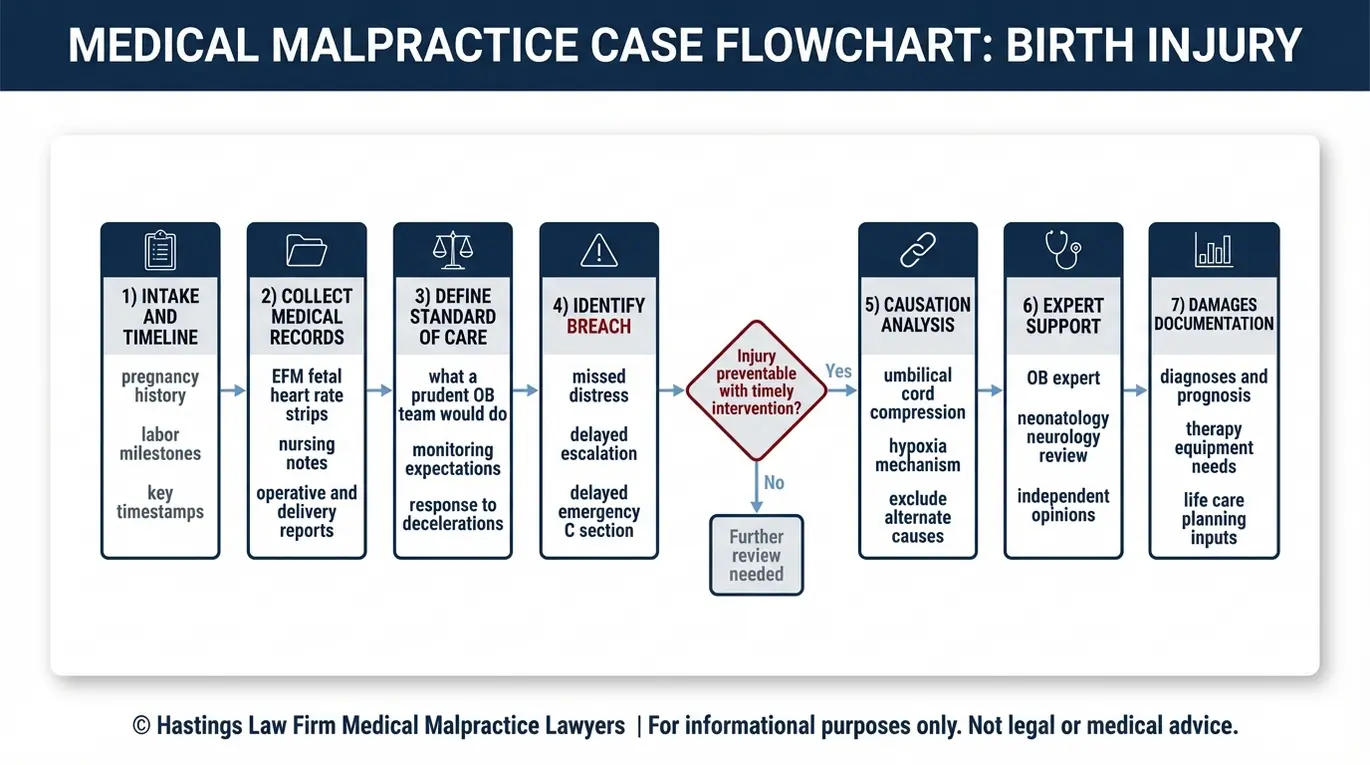
Proving liability requires demonstrating that the medical provider deviated from the accepted standard of care and that this deviation directly caused the child’s injury. Liability in these cases hinges on whether the medical team followed protocols to prevent brain damage. Our team includes board-certified patient advocates who help interpret medical records to identify exactly where the care failed.
Our team examines key pieces of evidence to determine what occurred. Electronic fetal monitoring (EFM) strips, the continuous printout that tracks fetal heart rate and contractions, are often the most important document in these cases. We look for variable decelerations, sudden drops in the baby’s heart rate that can signal umbilical cord compression. Nursing notes, delivery logs, and physician orders help us build a minute-by-minute timeline.
You have the right to obtain copies of your medical records. The U.S. Department of Health and Human Services (HHS.gov) outlines your rights under HIPAA to access your health information, and we help clients secure these records early in the process.
We also understand that questioning a doctor’s decisions can feel uncomfortable. Many families struggle with the “White Coat Effect,” a hesitation to challenge medical authority. If you believe something went wrong during your child’s delivery, that concern is valid. A malpractice lawyer for nuchal cord cases works with independent medical experts to confirm medical negligence and hospital malpractice, providing an objective review separate from the facility involved. Proving causation often relies on these expert opinions to link the breach of duty to the specific injury your child suffered.
Calculating Damages for Birth Injuries in Texas
Damages in birth injury cases cover both economic losses, such as lifetime medical care and lost earning capacity, and non-economic losses like pain, suffering, and physical impairment. Because a child injured at birth may need support for decades, accurately calculating these damages is essential for securing full compensation.
Economic damages may include:
- Past and future medical bills, including surgeries, therapy, and medications
- Physical, occupational, and speech therapy costs
- Specialized equipment such as wheelchairs, communication devices, or adaptive technology
- Home modifications for accessibility
- Lost future earning capacity
Non-economic damages may include:
- Pain and suffering
- Mental anguish
- Loss of enjoyment of life
- Physical impairment and disfigurement
The Role of Financial Experts in Calculating Future Damages
Because many birth injuries require care lasting 50 years or more, our firm works with Life Care Planners and economic experts who project the full cost of a child’s future needs. Future damages refer to the anticipated future care costs and lost income over a child’s lifetime.
These professionals analyze medical prognoses, therapy schedules, and equipment requirements to build a detailed financial picture. This ensures that any settlement or verdict accounts for the true lifetime cost of care, not just the expenses a family faces today.
Texas Deadlines and The Statute of Limitations
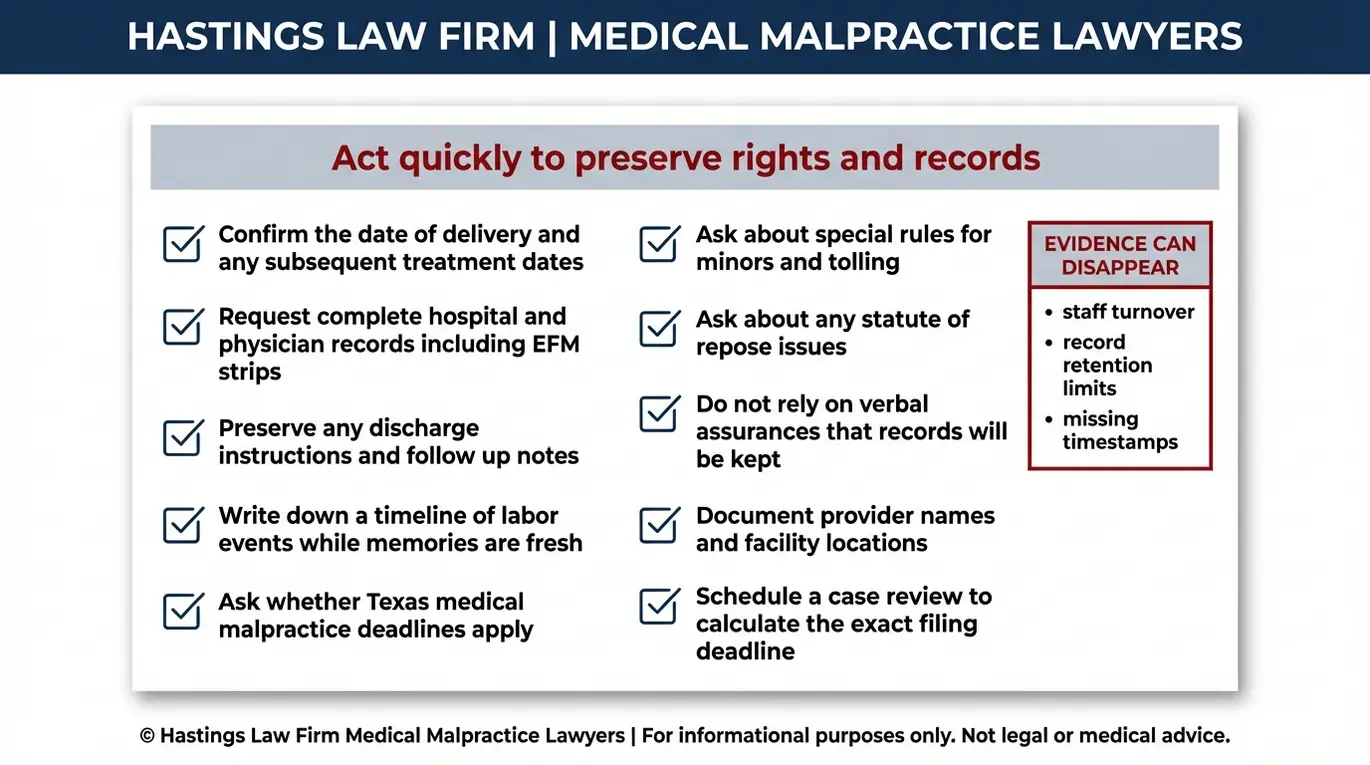
Texas law imposes strict deadlines for filing medical malpractice lawsuits. While there are specific provisions for minors, parents should consult a Texas nuchal cord malpractice attorney as early as possible to preserve evidence and protect their right to file.
Under the Texas Civil Practice and Remedies Code Chapter 74, the general statute of limitations for medical malpractice claims is two years from the date of the alleged negligence. For minors, the filing deadline may be extended, or “tolled,” but the rules are more nuanced than many families realize. Texas also imposes a statute of repose that can create a hard outer deadline regardless of the child’s age.
Even when the legal deadline may seem far away, waiting carries real risks. Medical records can be lost or altered, and hospital staff involved in the delivery may leave the facility. Fetal monitoring strips and nursing logs may not be preserved indefinitely.
Contacting an attorney early gives your legal team the best opportunity to secure and analyze the evidence that matters most.
Contact the Texas Birth Injury Attorneys at Hastings Law Firm Today for Help
If your child was injured during delivery due to a nuchal cord complication, you deserve to know what happened and whether the medical team’s response met the standard of care. Finding those answers is the first step, and it costs you nothing to start.
Hastings Law Firm is dedicated exclusively to medical malpractice. Founded by board-certified trial attorney Tommy Hastings, our firm has recovered millions for families affected by preventable birth injuries across Texas. Our team understands how these cases are built from both sides to ensure your family’s voice is heard.
We handle every case on a contingency fee basis, meaning you pay no attorney fees or costs unless we recover compensation for your family. Reach out today for a free, confidential case evaluation with a Texas nuchal cord malpractice lawyer. Let us help you find the truth about what happened and understand your legal options.
Frequently Asked Questions About Nuchal Cord Malpractice in Texas


This content was researched and written by the Hastings Law Firm editorial team, which includes attorneys, medical professionals, and experienced researchers. Our writing is informed by internal knowledge and practical experience, and we cross-check critical details against authoritative sources cited throughout. Every piece undergoes human-led fact-checking and legal review. Because legal and medical information can change, if you spot an error, please contact us. Learn more about our content standards and review process on our editorial policy page.

Tommy Hastings, founder of Hastings Law Firm, is a board-certified personal injury trial lawyer dedicated exclusively to healthcare injury cases. Since 2001, he has represented injured patients and families in litigation against major hospital systems, pharmaceutical companies, and negligent healthcare providers nationwide. He has handled numerous high-profile cases that have drawn national media attention and resulted in multi-million dollar recoveries. He draws on that experience in his writing, helping readers understand how these cases work and what options may be available to them.
