


Texas Newborn Opioid Withdrawal Lawyer
Written by: Hastings Law Firm | Reviewed by: Tommy Hastings | Updated: July 27, 2026
Neonatal Abstinence Syndrome can leave families facing intensive hospital care, long term developmental challenges, and overwhelming financial strain when opioid exposure during pregnancy was preventable. The topic often centers on whether clinicians prescribed opioids without proper monitoring, failed to warn about fetal risks, or overlooked a history of addiction. Accountability may involve individual prescribers, hospitals, or pharmaceutical manufacturers depending on the facts. If your child suffered harm or worse due to newborn opioid withdrawal in Texas, contact Hastings Law Firm for a free, confidential case review.
Compassionate Texas Medical Attorneys for Neonatal Abstinence Syndrome Claims
What You Should Know About Neonatal Abstinence Syndrome Malpractice Claims in Texas:
- Long term financial strain can follow when newborn opioid withdrawal leads to ongoing medical support and reduced future earning capacity.
- Severe early complications can occur when withdrawal is not recognized and treated promptly after birth.
- Liability can extend beyond one party when both negligent prescribing and deceptive pharmaceutical marketing contribute to opioid exposure.
- Recovery options can narrow if legal filing deadlines are missed, since Texas medical malpractice claims are subject to strict time limits.
- Proof disputes often turn on whether prenatal opioid prescribing was monitored and documented in a way that reflects accepted standards.
- Eligibility can depend on documented opioid exposure and a medical diagnosis or documented withdrawal signs.
- Compensation calculations can be shaped by projected lifetime needs, since settlements may need to fund care across the child life.
- Case facts can hinge on clinical documentation such as prescription records, prenatal care charts, and neonatal toxicology results.

A Healthcare Focused Law Firm
When a newborn suffers because of opioid exposure during pregnancy, parents are often left with fear, confusion, and a growing pile of medical bills. You may feel uncertain about what happened, who is responsible, and whether you have any legal options. Those feelings are valid, and you are not alone.
Neonatal Abstinence Syndrome, commonly called NAS, affects thousands of infants across Texas every year. In many of these cases, the opioid exposure could have been prevented with proper medical care. When a healthcare provider fails to meet accepted standards, families may have grounds for a medical malpractice claim.
As a Texas newborn opioid withdrawal lawyer, Hastings Law Firm focuses exclusively on medical malpractice. Our team of attorneys, in-house nurses, and medical consultants investigates these cases from day one, working to uncover what went wrong and who should be held accountable. This specialized focus ensures we understand the clinical details necessary to build a strong case.
If your child was diagnosed with NAS, we welcome the chance to review what happened and explain your options in a free, confidential consultation.
Understanding Neonatal Abstinence Syndrome (NAS)
Neonatal Abstinence Syndrome (NAS) is a group of conditions that develop when a baby withdraws from drugs, most often opioids, that the baby was exposed to in utero before birth. The drugs pass through the placenta during pregnancy, and once the baby is born and the supply stops, withdrawal begins.
According to the Office on Women’s Health, NAS can develop within hours or days after delivery. The severity depends on several factors, including the type of opioid involved, how long the mother used it, and whether the baby was full-term.
Doctors sometimes prescribe medications linked to newborn opioid withdrawal, such as oxycodone, hydrocodone, fentanyl, morphine, and codeine. When clinicians do not carefully monitor prenatal opioid exposure, the infant can pay the price. These medications are sometimes necessary for pain management, but they require strict medical oversight.
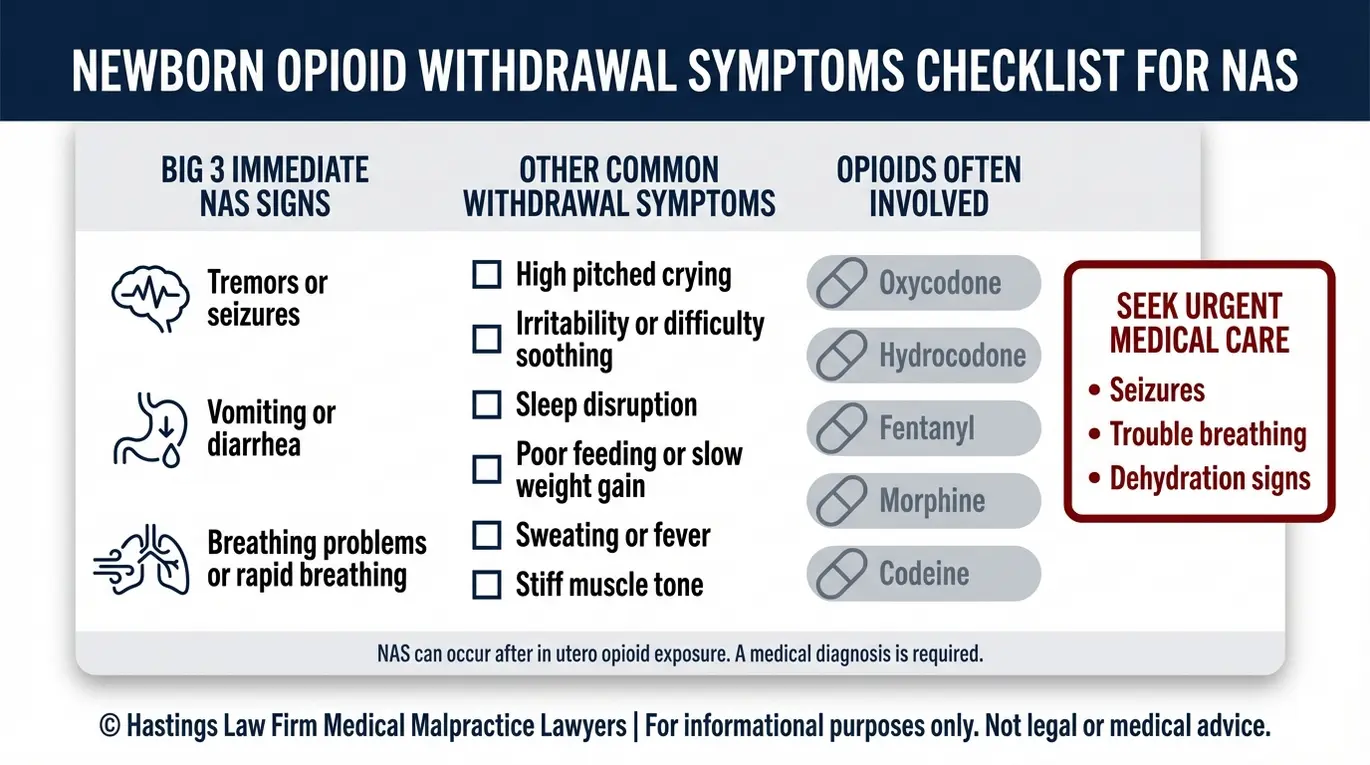
Symptoms of NAS generally fall into three main categories. Recognizing them early is essential for getting the baby proper treatment, which may include nonpharmacologic care such as rooming-in, swaddling, and maintaining a low-stimulation environment.
Common NAS Withdrawal Symptoms:
- Tremors and seizures: Uncontrollable shaking, muscle stiffness, or convulsions that may begin shortly after birth
- Gastrointestinal distress: Persistent vomiting, diarrhea, poor feeding, and difficulty gaining weight
- Respiratory issues: Rapid or irregular breathing, nasal stuffiness, and excessive sneezing
A Texas newborn opioid withdrawal attorney can help families understand whether these symptoms resulted from preventable medical decisions and what legal options may be available.
Long-Term Effects and the Lifetime Cost of Care
The long-term effects of NAS can include cognitive delays and behavioral consequences. Separately, prenatal opioid exposure has been linked to certain congenital birth defects, such as spina bifida and congenital heart defects, all of which may require lifetime medical support.
The challenges do not end in the NICU. Children who experience newborn opioid withdrawal often face developmental delays, which is a broad term covering problems with learning, memory, attention, and behavior that can emerge as the child grows. Many of these children need special education services, speech therapy, occupational therapy, and ongoing behavioral health support well into adolescence and beyond.
The physical toll can be equally significant. Pharmacologic weaning, the process of gradually reducing opioid therapy (such as morphine or methadone) in the newborn, may be required during the initial hospital stay. But some infants also face structural birth defects tied to prenatal opioid exposure, including hydrocephalus and gastroschisis, a condition where the infant’s intestines extend through an opening in the abdominal wall.
Families working with a Texas newborn opioid withdrawal lawyer often pursue compensation that accounts not just for current bills, but for the projected lifetime cost of care and the child’s diminished future earning capacity.
| Category of Care | Examples | Who Often Pays |
|---|---|---|
| Neonatal/Hospital Care | Extended NICU stay, pharmacologic weaning | Medicaid covers a large share; families bear remaining costs |
| Surgical Intervention | Gastroschisis repair, cardiac surgery | Insurance/Medicaid with significant out-of-pocket gaps |
| Developmental Therapies | Speech, occupational, physical therapy | Families often pay for services insurance does not cover |
| Special Education | Individualized learning plans, tutoring | Public school systems and families |
| Behavioral Health | Counseling, psychiatric care | Insurance with co-pays; limited Medicaid coverage |
| Lost Future Earning Capacity | Reduced ability to work independently as an adult | Not covered; recoverable through litigation |
Securing compensation is vital because a settlement must cover these chronic needs for the duration of the child’s life.
The Hastings Law Firm Difference
Results matter, but what truly sets us apart is how we achieve them. Every verdict, every settlement, and every Texas courtroom victory comes from one guiding promise: To treat each client’s fight for justice as if it were our own.
This balance of skill, experience, and empathy reflects our core philosophy that justice should not only compensate the injured, but also make healthcare safer nationwide.

Medical Negligence: Opioid Prescription During Pregnancy
Medical negligence occurs when a doctor prescribes opioids to a pregnant woman without proper monitoring, fails to warn of risks to the fetus, or ignores a patient’s history of addiction.
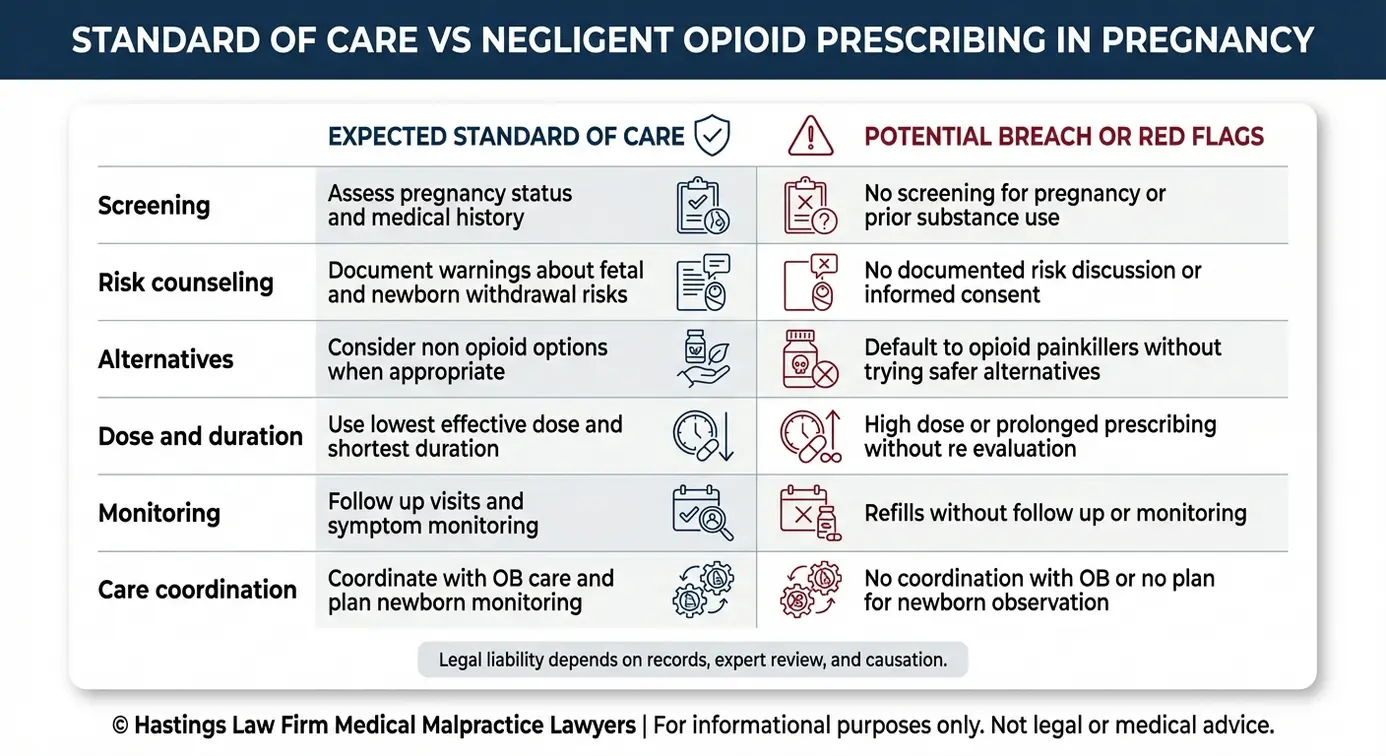
The standard of care for prescribing painkillers during pregnancy requires physicians to weigh the risks carefully. That includes opioid use disorder (OUD) screening, a medical assessment to identify potential addiction issues, and counseling the patient about the potential for prenatal opioid exposure to cause lasting injury. Doctors are expected to consider non-narcotic alternatives, closely monitor the pregnancy, and document all decision-making.
When these steps are skipped or ignored, the result can be a newborn suffering from withdrawal. The CDC’s guidance on opioid use and pregnancy outlines the serious risks that healthcare providers are expected to understand and communicate.
Understanding the broader crisis provides context for these individual cases. The opioid epidemic has unfolded in three waves: the first driven by overprescription of painkillers in the 1990s, the second by the rise of heroin, and the third by synthetic opioids like fentanyl. Provisional drug overdose death data from the CDC reflects how deeply these waves have affected communities across the country.
Medical providers have been part of each wave. Negligent prescribing, failure to screen for addiction risk, and failure to offer safer alternatives have directly contributed to infants being born dependent on opioids. Texas newborn opioid withdrawal attorneys examine these prescribing decisions closely, looking at whether the doctor followed accepted standards or fell short.
At Hastings Law Firm, our in-house nursing staff and former defense attorneys know how to read prescribing records, identify gaps in monitoring, and determine where the standard of care was breached.
Determining Liability: Pharmaceutical Giants vs. Negligent Prescribers
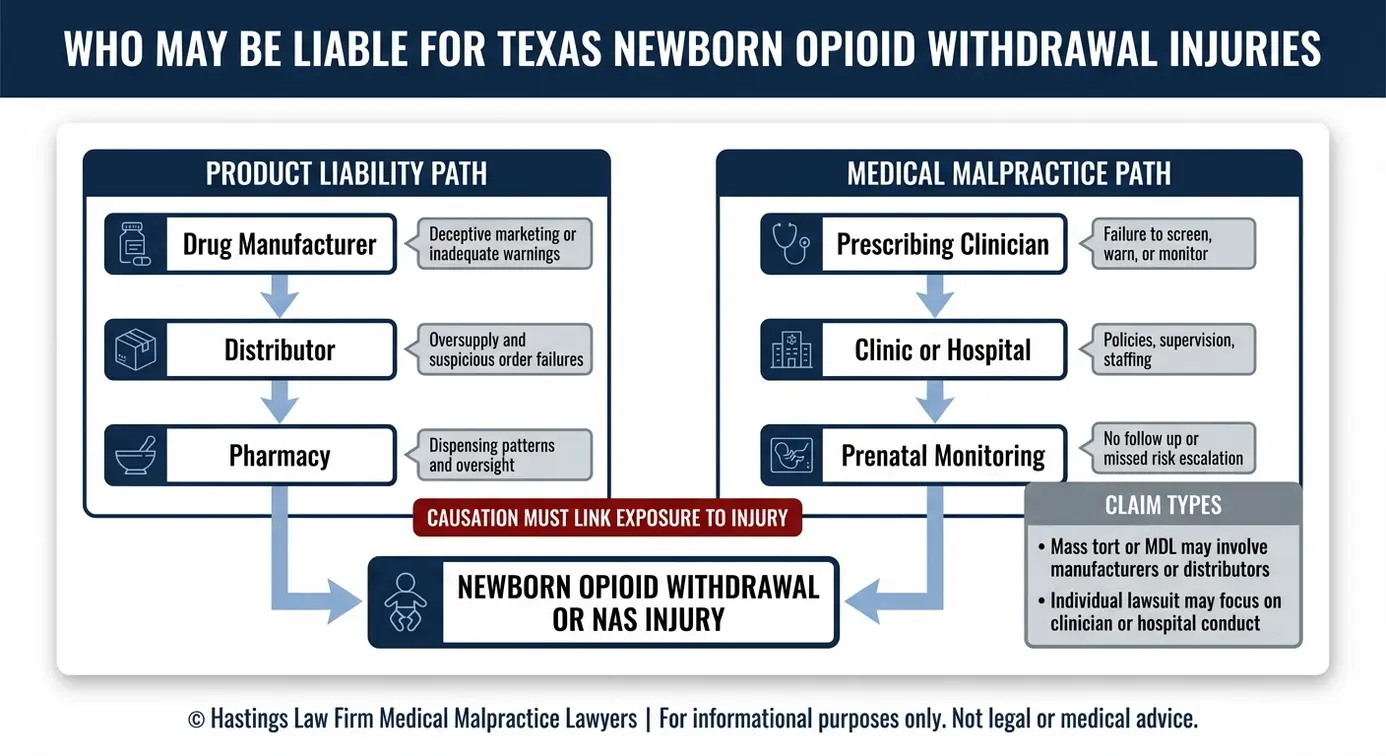
Liability in NAS cases may fall on pharmaceutical manufacturers for deceptive marketing or on individual doctors and hospitals for negligent prescribing and monitoring practices. In many cases, more than one party shares responsibility.
The national opioid crisis has produced massive legal action, including Multidistrict Litigation (MDL), which consolidates similar cases to handle complex legal issues efficiently. The Texas Comptroller’s Office provides details on how these settlement funds are being managed in Texas.
Identifying the sources of accountability and compensation is critical because large settlements address systemic roles, while individual claims address specific medical errors.
| Factor | Pharmaceutical Liability (Mass Tort/MDL) | Medical Malpractice (Doctor/Hospital) |
|---|---|---|
| Defendant | Drug manufacturers and distributors | Prescribing physician, clinic, or hospital |
| Legal Theory | Deceptive marketing, failure to warn | Breach of standard of care in prescribing |
| Claim Type | Product liability, often consolidated in MDL | Individual malpractice lawsuit |
| Evidence Focus | Internal marketing documents, FDA filings | Prescription records, prenatal care charts |
| Compensation Source | Settlement funds or jury verdict | Individual defendant’s malpractice insurance |
As a Texas newborn opioid withdrawal law firm, Hastings Law Firm investigates both angles. Our team reviews the prescribing history and the manufacturer’s conduct to determine every potential source of recovery.
Eligibility: Who Can File a Newborn Opioid Withdrawal Lawsuit?
Parents, legal guardians, and in some cases the children themselves (through a legal representative) may be eligible to file a lawsuit if the infant suffered NAS due to negligent opioid exposure.
To pursue a claim, families generally need three things: proof that opioids were prescribed during pregnancy, a medical diagnosis of NAS, and evidence linking the exposure to the child’s injuries. Medical records and neonatal toxicology testing, which analyzes meconium or umbilical cord tissue for drug exposure, are often central to building the case.
Hospitals typically use the Finnegan Neonatal Abstinence Scoring System (FNASS), a standardized tool that rates the severity of a newborn’s withdrawal symptoms, to diagnose and monitor NAS. These scores, along with prescription records and prenatal care documentation, form the foundation of the legal claim.
Eligibility Checklist:
- Qualifying for a lawsuit requires that the infant was diagnosed with NAS or showed documented withdrawal symptoms
- Opioids were prescribed to the mother during pregnancy
- Medical records and toxicology reports confirm opioid exposure
- The prescribing physician or manufacturer may have acted negligently
- A parent, legal guardian, or court-appointed representative can file on behalf of the child, who acts as the patient and plaintiff in the legal filing.
Texas has a statute of limitations, which is a strict legal deadline for filing medical malpractice claims. While the timeline can be affected by the child’s age, families should seek a legal review early to ensure evidence is preserved.
Contact the Texas Birth Injury Attorneys at Hastings Law Firm Today for Help
No family should have to face the consequences of preventable medical harm alone. If your child was born with Neonatal Abstinence Syndrome and you believe a doctor’s prescribing decisions may have contributed, you deserve answers.
Hastings Law Firm is dedicated to uncovering the truth in these cases and protecting the financial future of children who cannot yet speak for themselves. Founded by Tommy Hastings, a board-certified trial lawyer with over two decades of experience, our firm prepares every case as if it will go to a jury. Our team of Texas newborn opioid withdrawal lawyers is supported by in-house medical professionals and a national network of experts.
There are no fees unless we recover compensation for your family. Contact us today for a free, confidential consultation to discuss what happened and learn what options may be available to you.
Frequently Asked Questions About Newborn Opioid Withdrawal in Texas


This content was researched and written by the Hastings Law Firm editorial team, which includes attorneys, medical professionals, and experienced researchers. Our writing is informed by internal knowledge and practical experience, and we cross-check critical details against authoritative sources cited throughout. Every piece undergoes human-led fact-checking and legal review. Because legal and medical information can change, if you spot an error, please contact us. Learn more about our content standards and review process on our editorial policy page.

Tommy Hastings, founder of Hastings Law Firm, is a board-certified personal injury trial lawyer dedicated exclusively to healthcare injury cases. Since 2001, he has represented injured patients and families in litigation against major hospital systems, pharmaceutical companies, and negligent healthcare providers nationwide. He has handled numerous high-profile cases that have drawn national media attention and resulted in multi-million dollar recoveries. He draws on that experience in his writing, helping readers understand how these cases work and what options may be available to them.
