


Texas Infant Therapeutic Hypothermia Lawyer
Written by: Hastings Law Firm | Reviewed by: Tommy Hastings | Updated: July 27, 2026
Neonatal therapeutic hypothermia, also called brain cooling therapy, is a standard treatment for newborns with hypoxic ischemic encephalopathy after oxygen deprivation around birth. When screening is missed, cooling is delayed, or temperature control is mishandled, a preventable brain injury can worsen and lead to lifelong disability. Understanding eligibility criteria, timing expectations, and common protocol breakdowns can help families make sense of what happened and why outcomes changed. If you or a loved one were harmed or worse due to neonatal brain cooling errors in Texas, contact Hastings Law Firm for a free, confidential case review.

Legal Help for Families Impacted by Neonatal Brain Cooling Errors
What You Should Know About Neonatal Brain Cooling Treatment Error Claims in Texas:
- Long term neurological disability can become more severe when therapeutic hypothermia is not started on time after oxygen deprivation around birth.
- A missed opportunity for meaningful improvement can occur once the therapeutic window closes, because cooling is most effective when initiated quickly.
- A preventable loss of treatment can occur when eligibility signs are not recognized, such as abnormal cord blood gases or concerning neurological findings.
- Serious complications can be triggered when cooling is administered incorrectly, including overly aggressive cooling or rapid rewarming linked to reperfusion injury.
- Ongoing safety risks can go unaddressed when monitoring is inadequate during cooling, including missed seizures or untracked lab abnormalities.
- Disputes about what caused the injury can shape outcomes, because causation is often contested as occurring entirely before birth.
- Recovery can be affected by limits on non economic damages, because Texas law recognizes both economic and non economic damages but treats them differently.
- Lifetime financial needs can be central to compensation, because Life Care Plans project long term care costs such as nursing support and adaptive equipment.
- Key evidence can be lost with delay, because medical records, fetal monitoring strips, and staffing logs are time sensitive.
- Clarity about timing and severity can depend on specialized records, because MRI patterns and placental pathology may indicate when oxygen deprivation occurred.

A Healthcare Focused Law Firm
When a newborn suffers from hypoxic-ischemic encephalopathy (HIE), a type of brain injury caused by oxygen deprivation around the time of birth, every minute counts. If your child was denied timely brain cooling treatment or received it incorrectly, you may be dealing with questions that feel impossible to answer on your own: What went wrong? Could this have been prevented?
You are not alone, and you do not have to figure this out without help. As a Texas infant therapeutic hypothermia lawyer, Hastings Law Firm focuses exclusively on medical malpractice cases, including failures related to neonatal cooling therapy. We can review what happened during your child’s birth, explain your legal options, and help you understand whether the care your baby received fell below the accepted medical standard.
Contact us for a free, confidential case evaluation.
Understanding Therapeutic Hypothermia and HIE Treatment Standards
Neonatal therapeutic hypothermia, also called brain cooling therapy, is the standard of care treatment for newborns diagnosed with hypoxic-ischemic encephalopathy (HIE). Its purpose is to slow cellular metabolism and reduce the risk of permanent brain damage after oxygen deprivation during or around delivery.
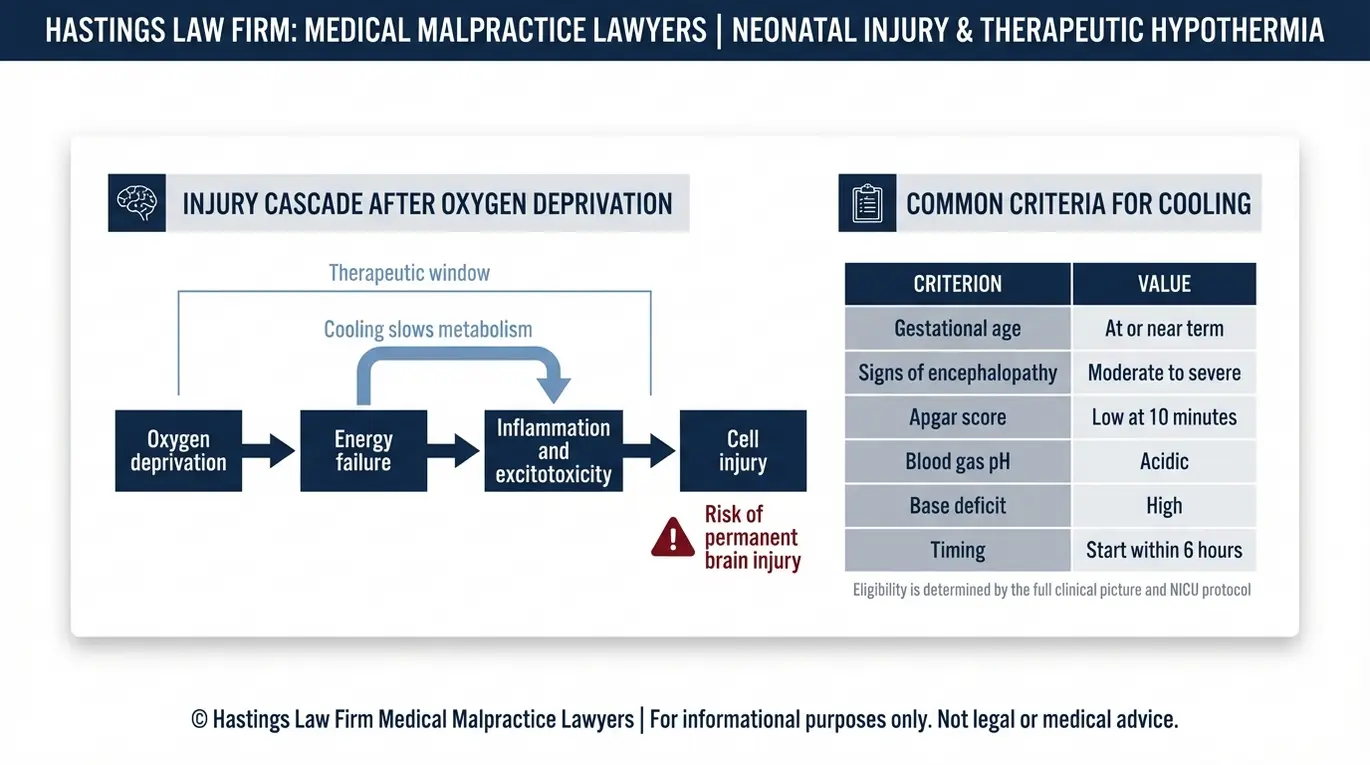
Neonatal therapeutic hypothermia works by addressing the secondary wave of cell death that occurs over several hours. When a baby’s brain is deprived of oxygen, the initial injury triggers this cascade. This delayed injury is driven by inflammation, toxic chemical release, and swelling. Cooling the infant’s core body temperature lowers metabolic demand in the brain, which helps interrupt that cascade before it causes irreversible harm.
This treatment is not experimental. It is a well-established protocol backed by major clinical research, including the landmark Whole Body Cooling for Birth Asphyxia in Term Infants trial registered with ClinicalTrials.gov. For infants who meet specific clinical criteria, offering therapeutic hypothermia is a mandatory part of the standard of care, not a discretionary decision.
There are two primary methods. Passive cooling involves removing external heat sources, such as turning off a radiant warmer, to begin lowering the baby’s temperature as a bridge measure. Active cooling uses specialized equipment, either a cooling blanket that wraps around the infant’s body (whole-body cooling) or a cooling cap placed on the head (selective head cooling), to achieve and maintain precise target temperatures.
Neonatal encephalopathy, which refers to abnormal neurological function in a newborn, must be assessed quickly to determine whether cooling is appropriate. Eligibility depends on objective clinical data:
| Criteria | Typical Threshold |
|---|---|
| Gestational age | 36 weeks or greater |
| Apgar scores | Low at 5 and/or 10 minutes |
| Cord blood gas pH | 7.0 or less (severe acidosis) |
| Base deficit | 16 mmol/L or more |
| Clinical signs | Seizures, abnormal tone, depressed consciousness |
When these thresholds are met, a qualified medical team should begin cooling without unnecessary delay. If your child’s care team failed to act on these criteria, a therapeutic hypothermia lawyer can help determine whether that failure constituted negligence.
Clinical Thresholds and Sarnat Staging Explained
Beyond the initial lab values, doctors use a clinical grading system called Sarnat staging, also known as the Sarnat score, to classify the severity of a newborn’s neurological compromise. The scale assigns a grade of mild, moderate, or severe encephalopathy based on observable signs like muscle tone, reflexes, level of consciousness, and seizure activity.
Infants graded as moderate or severe on the Sarnat scale are generally strong candidates for cooling therapy. However, Sarnat staging is not the only factor. Doctors also evaluate Apgar scores alongside lab results to assess the level of neurological compromise.
Umbilical cord blood gas pH measures the acidity of the baby’s blood at birth; a pH of 7.0 or lower signals significant oxygen deprivation. Base excess, sometimes called base deficit, reflects the degree of metabolic acidosis and helps quantify how long the baby experienced compromised blood flow. Together, these metrics give clinicians an objective basis for acting quickly.
The Critical 6-Hour Window and Timing Protocols
Medical protocols strictly require that therapeutic hypothermia be initiated within six hours of birth. This six-hour therapeutic window, the period during which cooling can most effectively reduce secondary brain injury, is the centerpiece of nearly every medical negligence claim involving brain cooling therapy.
The reason for this deadline is biological. After the initial oxygen deprivation event, there is a brief latent phase before the secondary injury cascade accelerates. Cooling during this latent phase gives the brain its best chance of recovery.
Once the window closes, the opportunity to intervene meaningfully decreases sharply. Research published in a therapeutic hypothermia study in neonatal hypoxic encephalopathy on PubMed reinforces that outcomes are closely tied to how quickly treatment begins.
This creates a clear chain of obligations for hospitals. After birth, the medical team must recognize signs of birth asphyxia, perform the necessary assessments, and determine eligibility for cooling. These assessments include blood gas analysis, Apgar scoring, and a neurological exam. If the delivering hospital has the equipment and trained staff, active cooling should begin immediately.
If the hospital cannot provide neonatal therapeutic hypothermia, it has a duty to arrange an emergency transfer to a facility that can. During transport, the referring team should begin passive cooling, which involves removing heat sources and monitoring temperature, to buy time within the therapeutic window.
Delays at any point in this sequence can mean the difference between a child who recovers and a child who faces a lifetime of neurological disability. These delays can stem from slow recognition, late transfer calls, or transport logistics, and create significant liability for the hospital.
As a Texas infant therapeutic hypothermia lawyer, we closely examine the minute-by-minute timeline from delivery through the initiation of cooling. When an infant brain cooling attorney reviews these records, the focus is on whether each facility met its obligations within that narrow window, and what happened when it did not.
The Hastings Law Firm Difference
Results matter, but what truly sets us apart is how we achieve them. Every verdict, every settlement, and every Texas courtroom victory comes from one guiding promise: To treat each client’s fight for justice as if it were our own.
This balance of skill, experience, and empathy reflects our core philosophy that justice should not only compensate the injured, but also make healthcare safer nationwide.

Common Malpractice Errors in Administering Cooling Therapy
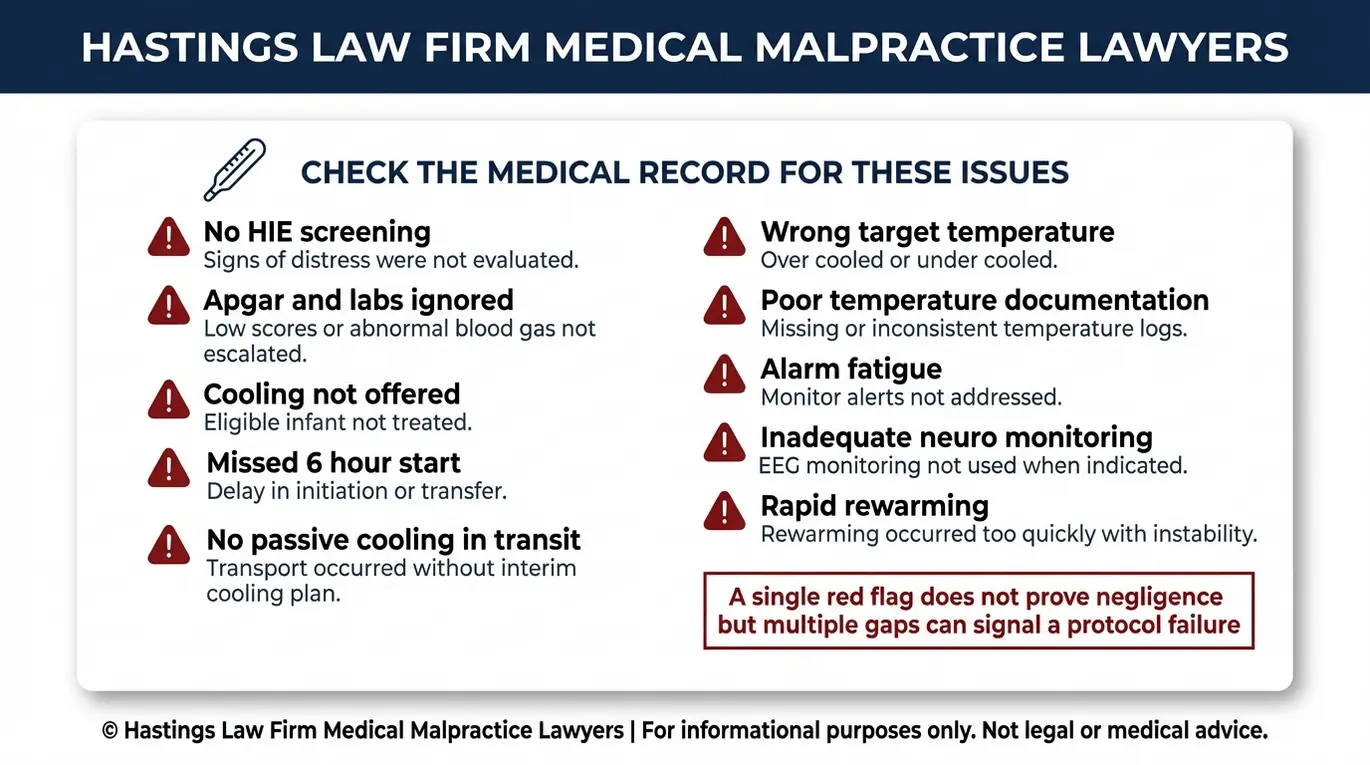
Medical malpractice in neonatal cooling cases can occur at multiple points: when medical staff fail to screen for HIE, when they miss the six-hour initiation window, when they mismanage target temperature, or when they rewarm the infant too quickly, triggering a dangerous secondary injury known as reperfusion injury.
These errors involve deviations from protocols designed to protect the newborn’s brain from permanent injury. According to the Neonatal Therapeutic Hypothermia overview on the NCBI Bookshelf, the protocol requires careful adherence at every stage. When that protocol breaks down, the consequences for the infant can be severe and irreversible.
Not every complication means negligence occurred. But certain patterns raise serious concern. Here are the red flags we look for when evaluating these cases:
- Failure to screen for HIE: Signs of fetal distress on the monitor strip, low Apgar scores, or abnormal cord blood gases were present but not acted on. If the clinical team did not perform a neurological assessment or order appropriate labs, an eligible baby may have been overlooked entirely. This denies them the chance for treatment that could prevent permanent disability.
- Failure to initiate cooling: The infant met the criteria for brain cooling therapy, but cooling was never started, or the decision was deferred past the six-hour window. This can happen when a hospital lacks the necessary equipment or trained NICU staff and does not arrange a timely transfer.
- Temperature mismanagement: Whether administering selective head cooling or whole-body cooling, the protocol requires maintaining a core body temperature in a precise range. Cooling too aggressively, below 33°C, increases the risk of coagulopathy. Not cooling enough may fail to provide meaningful neuroprotection. Inconsistent temperature logs or missing monitoring data can indicate protocol failures.
- Improper rewarming: Controlled rewarming, the gradual process of returning the infant to normal body temperature after the 72-hour cooling period, must happen slowly. It typically happens no faster than 0.5°C per hour. Warming too quickly can trigger reperfusion injury, where the sudden return of normal blood flow causes a new wave of oxidative damage and seizures in the brain.
- Inadequate monitoring during cooling: EEG monitoring, vital sign tracking, and blood work should be ongoing throughout treatment. If alarms were ignored, if seizure activity went undetected, or if lab values were not checked at appropriate intervals, the standard of care may not have been met.
A therapeutic hypothermia malpractice lawyer evaluates these specific failure points by reconstructing the clinical timeline and comparing what happened against established medical protocols. If your child suffered a worsened outcome that could have been prevented, a Texas infant injury lawyer can help you understand whether you have a viable claim.
Proving Negligence and Liability in Cooling Cases
Establishing liability requires proving that the medical team deviated from the accepted standard of care regarding eligibility assessment, timely initiation, or monitoring of therapeutic hypothermia, and that this deviation directly caused or worsened the infant’s brain injury.
This second element, causation, is often the most contested part of the case. Defense teams frequently argue that the brain damage occurred entirely before birth and that no amount of cooling would have changed the outcome. Overcoming this argument requires detailed medical evidence and qualified expert medical testimony.
Our team works with neonatal neurologists, neuroradiologists, and placental pathologists to build the causation case. MRI imaging is particularly valuable because the pattern and location of brain injury on an MRI can help experts determine the timing of the damage. If the MRI findings are consistent with an injury that was evolving after birth, rather than one that was already complete, it supports the argument that timely cooling could have reduced the severity.
Placental pathology provides another layer of evidence. Examining the placenta can reveal whether the oxygen deprivation was an acute event, such as a cord compression during labor, versus a chronic condition. This directly affects the causation analysis.
Our in-house nursing staff and Board Certified Patient Advocates review the medical records line by line. They look for gaps in temperature logs, unaddressed alarms, and missing electroencephalogram (EEG) monitoring data. EEG monitoring involves continuous brain wave recordings used to detect seizure activity during cooling.
Our team also looks for deviations from the hospital’s own internal cooling protocols. When a hospital violates its own written policies, that is strong evidence of a breach.
Under Texas Civil Practice and Remedies Code Chapter 74, medical malpractice claims require an expert report early in the litigation process. We also work within the framework of the Texas Occupations Code Chapter 159, which governs physician-patient communication and the release of medical records essential to building the case.
As a Texas birth injury team, we prepare every case from day one as though it will go before a jury. This trial-ready approach ensures that when we engage defense counsel and their experts, we are negotiating from a position built on thorough medical reconstruction and credible testimony, not guesswork. If you need legal help in Texas for brain cooling errors, our team has the clinical depth and litigation experience to handle these technically demanding cases.
Calculating Lifetime Damages for HIE Victims
Compensation in neonatal cooling cases often involves Life Care Plans that account for decades of medical needs, including around-the-clock nursing care, therapeutic services, adaptive equipment, and loss of future earning capacity.
Children who suffer severe HIE may live with cerebral palsy, seizure disorders, intellectual disabilities, or other permanent neurological conditions. According to the Centers for Disease Control and Prevention’s data on cerebral palsy, the condition is among the most common motor disabilities in childhood. The costs of care over a lifetime can be substantial.
A Life Care Plan is a document prepared by medical and economic experts that projects the full scope of your child’s future needs. It provides a roadmap for the child’s long-term medical and personal needs. These plans are critical because they ensure that any settlement or verdict reflects the real, long-term financial impact of the injury, not just the bills that have already accumulated.
The key components of a Life Care Plan typically include:
- 24-hour skilled nursing or attendant care
- Physical, occupational, and speech therapy (ongoing)
- Anti-seizure medications and neurology follow-ups
- Adaptive equipment such as wheelchairs, communication devices, and orthotics
- Home modifications for accessibility
- Special education services and support
- Psychological and behavioral therapy
- Transportation for medical appointments
- Loss of future earning capacity
These fall under economic damages, the measurable financial costs tied to the injury. But the law also recognizes non-economic damages, which compensate for pain and suffering, loss of enjoyment of life, and the emotional toll on both the child and the family. While harder to quantify, these damages reflect the real human cost of what happened.
Families must also consider the profound impact of inflation on medical costs. A Life Care Plan does not just look at today’s prices; it projects costs twenty, forty, or sixty years into the future. This ensures that funds for future care, surgeries, and therapies do not run out when the child needs them most. Without this detailed economic forecasting, a settlement might seem substantial now but prove inadequate decades down the line.
As a Texas infant malpractice lawyer, we work with life care planners, vocational economists, and medical specialists to build a damages case designed to provide financial security for your child’s entire life, not just the next few years. A settlement that falls short of covering lifetime needs leaves a family exposed. We prepare the evidence to prevent that outcome.
Why Choose Hastings Law Firm for Your Family
Hastings Law Firm was built for cases exactly like these. Founded by board-certified trial attorney Tommy Hastings, an inductee into the American Board of Trial Advocates (ABOTA), our firm handles nothing but medical malpractice litigation. That singular focus means every attorney, nurse consultant, and patient advocate on our team brings specialized knowledge to your child’s case.
We understand that families in this situation are often overwhelmed. You may feel like the hospital holds all the information, all the expertise, and all the power. That imbalance is something we work to correct from the very first conversation. Our team includes in-house nurses and Board Certified Patient Advocates who know how to read clinical records, identify charting inconsistencies, and translate complex medical data into a clear picture of what happened.
We also have former defense attorneys on staff, lawyers who once represented hospitals and insurance carriers. That background gives us direct insight into how the other side builds its case, what arguments they will raise, and where their strategies have weaknesses. We use that knowledge to prepare a stronger case for your family.
We investigate, document, and build every case as though it will go before a jury. This trial-ready approach is what drives fair outcomes, whether a case resolves through negotiation or at trial. We do not take shortcuts in preparation, and we do not wait to see if the defense will make a reasonable offer before doing the hard work.
We also believe that parents should be treated as partners throughout the process. You will have direct access to your legal team, regular updates on your case, and honest answers to your questions. We know this is about your child’s future, and we treat it that way. By keeping you informed and involved, we reduce the stress of the legal process so you can focus on your child.
Hastings Law Firm works on a contingency fee basis. You pay no attorney fees and no costs unless we secure a recovery for your family. As a Texas infant therapeutic hypothermia lawyer, Tommy Hastings and his team are prepared to stand beside you and pursue the accountability your child deserves.
Contact the Texas Birth Injury Attorneys at Hastings Law Firm Today for Help
Texas imposes strict deadlines for filing medical malpractice claims, and waiting too long can put critical evidence at risk. Medical records, fetal monitoring strips, and staffing logs are all time-sensitive. The sooner your case is evaluated, the stronger your position.
A free consultation with our team can give you the clarity you need. Taking this step allows you to secure the records needed to understand the clinical facts of the birth. We will review the circumstances of your child’s birth, examine the medical records, and explain whether you have a path forward, all at no cost and with no obligation.
You deserve to know what happened and whether it could have been prevented. If your family is ready to take that step, contact Hastings Law Firm today for a confidential case evaluation. There is no fee unless we win.
Frequently Asked Questions About Infant Therapeutic Hypothermia in Texas


This content was researched and written by the Hastings Law Firm editorial team, which includes attorneys, medical professionals, and experienced researchers. Our writing is informed by internal knowledge and practical experience, and we cross-check critical details against authoritative sources cited throughout. Every piece undergoes human-led fact-checking and legal review. Because legal and medical information can change, if you spot an error, please contact us. Learn more about our content standards and review process on our editorial policy page.

Tommy Hastings, founder of Hastings Law Firm, is a board-certified personal injury trial lawyer dedicated exclusively to healthcare injury cases. Since 2001, he has represented injured patients and families in litigation against major hospital systems, pharmaceutical companies, and negligent healthcare providers nationwide. He has handled numerous high-profile cases that have drawn national media attention and resulted in multi-million dollar recoveries. He draws on that experience in his writing, helping readers understand how these cases work and what options may be available to them.
