


Texas Infant Sepsis Malpractice Lawyer
Written by: Hastings Law Firm | Reviewed by: Tommy Hastings | Updated: July 27, 2026
Neonatal sepsis can escalate quickly, and delays in recognizing warning signs or starting appropriate treatment can leave an infant with lasting harm or worse. In Texas, these cases often turn on whether the medical team met the standard of care in monitoring, testing, and responding to changes in a newborn condition. Families may also face major financial strain from intensive care and long term support needs, while trying to understand what happened and why. If you or a loved one were harmed or worse due to infant sepsis malpractice in Texas, contact Hastings Law Firm for a free, confidential case review.

Top Rated Birth Injury Attorneys Helping Families Across Texas
What You Should Know About Neonatal Infection Misdiagnosis Claims in Texas:
- Permanent injury or death can result when neonatal sepsis is not recognized and treated promptly.
- A malpractice claim can hinge on whether the medical team response fell below the standard of care for monitoring, testing, and starting antibiotics.
- Options for recovery can be limited by Texas caps on non economic damages in medical liability cases.
- Financial pressure can be substantial after severe newborn infection because long term care needs and future support can be extensive.
- A hospital may face liability for a hospital acquired infection when poor sterilization or hygiene protocols contributed to a preventable infection.
- Case viability can be lost even with strong underlying facts when procedural requirements and deadlines are missed.
- A higher burden can apply when the alleged malpractice occurred in a hospital emergency department under the willful and wanton standard.
- Disputes about timing can be central because sepsis protocols emphasize rapid blood cultures and early broad spectrum antibiotics.
- Medical records and lab markers can be pivotal when they show infection was detectable but not acted on.
- Omitted testing can matter when a lumbar puncture was clinically indicated but not ordered during suspected infection.

A Healthcare Focused Law Firm
When your newborn is harmed by an infection that should have been caught and treated, the confusion and grief can feel overwhelming. You may sense that something went wrong during your baby’s care, but the medical system can make it difficult to get clear answers. You are not alone in feeling that way, and your instincts deserve to be taken seriously.
At Hastings Law Firm, we focus exclusively on medical malpractice. As a Texas infant sepsis malpractice lawyer team, we bring together board-certified trial attorneys, in-house nurse consultants, and former defense counsel to investigate whether your child’s infection was mismanaged. Our goal is to uncover what happened, explain your legal options, and hold the responsible parties accountable.
If your family is dealing with the aftermath of a newborn infection, we are here to help. Contact us for a free, confidential case evaluation to learn where you stand.
When Is Neonatal Sepsis Considered Malpractice in Texas?
Neonatal sepsis becomes medical malpractice when a healthcare provider fails to meet the standard of care by missing early signs of infection, delaying necessary testing, or failing to administer antibiotics, directly causing harm to the infant. Not every newborn infection is the result of medical negligence. Infections can develop despite appropriate care. The legal question is whether the medical team’s response fell below what a reasonably competent provider would have done under similar circumstances.
Neonatal sepsis is a serious bloodstream infection occurring in infants within the first 28 days of life. Timing is everything because a bacterial infection in a newborn can progress from subtle warning signs to life-threatening illness in a matter of hours. When providers in a NICU or nursery setting fail to recognize those signs or delay ordering broad-spectrum antibiotics (medications designed to target a wide range of bacteria before the specific cause is identified), the consequences can be severe and permanent.
Every healthcare provider treating a newborn has a duty of care, which is a legal obligation to provide treatment consistent with accepted medical standards. In the context of infant sepsis, that duty includes monitoring for infection risk factors, responding promptly to clinical changes, and initiating treatment without unnecessary delay. A hospital-acquired infection that results from poor protocols may also give rise to a malpractice claim, particularly if the infection was preventable. Consulting a sepsis malpractice attorney can clarify if the hospital’s failure to maintain a sterile environment constitutes a breach of duty.
An infant sepsis lawyer can help determine whether the care your child received crossed the line from an unfortunate outcome into actionable medical negligence. If you believe your baby’s infection was misdiagnosed or left untreated too long, legal help for newborn infection cases is available.
When we evaluate potential sepsis malpractice claims, we look for failures at each stage of the care process:
- Recognition: Did providers identify maternal or neonatal risk factors for infection?
- Response: Were appropriate diagnostic tests ordered promptly when symptoms appeared?
- Treatment: Were antibiotics started within the medically accepted timeframe?
- Monitoring: Did the team track the infant’s condition and adjust treatment as needed?
- Escalation: If the facility lacked resources, was a transfer initiated without delay?
Identifying Signs of Sepsis in Newborns
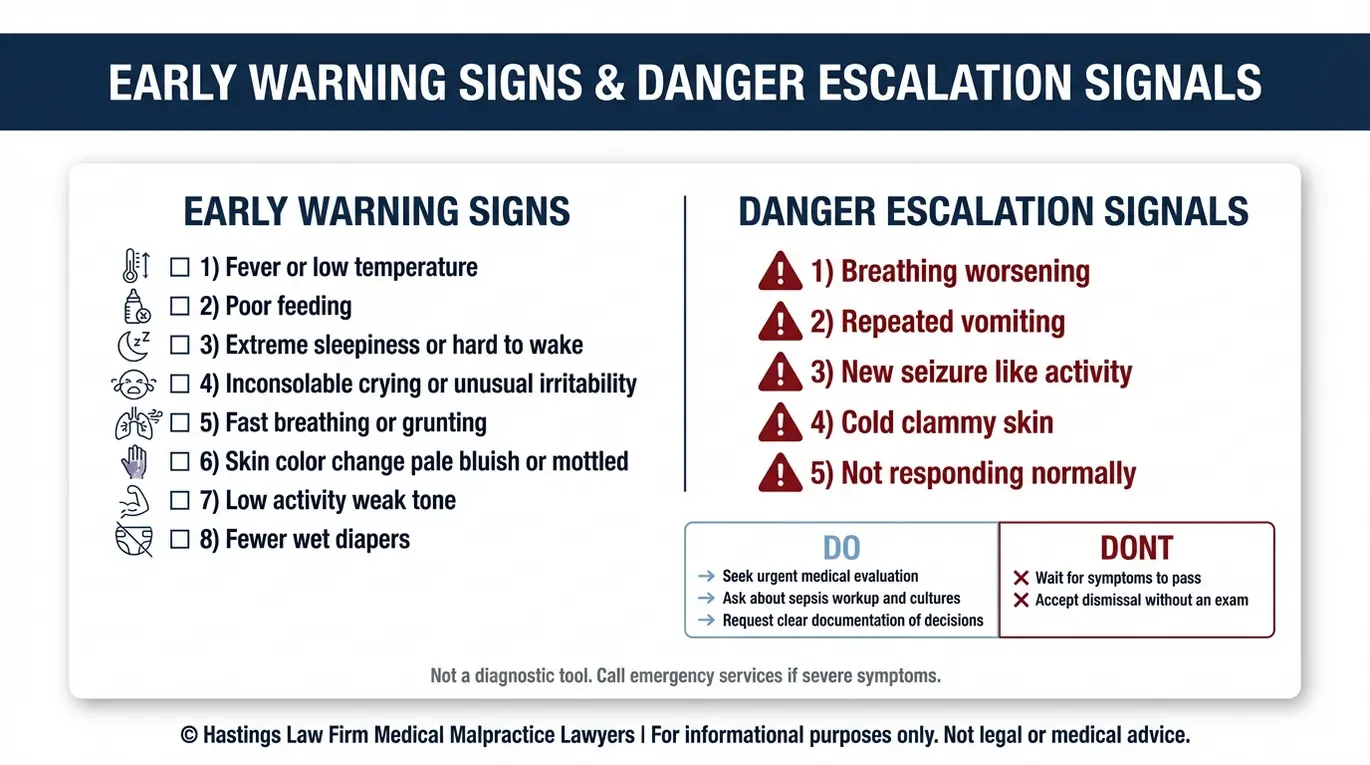
Early signs of sepsis in infants often include temperature instability (fever or hypothermia), lethargy, difficulty feeding, rapid breathing, and skin discoloration. These symptoms require immediate medical intervention to prevent progression to septic shock. Septic shock is a dangerous drop in blood pressure that can lead to organ failure.
Neonatal sepsis generally falls into two categories. Early-onset sepsis develops within the first 72 hours of life and is typically transmitted from mother to baby during labor and delivery. According to the CDC’s Early Onset Neonatal Sepsis Surveillance data, Group B Streptococcus and E. coli remain leading causes of these infections. Late-onset sepsis appears after 72 hours and is more commonly associated with hospital-acquired sources, such as IV lines or other invasive equipment.
Whether sepsis is early-onset or late-onset, the progression can be rapid. The body’s initial response to infection is known as systemic inflammatory response syndrome (SIRS). This involves widespread inflammatory reactions including abnormal temperature, elevated heart rate, and changes in white blood cell counts. Left unchecked, SIRS can advance to septic shock, where the infant’s blood pressure drops dangerously low and organs begin to fail. As UF Health explains in its overview of neonatal sepsis, early recognition and aggressive treatment are essential to preventing this cascade.
Recognizing mental status changes in a newborn is different from recognizing them in an adult. While adults may exhibit confusion or delirium, in infants, these mental status changes may present as:
- Extreme lethargy or difficulty waking for feedings
- Inconsolable or high-pitched crying
- Poor muscle tone or “floppy” limbs
- Pale, mottled, or bluish skin
- Rapid or labored breathing
- Abdominal distension or vomiting
- Temperature instability, either fever or unusually low body temperature
Trained medical professionals should recognize these signs of newborn infection and act immediately. When a care team fails to connect these symptoms to a potential infection, the resulting delay in diagnosis can cause permanent organ dysfunction or death. In cases of malpractice involving infant sepsis, we examine the medical records to determine whether providers identified and responded to these red flags within an appropriate timeframe. A Texas lawyer for a septic baby can review whether the clinical signs were present, documented, and acted upon.
The Hastings Law Firm Difference
Results matter, but what truly sets us apart is how we achieve them. Every verdict, every settlement, and every Texas courtroom victory comes from one guiding promise: To treat each client’s fight for justice as if it were our own.
This balance of skill, experience, and empathy reflects our core philosophy that justice should not only compensate the injured, but also make healthcare safer nationwide.

Proving Negligence in Infant Sepsis Cases
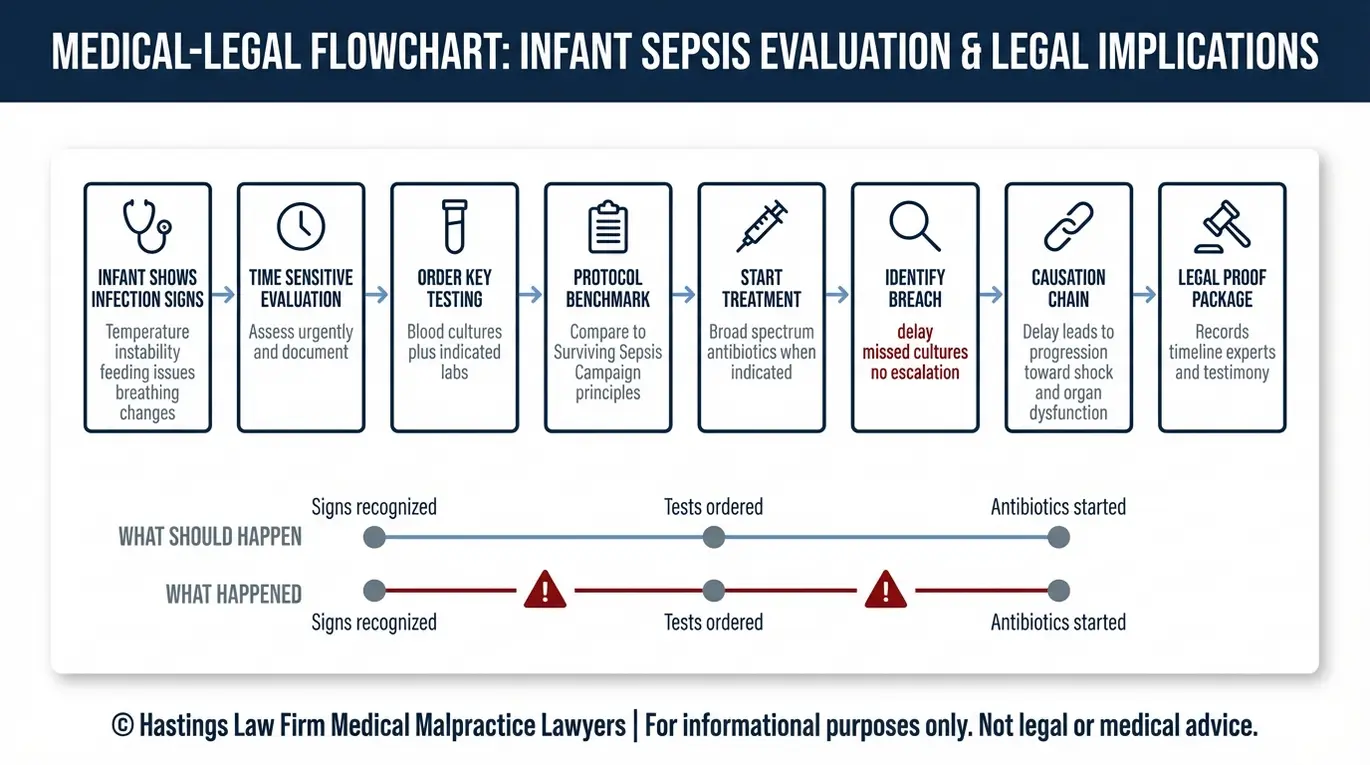
Proving negligence requires demonstrating that the medical team deviated from established protocols, such as the Surviving Sepsis Campaign guidelines, by failing to order blood cultures or administer broad-spectrum antibiotics within the critical one-hour window. In a sepsis malpractice lawsuit, we must prove causation: that the providers’ failure to follow standards directly resulted in injury.
The Surviving Sepsis Campaign establishes clear benchmarks for identifying and treating sepsis. A systematic review of neonatal sepsis guidelines published in PubMed Central underscores the importance of standardized protocols. These protocols emphasize what clinicians often call the “Golden Hour,” the critical first 60 minutes after sepsis is suspected. During this window, blood cultures (laboratory tests to identify the specific bacteria) should be drawn and broad-spectrum antibiotics should be started.
Research published in PubMed Central on appropriate timing of antibiotic initiation in sepsis patients confirms that delayed diagnosis and late antibiotic administration are directly associated with worse outcomes. For a newborn, even a short delay can cause permanent injury. We also investigate if sterilization failures during invasive procedures contributed to the infection.
A lawyer for infant infection death cases also evaluates if a lumbar puncture, a procedure to collect fluid from the spinal canal to test for meningitis, was ordered when clinically indicated. Omitting this test when infection is suspected can represent a significant deviation from the standard of care.
As a Texas infant malpractice counsel team, we build the evidentiary foundation for these cases by examining:
| Protocol Step | What Should Happen | What We Investigate |
|---|---|---|
| Initial Assessment | Risk factors identified; infection suspected | Whether clinical signs were documented and flagged |
| Blood Cultures | Drawn before antibiotics are started | Whether cultures were ordered and timed correctly |
| Antibiotic Administration | Broad-spectrum antibiotics given within one hour | Whether treatment was delayed and for how long |
| Lumbar Puncture | Performed when meningitis is suspected | Whether the test was ordered or omitted |
| Ongoing Monitoring | Vitals and lab results tracked continuously | Whether deterioration was recognized and addressed |
Diagnostic Markers and Lab Results
Beyond timelines, we examine evidence proving infection was detectable. Elevated lactate levels indicate that tissues are not receiving adequate oxygen, a hallmark of septic shock. C-reactive protein (CRP), a protein produced by the liver in response to inflammation, and procalcitonin (PCT), a biomarker that rises specifically in response to bacterial infections, are both standard indicators that should prompt immediate action.
Abnormal white blood cell counts confirm the immune system is responding to infection. When these lab markers are present but ignored, they become powerful evidence that the infection was detectable and that the care team failed to respond appropriately.
Recoverable Damages for Birth Injuries and Wrongful Death
Texas law allows families to recover economic damages for medical bills and future care, as well as non-economic damages for pain, suffering, and mental anguish, though these are subject to state caps in medical liability cases. These legal remedies are designed to provide financial support for the long-term needs of a child injured by negligence.
When an infant suffers permanent harm from untreated sepsis, the financial burden on a family can be staggering. Compensation for infant sepsis may include the following categories:
- Medical expenses: NICU stays, surgeries, medications, and ongoing specialist care
- Future care costs: Lifelong therapy, adaptive equipment, and in-home nursing if sepsis caused brain injury or cerebral palsy
- Lost earning capacity: The income the child will never be able to earn due to permanent disability
- Pain and suffering: The physical pain endured by the infant during and after the infection
- Mental anguish: The emotional toll on the parents and family
Under Texas Civil Practice and Remedies Code Chapter 74, the damage cap for non-economic damages in medical liability cases is set at $250,000 per provider category, with an aggregate maximum of $750,000. Economic damages have no cap. In serious sepsis cases involving brain injury or lifelong disability, economic damages often make up the largest portion of any settlement for newborn death or injury claim.
If the infant did not survive, Texas wrongful death laws allow surviving parents to pursue a claim for their loss, including funeral expenses, loss of companionship, and mental anguish.
The Process of Filing a Birth Injury Lawsuit
Filing a birth injury lawsuit in Texas involves strict procedural steps, including serving a pre-suit notice letter and obtaining a Chapter 74 expert report within 120 days after each defendant files their answer to validate the claim’s merit. Missing any of these deadlines can result in dismissal, regardless of the strength of the underlying case.
Here is how the process generally works when suing for infant sepsis in Texas:
- Pre-suit notice: Before filing, your attorney must send a written notice to each healthcare provider you intend to sue at least 60 days before the lawsuit is filed. This triggers a brief window during which both sides can assess the claim.
- Filing the lawsuit: Once the notice period expires, the case is formally filed in court.
- Chapter 74 expert report: Within 120 days after each defendant files their answer, you must serve a written report from a qualified medical expert. This report must identify the standard of care, explain how it was breached, and establish how that breach caused your child’s injury. Failure to meet this deadline results in mandatory dismissal.
- Discovery and investigation: Both sides exchange records, take depositions, and retain experts. This is where your legal team builds a detailed medical timeline.
- Trial preparation or resolution: Because we prepare every case as if it will go to a jury, we negotiate from a position of strength. Many cases resolve before trial, but we are always ready to proceed if a fair outcome cannot be reached otherwise.
The statute of limitations for medical malpractice in Texas is generally two years. However, under the discovery rule, or for minors, the deadline may be paused under certain circumstances. Even so, evidence degrades and memories fade. Working with a medical malpractice lawyer Texas families trust early in the process helps preserve the records and testimony needed to build a strong case.
Contact the Texas Birth Injury Attorneys at Hastings Law Firm Today for Help
No amount of money can undo what happened to your child. But holding a hospital or provider accountable can prevent the same failures from harming another family. That matters.
At Hastings Law Firm, we prepare every infant sepsis case for trial from the first day. Our team of attorneys, nurse consultants, and medical experts reviews every record, every lab result, and every decision point to determine whether your baby received the care the law required. Founder Tommy Hastings is a board-certified trial lawyer, a distinction held by less than 2% of Texas attorneys, ensuring your case is handled with high-level expertise. With former defense attorneys on our team, we understand how the other side builds their case, and we prepare accordingly.
If you believe your newborn was harmed by a delayed or missed infection diagnosis, contact a Texas birth injury lawyer today for a free, confidential case evaluation. There are no fees unless we recover compensation for your family. Let us help you find the answers you deserve.
Frequently Asked Questions About Infant Sepsis Malpractice in Texas


This content was researched and written by the Hastings Law Firm editorial team, which includes attorneys, medical professionals, and experienced researchers. Our writing is informed by internal knowledge and practical experience, and we cross-check critical details against authoritative sources cited throughout. Every piece undergoes human-led fact-checking and legal review. Because legal and medical information can change, if you spot an error, please contact us. Learn more about our content standards and review process on our editorial policy page.

Tommy Hastings, founder of Hastings Law Firm, is a board-certified personal injury trial lawyer dedicated exclusively to healthcare injury cases. Since 2001, he has represented injured patients and families in litigation against major hospital systems, pharmaceutical companies, and negligent healthcare providers nationwide. He has handled numerous high-profile cases that have drawn national media attention and resulted in multi-million dollar recoveries. He draws on that experience in his writing, helping readers understand how these cases work and what options may be available to them.
