


Texas Infant Herpes C-Section Error Lawyer
Written by: Hastings Law Firm | Reviewed by: Tommy Hastings | Updated: July 27, 2026
Preventable neonatal HSV infections can happen when warning signs of maternal herpes are missed during labor or when a newborn’s early symptoms are not recognized and treated promptly. These errors can lead to rapid deterioration, serious neurological injury, and long term disability, leaving families overwhelmed and searching for clear answers. Understanding how transmission occurs during delivery and how diagnosis delays affect outcomes can help families make informed decisions about next steps. If you or a loved one were harmed or worse due to an infant herpes C section error in Texas, contact Hastings Law Firm for a free, confidential case review.
Top Rated Medical Malpractice Attorneys for Preventable Neonatal HSV Infections
What You Should Know About Neonatal HSV Transmission Claims in Texas:
- Lifelong disability or fatal outcomes can follow neonatal HSV when the infection reaches the brain or becomes disseminated.
- Preventable transmission risk can rise when vaginal delivery occurs despite active maternal HSV lesions or prodromal symptoms.
- Missed or delayed recognition of neonatal HSV can worsen outcomes when symptoms are treated as routine bacterial infection without HSV focused evaluation.
- Irreversible brain damage can occur when antiviral treatment is delayed after clinical suspicion.
- Options in Texas can be lost early because medical malpractice claims can be dismissed when required expert support is not provided in the required form.
- Recovery for long term care can be limited because Texas places caps on non economic damages in medical malpractice cases.
- Disputes over whether warning signs were present can shape liability when providers claim asymptomatic shedding.
- Clarity about what happened can depend on medical records that show maternal history review, labor assessment, and the timing of testing and treatment orders.

A Healthcare Focused Law Firm
When a newborn is diagnosed with neonatal herpes, an infection caused by herpes simplex virus (HSV), a common viral infection passed from mother to baby during delivery, the news can feel devastating and deeply confusing. You may be wondering how this happened, whether it could have been prevented, and what options your family has now.
As a Texas infant herpes C-section error lawyer, Hastings Law Firm focuses exclusively on medical malpractice. Our firm was founded by board-certified trial lawyer Tommy Hastings to help families find answers and accountability. If your child was harmed by a preventable HSV infection, we are here to review the details of your situation and explain your options in a free, confidential consultation.
How Negligence Leads to Neonatal Herpes Transmission During Birth
Medical malpractice in these cases often begins when an obstetrician fails to identify active genital herpes lesions or prodromal symptoms, the early warning signs like tingling, burning, or pain that signal an impending outbreak, and then proceeds with a vaginal delivery instead of a C-section.
The standard of care is clear: when a mother has active HSV lesions or prodromal symptoms at the time of delivery, a Cesarean section is required to prevent the infant from contacting the virus in the birth canal. This applies whether the mother has HSV-1 or HSV-2. The risk of intrapartum transmission, meaning transmission during the delivery itself, rises dramatically during a vaginal delivery when the virus is active. According to The Joint Commission’s perinatal care standards, providers are expected to identify and manage infectious disease risks before and during labor.
A failure to perform C-section when indicated is a primary focus of our investigation. As a neonatal herpes malpractice lawyer, we often find that the delivering physician failed to inspect for visible lesions or ask about symptoms consistent with an outbreak. This form of HSV transmission negligence is unacceptable.
Texas birth injury attorney teams recognize that when signs are present, the standard of care requires surgical delivery. An obstetric negligence attorney will argue that this was not a judgment call but a violation of safety rules. Families dealing with a herpes birth injury claim deserve to know why these checks were missed. Valid legal claims also arise when providers ignore a maternal history of HSV, and a genital herpes birth injury claim focuses on this oversight.
One defense that hospitals and doctors frequently raise is asymptomatic shedding, the process where the virus is active and transmissible even without visible sores. This is a real medical phenomenon. But in many cases we review, the shedding was not truly “asymptomatic.” Instead, there were subtle signs of an active outbreak, or a documented maternal history of genital herpes, that should have prompted closer evaluation and a different delivery plan.
Our team, which includes in-house nurse consultants and former defense attorneys who previously worked for the hospital systems they now challenge, examines whether providers:
- Reviewed the mother’s full obstetric and medical history for prior HSV diagnoses
- Performed a visual inspection for active herpes lesions at the time of admission
- Asked about prodromal symptoms such as tingling, itching, or localized pain
- Documented their clinical reasoning for proceeding with vaginal delivery
- Considered viral shedding risk in mothers with a known history of genital herpes
Recognizing the Signs of Neonatal HSV and Encephalitis
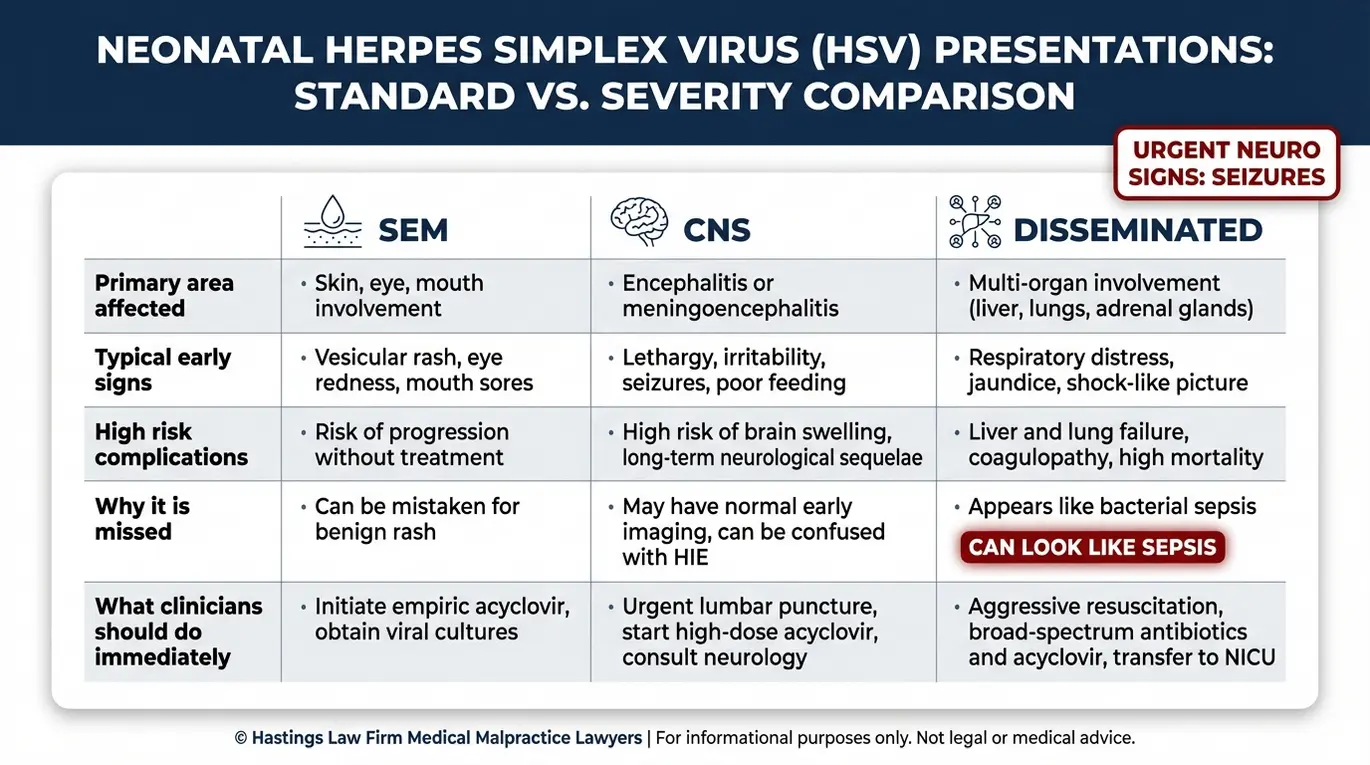
Neonatal HSV often presents within the first weeks of life with symptoms ranging from skin vesicles and fever to lethargy, seizures, and respiratory distress, which may indicate the virus has reached the central nervous system. These symptoms occur when the herpes simplex virus (HSV) is passed to a newborn, often leading to serious complications. Recognizing these signs quickly is essential because the type and severity of the infection determines both the treatment approach and the long-term outcome.
Medical professionals generally classify neonatal herpes into three categories:
| Classification | Key Symptoms | Severity and Risk |
|---|---|---|
| SEM herpes (skin, eye, mouth), a localized form of infection | Vesicular rash on the skin, mouth sores, eye redness or discharge | Least severe if treated early, but can progress to CNS or disseminated disease without antiviral therapy |
| CNS herpes (central nervous system herpes), where the virus infects the brain or spinal cord | Seizures, lethargy, poor feeding, irritability, bulging fontanelle, encephalitis or meningoencephalitis (inflammation of the brain and surrounding membranes) | High risk of permanent brain damage, developmental delays, and long-term neurological disability |
| Disseminated herpes | Sepsis-like presentation, liver failure, respiratory distress, jaundice, coagulopathy | Most dangerous form; can cause multi-organ failure and carries the highest mortality rate |
An infant who initially shows only a vesicular rash may deteriorate rapidly if the infection spreads. CNS herpes and disseminated disease can be fatal or cause lifelong disability, including cerebral palsy, vision loss, and cognitive impairment.
One of the diagnostic challenges highlighted in research published through Cureus on the neurological presentations of neonatal HSV is that early brain imaging can appear normal or be confused with hypoxic ischemic encephalopathy (HIE). This overlap can delay a correct diagnosis, especially when physicians are not actively considering HSV as a possibility. If the treating team does not connect the infant’s symptoms to a possible herpes infection, the window for effective treatment narrows quickly.
Because the consequences are so severe, contacting an infant herpes brain damage attorney is often necessary to uncover diagnostic failures. HSV medical malpractice occurs when providers overlook these distinct patterns. A newborn infection lawyer can review the medical chart to see if early signs were dismissed. Experienced viral encephalitis attorney teams understand the progression from rash to seizures.
If your child suffered due to a missed diagnosis, a herpes meningitis lawyer or Texas HSV lawyer can help establish liability. We treat every birth injury malpractice case with the urgency it deserves. Our firm acts as a Texas viral infection malpractice advocate for these children.
The Hastings Law Firm Difference
Results matter, but what truly sets us apart is how we achieve them. Every verdict, every settlement, and every Texas courtroom victory comes from one guiding promise: To treat each client’s fight for justice as if it were our own.
This balance of skill, experience, and empathy reflects our core philosophy that justice should not only compensate the injured, but also make healthcare safer nationwide.

Liability for Diagnosis Errors and Delayed Antiviral Treatment
Doctors may be liable for malpractice if they dismiss symptoms of neonatal HSV as common sepsis or a routine bacterial infection, failing to order immediate testing or start antiviral treatment while the virus causes irreversible brain damage. Physicians have a responsibility to identify neonatal herpes, an infection that requires rapid intervention to prevent lifelong injury.
The “Sepsis Workup” Trap
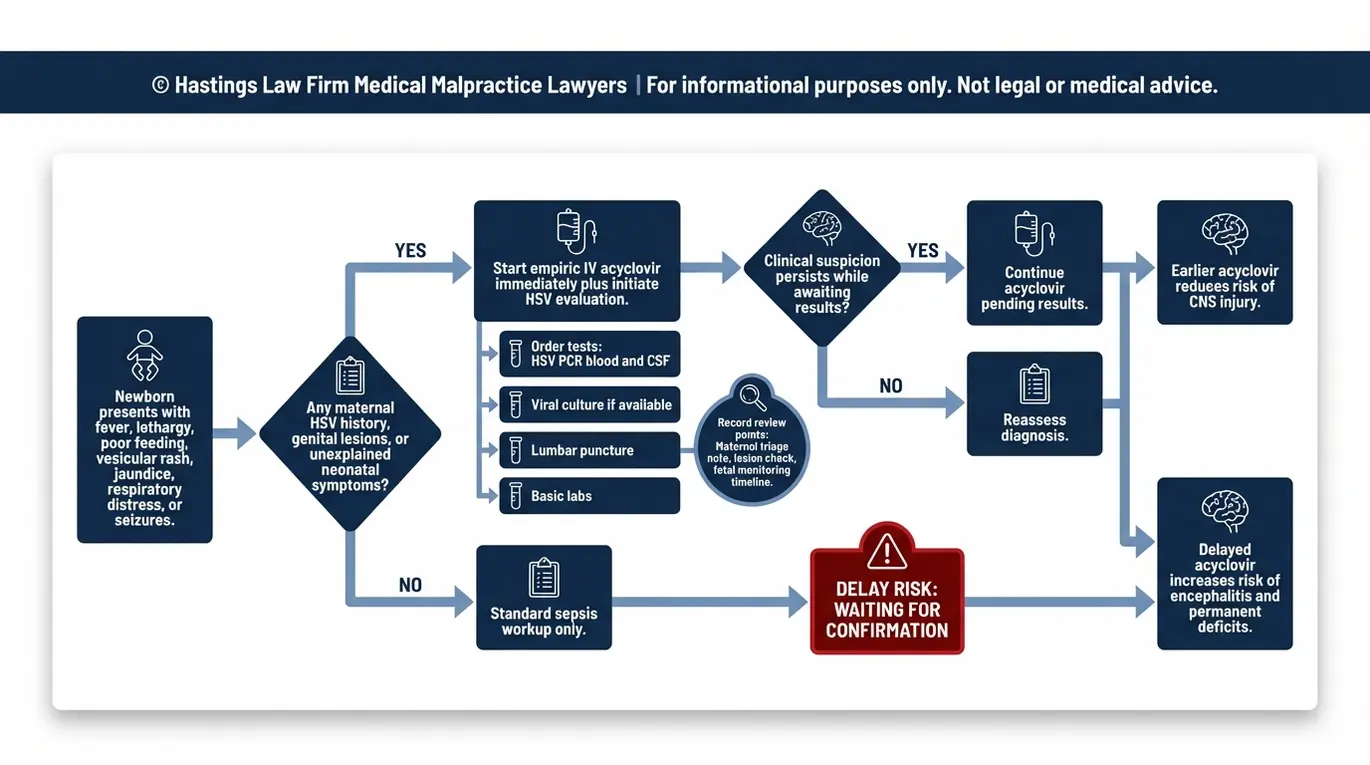
When a newborn shows signs of infection, the standard response is a bacterial sepsis workup, which typically tests for bacterial causes. The problem arises when doctors stop there. If the mother has a known history of herpes, or if the infant is showing symptoms consistent with HSV, the standard of care calls for HSV-specific testing alongside the bacterial workup.
The two primary diagnostic tools are HSV DNA PCR testing, a lab test that detects the genetic material of the herpes virus in blood or spinal fluid, and lumbar puncture (spinal tap), a procedure where a small amount of cerebrospinal fluid is collected and analyzed for signs of CNS infection. Viral cultures from any skin lesions may also be taken. According to the Infectious Diseases Management Program at UCSF, these tests should be part of the initial evaluation when HSV is suspected.
The treatment itself, Acyclovir, an antiviral medication that stops the herpes virus from replicating, must be started immediately upon clinical suspicion. Waiting for lab confirmation before beginning treatment can allow the virus to spread to the brain and other organs. This approach is called empiric antiviral therapy, meaning treatment is initiated based on the clinical picture before test results come back.
The Critical Treatment Window
Medical experts agree that time-sensitive treatment is top priority. A delayed diagnosis of infant herpes significantly worsens outcomes. Research published in PubMed Central on neonatal HSV and Acyclovir outcomes demonstrates the direct relationship between time-to-treatment and patient outcomes.
Medical literature shows that delays in starting Acyclovir—even by one or two days—are associated with significantly worse outcomes, including increased mortality and permanent neurological injury. When we investigate these cases, we build a detailed timeline from the moment symptoms first appeared to the moment antiviral therapy was ordered. Every hour matters, and the medical records often reveal exactly where the breakdown occurred.
Our in-house medical staff reviews nursing notes, physician orders, and lab timestamps to determine whether the standard of care was met. We act as your Texas malpractice lawyer for HSV to hold negligent parties accountable. A medical negligence attorney from our firm will scrutinize the timeline to build a strong HSV malpractice claim.
Texas Legal Requirements for Medical Malpractice Claims
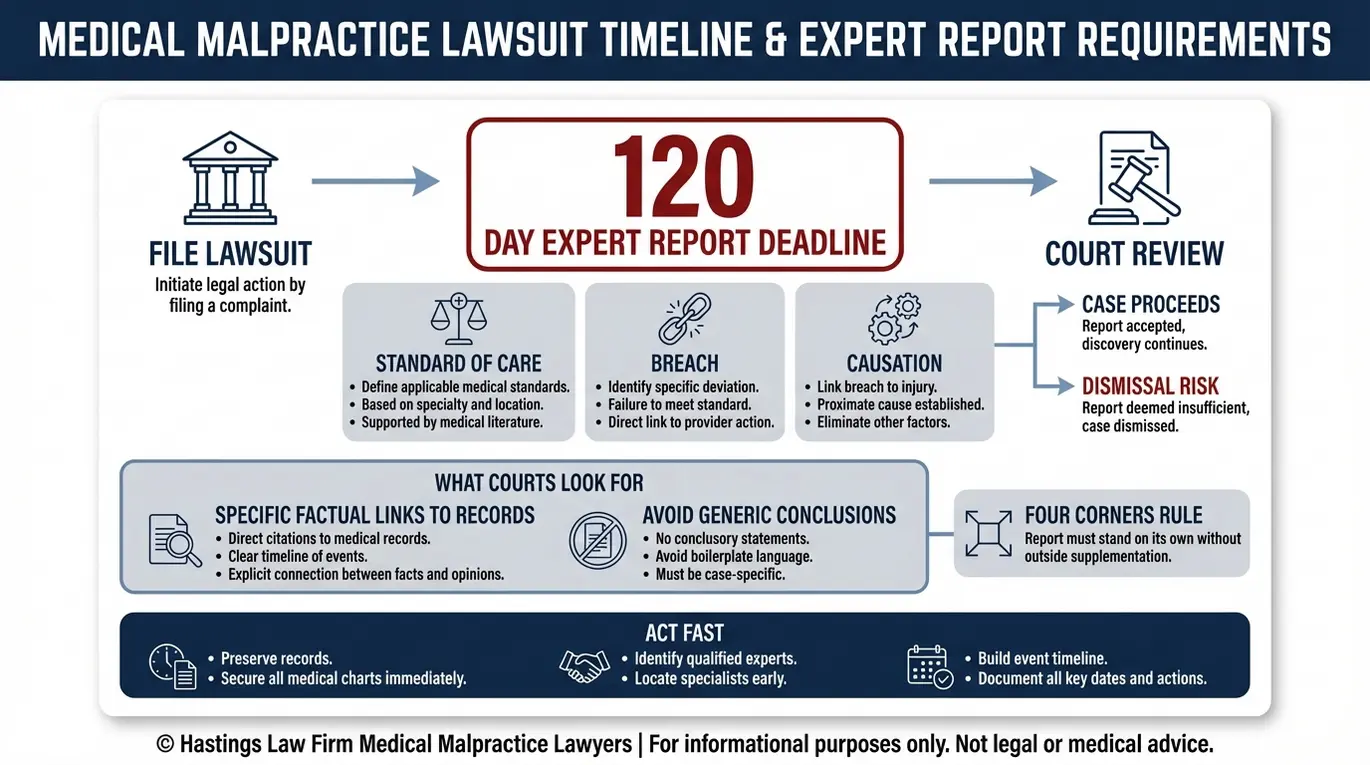
Texas law requires plaintiffs to serve a qualified expert report detailing the standard of care, the specific breach, and how that breach caused the injury, all within 120 days of filing suit. This strict deadline makes early legal involvement essential.
This requirement comes from Texas Civil Practice and Remedies Code, Chapter 74, which governs all healthcare liability claims in the state. The statute imposes what is known as the “Four Corners” rule: the expert report must contain enough specific detail within its own pages to establish that the claim has merit. Courts will not look beyond the document itself to fill in gaps.
Cases frequently fail at this specific step. A generic report that broadly states a doctor “should have done better” will likely be dismissed. The report must identify the specific provider, the specific duty they owed, exactly how they fell short, and the direct causal link between that failure and the child’s injuries.
Meeting these strict standards requires a knowledgeable Texas Chapter 74 attorney. Tommy Hastings is Board Certified in Personal Injury Trial Law by the Texas Board of Legal Specialization, a distinction achieved by less than 2% of Texas attorneys. Medical malpractice lawsuit requirements in Texas are designed to filter out claims, so filing a birth injury claim demands precision. We ensure every expert report lawyer we work with understands Texas expert report rules.
Key deadlines families should be aware of:
- 120-Day Expert Report Deadline: The qualified expert report must be served on each defendant within 120 days of filing. Missing this deadline can result in dismissal with prejudice.
- Statute of Limitations (Parents): Parents filing claims for their own damages generally have two years from the date of the negligent act.
- Statute of Limitations (Minor Child): For birth injury lawsuits involving minors younger than 12 at the time of injury, the deadline may be extended until the child turns 14, though this extension applies only to the child’s claims.
Recovering Damages for Lifelong Care and Disability
Families can recover compensation for birth injury for the lifetime of care their child needs. An HSV settlement lawyer helps secure resources to ensure future financial security and prevent issues akin to Nursing Home Abuse & Neglect.
Recoverable damages include:
- Past and future medical expenses and Life care plan costs
- Loss of earning capacity due to disability
- Pain and suffering (non-economic damages)
- Cost of lifelong nursing care and therapy
Texas does cap non-economic damages in medical malpractice cases, but these claims remain an important part of recognizing the full scope of what your child and family have endured.
Contact the Texas Birth Injury Attorneys at Hastings Law Firm Today for Help
A failure to perform a C-section when herpes is active during labor is not bad luck. It is a departure from the standard of care, and it can cause a newborn to suffer permanent, life-altering injuries.
Hastings Law Firm was built to handle exactly these cases. Our team of attorneys, nurse consultants, and former defense lawyers investigates every detail of the delivery and the postnatal care your child received. We prepare every case as if it will go to trial, and that preparation allows us to negotiate from a position of strength.
If your baby was diagnosed with neonatal herpes after a vaginal delivery, we encourage you to speak with one of our Board Certified Patient Advocates for a free case evaluation. There is no fee unless we recover compensation for your family. Contact a Texas infant herpes C-section error lawyer at Hastings Law Firm to find out what happened and what your family’s options are.
Frequently Asked Questions About Infant Herpes C-Section Error in Texas


This content was researched and written by the Hastings Law Firm editorial team, which includes attorneys, medical professionals, and experienced researchers. Our writing is informed by internal knowledge and practical experience, and we cross-check critical details against authoritative sources cited throughout. Every piece undergoes human-led fact-checking and legal review. Because legal and medical information can change, if you spot an error, please contact us. Learn more about our content standards and review process on our editorial policy page.

Tommy Hastings, founder of Hastings Law Firm, is a board-certified personal injury trial lawyer dedicated exclusively to healthcare injury cases. Since 2001, he has represented injured patients and families in litigation against major hospital systems, pharmaceutical companies, and negligent healthcare providers nationwide. He has handled numerous high-profile cases that have drawn national media attention and resulted in multi-million dollar recoveries. He draws on that experience in his writing, helping readers understand how these cases work and what options may be available to them.
