


Texas Infant Necrotizing Enterocolitis Lawyer
Written by: Hastings Law Firm | Reviewed by: Tommy Hastings | Updated: July 27, 2026
Necrotizing enterocolitis in the NICU can leave families overwhelmed and searching for clear answers about feeding choices, warning signs, and whether preventable risks played a role. This condition can progress quickly and may lead to sepsis, emergency surgery, long term complications, or worse. Responsibility may involve a formula manufacturer, a hospital, or both, depending on the facts. Options and potential recovery can also differ based on the type of claim. If you or a loved one were harmed or worse due to NICU necrotizing enterocolitis in Texas, contact Hastings Law Firm for a free, confidential case review.
Top Rated Legal Representation for NICU Injuries in Texas
What You Should Know About Newborn Necrotizing Enterocolitis Claims in Texas:
- Life changing harm can follow NEC, since it can progress to sepsis, intestinal perforation, emergency surgery, and long term nutritional complications.
- Accountability can be disputed across multiple parties, since liability may involve a formula manufacturer, a hospital, or both.
- Recovery can vary by claim type, since Texas limits non economic damages in medical malpractice cases but generally not in product liability claims.
- Options can be lost if procedural requirements are missed, since Texas malpractice claims can be dismissed for noncompliance.
- Causation disputes can focus on feeding choices, since bovine milk based formula and bovine derived fortifiers are described as increasing NEC risk compared with human milk.
- The severity of injury can shape damages, since NEC may require prolonged NICU care, multiple surgeries, ostomy creation, and ongoing specialized support.
- Proof issues can turn on clinical response, since delayed recognition of early warning signs can affect whether care is viewed as appropriate.
- Medical records can be central, since imaging and lab findings are used to evaluate suspected NEC and its progression.

A Healthcare Focused Law Firm
When a premature baby develops necrotizing enterocolitis in the NICU, the shock and grief can be overwhelming. You trusted the medical team and the products they chose to nourish your child, and now you are searching for answers about what went wrong and who is responsible.
You are not alone, and you do not have to figure this out by yourself.
At Hastings Law Firm, our medical-legal team includes in-house nurse consultants and former defense attorneys who understand both the clinical details and the legal strategies involved in these cases. Led by Tommy Hastings, a board-certified trial lawyer with over two decades of experience, we operate as a dedicated Texas Infant Necrotizing Enterocolitis Lawyer team investigating claims against formula manufacturers and hospitals to determine if negligence harmed your child.
If your baby was diagnosed with NEC, we can review what happened and explain your options during a free, confidential case evaluation.
Understanding Necrotizing Enterocolitis and Preventable Risk Factors
Necrotizing enterocolitis (NEC) is a serious gastrointestinal disease primarily affecting premature infants, where intestinal tissue becomes inflamed and begins to die, potentially leading to perforation and life-threatening sepsis. It is one of the most devastating conditions seen in neonatal intensive care units across the country.
NEC develops when harmful bacteria invade the weakened wall of a premature infant’s intestine. The immature gut lining, which has not fully developed its protective barriers, becomes vulnerable to bacterial overgrowth. This triggers an inflammatory cascade that can destroy sections of the bowel, cause holes in the intestinal wall, and allow bacteria to enter the bloodstream.
Research published in Frontiers in Pediatrics confirms that several preventable risk factors increase an infant’s likelihood of developing NEC. Among the most significant is the type of feeding introduced in the NICU.
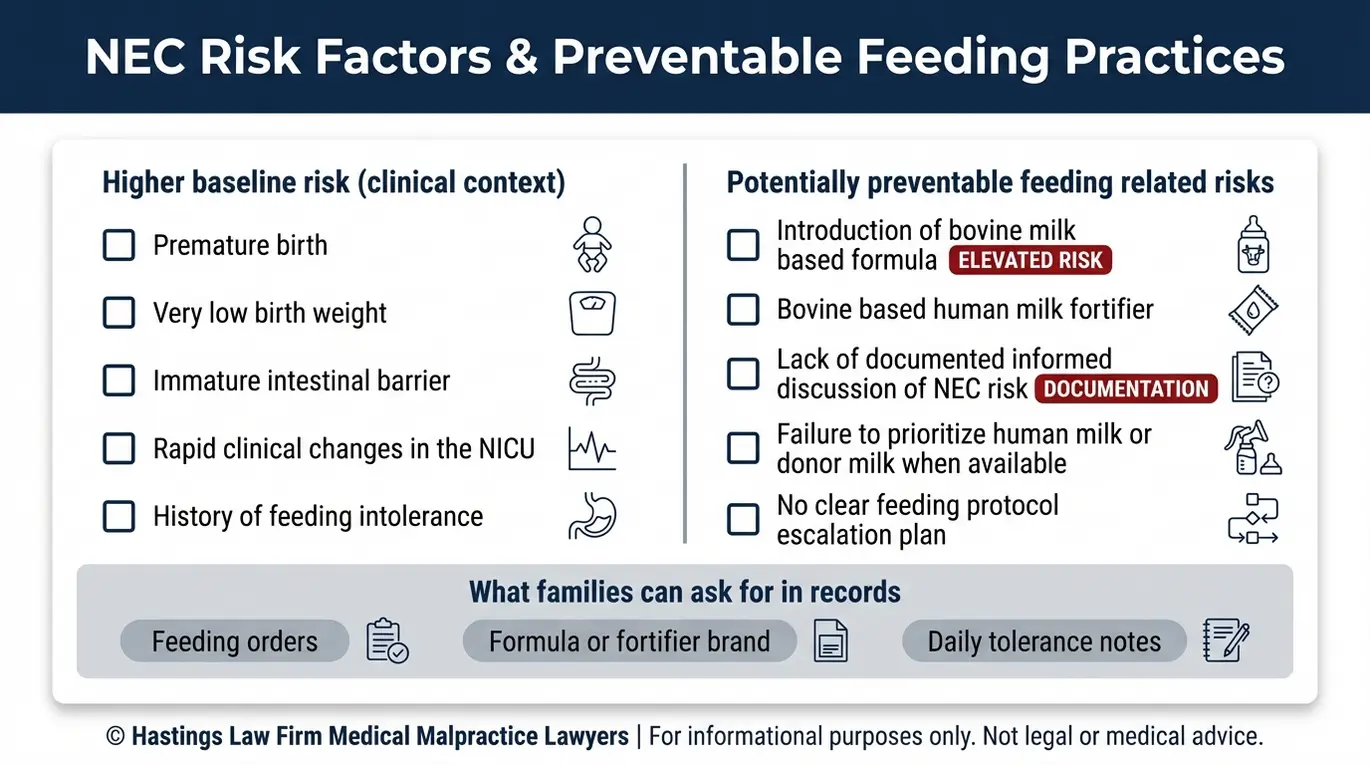
Key risk factors include:
- Prematurity: Infants born before 32 weeks gestation face the highest risk because their intestinal lining and immune systems are underdeveloped.
- Very low birth weight (VLBW): Babies weighing less than 1,500 grams (about 3.3 pounds) at birth are disproportionately affected by NEC.
- Bovine (cow’s milk)-based formula feeding: Introduction of cow’s milk formula to a premature infant’s diet has been strongly associated with NEC development compared to exclusive human milk feeding.
- Bacterial colonization patterns: Abnormal bacterial growth in the gut, sometimes influenced by antibiotic use or NICU environment, can set the stage for intestinal injury.
- Compromised blood flow to the intestines: Conditions that reduce oxygen delivery to the gut can weaken the intestinal wall and increase vulnerability.
If your premature baby developed NEC after being fed formula in the NICU, an experienced NEC lawsuit attorney can help determine whether the feeding decisions or products involved fell below the accepted standard of care. Under the Texas Civil Practice and Remedies Code, Chapter 74.051, specific procedural requirements must be met before a medical negligence claim can proceed, making early legal consultation important.
Recognizing Symptoms of NEC and Medical Response
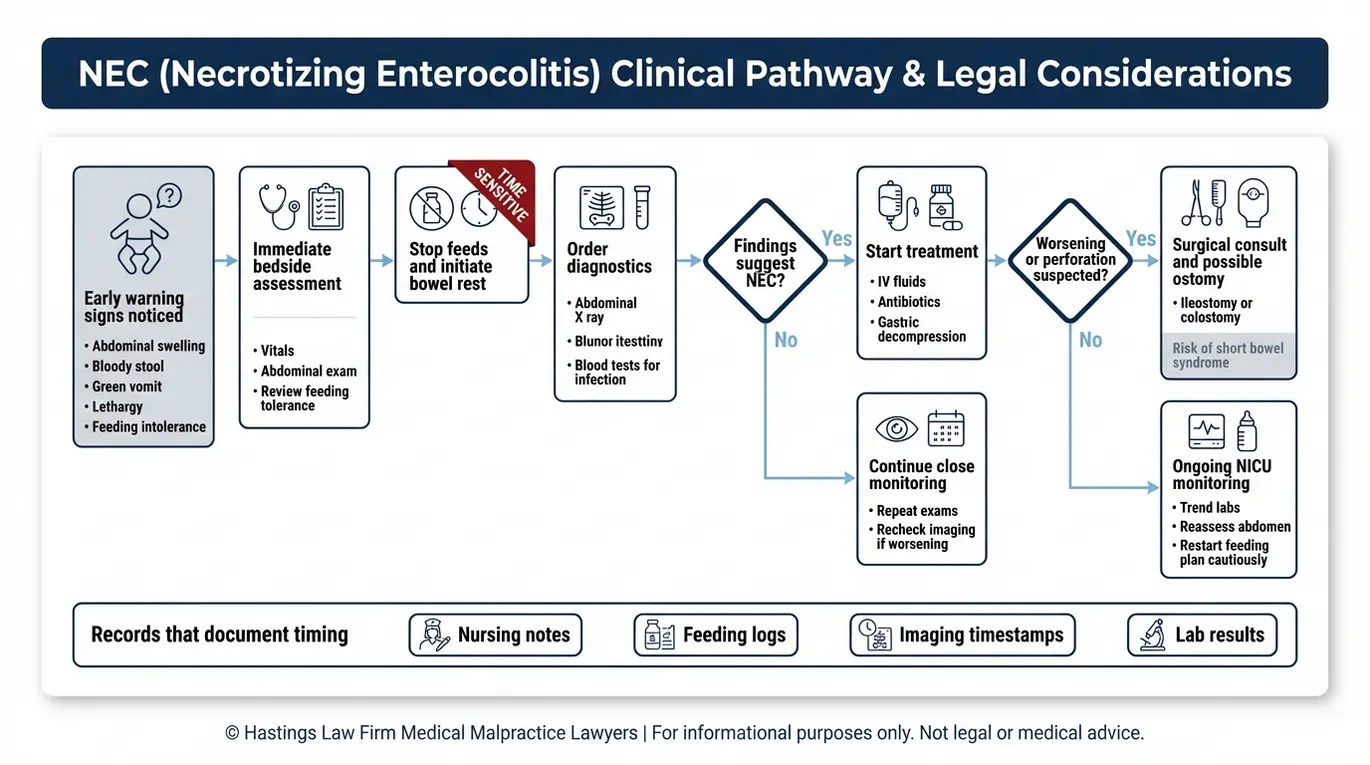
Early signs of NEC include abdominal swelling (distension), bloody stool, green vomit containing bile, lethargy, and feeding intolerance, all of which require immediate cessation of feedings and urgent diagnostic evaluation. According to research published through PubMed Central on Neonatal Necrotizing Enterocolitis, prompt recognition of these symptoms can mean the difference between medical management and emergency surgery.
NEC often begins subtly. A baby who was tolerating feedings may suddenly show signs of distress. The abdomen may appear bloated or discolored. Nurses and physicians monitoring preterm infants in the NICU are trained to watch for these changes because the disease can progress rapidly from early warning signs to a surgical emergency within hours.
Symptoms parents and medical staff should watch for:
- Abdominal distension or visible swelling
- Bloody or dark-colored stool
- Bile-stained (green) vomit or gastric residuals
- Feeding intolerance or refusal
- Lethargy and decreased activity
- Temperature instability
- Episodes of apnea (pauses in breathing) or bradycardia (slowed heart rate)
When NEC is suspected, the diagnostic workup typically begins with abdominal X-rays. Physicians look specifically for pneumatosis intestinalis, a pattern of gas bubbles within the intestinal wall that is a hallmark radiographic sign of NEC. Blood tests check for elevated white blood cell counts, low platelet levels, and markers of infection that suggest the disease is advancing.
Treatment depends on severity. In mild cases, doctors may place the infant on bowel rest, meaning all feedings are stopped and nutrition is delivered intravenously. Antibiotics are started to fight infection.
When NEC progresses to intestinal perforation, meaning the bowel wall has developed a hole allowing contents to leak into the abdominal cavity, emergency surgery becomes necessary. Surgeons may need to remove dead sections of bowel and create an ostomy, either a colostomy or ileostomy, to divert waste while the intestine heals.
For some infants, the damage is extensive enough to cause short bowel syndrome, a long-term condition where the remaining intestine cannot absorb adequate nutrition. These children often face years of specialized medical care.
The Hastings Law Firm Difference
Results matter, but what truly sets us apart is how we achieve them. Every verdict, every settlement, and every Texas courtroom victory comes from one guiding promise: To treat each client’s fight for justice as if it were our own.
This balance of skill, experience, and empathy reflects our core philosophy that justice should not only compensate the injured, but also make healthcare safer nationwide.

The Link Between Cow Milk Formula and NEC
Numerous studies have established a strong connection between bovine milk-based formulas and an increased risk of NEC in premature infants compared to those fed exclusively human milk or donor breast milk. This body of research is central to the growing wave of baby formula litigation across the country.
The science behind this link centers on how a preterm infant’s gut responds to different proteins. A premature baby’s intestinal lining is thin, porous, and not yet equipped with the protective enzymes and immune factors needed to process complex proteins. Bovine (cow’s milk)-based formula, which is derived from cow’s milk and contains proteins structurally different from human milk, can trigger an aggressive inflammatory response in this fragile tissue. Human breast milk, by contrast, contains immunoglobulins, growth factors, and beneficial bacteria that actively protect the intestinal lining.
Even human milk fortifier (HMF), a supplement added to breast milk to boost calorie and nutrient content for very small babies, can increase NEC risk when it is derived from bovine sources rather than human milk. A 2025 study published in PubMed on Human Milk Fortification and Necrotizing Enterocolitis in Very Low Birthweight Infants reinforces findings that bovine-based fortifiers are associated with higher NEC incidence in VLBW infants.
The formula products most frequently identified in litigation include:
- Similac products manufactured by Abbott Laboratories
- Enfamil products manufactured by Mead Johnson
The central legal theory in many of these cases is failure to warn. Plaintiffs allege that these manufacturers knew, or should have known, about the elevated NEC risk their products posed to premature infants but failed to adequately warn parents, physicians, and NICU staff. Instead, the products were marketed as safe and appropriate alternatives to breast milk for preterm use.
A Texas NEC attorney can evaluate whether the formula or fortifier used in your baby’s care contributed to the development of NEC. If you are considering legal action, an infant injury lawyer experienced in both product liability and neonatal medicine can assess how the feeding decisions were made and whether adequate warnings were provided.
Determining Liability in Texas NEC Cases
Liability for NEC may fall on the formula manufacturer under product liability law, on the hospital and medical staff for medical malpractice, or on both if multiple failures contributed to the infant’s condition or wrongful death. Understanding which legal pathway applies to your situation shapes the entire case strategy.
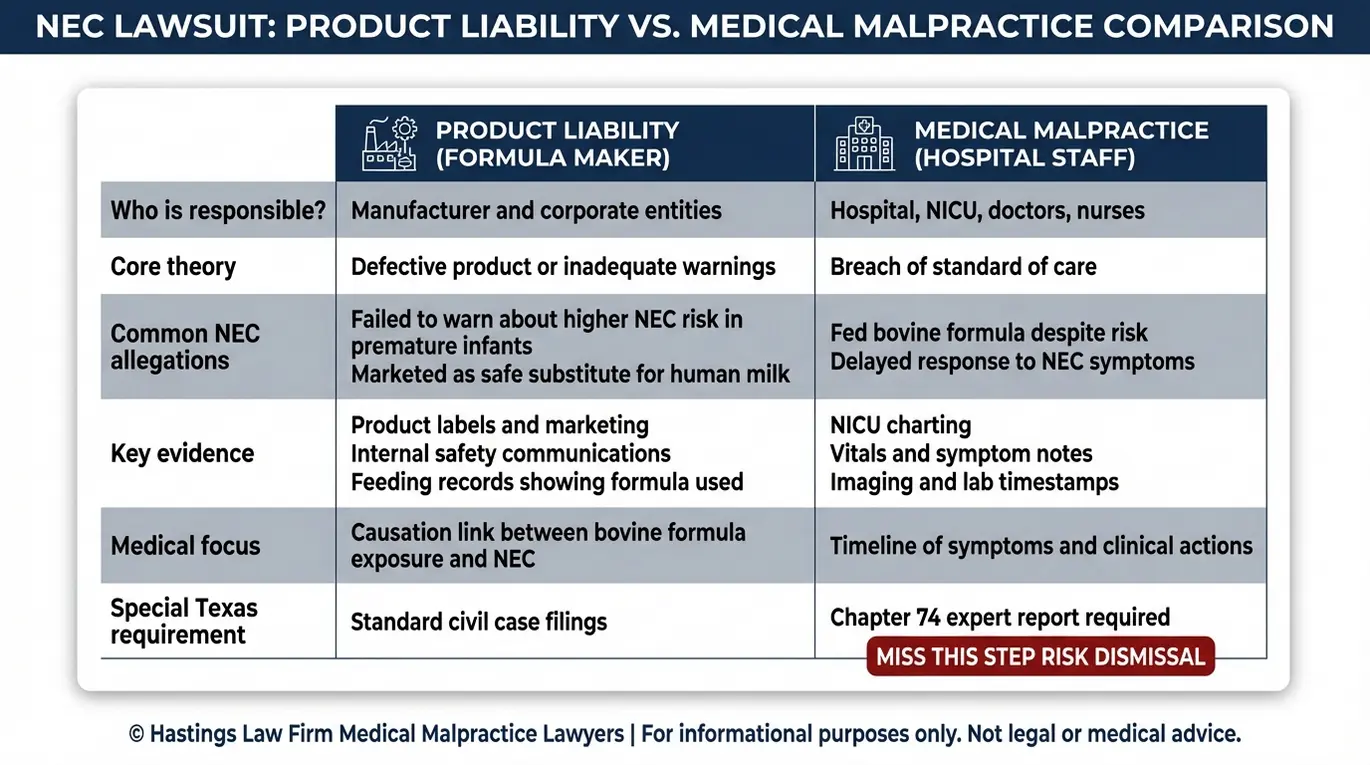
These two types of claims differ in important ways:
| Product Liability (Manufacturer) | Medical Malpractice (Hospital/Staff) | |
|---|---|---|
| Defendant | Formula manufacturer (e.g., Abbott, Mead Johnson) | Doctor, nurse, hospital, or NICU facility |
| Legal Theory | Strict liability, failure to warn, design defect | Negligence, breach of standard of care |
| Core Question | Was the product unreasonably dangerous or inadequately labeled? | Did the provider fail to follow accepted feeding protocols or ignore symptoms? |
| Expert Report Required? | Generally no (not governed by Chapter 74) | Yes, required within 120 days under Texas Chapter 74 |
| Damage Caps | No statutory caps on non-economic damages | $250,000 per physician; up to $500,000 total for institutions |
Product liability claims focus on the manufacturer’s conduct. If Abbott or Mead Johnson produced and marketed a formula they knew posed an elevated NEC risk to premature infants without providing adequate warnings, they may be held strictly liable. Families do not need to prove the manufacturer was negligent in the traditional sense; they need to show the product was defective or that its labeling failed to communicate known dangers.
Medical malpractice claims focus on the clinical decisions made by NICU providers. We examine whether the medical team chose to use bovine-based formula when human milk was available or recommended, whether they monitored the infant appropriately for early NEC symptoms, and whether they responded with adequate urgency once signs appeared. Sepsis, the body’s dangerous and potentially fatal response to infection, is a common consequence when NEC is not identified and treated promptly.
Texas law imposes strict procedural requirements on malpractice claims. Under Chapter 74 of the Texas Civil Practice and Remedies Code, a qualified expert must provide a written report within 120 days of filing suit. This report must detail the standard of care, the breach, and how that breach caused the injury. Missing this deadline results in automatic dismissal.
An NEC malpractice lawyer experienced in both product liability and medical negligence can identify every responsible party and build parallel claims where the evidence supports it. At Hastings Law Firm, our team includes former defense attorneys and nurses who understand how hospitals and manufacturers respond to these claims. Our in-house medical staff reviews clinical records to pinpoint where failures occurred. A Texas infant injury counsel can guide families through both legal tracks simultaneously.
Compensation for Families of NEC Victims
Families may recover damages for past and future medical expenses, pain and suffering, physical impairment, disfigurement from surgical scars, and the mental anguish that comes with watching a child endure this disease. These damages are generally categorized as economic or non-economic losses.
NEC cases often involve extraordinary medical costs. A premature infant who develops NEC may spend weeks or months in the NICU, undergo multiple surgeries, and require long-term nutritional support. Some children need ostomy procedures, where a surgeon creates an opening in the abdomen (either an ileostomy or colostomy) to allow the bowel to heal. Others develop short bowel syndrome (SBS), a chronic condition where the remaining intestine cannot absorb sufficient nutrients, requiring specialized feeding and ongoing medical management that can last a lifetime.
Recoverable damages in Texas NEC cases may include:
- Past medical bills: NICU stays, surgeries, medications, and emergency care already incurred
- Future care: Bowel reconnection surgeries, nutritional therapy, life care planning, and ongoing specialist visits
- Pain and suffering: Compensation for the physical pain the infant endured during illness and treatment
- Physical impairment: Reduced bodily function resulting from bowel loss or SBS
- Disfigurement: Surgical scarring from ostomy creation and abdominal procedures
- Mental anguish of the parents: The emotional distress and toll on family members who witnessed their child’s suffering
- Wrongful death damages: If the infant did not survive, parents may recover for loss of companionship, mental anguish, and funeral expenses
Under the Texas Civil Practice and Remedies Code Chapter 74, non-economic damage caps apply to medical malpractice claims but generally do not apply to product liability claims against manufacturers. These non-economic damages include compensation for intangible losses like physical pain and mental anguish.
A lawyer for NEC compensation can help calculate the full scope of your child’s current and future needs so that nothing is overlooked.
Contact the Texas Birth Injury Attorneys at Hastings Law Firm Today for Help
No family should have to face the aftermath of NEC alone. If your child’s injury resulted from a defective formula product or a failure in NICU care, Hastings Law Firm is prepared to investigate what happened and hold the responsible parties accountable.
Our team of attorneys, nurse consultants, and Board Certified Patient Advocates works exclusively on medical malpractice and product liability cases. We understand the medicine, we know the defense strategies, and we are committed to protecting families who have been failed by the systems they trusted. Tommy Hastings is a member of the American Board of Trial Advocates (ABOTA), an honor reserved for the top trial lawyers in the country.
We handle every case on a contingency fee basis, which means you pay no attorney fees or costs unless we secure a recovery for your family.
If your baby developed necrotizing enterocolitis in a Texas NICU, contact Hastings Law Firm for a free, confidential case evaluation. Let us review your child’s medical records and help you understand your legal options.
Frequently Asked Questions About Infant Necrotizing Enterocolitis in Texas


This content was researched and written by the Hastings Law Firm editorial team, which includes attorneys, medical professionals, and experienced researchers. Our writing is informed by internal knowledge and practical experience, and we cross-check critical details against authoritative sources cited throughout. Every piece undergoes human-led fact-checking and legal review. Because legal and medical information can change, if you spot an error, please contact us. Learn more about our content standards and review process on our editorial policy page.

Tommy Hastings, founder of Hastings Law Firm, is a board-certified personal injury trial lawyer dedicated exclusively to healthcare injury cases. Since 2001, he has represented injured patients and families in litigation against major hospital systems, pharmaceutical companies, and negligent healthcare providers nationwide. He has handled numerous high-profile cases that have drawn national media attention and resulted in multi-million dollar recoveries. He draws on that experience in his writing, helping readers understand how these cases work and what options may be available to them.
