


Texas Infant Congenital CMV Diagnosis Failure Lawyer
Written by: Hastings Law Firm | Reviewed by: Tommy Hastings | Updated: July 27, 2026
A missed or delayed congenital CMV diagnosis can leave families facing preventable lifelong challenges tied to hearing loss and developmental harm. When warning signs during pregnancy or shortly after birth are not recognized, opportunities for timely testing and treatment can be lost. These situations often involve questions about whether symptoms were dismissed, follow up was incomplete, or newborn screening results were not acted on. Clear medical records and expert review can help clarify what happened and why it mattered. If you or a loved one were harmed or worse due to missed congenital CMV diagnosis in Texas, contact Hastings Law Firm for a free, confidential case review.

Top Rated Texas Attorneys for CMV Misdiagnosis and Birth Injury Claims
What You Should Know About Cytomegalovirus Screening Misdiagnosis Claims in Texas:
- Lifelong disabilities can follow when congenital CMV is not identified and managed promptly.
- Missed warning signs can be central to a dispute when maternal symptoms, prenatal imaging concerns, or newborn findings were not followed with CMV testing.
- Hearing loss and developmental delays can be linked to untreated congenital CMV, and the article cites CDC materials describing serious neurologic outcomes.
- Options can be lost if legal time limits are missed, since Texas birth injury claims can be barred even when evidence is strong.
- Additional constraints can apply when care occurred at a public hospital, military facility, or federally funded clinic.
- Causation is often contested because the dispute may turn on whether earlier antiviral therapy or closer monitoring would have reduced harm.
- Financial recovery can be shaped by the long term cost of care, including medical treatment and supportive services.
- Insurance coverage gaps can leave families exposed to major long term expenses for rehabilitation and custodial care.
- Life care planning can drive the valuation of severe injuries by projecting future needs across a child’s lifespan.
- Medical records and specialist expert testimony can be decisive when evaluating whether the standard of care was met.

A Healthcare Focused Law Firm
Learning that your child’s hearing loss, developmental delays, or neurological damage may have been preventable is one of the most painful realizations a parent can face. If your child was diagnosed with congenital cytomegalovirus and you believe the signs were missed during pregnancy or shortly after birth, you are not alone in questioning what happened. These cases raise serious medical and legal questions, and getting clear answers is the first step toward protecting your child’s future.
At Hastings Law Firm, our team of attorneys, in-house nurses, and medical experts focuses exclusively on medical malpractice. As a dedicated Texas missed congenital CMV lawyer, we understand both the medicine and the law behind missed diagnoses, and we know how to investigate what went wrong. If you suspect your child’s injuries could have been reduced or prevented with earlier detection, we can review what happened and explain your options in a free, confidential consultation.
Understanding Congenital CMV and Medical Negligence
Congenital CMV, a viral infection passed from mother to fetus during pregnancy, can cause severe disabilities if not identified and managed promptly. Cytomegalovirus is one of the most common congenital infections worldwide, yet it remains underrecognized by many healthcare providers.
CMV belongs to the herpesvirus family and spreads through bodily fluids such as saliva, urine, and blood. When a pregnant woman contracts what is known as a primary CMV infection, meaning her first exposure to the virus, the risk of transmission to the fetus is highest. Reactivation of a previous infection can also pose risks, though the likelihood of serious birth injuries is generally lower. In either scenario, cytomegalovirus infection in pregnancy requires prompt clinical attention because the virus can cross the placenta and directly affect fetal development.
The challenge for families is that maternal CMV infections often look like nothing more than a mild flu. A mother may report fatigue, low-grade fever, sore throat, or swollen glands, symptoms that many physicians dismiss without further investigation. When those symptoms go unexplored, a critical window for diagnosis and intervention can close.
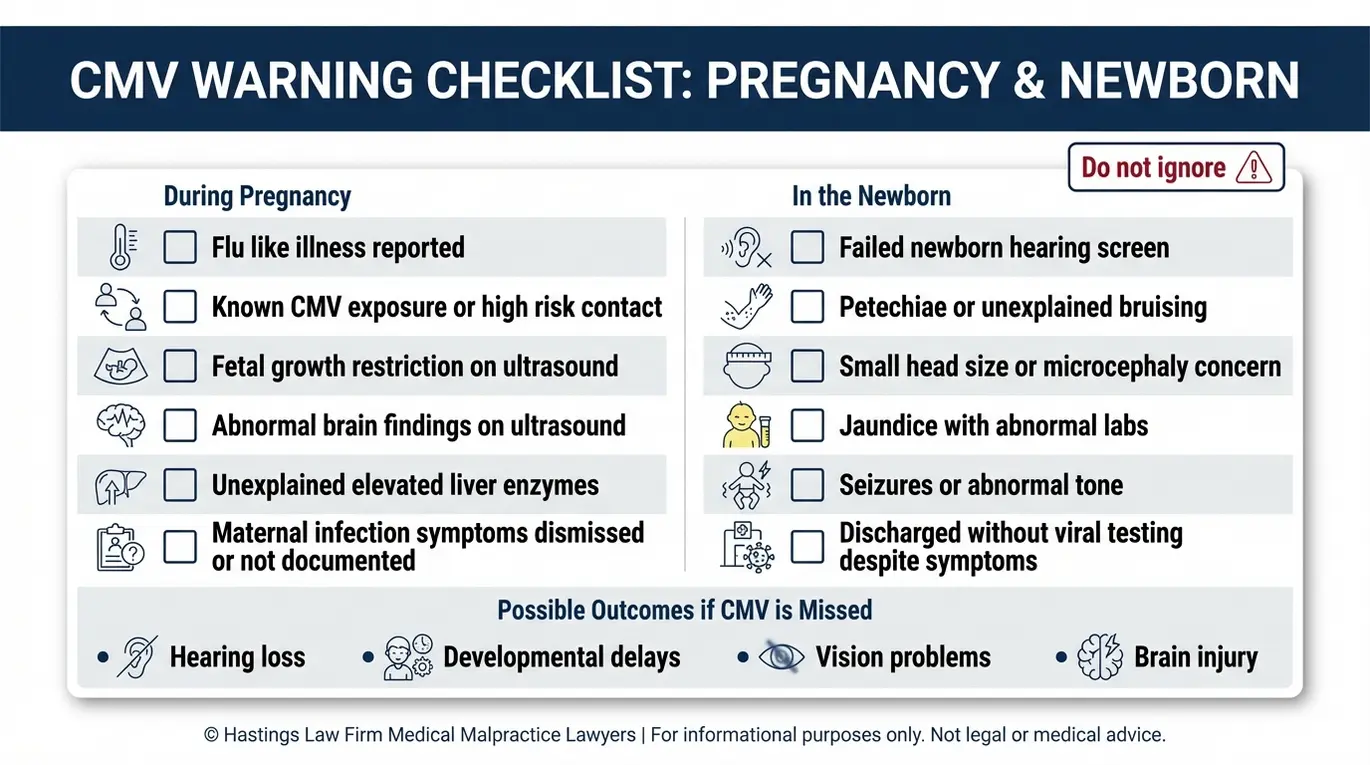
A Texas missed congenital CMV lawyer typically sees cases where one or more of the following red flags were present but not acted upon:
- Maternal flu-like symptoms during pregnancy that were not investigated with blood testing
- Fetal growth restriction identified on ultrasound without follow-up for infection
- Abnormal ultrasound findings such as excess amniotic fluid or brain calcifications (calcium deposits in the brain)
- A newborn failing their initial hearing screening without later CMV testing
- Petechiae, jaundice, or an enlarged liver or spleen in a newborn
The consequences of an undiagnosed congenital infection can be life-altering. According to the CDC’s resource on CMV in Newborns, congenital CMV is the leading non-genetic cause of sensorineural hearing loss in children. Beyond hearing loss in newborns, untreated CMV can result in microcephaly, brain damage at birth, intellectual disability, vision impairment, seizures, and significant developmental delays.
A 2023-2024 CDC field report on universal newborn CMV screening in Minnesota demonstrated that targeted screening programs can identify affected infants early enough to begin antiviral treatment. The Health Resources and Services Administration (HRSA) has also recognized congenital cytomegalovirus as a condition recommended for newborn screening, underscoring that medical knowledge and diagnostic tools exist to catch these cases.
When a doctor fails to connect the dots between maternal symptoms, fetal abnormalities, or neonatal warning signs, the role of a CMV birth injury lawyer becomes essential to building the medical and legal case to determine whether earlier action could have changed the outcome for the child.
Proving Malpractice and Failure to Screen or Diagnose CMV
To prove malpractice in a CMV case, a lawyer must demonstrate that the physician violated the standard of care by failing to test for or treat the infection despite clinical indicators. Proving medical negligence in cases involving congenital cytomegalovirus requires showing that a doctor failed to follow the standard of care. This requires more than showing that a bad outcome occurred; it requires connecting specific medical decisions to the harm your child suffered.
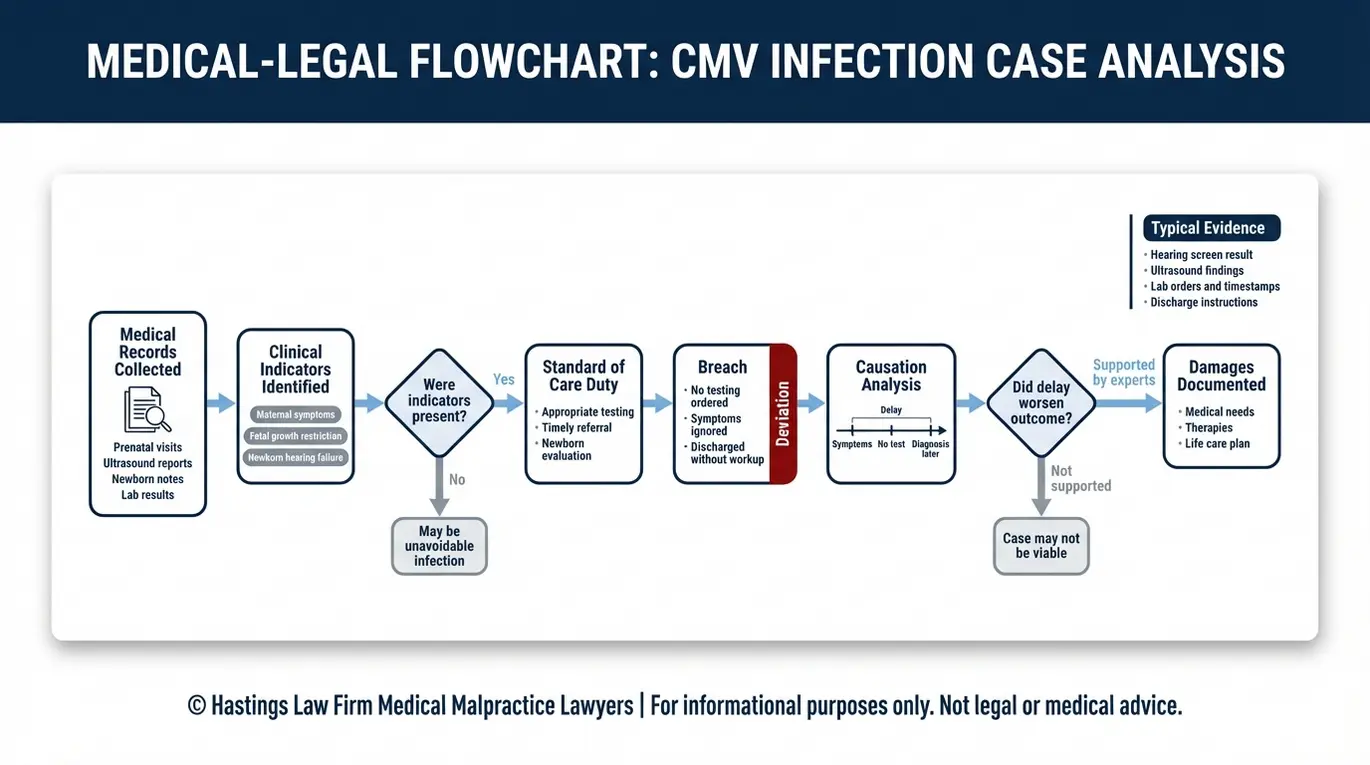
Medical malpractice claims follow a four-part legal framework: duty, breach, causation, and damages. Each element must be supported by evidence and confirmed through expert medical testimony. A Texas missed congenital CMV lawyer builds this proof structure methodically, starting with the medical records themselves.
Duty. Every obstetrician and pediatrician owes a duty of care to their patients. The standard of care for maternal infection screening generally requires physicians to investigate when a pregnant patient presents with symptoms consistent with viral illness, or when prenatal imaging reveals findings that suggest infection. While universal CMV screening is not yet mandatory in all settings, the duty to test is triggered when clinical indicators are present.
Breach. A breach of duty occurs when a provider fails to act as a reasonably competent physician would under similar circumstances. In missed CMV cases, specific errors that an attorney for CMV failure to diagnose may identify include:
- Dismissing a mother’s report of flu-like symptoms without ordering CMV serology, which includes IgM and IgG antibodies (proteins the immune system makes to fight infections) and IgG avidity testing (a test to see how long ago the infection started)
- Failing to recommend amniocentesis (sampling amniotic fluid) with CMV PCR (a test that detects viral DNA) when ultrasound findings suggest fetal infection
- Overlooking abnormal ultrasound results such as growth restriction, brain calcifications, or enlarged ventricles
- Discharging a symptomatic newborn without ordering a CMV-specific test after a failed hearing screen
- Failing to refer a newborn with clinical signs of infection to a pediatric infectious disease specialist
Causation. Causation in medical negligence is often the most contested element. A Texas CMV malpractice attorney must connect the delay in diagnosis or the mismanaged infection to the severity of the child’s injuries. The legal question is whether earlier intervention, such as antiviral therapy or closer fetal monitoring, would have meaningfully reduced the harm. Expert witnesses review the medical timeline, published treatment data, and the child’s clinical progression to establish this link.
Damages. The final element requires documenting the full scope of injury, from immediate medical needs to lifelong care requirements. This is addressed in detail below.
Distinguishing Unavoidable Complications from Negligence
Not every child born with congenital CMV has a malpractice case. Some infections are truly silent, producing no maternal symptoms and no fetal abnormalities on imaging. In those cases, even a careful physician acting within the standard of care may not have had reason to test.
The legal distinction centers on whether warning signs existed and were ignored. Fetal ultrasound findings suggestive of congenital CMV, such as ventriculomegaly (enlarged brain ventricles), intracranial calcifications, or fetal growth restriction, are the types of clinical evidence that should prompt further investigation. When those signs appear in the record but no action was taken, the case for negligence becomes stronger.
Similarly, the availability and timing of treatment matters. Valganciclovir and ganciclovir are antiviral medications used to treat congenital CMV in newborns. Studies have shown that early antiviral therapy for congenital CMV can help preserve hearing and improve developmental outcomes, though ideally it should be started within the first month of life to maximize benefit. A missed or delayed diagnosis can mean the difference between starting treatment in that critical window and missing it entirely.
A CMV birth injury lawyer works with medical experts in causation analysis to evaluate whether the specific facts of a case cross the line from an unfortunate outcome into actionable negligence.
The Hastings Law Firm Difference
Results matter, but what truly sets us apart is how we achieve them. Every verdict, every settlement, and every Texas courtroom victory comes from one guiding promise: To treat each client’s fight for justice as if it were our own.
This balance of skill, experience, and empathy reflects our core philosophy that justice should not only compensate the injured, but also make healthcare safer nationwide.

Financial Compensation Available for Missed Congenital CMV Injuries
Compensation in CMV cases typically covers past and future medical expenses, life-care planning costs, and non-economic damages for pain and suffering. Legal claims for CMV-related birth injuries seek to recover the costs of a child’s medical treatment and lifelong support. Understanding the categories of damages available under Texas law helps families appreciate what a claim is designed to address.
A Texas birth defect lawyer evaluates economic and non-economic damages to determine the full financial impact of birth injuries caused by a failure to diagnose. Unlike transient neonatal infections that resolve with brief treatment, congenital CMV often necessitates a lifetime of support.
Economic Damages represent the measurable, out-of-pocket costs associated with your child’s condition. These may include:
| Category | Examples |
|---|---|
| Medical treatment | Hospitalizations, surgeries, specialist visits, antiviral therapy |
| Hearing rehabilitation | Cochlear implants, hearing aids, audiological services |
| Therapy services | Speech therapy, physical therapy, occupational therapy |
| Educational needs | Special education programs, tutoring, adaptive learning tools |
| Assistive technology | Communication devices, mobility aids |
| Attendant and custodial care | In-home nursing, personal care assistance over the child’s lifetime |
Families often underestimate the cumulative cost of these interventions. While health insurance may cover acute care, it frequently denies coverage for long-term rehabilitation, experimental therapies, or custodial care. Economic damages aim to fill this gap, ensuring that the family does not face bankruptcy while providing the best possible quality of life for their child.
Non-Economic Damages address losses that do not carry a specific price tag but are no less real. These include the child’s physical pain and suffering, loss of enjoyment of life, and physical impairment. For parents, Texas law may also recognize claims related to the emotional toll of caring for a child whose injuries could have been lessened.
Life-Care Plans
In cases involving severe congenital CMV injuries, medical and financial experts work together to develop a life-care plan. These plans are comprehensive documents that outline the necessary future medical complications and support a child will need throughout their life. This document projects the total cost of care over the child’s expected lifespan, often spanning 40 to 50 years or more.
Life-care plans account for inflation, the cost of evolving medical technology, and the increasing level of support a child may need as they grow into adulthood. Creating a robust life-care plan is a complex process. It involves not just estimating current costs, but predicting how those costs will evolve.
For example, a child with CMV-related hearing loss may require a series of cochlear implant upgrades, speech therapy, and specialized educational support throughout their schooling. Similarly, physical impairments may require home modifications, wheelchair replacements, and accessible vehicles. We account for medical inflation and the potential for future medical complications, ensuring that the settlement or verdict provides financial security regardless of how the child’s needs change over time.
These plans are built with input from treating physicians, rehabilitation specialists, economists, and vocational experts. For families seeking legal help for CMV-related disabilities, a well-constructed life-care plan often forms the foundation of the damages case, giving a jury or mediator a clear picture of what the child will need. No two cases produce identical results, and we never promise a specific dollar amount. But our goal as CMV birth injury compensation attorneys is to ensure that every recoverable category of loss is identified, documented, and presented with the evidence to support it.
Texas Statute of Limitations for Missed CMV Diagnosis
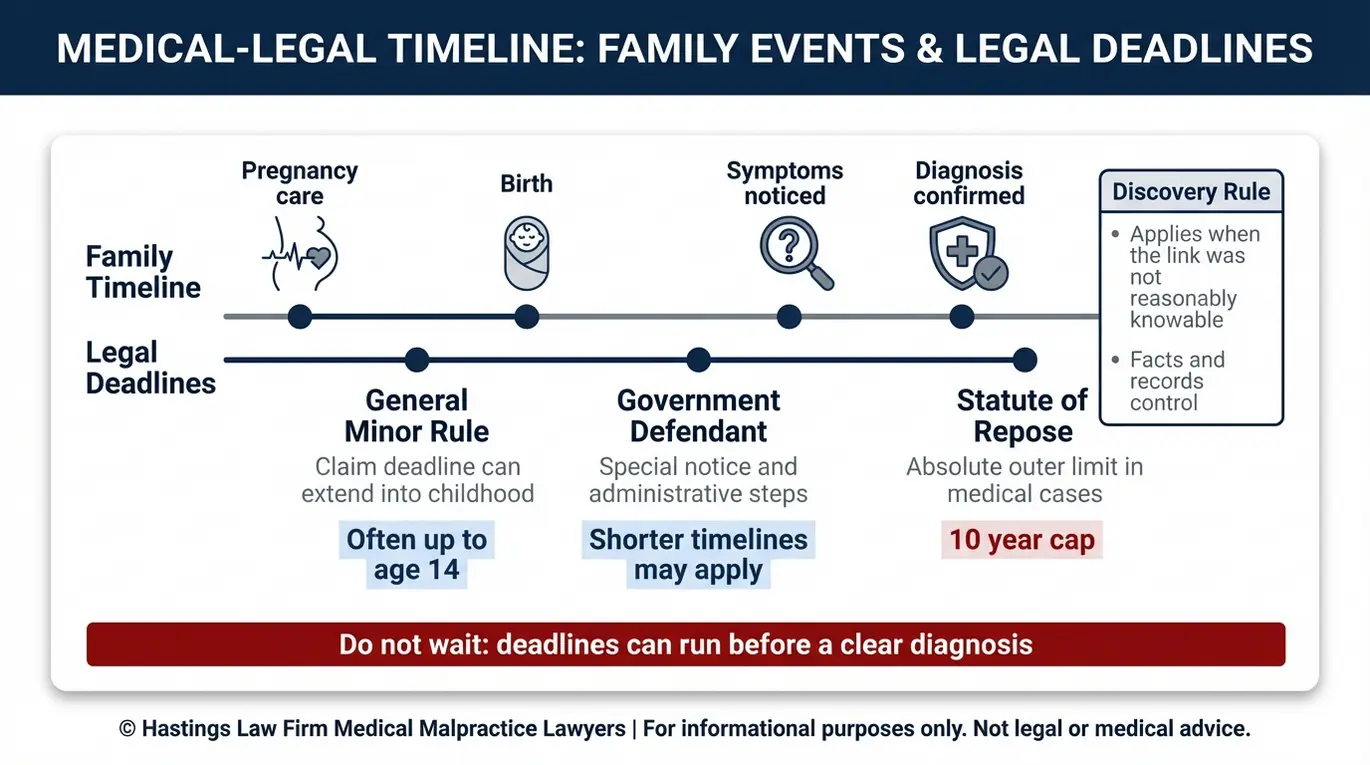
Texas law generally allows parents to file a birth injury claim until the child turns 14, though specific deadlines vary based on the type of defendant and the circumstances of discovery. In Texas, legal timelines called statutes of limitations dictate how long you have to file a birth injury lawsuit. Missing a filing deadline can permanently bar your claim, regardless of how strong the evidence may be.
Understanding the applicable statute of limitations for birth injury cases is one of the most important reasons to consult a lawyer early. The rules are not uniform, and several exceptions can either extend or shorten the window you have to act.
The General Rule for Minors. Under the Texas Civil Practice and Remedies Code § 74.251, medical malpractice claims must generally be filed within two years from the date of the alleged negligent act. However, Texas law tolls, or pauses, this deadline for minors. For children, the statute of limitations does not begin running until the child turns 12, giving parents until the child’s 14th birthday to file suit.
The Statute of Repose. Texas also imposes an absolute 10-year deadline, known as the statute of repose. This means that regardless of when the injury is discovered, no medical malpractice claim can be filed more than 10 years after the date of the negligent act. For children injured at or shortly after birth, this deadline can arrive well before the child turns 14, effectively overriding the tolling provision.
The statute of repose is particularly harsh because it allows for very few exceptions. Even if the parents were unaware of the negligence, the claim may be extinguished if the ten-year mark passes. This makes it important to review the medical records as soon as developmental delays or hearing loss become apparent, rather than waiting for a definitive medical confirmation that might come too late.
A Texas pediatric medical malpractice attorney can analyze which deadline applies in your specific situation.
Claims Against Government Entities. If the care was provided at a public hospital, a military facility, or a federally funded clinic, different and often stricter deadlines apply. Claims against federal facilities fall under the Federal Tort Claims Act (FTCA), which requires families to file an administrative claim with the responsible agency within two years of the injury. State and county hospitals may also have shorter notice requirements. These compressed timelines make early legal consultation essential.
Key deadline considerations for families:
- The two-year general statute is tolled for minors but is subject to the 10-year repose period
- FTCA claims against federal facilities carry a strict two-year administrative filing deadline
- Claims against Texas state or county hospitals may require notice within six months
- Delayed discovery of CMV-related injuries may affect the start date of the limitations period
The Discovery Rule in Late-Diagnosis Cases
Congenital CMV does not always reveal its full impact at birth. Some children pass their initial newborn evaluations only to develop progressive hearing loss or developmental delays months or years later. In these situations, the discovery rule may apply.
The discovery rule provides that the statute of limitations does not begin to run until the patient or family knew, or reasonably should have known, that an injury occurred and that it may have been caused by a failure to diagnose. For families who only learn about the connection between CMV and their child’s disabilities well after the fact, this rule can provide critical additional time. However, courts apply it narrowly, and the burden falls on the family to demonstrate that earlier discovery was not reasonably possible.
Because the interplay between tolling, repose, and the discovery rule creates real risk of missing a deadline, we encourage families to reach out sooner rather than later.
How Hastings Law Firm Investigates CMV Cases
Our firm conducts a thorough investigation using former defense attorneys and medical experts to uncover charting inconsistencies and establish liability. Our founder, Tommy Hastings, is board-certified in personal injury trial law, a distinction held by less than 2% of Texas attorneys. Our team includes former defense attorneys and hospital nurses who understand the systems and protocols they now challenge.
Every missed congenital CMV case we accept is prepared from day one as if it will go to a jury, because that level of preparation is what drives fair outcomes. Here is how our process works:
Step 1: Free, Confidential Case Evaluation. Your first conversation is with a patient advocate, not a salesperson. We listen to your family’s experience, gather preliminary information, and explain whether your situation may involve actionable medical negligence. There is no fee for this initial review and no obligation to proceed.
Step 2: Medical Records Collection and Analysis. Once we accept a case, our in-house nursing staff begins a detailed review of the prenatal, labor and delivery, and neonatal records. They look for gaps in documentation, missed clinical indicators, and whether appropriate testing was ordered. For instance, symptoms of CMV can sometimes be mistaken for neonatal sepsis or meningitis in newborns. We meticulously analyze the records to see if these conditions were ruled out and if CMV testing was omitted despite persistent symptoms.
For CMV cases specifically, our team examines whether newborn CMV PCR testing, which involves saliva or urine testing within 21 days of life, was performed when indicated. We also review newborn hearing screening results, including OAE and ABR tests, to determine whether sensorineural hearing loss (SNHL), a type of permanent hearing damage caused by inner ear or nerve injury, was identified and properly followed up. Families can request their child’s records directly from the treating facility; for example, Texas Children’s Hospital provides a Medical Records Request Form on their website.
Step 3: Expert Medical Review. We work with a national network of qualified medical experts, including maternal-fetal medicine specialists, pediatric infectious disease physicians, and neonatologists, to evaluate whether the standard of care was met. These experts review the timeline, the clinical findings, and the available literature to determine whether earlier diagnosis and treatment could have changed the outcome. We also consult with specialists who can speak to the long-term prognosis, helping to differentiate between genetic anomalies and viral injuries. This distinction is critical in rebutting defense arguments that the child’s condition was inevitable.
Step 4: Building the Litigation Strategy. Our legal team includes former defense attorneys who spent years representing hospitals and insurance carriers. That experience gives us direct insight into the arguments the other side will raise, whether they will claim the infection was asymptomatic, that treatment would not have helped, or that the child’s condition is genetic. We prepare to address each of those defenses with evidence and expert testimony before they are raised.
Step 5: Contingency Fee Representation. We handle CMV cases on a contingency fee basis, which means your family pays no attorney fees and no costs unless we secure a recovery. This structure exists so that families are never priced out of holding a negligent provider accountable.
If you are considering hiring a Texas birth injury lawyer, our team is ready to walk you through the process and answer your questions.
Contact the Texas Birth Injury Attorneys at Hastings Law Firm Today for Help
No parent should have to wonder alone whether their child’s condition could have been prevented. If your family is facing the reality of a congenital CMV diagnosis and you believe warning signs were missed, the attorneys at Hastings Law Firm are here to help you find answers.
Our firm exists to restore trust for families who feel let down by the healthcare system. We will review your child’s medical records, consult with qualified experts, and give you an honest assessment of your legal options. The confidential consultation is free and carries no obligation.
You pay nothing unless we win. Contact Hastings Law Firm today to take the first step toward understanding what happened and protecting your child’s future.
Frequently Asked Questions About Infant Congenital CMV Diagnosis Failure in Texas


This content was researched and written by the Hastings Law Firm editorial team, which includes attorneys, medical professionals, and experienced researchers. Our writing is informed by internal knowledge and practical experience, and we cross-check critical details against authoritative sources cited throughout. Every piece undergoes human-led fact-checking and legal review. Because legal and medical information can change, if you spot an error, please contact us. Learn more about our content standards and review process on our editorial policy page.

Tommy Hastings, founder of Hastings Law Firm, is a board-certified personal injury trial lawyer dedicated exclusively to healthcare injury cases. Since 2001, he has represented injured patients and families in litigation against major hospital systems, pharmaceutical companies, and negligent healthcare providers nationwide. He has handled numerous high-profile cases that have drawn national media attention and resulted in multi-million dollar recoveries. He draws on that experience in his writing, helping readers understand how these cases work and what options may be available to them.
