


Texas Infant Brain Anomaly Misdiagnosis Lawyer
Written by: Hastings Law Firm | Reviewed by: Tommy Hastings | Updated: July 27, 2026
An infant brain anomaly misdiagnosis can leave families facing permanent harm, overwhelming uncertainty, and long term care needs. Missed warning signs during labor, delivery, or early newborn care can delay critical treatment and allow preventable injury to worsen. Diagnostic errors may involve misread imaging, overlooked clinical indicators, or system breakdowns in communication and staffing. Understanding how these mistakes happen can help families make informed decisions and protect a child’s future. If you or a loved one were harmed or worse due to infant brain anomaly misdiagnosis in Texas, contact Hastings Law Firm for a free, confidential case review.

Top Rated Birth Injury Attorneys Helping Families Across Texas
What You Should Know About Infant Brain Abnormality Misdiagnosis Claims in Texas:
- Lifelong consequences can follow when an infant brain anomaly or injury is missed, because delayed intervention can allow damage to become permanent.
- Treatment options can narrow quickly after birth, because some therapies lose effectiveness when diagnosis and care are delayed.
- Additional injury can occur even after a problem is recognized, because improper ventilation management can worsen oxygen delivery to vulnerable brain tissue.
- Responsibility may extend beyond one clinician, because diagnostic errors can involve physicians, nurses, radiologists, and hospital level system failures.
- False reassurance can become a major dispute driver, because parent concerns and staff responses may be documented in the medical record.
- Recovery for long term needs can be shaped by limits on non economic damages in Texas, even when care costs and lost earning capacity are substantial.
- Options can be lost if timing rules are missed, because Texas places strict limits on when medical malpractice claims may be filed.
- Proof often turns on what was recorded and when, because fetal monitoring, imaging, lab results, and nursing notes can show whether warning signs were present.
- Expert analysis can be central to accountability, because Texas malpractice claims depend on qualified medical opinions about the standard of care and causation.

A Healthcare Focused Law Firm
When a doctor fails to identify a brain anomaly in your newborn, the consequences can reshape your family’s entire future. You trusted your medical team to recognize warning signs and act quickly. If that trust was broken, you deserve answers about what went wrong and who should be held accountable.
At Hastings Law Firm, we have focused exclusively on medical malpractice since 2005, including cases involving infant brain injuries that were missed, misread, or dismissed by healthcare providers. Our team of attorneys, in-house nurse consultants, and board-certified patient advocates understands both the medicine and the law behind these cases.
If you need a Texas infant brain anomaly misdiagnosis lawyer, we are here to listen. Contact us for a free, confidential case evaluation to learn about your options.
Commonly Misdiagnosed Infant Brain Defects and Injuries
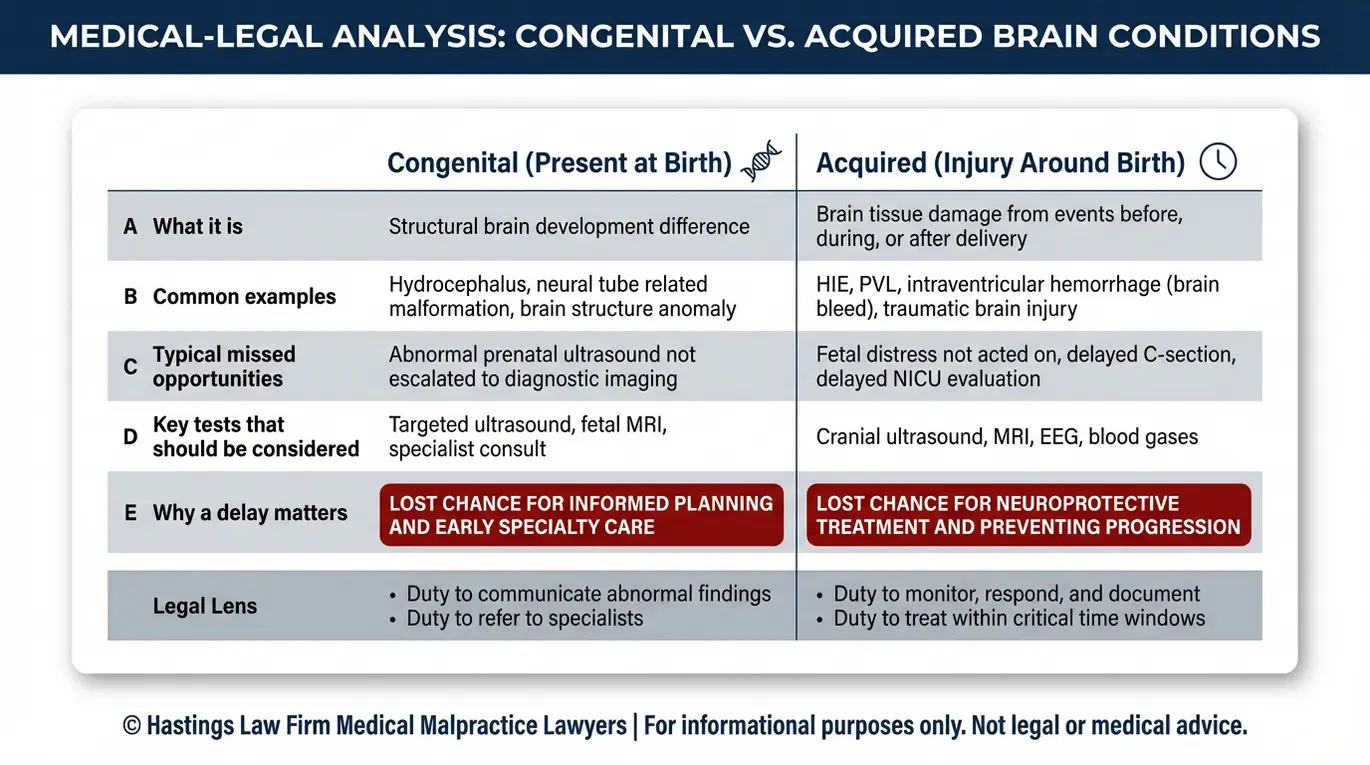
A misdiagnosis occurs when a physician fails to identify a congenital anomaly or acute brain injury despite clinical evidence that should prompt further testing and timely intervention. When a doctor overlooks or misreads these signs, the window for timely intervention can close before the family even knows there is a problem.
To understand how an infant brain anomaly lawyer evaluates these cases, it helps to know the two broad categories of conditions that are most often missed.
Congenital Brain Anomalies (Structural Defects Present at Birth)
These are conditions that develop during pregnancy and are present when the baby is born. While some are genetic, others result from environmental factors or maternal health issues that went unmonitored:
- Neural tube defects such as spina bifida or anencephaly
- Hydrocephalus, an abnormal buildup of fluid in the brain’s ventricles
- Agenesis of the corpus callosum, where the structure connecting the brain’s two hemispheres is partially or completely absent
- Periventricular leukomalacia (PVL), damage to the white matter surrounding the ventricles, often linked to premature birth
Acquired Brain Injuries (Caused by Birth Trauma or Oxygen Deprivation)
These injuries occur during labor, delivery, or shortly after birth. They are often preventable and frequently stem from medical errors, such as improper tool use or failure to manage complications, during the birthing process:
- Hypoxic-ischemic encephalopathy (HIE), brain damage caused by a combination of reduced oxygen and restricted blood flow to the infant’s brain
- Intraventricular hemorrhage (IVH), bleeding into the fluid-filled ventricles of the brain, most common in premature infants
- Cerebral palsy resulting from undetected oxygen deprivation or traumatic brain injury during birth
- Birth asphyxia related to umbilical cord prolapse, placental abruption, or prolonged labor
A failure to diagnose a brain defect in either category can have lasting consequences. Conditions like HIE and PVL, when caught early, may respond to specific interventions that can limit the severity of the damage. But when a provider adopts a “wait and see” approach in the face of clear clinical indicators, that delay can amount to medical negligence. Watchful waiting has a place in medicine, but not when a newborn’s imaging, lab work, or physical exam already points to an identifiable problem requiring action.
If your child received a delayed or incorrect diagnosis, a Texas infant brain anomaly misdiagnosis lawyer can review the medical records to determine whether the standard of care was met.
Recognizing Signs of Undiagnosed Brain Damage in Newborns
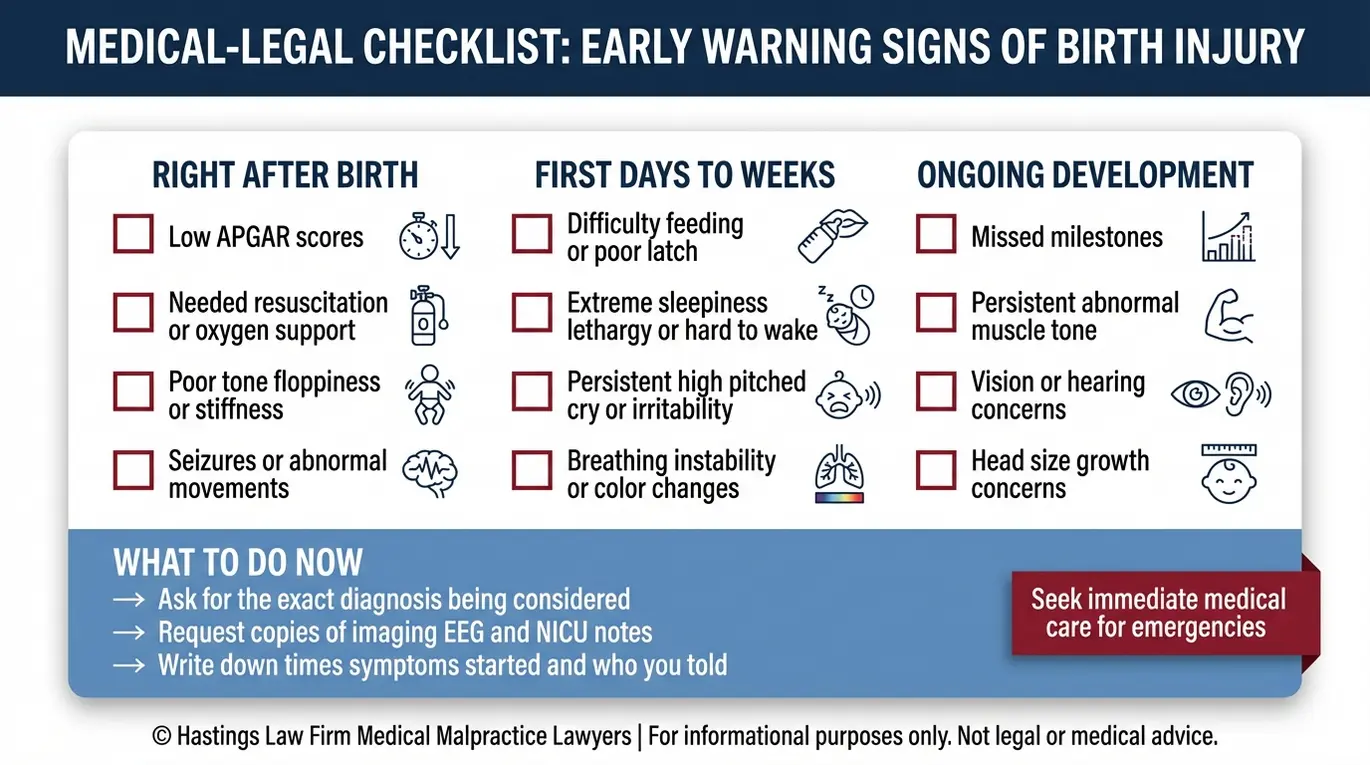
Signs of an undiagnosed brain anomaly often include seizures, difficulty feeding, abnormal muscle tone (either floppiness or unusual stiffness), and delayed developmental milestones. Some of these indicators appear within minutes of birth. Others surface gradually over days or weeks, making them easier for providers to overlook or dismiss. We review these clinical indicators to understand when a diagnosis should have occurred.
Signs That May Appear in the Delivery Room
- History of fetal distress indicated on monitoring equipment during labor
- Low APGAR scores, a quick assessment given at one and five minutes after birth that rates a newborn’s heart rate, breathing, muscle tone, reflexes, and skin color
- Need for resuscitation or breathing support immediately after delivery
- Neonatal seizures, which are abnormal electrical discharges in the brain that may cause rhythmic jerking, eye fluttering, or episodes of apnea in the first hours of life
- Weak or absent cry
- Bluish skin color or poor circulation
Signs That May Develop in the Days or Weeks After Birth
- Difficulty latching or persistent feeding problems
- Excessive lethargy or difficulty waking for feedings
- Abnormal posturing or arching of the back
- Tremors or jitteriness unrelated to cold or hunger
- Failure to track objects visually or respond to sound
Many parents describe a persistent feeling that “something is wrong” even when hospital staff reassure them. That instinct matters. If you raised concerns about your newborn’s behavior or condition and were told not to worry, that interaction may be documented in the medical record. Parents are often the first to notice subtle changes in their child’s temperament or physical ability that a rotating hospital staff might miss. A Texas infant brain anomaly misdiagnosis lawyer can examine those records to determine whether signs of infant brain damage were present but not properly evaluated.
An undiagnosed brain defect attorney looks at the full picture: what the medical team observed, what tests were or were not ordered, and whether the provider’s response matched what the clinical signs demanded.
The Hastings Law Firm Difference
Results matter, but what truly sets us apart is how we achieve them. Every verdict, every settlement, and every Texas courtroom victory comes from one guiding promise: To treat each client’s fight for justice as if it were our own.
This balance of skill, experience, and empathy reflects our core philosophy that justice should not only compensate the injured, but also make healthcare safer nationwide.

The Critical Importance of Early Detection and Treatment
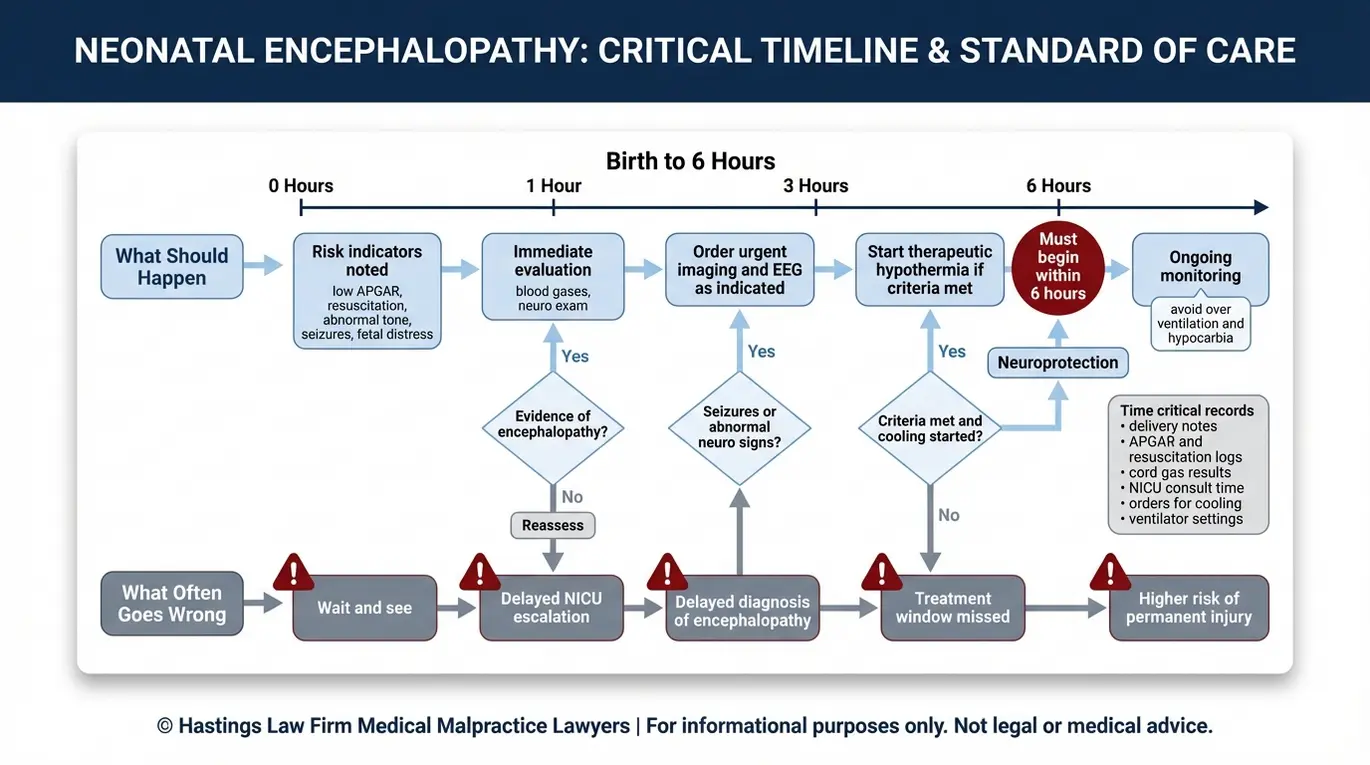
Early diagnosis is essential because specific treatments, such as therapeutic hypothermia, are only effective within a strict time window following birth to reduce permanent brain damage. When a healthcare provider misses or delays the diagnosis, that narrow opportunity to prevent permanent brain damage can be lost entirely.
The 6-Hour Window for Therapeutic Hypothermia
Therapeutic hypothermia, sometimes called cooling therapy, is a treatment where a newborn’s body temperature is carefully lowered to slow the progression of brain cell death after oxygen deprivation. According to the National Center for Biotechnology Information (NCBI Bookshelf), this treatment must begin within approximately six hours of birth to provide effective neuroprotection. After that window closes, the therapy loses effectiveness, and the damage from HIE may become irreversible.
A missed brain diagnosis carries high stakes. If a provider fails to recognize fetal distress, delayed breathing, or other indicators of oxygen deprivation, the infant may never receive the one treatment proven to limit the injury.
Over-Ventilation and the Risk of Hypocarbia
Even when a newborn’s condition is recognized, improper management of care can cause additional harm. Over-ventilation during resuscitation or neonatal intensive care can lead to hypocarbia, an abnormally low level of carbon dioxide in the blood. Hypocarbia causes blood vessels in the brain to constrict, further reducing oxygen delivery to already vulnerable tissue. Research tracked through the ClinicalTrials.gov study on transcutaneous carbon dioxide monitoring during therapeutic hypothermia highlights the clinical importance of careful CO2 management in these fragile patients.
| Treatment / Risk | Time Sensitivity | Why It Matters |
|---|---|---|
| Therapeutic hypothermia for HIE | Must begin within ~6 hours of birth | Only proven intervention to reduce brain cell death from oxygen deprivation |
| MRI or cranial ultrasound for brain bleed | Typically needed within first 24–72 hours | Identifies IVH or PVL before symptoms worsen |
| CO2 monitoring during ventilation | Continuous during respiratory support | Prevents hypocarbia, which can worsen brain injury |
A newborn misdiagnosis attorney examines whether the medical team acted within these critical timeframes. As a Texas infant brain anomaly misdiagnosis lawyer, we review the clinical timeline to determine if the standard of care required earlier action.
Establishing Liability for Diagnostic Errors and Systemic Failures
Liability extends beyond the attending physician to include nurses, radiologists, and the hospital itself if systemic failures contributed to the misdiagnosis. Our legal team includes former defense attorneys and experienced hospital nurses who understand how these systemic failures are often documented and where to find the evidence.
Physician Liability
Physician liability involves evaluating the specific medical decisions made by doctors during labor and delivery. An obstetrician or pediatrician may be liable if they misinterpreted ultrasound findings or failed to order follow-up imaging. Liability also applies if they ignored signs of fetal distress, which can indicate that the baby is not tolerating labor. A radiologist who misreads a brain scan may also bear responsibility for a missed diagnosis.
Hospital and Administration Liability
Hospital liability involves looking at the facility’s responsibility for providing a safe environment and adequate resources. Hospitals can be held liable for institutional problems that create conditions for error. This is often referred to as systemic negligence. We examine staffing records, equipment logs, and internal policies as part of our investigation.
The Limits of Prenatal Screening
Prenatal screening helps estimate the risk of certain conditions during pregnancy but is not a definitive diagnosis. Screening tests estimate risk but can produce false negatives, meaning a condition is present but the test does not flag it. If a provider relied solely on a screening result without ordering a diagnostic test follow-up when clinical indicators warranted one, such as after a placental abruption, that decision may constitute medical negligence.
Parties that may share liability include:
- The delivering obstetrician or midwife
- Neonatologists or pediatricians involved in post-delivery care
- Radiologists responsible for reading imaging studies
- Nursing staff who failed to document or communicate changes in the infant’s condition
- The hospital or medical facility for nursing negligence or policy failures
A Texas infant brain anomaly misdiagnosis lawyer evaluates each provider’s role individually. As a hospital negligence lawyer, we look at whether the system itself failed your child, not just whether one doctor made a single error.
How We Prove Medical Negligence in Misdiagnosis Cases
Proving negligence requires clear evidence that the healthcare provider breached the accepted standard of care and that this breach directly caused the infant’s worsened condition. In Texas, this process follows a defined legal framework and depends heavily on qualified medical expert analysis.
Defining the Standard of Care
The standard of care acts as the legal baseline for evaluating whether medical treatment was acceptable. It is the level of treatment that a reasonably competent physician, with similar training and experience, would have provided under the same circumstances. For a pediatrician evaluating a newborn showing neurological symptoms, the standard may require ordering specific imaging.
This imaging often includes a cranial ultrasound, which uses sound waves to visualize the brain. Doctors may also order an electroencephalogram, or EEG, to measure electrical activity and detect seizures or other abnormalities.
Expert Testimony
Expert testimony is required in Texas malpractice cases to provide a professional opinion on medical errors. Under Texas Civil Practice and Remedies Code Chapter 74, a patient must provide a qualified expert report within 120 days of filing a medical malpractice lawsuit. This report must identify the standard of care, explain how it was violated, and describe how that violation caused the injury. Our team works with a national network of medical expert witnesses to build this foundation from day one.
Building the Evidence
We gather and analyze various medical records to prove that a diagnostic error occurred. We approach standard of care evidence by examining the full clinical record to reconstruct what happened and when. The evidence we rely on typically follows a priority structure:
- Electronic fetal monitoring strips showing the baby’s heart rate patterns during labor
- Imaging studies (MRI, cranial ultrasound, EEG) and their corresponding radiology reports
- Lab results including blood gas values and metabolic panels
- Nursing notes and physician orders documenting clinical observations and response times
- Hospital protocols for escalation, transfer, and neonatal emergencies
Proving medical malpractice in a misdiagnosis case requires establishing that a professional duty existed, that a breach of that duty occurred, and that causation links the error to the injury. As a Texas infant brain anomaly misdiagnosis lawyer, we prepare every case with trial-level evidence from the start.
Securing Compensation for Long Term Care Needs
Compensation in brain anomaly cases is designed to cover the lifetime cost of care, including medical treatment, therapies, adaptive equipment, and loss of future earning capacity. Because many of these injuries require support for decades, the damages in an infant brain injury case must account for the lifetime cost of care that extends well into adulthood.
Economic Damages
Economic damages cover the specific financial losses your family faces due to medical errors:
- Past and future medical costs, including surgeries, hospitalizations, and medications
- Rehabilitation and therapy costs (physical, occupational, and speech therapy)
- In-home nursing care or assisted living support
- Adaptive equipment such as wheelchairs, communication devices, and home modifications
- Loss of earning capacity if the child’s disability prevents future employment
Non-Economic Damages
Non-economic damages address the intangible impact of an injury on the child’s quality of life:
- Physical pain and suffering
- Mental anguish experienced by the child and family
- Loss of enjoyment of life and diminished quality of daily experience
- Disfigurement or physical impairment
A Texas infant brain anomaly misdiagnosis lawyer works to ensure that compensation for infant brain injury reflects the true scope of what your family will face over a lifetime, not just the bills you have today. Damages for birth defects must be calculated with precision, and that requires specialized planning.
The Role of Life Care Planners
Life care planners help us project the long-term financial needs for a child with a brain injury. We work with these specialists to build a detailed projection of your child’s future needs. A life care plan maps out every anticipated cost, including therapies, equipment, and medical appointments over 50 or more years. Accounting for these future costs is essential to ensure the settlement keeps pace with inflation and rising healthcare prices. This document becomes a central piece of evidence in demonstrating the full scope of financial damages.
Contact the Texas Birth Injury Attorneys at Hastings Law Firm Today for Help
If your child has suffered because a healthcare provider failed to diagnose a brain anomaly, you do not have to face the insurance companies or hospital legal teams on your own. The medical records hold answers, and our team knows how to find them.
Our team provides the support and experience needed to handle medical malpractice claims. Hastings Law Firm offers a free, confidential case evaluation led by experienced patient advocates. Our legal team includes former defense attorneys, in-house nurse consultants, and board-certified advocates. We operate on a contingency fee basis, which means you pay nothing unless we secure a recovery for your family.
Founder Tommy Hastings, a board-certified trial attorney recognized as a Texas Super Lawyer since 2013, is Board Certified in Personal Injury Trial Law by the Texas Board of Legal Specialization. Every case we accept is prepared as if it will go to trial.
Contact our Texas infant brain anomaly misdiagnosis lawyer team today. Let us review what happened and help you understand your options.
Frequently Asked Questions About Infant Brain Anomaly Misdiagnosis in Texas


This content was researched and written by the Hastings Law Firm editorial team, which includes attorneys, medical professionals, and experienced researchers. Our writing is informed by internal knowledge and practical experience, and we cross-check critical details against authoritative sources cited throughout. Every piece undergoes human-led fact-checking and legal review. Because legal and medical information can change, if you spot an error, please contact us. Learn more about our content standards and review process on our editorial policy page.

Tommy Hastings, founder of Hastings Law Firm, is a board-certified personal injury trial lawyer dedicated exclusively to healthcare injury cases. Since 2001, he has represented injured patients and families in litigation against major hospital systems, pharmaceutical companies, and negligent healthcare providers nationwide. He has handled numerous high-profile cases that have drawn national media attention and resulted in multi-million dollar recoveries. He draws on that experience in his writing, helping readers understand how these cases work and what options may be available to them.
