


Texas Meconium Aspiration Syndrome Lawyer
Written by: Hastings Law Firm | Reviewed by: Tommy Hastings | Updated: July 27, 2026
Meconium Aspiration Syndrome can leave families overwhelmed when a newborn struggles to breathe after delivery. MAS happens when meconium mixes with amniotic fluid and enters the lungs, which can cause airway blockage, inflammation, and serious oxygen problems. The risk can rise when fetal distress is present and the response during labor and the first hours after birth is delayed or incomplete. Understanding how monitoring, documentation, and timely escalation of care affect outcomes can help families make informed decisions. If you or a loved one were harmed or worse due to meconium aspiration syndrome malpractice in Texas, contact Hastings Law Firm for a free, confidential case review.

Top Rated Legal Representation for Infant Lung Injuries in Texas
What You Should Know About Infant Meconium Injury Claims in Texas:
- Severe Meconium Aspiration Syndrome can lead to life threatening respiratory failure and lasting harm when oxygen deprivation is prolonged.
- Liability often turns on whether fetal distress and meconium stained fluid were recognized and acted on promptly during labor and delivery.
- Options can narrow quickly when Texas malpractice requirements are missed, since a case can be dismissed before the facts are heard.
- Recovery for non economic harm can be limited under Texas law, while economic losses for medical care and future needs are not capped.
- Disputes commonly focus on whether the care team escalated to emergency delivery when fetal heart rate patterns were non reassuring.
- Outcomes can worsen when post birth respiratory decline is not treated with timely escalation from basic support to advanced interventions.
- Long term complications can extend beyond the lungs, including persistent pulmonary hypertension and brain injury tied to hypoxia.
- Clarity about what happened can depend on objective records such as fetal monitoring strips, nursing notes, physician orders, imaging, and blood gas results.

A Healthcare Focused Law Firm
When your newborn is diagnosed with Meconium Aspiration Syndrome, the fear and confusion can be overwhelming. You may be asking whether the doctors and nurses did everything they should have during labor and delivery, or whether something was missed that could have prevented your baby’s injury. Those questions deserve honest answers.
At Hastings Law Firm, we focus exclusively on medical malpractice cases, including birth injuries caused by failures in monitoring and delivery management. Our founder, Tommy Hastings, is Board Certified in Personal Injury Trial Law by the Texas Board of Legal Specialization. Our legal and medical team works together to examine what happened, identify where the standard of care may have been breached, and determine whether your family has a path to compensation.
If your child suffered lung damage or other complications from MAS, a Texas Meconium Aspiration Syndrome Lawyer at our firm can review your case at no cost. Contact us for a free, confidential evaluation to understand your options.
Understanding Meconium Aspiration Syndrome and Medical Liability
Meconium Aspiration Syndrome (MAS) occurs when a newborn inhales a mixture of meconium and amniotic fluid into the lungs, causing respiratory distress, chemical pneumonitis, or airway obstruction. Meconium, an infant’s first stool consisting of a thick, dark substance that normally passes after birth, poses a severe risk when released prematurely. When a baby passes meconium while still in the womb, it can mix with the surrounding amniotic fluid and enter the airways during the baby’s first breaths.
The presence of meconium in utero is often a sign of fetal distress, meaning the baby may be experiencing oxygen deprivation or other physiological stress. Detection during labor should immediately raise the level of concern for the medical team.
Once meconium enters the lungs, it can trigger a chain of harmful events. The thick substance can physically block smaller airways, making it difficult for the baby to breathe. It also inactivates surfactant, the natural coating that keeps the lungs’ tiny air sacs open. Meconium also causes chemical pneumonitis, an inflammatory reaction in the lung tissue driven by bile acids and enzymes in the stool. According to a detailed review on meconium aspiration syndrome from pathophysiology to treatment (PubMed Central), this combination of obstruction, surfactant damage, and inflammation is what makes Meconium Aspiration Syndrome (MAS) potentially life-threatening.
Several known risk factors increase the likelihood of meconium passage and aspiration:
- Post-term pregnancy (delivery after 42 weeks of gestation)
- Maternal hypertension or preeclampsia
- Prolonged or difficult labor
- Placental insufficiency
- Maternal diabetes or infection
While the presence of any of these risk factors does not automatically mean negligence occurred, it requires vigilance. The medical team should have been providing heightened monitoring throughout labor to detect any further signs of compromise. When providers know these risks exist and fail to adjust their care accordingly, a Texas MAS birth injury attorney can evaluate whether that failure caused or worsened the baby’s injury.
Pathophysiology of Severe MAS
In severe cases of meconium aspiration syndrome (MAS), the lung damage goes beyond simple airway blockage. When meconium reaches the deeper portions of the lungs, it triggers a cytokine inflammatory response, often exacerbated by MIAC (microbial invasion of the amniotic cavity) if infection is present. This cascade involves chemical pneumonitis, an intense tissue reaction, and immune signals that cause widespread swelling and tissue damage in the lung. This inflammatory process can destroy the delicate lining of the air sacs, further impairing the baby’s ability to exchange oxygen and carbon dioxide.
Surfactant inactivation, the process by which meconium breaks down the protective coating inside the lungs, makes the air sacs collapse with each breath. The baby then has to work significantly harder to breathe, and in many cases, mechanical ventilation becomes necessary. The combination of airway obstruction, chemical pneumonitis, and surfactant failure is what elevates MAS from a manageable condition to a medical emergency requiring immediate and aggressive treatment.
When Does Meconium Aspiration Constitute Medical Malpractice
Medical malpractice occurs when healthcare providers fail to meet the standard of care, the accepted level of treatment a reasonably competent professional would have provided under similar circumstances, by ignoring signs of fetal distress or failing to intervene when meconium is present, resulting in preventable harm to the infant.
Not every case of meconium aspiration is the result of negligence. Meconium passage can happen even in well-managed deliveries. What determines liability is the medical team’s response to the situation, specifically whether they recognized the warning signs, acted on them promptly, and followed established clinical protocols.
Fetal heart rate (FHR) monitoring, the continuous electronic tracking of the baby’s heartbeat during labor, is one of the most important tools for detecting distress. Patterns such as late decelerations, reduced variability, or prolonged bradycardia can indicate that the baby is not tolerating labor. When these patterns appear alongside meconium-stained amniotic fluid, the standard of care generally requires the team to escalate their response quickly. This breach of duty often involves ignoring signs of fetal distress when the team should be preparing for or performing an emergency cesarean delivery.
A Texas Meconium Aspiration Syndrome Lawyer examines the timeline of events during labor and delivery to determine where breakdowns may have occurred. Our team, which includes in-house nurses and former defense attorneys, reviews fetal monitoring strips, nursing notes, and physician orders to identify gaps between what was happening clinically and how the team responded.
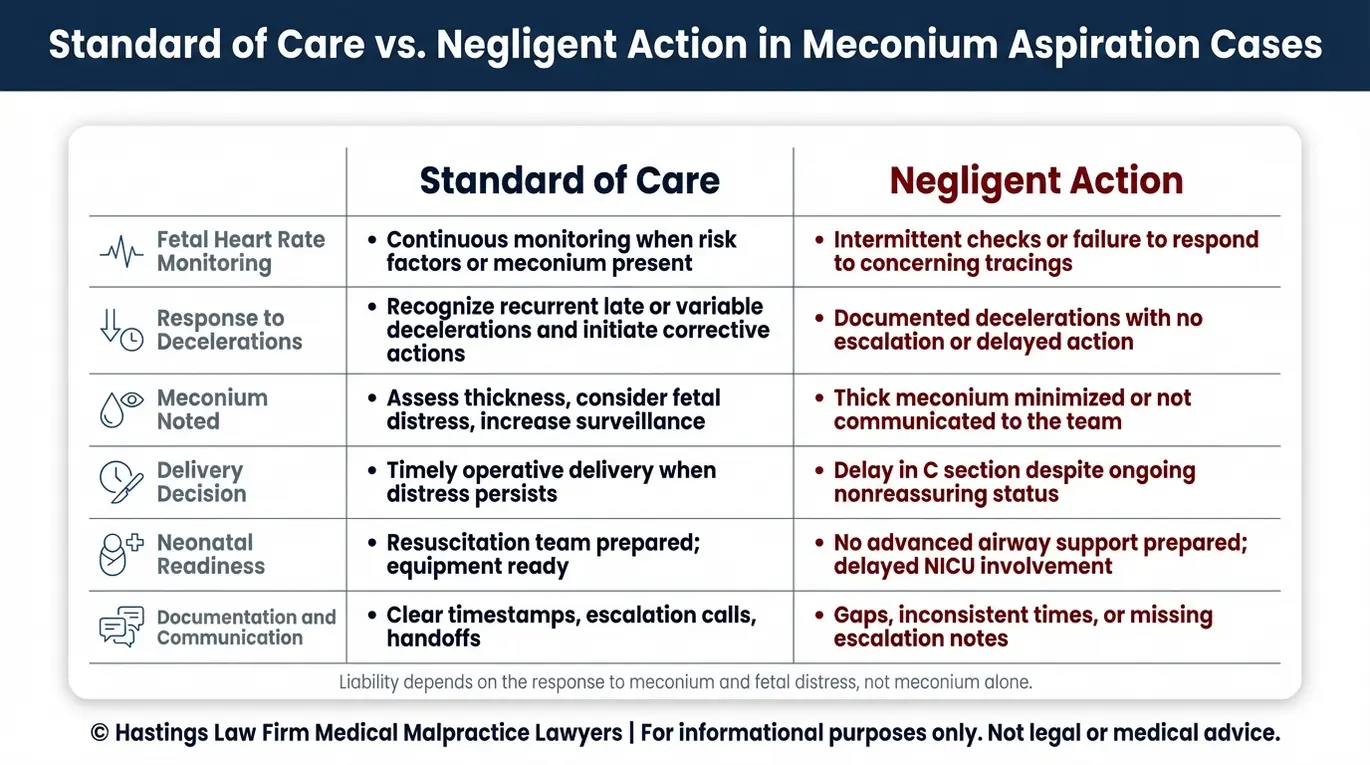
The following table illustrates the contrast between the expected standard of care and examples of actions that may constitute negligence:
| Standard of Care | Potentially Negligent Action |
|---|---|
| Continuous fetal heart rate monitoring during labor | Intermittent or absent monitoring when risk factors are present |
| Prompt recognition and documentation of FHR abnormalities | Ignoring or failing to act on late decelerations or reduced variability |
| Communication of concerns to the attending physician | Delayed notification of the doctor when fetal distress worsens |
| Timely decision to perform a C-section when distress is evident | Prolonged attempts at vaginal delivery despite non-reassuring fetal status |
| Preparation for neonatal resuscitation when thick meconium is noted | Failure to have a neonatal team present at delivery |
| Amnioinfusion or close observation when meconium is detected | No change in management after meconium-stained fluid is identified |
MAS malpractice lawyers in Texas use this type of comparison to build a case showing that the provider’s actions fell below what was expected, and that this failure directly contributed to the baby’s injuries.
The Hastings Law Firm Difference
Results matter, but what truly sets us apart is how we achieve them. Every verdict, every settlement, and every Texas courtroom victory comes from one guiding promise: To treat each client’s fight for justice as if it were our own.
This balance of skill, experience, and empathy reflects our core philosophy that justice should not only compensate the injured, but also make healthcare safer nationwide.

Recognizing the Signs of Negligent Care and MAS Symptoms
Signs of MAS include rapid breathing, grunting, cyanosis (a bluish discoloration of the skin), and low Apgar scores immediately after birth, often requiring immediate NICU admission. Recognizing these symptoms quickly, and documenting them accurately, is essential both for the baby’s treatment and for any future legal evaluation of the care that was provided.
In the delivery room, the earliest indicators that something may be wrong include limpness or poor muscle tone, a low heart rate, weak or absent crying, and visible meconium staining of the skin or umbilical cord. According to the Meconium Aspiration entry on the NCBI Bookshelf, the clinical presentation can range from mild respiratory difficulty to severe respiratory failure depending on the volume and consistency of the aspirated meconium.
Diagnostic confirmation typically involves chest X-rays, which may show patchy infiltrates, areas of hyperinflation, or a flattened diaphragm. Blood gas analysis can reveal low oxygen levels and elevated carbon dioxide, indicating the lungs are not functioning properly. These tests are usually performed shortly after birth when a baby shows signs of distress.
An Apgar score, a quick assessment given at one and five minutes after birth that rates the baby’s heart rate, breathing, muscle tone, reflexes, and skin color on a scale of zero to ten, is one of the first data points recorded. However, Apgar scores can sometimes be misleading, reflecting a momentary status rather than the cumulative stress the infant endured. Our medical team at Hastings Law Firm knows that chart entries can contain inconsistencies, and we review these scores alongside the full clinical picture to determine whether documentation accurately reflects the baby’s condition at birth.
Here is a checklist of the signs and symptoms an infant lung injury attorney may evaluate when reviewing a potential MAS case:
- Meconium-stained amniotic fluid noted during labor or delivery
- Low Apgar scores at one and/or five minutes
- Rapid, labored, or irregular breathing (tachypnea)
- Grunting or nasal flaring with each breath
- Cyanosis or pale skin color
- Poor muscle tone or limpness at birth
- Immediate need for supplemental oxygen or resuscitation
- NICU admission within the first hours of life
- Chest X-ray findings consistent with aspiration
Emergency Interventions and Failure to Treat
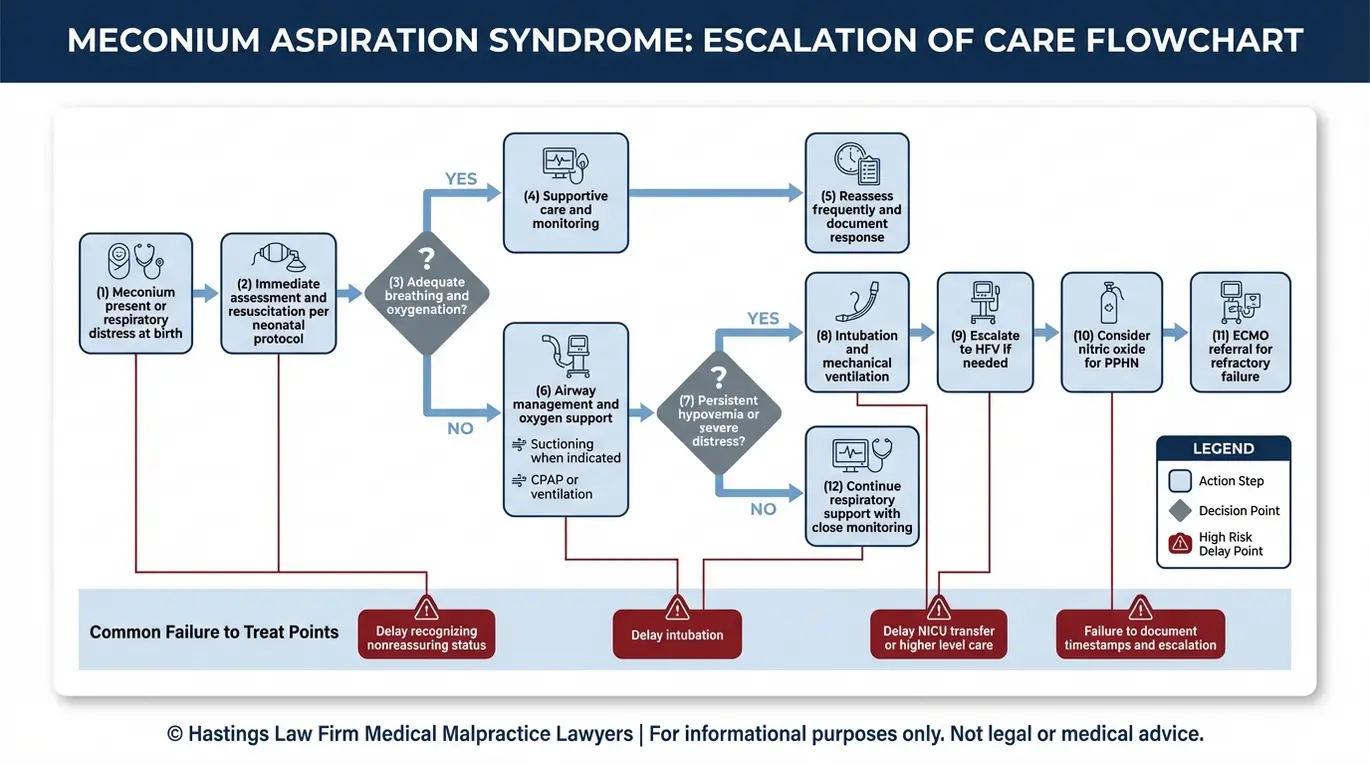
Proper treatment for MAS ranges from suctioning and oxygen therapy to advanced interventions like inhaled nitric oxide or ECMO, depending on the severity of the aspiration. The speed and appropriateness of the medical team’s response to meconium aspiration in the first minutes and hours after birth can significantly affect the baby’s outcome. Without timely intervention, advanced respiratory complications can rapidly develop.
According to the Neonatal Resuscitation guidelines in the Merck Manual Professional Edition, initial resuscitation steps focus on clearing the airway and supporting breathing. Current Neonatal Resuscitation Program (NRP) guidelines no longer recommend routine intubation and direct tracheal suctioning for non-vigorous infants born through meconium-stained amniotic fluid. Instead, initial resuscitation should follow the same steps used for any newborn, including warming, clearing the airway as needed, and initiating positive pressure ventilation if the infant is not breathing or the heart rate is low. Supplemental oxygen is provided as needed to maintain adequate blood oxygen levels.
When basic measures are not enough, care should be escalated. The standard treatment pathway for MAS may include:
- Suctioning of the airway to remove visible meconium
- Supplemental oxygen delivered by mask or nasal cannula
- CPAP (Continuous Positive Airway Pressure) to keep the airways open
- Mechanical ventilation, using a ventilator for infants unable to breathe adequately on their own
- High-Frequency Oscillatory Ventilation (HFV) for severe cases unresponsive to conventional ventilation
- Inhaled nitric oxide (iNO), a gas therapy that relaxes blood vessels in the lungs to improve oxygen delivery
- Surfactant replacement therapy to restore the lung’s natural protective coating
- ECMO (Extracorporeal Membrane Oxygenation), a form of heart-lung bypass that oxygenates the blood outside the body when the lungs cannot function on their own
ECMO is reserved for the most severe cases where other interventions have failed. Data from the Extracorporeal Life Support Organization Registry International Summary Report 2009–2022 (PubMed Central) shows that ECMO can be lifesaving. However, needing this support often indicates significant lung and potentially brain injury. Delays in escalating care, whether from failure to recognize worsening respiratory status or from lack of equipment and trained staff, can be the difference between recovery and permanent harm.
A Texas birth injury lawyer evaluates the treatment timeline closely. We look at whether each escalation step was taken when it should have been, or whether gaps in the response allowed the baby’s condition to deteriorate unnecessarily.
Long Term Complications of Untreated MAS
Meconium aspiration syndrome (MAS) that is not treated promptly can cause damage extending beyond the lungs. One of the most serious complications is persistent pulmonary hypertension of the newborn (PPHN), a condition in which the blood vessels in the baby’s lungs remain constricted after birth, forcing the heart to work harder and severely reducing oxygen delivery to the rest of the body.
Prolonged oxygen deprivation, known as hypoxia, can lead to brain injury. In the most severe cases, this results in Hypoxic-Ischemic Encephalopathy (HIE), a condition that can cause lasting neurological damage. Some children develop cerebral palsy, a group of movement and posture disorders caused by damage to the developing brain. Others may face chronic lung disease, developmental delays, learning disabilities, or seizure disorders that require ongoing medical care for years or even a lifetime.
The connection between the initial lung injury and these broader systemic complications is a central part of building a strong legal case. Establishing that a delay in treatment or a failure to escalate care directly contributed to brain damage or PPHN is essential to securing appropriate compensation.
Damages and Compensation for Families of Injured Infants
Families may recover economic damages for past and future medical care, as well as non-economic damages for pain, suffering, and physical impairment under Texas law. When a child’s injury results from medical negligence, the financial impact on a family can be staggering, and the legal system provides a framework for holding responsible parties accountable.
A Texas Meconium Aspiration Syndrome Lawyer works with medical experts and life-care planners to calculate the full scope of what a family will need after a birth injury. These cases are not just about reimbursing bills that have already been paid. They are about anticipating the future medical costs that lie ahead and making sure the child’s future is protected. A fair settlement or verdict must account for every aspect of the child’s needs.
Economic damages cover the measurable financial losses a family has incurred and will continue to incur. These may include:
- NICU hospitalization and associated medical bills
- Surgical procedures and ongoing specialist care
- Physical, occupational, and speech therapy
- Home nursing care or personal attendant services
- Specialized medical equipment (ventilators, wheelchairs, adaptive devices)
- Special education and developmental support programs
- Lost earning capacity if the child’s injuries prevent future employment and financial independence
Non-economic damages address the human cost of the injury, things that cannot be reduced to a dollar figure but are recognized under the law:
- Physical pain and suffering experienced by the child
- Mental anguish for both the child and the parents
- Physical impairment and loss of function
- Disfigurement
- Loss of enjoyment of life
In cases where the infant does not survive, Texas wrongful death law allows parents to pursue a claim for the loss of their child. This includes compensation for MAS birth injury losses such as funeral expenses, mental anguish, and the loss of the parent-child relationship. These are among the most difficult cases we handle, and we approach them with the care and sensitivity they require.
The goal of seeking damages is not just financial recovery. It is about securing the resources your child needs to have the best quality of life possible, and making sure the providers responsible are held accountable.
Navigating Texas Medical Malpractice Laws
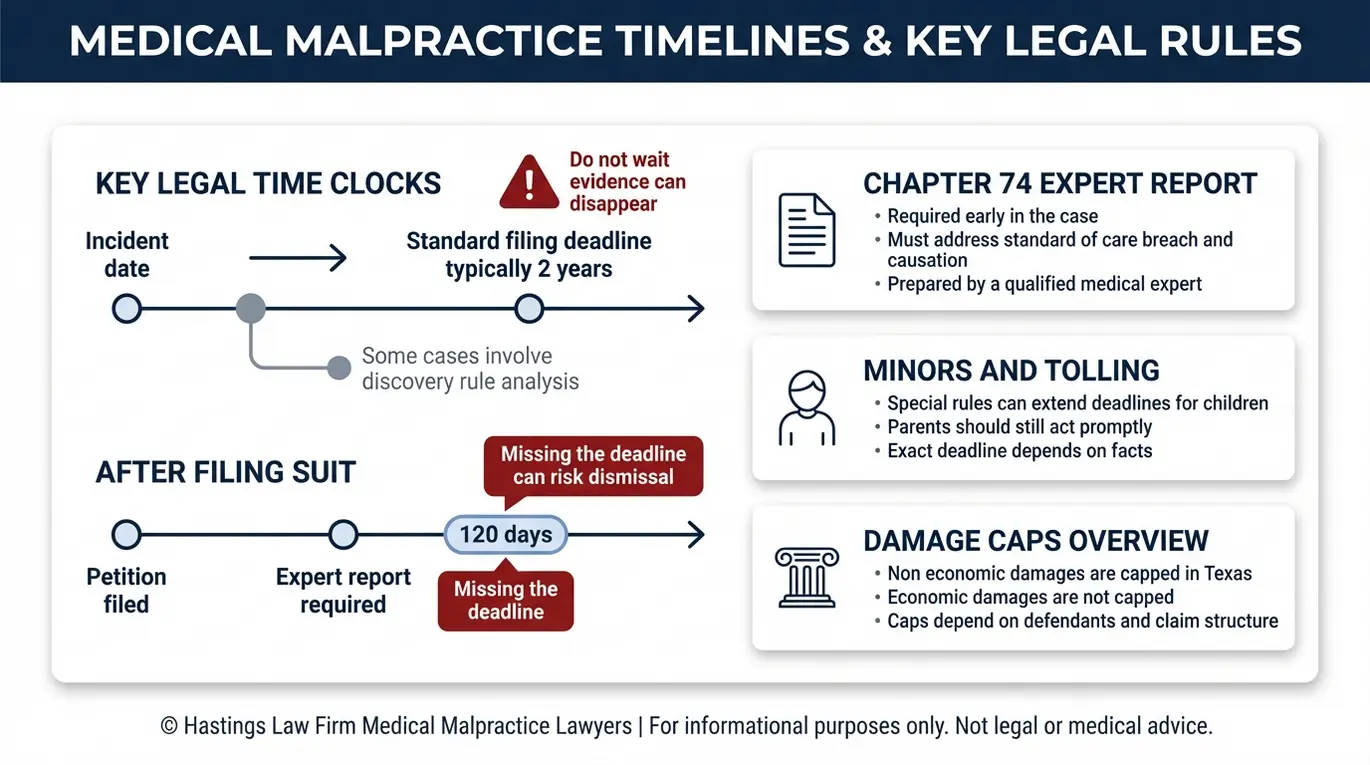
Texas imposes strict deadlines and procedural requirements on malpractice claims, including a two-year statute of limitations and the requirement for expert reports under Chapter 74 of the Texas Civil Practice and Remedies Code. Understanding these rules is essential when pursuing a medical malpractice claim in Texas because failing to comply with even one of them can result in your case being dismissed before the facts are ever heard.
Statute of Limitations: Under Texas law, a medical malpractice claim must generally be filed within two years of the date the negligence occurred, or within two years of the date it was reasonably discovered. For birth injuries involving children, there is an important exception. Through a legal principle known as minor tolling, the statute of limitations may be paused for minors under age 12, potentially allowing a claim to be filed on the child’s behalf until they reach age 14. Even with this extension, it is important to act sooner rather than later. Medical records can be altered or lost, and the memories of key witnesses fade over time.
Chapter 74 Expert Report Requirement: Texas law requires that within 120 days after each defendant files an original answer to a medical malpractice lawsuit, the plaintiff must serve a written expert report for that defendant. This report must be authored by a qualified medical professional and must outline the applicable standard of care, how it was breached, and how that breach caused the patient’s injury. This functions as a gatekeeper provision, meaning if the report is not timely filed or is deemed insufficient, the court can dismiss the case entirely. The full requirements are outlined in the Texas Civil Practice and Remedies Code Chapter 74.
Damage Caps: Texas law caps non-economic damages in medical malpractice cases at $250,000 per claimant against all physicians and individual healthcare providers combined, and $250,000 per claimant against each healthcare institution (up to $500,000 total for multiple institutions). When a case involves both individual providers and institutions, the total non-economic damages cap is $750,000. However, economic damages, covering medical bills, future care costs, therapy, and lost earning capacity, are not capped. In severe MAS cases involving lifelong care needs, economic damages often represent the largest portion of the recovery by a significant margin.
A Texas Meconium Aspiration Syndrome Lawyer at Hastings Law Firm understands medical malpractice laws in Texas and handles every procedural requirement so families can focus on their child’s health.
Why Choose Hastings Law Firm for Your Family
Hastings Law Firm offers a trial-ready approach with a team solely dedicated to medical malpractice, giving families the resources and experience needed to take on hospitals and their defense teams. We do not practice personal injury broadly. Every member of our team, from our attorneys to our in-house nurse consultants, focuses on one thing: holding negligent medical providers accountable for the devastation caused by birth injuries.
Here is what sets our firm apart:
- No cost upfront. We work on a contingency fee basis, meaning you pay no attorney fees or expenses unless we recover compensation for your family.
- Trial-ready from Day 1. We investigate and prepare every case as though it will be decided by a jury. That level of preparation puts pressure on the other side during settlement discussions and ensures we are never caught unprepared.
- In-house medical expertise. Our team includes nurse practitioners and Board Certified Patient Advocates who review medical records, interpret clinical data, and identify charting inconsistencies that other firms might miss.
- Former defense insight. Several members of our legal team previously defended hospitals and insurance companies. That background gives us a clear understanding of how the other side builds its case, so we can anticipate their strategy and counter it effectively.
- Board Certified leadership. Founder Tommy Hastings is Board Certified in Personal Injury Trial Law by the Texas Board of Legal Specialization, a distinction held by fewer than two percent of Texas attorneys. He is also a 2025 inductee into the American Board of Trial Advocates (ABOTA).
We provide a free case review to help you understand your rights without any financial risk. As a Texas Meconium Aspiration Syndrome Lawyer, our mission goes beyond financial recovery. We are here to help you find answers, hold the right people accountable, and make sure your child has the resources for the best possible future.
Contact the Texas Birth Injury Attorneys at Hastings Law Firm Today for Help
No amount of money can undo what happened to your child. But the right legal action can secure the medical care, therapy, and support your family needs going forward. It can also help ensure that what happened to your baby does not happen to another family.
If your child was diagnosed with Meconium Aspiration Syndrome and you believe the medical team’s response fell short, we want to hear from you. Our free, confidential case evaluation is led by a patient advocate and is designed to give you honest answers about whether you have a case, with no pressure and no obligation.
You do not need to have all the records or all the answers before reaching out. That is our job.
Contact Hastings Law Firm today to start your investigation. There is no fee unless we win.
Frequently Asked Questions About Meconium Aspiration Syndrome in Texas


This content was researched and written by the Hastings Law Firm editorial team, which includes attorneys, medical professionals, and experienced researchers. Our writing is informed by internal knowledge and practical experience, and we cross-check critical details against authoritative sources cited throughout. Every piece undergoes human-led fact-checking and legal review. Because legal and medical information can change, if you spot an error, please contact us. Learn more about our content standards and review process on our editorial policy page.

Tommy Hastings, founder of Hastings Law Firm, is a board-certified personal injury trial lawyer dedicated exclusively to healthcare injury cases. Since 2001, he has represented injured patients and families in litigation against major hospital systems, pharmaceutical companies, and negligent healthcare providers nationwide. He has handled numerous high-profile cases that have drawn national media attention and resulted in multi-million dollar recoveries. He draws on that experience in his writing, helping readers understand how these cases work and what options may be available to them.
