


Texas Maternal Wrongful Death Lawyer
Written by: Hastings Law Firm | Reviewed by: Tommy Hastings | Updated: July 27, 2026
Maternal wrongful death during pregnancy, childbirth, or postpartum recovery can leave families searching for clear answers about whether the care provided met accepted medical standards. Preventable failures such as missed warning signs, delayed treatment, poor monitoring, or breakdowns in hospital systems can lead to fatal outcomes and lasting harm for children and loved ones. Understanding how negligence is evaluated, who can bring a claim, and what losses may be recoverable can help families make informed decisions during an overwhelming time. If you lost a loved one due to maternal wrongful death in Texas, contact Hastings Law Firm for a free, confidential case review.

Compassionate Texas Medical Attorneys for Maternal Wrongful Death Claims
What You Should Know About Wrongful Death During Childbirth Claims in Texas:
- Accountability can depend on whether the care team met the accepted standard of care during pregnancy, labor, or postpartum recovery.
- Fatal outcomes can follow when urgent warning signs are dismissed or when monitoring and necessary interventions are delayed.
- Liability can extend beyond one clinician when understaffing, poor communication, inadequate training, or missing safety protocols contribute to a chain of failures.
- Eligibility to file a wrongful death claim in Texas is limited to the surviving spouse, children, and parents.
- Recovery options can be lost if filing deadlines are missed, even when evidence of negligence is strong.
- Compensation can include economic losses such as medical expenses and funeral costs and non economic losses such as mental anguish and loss of companionship.
- Non economic recovery can be limited by Texas damage caps in medical malpractice cases.
- Settlement decisions can permanently limit future recovery when a release is signed before the full scope of losses is evaluated.
- Access to key hospital information can be restricted by peer review privilege, even though factual records like incident reports and staffing logs may still be obtainable.
- Proving a breach and causation can hinge on qualified physician expert review and testimony.

A Healthcare Focused Law Firm
Losing a mother during pregnancy, childbirth, or postpartum recovery is a devastating tragedy, and when that loss was preventable, the grief can feel unbearable. If your family is facing this kind of pain, you likely have questions about what went wrong and whether the care your loved one received fell short of what she deserved.
You are not alone, and your instinct that something was not right matters. A Texas maternal wrongful death lawyer can help you understand what happened, determine whether medical negligence contributed to her death, and guide your family through the legal process of seeking accountability.
At Hastings Law Firm, our team focuses exclusively on medical malpractice. Founded by Tommy Hastings, who is board-certified in Personal Injury Trial Law by the Texas Board of Legal Specialization, we are here to listen, investigate, and explain your options. Contact us for a free, confidential consultation to discuss your family’s situation.
How Medical Negligence Leads to Preventable Maternal Death
Medical negligence occurs when a healthcare provider deviates from the accepted standard of care during pregnancy, labor, or postpartum recovery, directly resulting in the mother’s death. The standard of care is the level of treatment a reasonably competent medical professional would provide under similar circumstances. When an obstetrician, nurse, or hospital system fails to meet that standard, and that failure causes harm, it creates the foundation for a wrongful death claim.
Not every maternal death involves negligence. But a significant number of these deaths are preventable, and a lawyer for maternal death can help families uncover the truth. According to the HEAR HER Campaign from the CDC, urgent warning signs during and after pregnancy often go unrecognized or dismissed. When providers ignore a patient’s complaints, fail to monitor vital signs, delay necessary interventions, or mismanage known complications, the consequences can be fatal.
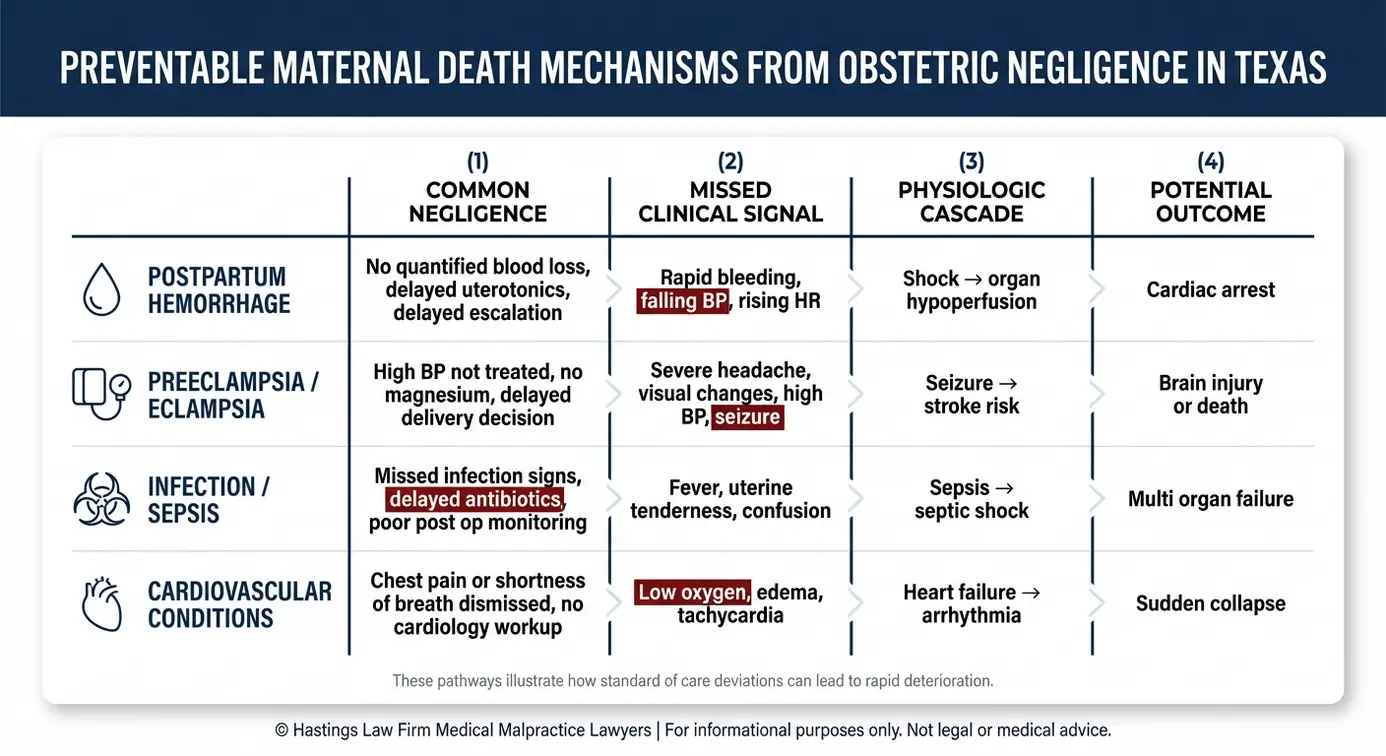
A Texas maternal wrongful death lawyer evaluates these cases by examining whether the medical team’s actions, or inactions, fell below what the standard of care required. Several conditions are commonly involved in preventable maternal deaths:
- Postpartum hemorrhage (PPH): Excessive bleeding after delivery that, if not quickly identified and treated, can lead to organ failure and death. PPH is one of the leading causes of maternal death, and delays in administering medication, performing surgery, or ordering blood products can be the difference between life and death.
- Preeclampsia and eclampsia: Preeclampsia, a pregnancy complication marked by dangerously high blood pressure and organ damage, most often affects the liver and kidneys. If left unmanaged, it can progress to eclampsia, which involves seizures that threaten the life of both mother and baby. Failure to monitor blood pressure, recognize lab abnormalities, or deliver the baby when indicated can all constitute negligence.
- Infection and sepsis: After delivery or a cesarean section, signs of infection such as fever, elevated heart rate, and abnormal lab values demand immediate attention. When providers fail to identify early signs of sepsis or delay antibiotics, the infection can become overwhelming and fatal.
- Cardiovascular conditions and cardiomyopathy: Heart-related complications, including peripartum cardiomyopathy, are a growing cause of maternal death. Symptoms like shortness of breath and chest pain may be dismissed as normal pregnancy discomfort, delaying life-saving cardiac evaluation.
- Amniotic fluid embolism (AFE): A rare but catastrophic event where amniotic fluid enters the mother’s bloodstream, triggering cardiac arrest or severe hemorrhage. While AFE itself may not be preventable, the medical response to it must be immediate and competent. Delays in performing an emergency C-section, an emergency cesarean delivery performed when the mother or baby is in acute distress, can worsen the outcome.
In each of these scenarios, the central legal question is the same: did the medical team do what a competent provider should have done, and did the failure to act cause the mother’s death? An attorney for wrongful death during childbirth works with qualified medical experts to reconstruct the timeline and answer that question.
Predictability of Postpartum Hemorrhage via Risk Assessment
Many postpartum hemorrhage-related maternal deaths are preventable when the standard of care requires providers to use established clinical risk assessment tools before and during delivery. Obstetric hemorrhage risk assessment, a standardized process for identifying patients at elevated risk for excessive bleeding based on factors like prior hemorrhage history, placental abnormalities, prolonged labor, or blood-clotting disorders, is essential for safety.
When these tools are used correctly, hospitals can prepare blood products, alert surgical teams, and put protocols in place before a crisis develops. When they are not used, or when the results are ignored, preventable bleeding can escalate rapidly.
A lawyer for maternal death examines whether the delivering hospital had hemorrhage protocols in place, whether the patient’s risk level was properly assessed, and whether the medical team responded according to those protocols. The failure to perform this basic risk evaluation can itself be evidence of negligence.
Texas Laws on Who Can File a Maternal Wrongful Death Claim
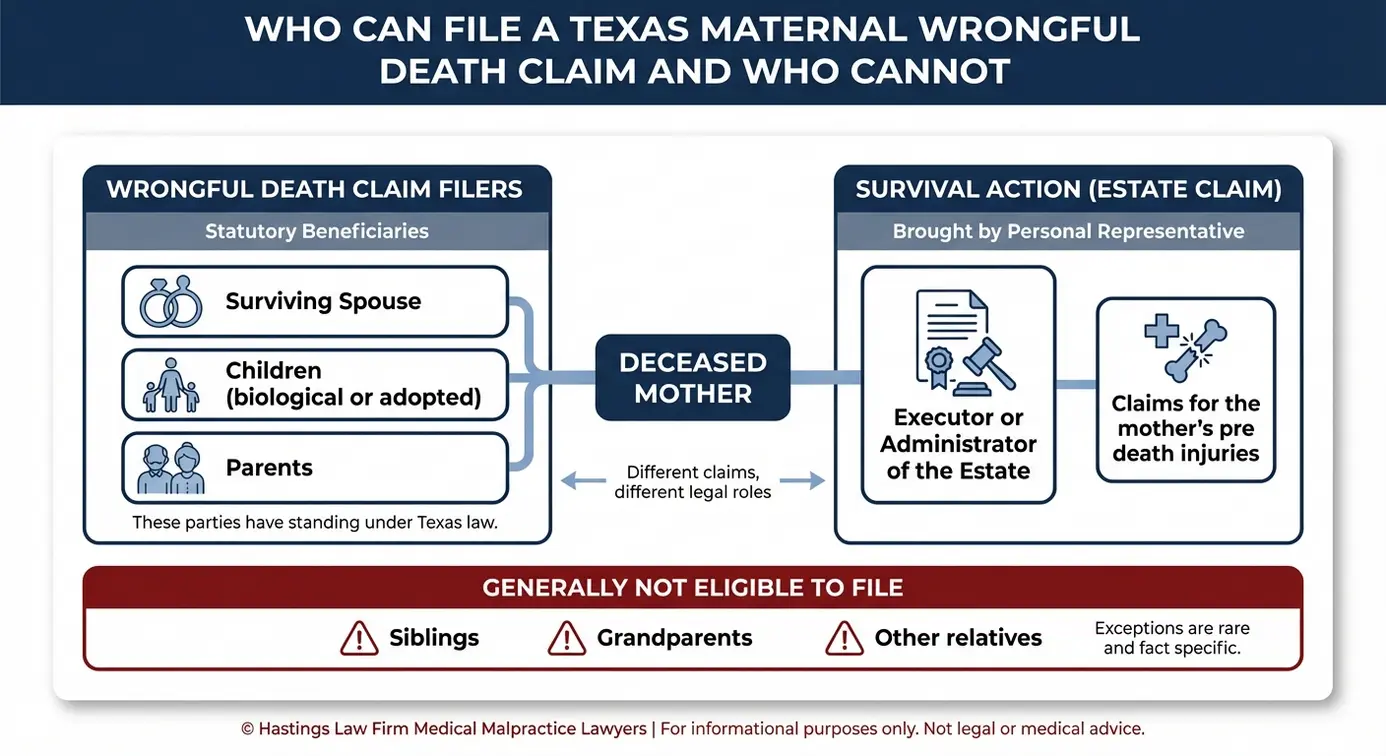
Under the Texas Wrongful Death Act, the surviving spouse, children, and parents of the deceased mother are the only parties eligible to file a wrongful death lawsuit; siblings and grandparents typically cannot file.
The eligible parties, known as statutory beneficiaries, include:
- Surviving spouse of the deceased mother
- Children of the deceased, including both biological and legally adopted children
- Parents of the deceased mother
These family members may file individually or together. Under Texas Civil Practice and Remedies Code Chapter 71, any beneficiary may bring the claim. If none do so within three months, the executor or administrator of the estate may file on their behalf.
There is also a separate but related legal action called a “survival action.” This is filed by the personal representative, or executor, the person legally authorized to manage the affairs of the mother’s estate. A survival action seeks compensation for the pain and suffering the mother herself experienced before her death, as well as any medical expenses incurred during that time. It is a distinct claim from the wrongful death action, which compensates the surviving family for their own losses, such as loss of companionship.
Understanding who can file and in what capacity is one of the first steps a maternal wrongful death attorney will clarify with your family. Texas law is specific about standing, and filing errors or missing the statute of limitations can jeopardize the claim.
Proposed legislation such as SB 2961 has been introduced in the Texas Legislature, reflecting ongoing legislative attention to wrongful death and survival claims. A Texas maternal death lawyer stays current on these developments to ensure your claim is handled under the most up-to-date legal framework.
The Hastings Law Firm Difference
Results matter, but what truly sets us apart is how we achieve them. Every verdict, every settlement, and every Texas courtroom victory comes from one guiding promise: To treat each client’s fight for justice as if it were our own.
This balance of skill, experience, and empathy reflects our core philosophy that justice should not only compensate the injured, but also make healthcare safer nationwide.

Investigating Hospital Safety Records and Proving Liability
Proving liability requires demonstrating that the hospital or physician breached the standard of care, often substantiated by internal safety records, staffing logs, and expert testimony. This process goes well beyond reviewing the surface-level medical chart. It demands a thorough investigation into the systems, decisions, and personnel involved in the mother’s care.
Maternal deaths rarely result from a single mistake. In many cases, there is a chain of failures across the hospital system. Understaffing, inadequate training on obstetric emergencies, poor communication between nurses and physicians, and the absence of evidence-based safety protocols can all contribute. Our legal team includes former defense attorneys who understand the methods hospitals use to evaluate these events.
A significant part of the investigation involves what we call “silent evidence,” the internal records that hospitals do not voluntarily disclose. Quality improvement reports, incident logs, committee reviews, and staffing schedules can reveal patterns of hospital negligence that the standard medical chart does not capture. Hospitals often assert that these documents are protected under peer review privilege, but we know how to identify factual data and incident reports that fall outside those protections.
Key types of evidence we examine include:
- Medical records, including nursing notes, physician orders, fetal monitoring strips, and medication administration logs
- Staffing schedules and nurse-to-patient ratios at the time of the event
- Internal hospital safety record and policies, and whether they were followed
- Records regarding informed consent and anesthesia errors
- Equipment maintenance and availability records
- Communication logs between care team members
Expert testimony is essential in these cases. Texas law requires that an independent, qualified physician review the case as an expert witness and provide an opinion on whether the standard of care was breached and whether that breach caused the death. Our firm works with a national network of top-tier medical experts across the U.S. who provide objective reviews and credible testimony. We also investigate specific medical emergencies, such as amniotic fluid embolism (AFE), a rare and catastrophic reaction triggered when amniotic fluid enters the mother’s bloodstream, or delays in an emergency C-section, a surgical delivery used in critical distress.
The 2024 Biennial Report from the Texas Maternal Mortality and Morbidity Review Committee and the Department of State Health Services provides valuable data on the scope and causes of maternal deaths in the state. This type of public health data can support a case by showing broader patterns of preventable death linked to the same types of failures under investigation.
Impact of Texas Abortion Laws on Standard of Care
Texas’s legal landscape around reproductive care has created a unique and troubling complication for maternal safety. The legal standard of care represents the level of medical attention a competent healthcare provider must offer under specific circumstances. Under Texas law and the Human Life Protection Act, physicians face potential criminal prosecution for performing certain procedures, which can lead to hesitation or delays in providing necessary, life-saving treatment.
Miscarriage management, the medical care provided to women experiencing pregnancy loss, including procedures like dilation and curettage (D&C), a surgical procedure used to remove tissue from the uterus, is a standard part of obstetric care. When a pregnancy is no longer viable and the mother’s health is at risk, timely intervention is part of the accepted standard of care. Yet legal ambiguity around these procedures may cause some providers to delay treatment while seeking legal guidance or waiting for a patient’s condition to worsen to the point where an exception clearly applies.
If that delay results in a maternal death, it can give rise to civil liability. A legal help for maternal death claim in this context examines whether the treating physician deviated from the medical standard of care because of legal uncertainty, and whether earlier intervention would have saved the mother’s life.
Damages and Compensation in Maternal Wrongful Death Cases
Recoverable damages in Texas include economic losses like funeral costs and lost income, as well as non-economic damages for the emotional pain, mental anguish, and loss of companionship suffered by the family. Securing fair maternal death compensation involves understanding these categories.
Economic damages compensate the family for financial losses that can be measured and documented:
| Category | What It Covers |
|---|---|
| Medical expenses | Bills for emergency treatment, hospitalization, and procedures incurred before the mother’s death |
| Funeral and burial costs | Expenses related to the funeral, burial, or cremation |
| Lost wages and earning capacity | The income the mother would have contributed to the household over her working life |
| Loss of household services | The economic value of the mother’s daily contributions to the home and family |
The American Time Use Survey from the U.S. Bureau of Labor Statistics provides data on how individuals allocate time to household and caregiving activities, which can help establish the economic value of a mother’s unpaid labor within the family.
Non-economic damages address losses that are deeply felt but harder to quantify, and an insurance company often tries to minimize these payouts:
| Category | What It Covers |
|---|---|
| Loss of companionship and society | The loss of the mother’s presence, guidance, and emotional bond, especially for young children |
| Mental anguish | The severe emotional distress experienced by the surviving family |
| Loss of love and comfort | The absence of the nurturing relationship the mother provided |
For children who will grow up without their mother, these damages carry particular weight. A wrongful death lawyer for mothers works with experts to present the full scope of what the family has lost, both financially and emotionally.
Exemplary (punitive) damages may also be available in rare cases involving gross negligence, where the provider’s conduct was so far below the standard of care that it demonstrated a conscious indifference to the patient’s safety. These damages are intended to deter similar conduct and are awarded in addition to economic and non-economic recovery.
Insurance Company Lowball Tactics
Families should be aware that hospitals and their insurance company may approach with settlement offers shortly after a maternal death. A settlement is a legal agreement where a party resolves a legal claim in exchange for a payment. These settlement tactics and early offers are often made before the full scope of damages has been evaluated and before the family has had time to consult with an attorney.
These initial offers typically do not reflect the true value of the claim. They may cover immediate expenses like funeral costs but fail to account for long-term lost income, the children’s future needs, or the non-economic harm to the family. Accepting an early settlement usually requires signing a release that permanently bars any future legal action.
This is why consulting with a maternal death compensation attorney early in the process is so important. Having legal representation ensures that any offer is measured against the full value of the claim, not just the hospital’s interest in resolving the matter quickly.
Texas Statute of Limitations for Childbirth Related Death
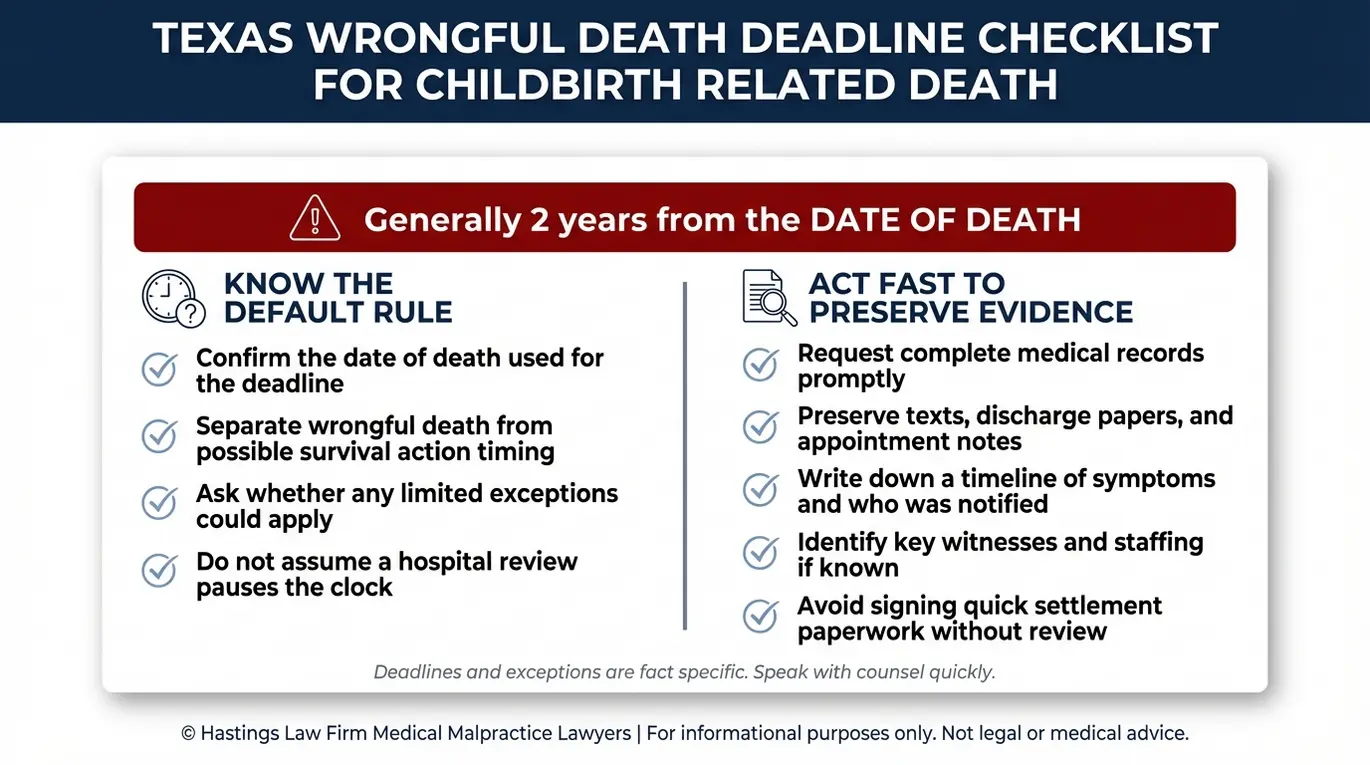
The statute of limitations for a wrongful death claim in Texas is generally two years from the date of the mother’s death, though specific exceptions may apply. The statute of limitations is the legal deadline for filing a lawsuit. Missing this deadline almost always means losing the right to file a lawsuit, regardless of how strong the evidence may be.
⚠️ Critical Deadline: You generally have two years from the date of the mother’s death to file a wrongful death claim in Texas. Delayed action can permanently bar your family’s right to recovery and allow critical evidence to be lost or destroyed.
There is an important distinction between the wrongful death claim and the survival action regarding timing. The wrongful death statute of limitations runs from the date of death. The survival action, which addresses the mother’s own pain and suffering before she passed, may have its clock start from the date the negligent act occurred.
In rare cases, exceptions may extend or alter the filing deadlines. For instance, if the negligent act was concealed and could not have been discovered through reasonable diligence, the discovery rule, which delays the start of the legal deadline until the harm is found, might apply. Texas also has a statute of repose that sets an absolute outer boundary of ten years, beyond which no medical malpractice claim can be filed.
While exceptions exist, the safest approach is to assume the two-year deadline applies and to contact a Texas maternal wrongful death lawyer as soon as your family is ready. Early action also helps preserve evidence. Medical records, electronic fetal monitoring data, staffing logs, and witness memories all become harder to obtain as time passes.
Contact the Texas Birth Injury Attorneys at Hastings Law Firm Today for Help
Your family does not have to face the hospital system alone. If you believe your loved one’s death during pregnancy, childbirth, or postpartum recovery could have been prevented, Hastings Law Firm is here to help you find answers.
Our team includes attorneys, nurse consultants, and medical experts who focus exclusively on medical malpractice. We prepare every case as if it will go to trial, drawing on the insight of former defense attorneys and experienced hospital nurses who understand how these systems work from the inside.
We work on a contingency fee basis, which means your family pays no attorney fees or costs unless we recover compensation for you. Contact a Texas maternal wrongful death lawyer at Hastings Law Firm for a free, confidential case evaluation. Let us help you uncover the truth about what happened and explore what options are available to protect your family’s future.
Frequently Asked Questions About Maternal Wrongful Death in Texas


This content was researched and written by the Hastings Law Firm editorial team, which includes attorneys, medical professionals, and experienced researchers. Our writing is informed by internal knowledge and practical experience, and we cross-check critical details against authoritative sources cited throughout. Every piece undergoes human-led fact-checking and legal review. Because legal and medical information can change, if you spot an error, please contact us. Learn more about our content standards and review process on our editorial policy page.

Tommy Hastings, founder of Hastings Law Firm, is a board-certified personal injury trial lawyer dedicated exclusively to healthcare injury cases. Since 2001, he has represented injured patients and families in litigation against major hospital systems, pharmaceutical companies, and negligent healthcare providers nationwide. He has handled numerous high-profile cases that have drawn national media attention and resulted in multi-million dollar recoveries. He draws on that experience in his writing, helping readers understand how these cases work and what options may be available to them.
