


Texas Maternal Chorioamnionitis Injury Lawyer
Written by: Hastings Law Firm | Reviewed by: Tommy Hastings | Updated: July 27, 2026
Chorioamnionitis is a treatable infection during labor that can become dangerous when warning signs are missed or treatment is delayed. Families may be left coping with serious maternal complications, newborn infection, or lasting neurologic injury, while trying to make sense of conflicting records and unanswered concerns. Understanding how this infection is recognized, how care teams are expected to respond, and how delays can change outcomes can help clarify what happened. If you or a loved one were harmed or worse due to chorioamnionitis negligence in Texas, contact Hastings Law Firm for a free, confidential case review.

Compassionate Texas Medical Attorneys for Chorioamnionitis Negligence Claims
What You Should Know About Chorioamnionitis Maternal Complications Claims in Texas:
- Long term harm can follow when chorioamnionitis is not diagnosed and treated promptly even though it is highly treatable with antibiotics and timely delivery.
- Severe outcomes can include maternal sepsis and hemorrhage and infant complications such as neonatal sepsis and permanent brain injury.
- Liability disputes often focus on whether warning signs were recognized and acted on during labor such as fever and fetal heart rate changes.
- Recovery can depend on whether fetal monitoring strips reflect distress that was present before severe maternal symptoms developed.
- Options can narrow if Texas procedural requirements are missed because an early expert report is required and missing it can lead to dismissal.
- Damages can be limited for non economic losses in Texas medical malpractice claims while economic losses for care costs are not capped.
- Causation can be contested when the defense argues the injury would have occurred even with earlier antibiotics or delivery.
- Newborn outcomes can worsen when maternal infection status is not communicated because neonatal sepsis evaluation and monitoring may be delayed.
- Proof can hinge on what the records show because labor notes lab results and placental pathology may indicate infection and timing.
- Additional fetal risk can arise when Pitocin continues despite distress because uterine hyperstimulation can reduce oxygen flow to a compromised fetus.

A Healthcare Focused Law Firm
When a routine delivery becomes a medical emergency because of an undiagnosed or untreated infection, the aftermath can feel overwhelming. You may be caring for a child with serious health challenges, recovering from your own medical complications, or simply trying to understand what went wrong. These feelings of confusion and betrayal are valid, and you deserve clear answers.
As a Texas Maternal Chorioamnionitis Injury Lawyer, Hastings Law Firm focuses exclusively on medical malpractice cases. Our team of attorneys, in-house nurse consultants, and patient advocates understands both the medicine and the law behind these claims. If you believe a preventable infection harmed you or your baby during labor and delivery, we can review what happened and explain your options in a free, confidential case evaluation.
Understanding Chorioamnionitis and Maternal Infection Claims
Chorioamnionitis, also known as Intra-amniotic Infection (Triple I), is a bacterial infection of the membranes surrounding the fetus (the chorion and amnion) and the amniotic fluid. It typically occurs when bacteria ascend from the vagina into the uterus, often after membranes rupture, requiring immediate diagnosis and treatment to prevent severe injury. When missed or ignored, the consequences for both mother and baby can be severe.
The condition often begins with bacterial colonization, a stage where organisms are present but have not yet triggered a dangerous immune response. Without intervention, colonization can progress to active infection and widespread inflammation involving the placenta and surrounding tissues. As the bacteria multiply, they alter the amniotic fluid, turning a protective environment into a hostile one that can damage the fetus’s lungs and brain. According to research published by PubMed Central on intra-amniotic inflammation and the confirmed diagnosis of Triple I, timely identification and classification of the infection stage is critical to guiding appropriate treatment.
This infection carries significant legal implications because it is highly treatable with antibiotics and timely delivery. Serious injuries often point to a failure in the standard of care.
A chorioamnionitis injury attorney examines whether the medical team recognized the warning signs and followed established protocols. Medical professionals are trained to treat infections before they cause permanent harm. When they fail to follow safety rules or monitor the patient closely, and harm results, the family may have a valid malpractice claim.
Diagnosing Asymptomatic Versus Clinical Chorioamnionitis
Not every case of chorioamnionitis presents obvious symptoms during labor. Clinical chorioamnionitis involves visible signs like fever and fetal heart rate changes that the medical team should detect in real time. Asymptomatic cases, by contrast, may only be confirmed after delivery through placental pathology, the laboratory examination of placental tissue that can reveal microscopic evidence of inflammation or infection.
This distinction matters in malpractice claims. In some cases, the medical team had clear clinical warning signs and failed to act. In others, placental pathology performed after birth reveals an infection that should have been suspected earlier based on the overall clinical picture. Both scenarios can form the basis of a negligence claim depending on what the records show.

Recognizing Symptoms of Intra Amniotic Infection During Labor
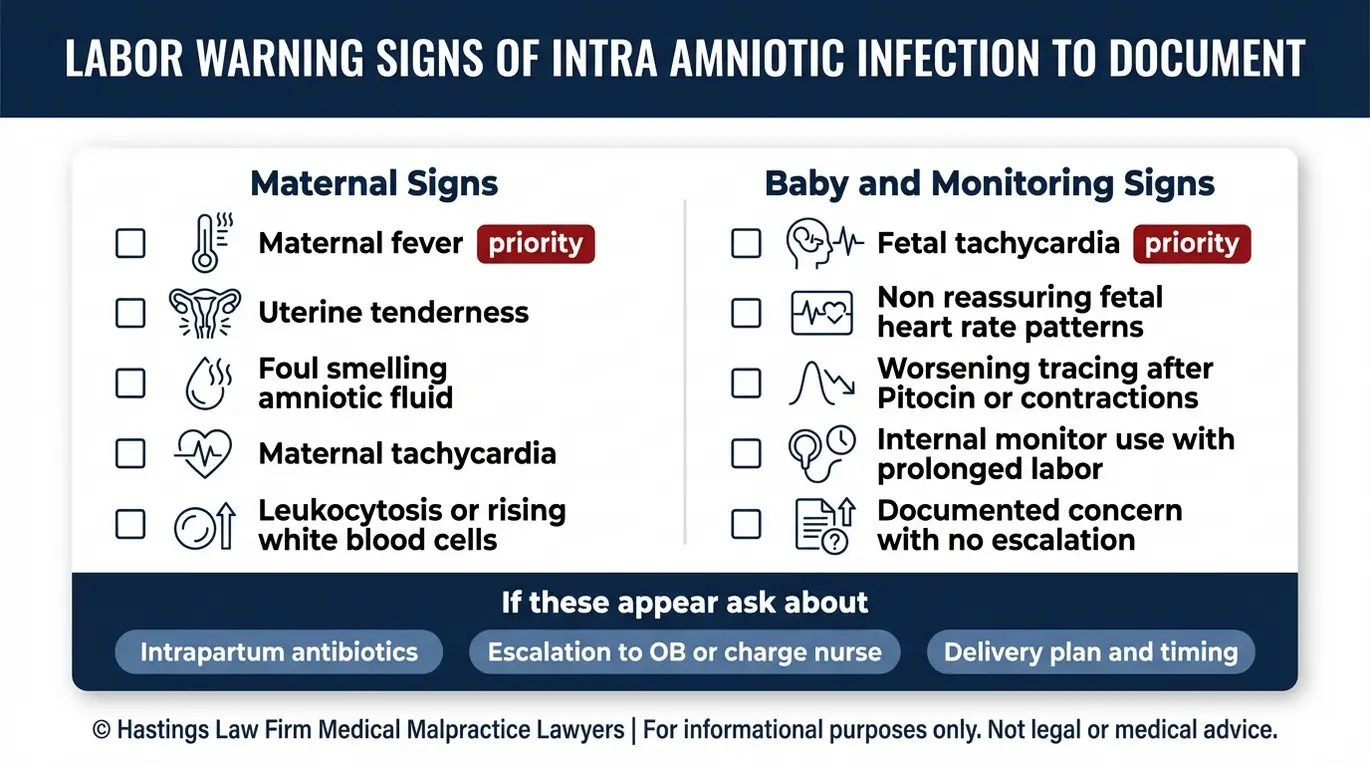
Medical teams must vigilantly monitor for signs of infection, including maternal fever (often the first sign), uterine tenderness, foul-smelling amniotic fluid, maternal tachycardia (rapid heart rate), and fetal tachycardia. Maternal fever is often the first indicator, but it is rarely the only one. When multiple signs appear together, the care team should take immediate action.
A maternal infection lawyer will review the labor records to determine whether these warning signs were present and whether the care team responded appropriately. Key symptoms that providers should be monitoring include:
- Maternal fever at or above 100.4°F (38°C), particularly if it persists or rises
- Fetal tachycardia, an abnormally rapid fetal heart rate (above 160 beats per minute), which can signal distress before the mother shows severe symptoms
- Uterine tenderness on examination, which is distinct from normal contraction pain
- Foul-smelling amniotic fluid, often termed purulent fluid
- Maternal tachycardia (elevated maternal heart rate)
- Leukocytosis, an elevated white blood cell count found on lab work, which supports the clinical suspicion of infection
Research published by PubMed on the updated definition of intraamniotic infection highlights the importance of applying consistent diagnostic criteria so that borderline cases are not overlooked.
Fetal monitoring strips are often among the most important pieces of evidence in these cases. The baby’s heart rate pattern can reflect distress well before the mother develops a high fever.
If the care team failed to recognize or act on those patterns, that gap in care becomes a central question in any malpractice investigation. Ignoring subjective complaints or objective data like a rising white blood cell count can lead to serious delays in treatment.
The Hastings Law Firm Difference
Results matter, but what truly sets us apart is how we achieve them. Every verdict, every settlement, and every Texas courtroom victory comes from one guiding promise: To treat each client’s fight for justice as if it were our own.
This balance of skill, experience, and empathy reflects our core philosophy that justice should not only compensate the injured, but also make healthcare safer nationwide.

Common Causes and Risk Factors for Maternal Infections
The primary cause of chorioamnionitis is the ascent of bacteria such as E. coli or Group B Streptococcus from the lower genital tract, which is significantly more likely to occur after prolonged rupture of membranes (PROM) or during prolonged labor with multiple invasive vaginal examinations. Group B Streptococcus (GBS) is a common bacterium that can colonize the vaginal tract, while prolonged rupture of membranes (PROM) refers to the water breaking well before delivery occurs.
Once the membranes rupture, the protective barrier between the uterus and the outside environment is gone. The longer delivery takes after that point, the greater the risk of bacterial invasion. A systematic review on the management of term prelabour rupture of membranes published in PubMed Central reinforces that timely intervention after membrane rupture is essential to reducing infection risk.
Several well-established risk factors increase the likelihood of developing chorioamnionitis:
- Prolonged rupture of membranes lasting more than 18 hours before delivery
- Extended labor, particularly when progress stalls
- Multiple vaginal examinations, each of which can introduce bacteria
- Internal fetal monitoring devices, which may create a pathway for infection
- GBS colonization that has not been adequately treated with prophylactic antibiotics
- Infection with anaerobic bacteria or other pathogens present in the birth canal
A Texas chorioamnionitis attorney will evaluate whether the medical team accounted for these risk factors and adjusted their monitoring and care plan accordingly. Internal monitoring devices, specifically fetal scalp electrodes or intrauterine pressure catheters, can act as a wick for bacteria to travel upwards. When known risks are present and the team fails to increase vigilance, that failure can form the foundation of a negligence claim.
Medical Standards for Treating Chorioamnionitis and Preventing Injury
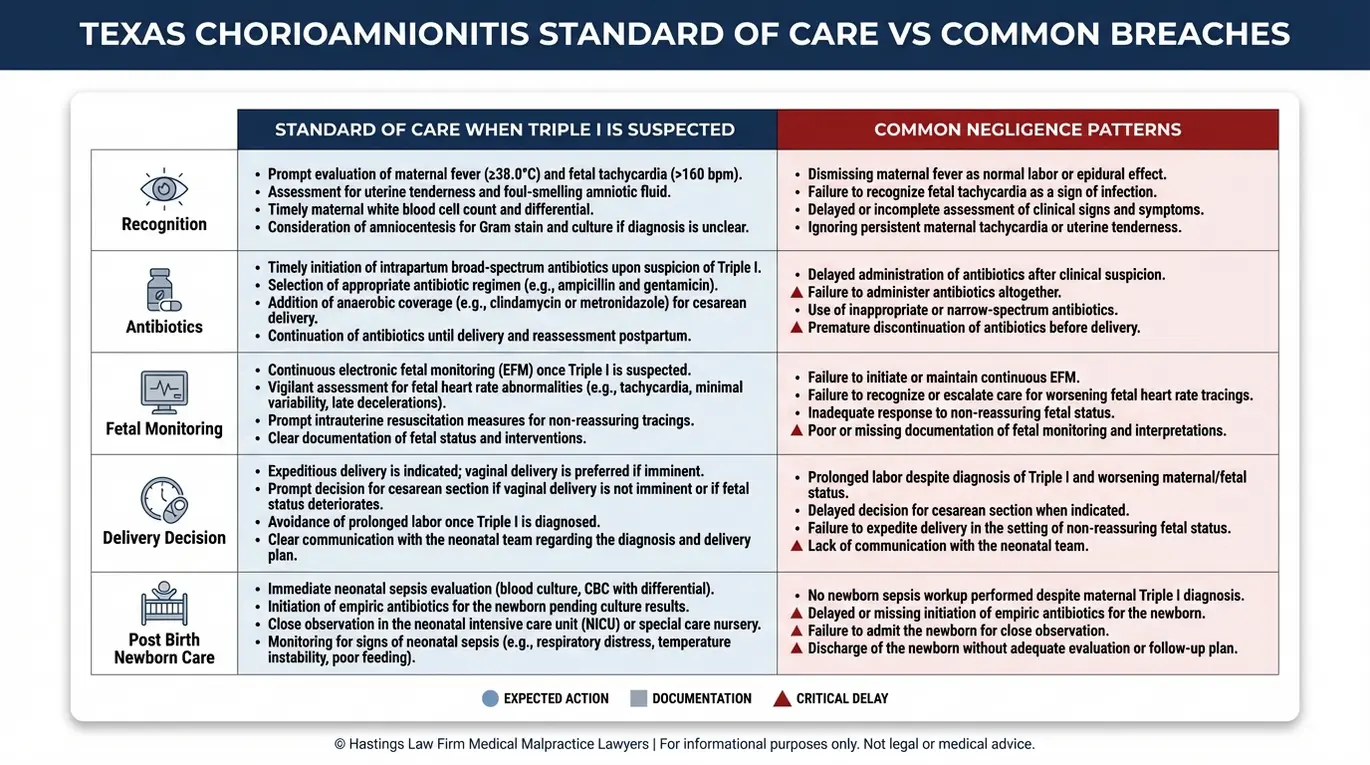
The standard of care for suspected chorioamnionitis requires the immediate administration of broad-spectrum intrapartum antibiotics (often Ampicillin and Gentamicin) and expeditious delivery, often necessitating a C-section if vaginal delivery is not imminent, to reduce the risk of sepsis and brain injury. Intrapartum antibiotics are antibiotics given during labor to fight infection before it harms the baby. Delays in either step can have irreversible consequences.
Clinical guidelines from Prisma Health Academics on intra-amniotic infection outline the expected treatment protocol once Triple I is suspected or confirmed. The following table summarizes the general framework that an infection malpractice lawyer would use to evaluate whether the standard of care was met:
| Treatment Step | Standard Protocol | Common Breach |
|---|---|---|
| Antibiotic administration | Begin broad-spectrum antibiotics (typically Ampicillin and Gentamicin) immediately upon suspicion | Delay in ordering or administering antibiotics |
| Delivery timeline | Expedite delivery; proceed to C-section if vaginal delivery is not imminent | Continued labor observation despite worsening signs |
| Fetal monitoring | Continuous electronic fetal monitoring for signs of distress | Intermittent monitoring or failure to interpret strip patterns |
| Neonatal evaluation | Immediate newborn assessment and monitoring for sepsis after delivery | Delayed NICU involvement or incomplete newborn workup |
Antibiotic timing matters because every hour of delay allows the infection to spread, increasing the risk of harm to both mother and baby. The decision to proceed with a C-section typically depends on how far labor has progressed, whether the baby is tolerating labor, and how quickly delivery can be safely achieved. Once the baby is born, the neonatal team must be ready to initiate a sepsis workup immediately. Failure to communicate the maternal infection status to the pediatric team can result in delayed treatment for the newborn.
Pitocin Use and Uterine Hyperstimulation Risks
When Pitocin is used to augment labor in the presence of a maternal infection like chorioamnionitis, it can create additional danger. Uterine hyperstimulation, a condition where contractions become too frequent or too strong, can reduce oxygen flow to an already compromised fetus. If fetal heart rate strips show signs of distress during Pitocin administration, the care team should reassess the delivery plan immediately. Continuing Pitocin without addressing those warning signs may support a finding of negligence.
Severe Complications Affecting Mothers and Infants
Untreated chorioamnionitis can lead to devastating outcomes including maternal sepsis, endometritis, and hemorrhage for the mother, while the infant faces risks of neonatal sepsis, pneumonia, meningitis, and permanent brain injuries like Hypoxic-Ischemic Encephalopathy (HIE) and Cerebral Palsy. A Texas maternal injury lawyer evaluates the full scope of harm to build a claim that reflects the true cost of what happened.
The following table outlines common complications:
| Maternal Complications | Infant Complications |
|---|---|
| Sepsis (life-threatening systemic infection) | Neonatal sepsis, a bloodstream infection in the newborn that can become fatal without rapid treatment |
| Endometritis (postpartum uterine infection) | Pneumonia |
| Hemorrhage or clotting disorders | Meningitis (infection of the membranes surrounding the brain) |
| Need for emergency hysterectomy | Hypoxic-ischemic encephalopathy (HIE), brain damage caused by oxygen deprivation |
| Prolonged hospitalization and recovery | Periventricular leukomalacia (PVL), damage to the brain’s white matter |
| Cerebral palsy |
For infants, the long-term consequences of brain injury are often the most significant. According to the CDC’s data and statistics on cerebral palsy, cerebral palsy is a common motor disability, and the lifetime cost of care can reach millions of dollars.
An infant brain injury attorney focuses on building a damages case that accounts for ongoing medical treatment, therapy, assistive equipment, and the child’s diminished quality of life. Families often face significant out-of-pocket costs for speech therapy, physical therapy, wheelchairs, and home modifications. These expenses are not short-term and require a settlement or verdict that secures their future.
The Inflammatory Mechanism and Fetal Brain Injury
In cases of chorioamnionitis, brain injury does not always result from oxygen deprivation alone. The infection itself can trigger what is known as a cytokine storm, an overwhelming inflammatory response where the body’s own immune signaling molecules (cytokines) flood the bloodstream and cross into the fetal brain. This inflammatory cascade can directly damage developing white matter, leading to conditions like PVL and HIE even when oxygen levels appear adequate. Understanding this mechanism is essential to proving causation, because it connects the untreated infection to the brain injury through a distinct biological pathway.
Establishing Negligence in Texas Chorioamnionitis Cases
Proving negligence requires demonstrating that the healthcare provider breached the standard of care by failing to diagnose the infection timely, delaying antibiotics, or failing to perform a C-section despite signs of fetal distress, and that this breach directly caused the specific injury to the mother or child. In Texas, medical malpractice claims are governed by Texas Civil Practice and Remedies Code Chapter 74, which sets specific procedural requirements including the need for an expert medical report early in the case.
A medical negligence attorney in Texas must establish four elements. First, there must be a duty, meaning the provider had a doctor-patient relationship and an obligation to deliver competent care. Second, there must be a breach, evidence that the provider failed to do what a reasonably competent physician would have done under the same circumstances.
As a board-certified trial attorney, Tommy Hastings leads our effort to investigate whether the care team failed to follow safety rules or respond to your symptoms. The firm uses a structured, client-friendly process designed to minimize stress while maximizing case viability.
Third, and often the most contested element, is causation. The legal team must connect the specific delay or omission to the specific injury. In chorioamnionitis cases, this means working with obstetric and neonatology experts to demonstrate that earlier treatment would have, more likely than not, prevented the brain injury or maternal complications. At Hastings Law Firm, our in-house nursing staff and national network of medical experts help us reconstruct the clinical timeline.
The fourth element is damages, both economic and non-economic. Economic damages cover the cost of past and future medical care, rehabilitation, and lost earning capacity. Expert testimony is essential in these cases to validate the extent of the damages and the link to the medical error.
Under Texas law, plaintiffs must serve an expert medical report within 120 days after each defendant’s original answer is filed, detailing the standard of care, how it was breached, and the causal relationship to the injury. Failure to meet this strict deadline can result in the case being dismissed.
Contact the Texas Birth Injury Attorneys at Hastings Law Firm Today for Help
You did not expect to be here, searching for answers about what went wrong during your delivery or your child’s birth. But asking questions is not disloyal to your doctors. It is the right thing to do for your family.
At Hastings Law Firm, we prepare every case as if it will go to trial, because that level of preparation is what it takes to hold healthcare systems accountable. Our team includes former defense attorneys who understand how hospitals respond to claims, and in-house medical professionals who know how to read the records and identify where care fell short.
As a Texas Maternal Chorioamnionitis Injury Lawyer, Tommy Hastings and his team are here to listen, review your records, and give you honest answers. There are no fees unless we recover compensation for you. Contact Hastings Law Firm today for a free, confidential case evaluation with a patient advocate. Let us help you understand what happened and what comes next.
Frequently Asked Questions About Maternal Chorioamnionitis Injury in Texas


This content was researched and written by the Hastings Law Firm editorial team, which includes attorneys, medical professionals, and experienced researchers. Our writing is informed by internal knowledge and practical experience, and we cross-check critical details against authoritative sources cited throughout. Every piece undergoes human-led fact-checking and legal review. Because legal and medical information can change, if you spot an error, please contact us. Learn more about our content standards and review process on our editorial policy page.

Tommy Hastings, founder of Hastings Law Firm, is a board-certified personal injury trial lawyer dedicated exclusively to healthcare injury cases. Since 2001, he has represented injured patients and families in litigation against major hospital systems, pharmaceutical companies, and negligent healthcare providers nationwide. He has handled numerous high-profile cases that have drawn national media attention and resulted in multi-million dollar recoveries. He draws on that experience in his writing, helping readers understand how these cases work and what options may be available to them.
